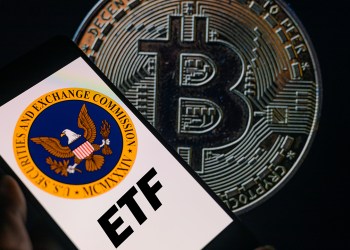
# Сопутствующие статьи по теме ETF

Новостной центр HTX предлагает последние статьи и углубленный анализ по "ETF", охватывающие рыночные тренды, новости проектов, развитие технологий и политику регулирования в криптоиндустрии.


Similar Trends? Just an Illusion: Why Bitcoin Today Is Fundamentally Different from 2022

This article argues that comparing current Bitcoin price action to 2022 is a superficial and misleading analogy, as the underlying conditions are fundamentally different across three key areas. First, the macroeconomic backdrop is the complete inverse. 2022 was defined by high inflation, aggressive interest rate hikes, and tightening liquidity environment, forcing capital into risk-off mode. In contrast, the current environment features declining CPI, an impending rate-cutting cycle, and central banks re-injecting liquidity, creating a strong risk-on appetite for assets like Bitcoin. Charts are presented showing Bitcoin's negative correlation with CPI and its positive correlation with US liquidity indices. Second, the technical market structure differs significantly. The 2021-2022 period formed a bearish weekly "M-top" pattern, characteristic of a major cycle top. The recent pullback is framed as a potential "bear trap" within a larger bull market, with the $80,850-$62,000 zone acting as a major area of consolidation that offers a favorable risk-reward ratio for buyers. Third, and most crucially, the investor base has structurally changed. The 2020-2022 market was retail-driven and highly speculative. Post-2023, the approval of Bitcoin ETFs has ushered in an "era of institutionalization," creating a new class of structural, long-term holders. This has locked up supply, drastically reduced volatility from historical highs of 80-150% to a current 30-60%, and provided a stable base of underlying demand. The conclusion states that a repeat of the 2022 bear market would require a new major inflationary shock, a return to quantitative tightening by central banks, and a decisive break below $80,850. In the absence of these conditions, declaring a structural bear market is premature. The core difference is a shift from a "retail-driven, high-leverage" market to an "institution-driven, long-term holding" one.

marsbit01/20 10:10

Similar Trends? Just an Illusion: Why Bitcoin Today Is Fundamentally Different from 2022

marsbit01/20 10:10

The Dollar Teeters, ECB Economist Reveals the Truth About Bitcoin as a Safe Haven

European Central Bank Chief Economist Philip Lane warns that political pressure on the Federal Reserve could undermine the U.S. dollar's global standing by driving up U.S. term premiums and triggering a reassessment of dollar-denominated assets. This could destabilize global markets through key channels like real yields, dollar liquidity, and institutional credibility. While recent geopolitical tensions initially drove oil and inflation expectations higher, Lane highlights a deeper risk: a "governance discount" on U.S. assets that could cause term premiums to spike even without Fed rate changes. Bitcoin, highly sensitive to liquidity and discount rates, faces two potential macro scenarios: in a traditional "yield differential" paradigm, higher U.S. rates strengthen the dollar and pressure risk assets like Bitcoin; in a "credibility risk" paradigm, dollar weakness coupled with rising term premiums could position Bitcoin as a monetary escape valve. The crypto ecosystem’s reliance on dollar-backed stablecoins ties it directly to U.S. Treasury dynamics, meaning term premium shocks could affect stablecoin yields and on-chain liquidity. Key indicators to watch include term premiums, TIPS yields, inflation expectations, DXY movements, Bitcoin ETF flows, and options positioning. Lane’s warning underscores that a repricing of dollar risk could create a regime shift, with Bitcoin reacting more sharply than traditional assets.

marsbit01/20 08:19

The Dollar Teeters, ECB Economist Reveals the Truth About Bitcoin as a Safe Haven

marsbit01/20 08:19

Funds Are Still in the Market, But Interest in Altcoins Has Faded

The article analyzes the structural shifts in the crypto market in 2025, arguing it was not a typical bull or bear cycle but a period of institutional repositioning. Key themes include: - **Policy and Regulation**: Clearer frameworks emerged (e.g., GENIUS Act, ETF approvals), reducing uncertainty and defining compliance boundaries, but without triggering a broad market boom. - **Capital Flow**: Significant capital entered through low-risk channels like stablecoins (e.g., USDe growth), ETFs (favoring BTC/ETH), RWA (e.g., treasury bonds), and DAT strategies, but this liquidity did not spread to most altcoins. - **Market Stratification**: While Bitcoin and Ethereum saw institutional support, ~85% of new tokens underperformed, with median FDV down over 70%. The market split: institutional capital focused on compliant assets, while speculative activity concentrated in niches. - **Key Sectors**: - *Real-yield assets* (e.g., DeFi protocols with fee mechanisms) gained traction as they offered returns without relying solely on narrative hype. - *AI/Robotics x Crypto* cooled in price but remained relevant long-term for infrastructure potential. - *Prediction markets and Perp DEXs* grew by serving native demand for leverage and event speculation, though they face efficiency challenges. Conclusion: 2025 marked a transition where narrative-driven rallies became shorter and more selective, while institutional capital prioritized assets with clear utility, compliance, and yield. The market is structured for continued divergence between mainstream and altcoins in 2026.

比推01/20 05:41

Funds Are Still in the Market, But Interest in Altcoins Has Faded

比推01/20 05:41

活动图片