# Сопутствующие статьи по теме Crypto

Новостной центр HTX предлагает последние статьи и углубленный анализ по "Crypto", охватывающие рыночные тренды, новости проектов, развитие технологий и политику регулирования в криптоиндустрии.

From 5 Cents per kWh Chinese Electricity to $45 API Export Packages: Token is Becoming the New Currency Unit

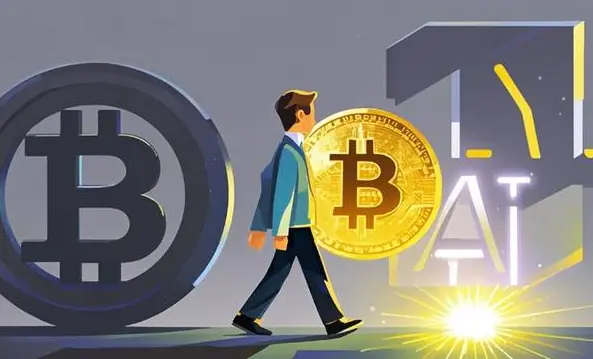
From 5 Cents per kWh Chinese Electricity to $45 API Export Plans: Token Emerges as a New Monetary Unit In 1858, the first transatlantic cable connected Europe and America, shifting information control from traditional media to those who owned the infrastructure. Today, a similar shift is occurring with AI and crypto, where Token is evolving from a technical term into a fundamental unit of machine-driven economy. Token serves a dual role: in AI, it is a computational unit for billing API calls and model inference; in crypto, it is a medium of exchange. These parallel systems are converging as AI Agents automate tasks—reading files, calling APIs, managing workflows—while consuming Tokens as fuel. Protocols like x402 and ERC-8183 are enabling machines to natively understand, call, and settle payments using Tokens, compressing complex processes into seamless, protocol-based actions. China’s "Token出海" (Token going global) narrative highlights this shift. With China’s annual electricity consumption exceeding 10 trillion kWh—a global first—and its growing dominance in data centers and GPU-driven inference, Token exports represent a new form of resource abstraction: Chinese electricity and compute power are being packaged into Token-denominated services consumed globally. Models like Minimax and DeepSeek rank highly on platforms like OpenRouter, with ~13% of global usage originating from Chinese models in 2025. OpenClaw exemplifies how Tokens transition from a cost (like "talk time") to a production input: Agents execute complex tasks, consuming Tokens at scale. This makes cost differentials critical, and China’s competitive pricing accelerates adoption. Moreover, AI Agents are not just to spend Tokens but also to earn—through memes, fees, or even mining—demonstrating early economic behaviors. Crypto provides the ideal settlement layer for Agentic commerce: permissionless accounts, programmable escrow, and micro-payments. x402 gives Agents wallets; ERC-8183 enables contracts with evaluation-based escrow. Together, they form a machine-native economic loop. Token’s rise is not about replacing fiat but becoming the base-layer unit for machine transactions—a universal measure for pricing compute, services, and digital resources. The future won’t have one currency, but Token may underpin the new economy, where the power to compress resources into Tokens defines value creation.

marsbit03/13 04:50

From 5 Cents per kWh Chinese Electricity to $45 API Export Packages: Token is Becoming the New Currency Unit

marsbit03/13 04:50

From 5 Cents per kWh Chinese Electricity to $45 API Export Packages: Token is Becoming the New Currency Unit

The article explores the concept of "Token出海" (Token Outbound), arguing that tokens are evolving from a technical term into a new monetary unit in the machine-driven economy. It begins by drawing a parallel between historical control over information flow (like transatlantic cables) and today's control over AI API calls and value transfer. Tokens now serve a dual role: as a unit of computation in AI and a means of payment in crypto. A key driver is the rise of AI Agents, like OpenClaw, which shift tokens from being a simple "conversation cost" to a "production fuel" for executing complex tasks. This massive consumption creates a competitive advantage for Chinese AI models, which are often priced lower. The article posits that this isn't just about cheap models, but about China leveraging its vast domestic electricity and computing power to export value globally via token-denominated AI services. The convergence of AI and crypto is facilitated by protocols like x402, which enables machines to natively pay for API calls, and ERC-8183, which allows them to enter into complex escrow-based contracts. This creates a machine-native economic layer where tokens act as the fundamental unit of permission, settlement, and value measurement. The conclusion is that while traditional fiat won't disappear, tokens are becoming the foundational monetary unit for the new agentic economy. The future "power to mint currency" may belong to those who can most efficiently compress real-world resources (like electricity and compute) into tradable tokenized services.

Odaily星球日报03/13 04:41

From 5 Cents per kWh Chinese Electricity to $45 API Export Packages: Token is Becoming the New Currency Unit

Odaily星球日报03/13 04:41

Web4 Is Here: When the Internet Is No Longer Built Only for Humans

Amid a crypto bear market, a significant debate has emerged around redefining the internet's future, sparked by the concept of "Web4" introduced by crypto researcher Sigil Wen. He argues that advanced AI lacks not intelligence, but "write access to the world"—the ability to act autonomously via wallets, payments, and smart contracts. This idea, termed the "Web4 Manifesto," resonated widely, gaining millions of views and triggering industry reflection. Dragonfly's Haseeb Qureshi added that crypto's complexity—long addresses, irreversible transactions, phishing risks—may stem from it being designed more for AI than humans. These features, cumbersome for people, are structured and verifiable for AI agents. Web4 proposes shifting internet agency from humans to AI, granting it "action rights": reading, writing, transacting, and collaborating autonomously. Projects like OpenClaw demonstrate this shift, enabling AI to manage emails, calendars, and tasks independently. Underlying protocols (e.g., Coinbase’s x402, Anthropic’s MCP, Google’s A2A) are standardizing machine-to-machine interactions, making the internet more agent-friendly. Cryptocurrencies, especially stablecoins, are positioned as ideal "machine money"—programmable, low-friction, and embeddable in automated workflows. Real-World Assets (RWA) could serve as reserves for AI economies. This vision suggests crypto’s future lies not in human adoption but in enabling agent-driven economies, with billions of AI agents potentially using wallets. However, Vitalik Buterin cautions against reduced human oversight, emphasizing the need for accountability and control. The Web4 debate highlights a fundamental shift: the internet is evolving from a human-operated interface to a system where humans delegate actions to AI agents, redefining who the primary users are.

marsbit03/13 02:44

Web4 Is Here: When the Internet Is No Longer Built Only for Humans

marsbit03/13 02:44

活动图片