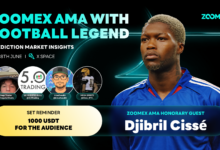
Резюме Space от Zoomex с Джибрилем Сиссе и панелью трейдеров о Чемпионате мира
Zoomex провел первый эпизод своей серии X Space, посвященной Чемпионату мира по футболу, в рамках инициативы ZoomX World Cup Impact Pledge. В дискуссии приняли участие чемпион Лиги чемпионов Джибриль Сиссе и четыре криптотрейдера: Dieguito Charts, Bitsofwealth, Mega и 5.0 Trading. В ходе беседы, которую вел Фернандо Аранда, обсуждались управление давлением, анализ футбола, карьерная философия и аналогии между криптотрейдингом и футболом.
В рамках эпизода был запущен благотворительный проект: за пять выпусков Zoomex будет жертвовать по 1000 USDT на выбранную футбольным гостем благотворительную организацию, а в случае верного прогноза гостя на ЧМ сумма увеличится на 5000 USDT. Сиссе выбрал Францию и организацию Maël et C’est Thérapie.
Ключевые темы обсуждения:
* **Давление и принятие решений:** Сиссе заявил, что жил ради давления ключевых моментов, таких как пенальти в финале. Трейдеры отметили, что стресс исчезает, когда торговля становится системной работой, а не азартной игрой.
* **Тайминг против скорости:** Трейдеры сошлись во мнении, что для успеха важнее время входа, чем скорость исполнения, хотя это зависит от торгового таймфрейма.
* **Преодоление трудностей:** Сиссе рассказал о comeback «Ливерпуля» в финале 2005 года и о своей философии восстановления после тяжелых травм: фокусироваться на решении, а не на проблеме. Трейдеры провели параллель с анализом убыточных сделок.
* **Работа с реальностью:** Сиссе отказался рассуждать о том, могла ли Франция выиграть ЧМ-2006, если бы он был здоров, подчеркнув важность работы с тем, что есть, а не с альтернативными сценариями — принцип, актуальный и для трейдинга.
* **Прогнозы и наблюдения:** Сиссе выделил таких игроков, как Майкл Олизе, Райан Шерки и Гарри Кейн, а также восхитился выступлениями малых стран на турнире.
* **Крипто-футбольные аналогии:** В легкой части дискуссии трейдеры сравнивали криптовалюты со сборными: Bitcoin — с Бразилией и Францией (история, база, эталон), мем-коины — с Мексикой, Ethereum — с Англией и Германией, Solana — с Францией и США.
Основной вывод: связь между футболом и трейдингом заключается в отношении к неопределенности и высоким ставкам. Успех приходит к тем, кто превращает давление в информацию, работает с проверенными системами и фокусируется на реальных событиях, а не на альтернативных сценариях.
Инициатива Zoomex World Cup Impact Pledge продолжится еще четырьмя эпизодами с новыми гостями и благотворительными пожертвованиями.
TheNewsCrypto06/22 10:42