# Сопутствующие статьи по теме BTC

Новостной центр HTX предлагает последние статьи и углубленный анализ по "BTC", охватывающие рыночные тренды, новости проектов, развитие технологий и политику регулирования в криптоиндустрии.

2025 Airdrop Survival Rules: From Gold Rush to Holding These Two Aces

In 2025, the airdrop farming landscape shifted dramatically, moving from a "gold rush" to a challenging environment with significantly reduced returns. The absence of an "altcoin season" and Bitcoin's market dominance led to lower valuations for airdropped tokens, with many projects launching at lower fully diluted valuations (FDVs) and experiencing immediate sell-offs. This resulted in smaller airdrops, often not even covering gas fees, causing many farming studios to shut down or pivot to other ventures. Despite the downturn, new farming methods emerged. "InfoFi" or "talk-to-earn" platforms like Kaito, Cookie Snaps, and Galxe’s Starboard allowed users to earn tokens by creating quality content and analysis on social media, lowering entry barriers and offering faster returns compared to traditional on-chain interactions. Binance Alpha also became a key income source for many, though its rewards diminished over time due to increased competition and lower token values. The two most reliable strategies for sustaining profits were: 1) Participating in high-profile token launches (e.g., on BuidlPad, Kaito, or Legion), focusing on projects with strong community hype and oversubscribed sales, which often provided quick, substantial gains at TGE. 2) Stablecoin farming through platforms like Binance’s Web3 Wallet, which offered low-risk, high-yield opportunities (e.g., Plasma’s collaboration with Binance offered over 70% APY for USDT depositors). These methods provided steady returns with minimal capital erosion. The author concludes that while airdrop farming is no longer a path to instant wealth, it remains a viable way to accumulate assets steadily. Success depends on adaptability, research, and discipline—focusing on quality over quantity, leveraging stablecoin yields, and capitalizing on high-potential launches. The key is to survive market downturns and capitalize when conditions improve.

marsbit12/12 15:57

2025 Airdrop Survival Rules: From Gold Rush to Holding These Two Aces

marsbit12/12 15:57

Bitcoin (BTC) Price Trend and Investor Sentiment Suggest a Bullish December

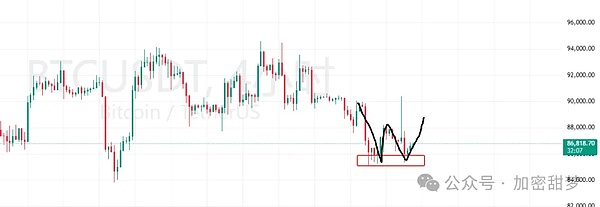
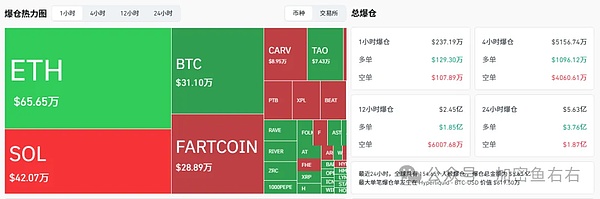
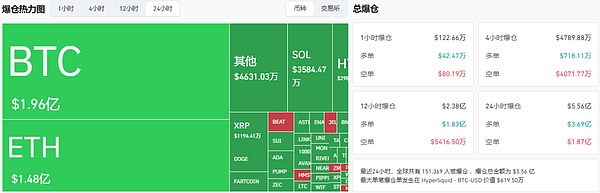
Bitcoin (BTC) is showing signs of a potential bullish December, challenging a decade-old bearish seasonal pattern where November losses typically extend into year-end declines. Key factors supporting this shift include reduced leverage, with open interest dropping from $94 billion to $60 billion, and Bitcoin’s price reclaiming its monthly volume-weighted average price (rVWAP), indicating controlled distribution. Liquidity dynamics have also shifted, with deep liquidity clusters moving upward, and around $3 billion in short positions set to liquidate near $96,000. Market structure diverges from historical cycles due to spot ETF inflows, introducing constant structural demand and accelerating price discovery. Analysts note that Bitcoin’s four-year cycle, while not obsolete, is no longer time-aligned, resembling extended accumulation phases like mid-2016 or late-2019. Macro liquidity (M2) growth has plateaued, creating a late-cycle environment where risk assets rally despite underlying economic softening. Supporting indicators, such as CNY/USD and ETH/BTC correlations, along with improving PMI data and gold’s relative strength, suggest continued risk-on momentum rather than cycle fatigue. While buy-sell ratios show urgency, analysts caution this may reflect positioning squeeze rather than sustainable accumulation. Overall, December’s performance may depend more on structural forces—ETF flows, liquidity rotation, and shifting macro correlations—than traditional halving-driven周期 patterns.

cointelegraph_中文12/12 12:20

Bitcoin (BTC) Price Trend and Investor Sentiment Suggest a Bullish December

cointelegraph_中文12/12 12:20

Market Divergence: SOL Becomes Institutional Darling, Terra Ecosystem Completely Collapses, ZEC Shorts Forced to 'Hold the Bag' by Whales?

The cryptocurrency market is currently experiencing significant divergence, with some assets surging while others face severe downturns. Bitcoin (BTC) is testing a critical resistance zone between $92,000 and $94,000. A successful breakout could propel it toward $100,000, while failure may lead to a pullback below $90,000. Similarly, Ethereum (ETH) is approaching its key level at $3,400. Holding above this could push it to $3,700-$3,800, otherwise a retest of $3,000 support is likely. Solana (SOL) has emerged as a major institutional favorite. Despite market volatility, SOL ETFs continue seeing consistent inflows. Support from major platforms like Coinbase, which integrated Solana DEX functionality, and growing adoption by traditional finance giants like JPMorgan and Nasdaq, highlight strong fundamental strength. Accumulating SOL gradually is recommended. In contrast, the Terra ecosystem (LUNA, LUNC, USTC) has effectively collapsed. Founder Do Kwon received a 15-year prison sentence, and the project's $40 billion collapse triggered a broader market crisis. These assets are considered uninvestable. Zcash (ZEC) presents a cautionary tale for short sellers. Many are trapped in losing positions as large holders (whales) maintain price range, collecting funding rates systematically. This strategy allows whales to profit from perpetual funding while gradually squeezing shorts. The lesson: take profits quickly when shorting ZEC and avoid greed. Overall strategy: Wait for BTC/ETH to break key levels before acting, accumulate SOL steadily, avoid Terra assets entirely, and short ZEC with extreme caution.

金色财经12/12 11:30

Market Divergence: SOL Becomes Institutional Darling, Terra Ecosystem Completely Collapses, ZEC Shorts Forced to 'Hold the Bag' by Whales?

金色财经12/12 11:30

活动图片