# Сопутствующие статьи по теме AI

Новостной центр HTX предлагает последние статьи и углубленный анализ по "AI", охватывающие рыночные тренды, новости проектов, развитие технологий и политику регулирования в криптоиндустрии.

The DeepSeek You've Been Waiting For Has Long Changed

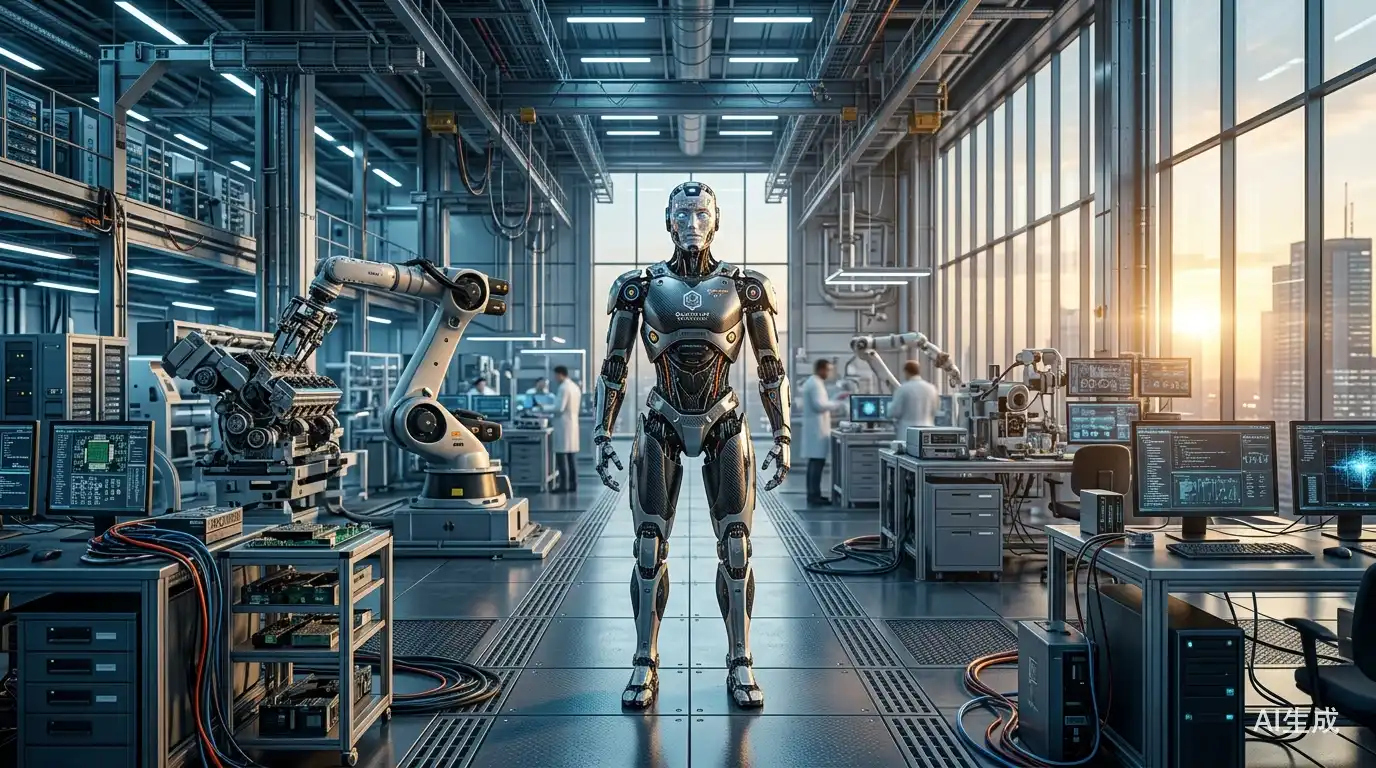
The article discusses the delayed release of DeepSeek V4, a highly anticipated AI model in China, and explores the reasons behind its slowed development. Initially a leader in the global AI race, DeepSeek has fallen behind competitors like OpenAI, Anthropic, and Google, which release major updates every few months. A key factor is DeepSeek's shift in focus due to national strategic priorities. In early 2025, the Chinese government encouraged the company to use Huawei’s Ascend processors instead of NVIDIA’s GPUs, aligning with broader efforts to achieve technological self-reliance. DeepSeek attempted to train its models on Huawei’s Ascend 910C chips but faced technical challenges, including instability and communication issues during distributed training. As a result, the company continued using NVIDIA hardware for training while only using Ascend chips for inference. In 2026, DeepSeek prioritized adapting V4 to Huawei’s new Ascend 950PR and Cambricon chips, aiming for a full migration from NVIDIA’s CUDA to Huawei’s CANN framework. This adaptation process, particularly ensuring precision alignment across hardware, consumed significant time and resources, slowing down model iteration. The delay also reflects DeepSeek’s evolving role from a purely market-driven entity to a "national mission-oriented" company. This shift has come at a cost: the model now lags behind competitors in areas like code generation and multimodal capabilities, and the company has faced talent drain, with key researchers leaving for better-paying opportunities at larger tech firms. Despite these challenges, V4’s release is seen as a potential milestone for China’s AI industry, demonstrating that advanced models can run on domestic hardware ecosystems. While it may not be a groundbreaking model in terms of performance, its success could validate China’s broader strategy for AI independence.

marsbitВчера 10:32

The DeepSeek You've Been Waiting For Has Long Changed

marsbitВчера 10:32

Short-Term Rebound or Bull Market Return? What Do Traders Think?

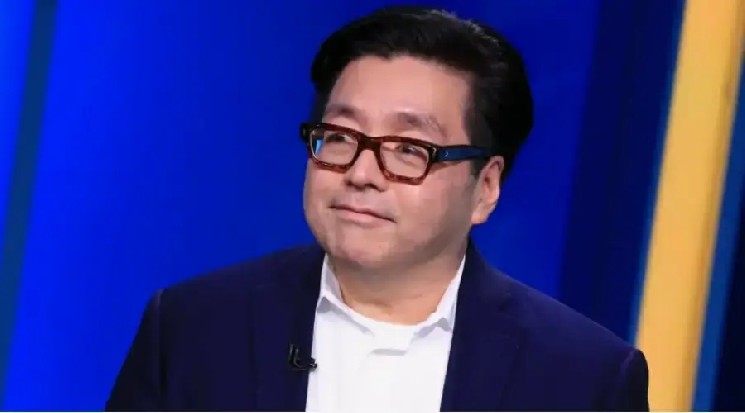
The S&P 500 has rebounded nearly 10% from its March 27 low, with the Nasdaq posting a 10-day winning streak—its longest since 2021. Bitcoin surged past $76,000, and crypto-related stocks rallied. The market is showing a V-shaped recovery, but the question remains: is this a true bull market return or just a short-term rebound? Bullish analysts, including Tom Lee and Ed Yardeni, argue the bottom is in. Lee cites the U.S.-Iran ceasefire as a key factor, while Yardeni maintains a year-end S&P 500 target of 7700, stating "pessimism is now out of style." Goldman Sachs labels this a "marathon expansion," expecting a 12% earnings growth to form a "fundamental bottom," with AI driving nearly 40% of S&P 500 earnings growth. Morgan Stanley notes that bull markets in their fourth year historically deliver positive returns, with AI-driven productivity gains yet to fully diffuse. Bearish voices, led by Bank of America’s Michael Hartnett, caution that true market lows require extreme pessimism, which is absent now. Cash levels are low at 4.3%, and institutional investors remain overweight on stocks. Hartnett warns that oil’s 60% rise since the Iran war could hurt profits more than inflation data suggests. Goldman’s trading desk also views the rally as a technical rebound, not a trend, pending real-world oil shipping data from the Strait of Hormuz. Piper Sandler’s Michael Kantrowitz has stopped issuing year-end targets due to high uncertainty. The divide is clear: bulls see a fundamentals-driven bull run with earnings growth and geopolitical de-escalation, while bears see a sentiment-driven bounce with weak inflows—equity funds saw $15.4 billion in outflows last week. The key variable is the U.S.-Iran talks; a ceasefire extension could solidify the rally, but failure may trigger a drop. As Hartnett warns, "investors should not mistake a relief rally for a solution."

marsbitВчера 07:48

Short-Term Rebound or Bull Market Return? What Do Traders Think?

marsbitВчера 07:48

Only Work 2 Hours a Day? This Google Engineer Uses Claude to Automate 80% of His Work

A Google engineer with 11 years of experience automated 80% of his work using Claude Code and a simple .NET application, reducing his daily work from 8 hours to just 2–3 hours while generating $28,000 in monthly passive income. The key to this transformation lies in three core elements: First, using a structured CLAUDE.md file based on Andrej Karpathy’s principles—Think Before Coding, Simplicity First, Surgical Changes, and Goal-Driven Execution—reduces Claude’s rule violations from 40% to just 3%. Second, the "Everything Claude Code" system acts as a full AI engineering team, with 27 pre-built agents for planning, reviewing, and executing tasks across multiple AI platforms. Third, a hidden token consumption issue in Claude Code v2.1.100 was identified, where 20,000 extra tokens were silently added, diluting instructions and reducing output quality. A quick fix using npx downgrades the version to avoid this. The automated system enables code generation, testing, and review to run autonomously in 15-minute cycles. The engineer now only reviews output, saving 5–6 hours daily. The setup takes less than 20 minutes, and the return on time investment is significant—potentially saving $10,000–$12,000 monthly for those valuing their time at $100/hour. The article emphasizes that managing AI systems, not just using them, is the new critical skill, enabling a shift from doing work to overseeing automated processes.

marsbitВчера 04:10

Only Work 2 Hours a Day? This Google Engineer Uses Claude to Automate 80% of His Work

marsbitВчера 04:10

活动图片