Supreme Court 'Hits the Brakes', Trump 'Hits the Gas': Tariff Battle Reignites!

比推Опубликовано 2026-02-21Обновлено 2026-02-21

Введение

The US Supreme Court ruled 6-3 on February 20 that the Trump administration lacked legal authority under the International Emergency Economic Powers Act (IEEPA) to impose broad tariffs. In response, former President Trump announced a new 10% global tariff using alternative legal authority, aiming to maintain similar tariff levels. The court’s decision challenges the legal foundation of Trump’s tariff framework and may lead to large-scale refunds and further legal battles. Market reactions were initially positive but tempered as policy uncertainty persisted. The ruling highlights ongoing tensions between presidential power and trade policy, with economic and political implications for U.S. trade strategy and revenue policy.

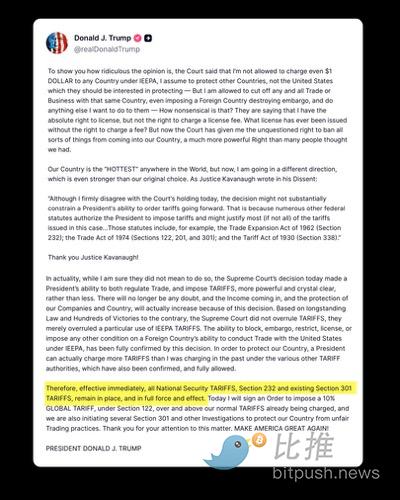
Lunar New Year’s fifth day, traditionally a day for Chinese to "welcome the God of Wealth," saw markets hoping for prosperity and smooth sailing. But in Washington, what arrived was a judicial "headwind." On February 20 local time, the U.S. Supreme Court ruled 6:3 that the Trump administration’s broad tariffs implemented under the International Emergency Economic Powers Act (IEEPA) lacked legal authorization. Within hours, the White House shifted course, with Trump announcing a 10% global tariff on top of existing duties. All current national security tariffs are fully effective immediately.

A tug-of-war over trade and presidential power has entered a new round.

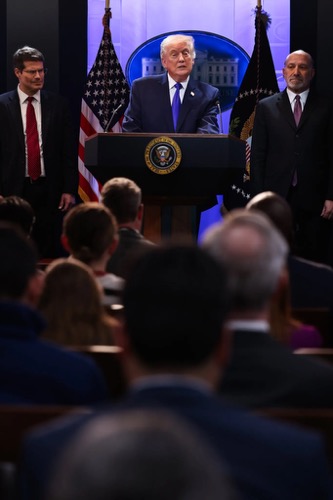
Sources told The New York Times that when the Supreme Court decision was announced, Trump was meeting with governors at the White House. An assistant handed him a note, and he immediately called it "disappointing." Later, at a press conference, Trump angrily criticized the Supreme Court justices, calling them "fools and lackeys."

More Than Just Tariffs Halted

The Supreme Court’s majority opinion held that IEEPA does not grant the president unilateral authority to impose widespread tariffs on global goods. In other words, the president can declare an emergency but cannot use it to establish a常态化 tariff system.

The practical impact of this ruling is evident at least on two levels.

First, at the policy implementation level. The core tariff framework Trump relied on over the past year has been overturned. Although some tariffs based on national security provisions (Section 232) or 301 investigations may remain, the most efficient and broad-reaching tool has been judicially否决.

Second, at the fiscal level. Multiple institutions estimate that if the relevant tariffs are ultimately deemed invalid, the U.S. government could face massive refund pressures, potentially amounting to hundreds of billions of dollars. Bloomberg cited trade lawyers stating that the refund issue "will become the focus of the next round of litigation."

More importantly, policy certainty is declining. Businesses cannot predict the structure of trade costs for the next six months—precisely the variable global supply chains most fear.

Trump’s "Backup Button"

Facing the ruling, Trump’s response was very强硬. He stated at the White House, "There are many methods, many powers."

The White House plans to implement a 10% global temporary tariff within days under Section 122, lasting 150 days. If Congress does not extend it, the measure automatically expires. This clause has rarely been used historically and was originally designed as a short-term tool to balance trade deficits.

Simultaneously, Trump has not ruled out pushing Congress to legislate, granting the president clearer tariff authority. Some Republican lawmakers have publicly expressed support. However, given the narrow seat margins in both chambers of Congress, whether it can顺利推进 remains uncertain.

A Republican strategist told media that tariffs are the "cornerstone" of Trump’s economic agenda, and "he won’t give up easily."

Yale University’s Budget Lab has been simulating the impact of tariff policies during Trump’s potential term and released a new report based on the president’s latest remarks.

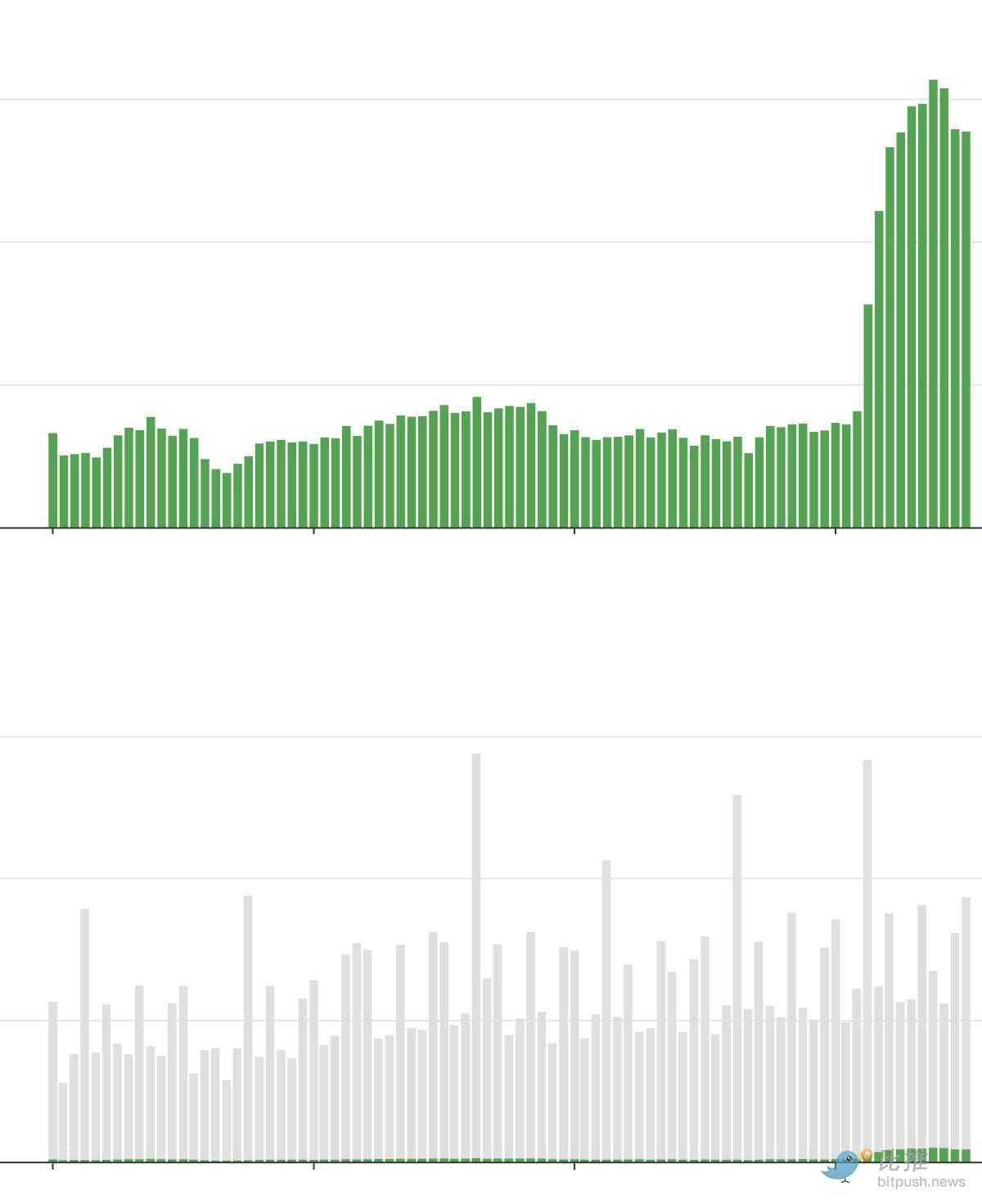
According to the Budget Lab’s estimates, before today’s Supreme Court ruling, the overall effective tariff rate (the average tax paid on all imported goods) was 16.9%. If the tariffs rejected by the Supreme Court become无效 and are not replaced, this number would drop to 9.1%.

But if Trump follows through on his plan to levy a 10% tariff on all goods using different legal grounds, and if he can maintain this policy, the Budget Lab estimates the effective tariff rate would eventually reach 15.4%—almost returning to the level before the day began.

Market Reaction Muted

Market volatility was limited that day. The three major U.S. stock indices rose, as investors believed corporate cost pressures might阶段性下降. In the S&P 500, manufacturing and retail sectors reliant on imported components saw relatively明显的 gains. The crypto market experienced a short-term boost. Bitcoin briefly approached $68,000, with some altcoins rising over 5%. Analysts pointed out that reduced expectations of trade friction boosted risk appetite.

However, as Trump announced the new tariff plan, the rally became more克制. The market quickly realized this wasn’t the end of policies but a路径重组.

Dual Economic and Political Pressures

The complexity of the tariff issue lies in its dual nature as both an economic tool and a political topic.

On the economic front, tariffs are generally seen as policies that raise import costs and potentially push up prices. Some Republicans私下 believe the drag on economic growth from tariffs cannot be ignored, especially with midterm elections approaching.

John Iselin, Deputy Director of Economic Analysis at Yale's Budget Lab, stated that Trump’s tariff policies have so far not achieved their goals of revitalizing U.S. manufacturing or reducing the trade deficit, but even economists who generally oppose import taxes acknowledge that tariffs have successfully increased fiscal revenue.

John said: "Frankly, compared to other viable revenue-raising options, tariffs are a more regressive way to raise revenue; there is a vast body of economic literature demonstrating the negative economic impacts of tariffs. But at the same time, we truly need significant fiscal revenue in the coming decades."

On the political front, Democrats have made "rising living costs" a primary attack point. A Democratic strategist in Pennsylvania told NBC that the price pressures from tariffs "have already had a real impact."

Meanwhile, the Trump camp emphasizes trade balance and manufacturing回流, viewing tariffs as a necessary means.

The core of this debate is not just trade itself, but the boundaries of U.S. presidential power during economic emergencies.

What Happens Next?

In the coming weeks, three issues warrant attention:

First, whether the newly announced 10% temporary tariff is implemented as scheduled and whether its scope expands;

Second, whether the refund issue enters judicial proceedings and the scale of its fiscal impact;

Third, whether Congress attempts to legislate to grant clearer tariff authority.

In the short term, markets may oscillate between "risk alleviation" and "policy volatility."

In the medium term, business decision-makers may delay some investment and expansion plans, awaiting policy clarity.

In the long term, this ruling could reshape the legal framework of U.S. trade policy.

A former federal trade official told Bloomberg: "What truly matters is not this particular tariff, but what the president can do in the future."

Author: Seed.eth


Twitter:https://twitter.com/BitpushNewsCN

Bitpush TG Discussion Group:https://t.me/BitPushCommunity

Bitpush TG Subscription: https://t.me/bitpush

Original link:https://www.bitpush.news/articles/7613431

Связанные с этим вопросы

QWhat was the U.S. Supreme Court's ruling regarding the tariffs imposed by the Trump administration?

AThe U.S. Supreme Court ruled 6:3 that the Trump administration's broad tariffs implemented under the International Emergency Economic Powers Act (IEEPA) lacked legal authorization.

QHow did President Trump respond to the Supreme Court's decision on tariffs?

APresident Trump responded by announcing a new 10% global tariff on all imports, to be implemented using a different legal authority, and he criticized the Supreme Court justices, calling them 'fools and lackeys'.

QWhat are the potential economic impacts of the Supreme Court's ruling on tariffs?

AThe ruling could lead to large-scale refunds potentially totaling hundreds of billions of dollars, and it creates policy uncertainty for businesses regarding future trade costs, which could disrupt global supply chains.

QWhat alternative legal mechanism is Trump planning to use to implement new tariffs?

ATrump plans to use Section 122 to implement a 10% global temporary tariff for 150 days, a provision rarely used historically that was designed as a short-term tool to balance trade deficits.

QHow did financial markets initially react to the Supreme Court's tariff decision?

AFinancial markets showed limited volatility initially, with U.S. stock indices rising as investors anticipated reduced corporate cost pressures. Cryptocurrencies like Bitcoin also saw short-term gains approaching $68,000, though the rally became more restrained after Trump announced new tariff plans.

Похожее

RWA First Stock's Major Acquisition: Why Buy a 'Traditional' Mortgage Company?

On June 10th, Figure Technology Solutions (Nasdaq: FIGR), a blockchain-native capital markets firm, announced a $717 million acquisition of Kiavi, a leading non-bank lender for residential real estate investors. The deal involves Figure acquiring Kiavi's technology and operations for approximately $538 million, while forming a joint venture with alternative asset manager Sixth Street to purchase Kiavi's existing loan portfolio. Sixth Street also provided a $3 billion forward purchase commitment. This acquisition marks a strategic shift for Figure, known as the "RWA (Real World Asset) first stock," allowing it to expand significantly into the larger market of first-lien mortgages. Kiavi specializes in non-qualified mortgage (Non-QM) loans, such as short-term fix-and-flip (RTL) and rental property (DSCR) loans—a segment traditionally underserved by major banks. The move is expected to increase Figure's first-lien loan origination to over $7 billion annually, aiming for these to constitute about 40% of its business by 2027. Both companies leverage AI for underwriting: Kiavi uses proprietary models to value renovated properties and automate document processing, dominating the fix-and-flip lending space. Figure plans to integrate these assets onto its blockchain platform, Provenance, using its new 'Adaptor' product to standardize and tokenize the loans for institutional investors on its Democratized Prime marketplace. While the integration poses challenges—including merging different asset types, interest rate sensitivity of Kiavi's loans, and post-IPO execution risks—Figure projects the deal to be accretive to earnings with a cash payback period under four years. The transaction is seen as a major step in scaling blockchain-based capital markets, moving RWA tokenization from concept validation toward large-scale operation.

Foresight News2 мин. назад

RWA First Stock's Major Acquisition: Why Buy a 'Traditional' Mortgage Company?

Foresight News2 мин. назад

Trend in US Stocks: A Post Triggers a 930-Point Rebound, Tonight Belongs to SpaceX

On Thursday (June 11, U.S. Eastern Time), Wall Street staged a textbook V-shaped reversal. The Dow Jones surged 929.97 points (+1.86%) to close above 50,000, while the Nasdaq and S&P 500 rose 2.54% and 1.75%, respectively. The rally occurred despite the hottest PPI report in years, with May data showing a 6.5% year-on-year surge, the highest since 2022. The market ignored the inflation data, focusing instead on reports that former President Trump called off a planned strike on Iran, hinting at a potential multi-party peace agreement draft. This sparked a sharp drop in oil prices, fueling hopes that inflation may have peaked. Sector rotations were stark: previously battered AI hardware and cyclical stocks led the gains, while defensive sectors that hit record highs the prior day were sold off. Chip stocks like Micron and Intel saw sharp rebounds. In contrast, software giant Oracle plunged nearly 10% despite beating earnings, with concerns over cloud revenue and cash flow. Adobe also fell after hours despite raising guidance, as its CFO announced departure. The rally's sustainability is questioned, driven largely by social media posts about unconfirmed geopolitical developments. Inflation risks remain, with pipeline pressures still high. Meanwhile, the market's risk appetite faces a major test with SpaceX's historic IPO. Priced at $135 per share, it aims to raise ~$75 billion with a $1.75 trillion valuation, becoming the largest U.S. IPO ever. It will join the Nasdaq 100 in 15 days, triggering massive index fund buying. However, critics cite extreme valuation (88x sales) and market liquidity concerns.

marsbit26 мин. назад

Trend in US Stocks: A Post Triggers a 930-Point Rebound, Tonight Belongs to SpaceX

marsbit26 мин. назад

The Trillion-Dollar Valuation Test: Are the Three Super IPOs a Tech Stock Frenzy or a Crypto Market Nightmare?

Trillion-Dollar Valuation Test: Are the Three Mega IPOs a Tech Stock Frenzy or a Crypto Market Nightmare? The capital market in 2026 is witnessing a highly anticipated wave of tech IPOs, centered on SpaceX, OpenAI, and Anthropic. Collectively valued at over $3.5 trillion, their potential listing represents one of the largest such waves in recent years. This raises concerns about market liquidity, valuation bubbles, and potential capital outflows from other assets like crypto. SpaceX's valuation narrative has shifted from rocket launches to becoming a global infrastructure play via its Starlink satellite network, which now drives most revenue. Despite ongoing losses, investors focus on its long-term growth potential. OpenAI and Anthropic represent the core productivity engines of generative AI. Their public listings would offer the first direct investment opportunity in large foundation model companies, potentially triggering a repricing within the AI sector. Market fears of a massive "capital drain" from these IPOs are likely overstated. Historical precedents like Alibaba and Saudi Aramco show that mega-listings primarily cause capital reallocation, not destruction, within the vast equities market. Systemic risk is rarely triggered by IPOs alone. For stock markets, short-term volatility and sector repricing are expected, especially for AI concept stocks. Long-term, these listings could reinforce the tech sector's importance. For crypto, direct competition for speculative capital exists, particularly affecting AI-themed tokens. However, crypto's trajectory remains more tied to its own cycles, macro liquidity, and Bitcoin ETF flows rather than a single IPO event. The real risk lies not in the listings themselves but in the sky-high growth expectations embedded in these valuations. If future revenue, profitability, or commercialization progress disappoints, significant valuation resets could follow, impacting high-growth tech stocks. Ultimately, the market's direction hinges on macroeconomic conditions and whether these companies can deliver on their ambitious promises.

链捕手42 мин. назад

The Trillion-Dollar Valuation Test: Are the Three Super IPOs a Tech Stock Frenzy or a Crypto Market Nightmare?

链捕手42 мин. назад

Trillion-Dollar Valuation Test: Are the Three Super IPOs a Tech Stock Frenzy or a Crypto Market Nightmare?

Title: Trillion-Dollar Valuations at Stake: Super IPOs of SpaceX, OpenAI, Anthropic – Tech Boom or Crypto Nightmare? TL;DR: A wave of mega-tech IPOs is approaching, featuring SpaceX (targeting a $1.75 trillion valuation), OpenAI (~$852B), and Anthropic (~$965B), with a combined potential valuation exceeding $3.5 trillion. This tests the market's pricing of innovation and sparks debate on liquidity impact. * **SpaceX**'s valuation is now driven more by its Starlink global communications infrastructure than its core rocket business. * **OpenAI & Anthropic** offer the first major public investment opportunities in foundational AI models, potentially repricing the entire AI sector. * Concerns about a market-wide "liquidity drain" are likely overblown; history shows large IPOs mainly cause fund reallocation, not disappearance, and rarely trigger systemic risk. * Crypto markets, especially some AI-themed tokens, may face short-term fund competition, but their long-term trajectory depends more on macro liquidity, regulation, and Bitcoin cycles. * The real risk lies not in the IPOs themselves, but in whether these companies can justify their sky-high valuations with future revenue growth and profitability. Unmet expectations could lead to significant repricing pressure. Ultimately, these IPOs represent a massive market pricing of next-gen tech infrastructure, not a prelude to a market crash. The broader market direction will be determined by macro conditions, corporate earnings, and risk appetite.

marsbit42 мин. назад

Trillion-Dollar Valuation Test: Are the Three Super IPOs a Tech Stock Frenzy or a Crypto Market Nightmare?

marsbit42 мин. назад

Торговля

Спот
Фьючерсы

Популярные статьи

Как купить GAS

Добро пожаловать на HTX.com! Мы сделали приобретение GAS (GAS) простым и удобным. Следуйте нашему пошаговому руководству и отправляйтесь в свое крипто-путешествие.Шаг 1: Создайте аккаунт на HTXИспользуйте свой адрес электронной почты или номер телефона, чтобы зарегистрироваться и бесплатно создать аккаунт на HTX. Пройдите удобную регистрацию и откройте для себя весь функционал.Создать аккаунтШаг 2: Перейдите в Купить криптовалюту и выберите свой способ оплатыКредитная/Дебетовая Карта: Используйте свою карту Visa или Mastercard для мгновенной покупки GAS (GAS).Баланс: Используйте средства с баланса вашего аккаунта HTX для простой торговли.Третьи Лица: Мы добавили популярные способы оплаты, такие как Google Pay и Apple Pay, для повышения удобства.P2P: Торгуйте напрямую с другими пользователями на HTX.Внебиржевая Торговля (OTC): Мы предлагаем индивидуальные услуги и конкурентоспособные обменные курсы для трейдеров.Шаг 3: Хранение GAS (GAS)После приобретения вами GAS (GAS) храните их в своем аккаунте на HTX. В качестве альтернативы вы можете отправить их куда-либо с помощью перевода в блокчейне или использовать для торговли с другими криптовалютами.Шаг 4: Торговля GAS (GAS)С легкостью торгуйте GAS (GAS) на спотовом рынке HTX. Просто зайдите в свой аккаунт, выберите торговую пару, совершайте сделки и следите за ними в режиме реального времени. Мы предлагаем удобный интерфейс как для начинающих, так и для опытных трейдеров.

494 просмотров всегоОпубликовано 2024.04.17Обновлено 2026.06.02

Как купить GAS

Обсуждения

Добро пожаловать в Сообщество HTX. Здесь вы сможете быть в курсе последних новостей о развитии платформы и получить доступ к профессиональной аналитической информации о рынке. Мнения пользователей о цене на GAS (GAS) представлены ниже.

活动图片