Strategy Watch #5

insights.glassnodeОпубликовано 2026-06-26Обновлено 2026-06-26

Введение

Strategy Watch #5 analyzes institutional digital asset trends in May, highlighting diverging flows. While corporate treasuries continued accumulating Bitcoin (BTC) and Ethereum (ETH), spot ETF investors reduced exposure. Market-neutral strategies benefited as CME basis yields turned positive, reviving cash-and-carry trades. A deep dive into DeFi notes that while outflows slowed, total value locked (TVL) continued declining. The report also covers fund performance, on-chain vault yields, manager positioning as cash balances rise, and new institutional expansion initiatives.

The full report is freely available in PDF format.

Download PDF version

Welcome to Strategy Watch #4

Strategy Watch was built to address a clear demand for high-signal, impartial analysis of fund-level performance and allocation trends in digital assets.

Our objective is straightforward — to make Strategy Watch a must-read monthly publication for the digital asset investment community.

This publication is strengthened by direct input from market participants. Funds and allocators that contribute data and insights help shape a more complete and valuable view of the landscape. If you have insights, data, or allocation updates worth sharing, we welcome your contribution.

Present your latest initiatives and updates to a curated audience of institutional allocators.

Share updates ↗

Inside the Latest Strategy Watch

The report is structured across six core sections, each focused on a distinct dimension of institutional activity in digital assets:

01 Institutional Flow Monitor | Institutional demand split by vehicle in May. ETF allocators reduced exposure while digital asset treasuries kept accumulating. What does this divergence signal for allocator positioning?

02 Fund and SMA Performance | Market-neutral strategies kept compounding gains, while the strongest directional returns came from stock selection rather than market beta.

03 Strategy Deep Dive: DeFi/Yield | A CIO's perspective on why fundamentals matter more than ever, and where the next wave of crypto value creation will accrue.

04 On-chain Vault Performance | On-chain credit continues to stabilize, but can vault yields compete with Treasury rates and native ETH staking?

05 Manager Monitor | Find out how managers are positioning as cash balances rise and fundraising conditions remain subdued.

06 Allocation Updates | Institutional expansion continued through new investment firms, dedicated crypto divisions, and quant fund launches.

in partnership with

The Premier Digital Assets Allocator Platform. Learn more


Institutional Flow Monitor

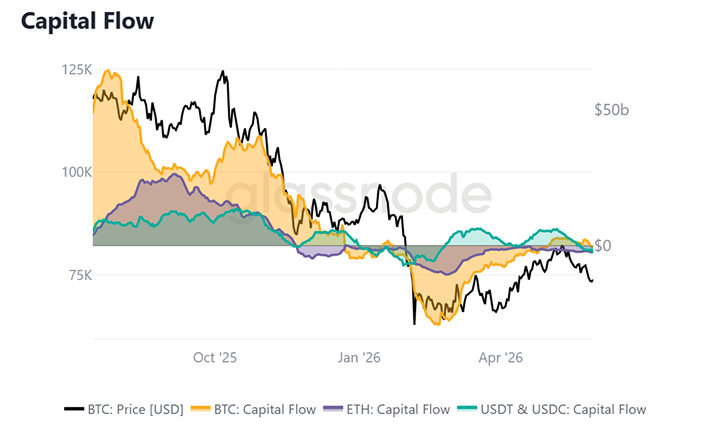
  • Bitcoin flows hovered near neutral while Ethereum outflows deepened and stablecoin inflows reversed sharply into month-end.

April's tentative stabilization carried into May for Bitcoin alone. BTC flows held close to neutral, spiking to +$2.9B on May 07 before drifting back to -$0.3B at the close. Ethereum again diverged, deepening from -$1.7B to a -$2.4B trough late in the month before ending at -$2.1B. The sharper signal came from stablecoins, which reversed from a +$6.1B peak early in May to -$2.5B by month-end, a decisive swing into net outflow. That rotation out of dollar liquidity points to allocators trimming risk into June rather than redeploying into spot.
ETF & DAT Net Flows

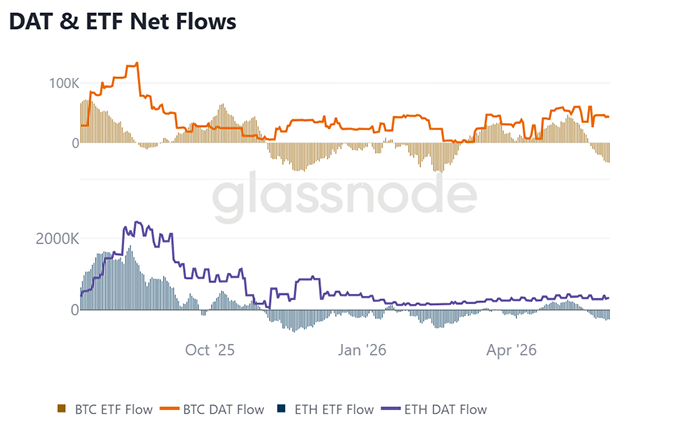
  • Spot ETF flows for both Bitcoin and Ethereum swung from early-month highs into outflows while treasury vehicles kept accumulating.

Institutional demand split by vehicle in May. Spot ETF flows peaked early, with Bitcoin at +46.8k BTC and Ethereum at +283.4k ETH on May 05, before both rolled over into net redemptions, closing at -33.1k BTC and -261.5k ETH as ETF outflows reached a monthly record. Digital asset treasuries told the opposite story and stayed positive throughout. BTC DAT flows held between +26.1k and +60.4k BTC, ending at +42.9k, while ETH DAT flows ran from +302.4k to +439.2k ETH before settling at +330.8k. The divergence suggests balance-sheet buyers kept accumulating into weakness even as ETF allocators de-risked.
DeFi TVL & Stablecoin Cap

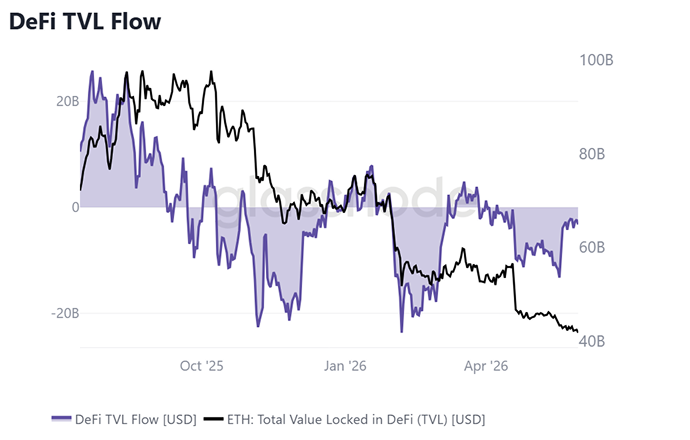
  • Ethereum DeFi TVL ground to new monthly lows even as the pace of net outflows eased through the second half of May.

The contraction that followed April's lending exploit persisted through May, though its intensity faded. Ethereum TVL slipped from $45.1B to $41.7B, closing at the monthly low after peaking at $46.1B on May 11. The flow picture was more constructive than the level implied. Thirty-day net flows stayed negative throughout but recovered from a -$13.3B trough on May 18 to -$3.2B by month-end, the shallowest outflow pace since the exploit. The combination of a falling TVL base alongside decelerating outflows suggests the forced deleveraging phase is largely complete, though fresh inflows remain absent.
CME Basis Yield

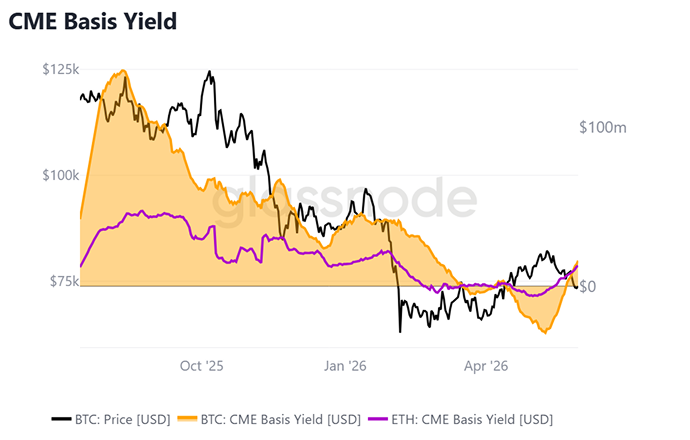
  • CME basis yields for both Bitcoin and Ethereum climbed back into positive territory through May, reviving the cash-and-carry trade.

Here we measure the return available to institutions running cash-and-carry trades. After April left both curves in backwardation, May delivered a clean reversal. BTC basis yield bottomed at -$29.3M on May 09 before rising steadily to +$16.0M, the monthly high reached at the close. ETH followed the same path, recovering from -$6.2M at the open to +$12.8M by month-end. Both series finished May at their peaks, with futures reclaiming a premium to spot for the first time since March. The rebuild restores a positive carry to market-neutral strategies, and a continuation into June would mark the firmest premium environment in several months.


Disclaimer: This report does not provide any investment advice. All data is provided for information and educational purposes only. No investment decision shall be based on the information provided here and you are solely responsible for your own investment decisions.
Exchange balances presented are derived from Glassnode’s comprehensive database of address labels, which are amassed through both officially published exchange information and proprietary clustering algorithms. While we strive to ensure the utmost accuracy in representing exchange balances, it is important to note that these figures might not always encapsulate the entirety of an exchange’s reserves, particularly when exchanges refrain from disclosing their official addresses. We urge users to exercise caution and discretion when utilizing these metrics. Glassnode shall not be held responsible for any discrepancies or potential inaccuracies. Please read our Transparency Notice when using exchange data.

Связанные с этим вопросы

QWhat is the primary objective of the Strategy Watch publication, and how does it seek to strengthen its content?

AThe primary objective of Strategy Watch is to become a must-read monthly publication for the digital asset investment community by providing high-signal, impartial analysis of fund-level performance and allocation trends. It is strengthened by direct input and contributions of insights and data from funds and allocators.

QAccording to the report, how did the demand for Bitcoin and Ethereum ETFs versus Digital Asset Treasuries (DATs) diverge in May?

AIn May, demand diverged significantly. ETF flows for both Bitcoin and Ethereum peaked early before rolling over into net outflows. Conversely, Digital Asset Treasuries (DATs) kept accumulating throughout the month, with BTC and ETH DAT flows staying positive. This suggests balance-sheet buyers accumulated assets while ETF allocators were de-risking.

QWhat trend was observed in the CME basis yields for Bitcoin and Ethereum in May, and what is its significance?

AIn May, CME basis yields for both Bitcoin and Ethereum climbed from negative territory back into positive territory, reviving the cash-and-carry trade. This reversal restores a positive carry to market-neutral strategies, marking the firmest premium environment in several months.

QWhat is the current state of Ethereum DeFi Total Value Locked (TVL) based on the May data, and how did the outflow trends change?

AEthereum DeFi TVL continued to decline in May, grinding to new monthly lows, slipping from $45.1B to $41.7B. However, the pace of net outflows decelerated through the second half of the month, recovering from a -$13.3B trough to -$3.2B by month-end, suggesting the forced deleveraging phase is largely complete.

QWhat sharp signal from stablecoin flows did the report highlight as a key indicator of allocator behavior in late May?

AThe report highlighted that stablecoin inflows reversed sharply into month-end, swinging from a +$6.1B peak early in May to a -$2.5B net outflow by month-end. This decisive swing into net outflow points to allocators trimming risk into June rather than redeploying capital into spot markets.

Похожее

Трейдеры Tron настороже! ЭТОТ критический уровень определит следующий шаг TRX

Трейдеры TRON находятся в состоянии повышенной готовности, поскольку курс TRX приближается к решающему уровню поддержки между $0.318 и $0.320, который определит его дальнейшее движение. Несмотря на общий отток средств с рынка криптовалют в этом году, TRX показал рост на 13.44%, однако сейчас его устойчивость подвергается испытанию. Технический анализ указывает, что данный уровень поддержки дважды инициировал ралли в этом году, хотя импульс ослабевает. Отскок от этой зоны и закрепление выше $0.334 откроют путь к целям в районе $0.353 и $0.377. Однако пробой ниже $0.310 будет сигнализировать о развороте тренда в сторону снижения. Индикаторы, такие как ленты Боллинджера и Индекс денежного потока (MFI), в настоящее время поддерживают бычий сценарий, указывая на продолжающийся приток капитала. MFI находится в бычьей зоне на уровне 65. Таким образом, несмотря на краткосрочную коррекцию, текущие данные склоняются к вероятности продолжения восходящего движения, если ключевая поддержка удержит.

ambcrypto1 ч. назад

Трейдеры Tron настороже! ЭТОТ критический уровень определит следующий шаг TRX

ambcrypto1 ч. назад

FBI призывает пострадавших от OneCoin подать заявку на долю в $40 млн до крайнего срока 30 июня

ФБР призывает жертв мошеннической схемы OneCoin подать заявки на компенсацию до крайнего срока 30 июня 2026 года. Через программу возмещения Минюста США пострадавшие инвесторы могут претендовать на часть из более чем 40 миллионов долларов, конфискованных у организаторов схемы. Программа предназначена для тех, кто приобретал пакеты OneCoin в период с четвертого квартала 2014 года по четвертый квартал 2019 года и понес чистые финансовые убытки. OneCoin, маскировавшийся под криптовалюту, был признан финансовой пирамидой, причинившей ущерб инвесторам по всему миру на сумму свыше 4 миллиардов долларов. Соосновательница схемы Ружа Игнатова остается в списке десяти самых разыскиваемых ФБР преступников, а ее сообщник Карл Себастьян Гринвуд был приговорен к 20 годам тюрьмы в 2023 году. Заявления на компенсацию принимаются до 30 июня 2026 года, после чего Минюст проведет их рассмотрение.

ambcrypto1 ч. назад

FBI призывает пострадавших от OneCoin подать заявку на долю в $40 млн до крайнего срока 30 июня

ambcrypto1 ч. назад

Акции MSTR упали ниже $100, в то время как привилегированные акции STRC торгуются значительно ниже номинала

Акции MicroStrategy (MSTR) упали ниже отметки $100 впервые с марта 2024 года, а ее привилегированные акции STRC торгуются значительно ниже номинала в $100. Это создает давление на капитальную структуру компании, которая рассматривается рынком как инструмент с левериджем для инвестиций в биткоин. Снижение котировок как обычных, так и привилегированных акций осложняет будущие выпуски ценных бумаг для привлечения капитала и ставит под вопрос устойчивость казначейской модели MicroStrategy в условиях слабости рынка. Хотя текущая ситуация не вынуждает компанию немедленно продавать биткоины, она снижает ее финансовую гибкость и возможности для дальнейшего накопления BTC. Рынок внимательно следит за тем, сохранит ли компания свой премиальный статус и сможет ли ее стратегия оставаться историей постоянного роста, или же слабость ее бумаг указывает на исчерпание модели корпоративных инвестиций в криптовалюту.

bitcoinist1 ч. назад

Акции MSTR упали ниже $100, в то время как привилегированные акции STRC торгуются значительно ниже номинала

bitcoinist1 ч. назад

«Король логики» Google тоже ушел в Meta, когда-то его пригласила Фейфэй Ли

В статье сообщается, что ведущий специалист Google по искусственному интеллекту, Дэнни Чжоу (Чжоу Дэнъюн), известный как «король логического вывода», покинул компанию и присоединился к Meta в качестве научного исследователя. Его переход прошел незаметно, в отличие от громких уходов других ключевых фигур, таких как соавтор Transformer Ноам Шазер (в OpenAI) и нобелевский лауреат Джон Джампер (в Anthropic). Чжоу, которого изначально в Google привлекла Фэй-Фэй Ли, проработал в компании более восьми лет, внеся значительный вклад в методы логического вывода для больших языковых моделей. Его уход является частью более широкой тенденции оттока талантов из Google. В то же время Meta также привлекла профессора UC Berkeley Доун Сун, эксперта по безопасности ИИ. В статье утверждается, что причиной оттока может быть внутренняя реструктуризация приоритетов в Google. Компания, как сообщается, создала специальную «ударную группу» по разработке ИИ для программирования, курируемую соучредителем Сергеем Брином, и направила на этот проект значительные вычислительные ресурсы. Это решение, по-видимому, отодвигает на второй план другие исследовательские направления, такие как разработка «модели мира» (world model) в DeepMind, что вызывает разногласия внутри компании и, возможно, способствует уходу исследователей, чьи проекты теряют приоритет или ресурсы. Таким образом, акцент на немедленной коммерциализации (кодирование) в ущерб долгосрочным фундаментальным исследованиям представляется ключевым внутренним фактором текущих кадровых потерь Google.

marsbit2 ч. назад

«Король логики» Google тоже ушел в Meta, когда-то его пригласила Фейфэй Ли

marsbit2 ч. назад

Как несколько сотен миллиардов долларов покупались, начиная с 26 июня, после включения SpaceX в индекс? Возможно ли взрывное ралли SpaceX?

**SpaceX ($SPCX): Как на самом деле работают миллиарды пассивных фондов при включении в индекс** 24 июня объявлено о включении SpaceX в индексы Russell US и Nasdaq 100 (официально с 6 июля). Многие ожидают огромного роста акций 6 июля из-за притока «пассивных» миллиардов. Однако реальность иная: эти фонды **не будут покупать акции единовременно в день включения.** **Ключевые моменты:** 1. **Нет единого покупателя:** Средства распределены между сотнями фондов (BlackRock, Vanguard и др.), которые следуют принципу **минимизации ошибки отслеживания** индекса. Их цель — купить по цене, максимально близкой к расчетной, а не спровоцировать всплеск. 2. **Два сценария покупки:** * **Индекс Russell:** Основной объем покупок происходит в последнюю минуту торгов 26 июня через MOC-ордера (рыночные ордера на закрытие). * **Индекс Nasdaq 100:** Между объявлением (26 июня) и вступлением в силу (6 июля) есть 10-дневное окно. В это время действуют три группы: * **Арбитражные фонды:** Скупают акции заранее, чтобы продать их пассивным фондам 6 июля. * **Опережающие индексные фонды:** Покупают постепенно до даты включения. * **Основная масса индексных фондов:** Совершает крупные покупки в момент закрытия торгов 6 июля. 3. **Проблема ликвидности и обходные пути:** Из-за короткого срока после IPO и блокировки акций у основателей свободного обращения мало. Чтобы не взвинчивать цены на бирже, крупные фонды используют: * **Внебиржевые (OTC) сделки:** Прямые переговоры с крупными держателями акций. * **Производные инструменты:** Например, свопы на доходность, которые не требуют физической передачи заблокированных акций. **Таким образом, основной объем покупок происходит «в тени» и не отражается в биржевых графиках.** 4. **Советы для частных инвесторов:** * **Неудачная тактика:** Пытаться угадать направление и покупать на пике ожиданий (особенно с кредитным плечом). * **Умеренная тактика:** Дождаться стабилизации после 6 июля и рассматривать долгосрочные инвестиции в SpaceX на основе её фундаментальных показателей. * **Более сложная тактика:** Использовать опционы для заработка на повышенной волатильности вокруг даты включения (например, продажа стрэнгла). **Вывод:** Значительного одномоментного роста цены акций SpaceX 6 июля, скорее всего, не произойдет. Основное движение цены, вызванное арбитражем, происходит в предшествующие дни. Ключ для инвестора — понимание правил игры институциональных участников, а не попытки их опередить.

marsbit2 ч. назад

Как несколько сотен миллиардов долларов покупались, начиная с 26 июня, после включения SpaceX в индекс? Возможно ли взрывное ралли SpaceX?

marsbit2 ч. назад

Торговля

Спот
活动图片