Last night's U.S. stock market performance makes the term "skyrocketing rebound" seem like an understatement.
SK Hynix surged 17.52%, SanDisk jumped 25.99%, Micron rose 18.36%, Microsoft climbed 15.51%, and even the VIX fear index plummeted 17.28% in a single day. The memory chip sector, which was bleeding heavily just days ago, staged a dramatic overnight reversal.
A rebound of this magnitude is never driven by a single factor. It is the result of multiple forces resonating: South Korea's market rescue efforts, cooling U.S. inflation, Microsoft's earnings report, and a short squeeze. However, before getting excited, one crucial question must be answered: Is this the beginning of a true reversal, or just a classic "dead cat bounce"?
1. South Korea's Market Rescue: Technical Assessment of a Short-Selling Ban, Sincerity Under Political Pressure
First, let's look at the clue from the epicenter of this storm—South Korea.
Following several consecutive days of sharp declines, the Korea Exchange (KRX) has internally assessed the technical feasibility and system preparation time required for a temporary ban on short-selling. It is also reviewing the operational feasibility of narrowing the current 30% daily price limit. The Ministry of Economy and Finance convened an "emergency market condition assessment meeting," maintaining the highest level of market alert afterward and initiating a cross-departmental 24-hour monitoring mechanism.
This rescue effort is also highly politically sensitive. The South Korean government had previously actively encouraged retail investors to participate in the AI chip stock craze led by Samsung Electronics and SK Hynix. Now, with retail investors suffering massive losses within 48 hours, authorities are caught in a dilemma—inaction is politically untenable, but intervention risks distorting market pricing.
Precisely because of this, the measures proposed so far appear quite sincere. Expectations of a short-selling ban, coupled with discussions about narrowing price limits, can significantly curb short-term selling pressure. For the market, this at least means one thing: the policy bottom has emerged before the market bottom.
2. Late-Stage Deleveraging: Leveraged ETF Assets Shrink by Nearly 70%
As mentioned in our previous article, the key for the memory sector to stabilize and bottom out lies not in how far prices fall, but in the progress of deleveraging in South Korea.
So, what is the current state of deleveraging?
The KOSPI index has successively broken below its 50-day, 100-day, and 200-day moving averages during this plunge, indicating a comprehensive technical breakdown. The asset size of leveraged ETFs has plummeted from a peak of over $50 billion in June to about $16 billion, a drop of nearly 70%.
This figure is crucial. While it's hard to say all leverage has been unwound, a 70% shrinkage in leveraged funds clearly indicates that deleveraging has entered its late stages—the most severe period of forced liquidations has likely passed. The remaining selling pressure is now more emotional than mechanical.
A policy floor in South Korea, combined with deleveraging nearing its end, forms the first layer of reasons why the rebound could ignite first in the Asian session.
3. U.S. Resonance: Cooling Inflation + Microsoft's Strongest Single-Day Performance Ever
The second layer of reasons comes from the United States.
Last night, the released U.S. Q2 core PCE inflation showed cooling, causing short-term rate hike expectations to plummet overnight and macroeconomic liquidity expectations to suddenly turn accommodative.
Even more impactful was Microsoft. Its Q4 FY2026 earnings report was explosive: revenue of $90 billion, a year-on-year increase of 18%; Azure and other cloud services growth accelerated from 40% last quarter to 43%; CEO Satya Nadella explicitly stated that Azure's full-year revenue "exceeded $100 billion," growing 41%—the first time this business has crossed the $100 billion threshold.
The market voted with real money: Microsoft soared over 15% in a single day, marking the largest single-day market cap increase in Wall Street history for an individual stock and its biggest one-day gain in 18 years. Combined with the end of selling pressure from the recent liquidation of a large AI fund, tech and momentum stocks collectively staged a short-squeeze rebound.
Why is Microsoft's earnings so important for the memory sector? Because the underlying narrative behind the earlier memory chip plunge was market concern that the "AI bubble had burst" and capital expenditure was unsustainable. Microsoft's report directly counters that: demand is not slowing down; it's accelerating. With the bearish narrative disproven, short covering naturally led to exaggerated gains.
4. A Moment of Caution: Potential Risk from Potential Yen Rate Hikes
If the above makes you think "the bull is back," this next section advises a moment of caution.
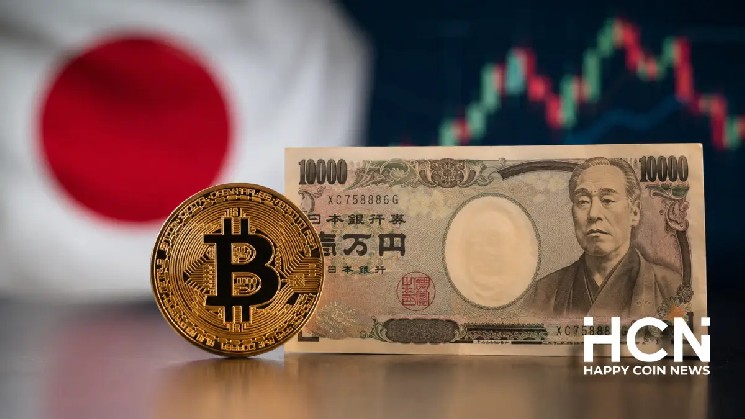
Japan's inflation accelerated for the second consecutive month, increasing expectations that the Bank of Japan (BoJ) may raise interest rates again in the coming months. Data from the Ministry of Internal Affairs and Communications showed Tokyo's core CPI rose 1.9% year-on-year in July, above market expectations of 1.8%; the "core-core CPI" excluding fresh food and energy rose 2%, and the overall CPI also increased by 2%. Takeshi Minami, chief economist at Norinchukin Research Institute, judges that inflation will stay above 2%.
The market widely expects the BoJ to keep interest rates unchanged at 1% at its meeting this Friday but may signal a continued readiness to hike.
What does this mean for global markets? It means the cost side of the Yen carry trade is rising. The severe global market turbulence in August 2024 was precisely triggered by massive unwinding of the Yen carry trade. If the deleveraging in South Korea is the "visible thread" of this episode, then Japan's rate hike expectations are the "invisible thread" hanging overhead—it may not determine whether a rebound occurs, but it will likely determine how far the rebound can go.
5. What to Watch Next?
Microsoft's earnings answered the question "Can AI capital expenditure be sustained?" But another question remains to be verified: As the supply cycle progresses and with the listing of China's CXMT, can the memory industry's high profitability be maintained?
To gauge the substance of this rebound, watch the following in the coming period:
- Can memory stocks hold their gains, and will the Korean market avoid another surge-and-fall pattern?
- Will prices and orders for HBM, DRAM, and NAND continue to be revised upward?
- Three key time windows—the Future Memory Conference on August 4th, the progress of SK Hynix's HBM4 volume ramp in Q3, and Nvidia's earnings report on August 26th.
6. Final Thoughts
To summarize the entire situation: A policy bottom is in place, deleveraging is in its late stages, and the AI demand narrative has been reaffirmed by Microsoft. However, the unresolved expectations for Japanese rate hikes and the unverified memory supply cycle mean it's far too early to declare "the bull is back."
For investors, there are two major pitfalls to avoid in such a market: first, panic selling at the bottom; second, chasing the rally after a violent rebound. What remains truly useful is discipline—don't go all-in at the start of a rebound, wait for confirming signals before deploying capital in phases, and use position sizing instead of trying to predict exact price points.
This is also the investment philosophy consistently emphasized by BIT Securities. At this juncture, investors may also consider using BIT Securities' options functionality to hedge their underlying assets, preparing for the upcoming market movements while waiting for the market to provide clearer answers.
Disclaimer:
This article is contributed by an external author. The content represents the personal views of the author only and does not represent the position, views, or opinions of BIT or its affiliates. The information herein is for reference only and does not constitute any investment advice, investment solicitation, recommendation for securities or financial products, nor should it be the basis for any investment decision. Financial markets involve risks, and the prices of related assets may experience significant volatility. Investors should make independent investment decisions based on their own circumstances and bear the corresponding risks.