Some Issues Are Better Discussed in Person: Summer of Ethereum 2026 Is Here!

marsbitОпубликовано 2026-05-15Обновлено 2026-05-15

Введение

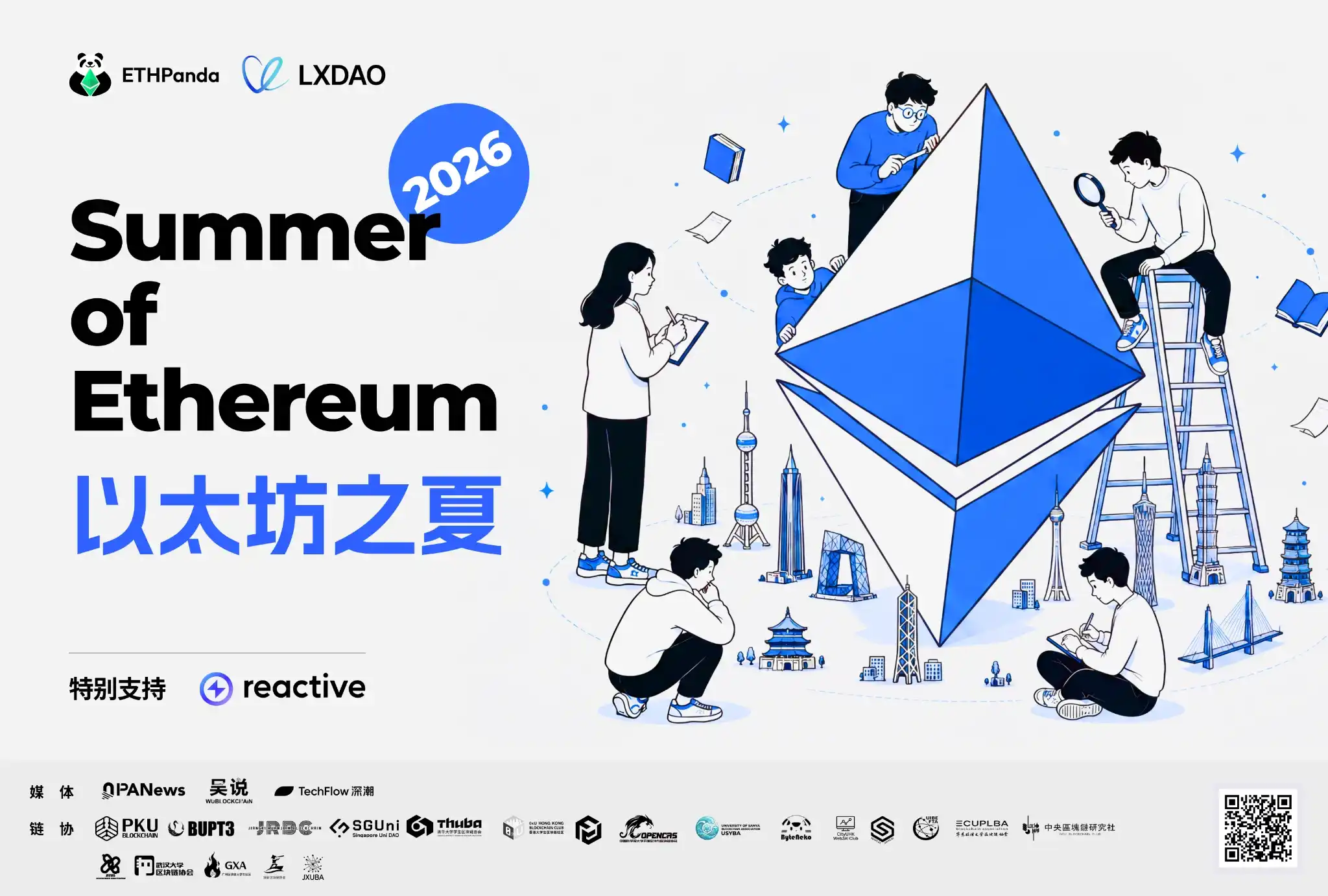
Summer of Ethereum 2026 is returning, focused on bringing crucial discussions about Ethereum's long-term development to in-person meetups across multiple cities. Organized by LXDAO and ETHPanda, the initiative aims to move beyond online discourse and event scheduling by addressing Ethereum's systemic challenges through real-world connections. The core question this year is the value of offline gatherings for the Ethereum community. While online discussions on topics like the roadmap, L2, account abstraction, and governance are abundant, they often lack depth and alignment. The goal is to bring these fragmented, complex issues—such as UX, developer tools, public goods, and local community building—into shared physical spaces to foster deeper understanding, trust, and actionable collaboration. The program will not follow a rigid format but will adapt to each city's context, potentially including talks, panels, workshops, and community gatherings. Key discussion areas include protocol evolution, Ethereum UX/account abstraction, real-world applications, developer tools, and sustainable community governance. The aim is for each event to leave behind clearer problems, stronger personal connections, and tangible follow-up actions. The call is open to developers, researchers, students, community members, local organizers, projects, and media partners. Participation is encouraged whether one brings deep expertise or just genuine curiosity. For Ethereum's ecosystem—built on principl...

Summer of Ethereum 2026 is setting sail once again. This year, LXDAO × ETHPanda aims to bring the discussion about Ethereum's long-term development to more cities on-site: not just by scheduling a series of events, but by focusing on the key challenges Ethereum is currently facing, connecting developers, researchers, community organizers, project teams, and ecosystem partners. Together, we aim to clarify the issues, connect people, and genuinely foster new collaborations.

The preparations for Summer of Ethereum 2026 have been underway for some time. The further we go, the more we realize: this isn't just about slotting a few events into the calendar, nor is it about finding a few speakers, making some posters, and opening a few registration links, and then calling it a day.

The real difficulty lies in answering a more fundamental question:

What is the actual value of offline gatherings for the Ethereum community this year?

Over the past few years, the discussion around Ethereum has been extremely dense. Roadmaps, L2, Account Abstraction, wallet UX, public goods, governance, application adoption, developer growth... every topic is important, and every topic is complex. But often, these discussions remain confined to articles, Twitter, meeting notes, online calls, and chats within small circles. There's a lot of information, but making sense of it is hard; there are many opinions, but not necessarily many people sitting down together to align.

Once an issue is identified, the next step is to bring the discussion from online back to the physical world.

It's not about creating a new event brand, nor is it about adding a few more lively gatherings to the summer calendar. More importantly, we hope to bring those long-standing, yet often fragmented discussions into real city venues: enabling developers and researchers to meet, letting project teams hear community feedback, helping local organizers find each other, and giving more people who haven't yet entered the core discussions a chance to start with a real-life encounter, to genuinely get closer to what's happening in Ethereum.

Why Focus on "Ethereum's Key Challenges"?

Because Ethereum has reached a stage where it cannot advance solely on singular narratives.

Focusing only on technology easily overlooks real users and application scenarios; focusing only on applications underestimates the importance of protocol, infrastructure, and security boundaries; focusing only on growth pushes issues like public goods, governance, and long-term collaboration to the back burner.

These issues aren't separate items on a checklist; they are systemic challenges intertwined. Wallet UX affects application adoption; L2 and cross-chain UX affect user retention; developer tools affect the entry of new builders; public goods and governance affect whether the ecosystem can sustain open collaboration in the long term.

Therefore, this year's Summer of Ethereum aims to use "Ethereum's Key Challenges" as the central theme. It's not a pre-written, standard answer, but a way to ask questions together:

What are the most pressing issues worth serious discussion for Ethereum's next phase? Which challenges have been repeatedly mentioned but not thoroughly examined? What real experiences, counter-examples, and constructive pathways should be heard by more people?

What's the Most Evident Feeling During Preparation?

The most evident feeling is: the Ethereum community isn't short of ideas or people who care about it, but these people are often scattered across different cities, projects, communities, and contexts.

Some are more concerned with protocol and roadmaps; some care more about wallets, accounts, and UX; some work daily on developer tools; some organize the first Web3 sharing sessions in universities; some deal with very specific user problems in projects; and some are persistently investing effort into public goods, community governance, and local organizational capacity.

If these people only "see" each other online, the connection is superficial. Real change often happens after a specific in-person meeting: a problem gets re-interpreted, a collaboration gets initiated on the spot, a local community realizes they are not an isolated island, a new builder discovers that it's not just about grand narratives but also about tangible work they can get involved in.

These connections might not be as eye-catching as a major launch event, but they are arguably closer to the way the Ethereum community has always grown: slower, more distributed, relying on the continuous building of trust between people.
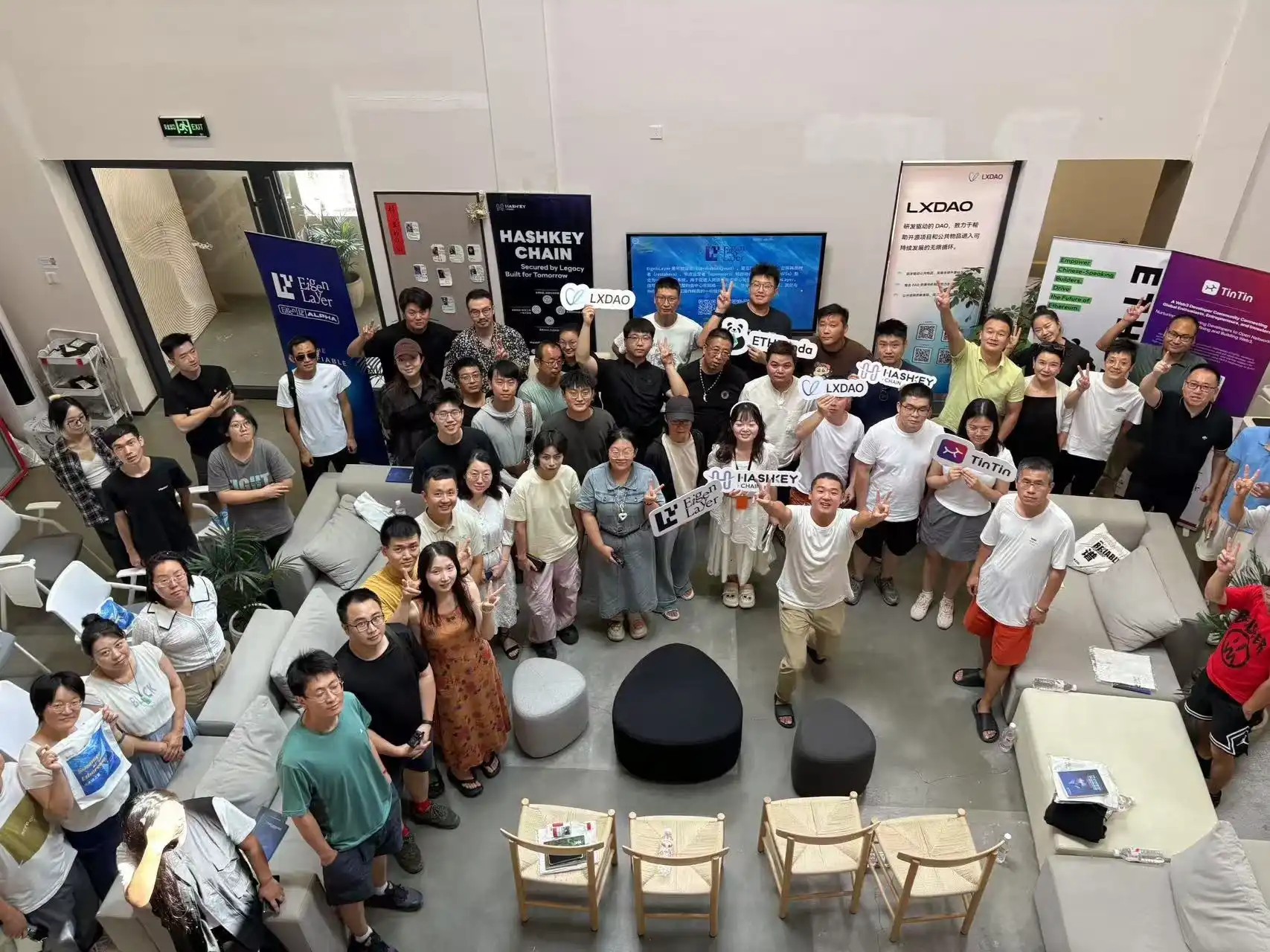
Summer of Ethereum 2025 · Xi'an Station
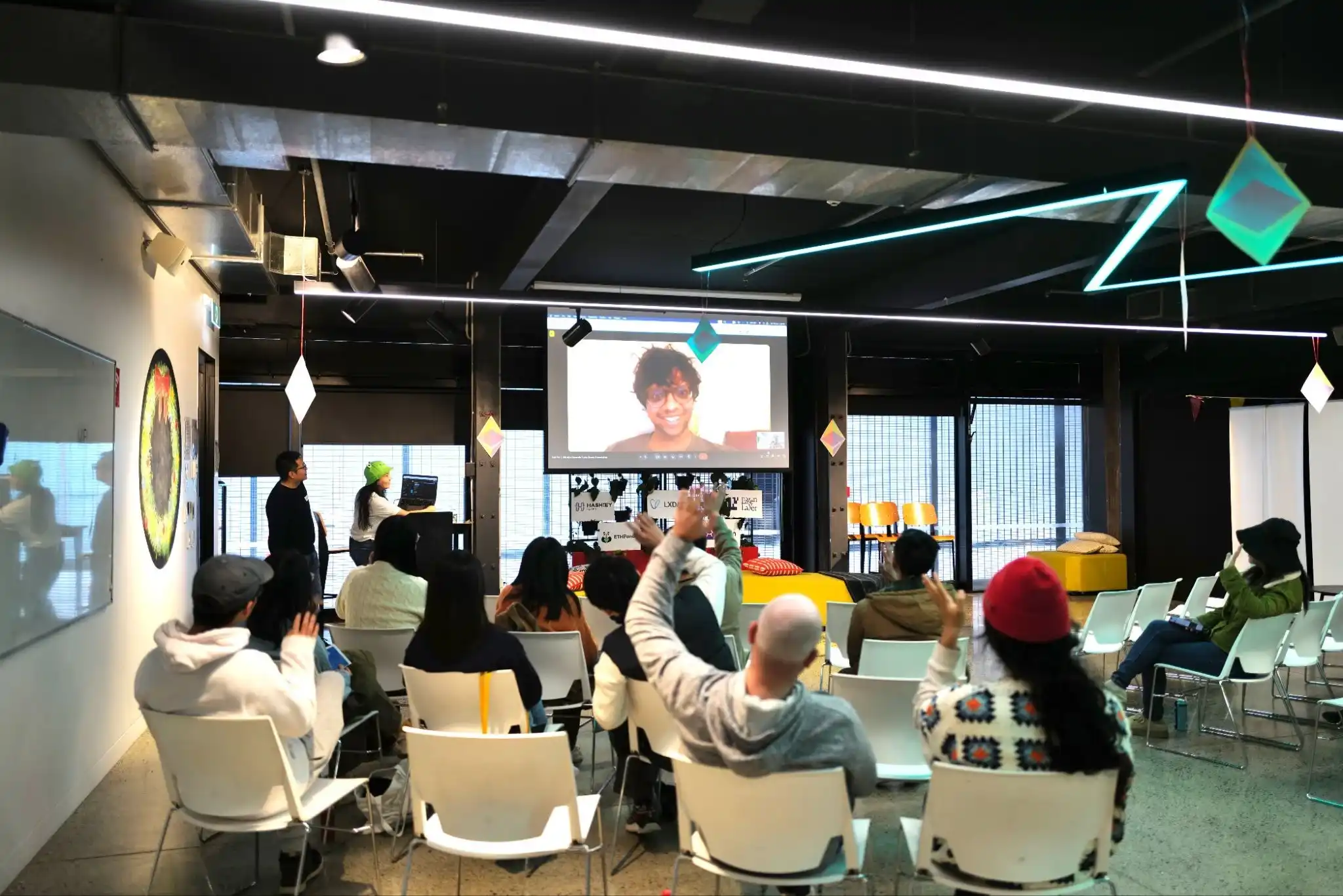
Summer of Ethereum 2025 · Auckland Station

What Will Happen This Year?

Summer of Ethereum 2026 will revolve around multi-city offline events. The event formats in different cities won't necessarily be identical; they could be keynote talks, panels, workshops, local community gatherings, project showcases, developer exchanges, or smaller, more in-depth closed-door discussions.

We hope each event doesn't simply end once it's "done," but leaves behind a few things: clearer problems, more specific connections between people, more credible resource links, and collaborative leads that can be pursued further.

Potential directions currently include:

  • Protocol Evolution & Roadmap: How these long-term topics can be genuinely understood by more builders;

  • Ethereum UX: How wallet, Gas, signing, account recovery, and cross-L2 experiences can become more usable;

  • Account Abstraction, Smart Wallets & Security Boundaries: How to find balance between convenience, permissions, and trust;

  • Stablecoins, Payments & Real-World Applications: How the on-chain world enters more concrete usage scenarios;

  • Developer Tools & Application Building: How to lower the barrier to entry, enabling more people to build sustainably;

  • Public Goods, Governance & Community Collaboration: How an open ecosystem develops longer-term organizational capacity;

  • Cities & Local Community Networks: How builders in different places can be connected, supported, and seen.

These directions won't be treated as a fixed agenda to be covered all at once. They are more like a gradually unfolding map of issues: each city, with its own resources, context, and community foundation, can find the most suitable entry point for local engagement.

Who Is Welcome to Participate?

If you are a developer, researcher, student, community member, or simply someone who has been following Ethereum, you're welcome to attend. Coming with questions is great; there's no need to start from a position of being an "expert." Many truly valuable discussions begin with a simple yet concrete question.

If you are a city lead or local organizer, welcome to bring Summer of Ethereum to your city. You might know local developers, can connect with university clubs, know suitable venues, or simply feel strongly about bringing Ethereum builders in your city together for a meetup. These are all very important starting points.

🐼 Local organizers are welcome to apply to become city co-organizers 👉 https://tally.so/r/pb01Mq

If you are a project team, ecosystem partner, or co-building partner, you're also welcome to participate. We hope collaboration goes beyond being just a name on a logo wall, but involves bringing real issues, technical practices, developer resources, workshops, case studies, and problems to the events.

If you are a media, content, venue, or resource partner, your help is also welcome. Good discussions, if not recorded, organized, and disseminated, easily remain confined to a single evening. We hope these on-site interactions can ultimately be distilled into more reusable content, relationships, and follow-up collaborations.

Why Is This Non-Negotiable?

Because the most important aspect of Ethereum has never been just a technology stack. Behind it, there have always been people who believe that open networks, public goods, verifiable rules, long-term collaboration, and a global community are worth serious building.

But this belief cannot forever stay confined to screens.

When discussions only happen online, people are easily swept along by information flow; when problems only exist in documents, they easily become the specialized language of a few. However, for Ethereum to move forward, it needs more real people to enter the discussions, understand the issues, form judgments, find their place, and then start taking action.

This is also that kind of "non-negotiable" support: not because offline events are inherently important, but because certain trust, judgment, and collaboration only begin to emerge when people truly meet people, and when problems truly land in a physical setting.

It might not be the most grandiose answer, but it can be a very concrete beginning: gathering a group of people who care about Ethereum in one city; putting different perspectives around the same table regarding a real challenge; enabling previously scattered people to have a follow-up because of one meeting.

If this summer, more cities establish new connections because of Summer of Ethereum; more builders enter longer-term collaborations because of an on-site discussion; more key issues transform from abstract concepts into actionable leads that can be pursued further, then this endeavor will have been worthwhile.

All subsequent city events, registration links, and schedule updates will be synchronized on the Luma Calendar. Welcome to follow and subscribe to get the latest event information as soon as possible: https://luma.com/SummerOfEthereum

Welcome to join Summer of Ethereum 2026.

This summer, let's bring the discussion about Ethereum's future back to the real world.

Связанные с этим вопросы

QWhat is the core purpose of the Ethereum Summer 2026 initiative, and why is an in-person format emphasized?

AThe core purpose is to move critical discussions about Ethereum's long-term development from online platforms to in-person settings across multiple cities. It's emphasized because the organizers believe that deep trust, nuanced judgment, and real collaboration on complex, systemic challenges (like UX, L2 interoperability, public goods, and governance) are best forged when people meet face-to-face, allowing for alignment and the start of new, distributed collaborations.

QWhat are the 'Ethereum Key Challenges' mentioned as the thematic focus for 2026, and why are they described as 'systemic'?

AThe 'Ethereum Key Challenges' include protocol evolution, Ethereum UX (wallets, gas, signatures), account abstraction, real-world applications (stablecoins, payments), developer tools, public goods/governance, and local community building. They are described as systemic because they are deeply interconnected, not isolated issues. For example, wallet and L2 UX directly impact user adoption and retention, while developer tools and public goods funding affect the ecosystem's long-term sustainability and ability to attract new builders.

QAccording to the article, what was a key insight during the preparation for Ethereum Summer 2026 regarding the community's state?

AA key insight was that while the Ethereum community is full of ideas and dedicated individuals, these people are often dispersed across different cities, projects, and circles (e.g., protocol researchers, UX developers, local organizers). Online visibility creates only shallow connections. Real change and trust-building happen more effectively after specific in-person meetings, which can lead to clarified problems, spontaneous collaborations, and a sense of community for local builders.

QWho is invited to participate in Ethereum Summer 2026, and what roles are they expected to play?

AMultiple groups are invited: 1) Attendees: Developers, researchers, students, community members, and long-time observers are welcome to join discussions. 2) City Organizers/Local Hosts: Individuals or groups who can bring the event to their city by connecting local networks and securing venues. 3) Project Partners: Projects and ecosystem partners are encouraged to contribute real-world issues, technical workshops, and case studies. 4) Resource Partners: Media, content creators, and venue providers are needed to help document, amplify, and sustain the discussions and connections formed.

QWhat does the article suggest is the 'non-negotiable' reason for holding these in-person gatherings, beyond just organizing events?

AThe 'non-negotiable' reason is that the fundamental beliefs underpinning Ethereum—in open networks, public goods, verifiable rules, and long-term global collaboration—cannot remain confined to screens. For Ethereum to progress, more people need to genuinely understand its challenges, form their own judgments, and find their role in the ecosystem. This level of engagement, trust, and actionable insight is something the organizers believe truly begins when 'people meet people and problems land on the ground' in real-life settings.

Похожее

U.S. Government Bans Foreign Nationals from Using Fable 5, Anthropic Issues Rebuttal

U.S. Government Bans Foreign Access to Fable 5, Anthropic Issues Rebuttal On June 12th, the U.S. government ordered AI company Anthropic to immediately suspend all foreign access—including foreign nationals within the U.S. and Anthropic's own foreign employees—to its newly released Fable 5 and Mythos 5 AI models, citing national security concerns. This forced Anthropic to temporarily disable access to both models for all users globally, as it cannot technically differentiate user nationality at scale. The models, released just three days prior, represent Anthropic's highest public capability tier. Fable 5 is the first publicly available model from the advanced "Mythos" family, while Mythos 5 is a less-restricted version for approved cybersecurity and critical infrastructure partners. The government's directive was reportedly triggered by claims from another company that it could "jailbreak" Mythos 5, raising alarm within the Trump administration. Anthropic, in a detailed public statement, strongly challenged this rationale. The company argues the demonstrated "jailbreak" is a narrow, non-generalized technique that merely involves identifying minor, known software vulnerabilities—a capability common to other publicly available models like OpenAI's GPT-5.5 and routinely used by cybersecurity defenders. Anthropic stated it has complied with the order but disagrees with the government's standard, warning that applying it industry-wide would halt all new frontier model deployments. The company criticized the lack of a transparent, fact-based legal process and expressed confidence the situation stems from a misunderstanding. It is working to restore access and will release more technical details within 24 hours. Other Anthropic models remain unaffected.

链捕手15 мин. назад

U.S. Government Bans Foreign Nationals from Using Fable 5, Anthropic Issues Rebuttal

链捕手15 мин. назад

The Revelation from the Raydium Theft Incident: New DeFi Vulnerabilities Lurking in Forgotten Old Contracts

**Raydium Exploit Reveals DeFi's Hidden Risk: Forgotten "Zombie" Contracts** A recent attack on Raydium's deprecated V3 AMM pools resulted in a loss of approximately $1.34 million. The hacker exploited pools that were no longer supported by Raydium's current UI or SDK but remained fully functional and accessible on-chain. This incident highlights a critical, often overlooked category of risk in DeFi: inactive or legacy smart contracts that projects fail to properly decommission. Since March 2025, there have been at least 8 publicly reported attacks targeting such abandoned contracts, with total losses around $10.8 million. Including older pools and deprecated features, the count rises to 10 incidents with roughly $22.5 million in losses. These "zombie contracts" represent a lifecycle management failure rather than a code vulnerability, yet they are typically misclassified under general "code bug" categories in security reports, masking the true scale of the problem. The root cause is that projects often merely document a contract as "deprecated" without taking essential technical steps to secure it: withdrawing remaining assets, disabling external call functions, and implementing ongoing monitoring. These forgotten, under-monitored components become prime targets for attackers. To address this, the industry needs to recognize "zombie contracts" as a distinct risk category and establish standardized decommissioning protocols. Essential steps should include: 1) a formal retirement announcement, 2) removal of all front-end integrations, 3) withdrawal of locked assets, 4) disabling key contract functions, 5) ongoing security monitoring, 6) clear user communication, and 7) a post-mortem analysis. The value of a DeFi project lies not only in its current TVL but also in the security of its historical codebase, which has now become a new attack surface.

Foresight News2 ч. назад

The Revelation from the Raydium Theft Incident: New DeFi Vulnerabilities Lurking in Forgotten Old Contracts

Foresight News2 ч. назад

Robots Begin to 'Consume Data': The Hidden Production Chain from Indian Data Factories to Billion-Dollar Humanoid Robots

Robots have started to 'consume data,' driving the formation of a new industrial supply chain focused on producing training data for embodied AI. Unlike large language models, which are trained on vast internet text corpora, embodied AI models face a 'data desert' in the physical world. This has created a massive demand for first-person perspective video data (Ego Data), captured by workers wearing cameras in places like Indian garment factories. Companies like Neocambrian AI are establishing 'data factories' where workers perform standardized tasks (e.g., sorting clothes, kitchen organization) to generate thousands of hours of video. Research, such as NVIDIA's EgoScale, demonstrates that scaling this human demonstration data predictably improves robot performance, particularly for dexterous manipulation. This has validated a training path combining large-scale human data for pre-training with smaller amounts of robot-specific data for fine-tuning. The value of different data types varies significantly, forming a 'data pyramid.' The base consists of low-cost, large-scale internet and Ego Data. Higher layers include more expensive motion-capture data (e.g., from data gloves), simulation/synthetic data, and the most costly and scarce layer: real robot teleoperation data. This demand has spawned a layered ecosystem of data suppliers: low-cost data factories, motion capture and alignment specialists, robot-native teleoperation service providers, simulation data companies, and platforms aiming for data standardization. Robot companies themselves are adopting a 'layered procurement' strategy: outsourcing generic Ego Data while building in-house capabilities for robot-specific adaptation data and the critical deployment/failure data generated in real-world applications. The industry is shifting focus from hardware and basic mobility to the data pipelines required for general-purpose capability. While parallels exist to data labeling companies like Scale AI in the LLM boom, the physical complexity of robot data—involving action success ambiguity and sim-to-real gaps—requires more integrated solutions for data collection, annotation, and a continuous feedback loop. The race is on to build the data engines that will teach robots to operate reliably in the unstructured real world.

marsbit4 ч. назад

Robots Begin to 'Consume Data': The Hidden Production Chain from Indian Data Factories to Billion-Dollar Humanoid Robots

marsbit4 ч. назад

Торговля

Спот
Фьючерсы

Популярные статьи

Manyu: восходящая мем-звезда на Ethereum, готовая открыть новую эру культуры Shiba

Manyu - это мемтокен на Ethereum, который приносит децентрализованную культурную и развлекательную ценность через вирусное влияние в соцсетях и вовлечённость сообщества.

2.0k просмотров всегоОпубликовано 2025.11.27Обновлено 2025.11.27

Manyu: восходящая мем-звезда на Ethereum, готовая открыть новую эру культуры Shiba

Неделя обучения по популярным токенам 14: Glamsterdam — самое ожидаемое обновление Ethereum в 2026 году

Ordinals/Runes по-прежнему стимулируют доходы от комиссий за блоки и активность разработчиков, рассматриваются как отправная точка «нативной эмиссии активов» в сети.

1.5k просмотров всегоОпубликовано 2026.04.29Обновлено 2026.04.29

Неделя обучения по популярным токенам 14: Glamsterdam — самое ожидаемое обновление Ethereum в 2026 году

Обсуждения

Добро пожаловать в Сообщество HTX. Здесь вы сможете быть в курсе последних новостей о развитии платформы и получить доступ к профессиональной аналитической информации о рынке. Мнения пользователей о цене на ETH (ETH) представлены ниже.

活动图片