Автор: Клод, Shenchao TechFlow
Введение Shenchao: Биржевые фонды (ETF) на спотовый Solana на прошлой неделе зафиксировали чистый приток средств в размере $39,23 млн, что стало лучшим недельным результатом с февраля. Bitwise BSOL составил 92% от этого объема. Открытые позиции по фьючерсам за первые две недели мая резко выросли на 29,5%, достигнув $6,4 млрд, что свидетельствует об одновременном увеличении покупательского спроса на спотовом и деривативном рынках.
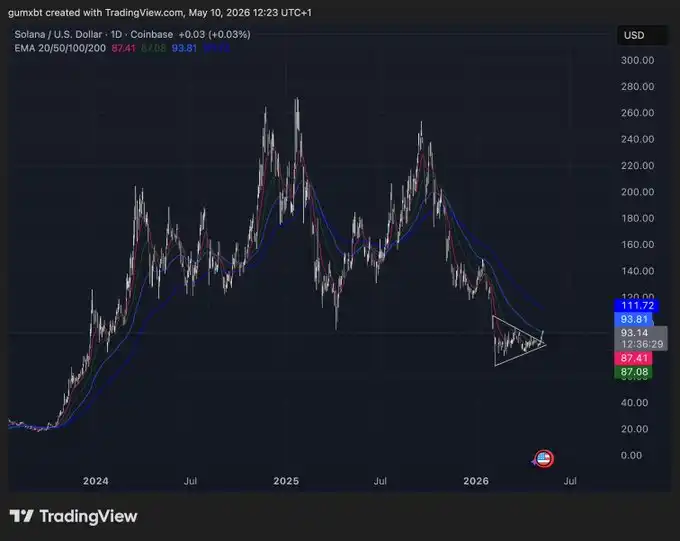
На техническом графике сформировалась модель дна Adam & Eve, целевой уровень которой указывает на $120. Между тем, крупнейшее в истории Solana обновление консенсуса Alpenglow было запущено в тестовой сети для сообщества 11 мая. Соучредитель Яковенко заявил, что развертывание в основной сети может состояться уже в следующем квартале. Фондовый, деривативный и ончейн-фундаментальный аспекты одновременно подают бычьи сигналы.
SOL переживает резонанс сигналов в нескольких измерениях.
Как сообщалось Cointelegraph 11 мая, спотовые ETF на Solana на прошлой неделе зафиксировали чистый приток в размере $39,23 млн, что стало самым сильным недельным показателем с февраля этого года. За тот же период цена SOL выросла примерно на 15% за семь дней, достигнув окрестностей $97, а открытые позиции по фьючерсам за полмесяца увеличились почти на $1,5 млрд.
Структура держателей в ончейне также незаметно меняется: трейдеры и спекулятивные капиталы постепенно уходили с рынка в течение четырехмесячной консолидации, а сильные держатели вновь берут под контроль объемы токенов. Любое увеличение объема после резкого его сжатия будет склоняться к движению цены вверх.
Сигналы из нескольких независимых источников данных загораются одновременно.
Потоки средств в ETF развернули шестимесячный нисходящий тренд, Bitwise BSOL занял 80% доли
Согласно данным SoSoValue, на прошлой неделе чистый приток средств в спотовые ETF на Solana составил $39,23 млн, из которых стейкинг-ETF BSOL от Bitwise обеспечил $36 млн, что составляет около 92%; FSOL от Fidelity привлек около $1,8 млн. С момента запуска BSOL привлек в общей сложности около $861 млн, что составляет 81% от общего совокупного притока (около $1,06 млрд) во все спотовые ETF на SOL.
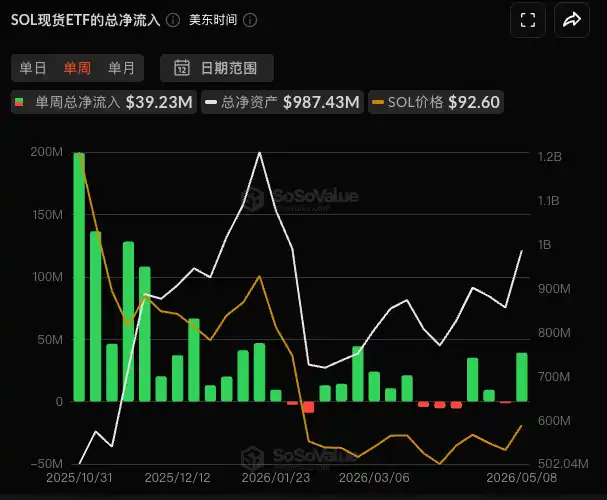
Важно понимать значение этой цифры в более долгосрочной перспективе. Согласно данным SoSoValue, процитированным BeInCrypto, ежемесячный приток средств в ETF на Solana после достижения пика в $419 млн в ноябре прошлого года снижался шесть месяцев подряд: $148 млн в декабре, $105 млн в январе, $63 млн в феврале, $45,44 млн в марте и всего $39,93 млн в апреле, что стало самым низким ежемесячным показателем с момента запуска продуктов. Приток за первые две недели мая уже приблизился к уровню за весь апрель, и если текущий темп сохранится, это станет первым разворотом шестимесячного нисходящего тренда.
На момент написания статьи совокупные чистые активы всех спотовых ETF на SOL составляли приблизительно $938 млн, доля SOL в чистых активах ETF составляла около 1,82%, а совокупный исторический чистый приток превысил $1 млрд.
Открытые позиции по фьючерсам выросли на 30% за полмесяца до $6,4 млрд, спотовый покупательский спрос также увеличился
Сигнал с деривативного рынка также очевиден.
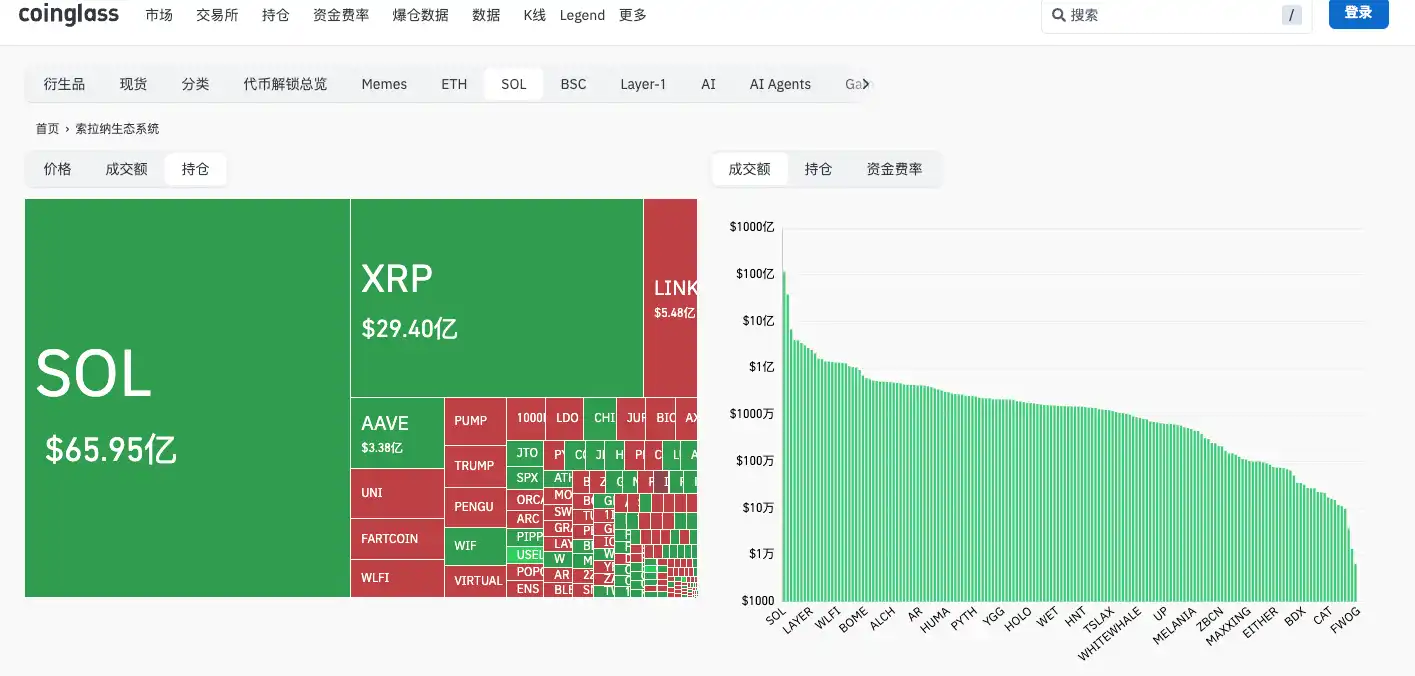
Согласно данным Coinglass, открытые позиции по фьючерсам SOL выросли с $4,94 млрд 1 мая до $6,4 млрд, увеличившись на 29,5% за полмесяца, что составляет прирост примерно в $1,5 млрд. Это не увеличение плеча в рамках существующей игры, а прямое свидетельство притока новых средств.
Покупательский спрос на спотовом рынке также этому способствует. Согласно данным velo.chart, чистая разница совокупного объема (CVD, измеряющая чистую разницу между активными покупками и продажами на рынке) на спотовом рынке за пять дней выросла с $163 млн до почти $250 млн; CVD на фьючерсном рынке неуклонно росла с 5 мая, расширившись примерно до $594 млн. Покупатели поглощают ликвидность продавцов одновременно на двух рынках: спотовом и фьючерсном.
Ставка финансирования остается на уровне около 0,065%, что указывает на то, что быки по-прежнему платят за поддержание позиций, но еще не достигли перегретого уровня. Однако после того, как SOL достиг диапазона $95–96, CVD на спотовом рынке и по объемам начали выравниваться, краткосрочный импульс несколько охладился.
Alpenglow запущен в тестовой сети, начинается обратный отсчет до крупнейшего обновления консенсуса в истории Solana
Помимо фондового и технического аспектов, фундаментальные показатели также обеспечивают катализатор.
Как сообщалось CoinDesk 11 мая, основная команда разработчиков Solana, Anza, объявила о запуске крупнейшего в истории сети обновления консенсуса Alpenglow в тестовом кластере для сообщества. Это обновление заменит существующие системы Proof-of-History и TowerBFT новыми протоколами Votor и Rotor, целью которых является сокращение времени окончательного подтверждения транзакций с нынешних примерно 12,8 секунд до около 150 миллисекунд, что ускорит процесс почти в 100 раз.
В голосовании сообщества в сентябре прошлого года 98,27% стейкеров проголосовали за это предложение при явке 52%. Соучредитель Solana Анатолий Яковенко на прошлой неделе на конференции Consensus в Майами заявил, что при успешном тестировании Alpenglow может быть запущен в основной сети уже в следующем квартале.
Тихая смена структуры держателей: распределение токенов стало здоровее после ухода «туристов»
Крипто-KOL gum в публикации на платформе X указал, что SOL прорывается после четырехмесячной консолидации, но основная причина этого прорыва не только в техническом анализе. Он считает, что SOL прорывается сейчас, а не месяц назад, потому что он является барометром аппетита к риску на всем крипторынке, и текущее движение цены отражает «возврат риска».
Что еще более важно, так это структура владения токенами. gum отмечает, что в течение четырех месяцев консолидации краткосрочные трейдеры и спекулятивные капиталы уже покинули SOL, что привело к резкому падению объемов торгов. Сильные держатели (conviction holders) вновь взяли под контроль распределение токенов. При такой структуре владения любое разумное восстановление объема торгов будет толкать импульс в восходящем направлении.
Рекомендуемая литература: Мнение KOL: Почему SOL вырастет на этом уровне?
Предупреждение о рисках: краткосрочный импульс уже показывает признаки охлаждения
Важно отметить, что покупательская активность SOL в диапазоне $95–96 уже начала ослабевать, CVD на спотовом и фьючерсном рынках выровнялись за последние 24 часа. Модель Adam & Eve все еще требует подтверждения закрытием дневной свечи. Если не удастся закрепиться выше $95, возможен откат к зоне поддержки $89–91.
Кроме того, более ранний анализ BeInCrypto указывал, что если приток средств в ETF в мае не стабилизируется или продолжит снижаться, SOL может столкнуться с давлением продаж со стороны бирж. Быстрое накопление высокого плеча также означает, что в случае отката цены каскад ликвидаций может усилить волатильность. Вакуум ликвидности после спада ажиотажа среди розничных инвесторов, вызванного мем-коинами, также является повторяющейся исторической моделью риска.
Множественные сигналы со стороны фондового, деривативного и технического анализа одновременно указывают в одном направлении, но рынку не чужды прецеденты движения в противоположную сторону, когда «сигналы выстраиваются в линию». Техническая цель в $120 четко видна, но на пути от $95 до $120 каждый шаг требует реальных денег покупателей для ее достижения.