SIREN, Another Leveraged Scam

marsbitОпубликовано 2026-03-24Обновлено 2026-03-24

Введение

The article "SIREN, Another Leveraged Scam" discusses the cryptocurrency $SIREN, which experienced a significant but suspicious price surge, briefly ranking among the top 30 cryptocurrencies by market cap. The token, initially launched during a meme-driven period, saw its liquidation volume reach $23.25 million, placing it fourth globally. The piece identifies $SIREN as a "leveraged scam," where manipulators control the majority of the supply (over 88.5% on-chain) and exploit low liquidity on exchanges like Gate.io to create extreme price volatility with minimal capital. For instance, a $100,000 trade could cause a 40% price swing. The scam involves pumping the price, luring short sellers, and then triggering liquidations through coordinated pumps and dumps. Similar patterns were observed in other tokens like $PIPPIN, $RIVER, and $BEAT. Despite denials from entities like DWF Labs, evidence suggests controlled manipulation. The article concludes that such schemes are detrimental to the market, favoring only a few informed traders while exposing most retail participants to unfair risks.

$SIREN, a token that launched during the "Broccoli" era of guessing CZ's dog's name on Binance Alpha and futures, has almost been forgotten.

But just two days ago, when the internet was abuzz with its "surge," the token's liquidation volume across the network ranked fourth, just behind Bitcoin, ETH, and XAU, with approximately $23.25 million. If it weren't for Trump's TACO boosting gold's volatility, SIREN would have been third.
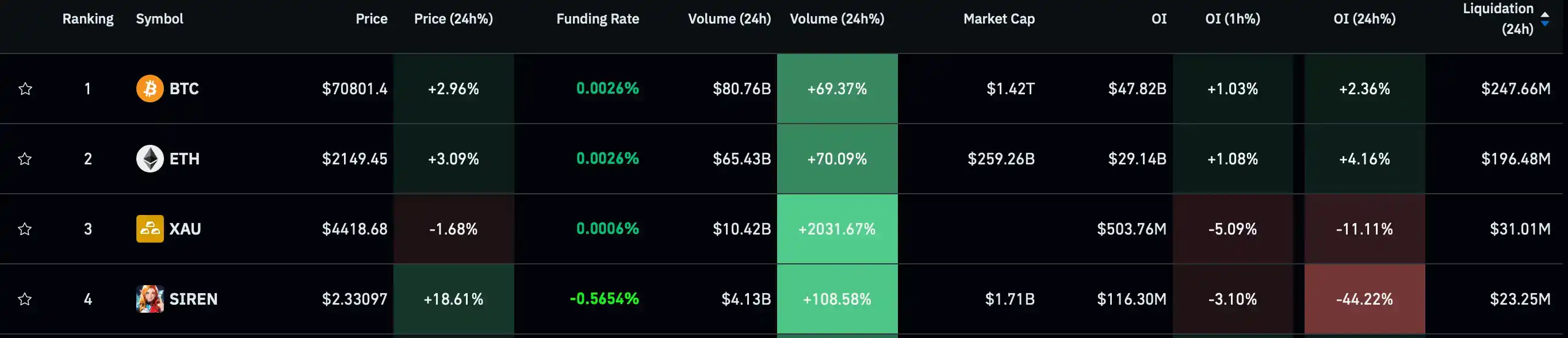
The token's price once approached $5, corresponding to a market cap of about $3.675 billion, briefly squeezing into the top 30 of the total cryptocurrency market cap rankings, surpassing established tokens like OKB and UNI.

In a sluggish market, this is not the first time we've seen such a phenomenon. $PIPPIN, $RIVER, $BEAT, $MYX... By examining the questions surrounding $SIREN, what lessons can we draw from these similar situations?

Are "Leverage Scams" Predictable?

As early as March 5, @c_ckoko posted a tweet pointing out, "$SIREN is clearly under absolute control of holdings; this is a cross-exchange method to harvest users."
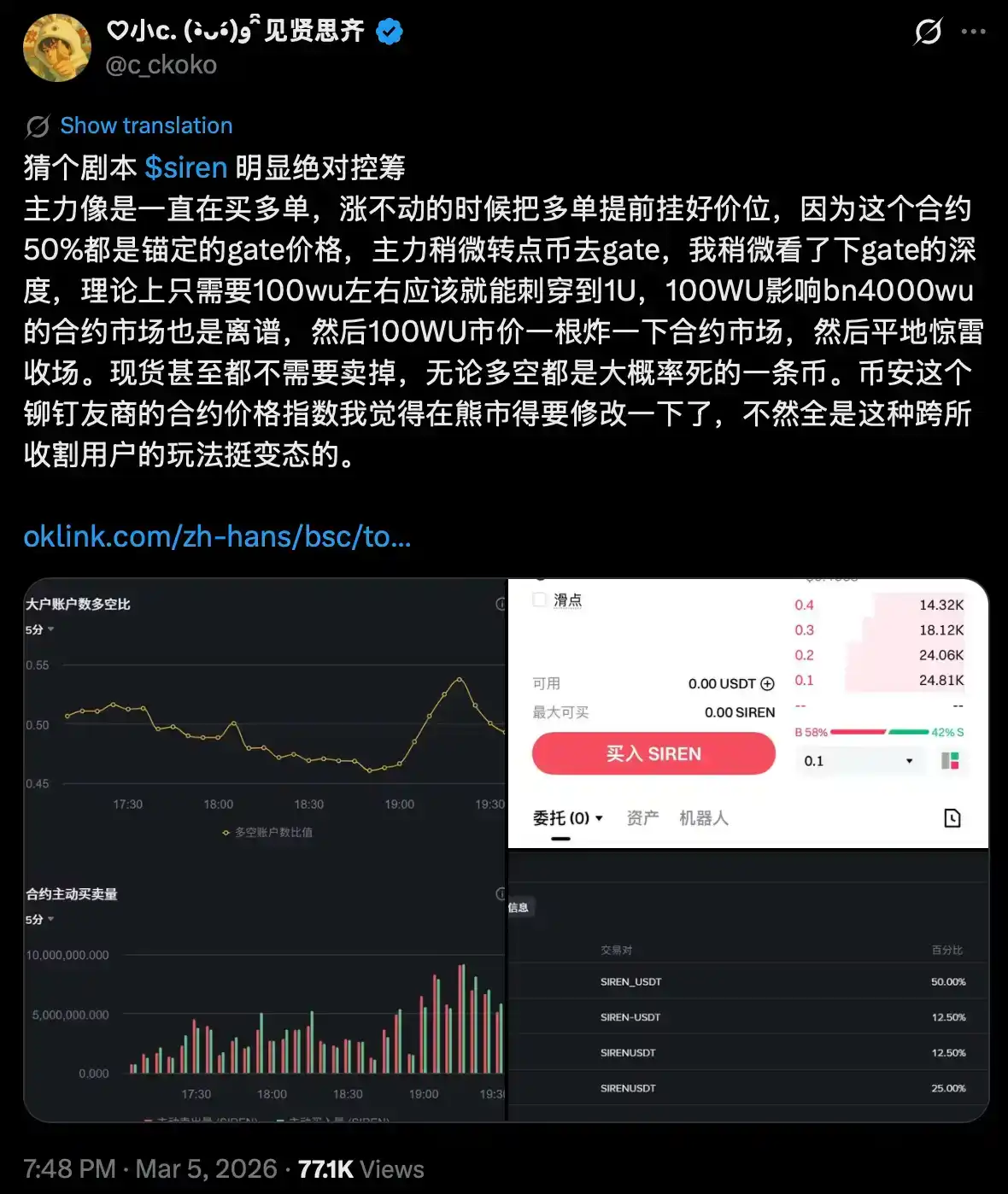
His tweet well explains how this "leverage scam" operates: the poor spot liquidity on exchanges allows for creating large fluctuations with small amounts of capital, which then affects the Binance futures price for harvesting.

Moreover, as suggested at the end of his tweet, the $SIREN futures price index was adjusted. When he posted the tweet, the weightings for the $SIREN Binance futures price index were: Gate spot 50%, Kucoin spot 12.5%, Binance futures 12.5%, and Binance Alpha 25%. After that, following two adjustments, the current futures price index weightings are: Gate spot 25%, Kucoin spot 12.5%, Binance futures 12.5%, and Binance Alpha 50%.

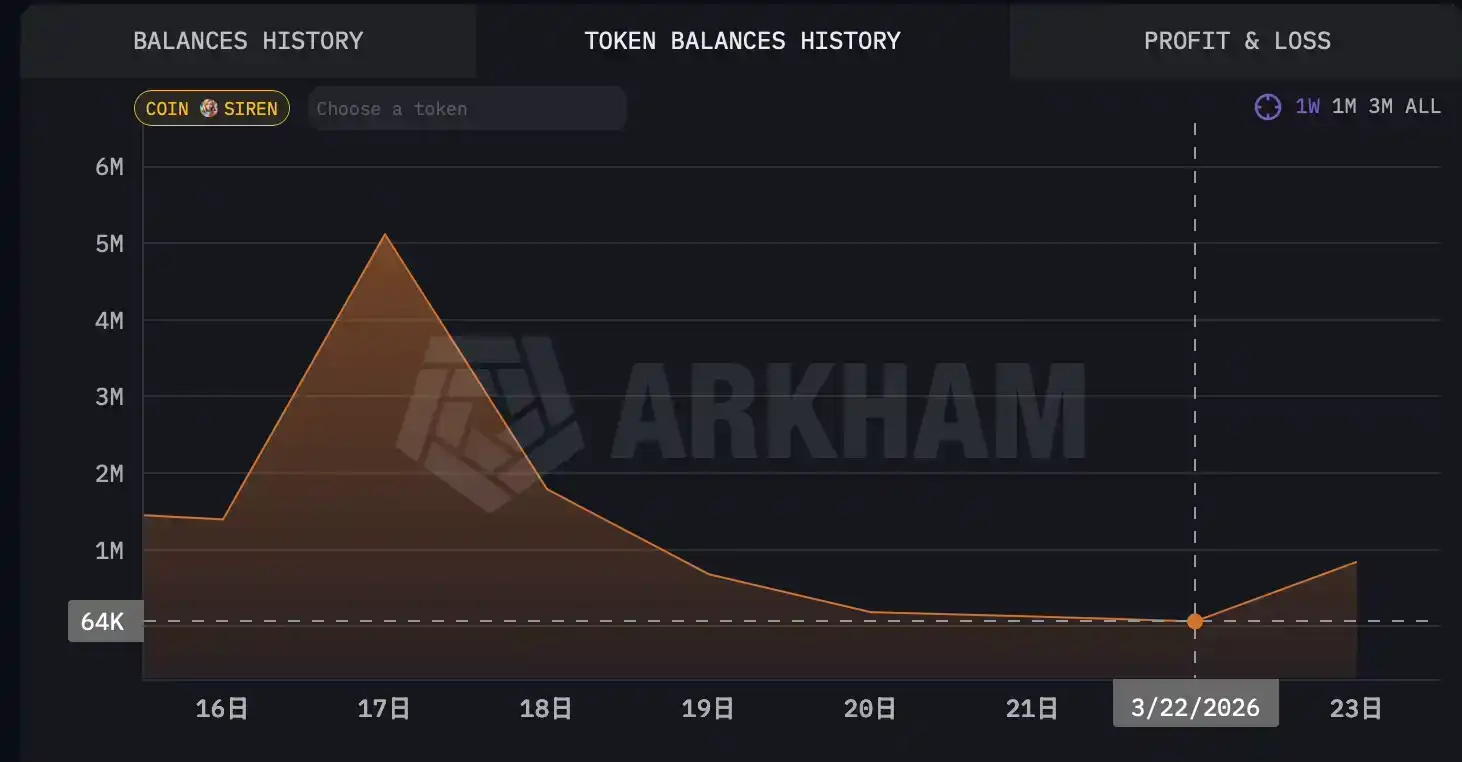
According to Arkham data, Gate's $SIREN holdings on March 22 were only 64,000 tokens.
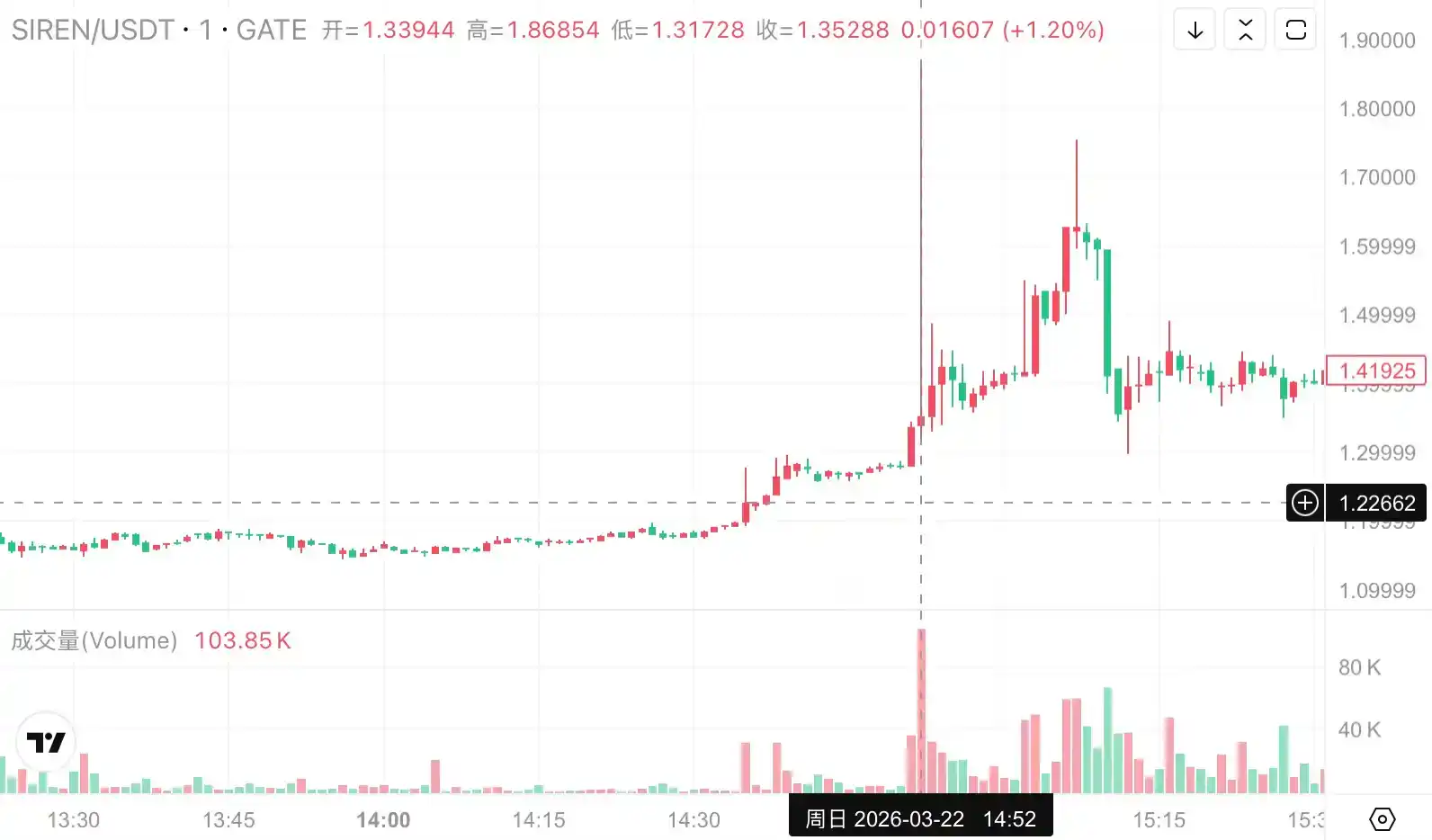
In this situation, a trading volume of $100,000 could create a minute-level candle with nearly a 40% fluctuation.
Looking at the open interest, $SIREN showed obvious abnormalities starting from February 8. The open interest, which had long hovered between $3-5 million, suddenly surged to $58.83 million.
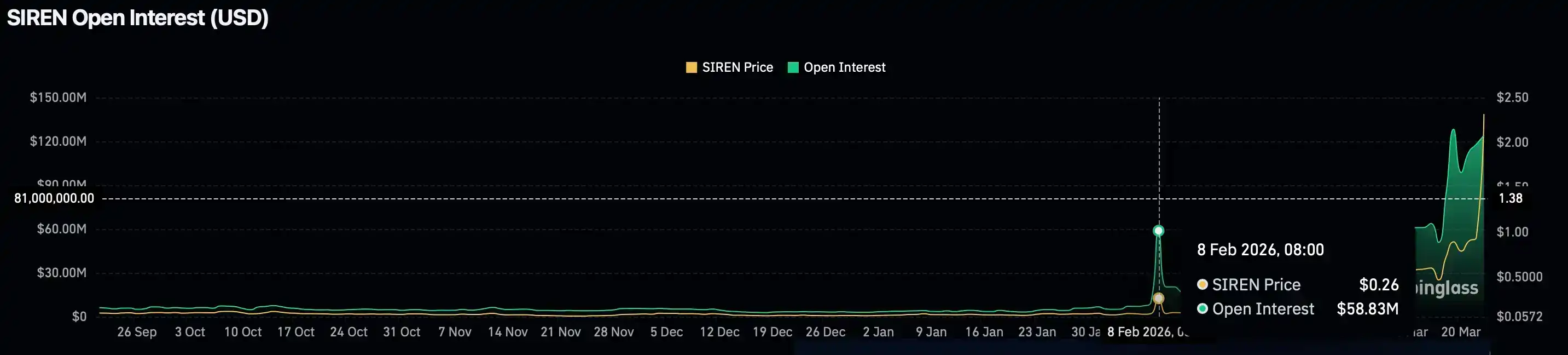
Of course, abnormal signs do not necessarily lead to a specific inevitable outcome. After all, the chips are in the hands of the controlling whales, and we cannot be sure how they will execute.

Methods

First, control of holdings: hoarding a large amount of spot tokens, also opening large long positions, pushing the price very high.

On-chain analyst Ember (@EmberCN) compiled the control situation of $SIREN and found that, just from on-chain data, the $SIREN controlled by the whale amounts to 88.5%. If including the portions deposited by the whale into CEXs, this number would be even higher.
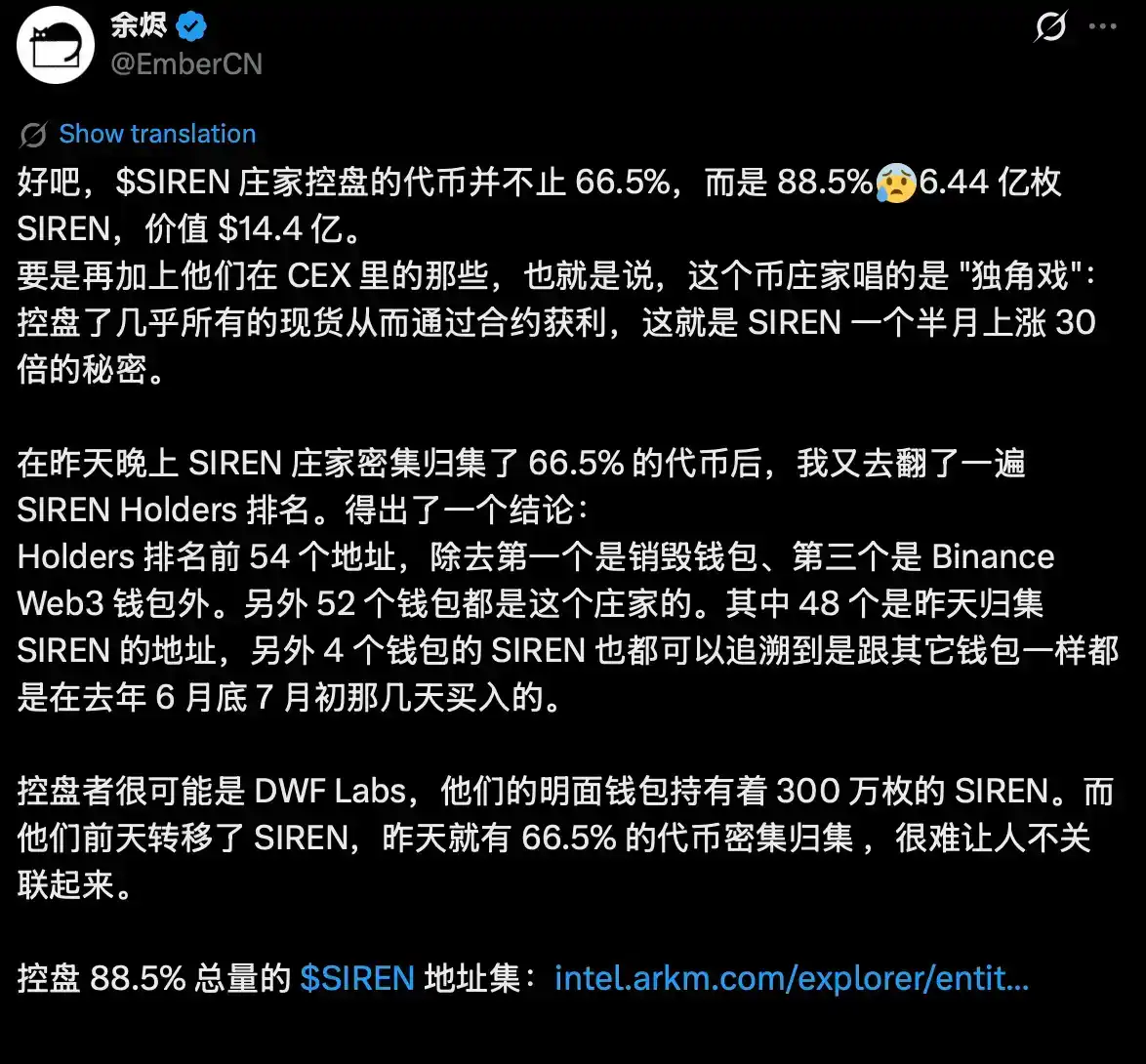
The above tweet also pointed out that DWF Labs might be the controller in this event, but DWF Labs co-founder Zac denied this claim in a group chat.

After pushing the price high, the whale lures in short sellers, laying down short positions to make retail investors think the阶段性 top is coming.
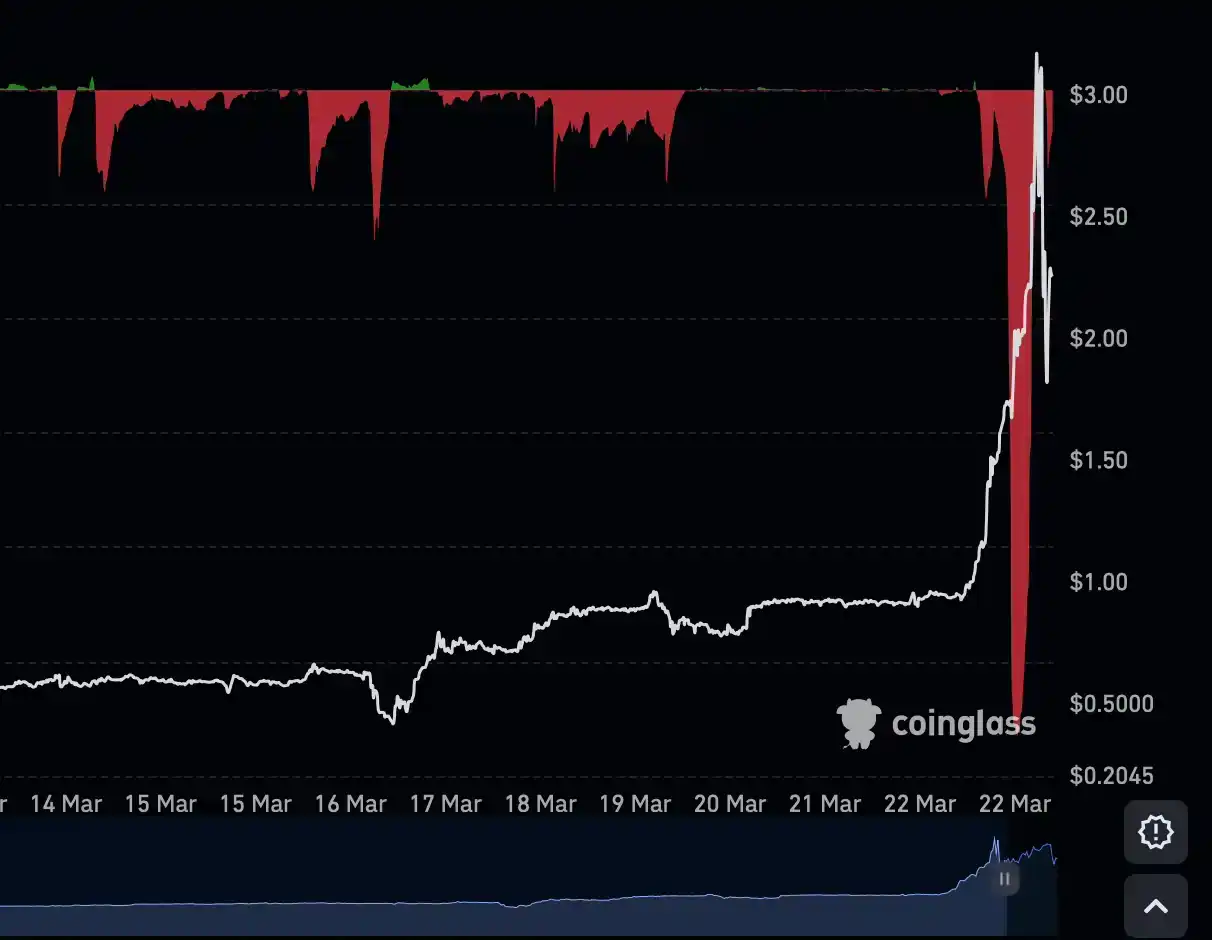
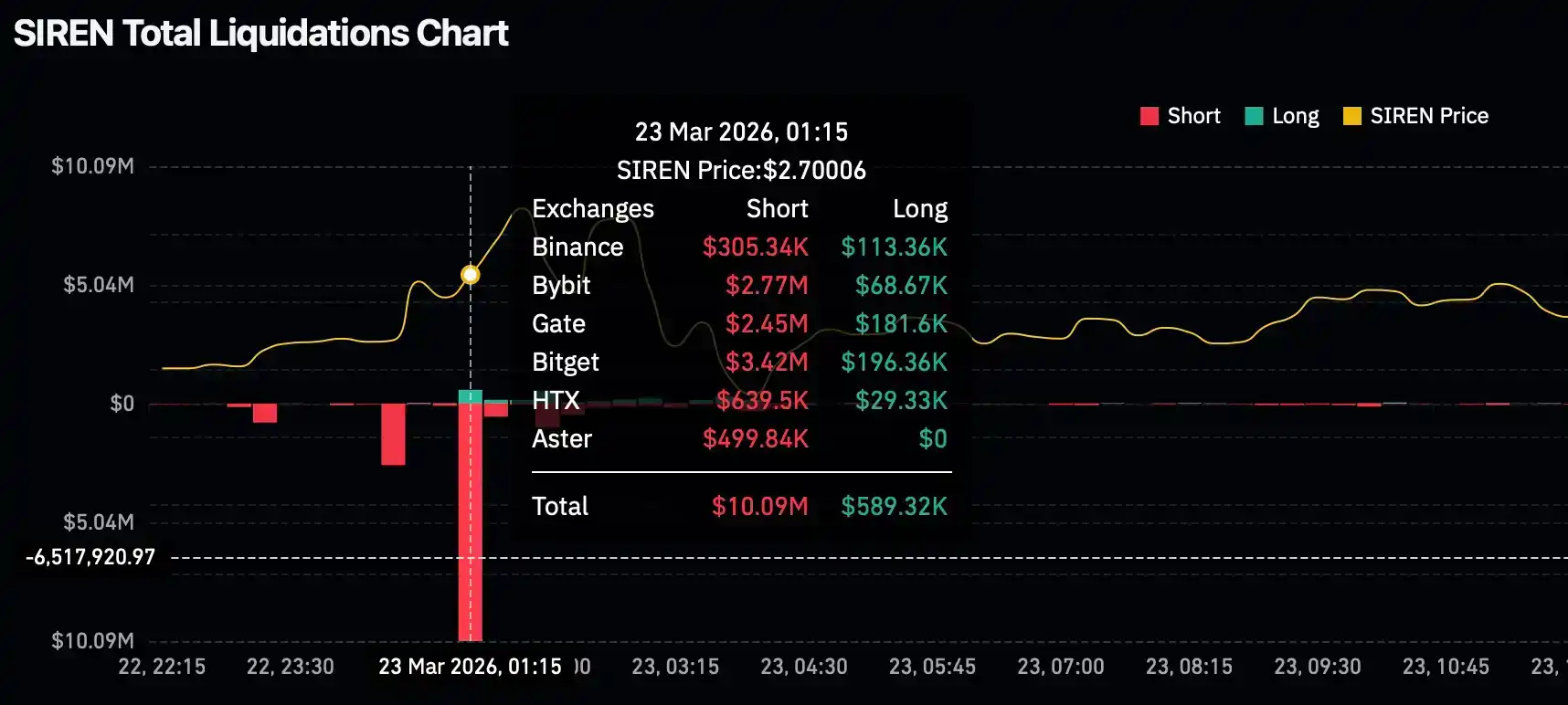
From the funding rate chart above, it can be seen that starting from March 14, $SIREN frequently had high negative funding rates. Short sellers continuously paid funding to the whale's long positions, and the whale used these "free" funds to continue pushing the price higher. In the early hours of March 23, another violent fluctuation of 78% occurred on Gate spot within 10 minutes, corresponding to a trading volume of only about $450,000. The price of $SIREN rose from $2.75 to nearly $5. This means many people were liquidated.
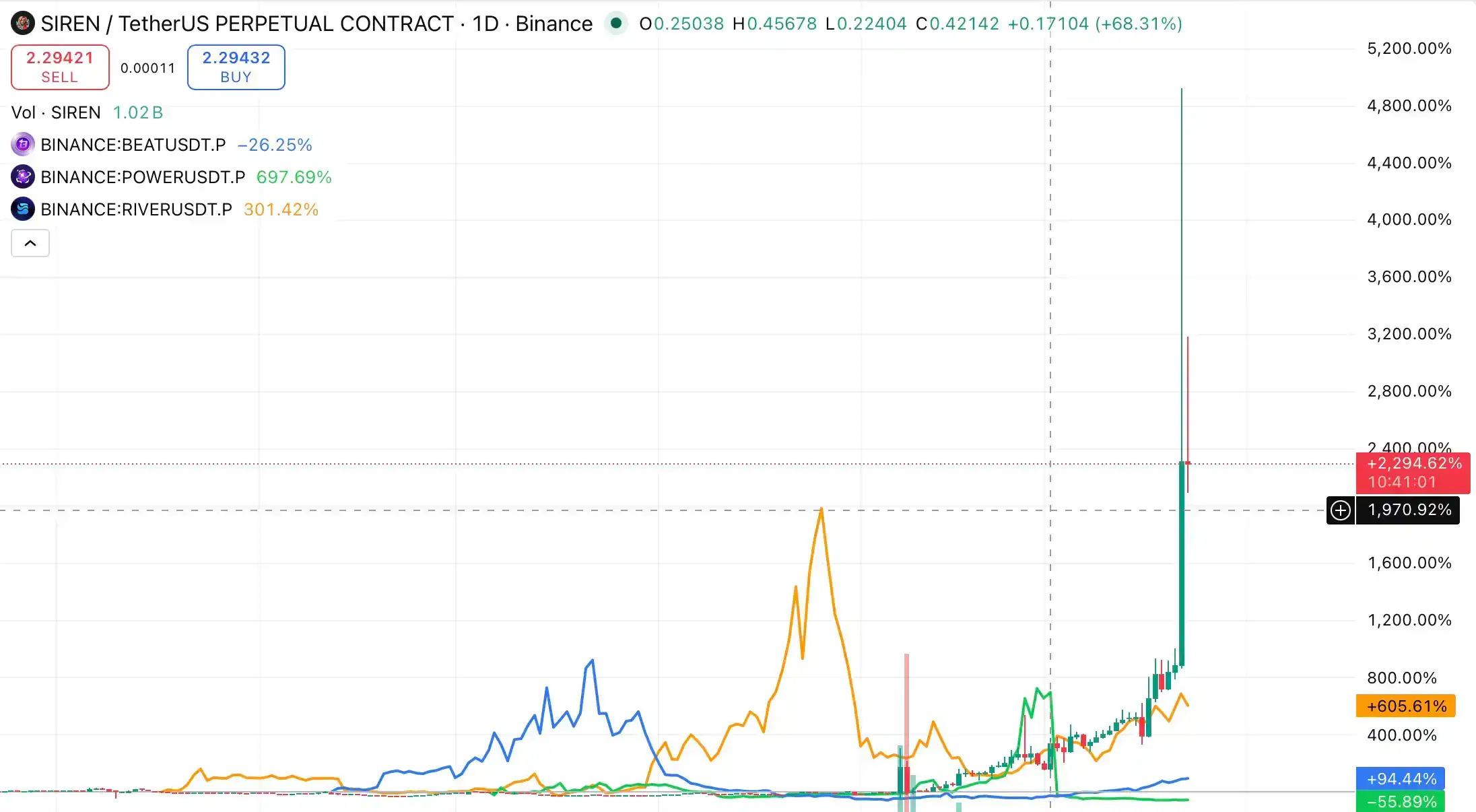
At this point, $SIREN might not be over yet. Because,刻舟求剑地来看, the whale could next close the long positions, dump the spot tokens, creating a huge bearish candle, and then close the short positions at a cost far lower than the opening price. Comparing the trends of $RIVER, $POWER, and $BEAT with $SIREN in one chart, it seems that $SIREN is still missing the final net closing.
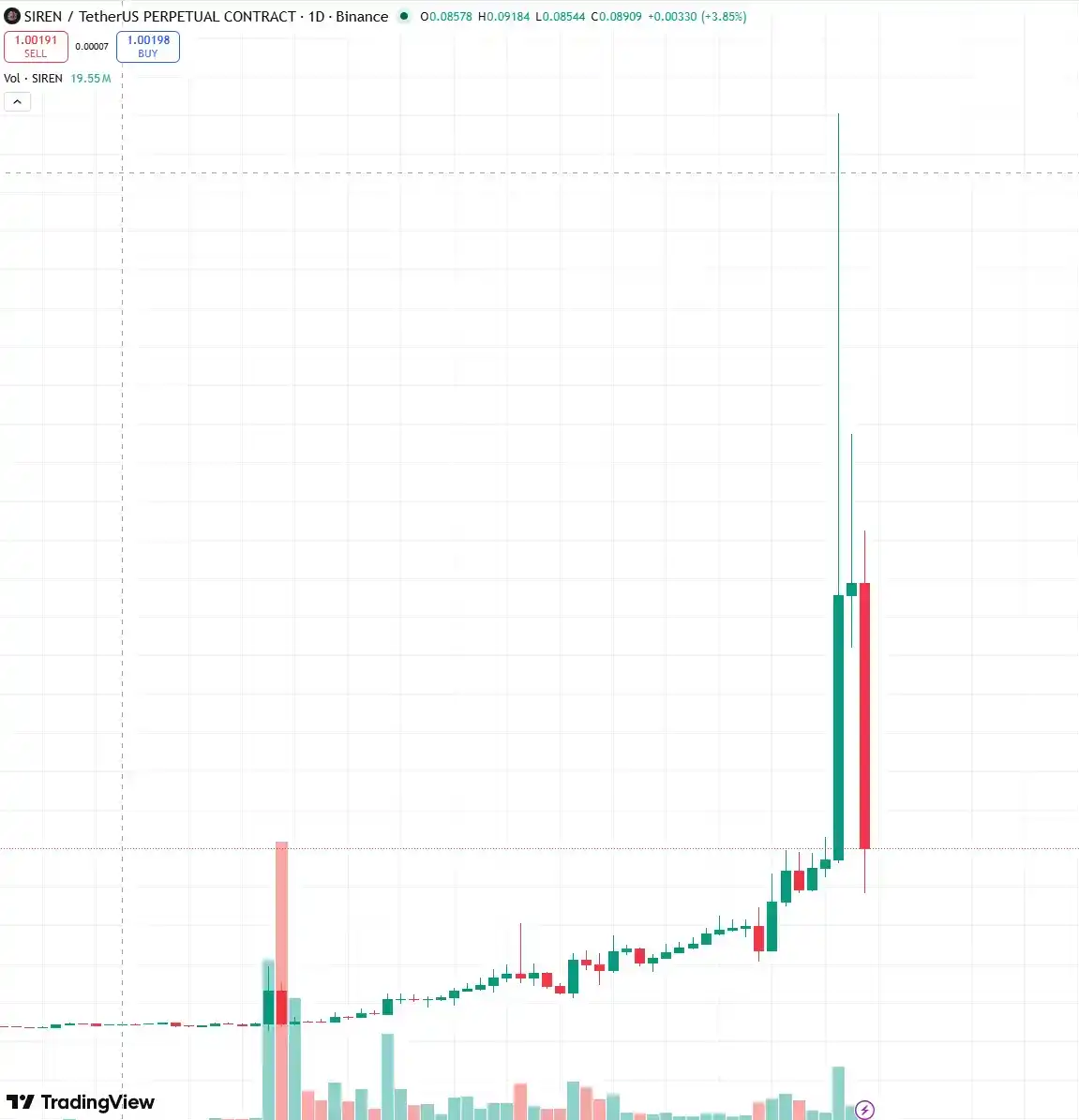
By the time this article was about to be published, the above speculation was confirmed:
Conclusion

Regardless of whether the current market is sluggish, the emergence of such harvesting schemes is always bad. Admittedly, some trading experts can get a share of the whale's soup amidst the information fog, but for the vast majority of retail investors, it is nothing more than an utterly unfair gamble.

When such a blatant harvesting scheme once appeared in the top 30 of the cryptocurrency market cap, I can only sigh.

Связанные с этим вопросы

QWhat is the main argument of the article regarding the SIREN token?

AThe article argues that SIREN was a leveraged scam, where a few entities controlled the majority of the supply and manipulated its price across exchanges to liquidate leveraged traders.

QHow did the low liquidity on exchanges like Gate contribute to the SIREN price manipulation?

AWith only 64,000 SIREN tokens on Gate, a small trade of around $100,000 could cause a price swing of nearly 40%, allowing manipulators to create extreme volatility with minimal capital.

QWhat evidence does the article provide to suggest that SIREN was heavily controlled by a few parties?

AOn-chain analysis showed that entities controlled 88.5% of the SIREN supply, and the open interest for SIREN futures surged abnormally from $3-5 million to over $58 million, indicating concentrated control.

QAccording to the article, what trading strategy did the manipulators use to profit from SIREN?

AThe manipulators accumulated a large现货 position and long futures, pushed the price up, then induced short selling from others. They used the negative funding rates paid by shorts to further fund the price pump before causing a sharp price drop to liquidate both longs and shorts.

QWhat was the significance of the adjustment to Binance's SIREN futures price index mentioned in the article?

AThe adjustment reduced the weight of Gate's spot price in the index from 50% to 25% and increased Binance Alpha's weight to 50%, making it harder to manipulate the futures price by exploiting low liquidity on a single exchange.

Похожее

Yang Ge Gary: Agent Economy and AI Sub-Microeconomics

"Agent Economy and AI Submicroeconomics" by Gary Yang discusses the evolution of AI Agent economies, written from Singapore in June 2026. The author observes a significant "civilizational generational gap" in AI development, particularly highlighted by events in Silicon Valley. The article identifies a current bottleneck in the transition from Human-to-Agent (H2A) economies to true Agent-to-Agent (A2A) ecosystems. While AI Payment protocols are rapidly emerging, many implementations remain non-AI-native, focusing on traditional human decision-making models rather than leveraging autonomous Agent decision-making. A core thesis is the inevitable formation of an **Agent Economy**, defined as a system where autonomous AI Agents create, exchange, and capitalize value independently. This requires new infrastructure: **AI Protocols**, which are the foundational rules and standards for Agent interaction. The piece explores the relationship and current gap between AI Protocols and Crypto Protocols, suggesting political and regulatory factors from traditional finance are temporarily constraining development. However, a future fusion into a mature Digital Protocol system is deemed inevitable based on first principles. The author introduces **AI Agent Submicroeconomics**, contrasting it with human economics. Key differences include higher transaction frequency, lower value per transaction, efficiency-driven (not emotion-driven) decisions, task-oriented (not consumption-oriented) behavior, and near-zero organizational and communication costs. A biological analogy is drawn, comparing an Agent to a cell, its LLM to a nucleus, and its protocol stack to a cell membrane. The rise of **AIFi** (AI Finance) is presented as a natural consequence, where value originates from AI-native activities and is subsequently tokenized and financialized. This contrasts with DeFi/TradFi, where finance is the source of value. The concept of a **Financial Chip (FinChip)**—an autonomous AI Agent integrated with a crypto smart contract—is highlighted as key infrastructure for this new economy. The conclusion emphasizes that **AI-Native** thinking represents a paradigm shift distinct from "Internet+" upgrades. It requires reasoning from first principles, focusing on energy-value shortest paths and maximum efficiency, which presents a steep learning curve and significant challenge for all participants in this rapidly evolving field.

marsbit35 мин. назад

Yang Ge Gary: Agent Economy and AI Sub-Microeconomics

marsbit35 мин. назад

ViaBTC CEO Haipo Yang: Looking Back at the Decade, Re-understanding the Value of Crypto

In "A Decade in Retrospect: Re-evaluating the Value of Crypto," ViaBTC & CoinEx CEO Haipo Yang reflects on the cryptocurrency industry's evolution since founding ViaBTC in 2016. Initially a niche interest, Crypto has fundamentally transformed key financial infrastructures like market making, trading, settlement, and issuance through open protocols, as seen with Uniswap and GMX, and enabled efficient cross-border transfers via stablecoins. While acknowledging speculation's role in fueling innovation and liquidity, Yang warns it often overshadows real demand. He distinguishes between blockchain (a trust-minimizing technology), Web3 (an application model requiring genuine utility), and Crypto assets. The latter's value derives from block space as a commodity (e.g., gas fees) and "sovereign liquidity premium" (e.g., Bitcoin's censorship resistance), with most tokens lacking such dual support. Looking ahead, Yang argues the next decade's focus should shift from "open participation" to "sustainable participation," emphasizing reliable infrastructure. He predicts consolidation towards networks with strong security and liquidity (like Bitcoin and Ethereum), and sees DeFi becoming a specialized tool rather than a mass replacement for traditional finance. Crypto will integrate into traditional finance (e.g., via Bitcoin ETFs) but may sacrifice some decentralization for mainstream adoption. Real future demand may come from AI agents and machine economies needing permissionless settlement. Ultimately, Yang believes Crypto's enduring value lies not in hype or replacing everything, but in verifiably reducing trust costs, increasing efficiency, and providing stable, transparent services across market cycles.

marsbit35 мин. назад

ViaBTC CEO Haipo Yang: Looking Back at the Decade, Re-understanding the Value of Crypto

marsbit35 мин. назад

Торговля

Спот
Фьючерсы

Популярные статьи

Как купить S

Добро пожаловать на HTX.com! Мы сделали приобретение Sonic (S) простым и удобным. Следуйте нашему пошаговому руководству и отправляйтесь в свое крипто-путешествие.Шаг 1: Создайте аккаунт на HTXИспользуйте свой адрес электронной почты или номер телефона, чтобы зарегистрироваться и бесплатно создать аккаунт на HTX. Пройдите удобную регистрацию и откройте для себя весь функционал.Создать аккаунтШаг 2: Перейдите в Купить криптовалюту и выберите свой способ оплатыКредитная/Дебетовая Карта: Используйте свою карту Visa или Mastercard для мгновенной покупки Sonic (S).Баланс: Используйте средства с баланса вашего аккаунта HTX для простой торговли.Третьи Лица: Мы добавили популярные способы оплаты, такие как Google Pay и Apple Pay, для повышения удобства.P2P: Торгуйте напрямую с другими пользователями на HTX.Внебиржевая Торговля (OTC): Мы предлагаем индивидуальные услуги и конкурентоспособные обменные курсы для трейдеров.Шаг 3: Хранение Sonic (S)После приобретения вами Sonic (S) храните их в своем аккаунте на HTX. В качестве альтернативы вы можете отправить их куда-либо с помощью перевода в блокчейне или использовать для торговли с другими криптовалютами.Шаг 4: Торговля Sonic (S)С легкостью торгуйте Sonic (S) на спотовом рынке HTX. Просто зайдите в свой аккаунт, выберите торговую пару, совершайте сделки и следите за ними в режиме реального времени. Мы предлагаем удобный интерфейс как для начинающих, так и для опытных трейдеров.

1.4k просмотров всегоОпубликовано 2025.01.15Обновлено 2026.06.02

Как купить S

Sonic: Обновления под руководством Андре Кронье – новая звезда Layer-1 на фоне спада рынка

Он решает проблемы масштабируемости, совместимости между блокчейнами и стимулов для разработчиков с помощью технологических инноваций.

2.3k просмотров всегоОпубликовано 2025.04.09Обновлено 2025.04.09

Sonic: Обновления под руководством Андре Кронье – новая звезда Layer-1 на фоне спада рынка

HTX Learn: Пройдите обучение по "Sonic" и разделите 1000 USDT

HTX Learn — ваш проводник в мир перспективных проектов, и мы запускаем специальное мероприятие "Учитесь и Зарабатывайте", посвящённое этим проектам. Наше новое направление .

1.8k просмотров всегоОпубликовано 2025.04.10Обновлено 2025.04.10

HTX Learn: Пройдите обучение по "Sonic" и разделите 1000 USDT

Обсуждения

Добро пожаловать в Сообщество HTX. Здесь вы сможете быть в курсе последних новостей о развитии платформы и получить доступ к профессиональной аналитической информации о рынке. Мнения пользователей о цене на S (S) представлены ниже.

活动图片