Shorting the Prediction Market

marsbitОпубликовано 2025-12-08Обновлено 2025-12-08

Введение

The author critiques the growing influence of prediction markets, arguing they distort truth and social reality rather than reflect it. While proponents claim these markets, fueled by real-money bets, offer a more accurate alternative to traditional polls and expert opinions, the author contends they operate like a Keynesian “beauty contest,” where participants bet on what others will think rather than on objective truth. This dynamic, combined with a lack of natural hedgers, creates a system dominated by insiders and doomed to collapse once “dumb money” is exhausted. The piece highlights how large bets can manipulate outcomes by influencing media coverage and public perception, turning probability signals into self-fulfilling prophecies. This undermines social stability, as the markets incentivize disruption rather than security. The author posits that society is reaching a peak in “gambling culture” and predicts a eventual rejection of hyper-financialization in favor of real-world experiences and deeper human connections. Ultimately, to “short” prediction markets is to go long on human agency and life itself—choosing to step away from the virtual casino and back into the sunlight.

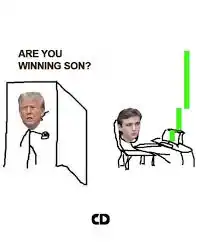
I am not a gambler, nor do I understand the thrill of watching candlestick charts with a racing heart. But when CNN and CNBC announced that they were integrating digital odds from prediction markets into their news broadcasts, I felt as if we were being played by a new kind of "truth."

Crypto bros are evangelizing: traditional polls will be replaced, experts are the high priests of the old era, and only the odds built with real money can reflect the wisdom of the crowd and the truth of reality. However, the trading logic fostered by prediction markets aligns with the "beauty contest" described by Keynes—you no longer care about who is the most beautiful, you only care about "who others think is the most beautiful." The very concept of beauty is "deconstructed," much like Duchamp's urinal placed in an art museum. Prediction markets will continue to accelerate, lose control, until more and more清醒的人 start to "short" this frenzy, to "short" the narrative of prediction markets itself.

Exchanges and casinos are two distinctly separate worlds. Farmers worry about falling grain prices, downstream food processing plants worry about rising prices, so they come to the derivatives market to find someone willing to take on the risk. Because their needs differ, trading can flow.

Yet, in the context of prediction markets, such natural hedgers do not exist. This results in a market where, aside from market makers, there are only smart money with insider information and gamblers destined to be harvested: if a counterparty with an information advantage is willing to trade at that price, the trade is likely a loss for you. Once the "dumb money" is exhausted, liquidity quickly dries up. Since insider trading is allowed to exist on a large scale, prediction markets, without a constant influx of gamblers, are an unsustainable new Ponzi scheme.

In natural systems, the reading on a thermometer does not change the temperature; no matter how we bet, Halley's Comet will still return on schedule. But in social systems, probability itself has the power to "distort the stance of reality"; the greed of the observer can alter the observed reality.

Ethereum can ensure the "economic security" of its blockchain network through slashing mechanisms in staking, but prediction markets completely fail to ensure "social security." On the contrary, they even reward destruction.

If a billionaire heavily bets on an extreme event, they are effectively funding that outcome and using the market's probability signal to create panic or consensus. Massive capital can form a tremendous potential energy, coercing media coverage in reverse to influence public confidence, forcibly collapsing an outcome full of uncertainty into the form the bettor desires.

Kaito, which aimed to be an information distribution center, ended up becoming a broadcast station outputting only noise. Prediction markets tout themselves as telescopes to glimpse the future, yet they cannot stop themselves from becoming billboards that manufacture the future.

Many believe that, with relaxed regulations and an influx of capital, prediction markets are inevitably the next big trend. But things always go too far.

People are gradually realizing that we are at the peak of the "gambling culture" cycle.

Total financialization only brings nihilism. People will eventually grow tired of this high-frequency dopamine stimulation and return to the experience of life. We begin to turn off the screens, go hiking, touch real soil, read physical books, and build deep relationships beyond the screen.

"Shorting" the prediction market is not just going long on "human agency," it is also going long on "life."

Since we cannot return to the past, perhaps the only way out is to stop wasting energy at the virtual betting table and turn to step into the sunlight.

Связанные с этим вопросы

QWhat is the core argument the author makes against prediction markets?

AThe author argues that prediction markets are fundamentally flawed because they lack natural hedgers, are dominated by insiders and gamblers, can be manipulated by wealthy actors to influence outcomes, and ultimately promote a gambling culture that erodes genuine human connection and reality.

QHow does the author compare prediction markets to Keynes' 'beauty contest' analogy?

AThe author states that the trading logic of prediction markets aligns with Keynes' 'beauty contest,' where participants are not betting on what they believe is true (or beautiful) but on what they think others will believe is true, thereby dissolving the concept of intrinsic value or truth.

QWhat problem does the author identify regarding 'smart money' and 'dumb money' in prediction markets?

AThe author identifies that without natural hedgers, the market consists only of insiders ('smart money') with an information advantage and gamblers ('dumb money') who are likely to be harvested. If the supply of 'dumb money' gamblers dries up, the market's liquidity will quickly collapse.

QAccording to the author, how can a wealthy individual manipulate a prediction market and reality?

AA wealthy individual can place a massive bet on an extreme event, which provides funding and creates a powerful momentum for that outcome. This action can use the market's probability signal to manufacture panic or consensus, influence media coverage, and sway public confidence, thereby forcing a uncertain result to collapse into the outcome the bettor desires.

QWhat does the author suggest is the ultimate alternative to participating in prediction markets?

AThe author suggests that the ultimate alternative is to 'short' the prediction market narrative itself by turning away from the virtual betting table, stepping into the sunlight, and re-engaging with real-life experiences like hiking, reading physical books, and building deep relationships offline.

Похожее

MoneyGram: Why Did We Launch Our Own Stablecoin?

MoneyGram, a global leader in cross-border remittances for over 80 years, has launched its own stablecoin, MGUSD. The initiative aims to evolve from single-transaction services to becoming a more integral part of users' financial lives. By allowing customers to hold a stable US dollar balance within the MoneyGram app, MGUSD enables not only remittances but also everyday spending, currency exchange, cash access, and future financial services. Targeting the billions globally who face challenges like currency volatility or lack of bank accounts, MGUSD leverages Stellar blockchain technology with a self-custody wallet architecture. This gives users control over their assets while providing a secure, compliant experience through a trusted brand. The approach focuses on solving existing customer pain points within MoneyGram's established network, rather than competing for broad crypto market liquidity. A key advantage is MoneyGram's hybrid model, combining digital services with the world's largest physical network for crypto-to-cash conversions. The stablecoin also modernizes the company's internal infrastructure, streamlining treasury management and partner settlements, with annual forex volume via stablecoins already reaching $2 billion. The project was delivered in about a year, driven by a reorganization into agile, cross-functional teams that operate with startup-like speed while leveraging decades of institutional expertise. Partners include Stablecoin (issuance), Crossmint (wallet APIs), Fireblocks (enterprise treasury), m0 (smart contracts), and the Stellar network. MoneyGram emphasizes that enhancing direct consumer offerings strengthens its partner ecosystem. The future direction is clear: to provide users worldwide with stable value storage, better financial tools, and greater control over their funds through a trusted, existing network.

Foresight News34 мин. назад

MoneyGram: Why Did We Launch Our Own Stablecoin?

Foresight News34 мин. назад

BIP-110 Controversy Intensifies: Bitcoin May Face Its Most Divisive Hard Fork Battle in Years

Bitcoin is approaching a critical block height of 961,632, which could activate the controversial BIP-110 proposal. This proposal aims to restrict the amount of non-financial data, such as inscriptions and other large data payloads, within Bitcoin transactions. Supporters, including some node operators and Bitcoin purists, argue that BIP-110 is necessary to preserve Bitcoin's core function as a monetary settlement layer by reducing network congestion and node operational burdens caused by non-essential data. They frame it as a correction to keep the network true to its original purpose. However, critics, including prominent figures like Blockstream's Adam Back and developer Jameson Lopp, warn that the proposal's implementation mechanism is dangerously flawed. They highlight that its low 55% miner signaling threshold, coupled with a contentious enforcement mechanism allowing nodes to unilaterally reject non-compliant blocks, significantly increases the risk of a chain split. Opponents argue this sets a dangerous precedent for transaction censorship, undermines Bitcoin's protocol neutrality, and creates excessive uncertainty for developers and businesses, especially since the rule is proposed as a temporary one-year measure. Market analysts, such as those from Bitfinex, suggest a full-scale network split is unlikely due to a lack of broad economic consensus. Major mining pools remain neutral, and adoption of the new rules is minimal. They view the situation more as a governance stress test. The primary risk is operational disruption: if a minority chain persists, major exchanges and custodians may need to temporarily suspend Bitcoin deposits and withdrawals to manage security and liquidity, potentially unsettling newer institutional investors. While BIP-110 is not expected to succeed in overtaking the main chain, its approach has ignited a significant debate about Bitcoin's governance, core values, and resilience.

Foresight News1 ч. назад

BIP-110 Controversy Intensifies: Bitcoin May Face Its Most Divisive Hard Fork Battle in Years

Foresight News1 ч. назад

NEAR to Airdrop 330,000 Tokens, Betting on TVL Reaching $70 Million

On June 11th, NEAR Protocol launched the Near@3.33 Milestone Incentive Program, targeting users of its Confidential Intents privacy cross-chain execution feature. The program will distribute 333,333 milestone tokens when the Confidential Intents Total Value Locked (TVL) reaches $70 million. Users must have conducted Confidential transactions on near.com and maintain a Confidential balance above $100 in any asset to qualify, with a single wallet capped at 2% of the current airdrop pool. The milestone tokens will be locked upon receipt and cannot be sold or transferred. They can only be converted 1:1 to NEAR tokens once NEAR's Volume Weighted Average Price (VWAP) maintains $3.33 or higher for three consecutive trading days. As of the report, Confidential Intents TVL exceeds $20.69 million, needing roughly a 3x increase to trigger the airdrop. Confidential Intents, launched in February 2026, is NEAR's privacy execution layer designed to prevent MEV, front-running, and strategy leaks by building confidentiality directly into the execution environment. Its TVL has grown from zero to approximately $15 million in about three months. NEAR token price, which surged from around $1 in April to a peak of $3.08, currently trades near $2. The program aims to boost user activity for Confidential Intents, with future incentive rounds planned as community engagement increases.

Foresight News2 ч. назад

NEAR to Airdrop 330,000 Tokens, Betting on TVL Reaching $70 Million

Foresight News2 ч. назад

Crypto Market Makers Are Collectively Seeking Change as Money Becomes Harder to Earn

**Summary: Crypto Market Makers Adapt as Margins Shrink** Leading crypto market maker GSR exemplifies a broader industry shift, moving beyond traditional market-making to become a full-service "Web3 investment bank." Its recent strategic acquisitions—including an SEC-registered broker-dealer, rebranded as GSR Securities—and purchases of token advisory firms aim to create an integrated platform covering token design, fundraising, listing, liquidity provision, and asset management. This includes launching an ETF and investing in tokenization platforms like Libeara, backed by a strategic investment from Standard Chartered's SC Ventures. This transformation is not unique to GSR. Other major players like Keyrock, B2C2, Wintermute, and DWF Labs are also expanding geographically, pursuing regulatory licenses (especially under frameworks like MiCA in the EU), and diversifying into over-the-counter (OTC) trading, asset management, and real-world asset tokenization. The driving force behind this collective pivot is a rapidly changing market. Profits from traditional altcoin market-making are declining due to fewer viable projects, reduced client budgets, increased competition, and smarter, more demanding clients. Simultaneously, regulatory pressures are mounting, making compliance a baseline cost. Extreme market events further expose teams lacking robust risk controls. Consequently, the crypto market-making business model is evolving from one reliant on information asymmetry and volatility to a more institutionalized, regulated, and service-diverse industry. Survival now depends on building systemic capabilities beyond mere liquidity provision.

marsbit2 ч. назад

Crypto Market Makers Are Collectively Seeking Change as Money Becomes Harder to Earn

marsbit2 ч. назад

Торговля

Спот
Фьючерсы

Популярные статьи

Как купить SFP

Добро пожаловать на HTX.com! Мы сделали приобретение SafePal (SFP) простым и удобным. Следуйте нашему пошаговому руководству и отправляйтесь в свое крипто-путешествие.Шаг 1: Создайте аккаунт на HTXИспользуйте свой адрес электронной почты или номер телефона, чтобы зарегистрироваться и бесплатно создать аккаунт на HTX. Пройдите удобную регистрацию и откройте для себя весь функционал.Создать аккаунтШаг 2: Перейдите в Купить криптовалюту и выберите свой способ оплатыКредитная/Дебетовая Карта: Используйте свою карту Visa или Mastercard для мгновенной покупки SafePal (SFP).Баланс: Используйте средства с баланса вашего аккаунта HTX для простой торговли.Третьи Лица: Мы добавили популярные способы оплаты, такие как Google Pay и Apple Pay, для повышения удобства.P2P: Торгуйте напрямую с другими пользователями на HTX.Внебиржевая Торговля (OTC): Мы предлагаем индивидуальные услуги и конкурентоспособные обменные курсы для трейдеров.Шаг 3: Хранение SafePal (SFP)После приобретения вами SafePal (SFP) храните их в своем аккаунте на HTX. В качестве альтернативы вы можете отправить их куда-либо с помощью перевода в блокчейне или использовать для торговли с другими криптовалютами.Шаг 4: Торговля SafePal (SFP)С легкостью торгуйте SafePal (SFP) на спотовом рынке HTX. Просто зайдите в свой аккаунт, выберите торговую пару, совершайте сделки и следите за ними в режиме реального времени. Мы предлагаем удобный интерфейс как для начинающих, так и для опытных трейдеров.

241 просмотров всегоОпубликовано 2026.05.22Обновлено 2026.06.02

Как купить SFP

Как купить CTR

Добро пожаловать на HTX.com! Мы сделали приобретение Citrea (CTR) простым и удобным. Следуйте нашему пошаговому руководству и отправляйтесь в свое крипто-путешествие.Шаг 1: Создайте аккаунт на HTXИспользуйте свой адрес электронной почты или номер телефона, чтобы зарегистрироваться и бесплатно создать аккаунт на HTX. Пройдите удобную регистрацию и откройте для себя весь функционал.Создать аккаунтШаг 2: Перейдите в Купить криптовалюту и выберите свой способ оплатыКредитная/Дебетовая Карта: Используйте свою карту Visa или Mastercard для мгновенной покупки Citrea (CTR).Баланс: Используйте средства с баланса вашего аккаунта HTX для простой торговли.Третьи Лица: Мы добавили популярные способы оплаты, такие как Google Pay и Apple Pay, для повышения удобства.P2P: Торгуйте напрямую с другими пользователями на HTX.Внебиржевая Торговля (OTC): Мы предлагаем индивидуальные услуги и конкурентоспособные обменные курсы для трейдеров.Шаг 3: Хранение Citrea (CTR)После приобретения вами Citrea (CTR) храните их в своем аккаунте на HTX. В качестве альтернативы вы можете отправить их куда-либо с помощью перевода в блокчейне или использовать для торговли с другими криптовалютами.Шаг 4: Торговля Citrea (CTR)С легкостью торгуйте Citrea (CTR) на спотовом рынке HTX. Просто зайдите в свой аккаунт, выберите торговую пару, совершайте сделки и следите за ними в режиме реального времени. Мы предлагаем удобный интерфейс как для начинающих, так и для опытных трейдеров.

235 просмотров всегоОпубликовано 2026.05.25Обновлено 2026.06.02

Как купить CTR

Обсуждения

Добро пожаловать в Сообщество HTX. Здесь вы сможете быть в курсе последних новостей о развитии платформы и получить доступ к профессиональной аналитической информации о рынке. Мнения пользователей о цене на A (A) представлены ниже.

活动图片