Sharplink stakes 511 Ethereum in a week – Breaking down its ‘ETH earns more ETH’ approach

ambcryptoОпубликовано 2026-04-08Обновлено 2026-04-08

Введение

Sharplink, the second-largest Ethereum treasury company, staked 511 ETH this week, bringing its total staked ETH to 16,947. This is part of its strategy to earn passive yield by staking its Ethereum holdings, which it describes as "Ethereum with an edge." The company's total ETH holdings are valued at $1.95 billion. This approach differs from the largest Ethereum treasury firm, BitMine, which hoards ETH for long-term bullish gains and flexibility. Sharplink's staking strategy, while generating rewards, carries risks like reduced liquidity, potential slashing, and exposure to price volatility. The trend of earning yield on crypto assets is growing, exemplified by Michael Saylor's MicroStrategy, which recently entered the yield-earning space with a new financial instrument. At the time of reporting, ETH's price was $2,245.04, and on-chain data suggested the asset was in an accumulation phase.

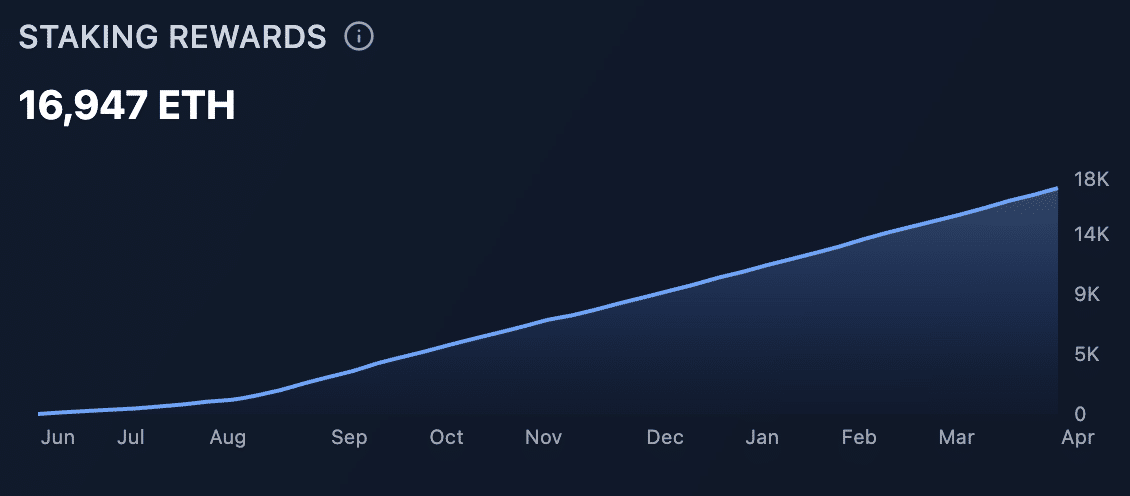
Sharplink, the second-largest Ethereum [ETH] treasury company, has reportedly staked over 511 ETH this week in staking rewards, bringing its total to 16,947 ETH.

Source: Sharplink

By staking ETH, Sharplink is locking up its Ethereum tokens in the network to validate transactions and, in return, earn rewards in ETH. Remarking on the same, Sharplink said,

Every week, our ETH earns more ETH. This is Ethereum with an edge.

Sharplink vs. BitMine – ETH holdings and strategy

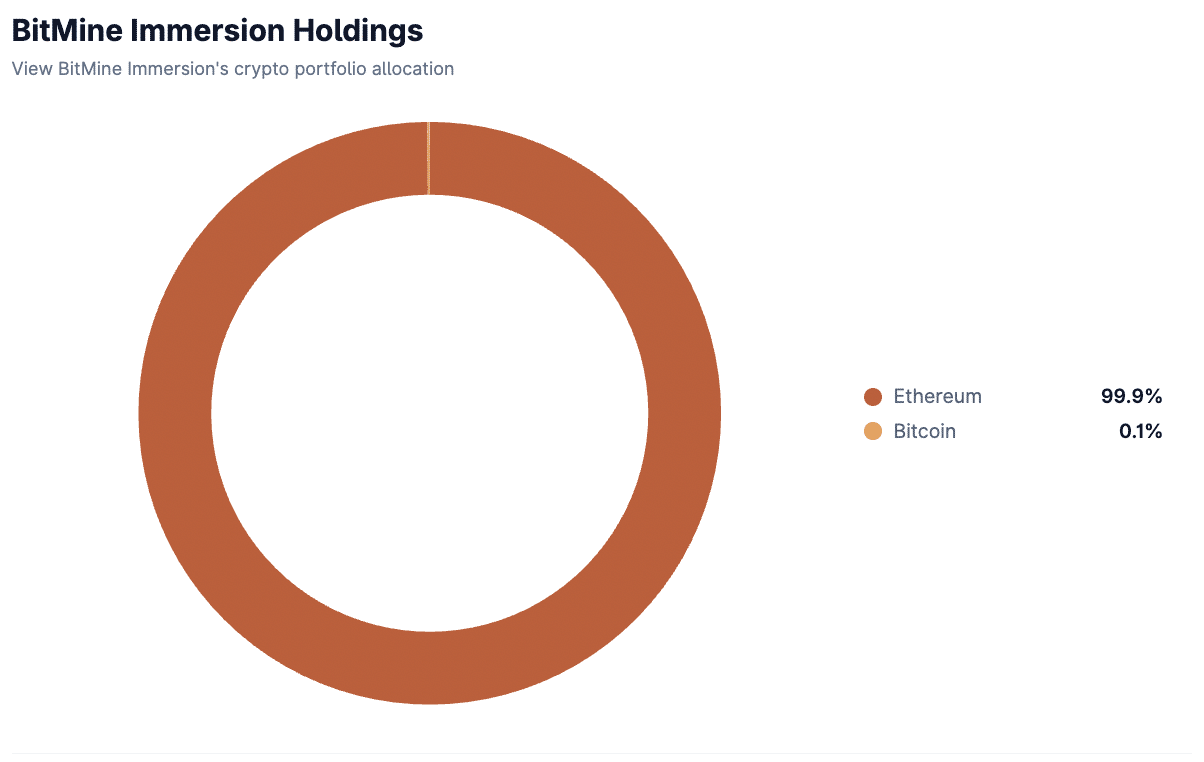
This happens at a time when Sharplink’s ETH stash has reached 868,699 ETH holdings worth $1.95 billion. However, when compared to the largest Ethereum treasury company, BitMine, it’s too little. As per CoinGecko’s data, BitMine holds 4,803,334 ETH worth $10.81 billion.

Source: CoinGecko

In fact, the motives of the two firms are also widely different, as BitMine strongly believes in hoarding ETH, which is similar to Michael Saylor’s firm, Strategy. However, Sharplink is taking a different approach to earning interest by staking its Ethereum.

The approach that BitMine is following is good if the firm is looking for bullish results and is more inclined towards flexibility at times of selling.

However, in Sharplink’s case, the firm is more interested in long-term conviction and wants passive yield. But this also comes with a set of risks, like reduced liquidity, potential slashing risks, and exposure to price drops while the ETH is locked.

Why is staking becoming important now?

Additionally, with the ongoing discussions around the CLARITY ACT and investors adjusting to the yield-earning policy shift, Ethereum staking is gradually growing.

Needless to say, there are many firms that opt for both. The recent addition to the list was Saylor’s Strategy. The firm, with the help of STRC, a Variable Rate Series A Perpetual “Stretch” Preferred Stock, recently entered the yield-earning cycle besides hoarding Bitcoin [BTC].

This comes as ETH’s price was trading at $2,245.04 after a hike of 6.8% in the past 24 hours.

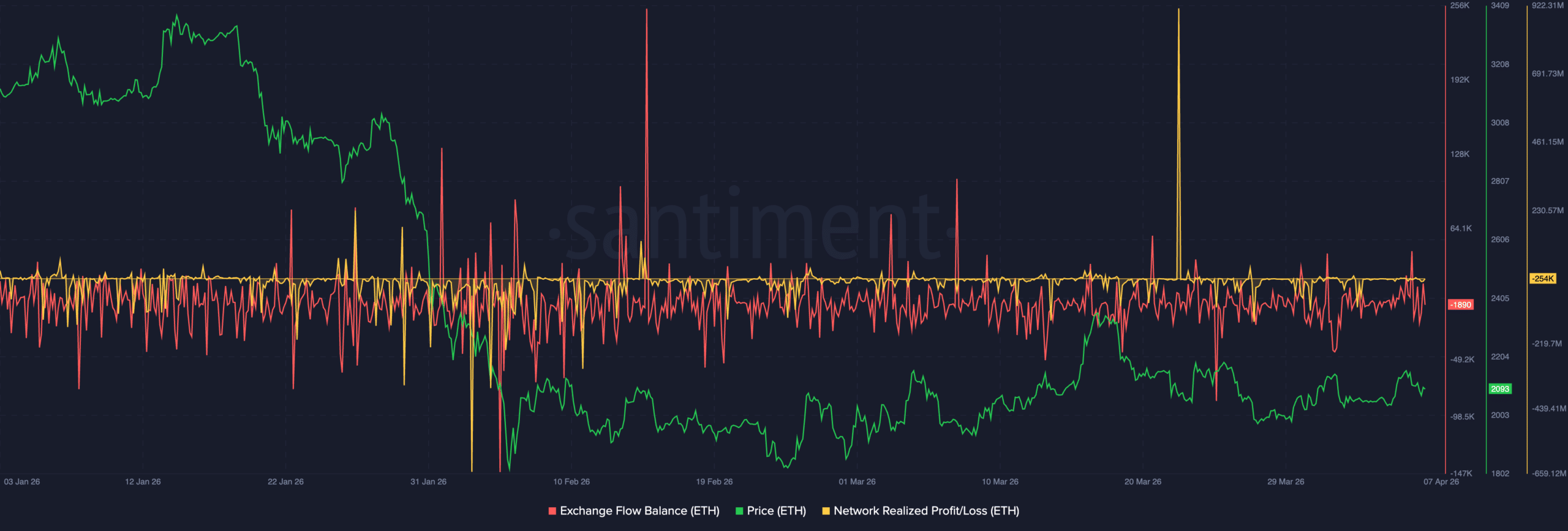
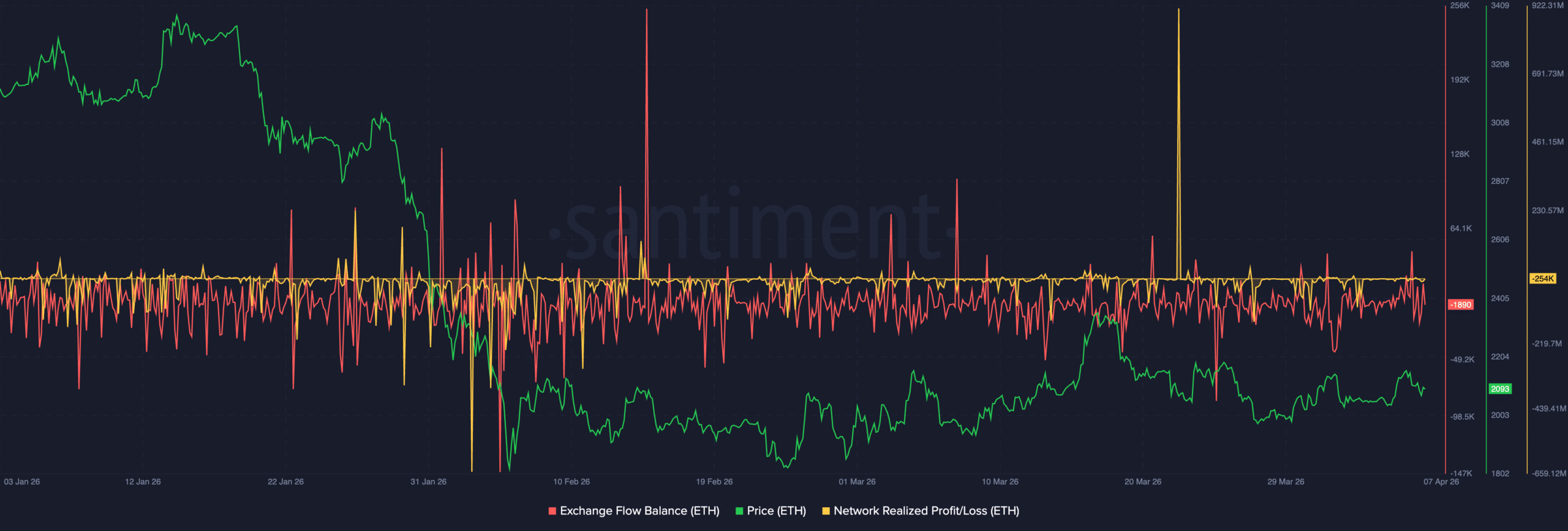
Additionally, the on-chain metrics are also in support. For instance, the Ethereum Exchange Fow Balance showed more ETH being withdrawn from exchanges, and the Network Realized Profit/Loss suggested a neutral phase.

All this combined suggests that ETH was in an accumulation phase at the time of reporting.

Source: Santiment

Final Summary

  • Sharplink reaches 16,947 ETH thanks to its Ethereum staking strategy, but risk remains.
  • If in the Ethereum ecosystem it’s Sharplink, in the Bitcoin space, it’s Michael Saylor’s Strategy, which recently started STRC for the same reason.

Связанные с этим вопросы

QHow much Ethereum did Sharplink stake this week, and what is its total staked amount now?

ASharplink staked over 511 ETH this week, bringing its total staked amount to 16,947 ETH.

QWhat is the key difference in Ethereum strategy between Sharplink and the largest treasury company, BitMine?

ASharplink focuses on earning passive yield through staking its Ethereum, while BitMine believes in hoarding ETH, similar to Michael Saylor's Strategy, prioritizing bullish results and flexibility for selling.

QWhat are some of the risks associated with Sharplink's staking strategy?

AThe risks include reduced liquidity, potential slashing risks, and exposure to price drops while the ETH is locked in the staking contract.

QWhat recent development suggests that Ethereum is in an accumulation phase according to the article?

AOn-chain metrics support this, specifically the Ethereum Exchange Flow Balance showing more ETH being withdrawn from exchanges and the Network Realized Profit/Loss indicating a neutral phase.

QWhich other major company, mentioned in the article, recently entered the yield-earning cycle for its crypto holdings?

AMichael Saylor's company, Strategy, recently entered the yield-earning cycle by utilizing STRC, a Variable Rate Series A Perpetual 'Stretch' Preferred Stock, in addition to its Bitcoin hoarding strategy.

Похожее

a16z: AI's 'Amnesia', Can Continuous Learning Cure It?

The article "a16z: AI's 'Amnesia' – Can Continual Learning Cure It?" explores the limitations of current large language models (LLMs), which, like the protagonist in the film *Memento*, are trapped in a perpetual present—unable to form new memories after training. While methods like in-context learning (ICL), retrieval-augmented generation (RAG), and external scaffolding (e.g., chat history, prompts) provide temporary solutions, they fail to enable true internalization of new knowledge. The authors argue that compression—the core of learning during training—is halted at deployment, preventing models from generalizing, discovering novel solutions (e.g., mathematical proofs), or handling adversarial scenarios. The piece introduces *continual learning* as a critical research direction to address this, categorizing approaches into three paths: 1. **Context**: Scaling external memory via longer context windows, multi-agent systems, and smarter retrieval. 2. **Modules**: Using pluggable adapters or external memory layers for specialization without full retraining. 3. **Weights**: Enabling parameter updates through sparse training, test-time training, meta-learning, distillation, and reinforcement learning from feedback. Challenges include catastrophic forgetting, safety risks, and auditability, but overcoming these could unlock models that learn iteratively from experience. The conclusion emphasizes that while context-based methods are effective, true breakthroughs require models to compress new information into weights post-deployment, moving from mere retrieval to genuine learning.

marsbit2 ч. назад

a16z: AI's 'Amnesia', Can Continuous Learning Cure It?

marsbit2 ч. назад

Can a Hair Dryer Earn $34,000? Deciphering the Reflexivity Paradox in Prediction Markets

An individual manipulated a weather sensor at Paris Charles de Gaulle Airport with a portable heat source, causing a Polymarket weather market to settle at 22°C and earning $34,000. This incident highlights a fundamental issue in prediction markets: when a market aims to reflect reality, it also incentivizes participants to influence that reality. Prediction markets operate on two layers: platform rules (what outcome counts as a win) and data sources (what actually happened). While most focus on rules, the real vulnerability lies in the data source. If reality is recorded through a specific source, influencing that source directly affects market settlement. The article categorizes markets by their vulnerability: 1. **Single-point physical data sources** (e.g., weather stations): Easily manipulated through physical interference. 2. **Insider information markets** (e.g., MrBeast video details): Insiders like team members use non-public information to trade. Kalshi fined a剪辑师 $20,000 for insider trading. 3. **Actor-manipulated markets** (e.g., Andrew Tate’s tweet counts): The subject of the market can control the outcome. Evidence suggests Tate’sociated accounts coordinated to profit. 4. **Individual-action markets** (e.g., WNBA disruptions): A single person can execute an event to profit from their pre-placed bets. Kalshi and Polymarket handle these issues differently. Kalshi enforces strict KYC, publicly penalizes insider trading, and reports to regulators. Polymarket, with its anonymous wallet-based system, has historically been more permissive, arguing that insider information improves market accuracy. However, it cooperated with authorities in the "Van Dyke case," where a user traded on classified government information. The core paradox is reflexivity: prediction markets are designed to discover truth, but their financial incentives can distort reality. The more valuable a prediction becomes, the more likely participants are to influence the event itself. The market ceases to be a mirror of reality and instead shapes it.

marsbit3 ч. назад

Can a Hair Dryer Earn $34,000? Deciphering the Reflexivity Paradox in Prediction Markets

marsbit3 ч. назад

Торговля

Спот
Фьючерсы

Популярные статьи

Manyu: восходящая мем-звезда на Ethereum, готовая открыть новую эру культуры Shiba

Manyu - это мемтокен на Ethereum, который приносит децентрализованную культурную и развлекательную ценность через вирусное влияние в соцсетях и вовлечённость сообщества.

1.9k просмотров всегоОпубликовано 2025.11.27Обновлено 2025.11.27

Manyu: восходящая мем-звезда на Ethereum, готовая открыть новую эру культуры Shiba

Обсуждения

Добро пожаловать в Сообщество HTX. Здесь вы сможете быть в курсе последних новостей о развитии платформы и получить доступ к профессиональной аналитической информации о рынке. Мнения пользователей о цене на ETH (ETH) представлены ниже.

活动图片