Robinhood Gains a New Batch of Stock Investors, the Oldest is 1 Year Old, the Youngest is -3 Years Old

marsbitОпубликовано 2026-04-08Обновлено 2026-04-08

Введение

On April 6, the U.S. Treasury announced that Robinhood, in collaboration with BNY Mellon, has been selected as the broker and initial custodian for the "Trump Accounts" (also known as 530A accounts). Established under the "Big and Beautiful" Act authorized by former President Trump in June 2025, the program aims to create tax-advantaged investment accounts for children born between January 1, 2025, and January 1, 2029. Each account will receive an initial $1,000 from the federal government. Private donations, such as Michael Dell’s $6.25 billion contribution, will add $250 for eligible lower-income families. Families can also deposit up to $5,000 annually per child. Funds are restricted to low-cost index funds or ETFs tracking broad market indices like the S&P 500 and cannot be withdrawn until the child turns 18. With an estimated 14.4 million children eligible, the program could inject over $14.4 billion in government funds alone, growing significantly with private and family contributions. This creates a long-term, passively managed pool of capital potentially worth hundreds of billions of dollars. Robinhood stands to benefit significantly by gaining millions of young users who will be tied to the platform from birth, with their accounts converting to IRA-like structures upon adulthood. This provides Robinhood with a long-term client base, stable custodial assets, and entry into government-backed financial infrastructure, diversifying its business beyond its traditional ...

Author: Azuma, The Block

On April 6 local time, the U.S. Department of the Treasury officially announced the latest developments regarding 'Trump Accounts' — The Bank of New York Mellon (BNY) has been selected as the designated financial agent of the U.S. government, responsible for managing the initial accounts; Robinhood will cooperate with BNY, serving as the broker and initial custodian for the 'Trump Accounts'.

All parties will work together to support the Treasury's goal of ensuring that every eligible newborn American citizen can quickly and conveniently obtain a 'Trump Account'.

What is a 'Trump Account'?

The so-called 'Trump Account', also known as a 530A account, is a tax-advantaged investment account plan established on June 9, 2025, under the authorization of the 'Big and Beautiful' Act by then-President Donald Trump. It aims to set up government-funded savings accounts for children of U.S. citizens born between January 1, 2025, and January 1, 2029.

The initial funding for 'Trump Accounts' primarily comes from government appropriations, private donations, and family deposits. The federal government will provide $1,000 in initial funding for each account; Dell founder Michael Dell and his wife announced a donation of $6.25 billion in December last year, which will open accounts for 25 million children from families with a regional median income below $150,000, injecting $250 into each account; parents, friends, and other designated individuals can also deposit funds into specified accounts, but a maximum of $5,000 can be deposited per child per year.
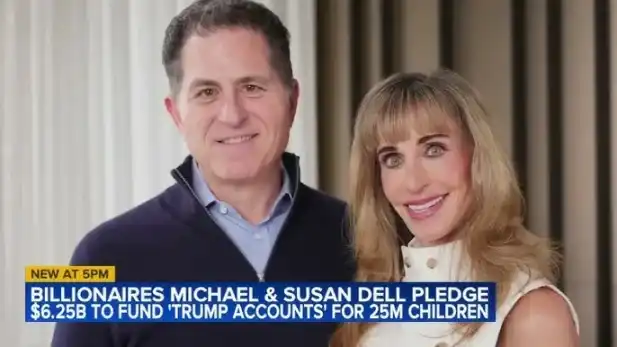
Odaily Note: Michael Dell couple, who donated $6.25 billion. Trump called this 'one of the most generous acts in American history'.

In terms of investment, 'Trump Accounts' will be limited to investing in low-cost investment funds or exchange-traded funds (ETFs) that track broad stock indices such as the 'S&P 500' index, and cannot be used to invest in specific industry or sector indices. The usage of funds is also restricted. Before the child turns 18 and becomes a legal adult on January 1 of that year, funds in the account cannot be withdrawn for any reason (unless the child passes away or the funds are transferred to another similar restricted account). After the child turns 18, the account will receive the same treatment as a traditional Individual Retirement Account (IRA).

According to the current plan, 'Trump Accounts' are tentatively scheduled to begin accepting initial deposits on July 4, 2026 (the 250th anniversary of the signing of the U.S. Declaration of Independence). This timing coincides with the run-up to the 2026 midterm elections and is expected to be a major policy 'trump card' for the Republican Party to win voters.

What is the Potential Scale?

According to statistics from Statista, since 2020, the annual number of births in the United States has fluctuated around 3.6 million.

Using this data as a benchmark, the planned coverage period from January 1, 2025, to January 1, 2029, is expected to include approximately 14.4 million newborn American children. If the federal government opens a $1,000 'Trump Account' for each child, this implies a massive fund of $14.4 billion; with potential private donations and family deposits, this number will continue to grow to hundreds of billions of dollars; if the plan continues to be promoted as a long-term initiative after 2029, its potential scale will be even more staggering.

Due to its operational characteristics of long-term lock-up, passive investment, and continuous new inflows, the 'Trump Account' will essentially become a long-term passive fund pool with a potential scale of hundreds of billions of dollars. Compared to a simple child welfare attribute, this更像是 establishing a long-term capital transmission channel between fiscal policy and the capital market, directly integrating the future generation into the stock market system.

The Biggest Beneficiary: Robinhood?

After the 'Trump Account' plan was announced, financial institutions such as JPMorgan Chase, Charles Schwab, and Robinhood began fierce competition for related services. With the U.S. Treasury Department officially designating Robinhood as the broker and initial custodian yesterday, Robinhood, which has obtained the 'entry ticket', is poised to become one of the most direct beneficiaries of this plan.

The most直观 benefit lies on the user side. According to the current policy coverage calculation, 'Trump Accounts' will correspond to tens of millions of newborn accounts, and the interaction portal for these accounts will be completed through a unified application — in other words, Robinhood will acquire a batch of potential users bound to the platform from birth. The oldest of these users is only 1 year old, and the youngest hasn't even been born yet... More importantly, these users are not one-time traffic but potential clients with an extremely long lifecycle. After the children turn 18, the accounts will convert into long-term investment accounts similar to IRAs, which means Robinhood has the opportunity to directly承接 these users into their adult investment behaviors and further extend into more business scenarios such as ETFs, options, and even crypto assets. From a lifecycle perspective, this is almost the longest possible user path a broker can obtain.

The benefits on the asset side are equally significant. The funds in 'Trump Accounts' have obvious long-term lock-up characteristics, hardly flowing out before the child reaches adulthood, while the investment scope is limited to index funds. This type of fund is extremely high-quality custody asset for brokers — low volatility, long retention, predictable scale. Furthermore, Robinhood's core label in the past has been a 'retail trading platform', with growth highly dependent on market conditions and trading activity. The 'Trump Account' introduces low-frequency, long-term, passive investment funds, which are closer to the capital attributes of traditional wealth management businesses. As the proportion of such funds increases, it will also enrich Robinhood's business diversity to a certain extent,补齐相对短板.

At the same time, the endorsement at the policy level also has symbolic significance. Participating in an account plan led by the Treasury Department brings Robinhood into the U.S. government's financial infrastructure system for the first time. This not only enhances its institutional credibility but also provides new narrative space for its future expansion into retirement accounts, long-term investment, and wealth management businesses.

From a political perspective, the 'Trump Account' is an important policy chip for the Republican Party facing the midterm elections; from a capital market perspective, this plan introduces an institutionalized long-term source of funds into the U.S. stock market. Robinhood happens to be at the intersection of both — as millions of newborns who have not yet entered society are 'automatically opening accounts', this policy design围绕选票 has also quietly laid a growth curve for Robinhood that could last for more than a decade.


Связанные с этим вопросы

QWhat is the 'Trump Account' and what is its purpose?

AThe 'Trump Account', also known as a 530A account, is a tax-advantaged investment account plan established under the 'Big and Beautiful' Act. Its purpose is to provide government-funded savings accounts for children born between January 1, 2025, and January 1, 2029, who are U.S. citizens.

QWhich financial institutions were selected to manage the 'Trump Accounts' and what are their roles?

ABNY Mellon was selected as the designated financial agent to manage the initial accounts. Robinhood will partner with BNY Mellon, serving as the broker and initial custodian for the accounts.

QWhat are the sources of initial funding for a 'Trump Account' and what are the contribution limits?

AInitial funding comes from a $1000 federal grant, private donations (e.g., a $250 donation from the Michael Dell family for eligible children), and deposits from parents/friends, who can contribute up to $5000 per child per year.

QWhat is the potential scale of the 'Trump Account' program in terms of the number of children and total assets?

AThe program is expected to cover approximately 14.4 million children born during the eligibility period. With the $1000 federal grant alone, this represents $14.4 billion in assets, with the total potential size growing to hundreds of billions when including private and family contributions.

QWhy is Robinhood considered a major potential beneficiary of the 'Trump Account' program?

ARobinhood gains a long-term user base locked in from birth, with accounts converting to IRA-like accounts at age 18. It also acquires high-quality, long-term, passive assets that diversify its business beyond its traditional reliance on active retail trading, and receives a significant credibility boost from the government partnership.

Похожее

Бернштейн анализирует первый отчет SpaceX после выхода на биржу: как обоснована целевая цена в 239 долларов?

SpaceX представила свой первый квартальный отчет после выхода на биржу, показав агрессивную историю роста: выручка Connectivity (Starlink) остаётся прибыльной, доходы от AI-вычислений быстро растут, а Илон Маск перенёс цель по достижению годовой выручки в $1 трлн с 2031 на 2030 год. Bernstein сохранил рейтинг «Outperform» и целевую цену в $239, что подразумевает потенциал роста около 91% от цены закрытия 4 августа. Однако эта оценка не основана на полном достижении цели в $1 трлн. Прогноз Bernstein на 2031 год — $554 млрд выручки, что ниже видения руководства. Более высокие цены на AI-вычисления и амбициозные цели рассматриваются как потенциальный дополнительный рост сверх текущей оценки. Во втором квартале выручка SpaceX выросла на 92% до $7,8 млрд, превысив ожидания. Starlink (Connectivity) с 12 млн пользователей остаётся прибыльным столпом (операционная маржа ~38,6%). AI-бизнес показал выручку в $2,56 млрд, но требует огромных капвложений ($15,8 млрд за квартал). Раздел Space (запуски) остаётся убыточным из-за затрат на разработку Starship. Ключевые факторы для будущей оценки: способность Starlink расти, трансформация AI-мощностей в стабильный доход и достижение Starship полной многоразовости для частых и дешёвых запусков. Целевая цена $239 зависит от совместного выполнения этих условий. Неопределённость вокруг окупаемости AI-инвестиций, снятия ограничений на продажу акций и прогресса Starship объясняет падение акций после отчёта, несмотря на превышение ожиданий.

marsbit5 мин. назад

Бернштейн анализирует первый отчет SpaceX после выхода на биржу: как обоснована целевая цена в 239 долларов?

marsbit5 мин. назад

Индекс S&P 500 вновь обновляет исторический рекорд, а ваши технологические акции все еще "отбивают убытки"?

4 августа 2026 года индекс S&P 500 закрылся на рекордном уровне в 7736,52 пункта, в то время как многие известные технологические акции, такие как NVIDIA (упали примерно на 20% с пика), оставались далеко от своих исторических максимумов. Эта кажущаяся противоречивой ситуация объясняется ключевой концепцией диверсификации. S&P 500 — это взвешенный по рыночной капитализации индекс, охватывающий 500 крупнейших компаний США из 11 различных секторов. Хотя технологический сектор является крупнейшим (около 30%), остальные 70% распределены между финансами, здравоохранением, промышленностью и другими отраслями. В июне-июле 2026 года, когда технологические и полупроводниковые акции испытывали давление, рост в финансовом, медицинском и промышленном секторах компенсировал их слабость и позволил общему индексу обновлять максимумы. Это наглядная демонстрация того, как работает диверсификация: убытки в одной части портфеля компенсируются прибылями в других. Индекс равного веса S&P 500 (RSP), где каждая из 500 компаний имеет одинаковый вес, с начала года показал доходность 14,9%, опередив стандартный S&P 500 (13,2%), что подчеркивает силу более широкого участия рынка. Таким образом, рекорд S&P 500 отражает успех диверсифицированного подхода, а не всеобщий рост. Для инвесторов, сконцентрированных только на технологических акциях, опыт рынка был совершенно иным. Ключевой вывод: диверсификация — это не просто теория, а практический механизм, встроенный в структуру индекса, который обеспечивает устойчивость, когда отдельные сектора испытывают трудности.

marsbit16 мин. назад

Индекс S&P 500 вновь обновляет исторический рекорд, а ваши технологические акции все еще "отбивают убытки"?

marsbit16 мин. назад

GSR увеличивает подверженность Bitcoin после падения портфеля Crypto Core3 на 57,78%

Крипто-портфель Crypto Core3 компании GSR, институционального маркет-мейкера, продемонстрировал падение на 57,78% за последний год. На 5 августа портфель состоял из Ethereum (44,1%), Solana (36,5%) и Bitcoin (19,3%). Несмотря на доминирование Ethereum, компания увеличила долю Bitcoin и снизила долю Ethereum, чтобы адаптироваться к рыночной волатильности. За последние 12 месяцев все три основных актива показали отрицательную динамику: Solana упала на 40,21%, Ethereum – на 35,49%, а Bitcoin – на 24,82%. Более высокий вес активов с наибольшими потерями усугубил общий убыток портфеля. Ротация портфеля GSR, направленная на увеличение экспозиции к Bitcoin, демонстрирует стратегию управления рисками во время затяжного спада рынка. Этот пример подчеркивает, что даже диверсифицированные крипто-портфели не защищены от убытков при общем падении рынка. Подобные раскрытия институциональными игроками дают представление о преобладающих рыночных настроениях и стратегиях в отрасли.

TheNewsCrypto22 мин. назад

GSR увеличивает подверженность Bitcoin после падения портфеля Crypto Core3 на 57,78%

TheNewsCrypto22 мин. назад

Компания Grayscale реорганизует финансирование во втором квартале, добавив этот альткоин в свой фонд смарт-контрактов! Вот подробности

Криптоуправляющая компания Grayscale провела ребалансировку своих фондов на второй квартал 2026 года, внеся ключевые изменения в состав активов. В фонде смарт-контрактов впервые появился токен BNB, который теперь занимает около 31% портфеля, в то время как доли Ethereum и Solana составляют по 29% каждая. Это расценивается как сигнал растущего интереса институциональных инвесторов к экосистеме BNB Chain. В фонде DeFi крупнейшими активами остаются Uniswap (34,16%), Ondo Finance (25,44%) и Aave (19,97%). В фонде децентрализованного ИИ компания уменьшила долю NEAR Protocol до 31% и увеличила долю Bittensor (TAO) до 29%. Эксперты отмечают, что такие обновления отражают адаптацию инвестиционной стратегии к текущим рыночным условиям и развитию проектов.

cryptonews.ru23 мин. назад

Компания Grayscale реорганизует финансирование во втором квартале, добавив этот альткоин в свой фонд смарт-контрактов! Вот подробности

cryptonews.ru23 мин. назад

Московская биржа запустит собственный цифровой депозитарий для криптовалют

Московская биржа готовится запустить собственный цифровой депозитарий для работы с криптовалютами к концу 2026 — началу 2027 года. Он будет независим от Национального расчетного депозитария (НРД). Банк России утвердил требования к таким структурам, включая минимальный размер капитала от 50 до 250 млн рублей в зависимости от функций. На рынке параллельно формируются другие центры ликвидности. Сбербанк, Альфа-Банк, ВТБ, группа «Т-Технологии» и СПБ Биржа также разрабатывают собственную инфраструктуру для хранения и торговли цифровыми активами, планируя запуск в ближайшее время. Брокерам будет предложен выбор: подключиться к депозитарию Московской биржи или развивать собственные решения. Закон «О цифровой валюте и цифровых правах» вступает в силу с 1 сентября 2026 года с переходным периодом до 1 июля 2027 года. Таким образом, к моменту начала регулирования в России появится несколько независимых депозитарных систем, что создает распределенную архитектуру рынка. Это отличается от централизованной модели, выбранной, например, Казахстаном. Распределенный подход распределяет риски между игроками, но может осложнить перевод активов, в то время как централизованный снижает фрагментацию ликвидности, но усиливает зависимость от одного регулятора. Устойчивость каждой модели покажет практика.

cryptonews.ru26 мин. назад

Московская биржа запустит собственный цифровой депозитарий для криптовалют

cryptonews.ru26 мин. назад

Торговля

Спот
活动图片