Ripple Chiseled a Crack in the Wall, But Swift Tore Down the Entire Wall

深潮Опубликовано 2025-12-23Обновлено 2025-12-23

Введение

At the Sibos 2025 conference, Swift announced a major evolution of its financial infrastructure by integrating a blockchain-based shared ledger to support tokenized assets and enable secure, real-time, and interoperable global transactions. The new system, built on Consensys' Ethereum Layer 2 network Linea, uses zk-EVM rollup technology to reduce costs and settlement times while meeting banking security standards. Over 30 major banks, including JPMorgan and Citibank, are participating in the pilot. The article reflects on Ripple’s long-standing effort to challenge traditional cross-border payments using XRP and RippleNet, which has seen adoption in retail and corporate remittances despite earlier regulatory challenges. However, Swift’s move represents a broader and more systemic shift. Unlike Ripple’s XRP-dependent model, Swift’s ledger is asset-agnostic, supporting CBDCs, stablecoins, and fiat currencies, and leverages its existing network of over 11,000 institutions. This transition marks a convergence of traditional and decentralized finance, enabling 24/7 settlement, reducing reliance on pre-funded accounts, and potentially freeing up trillions in trapped capital. By adopting a neutral, interoperable, and highly scalable blockchain framework, Swift is positioned to redefine global value transfer—moving from a legacy telegraphic model to a digitally-native, mathematically-verified system.

Author: Sanqing, Foresight News

During the Sibos 2025 conference in Frankfurt, Swift's Chief Business Officer Thierry Chilosi and Standard Chartered Bank's Global Head of Transaction Banking, Michael Spiegel, discussed a major transformation in global finance. As tokenization moves from pilot programs to reality, Swift officially announced the addition of a blockchain-based shared ledger to its infrastructure, aiming to achieve trusted and interoperable digital finance on a global scale. This ledger will serve as a secure, real-time transaction record between financial institutions, using smart contracts to validate transaction sequences and execute agreed-upon rules. It is designed to complement existing systems and seamlessly bridge traditional finance with tokenized assets.
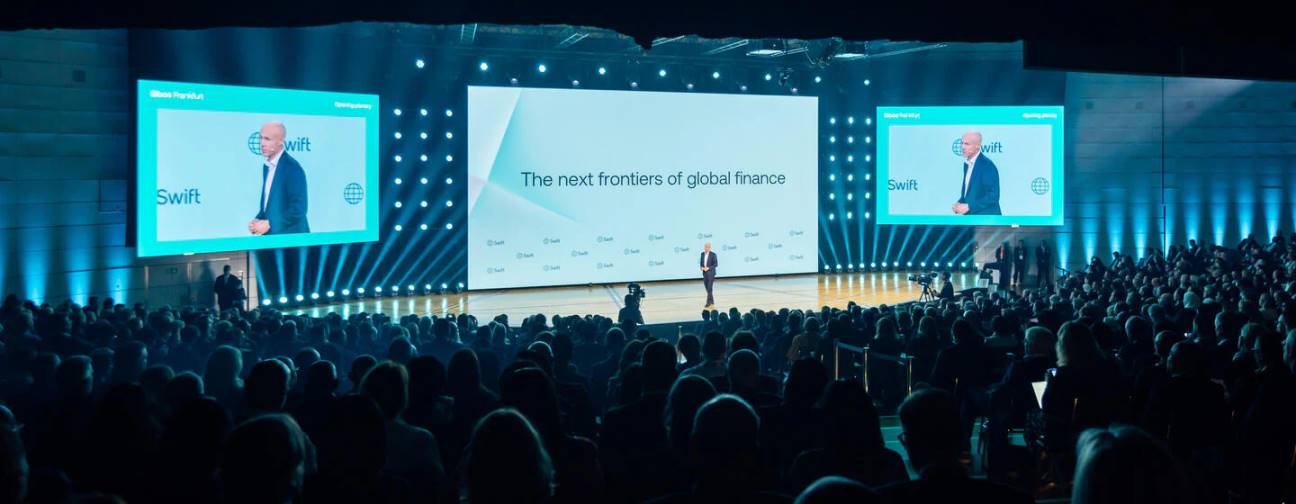
Image Source: Swift Official Website

Although Swift did not explicitly state the technical platform when initially announcing this major development to the banking industry, Consensys CEO Joe Lubin revealed at the Token2049 conference in Singapore that Swift is leveraging the Ethereum Layer 2 network Linea to build its new payment settlement platform. By adopting Linea's zk-EVM rollup technology, Swift can significantly reduce costs and latency while meeting the financial industry's stringent requirements for 24/7 real-time settlement and security. Currently, over 30 top financial institutions, including JPMorgan Chase, Bank of America, and Citibank, are preparing to participate in the pilot of this new blockchain-based payment rail built on Linea.

Ripple's In-Depth Efforts and Current Status

Before discussing Swift, we must revisit the pioneer that challenged the old system for over a decade: Ripple.

In 2012, Ripple emerged with the XRP Ledger (XRPL), with the core goal of replacing the inefficient Swift correspondent banking model. During this period, Ripple successfully built the global payment network RippleNet, connecting over 300 financial institutions. In fragmented markets like Southeast Asia, its On-Demand Liquidity (ODL) service demonstrated that XRP, as a bridge currency, could reduce cross-border settlement times from several days to just 3 to 5 seconds.

By 2020, affected by the U.S. SEC lawsuit, Ripple faced a blockade and stagnation in the U.S. market due to securities allegations. However, its global scale continued to expand. By 2022, its business had reached over 40 payment markets, with total payment volume doubling to approximately $30 billion.

In 2023, Ripple saw a turning point when a court ruled that XRP itself is not a security, marking a milestone victory for Ripple and the industry.

In August 2025, with the SEC completely abandoning its appeal, the five-year legal battle came to an end. The full clarification of its status led to the approval of an XRP spot ETF, marking its official entry into mainstream institutional asset allocation portfolios.

Today, Ripple is conducting cross-border payment and receipt businesses in multiple real-world scenarios, ranging from retail remittances (To C) to enterprise-level payments (To B).

In the retail sector, Japan's SBI Remit uses XRP to bridge real-time remittance channels to the Philippines, Vietnam, and Indonesia, significantly reducing the pre-funding costs for overseas workers. Santander Bank offers transparent real-time transfers to its customers through the One Pay FX app. Meanwhile, the Southeast Asian payment platform Tranglo has significantly improved the efficiency of peso and baht conversions with the support of Ripple ODL.

At the enterprise level, American Express and PNC Bank use RippleNet to optimize B2B trade settlements and international payment collection experiences.

Additionally, in national infrastructure, Ripple is collaborating with over 20 countries, including Palau, Montenegro, and Bhutan, to develop CBDC platforms, applying blockchain technology to the issuance and清算 systems of sovereign currencies.

Why Did Swift Choose Linea?

When giants in the industry布局 the Ethereum ecosystem, they have shown a high degree of consistency in their preference for Layer 2 technology: Coinbase's Base chain is built on OP Stack, while Robinhood announced earlier this year the launch of Robinhood Chain based on Arbitrum technology to support the tokenization and 24/7 trading of RWA.

This preference stems from L2's ability to leverage Ethereum's security while meeting high-performance demands through a modular architecture. Swift's choice of Linea over OP or Arbitrum lies in the core difference in underlying validation logic.

OP and Arbitrum use Optimistic Rollup, which operates on the logic of assuming transactions are valid by default and only verifying them if challenged. Asset withdrawals typically require a multi-day challenge period, which is a significant time cost for financial清算追求流动性.

Linea, on the other hand, uses zk-EVM, which provides instant validity proofs mathematically. For Swift and its partner banks, which need to process massive value settlements, zk-EVM not only offers faster finality but also ensures compliance verification while protecting transaction privacy.

Swift's choice of Linea embodies the first principle of capital operation: maximizing flow velocity.

Capital will flow like a fluid from low-velocity systems (requiring large amounts of idle准备金预存 in Nostro/Vostro accounts), high-friction systems (layers of correspondent bank fees), and slow-settlement systems (settlement taking days) of the traditional telegraphic instruction era to high-velocity, low-friction, fast-settlement blockchain digital systems.

Swift processes approximately $150 trillion in global payments annually. If it can achieve atomic-level reconciliation and 24/7 real-time settlement through Linea's technology stack, it means that trillions of dollars in准备金 currently积压 in the global financial system to hedge against清算 delays will be released and reinjected into the real economy.

As Consensys CEO Joe Lubin stated at the Token 2049 conference in Singapore, this is not merely a technological upgrade but the true convergence of TradFi and DeFi, marking the global value transfer protocol's official transition from the "Telegraphic Instruction Era" to the "Mathematical Verification Era."

The Significance of Swift Embracing Blockchain

As the global financial backbone network handling approximately $150 trillion in annual transaction volume, Swift's decision to build its ledger on Linea, an Ethereum Layer 2, signifies that blockchain technology will become the heart of mainstream finance.

Swift will eliminate fragmentation between different tokenized networks through unified technical standards, breaking down the long-standing barrier between TradFi and DeFi and implanting the efficiency genes of decentralized finance into the traditional清算 system.

Through a 24/7 operational real-time shared ledger, global financial institutions will no longer be limited by the cumbersome manual reconciliation and time-zone delays of the correspondent banking model. The massive amounts of idle capital currently积压 in correspondent bank accounts to hedge against清算 risk will be effectively released. This will enable the speed of capital flow to truly match the demands of the modern economy, ushering in a new era of global value transfer that is more transparent, lower cost, and更具互操作性.

Ripple struggled for a decade to build a new city based on the XRP Ledger outside the old system. However, the scale of financial institutions it currently connects appears势单力薄 compared to Swift's存量 network, which covers over 11,000 institutions across more than 200 countries.

The core threat from Swift lies in its "asset neutrality." Unlike Ripple's ODL model, which heavily relies on XRP as a bridge currency, Swift's blockchain ledger is designed to support multiple assets, including fiat currencies, stablecoins, and CBDCs.

Banks within the Swift system can achieve instant settlement by upgrading their existing rails without bearing the volatility risk of a single asset. This combination of "存量优势 (incumbent advantage) + technical compliance" is giving Ripple its most bone-chilling challenge since its inception.


Трендовые криптовалюты

Связанные с этим вопросы

QWhat is the core technological difference between Swift's chosen Linea and other Layer 2 solutions like Optimistic Rollups?

AThe core difference lies in the underlying verification logic. Linea uses zk-EVM (Zero-Knowledge Ethereum Virtual Machine), which provides instant validity proofs for transactions. In contrast, Optimistic Rollups (like OP and Arbitrum) assume transactions are valid by default and only verify them if a challenge is issued, which introduces a multi-day withdrawal delay. For high-value financial settlements requiring speed and finality, zk-EVM's instant cryptographic verification is superior.

QHow did the resolution of Ripple's legal battle with the SEC in 2025 impact its business?

AThe resolution, with the SEC dropping its appeals in August 2025, provided full legal clarity for Ripple. This landmark victory led to the approval of an XRP spot ETF, marking its formal entry into the asset allocation lists of mainstream financial firms and solidifying its legitimacy in the market.

QWhat specific problem is Swift's new blockchain-based shared ledger designed to solve in global finance?

AIt is designed to solve the inefficiencies of the traditional correspondent banking model, including slow settlement times (taking days), high costs from intermediary fees, and the need for large amounts of pre-funded capital (Nostro/Vostro accounts) to hedge against settlement risk. The ledger enables secure, real-time, 24/7 settlement, releasing trapped capital and improving interoperability.

QWhy is Swift's approach considered a greater threat to Ripple than simply competing with its technology?

ASwift's threat stems from its 'asset neutrality' and immense existing network. Unlike Ripple's ODL model, which relies heavily on the XRP token as a bridge currency, Swift's ledger is designed to support multiple assets including fiat currencies, stablecoins, and CBDCs. This allows Swift's vast network of over 11,000 banks to upgrade for instant settlement without exposure to the volatility of a single asset, leveraging its massive existing infrastructure.

QName one retail and one corporate use case where Ripple's technology is currently being implemented.

ARetail: Japan's SBI Remit uses XRP to provide real-time remittance channels to the Philippines, Vietnam, and Indonesia. Corporate: American Express utilizes RippleNet to optimize its B2B trade settlement processes.

Похожее

Акции компаний, занимающихся искусственным интеллектом, торгуются как «мемокоины», в то время как биткоин практически не меняет цены — обзор недели

В еженедельном обзоре рассматривается волатильность на рынках, вызванная распродажей в секторе ИИ и проблемами крупного хедж-фонда «Situational Awareness», что привело к значительным падениям на азиатских фондовых рынках. Акцентируется внимание на макроэкономических факторах, включая политику ФРС и интервенции Банка Японии. В криптосфере обсуждаются закрытие бирж BitMart и банкротство Storj Labs, трудности компаний вроде Coinbase, а также действия MicroStrategy по наращиванию резервов. Поднимаются темы инсайдерской торговли на Hyperliquid и отключения малопопулярных активов в Aave. Отдельно выделяется энтузиазм венчурных инвесторов вокруг Bittensor ($TAO). Завершается обзор серьёзным предупреждением об уязвимости аппаратных кошельков Coldcard, призывая пользователей к немедленным действиям и повышенной бдительности при самохранении активов.

cryptonews.ru13 мин. назад

Акции компаний, занимающихся искусственным интеллектом, торгуются как «мемокоины», в то время как биткоин практически не меняет цены — обзор недели

cryptonews.ru13 мин. назад

Coinkite подвергся критике за хранение электронных писем клиентов после взлома Coldcard на сумму 88 млн долларов

Coinkite столкнулась с критикой из-за хранения электронных адресов клиентов после взлома, связанного с аппаратными кошельками Coldcard, в результате которого было похищено более 1000 BTC (свыше 88 млн долларов). Инцидент произошел из-за ошибки в генерации случайных сид-фраз. Чтобы предупредить пострадавших, компания отправила письма на адреса, связанные с покупками с 2019 года, что вызвало вопросы о хранении таких данных. Coinkite сослалась на свою политику, согласно которой электронные адреса сохраняются для возможности входа и проверки удаления остальной информации, но не указала сроки их хранения. Соучредитель компании Родольфо Новак подчеркнул, что Coinkite не хранит данные клиентов и предлагает анонимные покупки с удалением информации через 90 дней. Тем не менее, ущерб от взлома продолжает расти, достигнув к субботе 1 367 BTC.

cryptonews.ru14 мин. назад

Coinkite подвергся критике за хранение электронных писем клиентов после взлома Coldcard на сумму 88 млн долларов

cryptonews.ru14 мин. назад

Обвал курса BTC вызвал распродажу альткоинов, в то время как ADA пошла вразрез с общей тенденцией

После значительного роста в конце июля биткоин завершил месяц с небольшим повышением на 4.5%, не сумев компенсировать годовые потери около 30%. Резкое падение 31 июля до $62 236 вызвало снижение его рыночной капитализации до $1.26 трлн. Слабость биткоина была обусловлена решением ФРС оставить ставки без изменений, политической неопределённостью вокруг закона CLARITY в США и эскалацией конфликтов на Ближнем Востоке. Падение BTC привело к распродаже на рынке альткоинов. Большинство крупных альткоинов, включая Ethereum, XRP и Solana, потеряли за неделю 2-3%. Наиболее значительно упали HYPE (-12%) и RAIN. Однако Cardano (ADA) и Binance Coin (BNB) выросли на 15.3% и 2.4% соответственно, демонстрируя положительную динамику вопреки общей тенденции. Uniswap, PUMP и BEAT также показали рост. Общая капитализация рынка альткоинов снизилась до $964 млрд, а совокупная капитализация крипторынка упала с $2.33 трлн до $2.22 трлн. Несмотря на надежды индустрии на принятие закона CLARITY, текущие риски, включая проблемы безопасности (взломы Coldcard) и геополитическую напряжённость, продолжают оказывать давление на рынок, ставя под сомнение оптимистичные прогнозы на конец года.

cryptonews.ru16 мин. назад

Обвал курса BTC вызвал распродажу альткоинов, в то время как ADA пошла вразрез с общей тенденцией

cryptonews.ru16 мин. назад

Фразы-семена: 12 слов, которые стоят между вами и потерей всего

Семенная фраза (12 или 24 слова из списка BIP39) — это не логин и пароль, а математическое представление самого криптокошелька. Тот, кто владеет ею, полностью и безвозвратно контролирует все средства. В январе злоумышленники похитили активы на сотни миллионов долларов, не взламывая код, а с помощью социальной инженерии, убедив жертву ввести фразу в поддельное поле. Хотя перебор всех комбинаций полной 12-словой фразы практически невозможен (на это ушли бы миллиарды лет), утечка даже нескольких слов катастрофически снижает безопасность. Например, знание 7 из 12 слов делает взлом возможным менее чем за год. Контрольная сумма во фразе служит не для защиты, а для проверки на опечатки при восстановлении. Однако главная причина потерь — не кражи, а утрата доступа самими владельцами. По оценкам, до 23% всех биткоинов могут быть навсегда утеряны из-за забытых или уничтоженных семенных фраз. Таким образом, эта фраза — единственное и абсолютное доказательство владения, не имеющее механизма восстановления. Её утрата означает безвозвратную потерю активов.

cryptonews.ru17 мин. назад

Фразы-семена: 12 слов, которые стоят между вами и потерей всего

cryptonews.ru17 мин. назад

Внимание: на этой неделе произойдёт масштабное разблокирование токенов в 10 альткоинах! Вот список по дням и часам

В последнюю неделю рынок криптовалют испытал спад из-за хакерской атаки на аппаратный кошелек ColdCard и влияния геополитических событий. Однако на текущей неделе ожидается масштабное разблокирование токенов в 10 альткоинах, что может оказать значительное влияние на их рынки. Все время указано по UTC+3. Основные события разблокировки: * **4 августа, 03:00:** Lagrange (LGN) – разблокируется токенов на $1,38 млн (15.04% от рыночной стоимости). * **5 августа, 03:00:** Proof (PROOF) – разблокируется на $39,11 млн (119.59%), Power Protocol (POWER) – на $1,62 млн (8.93%), Verona (VERONA) – на $1,37 млн (12.61%). * **5 августа, 11:00:** Ethereum (ENA) – разблокируется на $15,28 млн (1.80%). * **6 августа, 03:00:** Goldfinger (GF) – на $11,52 млн (5.05%). * **7 августа, 03:00:** Infinity (INF) – на $2,31 млн (20.30%). * **8 августа, 03:00:** Stable (STBL) – на $28,75 млн (3.55%). * **9 августа, 03:00:** Name (NAME) – на $48,47 млн (74.54%), Move (MOVE) – на $1,22 млн (3.90%). Особое внимание стоит обратить на проекты Proof и Name, где объем разблокировки существенно превышает текущую рыночную капитализацию. Это не является инвестиционной рекомендацией.

cryptonews.ru1 ч. назад

Внимание: на этой неделе произойдёт масштабное разблокирование токенов в 10 альткоинах! Вот список по дням и часам

cryptonews.ru1 ч. назад

Торговля

Спот

Популярные статьи

Что такое ANSEM

I. Введение в проектЧёрный Бык ($ANSEM) — это прозрачная, управляемая сообществом мемкоин на Solana, основанная на одном кредо: двигаться вперёд, несмотря ни на что. Проект ориентирован на фронтенд и полностью поддаётся проверке — его веб-сайт отображает данные в реальном времени с блокчейна и рынка напрямую из Solana, включая цену, ликвидность, объём, рыночную капитализацию и распределение держателей, так что любой может проверить утверждения без входа в систему и без сбора пользовательских данных. Кроме токена, он предлагает Ansem-call Radar, некустодиальные пулы ликвидности сообщества на PumpSwap и браузерный мем-терминал. $ANSEM — это стандартный токен Pump.fun SPL (6 знаков после запятой), торгующийся против SOL и USDC.II. Информация о токенеСимвол токена: ANSEM (Чёрный Бык)III. Связанные ссылкиВебсайт:https://www.blackbullsol.com/X: https://x.com/blknoiz06Адрес контракта: https://solscan.io/token/9cRCn9rGT8V2imeM2BaKs13yhMEais3ruM3rPvTGpumpПримечание: Введение в проект основано на материалах, опубликованных или предоставленных официальной командой проекта, и предназначено только для справки и не является инвестиционной рекомендацией. HTX не несёт ответственности за любые прямые или косвенные убытки, возникшие в результате.

957 просмотров всегоОпубликовано 2026.07.01Обновлено 2026.07.01

Что такое ANSEM

Как купить ANSEM

Добро пожаловать на HTX.com! Мы сделали приобретение The Black Bull (ANSEM) простым и удобным. Следуйте нашему пошаговому руководству и отправляйтесь в свое крипто-путешествие.Шаг 1: Создайте аккаунт на HTXИспользуйте свой адрес электронной почты или номер телефона, чтобы зарегистрироваться и бесплатно создать аккаунт на HTX. Пройдите удобную регистрацию и откройте для себя весь функционал.Создать аккаунтШаг 2: Перейдите в Купить криптовалюту и выберите свой способ оплатыКредитная/Дебетовая Карта: Используйте свою карту Visa или Mastercard для мгновенной покупки The Black Bull (ANSEM).Баланс: Используйте средства с баланса вашего аккаунта HTX для простой торговли.Третьи Лица: Мы добавили популярные способы оплаты, такие как Google Pay и Apple Pay, для повышения удобства.P2P: Торгуйте напрямую с другими пользователями на HTX.Внебиржевая Торговля (OTC): Мы предлагаем индивидуальные услуги и конкурентоспособные обменные курсы для трейдеров.Шаг 3: Хранение The Black Bull (ANSEM)После приобретения вами The Black Bull (ANSEM) храните их в своем аккаунте на HTX. В качестве альтернативы вы можете отправить их куда-либо с помощью перевода в блокчейне или использовать для торговли с другими криптовалютами.Шаг 4: Торговля The Black Bull (ANSEM)С легкостью торгуйте The Black Bull (ANSEM) на спотовом рынке HTX. Просто зайдите в свой аккаунт, выберите торговую пару, совершайте сделки и следите за ними в режиме реального времени. Мы предлагаем удобный интерфейс как для начинающих, так и для опытных трейдеров.

454 просмотров всегоОпубликовано 2026.07.01Обновлено 2026.07.01

Как купить ANSEM

Обсуждения

Добро пожаловать в Сообщество HTX. Здесь вы сможете быть в курсе последних новостей о развитии платформы и получить доступ к профессиональной аналитической информации о рынке. Мнения пользователей о цене на A (A) представлены ниже.

活动图片