Автор: Robozaps
Перевод: Felix, PANews
Индустрия человекоподобных роботов переживает взрывной рост, превратившись из нескольких исследовательских лабораторий в глобальный рынок стоимостью 29 миллиардов долларов в 2025 году, который, по прогнозам, к 2030 году достигнет 40–180 миллиардов долларов. Десятки компаний в настоящее время соревнуются в создании роботов, которые могут ходить, говорить и работать совместно с людьми.
Это руководство призвано познакомить с ведущими компаниями по производству человекоподобных роботов в 2026 году, включая их основные модели роботов, информацию о финансировании, цены и уникальные особенности каждой компании.
Ключевые моменты:
- Наибольшая стоимость: Figure AI (стоимость 390 млрд долларов)
- Самая низкая цена: Unitree Robotics G1 (16 000 долларов)
- Самый старый опыт: Boston Dynamics (более 30 лет)
- Крупнейшие масштабы производства: Tesla (цель – 1 миллион единиц в год)
- Первое коммерческое развертывание: Agility Robotics Digit
- Лучший для дома: 1X NEO (цена 20 000 долларов или 499 долларов в месяц)
Полное сравнение компаний по производству человекоподобных роботов в 2026 году:
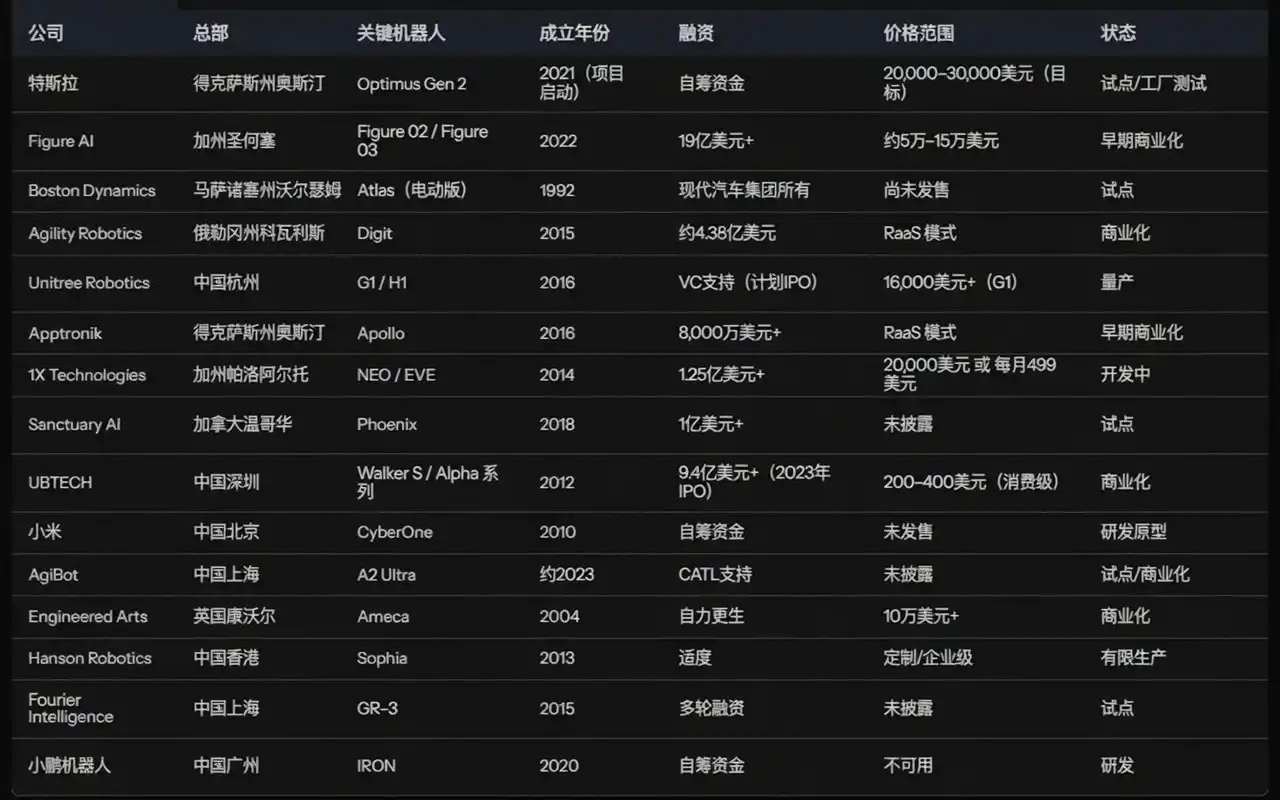
1. Tesla — Optimus
Штаб-квартира: Остин, Техас | Основание: Проект роботов запущен в 2021 году | Генеральный директор: Илон Маск
Tesla, пожалуй, самая привлекающая внимание компания по производству человекоподобных роботов в мире, во многом благодаря активной рекламе Илоном Маском Tesla Optimus. Компания использует свою существующую инфраструктуру искусственного интеллекта для обучения своего человекоподобного робота, включая нейронную сеть для полного автономного вождения и суперкомпьютер Dojo.
Основной продукт: Optimus Gen 2 (второе поколение) имеет рост 5 футов 8 дюймов (около 1,73 метра), вес около 125 фунтов (57 кг), и только кисть руки имеет более 28 степеней свободы. Tesla стремится снизить себестоимость производства до 20 000 долларов за единицу, целевая розничная цена составляет 20 000–30 000 долларов.
Текущее состояние: По словам Маска на конференции по итогам четвертого квартала 2025 года, Optimus выполняет основные задачи на собственных заводах Tesla, но «еще не внедрен существенно». Tesla планирует переоборудовать свой завод во Фримонте для производства до 1 миллиона единиц Optimus в год. Ожидается, что публичные продажи начнутся к концу 2027 года.
Уникальность: Ни одна компания по производству человекоподобных роботов не обладает такими масштабами производства, инфраструктурой для вычислений ИИ или известностью бренда, как Tesla. Если планы Маска хоть частично верны, Tesla может доминировать на потребительском рынке человекоподобных роботов благодаря огромным объемам производства.
Финансирование: Самофинансируется через Tesla. Компания обязалась инвестировать 200 миллиардов долларов капитальных затрат в 2026 году на производственные и вычислительные мощности для Optimus и других проектов.
2. Figure AI
Штаб-квартира: Сан-Хосе, Калифорния | Основание: 2022 год | Генеральный директор: Brett Adcock
Figure AI — это компания с самым быстрорастущим капиталом, чья стоимость достигла 390 миллиардов долларов после привлечения 10 миллиардов долларов в сентябре 2025 года. Менее чем за три года Figure выросла из стартапа с нуля до одной из самых хорошо финансируемых робототехнических компаний в истории.
Основной продукт: Figure 02 — это промышленный человекоподобный робот компании, в настоящее время проходящий пилотный проект по производству автомобилей в сотрудничестве с BMW. Figure 03 — это робот следующего поколения для потребителей, оснащенный камерами в ладонях, тактильными датчиками, способными обнаруживать усилие до 3 граммов, функцией беспроводной зарядки и защитным пенопокрытием.
Платформа ИИ: Проприетарная модель Figure Helix (VLA — vision-language-action) использует двухсистемную архитектуру: System 1 работает на частоте 200 Гц для базового управления моторами, а System 2 работает на частоте 7–9 Гц для планирования и рассуждений. Компания прекратила сотрудничество с OpenAI в 2025 году, чтобы построить полностью собственный ИИ.
Производство: Специализированный завод Figure по производству человекоподобных роботов называется BotQ, цель — производить 12 000 единиц в год. Это первый завод, построенный специально для человекоподобных роботов.
Финансирование: Всего привлечено более 1,9 миллиарда долларов от инвесторов, включая Джеффа Безоса, Microsoft, NVIDIA, Intel, Qualcomm, T-Mobile, Salesforce и Brookfield.
Уникальность: Скорость выполнения. Ни одна робототехническая компания не развивалась так быстро от основания до стоимости в десятки миллиардов долларов, как Figure. Специализированный завод BotQ дает Figure преимущество в производстве, которого нет у большинства стартапов.
3. Boston Dynamics
Штаб-квартира: Уолтем, Массачусетс | Основание: 1992 год | Генеральный директор: Роберт Плейтер (Robert Playter) | Владелец: Группа Hyundai Motor
Boston Dynamics — самая известная в мире робототехническая компания. Основанная более 30 лет назад как спин-офф Массачусетского технологического института, компания стала известна благодаря вирусным видео с роботами, выполняющими сальто назад, паркур и танцы. В 2024 году Boston Dynamics прекратила производство своего легендарного гидравлического робота Atlas и представила полностью электрическую версию, разработанную специально для реального промышленного развертывания.
Основные продукты: Новый электрический Atlas создан для промышленных операционных задач. Его четвероногий робот Spot (цена 75 000 долларов) доступен для инспекций, сбора данных и охраны. Stretch используется для логистики на складах.
Текущее состояние: Hyundai объявила о планах производить 30 000 человекоподобных роботов в год, в основном для складских работ. Atlas переходит от стадии исследований к стадии коммерческих пилотных проектов.
Финансирование: В настоящее время является частью Группы Hyundai Motor (приобретена в 2021 году примерно за 1,1 миллиарда долларов). Ранее принадлежала SoftBank и Google/Alphabet.
Уникальность: Тридцатилетние исследования в области локомоции дают Boston Dynamics непревзойденный опыт в области двуногого движения. Их облачная платформа Orbit для управления парком машин является ключевым преимуществом для корпоративного развертывания.
4. Agility Robotics — Digit
Штаб-квартира: Корваллис, Орегон | Основание: 2015 год | Генеральный директор: Damion Shelton
Agility Robotics создала «первого в мире коммерческого человекоподобного робота». В то время как другие компании все еще находятся на пилотной стадии, Digit уже работает на складах клиентов.
Основной продукт: Digit — это двуногий человекоподобный робот, разработанный специально для логистики, способный выполнять такие задачи, как подбор, укладка и разгрузка товаров. Его цель — заполнить более 1 миллиона вакансий в США по перемещению материалов.
Бизнес-модель: «Робот как услуга» (RaaS) с облачной платформой Agility Arc для управления парком.
Ключевые партнеры: Amazon (тестирование на складах), GXO Logistics.
Финансирование: Всего привлечено около 438 миллионов долларов. Раунд финансирования C в октябре 2024 года составил около 150 миллионов долларов (под руководством DCVC), стоимость после инвестиций оценивается примерно в 1,2 миллиарда долларов. Инвесторы включают DCVC, Playground Global и Amazon.
Уникальность: Преимущество первопроходца в коммерческом развертывании человекоподобных роботов. Создан для логистики, а не для попытки стать универсальным роботом, что позволило быстрее вывести продукт на рынок.
5. Unitree Robotics
Штаб-квартира: Ханчжоу, Китай | Основание: 2016 год | Генеральный директор: Ван Синсин
Unitree Robotics — компания, стремящаяся сделать технологию человекоподобных роботов доступной. Ее человекоподобный робот G1 начинается с цены всего в 16 000 долларов, что делает его самым дешевым доступным человекоподобным роботом на рынке.
Основные продукты: G1 — это компактный человекоподобный робот, предназначенный для массового производства. H1 — полноразмерный человекоподобный робот, установивший мировой рекорд скорости бега для человекоподобных роботов — 3,3 м/с. 16 роботов H1 выступили на китайском Весеннем фестивальном гала-концерте, став культурной вехой в робототехнике.
Статус производства: Массовое производство, G1 и четвероногие роботы (Go2 от 1600 долларов) доступны и поставляются по всему миру.
Финансирование: Поддержка от Sequoia Capital China, Matrix Partners и Shunwei Capital. Рассматривается возможность размещения акций в Гонконге.
Уникальность: Цена G1 в 16 000 долларов значительно ниже, чем у любого конкурента. Unitree повторяет на рынке человекоподобных роботов успех DJI на рынке дронов: делает передовые робототехнические технологии доступными.
6. Apptronik — Apollo
Штаб-квартира: Остин, Техас | Основание: 2016 год | Генеральный директор: Джефф Карденас (Jeff Cardenas)
Apollo — это универсальный человекоподобный робот от Apptronik, ростом 1,73 метра и весом 73 кг. Он оснащен сменными батареями, обеспечивающими время работы до 4 часов, и полезной нагрузкой 25 кг. Эти практические характеристики разработаны специально для реальных складских операций.
Целевые рынки: Логистика третьих сторон (подбор коробок, разгрузка трейлеров), розничная торговля (паллетирование, сортировка) и производство (пополнение линий, работа с машинами). Их акцент делается на сокращении травм на рабочем месте (одна треть профессиональных травм вызвана перенапряжением).
Бизнес-модель: «Робот как услуга» (RaaS), с обещанием «окупаемости инвестиций с самого начала».
Финансирование: Всего привлечено около 935 миллионов долларов. Раунд финансирования А в марте 2025 года составил 403 миллиона долларов (под руководством Google) и расширение раунда А в феврале 2026 года — 520 миллионов долларов, стоимость после инвестиций составляет около 5 миллиардов долларов. В 2025 году вошла в список CNBC Disruptor 50.
Уникальность: Практичный и ориентированный на окупаемость инвестиций подход. В то время как конкуренты гонятся за заголовками, Apptronik фокусируется на доказательстве экономической ценности в конкретных логистических задачах. Генеральный директор Джефф Карденас называет человекоподобных роботов «космической гонкой нашего времени».
7. 1X Technologies — NEO
Штаб-квартира: Пало-Альто, Калифорния, США (основана в Норвегии в 2014 году под названием Halodi Robotics; производственный завод в Хейварде, Калифорния, откроется в апреле 2026 года) | Основание: 2014 год | Генеральный директор: Бернт Бёрних (Bernt Børnich)
1X Technologies — одна из немногих компаний по производству человекоподобных роботов, ориентированных на рынок для дома. Их робот NEO предназначен быть домашним компаньоном, а EVE служит коммерческим приложениям в области безопасности и розничной торговли.
Партнеры: OpenAI является как инвестором, так и партнером по ИИ для 1X, что дает 1X доступ к самым передовым моделям языка и рассуждений.
Ценообразование: Предполагаемая цена NEO составляет около 20 000 долларов или подписка за 499 долларов в месяц.
Финансирование: Всего привлечено более 125 миллионов долларов от OpenAI, Tiger Global и Samsung.
Уникальность: Одна из немногих европейских компаний по производству человекоподобных роботов и самая четкая стратегия «домашнего робота» на рынке. Партнерство с OpenAI может дать NEO способности к диалогу и рассуждению, недоступные конкурентам.
8. Sanctuary AI — Phoenix
Штаб-квартира: Ванкувер, Канада | Основание: 2018 год | Генеральный директор: Джорди Роуз (Geordie Rose, сооснователь D-Wave Quantum)
Phoenix — это промышленный человекоподобный робот от Sanctuary AI, обладающий преимуществом, которого нет у большинства конкурентов: ведущая в отрасли гидравлическая кисть руки с превосходной ловкостью и тактильной обратной связью.
Подход к ИИ: Sanctuary создает воплощенную когнитивную архитектуру ИИ, имитирующую человеческое движение и познание, используя партнерство с NVIDIA Isaac Lab и технологию переноса из симуляции в реальность.
Партнеры: Microsoft (совместный анонс на Ганноверской промышленной ярмарке 2025 года), NVIDIA.
Финансирование: Всего привлечено около 140 миллионов долларов. Стратегические долевые инвестиции от Magna, которая является партнером и инвестором, а не покупателем; Sanctuary останется независимой.
Уникальность: Технология гидравлической кисти руки дает Phoenix способность к тонким манипуляциям, недоступную для современных электрических кистей. Робототехническая компания под руководством пионера квантовых вычислений (Джорди Роуз) привносит уникальный междисциплинарный взгляд.
9. UBTECH Robotics
Штаб-квартира: Шэньчжэнь, Китай | Основание: 2012 год | Генеральный директор: Чжоу Цзянь
UBTECH — коммерческая компания по производству человекоподобных роботов с самым высоким объемом продаж потребительской продукции. Ее Walker S — полноразмерный человекоподобный робот для сервисных приложений, а Alpha Mini и Alpha 1E — доступные потребительские/образовательные роботы стоимостью от 200 до 400 долларов.
Позиция на рынке: UBTECH провела первичное публичное размещение акций на Гонконгской фондовой бирже в декабре 2023 года, привлекая около 130 миллионов долларов. До IPO компания привлекла более 940 миллионов долларов частного финансирования, став одной из самых финансируемых робототехнических компаний в мире.
Целевые рынки: Образование (решения для обучения ИИ), уход за пожилыми людьми, потребительское оборудование и сервисные роботы. Уже развернуты в школах и учреждениях по всему миру.
Уникальность: Сочетание доступных потребительских продуктов и полноразмерных человекоподобных роботов. Серия Alpha приносит UBTECH доход и узнаваемость бренда, в то время как Walker S продолжает двигать технологические границы.
10. Xiaomi — CyberOne
Штаб-квартира: Пекин, Китай | Основание: 2010 год | Генеральный директор: Лэй Цзюнь
CyberOne — человекоподобный робот от Xiaomi, ростом 177 см, весом 52 кг, с 21 степенью свободы и функцией распознавания эмоций. В настоящее время все еще находится на стадии исследовательского прототипа и технологической демонстрации, официально не выпущен.
Примечательно: четвероногий робот Xiaomi CyberDog 2 более зрелый и лучше отражает производственные возможности компании.
Уникальность: Производственные возможности Xiaomi в области потребительской электроники являются одними из лучших в мире. Если они решат запустить массовое производство человекоподобных роботов, их скорость масштабирования может превзойти почти всех конкурентов.
11. AgiBot
Штаб-квартира: Шанхай, Китай | Основание: около 2023 года | Поддержка: CATL (крупнейший в мире производитель аккумуляторов для электромобилей)
AgiBot имеет один из самых амбициозных продуктовых портфелей среди компаний по производству человекоподобных роботов: полноразмерный человекоподобный робот A2 Ultra, A2-W для гибкого производства, платформы для исследований с открытым исходным кодом X1/X2, четвероногий робот D1 и ловкую руку-манипулятор OmniHand.
Уникальность: Инвестиции от CATL означают прямой доступ к передовым аккумуляторным технологиям. Это критически важное преимущество, когда время автономной работы (обычно 2–4 часа) является основным ограничивающим фактором для человекоподобных роботов. Их платформа с открытым исходным кодом X1 и «набор данных AGIBOT World» показывают, что они строят экосистему, а не просто продукт.
12. Engineered Arts — Ameca
Штаб-квартира: Пенрин, Корнуолл, Великобритания | Основание: 2004 год | Генеральный директор: Уилл Джексон (Will Jackson)
Ameca быстро стала популярной благодаря своим чрезвычайно реалистичным выражениям лица, имея 17 степеней свободы только в лице. Это социальный антропоморфный робот (верхняя часть тела), предназначенный для развлечений, выставок и исследований, а не для физического труда.
Цена: Сообщается, что цена превышает 100 000 долларов, доступна для покупки или аренды.
Другие продукты: Mesmer (сверхреалистичный антропоморфный робот) и RoboThespian (развлекательный робот).
Уникальность: Ни одна компания по производству человекоподобных роботов не может создать более реалистичное, похожее на человека выражение лица. Благодаря 20-летнему опыту, Engineered Arts обладает непревзойденным опытом в социальном/экспрессивном измерении человекоподобных роботов.
13. Hanson Robotics — Sophia
Штаб-квартира: Гонконг | Основание: 2013 год | Генеральный директор: Дэвид Хэнсон (David Hanson)
Sophia — самый известный в мире робот. Она получила гражданство Саудовской Аравии, появлялась в бесчисленных ток-шоу и стала культурной иконой. Hanson Robotics использует запатентованный материал кожи Frubber для создания реалистичных выражений лица.
Текущее позиционирование: Больше как медийная фигура и исследовательская платформа, чем коммерческий продукт. Потребительский образовательный робот Little Sophia за 150 долларов снят с производства.
Уникальность: Узнаваемость бренда и культурное влияние. Sophia сделала для повышения общественного восприятия человекоподобных роботов больше, чем любой другой робот.
14. Fourier Intelligence — GR-3
Штаб-квартира: Шанхай, Китай | Основание: 2015 год | Генеральный директор: Гу Цзе
Fourier Intelligence стремится объединить медицинские реабилитационные роботы с потребительскими человекоподобными продуктами. Ее GR-3 позиционируется как «заботливый и надежный компаньон», а ее платформа RehabHub обеспечивает стабильный доход в сфере здравоохранения.
Уникальность: Глубокий опыт Fourier Intelligence в области реабилитационной робототехники дает им богатые знания в области взаимодействия человека и робота. Это ключевые знания, которых не хватает чистым компаниям по производству человекоподобных роботов. У них есть клиническое понимание биомеханики человеческого тела.
15. XPeng Robotics — IRON
Штаб-квартира: Гуанчжоу, Китай | Материнская компания: XPeng Inc. (NYSE: XPEV)
XPeng следует модели Tesla: компания по производству электромобилей, расширяющаяся в сферу человекоподобных роботов. IRON — это их полноразмерный двуногий человекоподобный робот, в настоящее время находящийся на стадии исследований/прототипирования.
Уникальность: Как и Tesla, XPeng может использовать инфраструктуру производства электромобилей, таланты в области ИИ и отношения в цепочке поставок. Они представляют собой большую тенденцию выхода автомобильных компаний на рынок человекоподобных роботов.
Другие компании по производству человекоподобных роботов, за которыми стоит следить
Сфера человекоподобных роботов гораздо шире, чем 15 ведущих компаний. Вот некоторые другие производители человекоподобных роботов, заслуживающие внимания:
PAL Robotics (Барселона, Испания): Более 20 лет опыта в создании исследовательских человекоподобных роботов. TALOS и TIAGo Pro продаются в более чем 35 стран.
SoftBank Robotics (Токио, Япония): Разработала Pepper и NAO, но перешла от производства человекоподобных роботов к интеграции роботов.
Promobot (Россия/операции в США): Сервисные роботы развернуты в более чем 40 странах. В настоящее время активно ищет дистрибьюторов и партнеров.
Clone Robotics (Варшава, Польша): Использует революционный мышечно-скелетный дизайн с искусственными сухожилиями вместо традиционных приводов.
Mentee Robotics (Израиль): Основана сооснователем Mobileye Амноном Шашуа (Amnon Shashua). Ее роботами можно «обучать» с помощью естественного языка.
LimX Dynamics (Шэньчжэнь): Работает над созданием COSA, операционной системы воплощенного интеллекта, объединяющей продвинутые когнитивные способности и полный контроль над телом.
Kepler Robot (Шанхай): Человекоподобный робот Forerunner для промышленного применения, с примерно 40 степенями свободы.
RobotEra (Пекин): Человекоподобный робот STAR1, целевые области применения: производство, логистика и уход на дому.
Noetix Robotics (Пекин): Основана в сентябре 2023 года. Ее робот Bumi стоит 1400 долларов и является одним из самых экономичных человекоподобных роботов. Привлекла 41 миллион долларов финансирования.
MagicLab (Китай): Основана в декабре 2023 года. Разрабатывает человекоподобных роботов MagicBot Gen1 и Z1 для применения на производственных заводах.
Galbot (Шанхай): Основана в мае 2023 года. Человекоподобный робот G1. Компания привлекла 800 миллионов долларов при оценке в 3 миллиарда долларов, являясь одной из самых высокооцененных стартапов по производству человекоподобных роботов в Китае.
NEURA Robotics (Метцинген, Германия): Ведущая европейская компания по производству человекоподобных роботов. Ее человекоподобный робот 4NE-1 стоит 98 000 евро и подходит для промышленного применения. Компания известна своими технологиями когнитивных роботов и взаимодействия человека и робота.
DEEP Robotics (Ханчжоу): Ее человекоподобный робот DR02 имеет степень защиты IP66, что делает его одним из самых прочных человекоподобных роботов для наружных и промышленных условий.
Кто инвестирует в компании по производству человекоподобных роботов?
Только в 2024 году общий объем венчурного финансирования в сфере человекоподобных роботов превысил 3–4 миллиарда долларов. Крупнейший отдельный раунд финансирования был у Figure AI в сентябре 2025 года — 10 миллиардов долларов при оценке в 390 миллиардов долларов.
- NVIDIA: Является как инвестором, так и поставщиком инфраструктуры (Isaac Sim, базовая модель GR00T)
- Джефф Безос (Jeff Bezos): Личные инвестиции в Figure AI
- Microsoft: Инвестировала в Figure AI; сотрудничает с Sanctuary AI
- OpenAI: Инвестировала в 1X Technologies
- Samsung, Intel, Qualcomm: Стратегические инвестиции в несколько компаний
- Amazon: Инвестировала и тестирует Digit от Agility Robotics
- Hyundai: Приобрела Boston Dynamics за 1,1 миллиарда долларов
Тенденции отрасли, формирующие компании по производству человекоподобных роботов
Ценовое снижение
G1 от Unitree за 16 000 долларов знаменует начало коммодитизации человекоподобных роботов. Целевая цена Tesla — 20 000–30 000 долларов. В течение 5 лет потребительские человекоподобные роботы по цене ниже 20 000 долларов могут стать реальностью.
Прорывы в области ИИ
Модели «видение-язык-действие» (VLA) позволяют роботам обучаться задачам на основе демонстраций, а не явного программирования. Это самый большой технологический прорыв, движущий отрасль вперед.
Масштабы производства
BotQ от Figure (12 000 единиц в год), переоборудование завода Tesla во Фримонте (цель — 1 миллион единиц в год) и Boston Dynamics/Hyundai (30 000 единиц в год) представляют собой огромное увеличение производственных мощностей.
Робот как услуга (RaaS)
Такие компании, как Agility Robotics и Apptronik, используют модели подписки, чтобы снизить барьер для внедрения роботов предприятиями.
Часто задаваемые вопросы
Сколько существует компаний по производству человекоподобных роботов в настоящее время?
По состоянию на 2026 год, примерно 30–50 компаний активно разрабатывают человекоподобных роботов. Сюда входят такие крупные игроки, как Tesla, Figure AI и Boston Dynamics, а также десятки более мелких стартапов и китайских производителей. Это число примерно удвоилось с 2023 года, когда венчурный капитал хлынул в эту сферу.
Какая компания по производству человекоподобных роботов имеет наибольшую стоимость?
По состоянию на сентябрь 2025 года, Figure AI имеет самую высокую частную оценку — 390 миллиардов долларов. Однако, если оценивать проект Optimus от Tesla отдельно от материнской компании, его стоимость может быть еще выше. Маск утверждал, что 80% стоимости Tesla в конечном итоге будет приходиться на проект Optimus. Среди публичных чисто робототехнических компаний наиболее заметна UBTECH (Гонконгская биржа).
Какой самый дешевый человекоподобный робот можно купить?
G1 от Unitree стоит около 16 000 долларов и является в настоящее время самым экономичным человекоподобным роботом на рынке. Для более бюджетного варианта потребительские роботы серии Alpha от UBTECH начинаются от 200 до 400 долларов, хотя это небольшие образовательные роботы, а не полноразмерные человекоподобные роботы.
Можно ли сейчас купить человекоподобного робота?
Да. Несколько человекоподобных роботов будут доступны в 2026 году: Unitree G1, Unitree H1, серия Alpha от UBTECH (200–400 долларов), Ameca от Engineered Arts (свыше 100 000 долларов), Spot от Boston Dynamics (четвероногий робот, 75 000 долларов) и Digit от Agility Robotics (модель «робот как услуга»).
Какие компании производят домашних человекоподобных роботов?
Компании, специализирующиеся на домашних/потребительских человекоподобных роботах, включают: 1X Technologies (NEO), Figure AI (Figure 03), Tesla (Optimus, долгосрочный проект) и Unitree (G1). Большинство продуктов все еще находятся на стадии разработки или ранних пилотных проектов.
Как будет выглядеть индустрия человекоподобных роботов к 2030 году?
Прогнозы рынка показывают, что к 2030 году рынок человекоподобных роботов достигнет 4 миллиардов долларов (консервативная оценка) до 18 миллиардов долларов (оптимистичная оценка). Ключевые вехи, за которыми стоит следить, включают: запланированные публичные продажи Tesla в конце 2027 года, расширение производственных мощностей Figure AI на BotQ, а также возможность снижения стоимости потребительских человекоподобных роботов ниже 20 000 долларов. Будущая траектория отрасли во многом зависит от улучшения возможностей ИИ и снижения производственных затрат.
Заключение
Индустрия человекоподобных роботов находится на переломном этапе. Инвестиции в миллиарды долларов, прорывы в области ИИ и участие производственных гигантов, таких как Tesla, ускоряют процесс внедрения человекоподобных роботов на фабрики, склады и, в конечном итоге, в дома.
Пока ни одна компания не может «взять все». У Tesla есть преимущество в масштабе, у Figure AI — динамика, у Boston Dynamics — опыт, а у Unitree — ценовое преимущество. Следующие 2–3 года определят, какие производители человекоподобных роботов смогут перейти от демонстрационных продуктов к надежным и коммерчески жизнеспособным.
Связанное чтение: 11 руководств по применению человекоподобных роботов: Китай лидирует в мире, кто зарабатывает, а кто все еще на стадии пилота?