Ethereum пытается вернуться к уровню $2000, в то время как более широкий крипторынок демонстрирует первые признаки восстановления после недель устойчивой волатильности. Недавняя стабилизация ценовых движений помогла ослабить краткосрочное давление продаж, позволив ETH приблизиться к ключевому психологическому и техническому порогу, который может повлиять на рыночные настроения в ближайшие недели. Хотя восстановление остается неустойчивым, данные on-chain позволяют предположить, что под поверхностью могут развиваться структурные изменения в динамике предложения.
Согласно данным CryptoQuant, общий объем Ethereum, выведенного с бирж в феврале, достиг приблизительно 31,6 миллиона ETH. Это представляет собой самый высокий уровень оттока с бирж, зафиксированный с прошлого ноября, и знаменует собой заметный сдвиг в том, как инвесторы позиционируют свои активы.
Крупномасштабный вывод средств с централизованных бирж часто указывает на то, что участники рынка перемещают активы в холодное хранилище или альтернативные решения для хранения, что обычно ассоциируется с долгосрочными стратегиями хранения. Когда монеты покидают резервы бирж, немедленно доступное предложение для торговли сокращается, что может постепенно ужесточать условия ликвидности на рынке.
Таким образом, масштабы февральского оттока свидетельствуют о более широком поведенческом сдвиге среди инвесторов. Похоже, что растущая доля предложения ETH перемещается за пределы платформ, а не остается в виде легко торгуемых балансов на биржах, что потенциально снижает краткосрочное давление продаж, пока Ethereum пытается вернуть уровень $2000.
В отчете дополнительно подчеркивается, что большая часть февральского оттока с бирж была сконцентрирована на крупнейших торговых площадках. На Binance был зафиксирован наиболее значительный отток — около 14,45 миллиона ETH покинули биржу в течение месяца. Это составляет почти половину от общего объема вывода и подтверждает, что активность сильно сконцентрирована на платформе, которая обладает самой глубокой ликвидностью на рынке Ethereum. Такая концентрация обычна в периоды структурных сдвигов, поскольку крупные инвесторы, как правило, перемещают активы через биржи, способные обрабатывать значительные объемы транзакций.
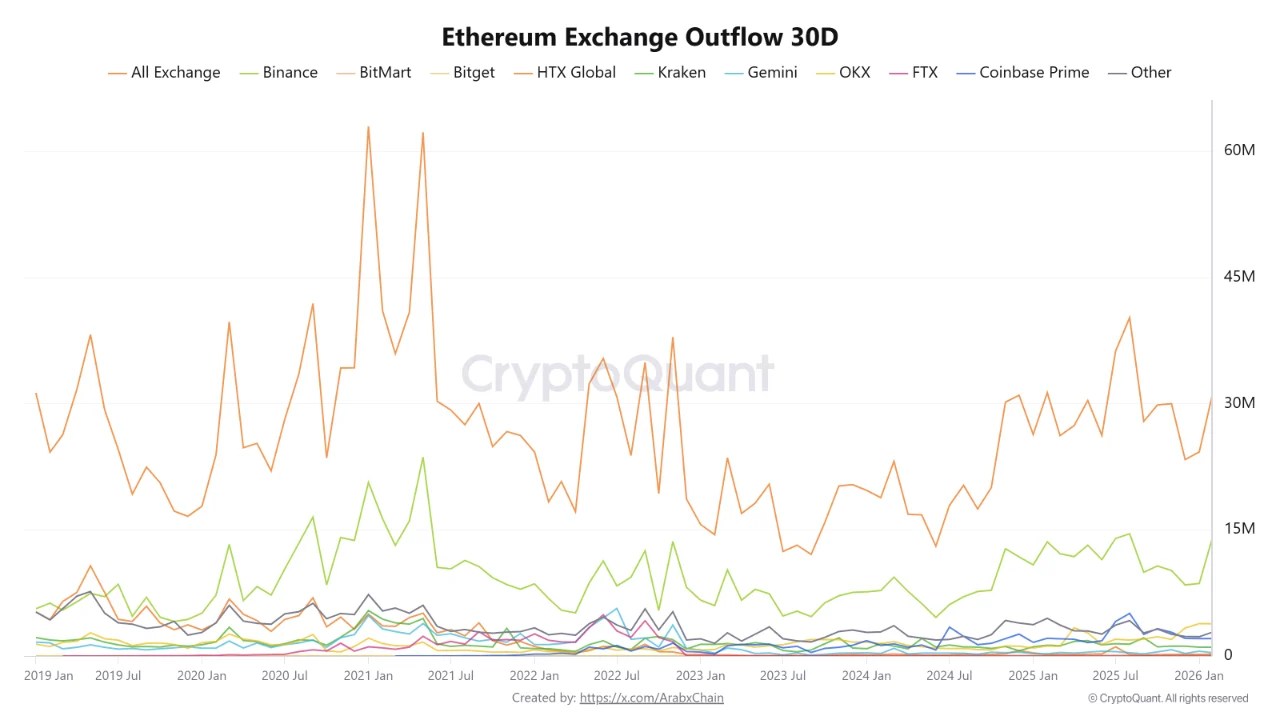
OKX заняла второе место по объемам вывода, с около 3,83 миллионами ETH, покинувшими платформу. Это указывает на то, что тренд не был изолированным для одной площадки, а отражал более широкую активность инвесторов на крупных биржах. Kraken заняла третье место, зафиксировав примерно 1,04 миллиона ETH в выводе и закрепив позицию среди топовых платформ по объему оттока в этот период.
Совокупная цифра — превышающая 31 миллион ETH — представляет собой заметный сигнал в динамике предложения Ethereum. Растущий отток с бирж часто интерпретируется как перевод монет в холодное хранилище или частные решения для хранения, что сокращает количество ETH, немедленно доступного для торговли.
Когда такие движения происходят вблизи чувствительных ценовых уровней, они могут сигнализировать об усилении уверенности в удержании или стратегической перестановке портфеля. Если выводы продолжатся, ликвидность на биржах может еще больше сократиться в предстоящие месяцы.