Автор: Willo, Arkham
Перевод: Yuliya, PANews
Редакционное примечание: Zcash, криптовалюта, запущенная в 2016 году и ориентированная на защиту конфиденциальности, построена на базе кода Bitcoin. Несмотря на свою основную цель — скрывать информацию о транзакциях, на практике большая часть транзакций с ZEC все еще может быть отслежена в блокчейне. В этой статье объясняется, как работает Zcash, и обсуждается, почему в настоящее время большинство транзакций с ZEC в блокчейне все еще можно отследить. Это показывает, что фактический уровень конфиденциальности, предоставляемый Zcash, полностью зависит от того, как пользователи решают его использовать.
Zcash — это цифровая валюта, построенная на основе технологий Bitcoin, но разработанная с целью устранить, по мнению создателей, главный недостаток Bitcoin: полную публичную прозрачность информации о транзакциях. Как и Bitcoin, Zcash имеет жесткий лимит общего количества монет в 21 миллион, сокращает вдвое награду за блок каждые четыре года и работает на механизме консенсуса Proof-of-Work (PoW). На уровне архитектуры он также использует ту же UTXO-модель транзакций, что и Bitcoin. В большинстве случаев транзакции Zcash выглядят так же, как и транзакции Bitcoin; разница заключается в том, что часть транзакций Zcash спроектирована как полностью скрытые.
В текущем криптоцикле конфиденциальность — одна из самых заметных тем. По мере усиления глобального регулирующего давления и роста возможностей инструментов мониторинга блокчейна, все больше розничных и институциональных пользователей начинают задаваться вопросом: не раскрывают ли публичные блокчейны слишком много информации о пользователях и их транзакциях? В этом контексте приватные монеты превратились из нишевой области рынка в объект пристального внимания. Именно поэтому Zcash стала одним из наиболее успешных активов на рынке в 2025 году.
История и эволюция
Zcash была запущена в октябре 2016 года компанией Electric Coin Company (ECC), основанной криптографом Zooko Wilcox-O'Hearn, совместно с опытной академической командой криптографов. Корни проекта восходят к статье 2014 года, представляющей протокол Zerocash, которая была написана исследователями из Массачусетского технологического института, Университета Джонса Хопкинса и Тель-Авивского университета. В ней теоретически предлагался протокол, позволяющий пользователям совершать приватные платежи с сохранением скорости обработки, сопоставимой с Bitcoin.
Основная криптографическая технология Zcash, zk-SNARK, не появилась вместе с криптовалютами, а стала результатом десятилетий теоретических исследований в области компьютерных наук. Вклад Electric Coin Company заключается в преобразовании этой теории в практическую технологию, способную эффективно работать на реальном блокчейне. В 2016 году команда провела церемонию криптографической настройки для генерации системных параметров; затем в 2018 году состоялась вторая церемония под названием Sapling. Это обновление значительно повысило эффективность обработки скрытых транзакций, сделав их пригодными для повседневного использования.
Система управления Zcash состоит из двух организаций: Electric Coin Company, отвечающей за разработку и поддержку протокола, и независимой некоммерческой организации Zcash Foundation, которая курирует развитие более широкой экосистемы. Часть вновь добываемых монет ZEC выделяется на финансирование работы этих двух организаций, что обеспечивает непрерывную разработку проекта без зависимости от внешних инвестиций.
Доказательство с нулевым разглашением
Ключевой технологией, обеспечивающей конфиденциальность Zcash, являются так называемые "доказательства с нулевым разглашением" (zero-knowledge proofs). В частности, Zcash использует производную технологию под названием zk-SNARK (zero-knowledge Succinct Non-Interactive Argument of Knowledge — краткое неинтерактивное аргументированное доказательство с нулевым разглашением).
Эта концепция может звучать абстрактно, но ее основная идея очень проста для понимания. Доказательство с нулевым разглашением позволяет одной стороне доказать другой стороне, что некое утверждение истинно, не раскрывая при этом никакой конкретной информации. В случае с Zcash узлы сети могут проверить, является ли транзакция законной и действительной (например, убедиться, что отправитель действительно имеет достаточные средства и не создал монеты из воздуха), совершенно не зная, кто является отправителем, кто получателем и какова конкретная сумма транзакции.
Эта технология стала прорывом в области криптографии. Публичная прозрачность Bitcoin, хотя и полезна для аудита и отслеживания, является большим недостатком для пользователей, стремящихся защитить свою финансовую конфиденциальность. Разработчики Zcash умело наложили технологию zk-SNARK на код Bitcoin, предоставив пользователям опциональный уровень защиты конфиденциальности.
Типы транзакций
Система Zcash включает два типа адресов: прозрачные адреса (t-адреса) и скрытые адреса (z-адреса).
-
Прозрачные адреса работают точно так же, как адреса Bitcoin, и вся активность по ним видна публично в блокчейне.
-
Скрытые адреса существуют в зашифрованном пуле средств, где отправитель, получатель и сумма транзакции скрыты от внешних наблюдателей.
Комбинация этих двух типов адресов порождает четыре различных типа транзакций, каждый из которых обеспечивает разный уровень конфиденциальности:
-
t → t (прозрачный в прозрачный): Полностью публично. Отправитель, получатель и сумма транзакции четко видны в блокчейне. Это ничем не отличается от стандартной транзакции Bitcoin.
-
t → z (прозрачный в скрытый): Сумма, переводимая в скрытый пул, публична, но информация о получателе скрыта. Это похоже на наблюдение за тем, как деньги вносятся в дверь: снаружи видно, что деньги поступили внутрь, но неизвестно, кому они достались.
-
z → t (скрытый в прозрачный): Получатель и сумма транзакции публичны, но информация об отправителе скрыта. Средства вытекают из зашифрованного пула, но их первоначальный источник невозможно отследить.
-
z → z (скрытый в скрытый): Полностью приватно. Единственные публичные данные в блокчейне — это комиссия за транзакцию. Отправитель, получатель и сумма транзакции полностью скрыты с помощью криптографии.
На практике, согласно историческим данным, подавляющее большинство транзакций в сети Zcash по-прежнему являются прозрачными. Из-за необходимости соответствия регуляторным требованиям большинство криптовалютных бирж и институциональных участников по умолчанию используют прозрачные адреса (t-адреса). Это означает, что доля публично читаемых данных в истории транзакций Zcash гораздо больше, чем можно было бы ожидать от "приватной монеты".
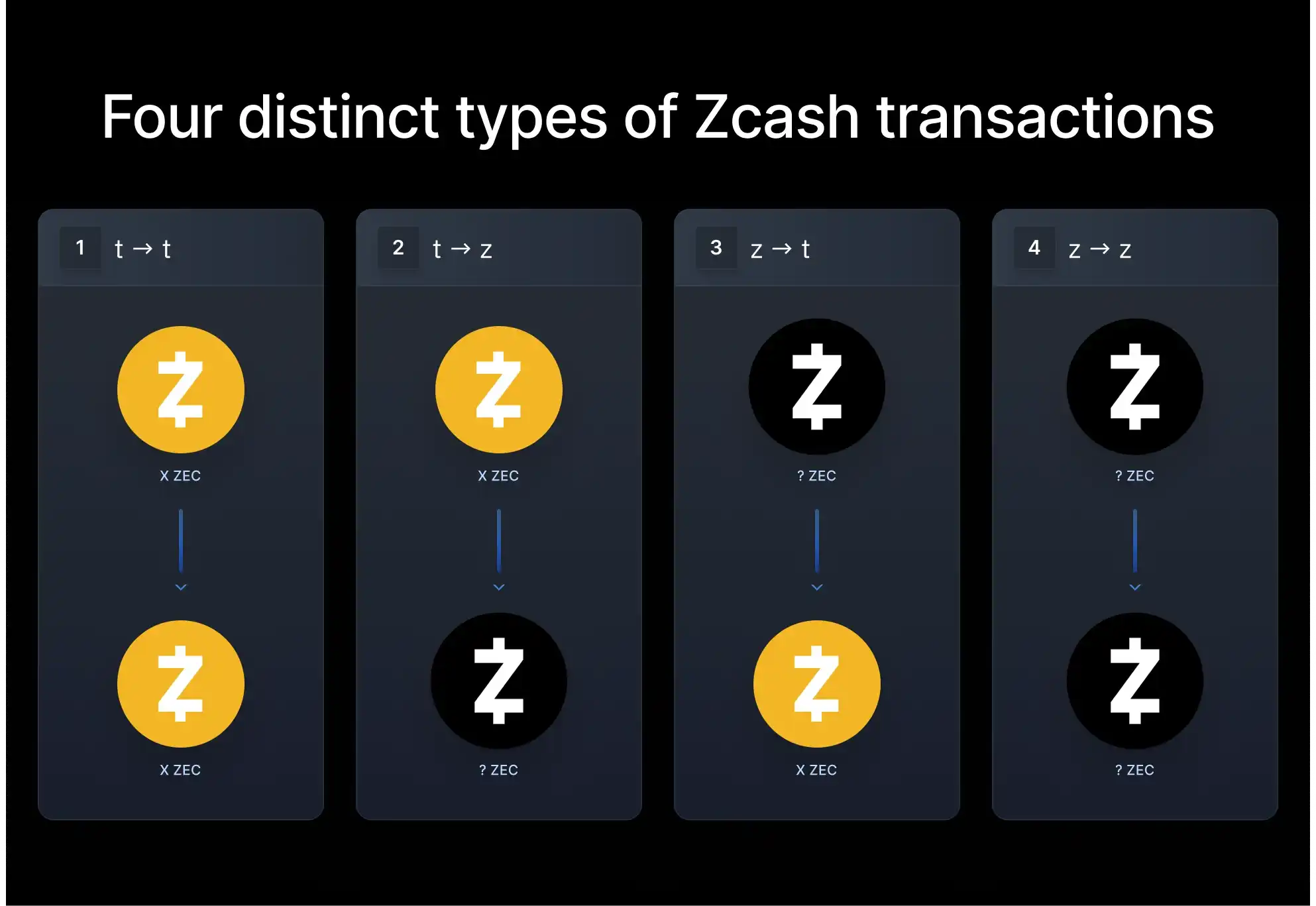
Типы транзакций ZEC
Отслеживание Zcash с помощью Arkham
Распространено мнение, что приватные монеты невозможно отследить, но реальность с Zcash ломает этот стереотип.
В настоящее время платформа анализа данных блокчейна Arkham успешно пометила более половины активности в блокчейне Zcash и идентифицировала известных лиц и организации, стоящие за объемом транзакций в колоссальные 420 миллиардов долларов. Для блокчейн-сети, специально разработанной для сокрытия данных о транзакциях, эта цифра, несомненно, шокирующая. Возможность такого отслеживания коренится в том, что большинство транзакций Zcash по-прежнему осуществляются в прозрачном режиме. Кроме того, криптовалютные биржи, кастодиальные сервисы и крупные финансовые учреждения, выступающие в качестве точек входа и выхода средств, также, как правило, сохраняют и используют прозрачные адреса для удобства перевода и управления средствами.
Безусловно, сами скрытые транзакции остаются высоконепрозрачными: активность типа z→z (скрытый в скрытый) не поддается отслеживанию, и такие скрытые адреса на платформе Arkham просто помечаются как "SHIELDED" (защищено). Однако точки входа и выхода средств из зашифрованного пула часто являются публично видимыми, и именно здесь открываются возможности для анализа разведданных на основе данных.
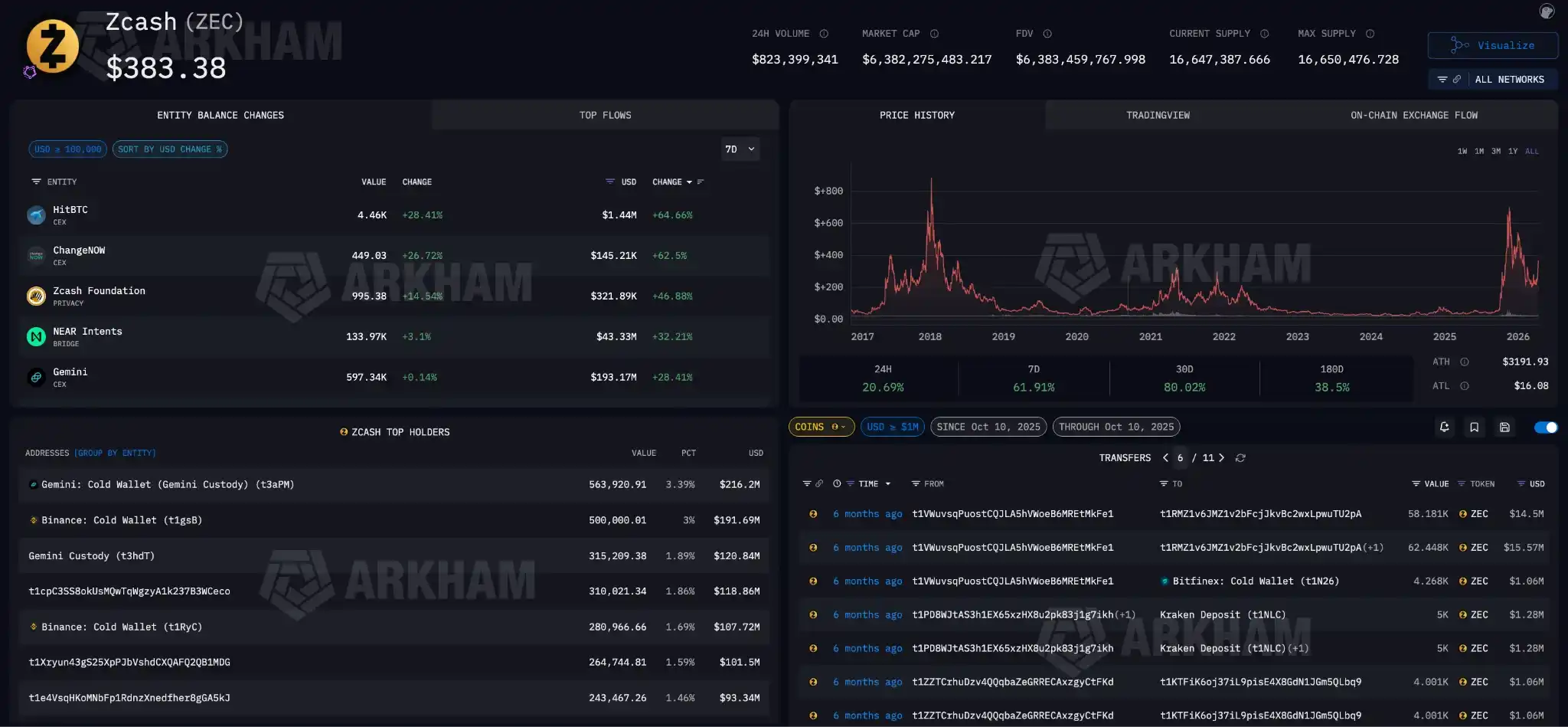
Zcash на Arkham
Кейс: Холдинг Zcash правительства США
Среди записей данных Zcash на платформе Arkham одним из примечательных объектов является правительство США. В кошельке правительства США хранятся монеты Zcash, конфискованные у основателя даркнет-маркетплейса AlphaBay Александра Казеса, который был арестован в 2017 году. На момент конфискации эти Zcash стоили около 737 тысяч долларов. В течение восьми лет эти активы не перемещались, а их рыночная стоимость с тех пор удвоилась. Публика может отслеживать активность этого кошелька в реальном времени через платформу Arkham.
Кейс: Сделка с прибылью в 6,6 миллиона долларов
Данные Arkham также могут раскрывать крупные движения средств индивидуальных трейдеров. Например, один адрес 10 октября, во время обвала рынка, купил Zcash на сумму 4,49 миллиона долларов. Продержав монеты пять с половиной недель, этот адрес перевел их на биржу Gemini. Если предположить, что трейдер продал монеты сразу после внесения на биржу, то эта сделка принесла бы ему чистую прибыль в размере 6,6 миллиона долларов, что более чем вдвое превышает его первоначальные инвестиции. На платформе Arkham видна полная история этой транзакции, включая точное время каждого перевода и название биржи, на которую в конечном итоге поступили монеты.
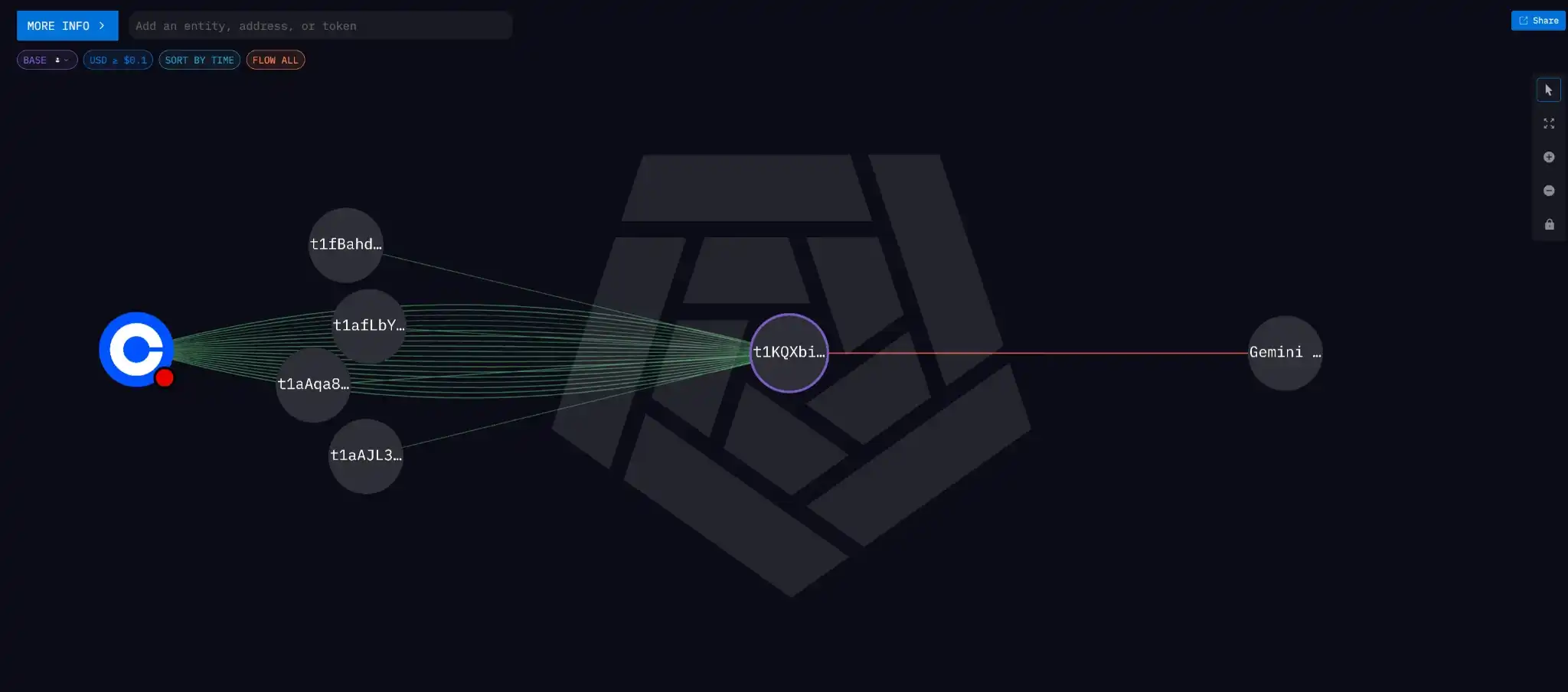
Инструмент визуализации Arkham
Вывод
Zcash занимает очень особенное место. Это одновременно один из самых технологически сложных инструментов защиты конфиденциальности в криптовалютной сфере и один из наиболее неправильно понимаемых проектов. Обычно предполагается, что приватные монеты по умолчанию полностью неотслеживаемы, но это неверно. На практике подавляющее большинство денежных потоков Zcash проходят через прозрачные адреса; чтобы соответствовать требованиям соответствия, крупные биржи также по умолчанию используют публичные прозрачные адреса. Именно поэтому такие платформы анализа разведданных в блокчейне, как Arkham, могут связать транзакции на сумму более 4200 миллиардов долларов с известными организациями в блокчейне, который изначально был разработан для противодействия такому анализу данных.
Но это не означает, что возможности защиты конфиденциальности Zcash неисправны. Чисто скрытые транзакции (z в z) на криптографическом уровне по-прежнему остаются неприступными и не поддающимися просмотру. Все это показывает, что фактический уровень конфиденциальности, предоставляемый Zcash, полностью зависит от того, как пользователи решают его использовать.
Для любого пользователя, желающего самостоятельно исследовать активность в блокчейне Zcash, широкий охват данных Arkham предоставляет наиболее полную на сегодняшний день информационную картину. Пользователи могут отслеживать историю транзакций ZEC, идентифицировать организации и балансы счетов, настраивать оповещения о важных движениях средств и использовать искусственный интеллект Arkham для глубокого анализа потенциальной информации во всей сети блокчейна.







