Объем месячных продаж невзаимозаменяемых токенов (NFT) упал до самого низкого уровня в этом году, при этом рыночная капитализация цифровых коллекционных предметов снизилась более чем на 66% по сравнению с январскими максимумами.
Данные CryptoSlam показывают, что продажи NFT снизились до 320 миллионов долларов в ноябре, что примерно вдвое меньше, чем 629 миллионов долларов, зафиксированных в октябре. Это падение вернуло месячные объемы к уровням, невиданным с сентября 2024 года, когда продажи цифровых коллекционных предметов достигли 312 миллионов долларов.
Данные также показывают, что с 1 по 7 декабря NFT принесли 62 миллиона долларов от продаж, что стало самым слабым недельным итогом 2025 года. Медленное начало декабря позволяет предположить, что спад может продолжиться в течение месяца по мере замедления импульса NFT.
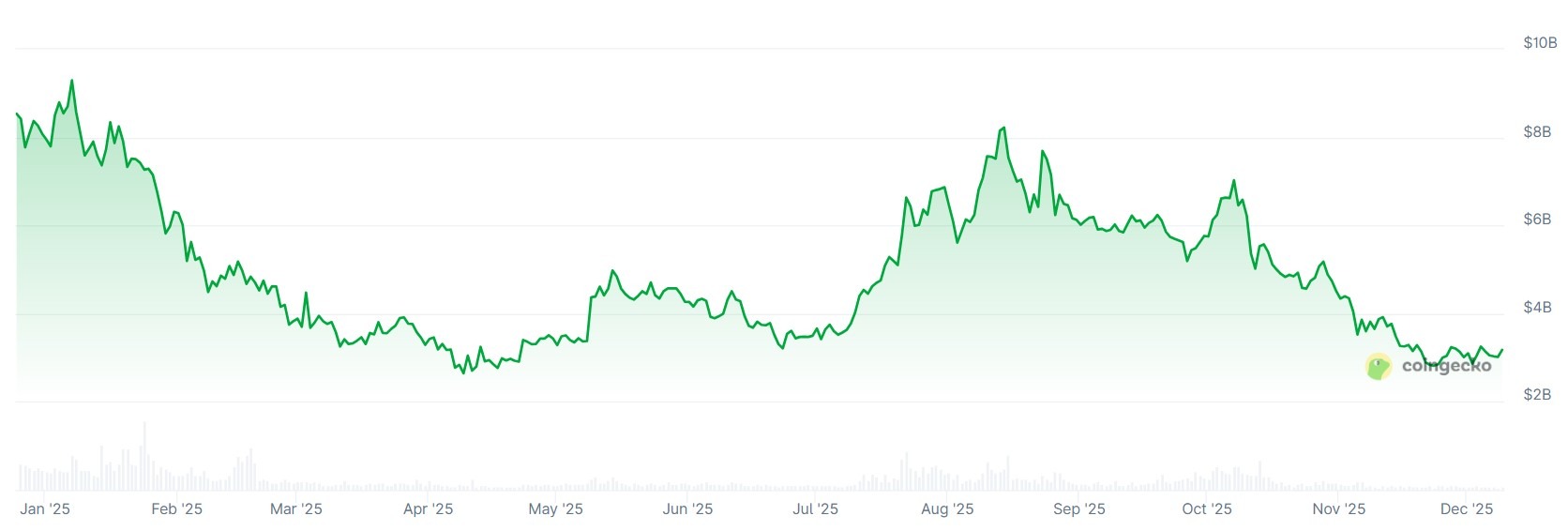
Нисходящий тренд наблюдается на фоне более широкого снижения оценок NFT. Согласно данным CoinGecko, общая рыночная капитализация сектора составляет 3,1 миллиарда долларов, что на 66% ниже максимума в 9,2 миллиарда долларов в январе.
Голубые фишки падают, но Infinex Patrons и Autoglyphs идут против тренда
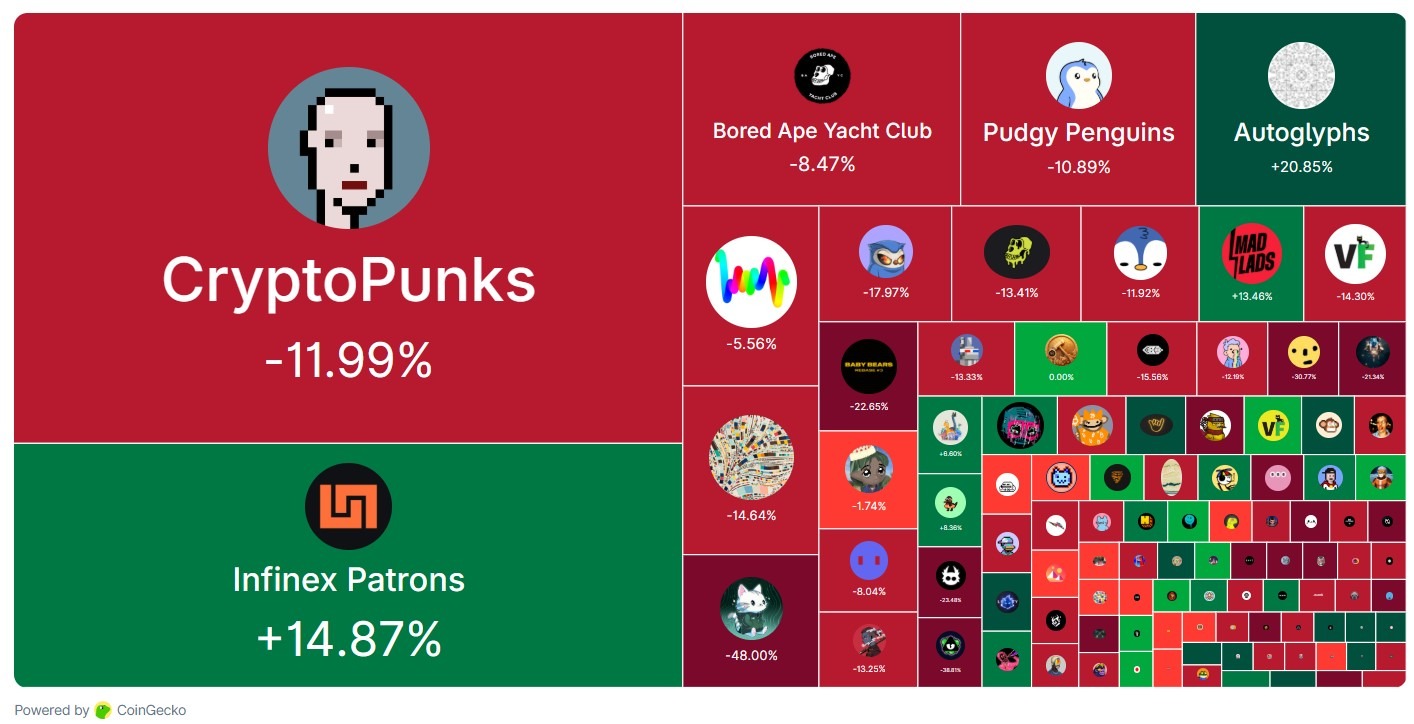
Данные CoinGecko показали, что большинство топовых коллекций NFT повторили более широкий рыночный спад: CryptoPunks, крупнейшие по рыночной капитализации, упали на 12% за последние 30 дней.
Bored Ape Yacht Club снизился на 8,5%, а Pudgy Penguins упал на 10,6% за тот же период, продолжив откат across the most dominant NFT assets.
Спад не пощадил и арт-ориентированные голубые фишки. Chromie Squiggle снизился на 5,6%, Fidenza упала на 14,6%, Moonbirds потеряли 17,9%, а Mutant Ape Yacht Club снизился на 13,4% за последний месяц.
Наибольшее падение показал Hypurr, который потерял 48%, что стало самым большим снижением среди топ-10 коллекций NFT.
Тем временем две крупные коллекции показали рост за последние 30 дней, идя против нисходящего тренда. Infinex Patrons, в настоящее время вторая по величине рыночной капитализации коллекция NFT, показала рост на 14,9%, в то время как Autoglyphs превзошли весь топ-10 лидерборд с ростом на 20,9% за последние 30 дней.
По теме: Акции Meta растут на сообщениях о возможном сокращении бюджета метавселенной на 30%
Зима NFT углубляется по мере завершения 2025 года
Последнее снижение происходит на фоне turbulent quarter для рынка NFT. Как ранее сообщал Cointelegraph, NFT зафиксировали резкое падение оценки с октября по ноябрь.
Цифровые коллекции упали с 6,6 миллиарда долларов до 3,5 миллиарда долларов, даже несмотря на незначительный рост продаж. Это представляет собой падение на 46% всего за 30 дней.
За слабостью последовал отскок. 11 ноября рыночная капитализация NFT ненадолго восстановилась с 3,5 миллиарда долларов до 3,9 миллиарда долларов, что отражает возобновившийся аппетит на фоне ралли мемкоинов.
Однако восстановление было недолгим. Данные CoinGecko показали, что рыночная капитализация NFT составляет 3,1 миллиарда долларов, что на 53% ниже октябрьского уровня.
Журнал: Цифровое искусство «состарится, как хорошее вино»: внутри 9-значной коллекции NFT Flamingo DAO