New York's "Egg Giveaway" Battle: Polymarket Opens a Store, Kalshi Issues Coupons, What Are the Giants Up To?

marsbitОпубликовано 2026-02-04Обновлено 2026-02-04

Введение

Two prediction market giants, Kalshi and Polymarket, are launching offline promotional campaigns in New York to attract users and influence regulatory perception. Ahead of the Super Bowl, Kalshi offered $50 worth of free groceries at a local market through a limited-time pop-up event, encouraging participation in low-stakes predictions like local gas price changes. Polymarket went further, announcing the opening of a “free grocery store” in New York and donating $1 million to a food bank, while distributing free produce like tomatoes and eggs—a tactic reminiscent of classic user-acquisition strategies in China. The $50 offer holds significant value in New York: it can buy about 1.5 pounds of beef, five McDonald’s meals, or cover two days of food for an average person. Both campaigns drew considerable public attention, with long queues reported. Beyond user growth, these moves appear strategically timed amid regulatory scrutiny. New York state lawmakers are considering bills to restrict prediction markets, likening them to unregulated gambling. By addressing food affordability—a key issue aligned with local political discourse—Kalshi and Polymarket may be attempting to shape a more favorable regulatory environment, even though direct oversight falls to state and federal authorities.

"Each generation has its own eggs to claim," and the value of this statement continues to rise!

This time, the two titans of the prediction market—Kalshi and Polymarket—are the ones stirring up this egg scramble.

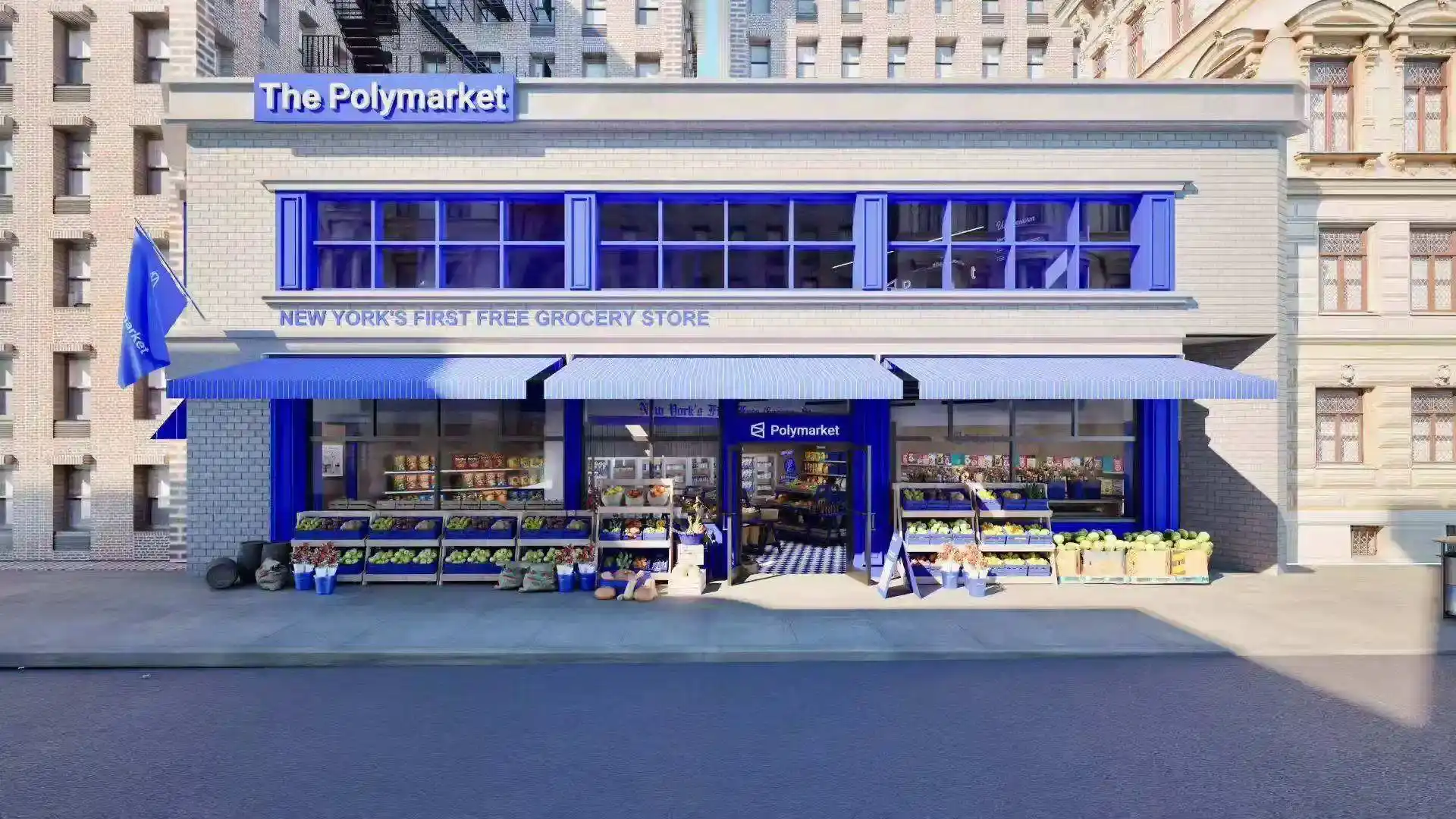
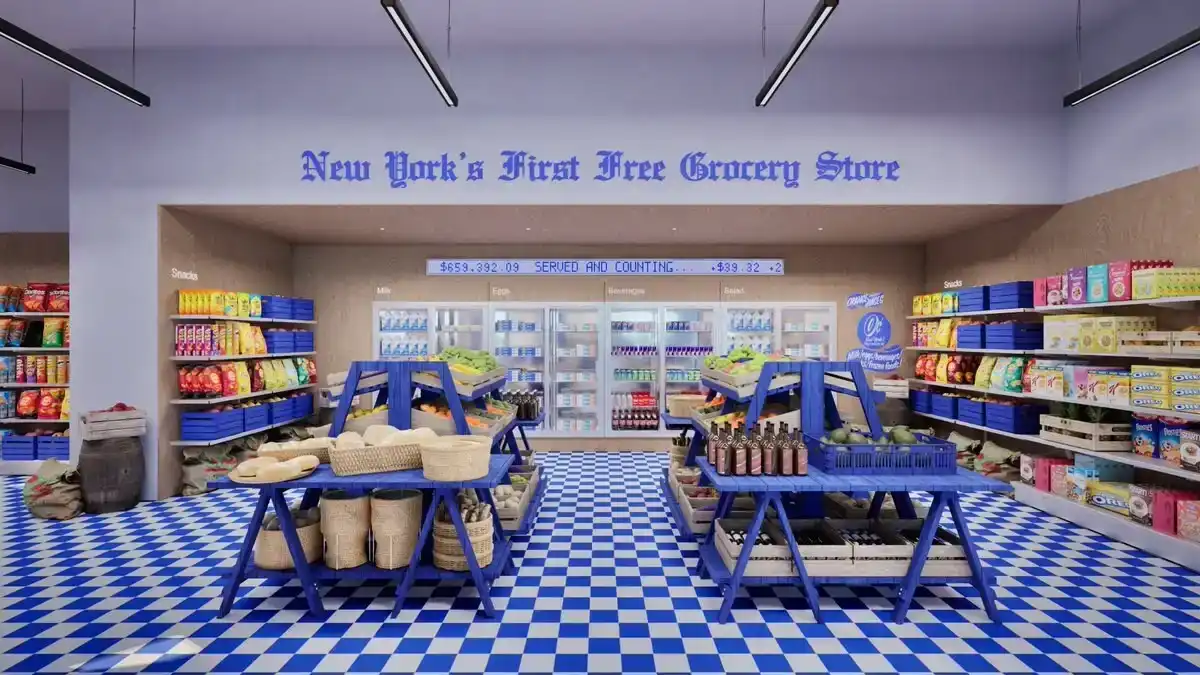
In a bid to grab more attention ahead of the "American Super Bowl," the two platforms recently launched their own "offline promotion performances"—Kalshi offered users $50 worth of free groceries at a market in New York; Polymarket went even further, unveiling its months-in-the-making "first free grocery store in New York," set to open on February 12. In the battle for attention and user growth, the prediction market giants, valued at billions, have chosen the oldest but most effective route: "ground-level offline promotions."

Regarding this, we immediately contacted our New York-based colleague Connie for the latest on "Kalshi and Polymarket's offline promotions" and practical details like "how much can $50 actually buy in New York City?" to share with our readers.

When Prediction Market Giants Dive into Offline Promotions: Kalshi's Pop-Up, Polymarket's "Instant Store Launch"

As one of America's premier metropolises, New York has become a crucial battleground and focal point for Kalshi and Polymarket, the two prediction market giants.

Addressing the growing cost-of-living pressures in New York and across the U.S., both Kalshi and Polymarket have rolled out major initiatives—

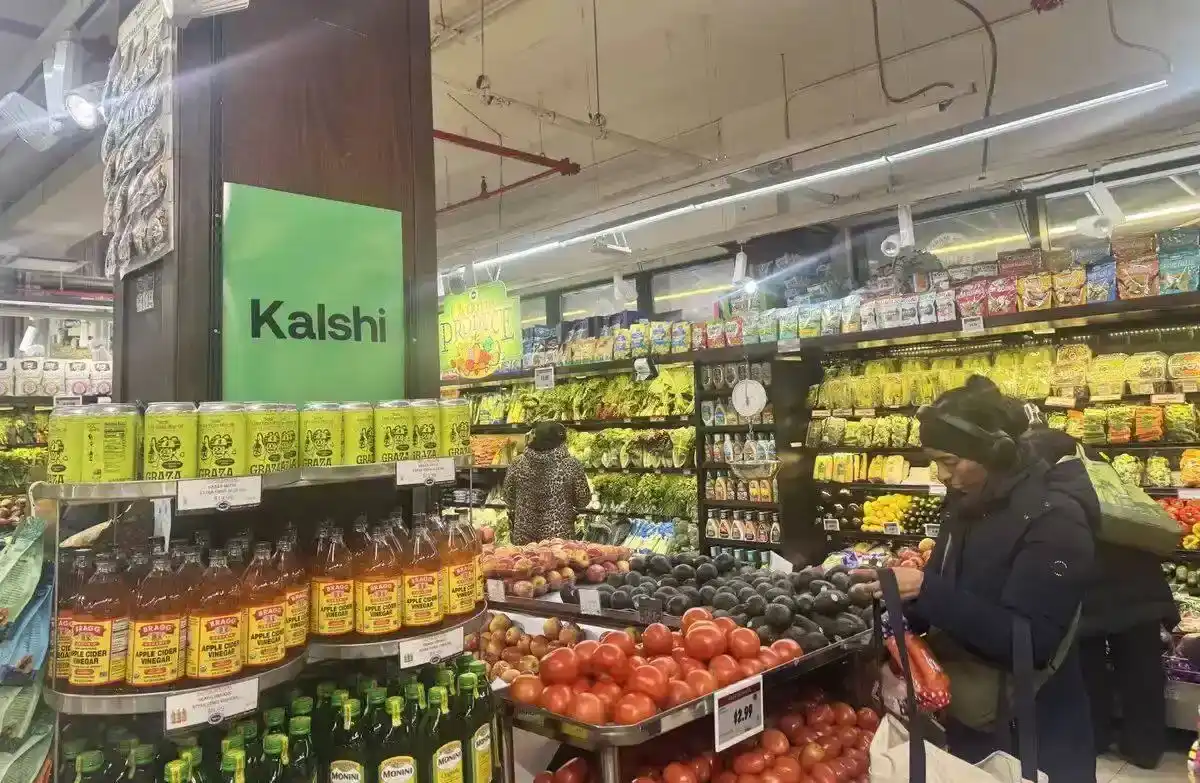
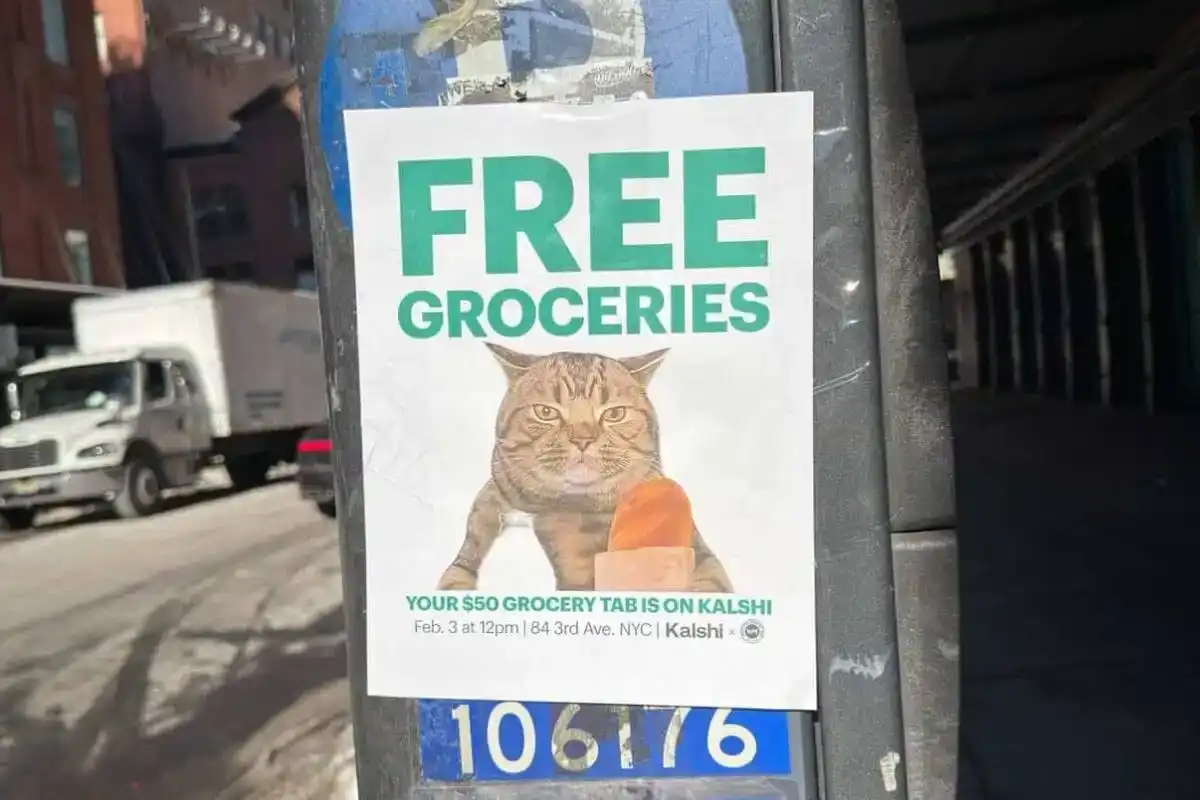
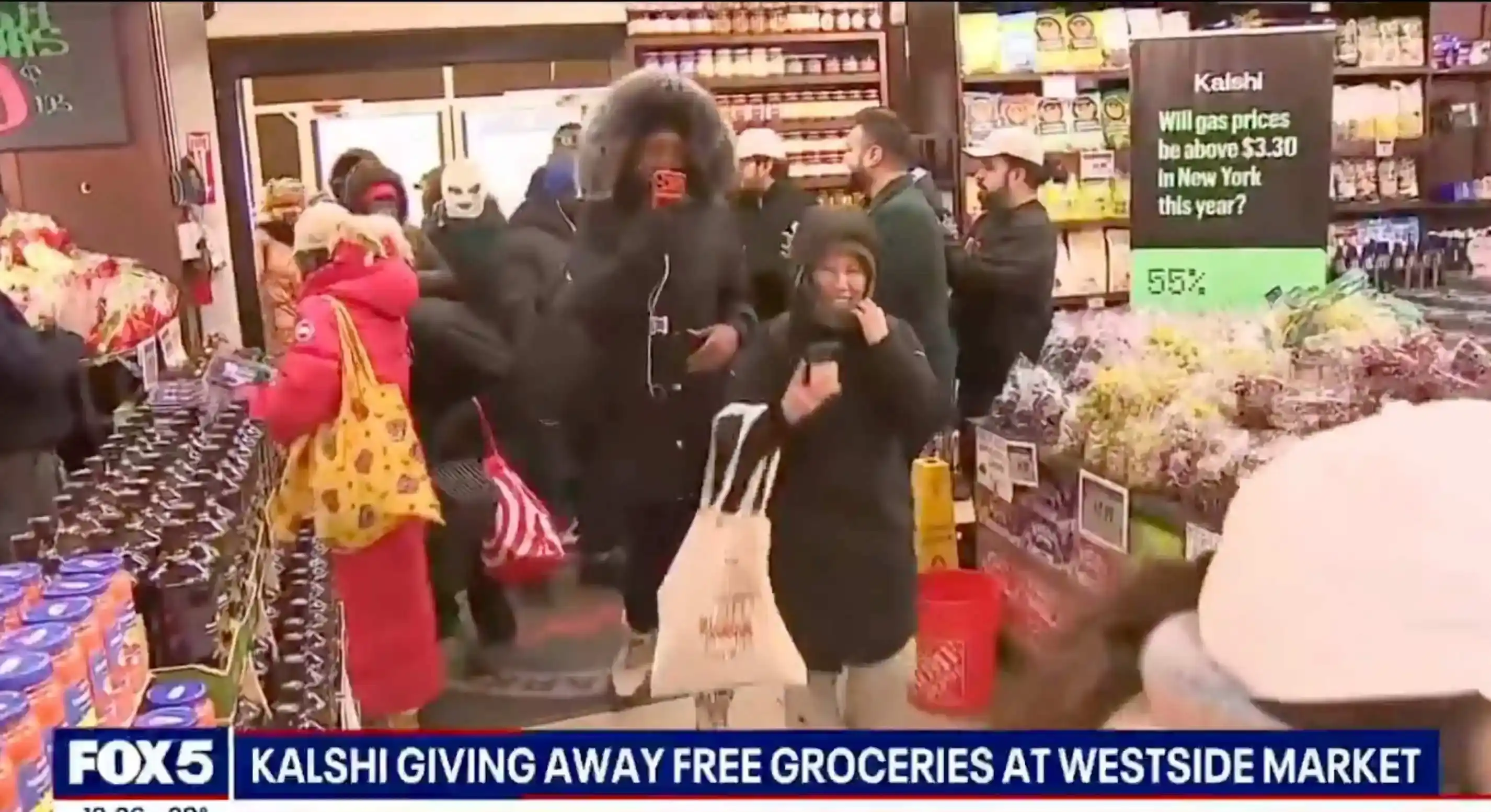
On February 3, Kalshi offered select users a【limited-time】$50 free grocery benefit at Westside Market on Third Avenue and 84th Street, aiming to attract more users to participate in various real-world event predictions on their platform.

Judging from the surrounding "flyers," "supermarket posters," and other materials, Kalshi's offline promotion resembled an impromptu "pop-up event"—partnering with a local market to deploy temporary offline materials, using "free $50 worth of groceries" as bait to draw crowds to line up and engage. This was confirmed by Connie.

Additionally, through this pop-up, Kalshi hopes to attract more people to join prediction markets with accessible, low-barrier questions like "Will New York City's gas prices exceed $3.3 this year?" thereby achieving brand marketing and user acquisition goals.

Compared to Kalshi's somewhat rough and highly commercial approach, Polymarket's preparations were undoubtedly more thorough.

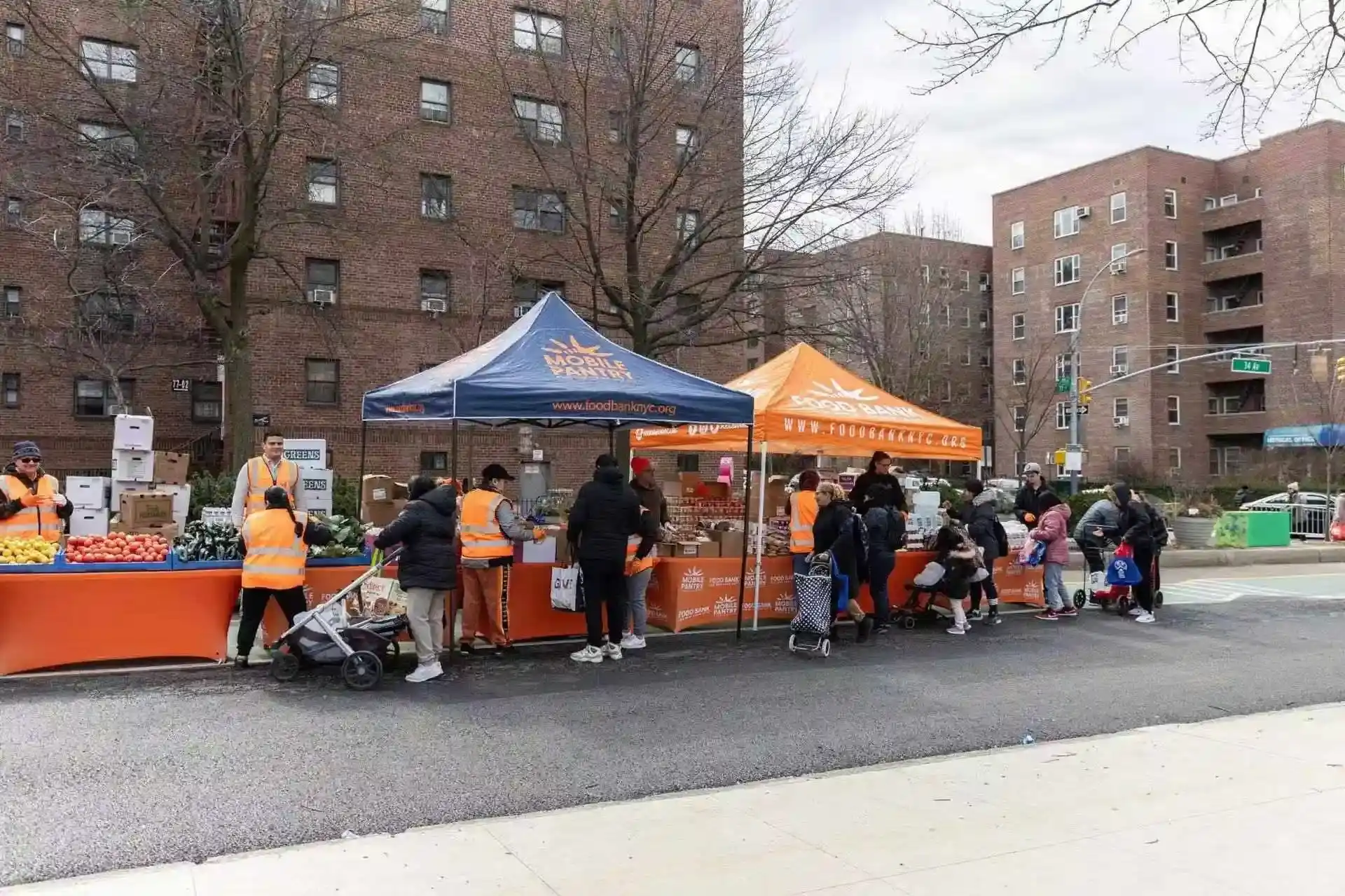
On February 3, slightly ahead of Kalshi's announcement, Polymarket officially announced that after months of careful planning, it plans to open "New York's first free grocery store" on February 12 (EST) by leasing a physical storefront. Additionally, Polymarket donated $1 million to the New York City Food Bank to address the region's "hunger issues."

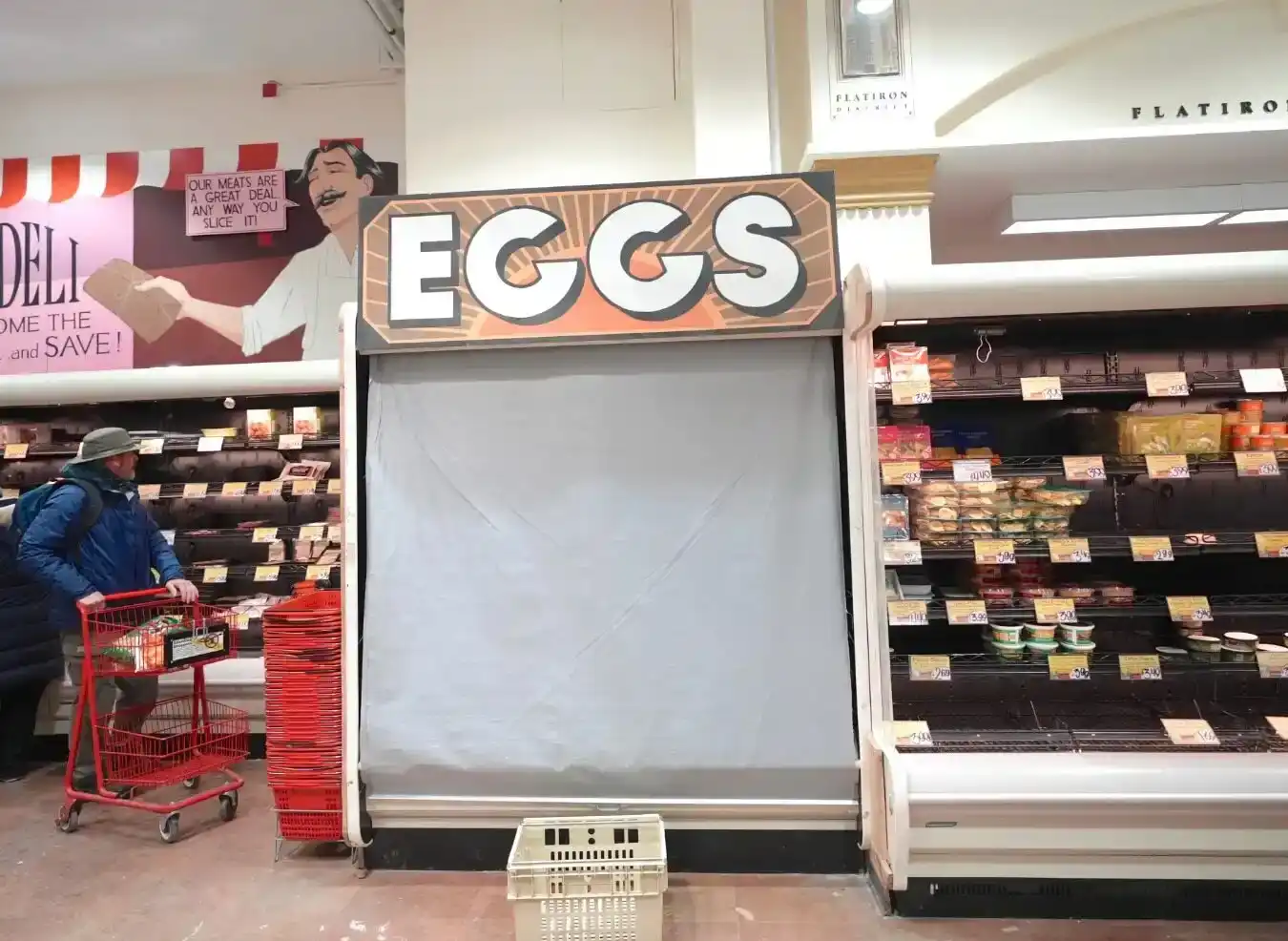
Polymarket also released actual photos of distributing vegetables like tomatoes and eggplants offline, instantly reminiscent of the domestic internet platform promotion era, full of "download the APP get free eggs" and "first recharge gift package" vibes.

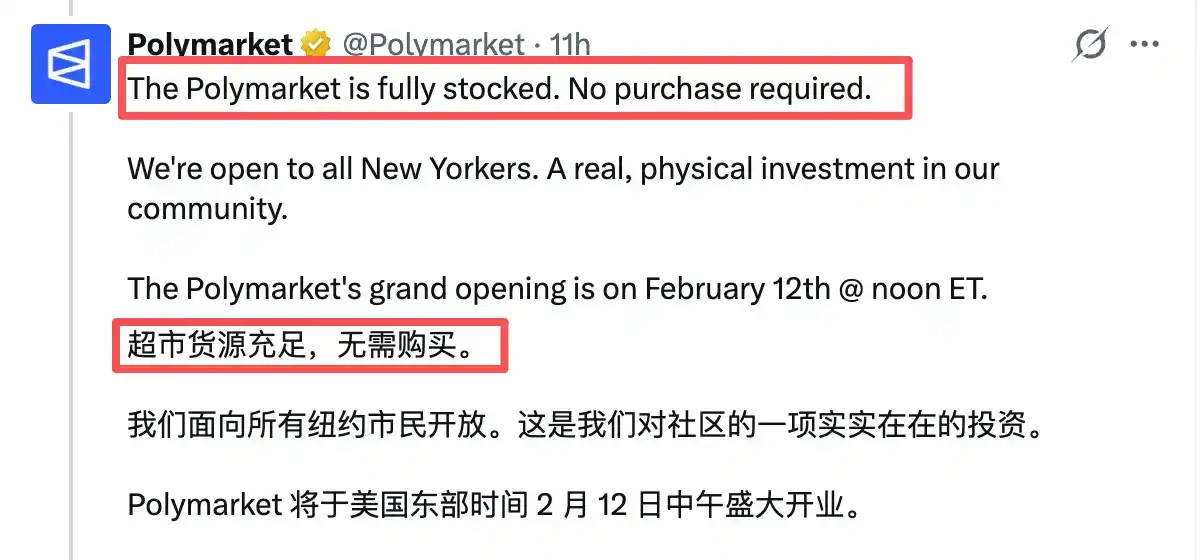
It's worth noting that Polymarket not only emphasized that "Polymarket's offline store is well-stocked, no purchase necessary" but also ended its post by encouraging donations to the New York City Food Bank, urging people to take practical action to address the real "hunger issues" caused by high food costs and the soaring cost of living.

Seeing this, one can't help but remark—

Fake crypto project promotions: Host offline conferences, feast on seafood, shill various scam tokens;

Real crypto project promotions: Give away vegetables, eggs, open offline stores for free food, engage in charity and public welfare, call for donations and compassion.

Regarding the actual purchasing power of Kalshi and Polymarket's "egg collection activities," we also discussed in detail with Connie.

The Real Purchasing Power of $50 in New York, USA: 5 McDonald's Meals, 1.5 lbs of Beef, or 2 Days of Food for the Average Person

According to Connie, $50 holds considerable value in New York City.

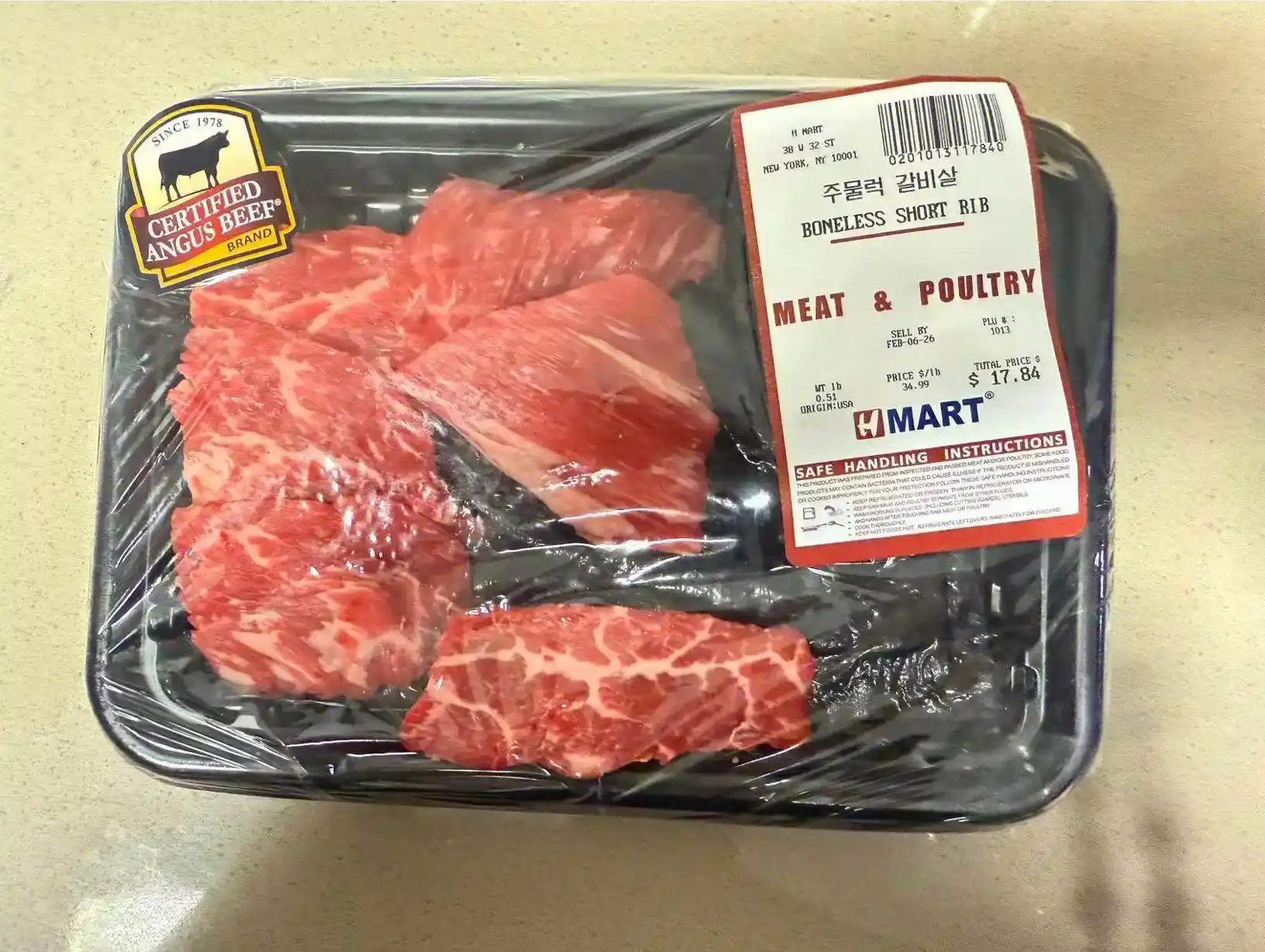
"Buying a 0.5 lb (about 0.45 kg) portion of beef at a local New York supermarket costs around $18, so $50 can buy about 1.5 lbs of beef"—enough protein for an adult's three meals a day. For comparison, a pound of beef in China costs only about 30 yuan, roughly 1/8th the cost in New York.

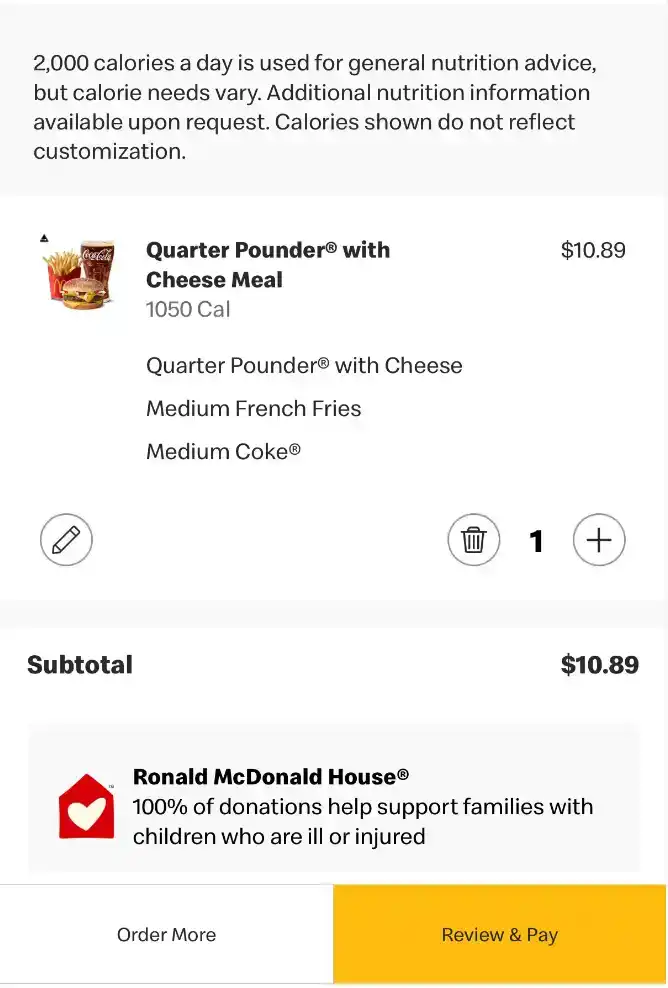
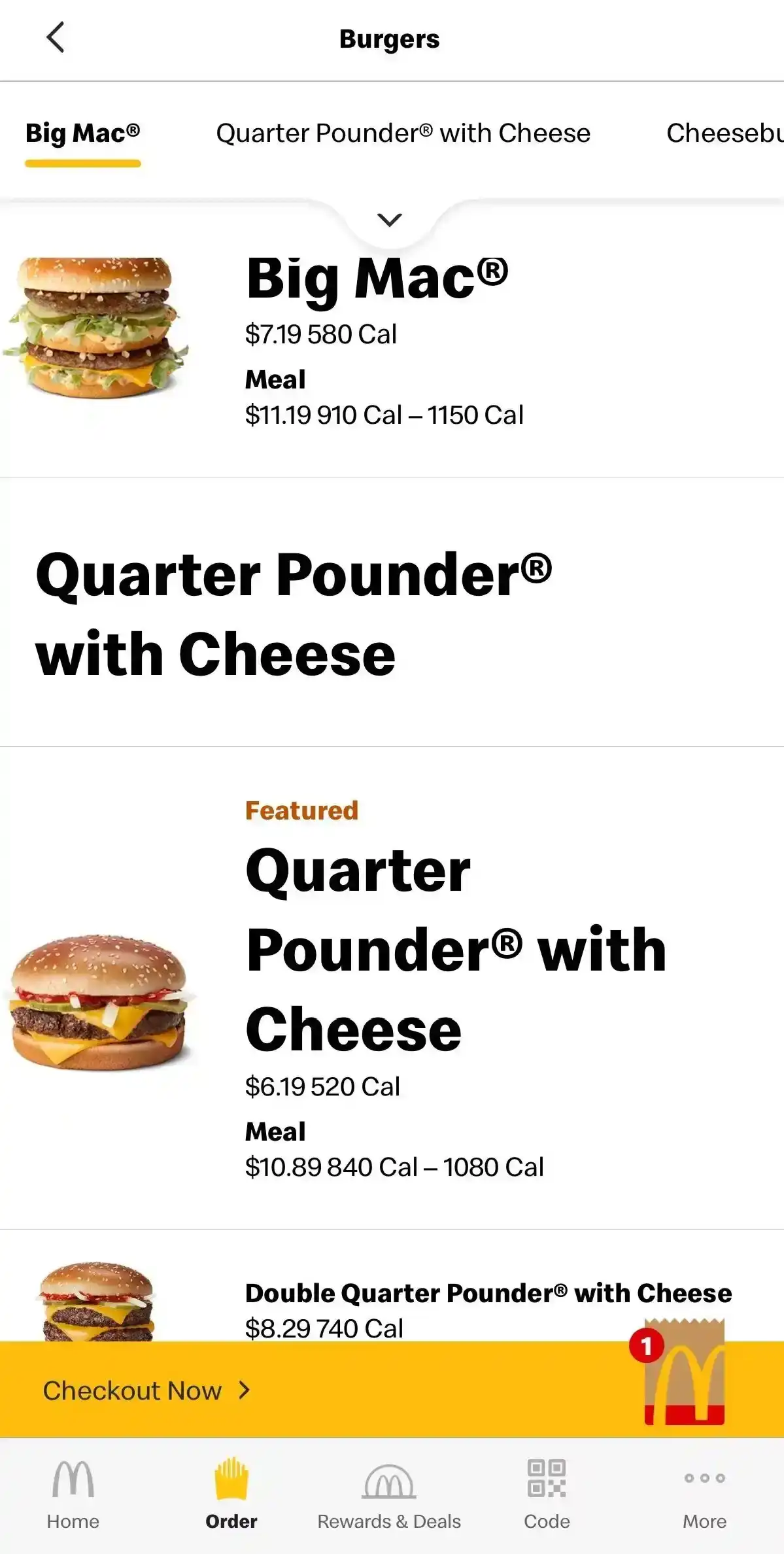
Converting to the well-known "Big Mac Index," the real purchasing power of $50 is quite impressive—a cheeseburger meal外卖 (takeout) with 800-1000 calories costs about $10.89, so $50 can buy about 5 meals; a double burger with 580 calories costs only about $7.20. Of course, these prices are "sky-high" compared to China, where the same burger meal costs only 25-40 yuan, half the price of New York's.

In other words, spent frugally, $50 can nearly cover an average person's food costs for about 2 days in New York (based on 5-6 meals). According to Connie, Kalshi's event attracted many Americans to line up for "free food," and "Americans' enthusiasm for queuing for freebies might even surpass that of Chinese people." Polymarket's "offline free grocery store" is also expected to draw large crowds. Based on the information released by Kalshi and Polymarket, the hard costs for these campaigns are likely at least $50,000 to $100,000.

Beyond charity and compassion, Kalshi and Polymarket have their own "business calculations" behind these substantial investments in manpower and resources.

The "Business Strategy" Behind Prediction Platforms' "Egg Giveaways": Influencing Institutional Regulation with Political Issues

Both Kalshi and Polymarket's food donation activities were conducted without coordination or communication with the New York City government; they are voluntary corporate actions.

However, the wording and objectives of their public statements closely align with the "policies" repeatedly emphasized by New York's new mayor, Zohran Mamdani, during his campaign—he proposed "opening publicly owned grocery stores in New York's five boroughs to lower food prices." Zohran Mamdani noted that city-run stores could reduce rental and operational costs through non-profit models and the use of public property. This proposal is still in the pilot stage, with no final implementation timeline yet determined.

On another front, as a key state, New York's legislators are busy drafting new bills targeting the emerging prediction market industry. Among them, the "ORACLE Act" aims to restrict or prohibit New York residents from betting on certain prediction market events and impose stricter regulations on event-based prediction markets; another piece of legislation plans to require prediction market operators to obtain a state-issued license before operating.

It's clear that some lawmakers still have concerns about prediction markets, viewing them as akin to unregulated gambling or susceptible to insider manipulation.

Given this, although the New York mayor has no direct jurisdiction over prediction market regulation (author's note: regulatory authority for prediction market platforms lies with state and federal governments), Kalshi and Polymarket's actions might be an attempt to indirectly seek more favorable regulations.

Finally, regardless of the ultimate impact of their "egg giveaway" efforts, we must admit that Chinese internet platforms' promotion models are likely at least 5-10 years ahead of the Western world.

Связанные с этим вопросы

QWhat are Kalshi and Polymarket doing in New York to attract users and what is the main goal of their campaigns?

AKalshi is distributing $50 worth of free food at a local market as a limited-time flash event, while Polymarket is opening a free grocery store in New York and has donated $1 million to the New York City Food Bank. Their main goal is to attract more users to their prediction market platforms, increase brand visibility, and potentially influence regulatory perceptions through public goodwill.

QHow does the purchasing power of $50 in New York compare to China, according to the article?

AIn New York, $50 can buy about 1.5 pounds of beef or 5 McDonald's cheeseburger meals, which is enough for approximately 2 days of meals for an average person. In contrast, the same amount of beef costs about one-eighth of the price in China, and a McDonald's meal is about half the cost compared to New York.

QWhat regulatory challenges are prediction markets like Kalshi and Polymarket facing in New York?

ANew York lawmakers are considering legislation such as the ORACLE Act, which aims to restrict or ban residents from betting on certain prediction market events and impose stricter regulations. Some legislators view prediction markets as unregulated gambling or susceptible to insider manipulation, leading to potential licensing requirements and tighter controls.

QHow does Polymarket's approach to 'giving away eggs' differ from typical crypto project promotions?

AUnlike typical crypto project promotions that involve hosting conferences, expensive dinners, and promoting speculative tokens, Polymarket's approach focuses on practical benefits like giving away free vegetables, eggs, and groceries, donating to charity, and encouraging public donations to address real-world issues like hunger and high living costs.

QWhat political context in New York is related to the actions of Kalshi and Polymarket, even though they didn't coordinate with the government?

ATheir initiatives align with New York Mayor Zohran Mamdani's campaign proposal to open publicly owned grocery stores to lower food prices, though his plan is still in the pilot stage. While the mayor has no direct regulatory authority over prediction markets, their actions may be an attempt to gain favor and influence state-level regulatory attitudes indirectly.

Похожее

You Bet on the News, the Pros Read the Rules: The True Cognitive Gap in Losing Money on Polymarket

The article explains that the key to profiting on Polymarket, a prediction market platform, lies not just predicting real-world events correctly, but in meticulously understanding the specific rules that govern how each market will be resolved. It illustrates this with examples, such as a market on Venezuela's 2026 leader, where the official rules defining "officially holds" the office overruled the intuitive answer of who was in practical control. Other examples include debates over the definition of a "token" or what constitutes an "agreement." The core argument is that a "reality vs. rules" gap creates pricing discrepancies that savvy traders ("车头" or "whales") exploit. The platform has a formal dispute resolution process managed by UMA token holders to settle ambiguous outcomes. This process involves proposal submission, a challenge window, a discussion period, and a final vote. However, the article highlights a critical flaw in this system compared to a traditional court: the lack of separation between the arbiters (UMA voters) and the interested parties (traders with financial stakes in the outcome). This conflict of interest undermines the discussion phase, leads to herd mentality, and results in opaque final decisions without explanatory rulings. Consequently, the system lacks a body of precedent, making it difficult for users to learn from past disputes. The ultimate takeaway is that success on Polymarket requires a lawyer-like scrutiny of the rules to identify and capitalize on the cognitive gap between how events appear and how they are contractually defined for settlement.

marsbit49 мин. назад

You Bet on the News, the Pros Read the Rules: The True Cognitive Gap in Losing Money on Polymarket

marsbit49 мин. назад

Will the Fed Still Cut Interest Rates? Tonight's Data Is Crucial

The core debate surrounding the Federal Reserve's potential interest rate cuts is intensifying amid geopolitical conflict and rebounding inflation. The key question is whether high energy prices will cause persistent inflation or weaken consumer demand enough to force the Fed to cut rates. Citigroup presents a bullish case for cuts, arguing that oil supply disruptions from the Strait of Hormuz are temporary and will not lead to lasting inflationary pressure. They point to receding bond yields and oil prices as evidence the market is pricing in a short-lived shock. Citi's data also shows tightening financial conditions, a stabilizing labor market, and healthy tax returns, supporting their view that the path to lower rates remains open. Conversely, Deutsche Bank offers a starkly contrasting, more hawkish outlook. They argue the Fed's current policy is already neutral and expect rates to remain unchanged indefinitely. Their view is based on stalled disinflation progress and a shift toward more hawkish rhetoric from key Fed officials like Waller, who cited risks from prolonged Middle East conflict and tariffs. Other officials, including Williams and Hammack, signaled rates would likely stay on hold for a "considerable time." The market pricing has shifted dramatically, now forecasting zero cuts in 2026. The imminent release of the March retail sales "control group" data is highlighted as a critical test. This metric, which excludes gas station sales, will reveal if high gasoline prices are eroding consumer spending in other areas. A weak reading could support the case for imminent rate cuts, while a strong one would bolster the argument for the Fed to hold steady. This data is pivotal for determining the near-term policy path.

marsbit1 ч. назад

Will the Fed Still Cut Interest Rates? Tonight's Data Is Crucial

marsbit1 ч. назад

Торговля

Спот
Фьючерсы

Популярные статьи

Как купить S

Добро пожаловать на HTX.com! Мы сделали приобретение Sonic (S) простым и удобным. Следуйте нашему пошаговому руководству и отправляйтесь в свое крипто-путешествие.Шаг 1: Создайте аккаунт на HTXИспользуйте свой адрес электронной почты или номер телефона, чтобы зарегистрироваться и бесплатно создать аккаунт на HTX. Пройдите удобную регистрацию и откройте для себя весь функционал.Создать аккаунтШаг 2: Перейдите в Купить криптовалюту и выберите свой способ оплатыКредитная/Дебетовая Карта: Используйте свою карту Visa или Mastercard для мгновенной покупки Sonic (S).Баланс: Используйте средства с баланса вашего аккаунта HTX для простой торговли.Третьи Лица: Мы добавили популярные способы оплаты, такие как Google Pay и Apple Pay, для повышения удобства.P2P: Торгуйте напрямую с другими пользователями на HTX.Внебиржевая Торговля (OTC): Мы предлагаем индивидуальные услуги и конкурентоспособные обменные курсы для трейдеров.Шаг 3: Хранение Sonic (S)После приобретения вами Sonic (S) храните их в своем аккаунте на HTX. В качестве альтернативы вы можете отправить их куда-либо с помощью перевода в блокчейне или использовать для торговли с другими криптовалютами.Шаг 4: Торговля Sonic (S)С легкостью торгуйте Sonic (S) на спотовом рынке HTX. Просто зайдите в свой аккаунт, выберите торговую пару, совершайте сделки и следите за ними в режиме реального времени. Мы предлагаем удобный интерфейс как для начинающих, так и для опытных трейдеров.

1.1k просмотров всегоОпубликовано 2025.01.15Обновлено 2025.03.21

Как купить S

Sonic: Обновления под руководством Андре Кронье – новая звезда Layer-1 на фоне спада рынка

Он решает проблемы масштабируемости, совместимости между блокчейнами и стимулов для разработчиков с помощью технологических инноваций.

2.2k просмотров всегоОпубликовано 2025.04.09Обновлено 2025.04.09

Sonic: Обновления под руководством Андре Кронье – новая звезда Layer-1 на фоне спада рынка

HTX Learn: Пройдите обучение по "Sonic" и разделите 1000 USDT

HTX Learn — ваш проводник в мир перспективных проектов, и мы запускаем специальное мероприятие "Учитесь и Зарабатывайте", посвящённое этим проектам. Наше новое направление .

1.8k просмотров всегоОпубликовано 2025.04.10Обновлено 2025.04.10

HTX Learn: Пройдите обучение по "Sonic" и разделите 1000 USDT

Обсуждения

Добро пожаловать в Сообщество HTX. Здесь вы сможете быть в курсе последних новостей о развитии платформы и получить доступ к профессиональной аналитической информации о рынке. Мнения пользователей о цене на S (S) представлены ниже.

活动图片