Mythos Report Released: Billions of Devices Worldwide Exposed, 10,000 Critical Vulnerabilities Uncovered in 30 Days

marsbitОпубликовано 2026-05-25Обновлено 2026-05-25

Введение

The first report from Anthropic's "Project Glasswing" reveals staggering results from its secret initiative using the next-generation AI model, Claude Mythos Preview. In just 30 days, collaborating with roughly 50 global tech giants and critical infrastructure developers, Mythos identified over 10,000 high or critical-severity software vulnerabilities. It demonstrated an extremely low false-positive rate, even outperforming human experts, and successfully intercepted a $1.5 million bank fraud in progress. Key findings include uncovering 2,000 bugs in Cloudflare's core systems, fixing 271 critical vulnerabilities in Firefox 150 (ten times more than previous methods), and discovering a 27-year-old hidden bug in OpenBSD's codebase. The AI even autonomously constructed full attack chains for some exploits. Mythos also scanned over 1,000 essential open-source projects, identifying 23,019 total vulnerabilities, with 6,202 rated high/critical by the AI. Independent verification confirmed a 90.6% true-positive rate, validating 1,094 severe vulnerabilities. A critical case involved wolfSSL, a cryptography library used by billions of devices, where Mythos found a flaw allowing perfect digital certificate forgery. This unprecedented discovery speed has created a new crisis: human developers are overwhelmed and cannot patch vulnerabilities fast enough. In response, Anthropic is rolling out defensive tools like "Claude Security" to auto-generate patches and releasing frameworks to help ...

A's Project Glasswing Achieves Initial Success: Mythos Uncovers 10,000 Critical Vulnerabilities in 30 Days, Even Intercepts $1.5M in Wire Fraud! Facing a Blizzard of Reports, Human Programmers Plead for Mercy: "Stop Finding Them! We Can't Possibly Fix Them All!"

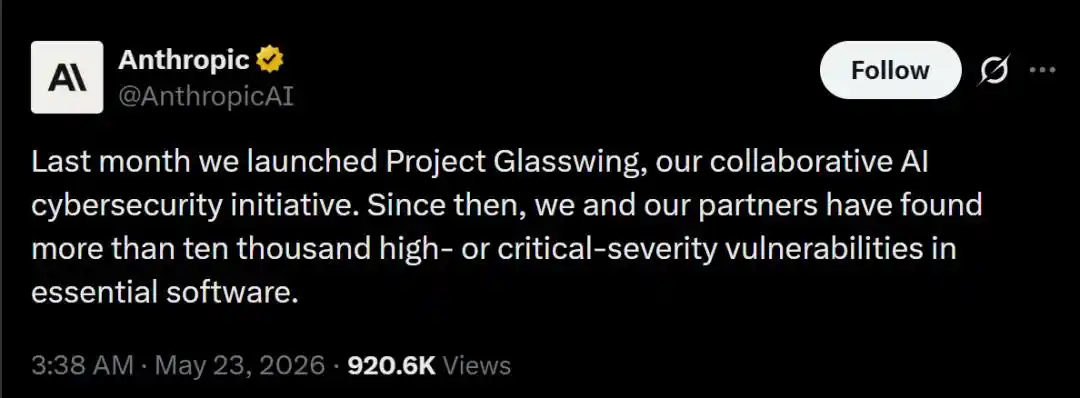
Just now, Anthropic released another piece of news that has shocked the global tech and security circles.

The first-month battle report for "Project Glasswing" has been officially announced!

In this secret operation, Anthropic deployed its next-generation top-tier large language model—Claude Mythos Preview—for the first time.

In just 30 days, partnering with about 50 global internet giants and critical infrastructure software developers, it unearthed over 10,000 high-risk or critical-level software vulnerabilities in one go!

Even more terrifying, it can not only find vulnerabilities but also automatically construct "end-to-end" attack chains.

In a real business scenario at a partner bank, it even successfully intercepted a $1.5 million wire fraud attempt!

Instantly, the entire security community was thoroughly shaken.

Some security experts even exclaimed in despair on X: "The foundation of the internet has been turned upside down by AI... We might really be done for!"

The Crazy 30 Days

Global Tech Giants Experience Firsthand: How Terrifying is Mythos?

In April 2026, Anthropic secretly launched Project Glasswing. The name symbolizes the hope of making the world's most important closed-source and open-source software transparent and secure.

The first batch to join the plan comprised about 50 critical infrastructure software developers.

After they gained testing access to Claude Mythos Preview, within just one month, the entire industry's worldview was shattered.

Let's look at this dazzling battle report—

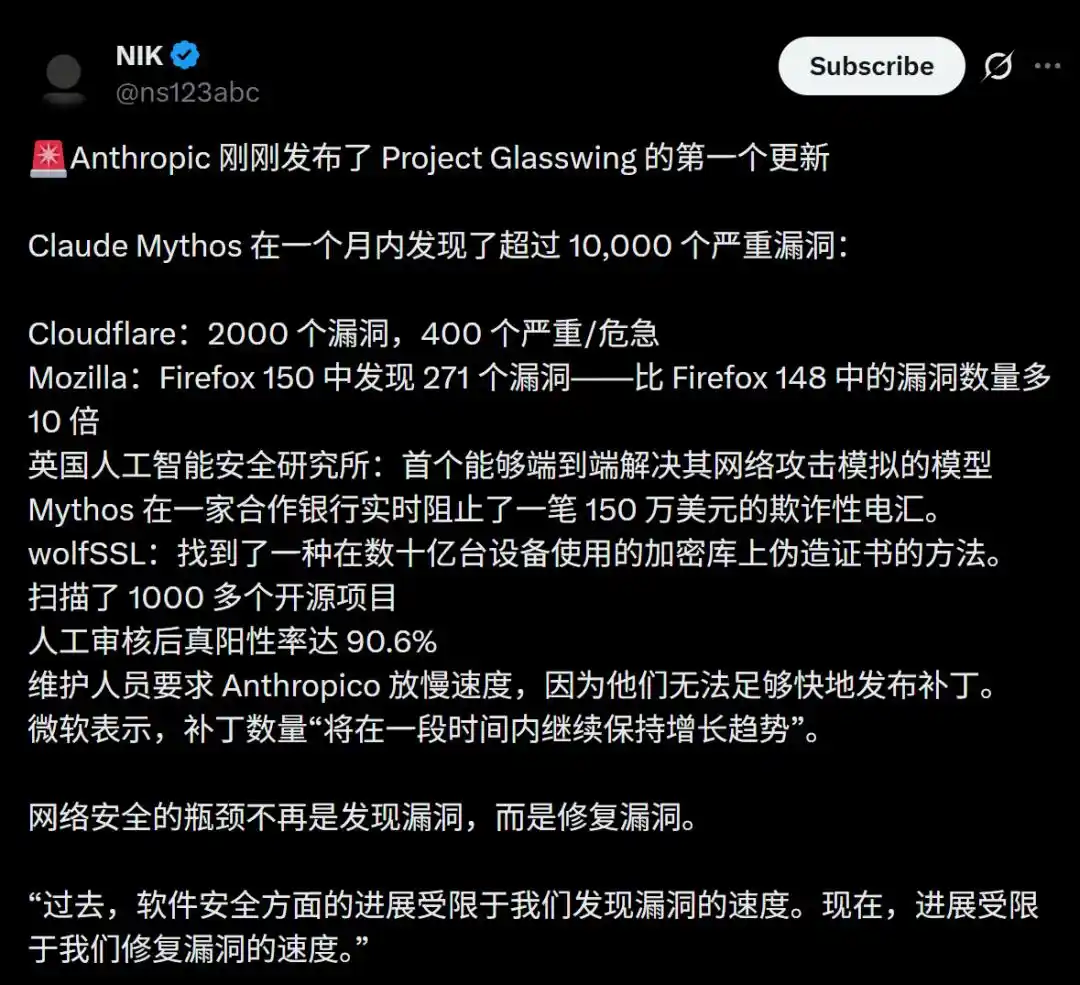
Cloudflare reported that in their extremely critical core-path systems, Mythos dug up 2000 vulnerabilities in one go! Among them, 400 were high-risk or critical-level.

Even more outrageous, Cloudflare's security team exclaimed: This AI's false-positive rate is even lower than that of top-tier human security testers.

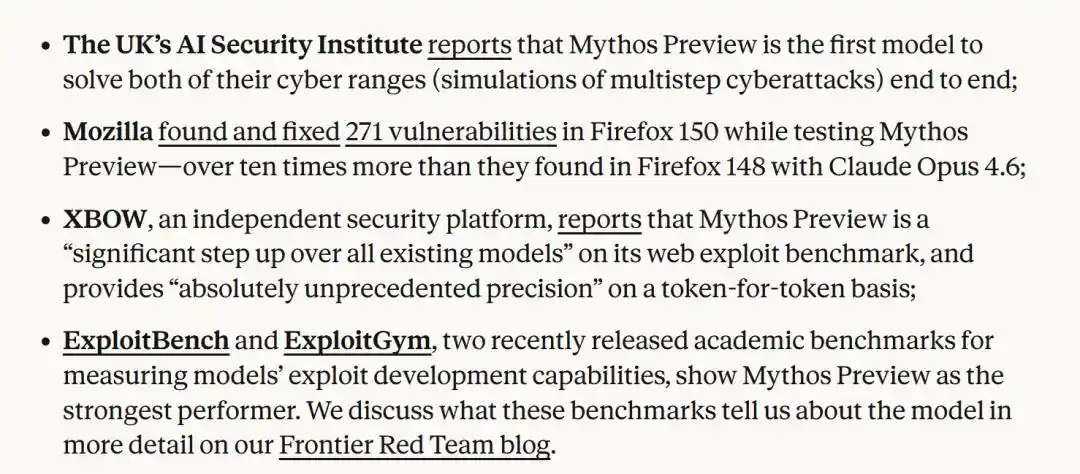
In the testing of Mozilla's latest Firefox 150 browser, Mythos fixed 271 high-risk vulnerabilities in one go.

This number is over 10 times the vulnerabilities previously found using Opus 4.6 in Firefox version 148!

OpenBSD's reported results are downright spine-chilling: Mythos unearthed a bug hidden in the OpenBSD codebase for a full 27 years!

Moreover, the model didn't even need human intervention; it constructed a complete vulnerability exploitation chain itself.

The UK AI Safety Institute offered official endorsement. They confirmed that Mythos Preview is the world's first AI model capable of end-to-end, fully compromising the double-network test environment they set up.

In practical defense, Mythos also demonstrated its prowess.

At a partner bank, a hacker group had successfully infiltrated a client's email and used AI voice-cloning technology to make a fraudulent call.

At the critical moment when the $1.5 million wire transfer was about to be sent, the Mythos model, through real-time analysis of the abnormal behavior chain, instantly saw through the scam and forcibly blocked the transaction!

"We human security experts look like primitives holding spears, watching an F-22 fighter jet fly overhead," a security researcher participating in the internal testing lamented on X.

Billions of Exposed Devices Worldwide Saved by Mythos!

However, Mythos also triggered a productivity crisis.

In the past, the core bottleneck in cybersecurity was discovering vulnerabilities. Finding a high-risk zero-day vulnerability could take top white-hat hackers weeks or even months.

Now, Claude Mythos has driven the cost and time of finding vulnerabilities to "infinitely close to zero."

Anthropic used it to scan over 1,000 core open-source projects underpinning the global internet. The results are hair-raising—

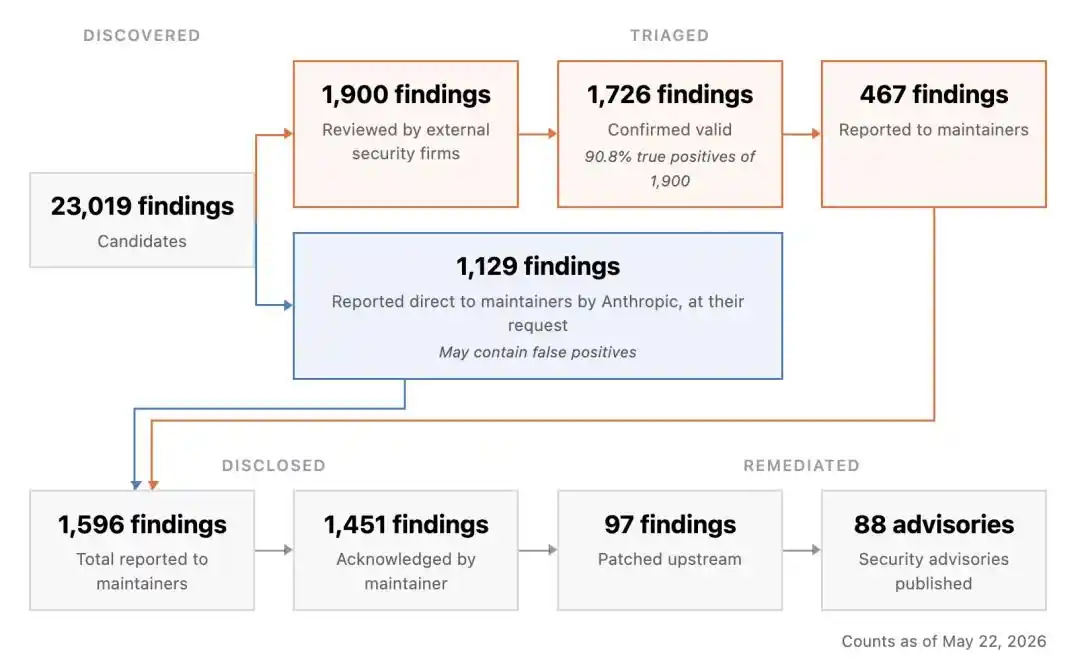
A total of 23,019 vulnerabilities were discovered, including 6,202 high-risk or critical vulnerabilities assessed by Mythos!

To ensure it wasn't the AI "rambling," Anthropic collaborated with six globally renowned independent security research firms for manual cross-verification.

The result proved: The AI's true positive rate (i.e., the vulnerability actually exists) was as high as 90.6%! Ultimately, 1,094 were confirmed as undeniable high-risk or critical vulnerabilities.

Open-source vulnerability dashboard, showing vulnerabilities of all severity levels

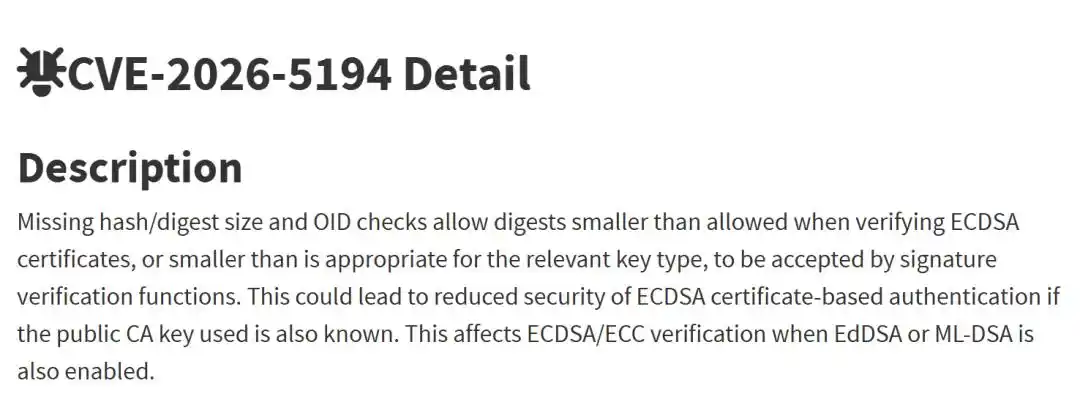
Here, an extremely typical case must be mentioned—wolfSSL.

wolfSSL is a famously prominent open-source cryptography library, used by billions of devices worldwide (including IoT devices, routers, smart cars, etc.).

However, before Mythos, wolfSSL's defenses were like paper. Mythos not only discovered an extremely hidden logic vulnerability but even wrote a set of attack code itself!

Using this code, hackers could arbitrarily forge digital certificates, creating incredibly realistic bank websites or email login pages with no flaws.

If this vulnerability hadn't been discovered and reported for repair by Mythos in advance, once exploited by the black market, the consequences would be unimaginable.

Billions of devices worldwide were actually running exposed on the edge of danger. This time, Mythos pulled them back.

Epic Reversal: Finding Bugs is No Longer the Bottleneck, Fixing Them Is!

As Project Glasswing progressed, a bizarre phenomenon never before seen in cybersecurity history was born.

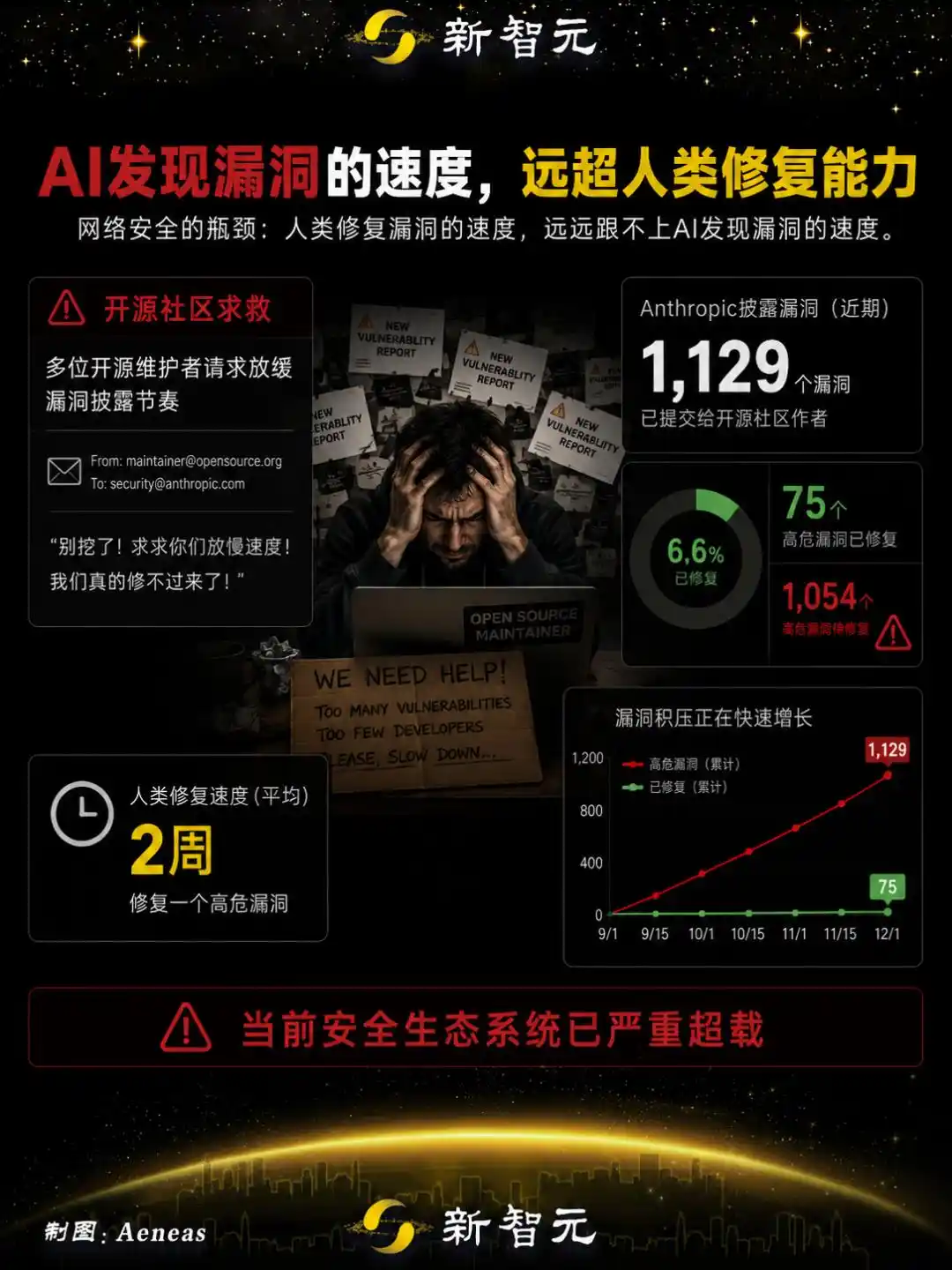
"The bottleneck of cybersecurity is no longer finding vulnerabilities. The current bottleneck is: the speed at which humans can fix vulnerabilities is far outpaced by the speed at which AI discovers them."

For open-source community maintainers, this is simply a nightmare.

Anthropic's vulnerability reports flew like snowflakes to major open-source communities. The authors are already overwhelmed.

"Stop digging! Please, slow down! We really can't fix them fast enough!"

According to Anthropic, several open-source maintainers recently sent "pleading" emails asking them to slow down the pace of vulnerability disclosure due to severe manpower shortages.

Even with detailed reports, human programmers still need an average of two full weeks to fix a single high-risk vulnerability.

Currently, out of the 1,129 vulnerabilities Anthropic submitted to open-source authors, only 75 high-risk ones have been successfully patched. The current security ecosystem is severely overloaded!

Fight Fire with Fire: Anthropic's Defense

Since humans can't keep up with fixing them, fight fire with fire.

Anthropic decisively unveiled its "Defender Toolkit" plan.

First is the heavy-weight launch of Claude Security.

This is an automation marvel built specifically for Claude Enterprise customers. Its logic is: I not only help you find vulnerabilities in your codebase, but I also directly write the fix patches for you.

Within just three weeks of launch, enterprise customers have already used Opus 4.7 to fix over 2100 vulnerabilities at lightning speed!

Next is the "Network Verification Program."

Anthropic now allows professional white-hats, penetration testers, and red/blue teams to legally and compliantly lift certain "security restraints" on the Claude model for legitimate vulnerability research and test range activities.

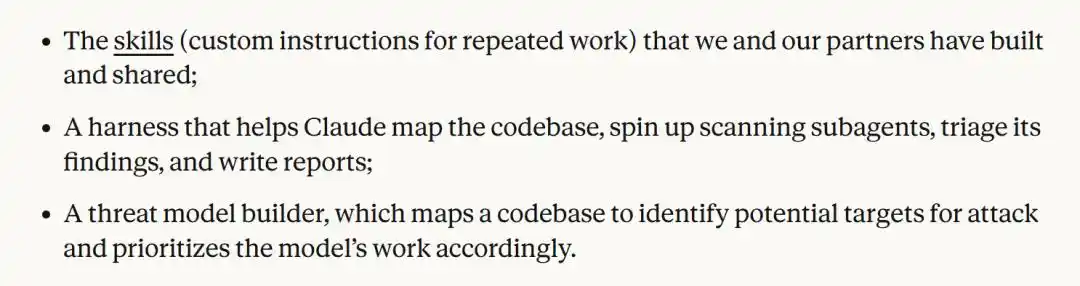
More interestingly, Anthropic directly open-sourced a "BUG-finding pipeline."

1 Customized Instructions (Skills): Teach you how to keep the AI focused for deep code review.

2 Automation Framework (Harness): A command system enabling Claude to automatically traverse massive codebases, clone sub-agents for parallel scanning, automatically triage vulnerabilities, and generate reports.

3 Threat Model Builder: Simply throw your code in, and the AI automatically identifies the system's most vulnerable "soft spots," prioritizing them for defense.

Internet giant Cisco also stepped forward, announcing the open-sourcing of the "Foundry Security Spec" system to build security assessment defenses similar to Mythos.

From now on, it will be: AI finds vulnerabilities, then AI generates patches, with humans only responsible for final review.

This is the ultimate future form of cybersecurity.

The Sword of Damocles: When Will Mythos Be Publicly Released?

So, when exactly will Claude Mythos be officially released to the public?

Anthropic's current stance remains very cautious.

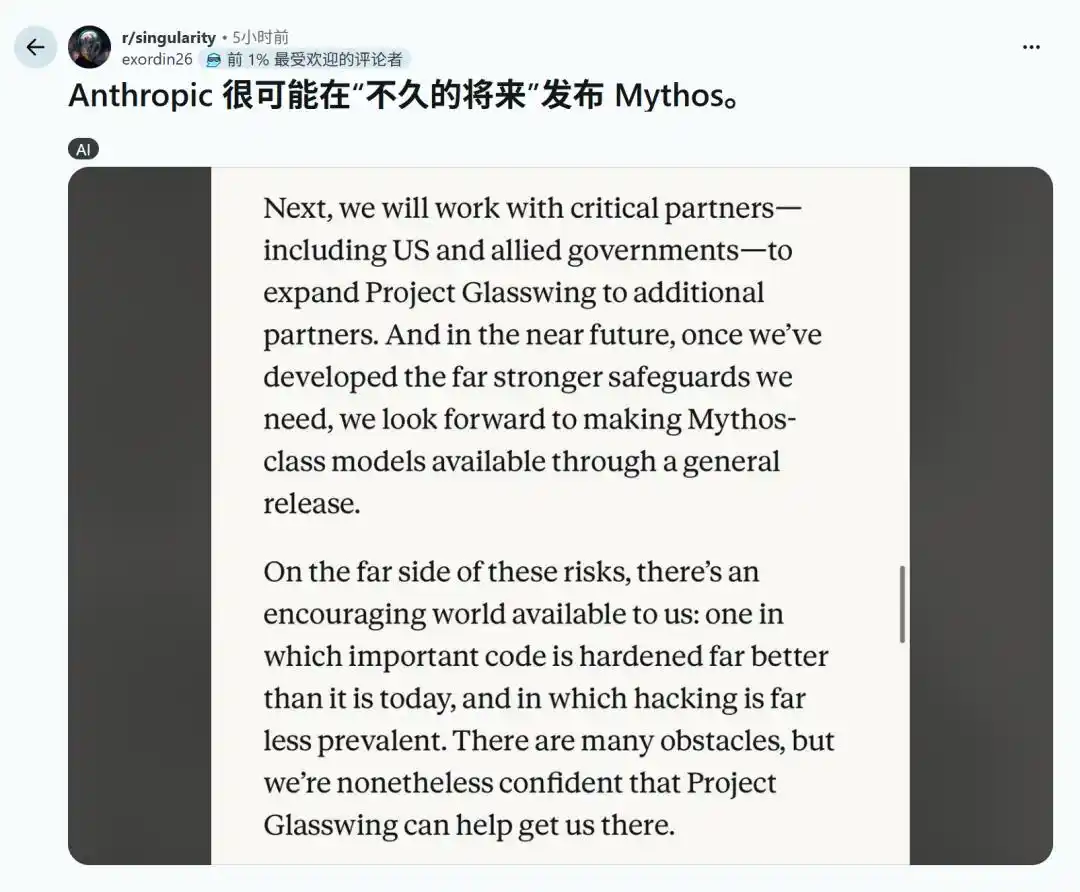
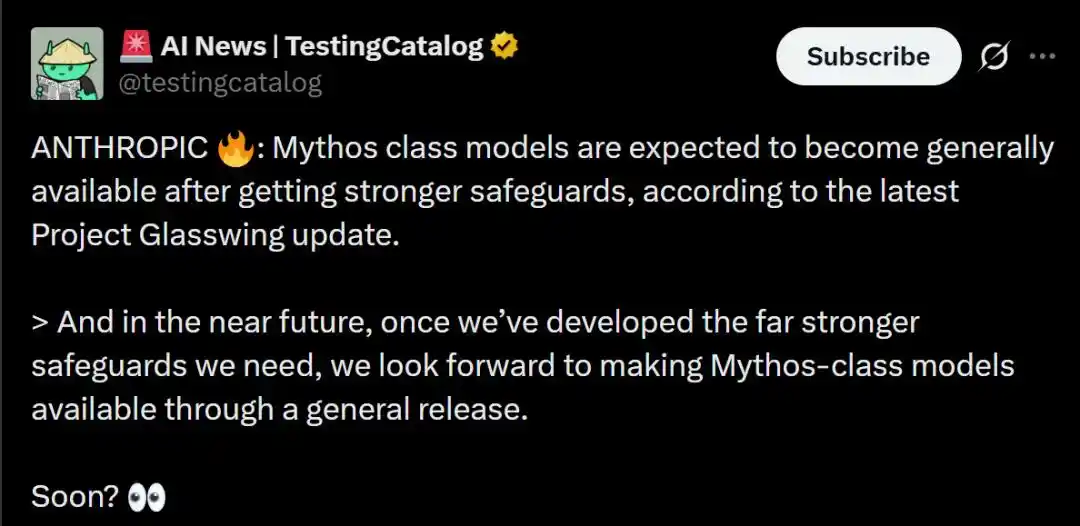
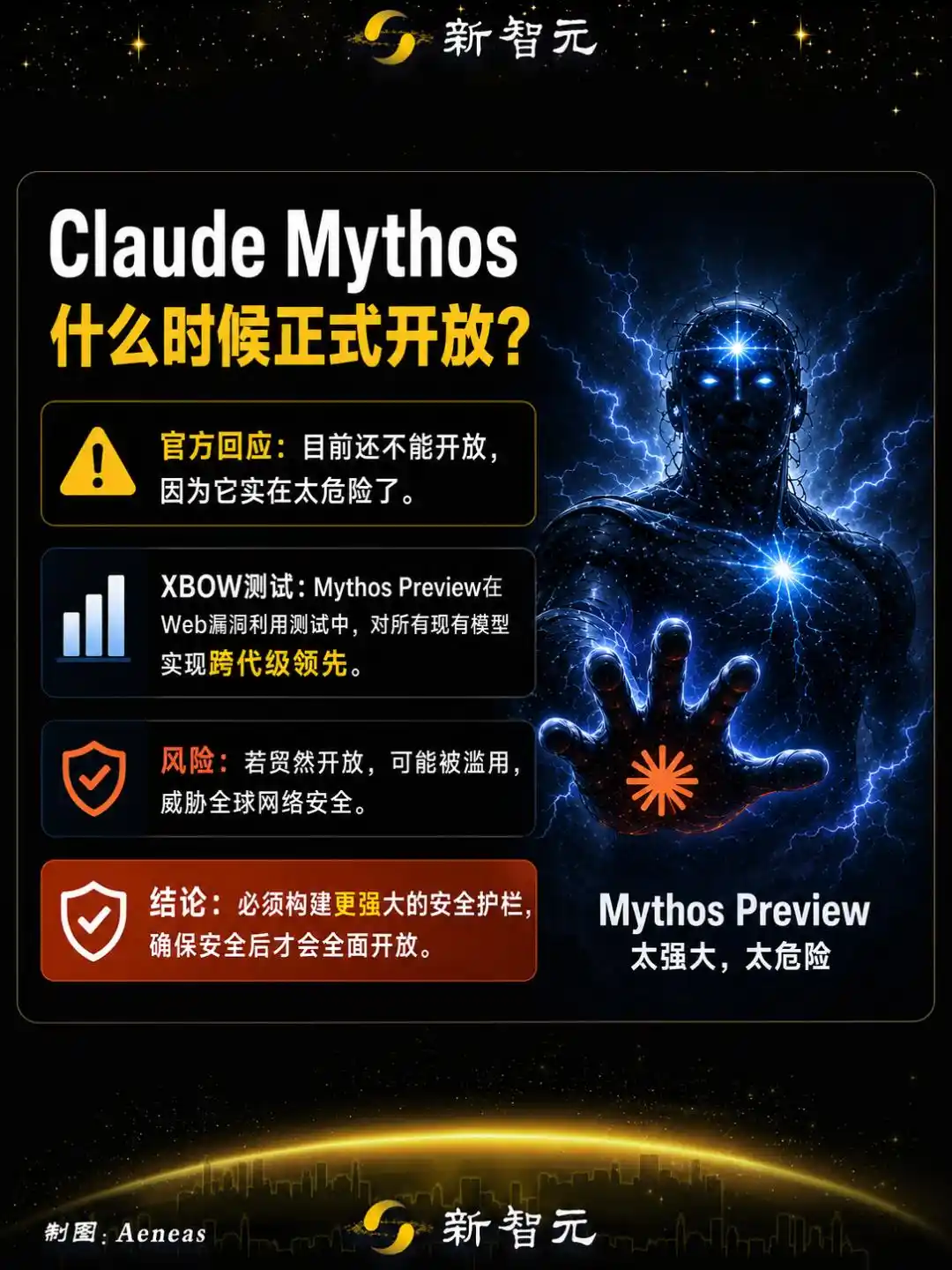
They state that once "more powerful, higher-level safety guardrails" are built, Mythos-level models will inevitably be pushed for full public release!

It cannot be released now because it is simply too dangerous.

As the XBOW test report states: Mythos Preview achieves "generational leaps ahead of all existing models" in web vulnerability exploitation benchmarks, even demonstrating "absolutely unprecedented precision" in every single token generation.

Anthropic is very clear that currently, no company in the world possesses security mechanisms strong enough to 100% ensure this model won't be abused.

If Mythos's API were made public today, tomorrow global hacker groups, and even some extremist organizations, could mass-produce thousands of zero-day exploitation tools at extremely low cost.

Ordinary people's computers, hospital systems, power grid control centers would face a catastrophe!

Anthropic's recommendations are:

1 Shorten the patch cycle! Shorten the patch cycle! Shorten the patch cycle! Don't hoard updates for a month; use existing AI tools (like Opus 4.7) to push security fixes to users as soon as possible.

2 Enforce upgrade policies. Developers must make updates as effortless as possible for users to install; for those who stubbornly refuse to upgrade, enforce network disconnection. Return to security fundamentals.

3 Strengthen multi-factor authentication (MFA), harden default configurations, maintain detailed logs.

The Calm Before the Storm

One month, collaboration with over 50 giants, 10,000+ critical vulnerabilities, intercepting $1.5M in wire fraud... These are just the initial results of Claude Mythos Preview flexing its muscles.

Right now, human programmers are experiencing the birth pangs—being inundated by AI reports, patching bugs that have lurked for 20-30 years.

But as Anthropic envisions—

"After navigating these risks, an exhilarating world beckons: one where humanity's important code will be forged to be a hundred times more robust than today's, and hacker attacks will become an exceedingly rare historical footnote."

Let us silently thank those AIs tirelessly reviewing hundreds of millions of lines of code.

It's quite possible that it just blocked a potentially fatal nuclear blast for you.

References:

https://x.com/AnthropicAI/status/20579091025425495

This article is from the WeChat public account "AI New Wisdom," author: ASI Revelation, editor: Aeneas Moses

Связанные с этим вопросы

QWhat was the outcome of Anthropic's 'Project Glasswing' in its first 30 days?

AIn its first 30 days, Anthropic's 'Project Glasswing,' which utilized the Claude Mythos Preview AI model, identified over 10,000 high or critical severity software vulnerabilities across approximately 50 major tech companies and critical infrastructure software providers.

QWhat significant achievement did the Claude Mythos model accomplish in a real-world banking scenario?

AIn a real-world banking scenario, the Claude Mythos model successfully intercepted a $1.5 million wire transfer fraud by analyzing the transaction's abnormal behavior chain in real-time and blocking it at the last moment.

QWhat major shift in cybersecurity bottlenecks does the report highlight due to AI like Claude Mythos?

AThe report highlights a major shift where the bottleneck in cybersecurity is no longer finding vulnerabilities, but rather the human inability to patch them fast enough. AI can discover vulnerabilities far quicker than developers can fix them.

QWhat was a particularly dangerous vulnerability discovered by Mythos in the wolfSSL library, and why was it significant?

AMythos discovered a hidden logic flaw in the wolfSSL cryptography library that could allow hackers to forge digital certificates and create perfect fake websites. This was significant because wolfSSL is used in billions of devices globally, meaning they were all at severe risk.

QWhy is Anthropic hesitant to publicly release the Claude Mythos model immediately, according to the article?

AAnthropic is hesitant to publicly release Claude Mythos immediately because it is considered too dangerous. They state that without 'more powerful, higher-level safety guardrails,' releasing it could enable malicious actors to cheaply mass-produce zero-day exploit tools, potentially devastating critical systems worldwide.

Похожее

Three Years Later: Looking Back at My Predictions About ChatGPT in 2023

Three Years Later: Revisiting My 2023 Predictions on ChatGPT In March 2023, shortly after ChatGPT's launch, I made 20 predictions about its future. Now, in mid-2026, I've used AI agents to fact-check each one against the latest data. Overall, most major directional forecasts were correct, with only one outright error (incorrectly stating GPT-4 had 100 trillion parameters). Key successes included predicting that RAG and retrieval architectures would become the standard for handling knowledge and hallucinations, that natural language interfaces (LUI) would create a massive new industry layer beyond the models themselves, and that China would develop viable large language models, significantly closing the performance gap with Western counterparts within about three years. Predictions about the absence of mass unemployment, the rise of a new "robot network" for agent communication, and ChatGPT not possessing consciousness also held true in their core arguments. However, the "devil was in the details." Errors frequently involved specific numbers, timelines, or overlooking distributional effects. I tended to overestimate the speed of adoption (e.g., for agent networks) while underestimating the ultimate scale of capabilities or costs (e.g., AI winning IMO gold without tools, or the extreme capital required for frontier models). Other misjudgments included: underestimating how AI would reinforce, not dissolve, information filter bubbles; incorrectly assuming AI-generated content would easily circumvent copyright (it has instead triggered record-breaking settlements); and misidentifying where value would be captured (it accrued overwhelmingly to the compute layer, like Nvidia, not just the application or model layers). Key lessons from reviewing these predictions are: 1) Directional and mechanistic insights are far more reliable than precise numbers or absolute statements. 2) There's a consistent bias to overestimate short-term speed but underestimate long-term magnitude. 3) Errors often lie in missing distributional impacts within a generally correct aggregate trend. 4) Predictions phrased with nuance and caveats aged the best. 5) Some fundamental debates (e.g., on machine consciousness or the ultimate value chain) remain unresolved even after three years. This exercise is less about scoring the past and more about establishing rules for clearer thinking about the next three years of AI.

marsbit3 ч. назад

Three Years Later: Looking Back at My Predictions About ChatGPT in 2023

marsbit3 ч. назад

Three Years Later: Looking Back on My 2023 Predictions for ChatGPT

Looking Back After Three Years: Revisiting My 2023 Predictions on ChatGPT In March 2023, shortly after ChatGPT's debut and before GPT-4's release, I made over twenty predictions about AI's future based on limited information and intuition. Now, in May 2026, I revisited those forecasts using an AI-driven analysis with 41 Opus 4.8 agents to cross-reference them with the latest data. The assessment used symbols: ✅ Correct, 🟢 Mostly Correct, 🟡 Partially Correct, ❌ Incorrect. Overall, the directional judgments held up well, with only one major factual error regarding GPT-4's rumored parameter size (incorrectly cited as 100T). However, nuances and degrees of accuracy revealed more. **What Was Largely Correct:** Predictions about mechanisms and directions proved accurate. The rise of RAG (Retrieval-Augmented Generation) as the standard architecture for combating AI hallucination was confirmed, as was the transformative potential of LUI (Language User Interface) in creating a new industry layer atop GUIs. The emergence of "robot networks" (agent-to-agent communication protocols) and China's rapid catch-up in developing capable large models (closing the performance gap with top models to ~2.7%) were also on point. The analysis affirmed that LLMs lack consciousness and that the Turing Test merely measures perceived intelligence. **What Was Off Target:** Errors often involved specific numbers, over-optimistic timelines, or misjudged distributions. The prediction that value would primarily accrue to the application layer was half-right but missed NVIDIA's dominance as the profitable infrastructure layer. Forecasts about AI circumventing copyright issues and fostering a "global common ground" by averaging human viewpoints were incorrect; instead, major copyright settlements occurred and AI personalization is increasing. Estimates for model training costs ("$5-10 billion cap") were significantly off, underestimating frontier costs and overestimating replication costs. The notion that LLMs could never do complex math without tools was disproven by later models winning IMO gold. **Key Patterns from the Review:** 1. **Direction over precision:** Judgments about mechanisms and trends were more reliable than specific numbers or definitive statements. 2. **Timing bias:** There was a tendency to overestimate short-term speed but underestimate long-term magnitude and transformation. 3. **The distribution blind spot:** Aggregate-level correctness often masked uneven impacts (e.g., on young professionals' employment). 4. **The value of qualifiers:** Predictions framed with caution (e.g., "reportedly," "for now," "prototype in 2-3 years") aged better. 5. **Some debates continue:** Issues like the nature of "emergent abilities" or machine consciousness remain unresolved. This three-year review highlights that while seeing the big picture is crucial, humility regarding specifics, timelines, and disparate impacts is essential for future forecasting.

链捕手5 ч. назад

Three Years Later: Looking Back on My 2023 Predictions for ChatGPT

链捕手5 ч. назад

AI Bubble Warning: AI Investments Are Negative Returns for Most Tech Giants

The article issues a stark warning about a potential AI investment bubble. It notes that while the AI boom shares similarities with the TMT bubble of the late 1990s, its scale is vastly larger, currently driving 93% of U.S. GDP growth. Major hyperscale cloud providers like Microsoft, Alphabet, Amazon, Meta, and Oracle are planning to invest trillions in AI data centers over the coming years. However, calculations based on analyst projections for 2025-2030 reveal a concerning math problem: expected capital expenditure growth far outpaces projected revenue growth. Even under an extremely optimistic scenario of zero costs, the implied return on investment for most of these tech giants (except Amazon) is deeply negative. This suggests that the current trajectory could lead to one of history's largest shareholder value destruction events. The piece outlines two potential escapes: AI generating vastly more revenue than currently anticipated—a near-impossible task—or a significant cutback in the planned investment splurge. The latter scenario could trigger a domino effect, severely impacting the entire tech supply chain (from Nvidia to TSMC), potentially pushing the U.S. economy into recession, and causing a major stock market downturn. The author suggests upcoming high-profile IPOs by companies like OpenAI and Anthropic might represent a transfer of risk from early investors to public market participants. While the peak of the hype cycle might sustain investment through 2026, the fundamental financial dilemma remains unresolved, setting the stage for a potential market correction in 2027 or 2028, similar to the years following Alan Greenspan's "irrational exuberance" warning.

marsbit6 ч. назад

AI Bubble Warning: AI Investments Are Negative Returns for Most Tech Giants

marsbit6 ч. назад

From Tokens to Machine Labor: AI is Shifting from Tool to "Worker"

The article "From Token to Machine Labor: AI is Evolving from Tool to 'Worker'" argues that the business model for AI is shifting beyond simply selling computational resources (tokens, GPU hours) or model access. Instead, a new "machine labor market" is emerging, where the core economic transaction is the purchase of economically useful work directly performed by software. The central thesis is that AI pricing will evolve through four stages: 1) raw tokens, 2) standardized LLM capabilities (e.g., text generation), 3) industry-specific labor markets (e.g., legal review, radiology), and finally 4) a programmable results market where tasks like resolving a support ticket are bid on and priced based on outcome. In this future, buyers will care less about *which* model or GPU completes a task and more about whether the work meets specified standards for accuracy, latency, and cost. This transition reframes the impact of AI on human labor. Rather than simple replacement, it suggests a re-coordination where machines handle standardized, verifiable work, freeing humans for roles involving oversight, context management, responsibility, and final judgment. In some cases, this "last 1%" of human input becomes more valuable as it enables the other 99% to be automated. Furthermore, as AI reduces the cost of work, demand may expand, creating larger markets (e.g., 24/7 customer service) rather than just cheaper versions of existing ones. The article concludes that while infrastructure (GPUs, models, tokens) remains crucial upstream, the market is converging on a simpler, tradeable unit: machine labor that can be defined, measured, priced, and procured based on contractible specifications.

marsbit6 ч. назад

From Tokens to Machine Labor: AI is Shifting from Tool to "Worker"

marsbit6 ч. назад

Xiaomi MiMo's 99% Price Cut is Not Marketing! Luo Fuli Posts on X to Refute Critics

The price of Xiaomi's MiMo-V2.5 series API has been permanently reduced by up to 99%, specifically for the "Input (Cache Hit)" cost, which covers users re-reading historical context in long conversations. MiMo's head, Luo Fuli, published a detailed technical blog to clarify that this drastic price cut stems from genuine engineering breakthroughs, not a marketing stunt or a simple price war. The core of the achievement lies in six key engineering optimizations. First, the model architecture adopts a Hybrid Sliding Window Attention (SWA), reducing the memory footprint (KVCache) to 1/7th of a traditional model. Second, a dual-pool memory management system actually utilizes these savings, allowing a single GPU to handle over 5 times more concurrent users. Third, an upgraded prefix caching mechanism achieves a cache hit rate of 93-95% for repeated reads, meaning most such requests bypass GPU computation entirely. Fourth, a self-developed distributed cache (GCache) utilizes idle SSD space on existing GPU servers, eliminating additional storage costs. Fifth, an intelligent scheduling system (LLM-Router) efficiently routes requests to maximize cache reuse and performance. Sixth, Multi-Token Prediction (MTP) accelerates the model's text generation ("output") side. Together, these systemic optimizations dramatically lower the real computational cost per request, enabling the 99% price reduction for cached inputs while reportedly maintaining positive gross margins. Luo Fuli's disclosure aims to shift the narrative from "price war" to a demonstration of substantive AI engineering progress.

marsbit8 ч. назад

Xiaomi MiMo's 99% Price Cut is Not Marketing! Luo Fuli Posts on X to Refute Critics

marsbit8 ч. назад

Торговля

Спот
Фьючерсы

Популярные статьи

Как купить S

Добро пожаловать на HTX.com! Мы сделали приобретение Sonic (S) простым и удобным. Следуйте нашему пошаговому руководству и отправляйтесь в свое крипто-путешествие.Шаг 1: Создайте аккаунт на HTXИспользуйте свой адрес электронной почты или номер телефона, чтобы зарегистрироваться и бесплатно создать аккаунт на HTX. Пройдите удобную регистрацию и откройте для себя весь функционал.Создать аккаунтШаг 2: Перейдите в Купить криптовалюту и выберите свой способ оплатыКредитная/Дебетовая Карта: Используйте свою карту Visa или Mastercard для мгновенной покупки Sonic (S).Баланс: Используйте средства с баланса вашего аккаунта HTX для простой торговли.Третьи Лица: Мы добавили популярные способы оплаты, такие как Google Pay и Apple Pay, для повышения удобства.P2P: Торгуйте напрямую с другими пользователями на HTX.Внебиржевая Торговля (OTC): Мы предлагаем индивидуальные услуги и конкурентоспособные обменные курсы для трейдеров.Шаг 3: Хранение Sonic (S)После приобретения вами Sonic (S) храните их в своем аккаунте на HTX. В качестве альтернативы вы можете отправить их куда-либо с помощью перевода в блокчейне или использовать для торговли с другими криптовалютами.Шаг 4: Торговля Sonic (S)С легкостью торгуйте Sonic (S) на спотовом рынке HTX. Просто зайдите в свой аккаунт, выберите торговую пару, совершайте сделки и следите за ними в режиме реального времени. Мы предлагаем удобный интерфейс как для начинающих, так и для опытных трейдеров.

1.4k просмотров всегоОпубликовано 2025.01.15Обновлено 2025.03.21

Как купить S

Sonic: Обновления под руководством Андре Кронье – новая звезда Layer-1 на фоне спада рынка

Он решает проблемы масштабируемости, совместимости между блокчейнами и стимулов для разработчиков с помощью технологических инноваций.

2.3k просмотров всегоОпубликовано 2025.04.09Обновлено 2025.04.09

Sonic: Обновления под руководством Андре Кронье – новая звезда Layer-1 на фоне спада рынка

HTX Learn: Пройдите обучение по "Sonic" и разделите 1000 USDT

HTX Learn — ваш проводник в мир перспективных проектов, и мы запускаем специальное мероприятие "Учитесь и Зарабатывайте", посвящённое этим проектам. Наше новое направление .

1.8k просмотров всегоОпубликовано 2025.04.10Обновлено 2025.04.10

HTX Learn: Пройдите обучение по "Sonic" и разделите 1000 USDT

Обсуждения

Добро пожаловать в Сообщество HTX. Здесь вы сможете быть в курсе последних новостей о развитии платформы и получить доступ к профессиональной аналитической информации о рынке. Мнения пользователей о цене на S (S) представлены ниже.

活动图片