Morning Post | Digital Bank Fasset Completes $51M Series B Funding; Jane Street Increases Holdings in Ethereum ETFs and Galaxy Digital in Q1; SATA to Pay Cash Dividend Starting June 16

链捕手Опубликовано 2026-05-15Обновлено 2026-05-15

Введение

"ChainCatcher" News Summary: **Key Developments:** - **Jane Street**: Q1 saw significant reductions in Bitcoin ETF holdings alongside increased positions in Ethereum ETFs and Galaxy Digital. - **Morgan Stanley**: Substantially boosted Bitcoin ETF exposure in Q1, with holdings in BlackRock's IBIT surging 174%. The bank also initiated positions in a Solana ETF and increased Ethereum ETF holdings while exiting XRP ETF positions. - **CME Group**: Plans to launch Nasdaq CME Cryptocurrency Index Futures (subject to regulatory review) on June 8th, offering exposure to a basket of top cryptocurrencies. - **Fasset**: The stablecoin-focused digital bank completed a $51 million Series B round with investors including SBI Group. It facilitates over $32 billion in annual transactions across 125 countries. - **SATA Dividend**: Strive's perpetual preferred stock (SATA) will begin paying cash dividends daily starting June 16th, a first for a U.S.-listed security, offering an effective annualized yield of ~13.88%. - **Consensys**: Has delayed potential IPO plans until autumn due to unfavorable market conditions. - **CLARITY Act**: Bipartisan negotiations stalled, with Democrats remaining divided over specific provisions. **Market Trends:** - **Meme Tokens**: GMGN data shows top-traded tokens on ETH, Solana, and Base chains over the past 24 hours, including HEX, SHIB, PEPE, TROLL, and others. **Featured Analysis:** Articles explore Kraken's acquisition of payment infrastructure company Reap...

Compiled by: ChainCatcher


Important Updates:

  • Jane Street Significantly Reduced Bitcoin ETF Holdings in Q1, While Increasing Holdings in Ethereum ETFs and Galaxy Digital
  • Consensys Delays Potential IPO Plans Until Fall Due to Unfavorable Market Conditions
  • Bipartisan Negotiations on the 'CLARITY Act' Fail to Reach Agreement, Democrats Remain Divided Over BRCA Clause
  • Stablecoin-Focused Digital Bank Fasset Completes $51M Series B Funding Round with Participation from SBI, etc.
  • CME Group to Launch Nasdaq Crypto Index Futures
  • JPMorgan Chase Significantly Increased Bitcoin ETF Holdings in Q1, IBIT Holdings Surge 174%
  • Strive's Perpetual Preferred Stock SATA to Pay Daily Cash Dividends Starting June 16, a First in US Stock Market History

What major events happened in the past 24 hours?

Strive's Perpetual Preferred Stock SATA to Pay Daily Cash Dividends Starting June 16, a First in US Stock Market History

ChainCatcher News: According to CoinDesk, Bitcoin treasury company Strive announced that its perpetual preferred stock SATA will pay cash dividends every trading day starting June 16, becoming the first listed security in US capital market history to achieve daily dividend payments.

Strive CEO Matthew Cole described this move as "a zero-to-one innovation." SATA has an annualized dividend rate of 13%. After switching to daily payments, the effective annualized yield increases to approximately 13.88%. Currently, Strive has cleared all its debt, holds 15,009 bitcoins, and ranks ninth among global listed companies in Bitcoin reserves.

JPMorgan Chase Significantly Increased Bitcoin ETF Holdings in Q1, IBIT Holdings Surge 174%

ChainCatcher News: According to Cointelegraph, 13F filings show that JPMorgan Chase substantially increased its Bitcoin ETF holdings in the first quarter, with holdings in BlackRock iShares Bitcoin Trust (IBIT) rising from approximately 3 million shares to 8.3 million shares, an increase of 174%.

Additionally, JPMorgan also significantly increased holdings in other Bitcoin spot ETFs like Fidelity FBTC and Bitwise BITB, and slightly increased holdings in MicroStrategy (MSTR).

Regarding altcoin ETFs, JPMorgan's moves varied: it initiated a purchase of Bitwise Solana Staking ETF (BSOL), increased holdings in Ethereum-related ETFs, while completely selling off its XRP ETF holdings.

CME Group to Launch Nasdaq Crypto Index Futures

ChainCatcher News: CME Group announced plans to launch Nasdaq CME Cryptocurrency Index Futures on June 8, pending regulatory review. The Nasdaq CME Cryptocurrency Index Futures will be the company's first market-cap-weighted futures contracts, offered in both micro and standard contract sizes.

These contracts will provide market participants with a capital-efficient way to gain exposure to top cryptocurrencies through a single, financially-settled futures contract. At expiration, the Nasdaq CME Cryptocurrency Index Futures will be settled based on the value of the Nasdaq CME Cryptocurrency Settlement Price Index, which measures the performance of the highest-volume, most actively traded cryptocurrencies, currently (as of May 14) including Bitcoin, Ethereum, SOL, XRP, ADA, LINK, and lumens (XLM).

Stablecoin-Focused Digital Bank Fasset Completes $51M Series B Funding Round with Participation from SBI, etc.

ChainCatcher News: According to CoinDesk, Los Angeles-based stablecoin-focused digital bank Fasset announced the completion of a $51 million Series B funding round. Investors include Japan's SBI Group, Investcorp, and Turkish asset management firm Arz Portföy. The valuation for this round was not disclosed.

Fasset covers over 50 payment channels across Asia, Africa, and the Middle East using stablecoin technology, serving over 1,000 SMEs in 125 countries with an annualized transaction volume exceeding $32 billion. The company plans to use the funds to expand into new markets, develop lending and trade finance products, and expand its proprietary stablecoin payment and custody infrastructure, the "Own Network." Furthermore, Fasset recently partnered with Tether, the issuer of USDT, to launch a gold-backed digital payment card.

Fintech Company Stitch Completes $25M Series A Funding Led by a16z

Meme Token Hot List

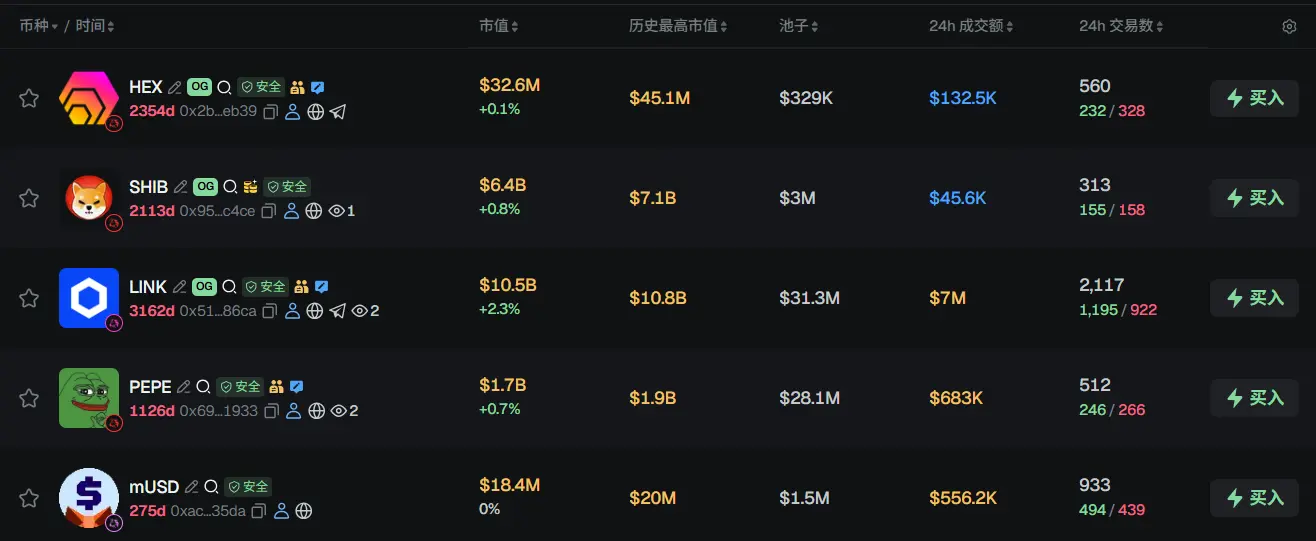
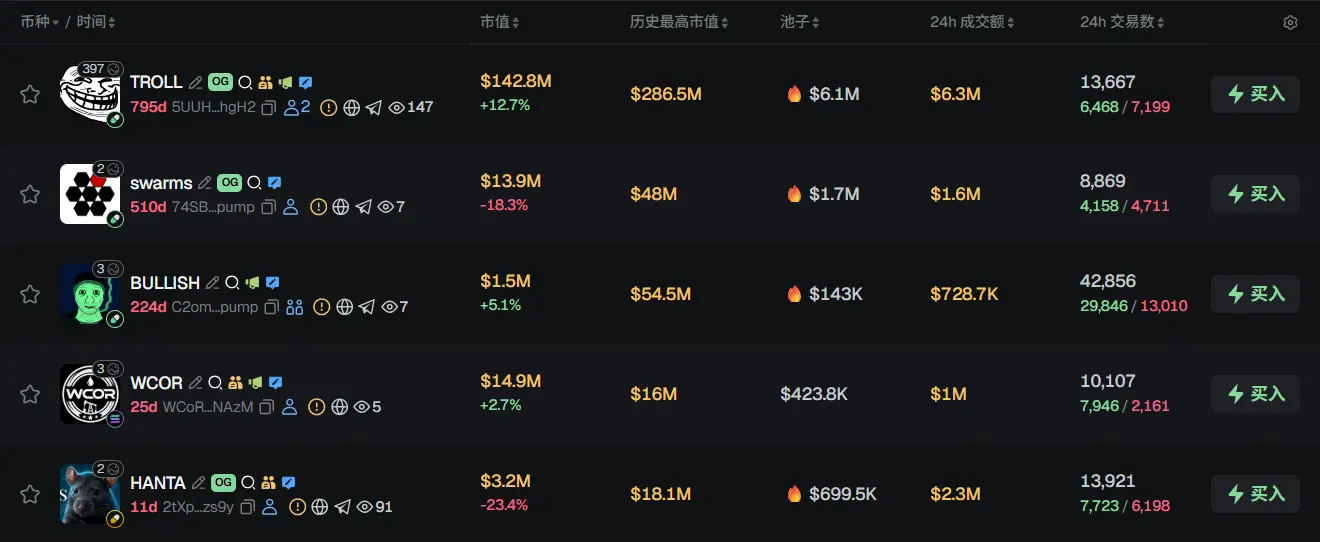
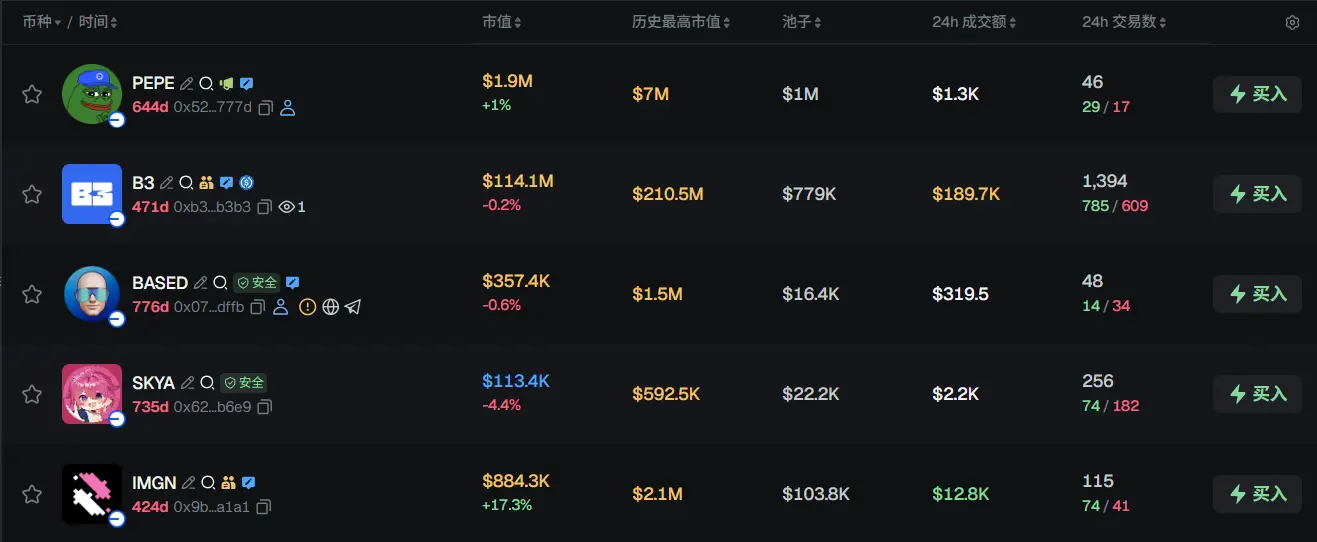
According to data from the Meme token tracking and analytics platform GMGN as of 09:00 on May 15,

The top five trending tokens on ETH in the past 24h were: HEX, SHIB, LINK, PEPE, mUSD

The top five trending tokens on Solana in the past 24h were: TROLL, swarms, BULLISH, WOCR, HANTA

The top five trending tokens on Base in the past 24h were: PEPE, B3, BASED, SKYA, IMGA

What interesting articles are worth reading from the past 24 hours?

Why Did Kraken Buy Reap, Instead of Just Buying a U Card?

Kraken's parent company Payward intends to acquire Reap for up to $600 million, a deal that serves as a good entry point to understanding stablecoin payments. According to official announcements from Payward and Reap, Reap is defined as a stablecoin-native, card issuing and payments infrastructure company. After the transaction closes, Reap's capabilities will be integrated into Payward Services to support card issuance, cross-border payments, and stablecoin treasury services.

The 'CLARITY Act' Released: Why is Ethereum the Biggest Winner?

The Senate Banking Committee released the full 309-page revised text of the "Digital Asset Market Clarity Act" on May 12.

Much of the coverage will focus on which tokens failed the new decentralization test, which issuers will face new disclosure burdens, and which projects need to restructure within the four-year transitional certification window. This coverage is not wrong, but it is incomplete.

The more important story is the impact the bill has on the one asset that passed every criterion of the test, and which happens to be the only asset with a programmable smart contract platform.

Once this framework becomes law, Ethereum will occupy a regulatory category within the US legal system with only itself as a member. The two dominant bearish ETH narratives of the past five years will simultaneously collapse, and the market has yet to price this in.

Anthropic Valued at $900 Billion: How Was Its Founder Forged?

Anthropic is in talks for its latest funding round, with rumors of a valuation nearing $900 billion—surpassing OpenAI.

In the secondary market, the implied valuation of Anthropic's equity is approaching $1 trillion, with even higher quotes on some tokenization platforms.

Nine months ago, that number was $61 billion.

Around the same time, founder and CEO Dario Amodei said at the Code with Claude developer conference on May 6 that the company's revenue in Q1 2026 grew 80 times year-over-year.

"We were planning for 10x," he said. "It was 80x."

Circle's Second Growth Curve: After Arc's $222M Funding, CRCL or ARC?

On May 11, while releasing its Q1 2026 earnings, Circle announced that the native token ARC of its public blockchain Arc had completed a $222 million pre-sale, with a fully diluted network valuation of $3 billion.

The round was led by a16z crypto with a $75 million investment, followed by top-tier institutions including BlackRock, Apollo, ICE (parent company of the NYSE), SBI Group, Standard Chartered Ventures, ARK Invest, and others.

CRCL's stock price surged nearly 16% that day, with its market cap rebounding above $30 billion.

This raises a core question for the market: Circle is already a public company. If one is bullish on its future, one can simply hold CRCL stock. Why issue the ARC token? Both are capturing the value of the Arc network, but what is each worth?

Связанные с этим вопросы

QWhat significant action did Strive take with its perpetual preferred stock SATA, and why is it historically notable?

AStrive announced that its perpetual preferred stock, SATA, will begin paying cash dividends on every trading day starting June 16. This makes it the first listed security in the history of the US capital markets to implement daily dividend payments, an innovation its CEO called 'zero to one.'

QHow did JPMorgan's investment in Bitcoin ETFs change in Q1, and what did it do regarding XRP ETF?

AIn Q1, JPMorgan significantly increased its holdings in Bitcoin ETFs. Its position in BlackRock's iShares Bitcoin Trust (IBIT) surged by 174%. It also increased stakes in other Bitcoin ETFs like FBTC and BITB. Conversely, regarding altcoin ETFs, JPMorgan completely liquidated its holdings in the XRP ETF.

QWhat new financial product is the CME Group planning to launch, and what is its key feature?

ACME Group plans to launch Nasdaq CME Cryptocurrency Index futures, pending regulatory review. A key feature is that they will be the firm's first market-cap-weighted futures contracts, allowing investment in top cryptocurrencies through a single, financially-settled futures contract.

QWhat was the outcome of the Fasset B round funding, and what are the company's plans for the capital?

AFasset, a stablecoin-driven digital bank, completed a $51 million Series B funding round with investors including SBI Group and Investcorp. The company plans to use the funds to expand into new markets, develop loan and trade finance products, and build out its proprietary stablecoin payment and custody infrastructure called 'Own Network.'

QAccording to the article, why might Ethereum become the biggest winner under the proposed CLARITY Act in the US?

AThe article argues that the CLARITY Act creates a unique regulatory category which, based on its proposed decentralization test, only Ethereum qualifies for. This would dismantle two major bearish narratives against ETH from the past five years, granting it a singular legal status that no other digital asset with programmable smart contracts currently holds in the US framework.

Похожее

Agents Take Over Traffic Distribution Power: What Are Tencent, ByteDance, and Alibaba Competing For?

In the race to dominate the AI era's entry point, China's tech giants—Tencent, ByteDance, and Alibaba—are aggressively deploying AI Agents to control the future of traffic distribution. Alibaba is pursuing a dual-track "closed loop + openness" strategy. Its Qianwen app is evolving into a super-Agent integrated across its ecosystem (Taobao, Alipay, etc.) to handle complex tasks like travel planning. Concurrently, it is opening its platform to external brands (Luckin Coffee, KFC) and has launched a B2B Agent platform, "Wukong," targeting enterprise automation. Its other flagship, Quark, aims to be an "AI super search box" for information and tasks. ByteDance is executing an omnipresent "sprawl strategy." Its Doubao app boasts over 300 million monthly active users and is evolving into a default AI entry point for daily life, with plans for paid versions and e-commerce integration. Its core weapon is the Kouzi platform, a visual "AI assembly factory" for developers to build custom Agents. ByteDance is also pushing hardware integration, collaborating on AI phones and developing smart glasses to embed Doubao everywhere. Tencent is playing its long-held "ultimate card" by quietly embedding an AI Agent directly into WeChat. This Agent, accessible via a swipe, can understand user commands and automatically execute tasks by calling upon WeChat's millions of mini-programs (e.g., finding and ordering coffee). This leverages WeChat's unparalleled 1.4-billion-user ecosystem to position the app as an AI-powered "service operating system," a move that could dramatically reshape the competitive landscape. The core battleground is shifting from competing for "user screen time" to competing to be the "default execution layer" for user intent. The business model is evolving from an "attention economy" to an "intent economy," where the Agent that can most efficiently fulfill a user's need gains control over service access and token flow. This represents a fundamental change in how users connect with digital services, making the fight for the Agent入口 (entry point) a pivotal moment for redefining industry leadership in the AI age.

marsbit39 мин. назад

Agents Take Over Traffic Distribution Power: What Are Tencent, ByteDance, and Alibaba Competing For?

marsbit39 мин. назад

From Banning Doubao to Embracing Honor: Why Did WeChat Suddenly 'Change Its Face'?

The article explores the sudden shift in WeChat's strategy towards AI assistants from mobile phone manufacturers, transitioning from strict opposition to active collaboration. For over a year, WeChat fiercely resisted attempts by phone AI assistants (like ByteDance's Doubao in late 2025) to control its features via GUI automation ("simulated clicking"), citing security and data control concerns. This stance created a significant barrier for system-level AI integration. Now, Tencent has initiated A2A (Agent-to-Agent) partnerships with major phone brands like Honor, Xiaomi, OPPO, and vivo. This model allows a phone's system AI (e.g., Honor's YOYO) to parse a user's voice command and send a structured request directly to WeChat's own internal AI agent via secure APIs. WeChat then executes the action (e.g., sending a message) and returns the result. The article attributes Tencent's "change of face" to strategic pressure. While leading in social app usage, Tencent trails rivals like ByteDance and Alibaba in standalone AI app popularity. WeChat, with its vast mini-program ecosystem, is Tencent's key asset for an AI comeback. The upcoming WeChat AI agent aims to handle tasks like booking and payments within the app. However, phone system assistants remain the primary AI entry point for most users. The A2A collaboration allows Tencent to extend WeChat's AI reach to this crucial system layer while maintaining control over its core functions and data. For phone manufacturers, embracing A2A is a pragmatic move. The GUI route proved unviable due to WeChat's blocks. A2A offers a compliant path to integrate a vital service, enhancing their AI assistants' usefulness. It allows them to focus on developing their own AI ecosystems for other services while cooperating on WeChat access. The collaboration is framed as a mutual, strategic necessity: Tencent gains a distribution channel, and manufacturers gain a key functionality. The partnership relies on a "dual authorization" mechanism for security, requiring both user and app consent for each action. While questions about long-term data privacy practices remain, experts note A2A is more secure and compliant than GUI automation. Ultimately, this cooperation is seen as a tentative, calculated truce. Tencent's long-term goal is to make WeChat an AI-powered "service OS." Phone manufacturers aim to make their system AI the central user interface. Their paths may converge or clash in the future, but for now, the A2A deal represents the opening chapter in the battle for the AI-era user入口, driven by necessity and strategic calculus on both sides.

marsbit2 ч. назад

From Banning Doubao to Embracing Honor: Why Did WeChat Suddenly 'Change Its Face'?

marsbit2 ч. назад

Торговля

Спот
Фьючерсы

Популярные статьи

Manyu: восходящая мем-звезда на Ethereum, готовая открыть новую эру культуры Shiba

Manyu - это мемтокен на Ethereum, который приносит децентрализованную культурную и развлекательную ценность через вирусное влияние в соцсетях и вовлечённость сообщества.

1.9k просмотров всегоОпубликовано 2025.11.27Обновлено 2025.11.27

Manyu: восходящая мем-звезда на Ethereum, готовая открыть новую эру культуры Shiba

Неделя обучения по популярным токенам 14: Glamsterdam — самое ожидаемое обновление Ethereum в 2026 году

Ordinals/Runes по-прежнему стимулируют доходы от комиссий за блоки и активность разработчиков, рассматриваются как отправная точка «нативной эмиссии активов» в сети.

1.5k просмотров всегоОпубликовано 2026.04.29Обновлено 2026.04.29

Неделя обучения по популярным токенам 14: Glamsterdam — самое ожидаемое обновление Ethereum в 2026 году

Обсуждения

Добро пожаловать в Сообщество HTX. Здесь вы сможете быть в курсе последних новостей о развитии платформы и получить доступ к профессиональной аналитической информации о рынке. Мнения пользователей о цене на ETH (ETH) представлены ниже.

活动图片