Автор: @bonnazhu, Bonna | U酪乳
Это быстрое падение в связке с STRC, на мой взгляд, возможно, лучший учебный кейс в финансах.
Вновь предупреждение: длинный текст с ярко выраженным личным мнением.
TL;DR
- Если MSTR действительно погибнет, то причиной станет рефлексивность, но не на этот раз.
- Возврат STRC к номинальной стоимости — вопрос времени, такова природа облигаций с плавающей процентной ставкой.
- Продавать токены ради денег — лишь временное решение, влекущее долгосрочные проблемы.
Подробное объяснение ниже:
1. Как понять это падение BTC?
Я склонен считать, что это быстрое падение BTC — это целенаправленная атака на MSTR, связанная с движением капитала. Причиной стало то, что MSTR потратила свои и без того скромные денежные резервы (которые рынок обычно считает буфером безопасности для дивидендов по привилегированным акциям) на обратный выкуп части конвертируемых облигаций. Это привело к резкому снижению покрытия дивидендов по привилегированным акциям денежными резервами — с более чем двух лет до примерно полугода, после чего сразу же было продано 32 BTC.
Рынок мгновенно уловил запах "кризиса денежных потоков" и быстро начал атаку. Уже существующие опасения на рынке — отток капитала на крупные IPO, отвлечение на Чемпионат мира, рост инфляции и охлаждение ожиданий по снижению процентных ставок — создали благоприятную почву для усиления этой атаки и закрепления ожиданий на графиках. Это позволило быстро заставить недостаточно информированных инвесторов капитулировать или не решаться активно входить на рынок для покупки на дне.
Это классическая рефлексивность на традиционных финансовых рынках:
Рыночные цены не пассивно отражают реальность, а сами способны её изменять.
Другими словами:
Ожидания заразны, и эта заразность способна менять реальность.
Сценарий был таким же, когда Сорос атаковал фунт стерлингов: резервы Банка Англии, возможно, изначально были достаточными, но участники рынка не обладают всей информацией; как только все начинают считать, что их не хватит, и коллективно открывают короткие позиции, резервы действительно могут оказаться недостаточными. Бегство вкладчиков из банков работает по тому же принципу: если все одновременно поверят, что банк обанкротится, и придут за своими деньгами, это ожидание может стать реальностью!
Применительно к MSTR сценарий атакующих выглядит так:
Снижение денежных резервов → Рынок ожидает кризиса ликвидности и вынужденной продажи токенов → Панические продажи снижают цену BTC → Падение BTC ещё больше снижает скорректированную чистую стоимость активов (mNAV), ухудшает баланс → Ожидания "не выдержать" всё больше подтверждаются ценами, вариантов для действий становится меньше → Больше игроков присоединяются к шорту → Ожидания ещё больше приближаются к реальности
Ахиллесовой пятой MSTR, которую легче атаковать, является то, что сам BTC не создает устойчивых денежных потоков для покрытия дивидендных выплат, а для продолжения работы "летающего колеса" необходимы постоянные привлечения финансирования.
2. Логика падения STRC и возврата к номинальному якорю
STRC и обыкновенные акции MSTR соотносятся как приоритетные и младшие (субординированные) обязательства:
Обыкновенные акции как младшие (субординированные) поглощают большую часть рисков, связанных с волатильностью цены BTC.
STRC как приоритетные в большинстве случаев могут оставаться относительно стабильными.
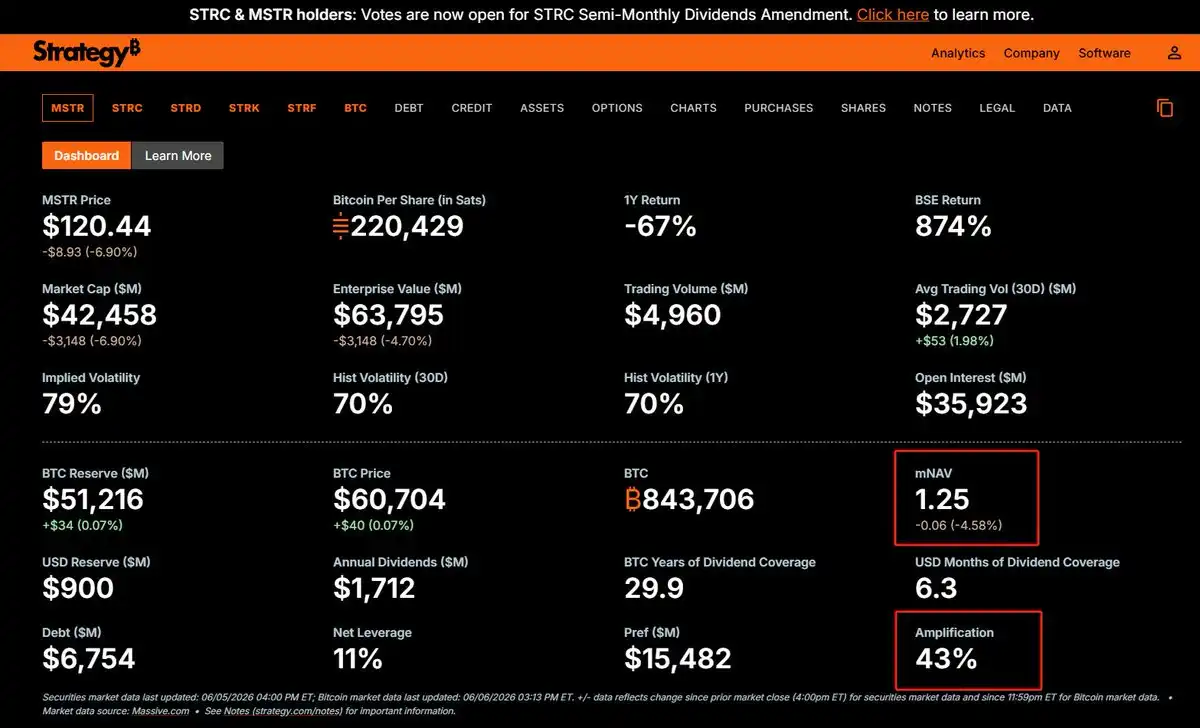
Согласно целевой дисциплине MSTR по общему коэффициенту левериджа примерно 33-35% (в настоящее время из-за падения цены BTC до 61k общий коэффициент долга вырос до 43%), теоретически только при падении цены BTC ниже 26k, когда обыкновенные акции обнулятся, привилегированные акции будут по-настоящему затронуты.
Тогда почему STRC тоже упала?
Это связано с основами ценообразования облигаций.
STRC формально является привилегированной акцией, но по сути это долговая бумага с плавающей процентной ставкой и без срока погашения.
Цена облигации по сути представляет собой сумму приведённых к настоящему моменту стоимостей всех будущих денежных потоков (периодические процентные выплаты, рассчитываемые по купонной ставке + номинальная стоимость при погашении, равная 100). Ставка дисконтирования, используемая для этого, — это требуемая рынком в данный момент доходность.
Если купонная ставка точно равна требуемой доходности, то дисконтированная цена будет в точности равна номиналу 100. Обычно так происходит при выпуске облигаций, когда андеррайтеры в основном ориентируются на текущую рыночную ситуацию и требования инвесторов к доходности при установлении этой купонной ставки.
Но жизненный цикл облигации долог, и в течение всего срока обращения внешняя процентная среда и кредитоспособность эмитента могут меняться. Всё это влияет на ставку дисконтирования (знаменатель), соответствующую требуемой доходности. Как только требуемая рынком доходность растёт, а купонные выплаты (числитель) остаются неизменными, дисконтированная приведённая стоимость становится ниже номинала, и облигация торгуется с дисконтом. И наоборот, при снижении требуемой доходности облигация торгуется с премией.
Таким образом, цена облигации никогда не является статичным числом. Напротив, она отражает, какую доходность требует рынок в данный момент, чтобы владеть ею.
Падение цены ниже номинала означает: "рынку требуется процентная ставка выше купонной". И если вы действительно купите её с дисконтом и будете держать до погашения, то итоговая полученная вами доходность действительно будет выше купонной ставки, поскольку та часть номинала, которую вы не доплатили при покупке облигации за 100, компенсирует недостающую часть доходности. То есть рынок через дисконт требует той компенсации за риск, которая, по его мнению, заслуживает, но не обеспечивается купонной ставкой.
С STRC ситуация аналогична. Обеспокоенность рынка денежными потоками MSTR перешла в переоценку платёжеспособности по STRC. По мере развития нарратива о "кризисе денежных потоков" требуемая рынком доходность за владение STRC растёт. Для принятия этого риска купонной ставки в 11.5% уже недостаточно.
Конечно, с точки зрения внешних атакующих, это также часть общей картины: только падение STRC вместе с остальным позволяет в условиях информационной асимметрии утвердить нарратив о "кризисе денежных потоков", заставляя сомневаться:
«Неужели есть какая-то информация, которая мне неизвестна?»
Для облигаций с фиксированной ставкой на этом история, как правило, заканчивается. Рост требуемой рынком доходности может быть уравновешен только падением цены, поэтому дисконт может существовать долгое время, не возвращаясь к номинальному якорю. Но STRC — это не облигация с фиксированной ставкой, у неё плавающая ставка, и числитель может корректироваться.
Например, если рынок требует 12% доходности для владения STRC, и руководство MSTR соответственно повышает дивидендную ставку с 11.5%, то цена не сможет долгое время оставаться ниже номинала 100. Потому что в такой ситуации фактическая доходность при покупке STRC с дисконтом будет выше 12%, что естественным образом привлечёт покупателей и подтолкнёт цену до уровня, где подразумеваемая доходность равна 12%, то есть до номинала.
Вот почему средне- и долгосрочные облигации с плавающей процентной ставкой обязательно возвращаются к номинальному якорю 100 — это свойство таких облигаций.
А для MSTR возврат цены STRC к номинальному якорю 100 — это предпосылка для возможности её дальнейшего использования для привлечения финансирования. Потому что если выпускать с дисконтом, то компания формально размещает бумагу с номиналом 100, но покупатель платит только 90 долларов. Это означает, что компания берёт на себя обязательства по дивидендам, определённые для номинала в 100 долларов, чтобы выплачивать проценты за фактически полученные 90 долларов. Это равносильно искусственному завышению реальной стоимости привлечения капитала, убытку при каждом размещении — разве такое возможно?
3. Когда mNAV > 1, лучше продавать акции, никогда не продавать токены
Так в чём же ключ к решению проблемы?
Как было сказано ранее, всё это падение — это рефлексивный сценарий самоисполняющегося пророчества, построенный на информационной асимметрии и ожиданиях кризиса денежных потоков. Чтобы его разрушить, достаточно доказать, что этого кризиса ликвидности просто не существует. Как только резервы будут пополнены, атака лишится основы, и рефлексивная спираль разрушится сама собой.
Как же пополнить резервы?
Сделать так, как многие кричат в X: чтобы Сэйлор вышел и заявил: "В ходе этого падения мы продали ещё больше токенов, теперь у нас достаточно денег на несколько лет"? Этот приём, конечно, сработает, и паника прекратится.
Но платой за это станет другой, скрытый вид неопределенности.
Потому что это будет сигналом рынку: вам нужно переоценить меня.
Нарратив "постоянного наращивания доли, никогда не продавать токены, непрерывного увеличения содержания BTC на акцию для акционеров", который создавал премию на рынке капитала и раскручивал "летающее колесо", определённо исчезнет. Его заменит нарратив "при необходимости возможно масштабное сокращение баланса за счёт продажи токенов, что снизит содержание BTC на акцию", по крайней мере, это будет замедленный вариант "летающего колеса": три шага вперёд, один назад.
В результате непонятно, как отреагируют владельцы обыкновенных акций, не исчезнет ли полностью mNAV. Даже если и не исчезнет, его сужение весьма вероятно, поскольку премия в части, где mNAV > 1, соответствует неявному опциону колл MSTR на "будущее увеличение содержания BTC на акцию". Если скорость роста содержания BTC замедляется, опцион, естественно, становится менее ценным.
Важность премии mNAV для MSTR очевидна, потому что логика расширения MSTR основана не только на обыкновенных акциях или леверидже через такие инструменты, как STRC (формально акции, по сути долг), а на взаимном усилении: увеличение капитала позволяет купить больше BTC, рост стоимости BTC позволяет привлечь больше капитала. Это позволяет поддерживать общий коэффициент левериджа на желаемом уровне в 33-35%. Сужение премии mNAV напрямую повлияет на возможности последующих размещений акций для привлечения финансирования, что является поведением, равносильным "пить яд, чтобы утолить жажду".
Лучшим способом, на мой взгляд, было бы воспользоваться текущей ситуацией, когда mNAV = 1.25x, и премия по-прежнему значительна, чтобы провести дополнительную эмиссию акций, привлечь финансирование и пополнить денежные резервы. У MSTR до сих пор достаточно большой неиспользованный лимит на размещение акций (Shelf Offering), зарегистрированный в SEC. Это единственная операция, которая однозначно порадует как держателей STRC (формально акций, по сути долга), так и владельцев обыкновенных акций, и при этом не создаст риска переоценки.
Конкретный механизм заключается в следующем:
Когда mNAV значительно больше 1, выбор в пользу дополнительной эмиссии и продажи акций означает, что за каждые 1 доллар привлечённых средств от продажи акций, полностью потраченный на покупку BTC, вы создаёте на рынке капитала стоимость для акционеров более 1 доллара. Именно поэтому акционеры готовы отдавать вам деньги. И именно поэтому в таком состоянии вам на самом деле не обязательно тратить все привлечённые средства на покупку токенов: можно оставить часть в качестве денежного резерва для будущих выплат процентов и основного долга, не оказывая негативного влияния на стоимость для акционеров. Одновременно, увеличение денежных резервов успокаивает держателей STRC, тревога уходит, рисковая премия снижается, STRC постепенно возвращается к якорю, и впоследствии, даже если потребуется привлечь средства через STRC, это тоже будет возможно. Одно другому не мешает.
И наоборот, выбор в пользу продажи токенов для привлечения средств — это "пить яд, чтобы утолить жажду". Как только переоценка приведёт к сужению или исчезновению mNAV, путь привлечения средств через размещение акций для покупки BTC станет непроходимым, потому что в этот момент справедливая стоимость ваших акций будет равна лежащим в их основе BTC — зачем тогда мне покупать акции, а не токены напрямую? Более того, если вы ещё и часть привлечённых средств будете оставлять для выплаты процентов, это будет откровенно разрушать стоимость для акционеров: вы берёте мои деньги, часть тратите на покупку BTC (создаваемая на рынке капитала стоимость как раз покрывает эту сумму), а другую часть напрямую тратите на выплату процентов, то есть уничтожаете.
Это структура чистого оттока стоимости.
И тогда, поскольку дополнительная эмиссия акций станет невозможной, размещение STRC также постепенно окажется под ударом. Не только общее "летающее колесо" расширения, скорее всего, остановится, но и окно для привлечения финансирования закроется. Тогда придётся полагаться на денежные резервы, а когда они закончатся, действительно останется только продавать токены, и на этом всё и закончится.
Кроме того, у продажи акций есть ещё одно преимущество — она напрямую улучшает коэффициент левериджа. В настоящее время из-за падения BTC до 61k общий коэффициент левериджа MSTR вырос с целевых 33-35% примерно до 43%. Средства, привлечённые от продажи дополнительных акций, — это собственный капитал: увеличиваются денежные средства (активы) и увеличивается капитал. За вычетом небольшой части, оставленной для выплаты процентов, общий коэффициент левериджа будет улучшаться.
А что насчёт продажи токенов? Поскольку деньги, полученные от продажи токенов, тут же уходят на выплату дивидендов, на стороне активов сначала уменьшается количество BTC, затем происходит отток денежных средств. Чистый эффект — сокращение совокупных активов, при этом обязательства не уменьшаются, коэффициент левериджа фактически немного ухудшается.
Продажа акций: Улучшает коэффициент левериджа ✓, Сохраняет содержание BTC на акцию ✓, Не вредит премии ✓
Продажа токенов: Ухудшает коэффициент левериджа, Снижает содержание BTC на акцию, Сильно вредит премии
Что лучше — очевидно.
Наконец, если, предположим,
MSTR действительно продаст большое количество токенов для пополнения резервов?
Тогда, как и говорили многие авторы в X, включая Delphi и других, краткосрочный кризис, несомненно, будет преодолён, BTC отскочит вверх, STRC вернётся к якорю. Именно поэтому я говорю, что если MSTR действительно погибнет, то не в этот раз — независимо от того, продадут они акции или токены, это действительно поможет решить насущную проблему.
Но лично для меня это будет означать разочарование в MSTR и Сэйлоре.
И из-за переоценки логики обыкновенных акций, опцион колл на "содержание BTC на акцию" станет менее ценным, чем раньше, что приведёт к постепенному исчезновению премии mNAV. В результате может возникнуть странное расхождение: BTC отскочит, STRC вернётся к якорю, а обыкновенные акции MSTR продолжат падать.
А в следующий раз, когда денежные резервы снова истощатся и рынок вновь начнёт ожидать продажи токенов, рефлексивный сценарий разыграется снова, и тогда неизвестно, не станет ли это началом конца.
Но, честно говоря, если итог будет таким, я его приму.
Возможно, "изменение" само по себе является частью этой "игры".