При оценке рынков опционов одним из наиболее мощных сигналов является асимметрия (skew): то, как рынок оценивает риск на повышение по сравнению с понижением. Стандартный подход для трейдеров — смотреть на 25-дельта асимметрию: простое сравнение подразумеваемой волатильности 25-дельта колла и 25-дельта пута. Этот метод эффективен, прост и знаком, но он затрагивает только две точки на кривой волатильности. В результате он упускает структуру, заложенную в остальной части поверхности.
Индекс асимметрии Glassnode решает эту проблему, агрегируя информацию по всей кривой волатильности (smile), создавая более надежный сигнал о том, где оценивается риск. Мы объясняем цель нового показателя, как он строится и как он может вписаться в более широкий инструментарий анализа опционов.
Для доступа к новым метрикам посетите Glassnode Studio. Доступно для пользователей Professional тарифа.
Знакомство с Индексом асимметрии Glassnode
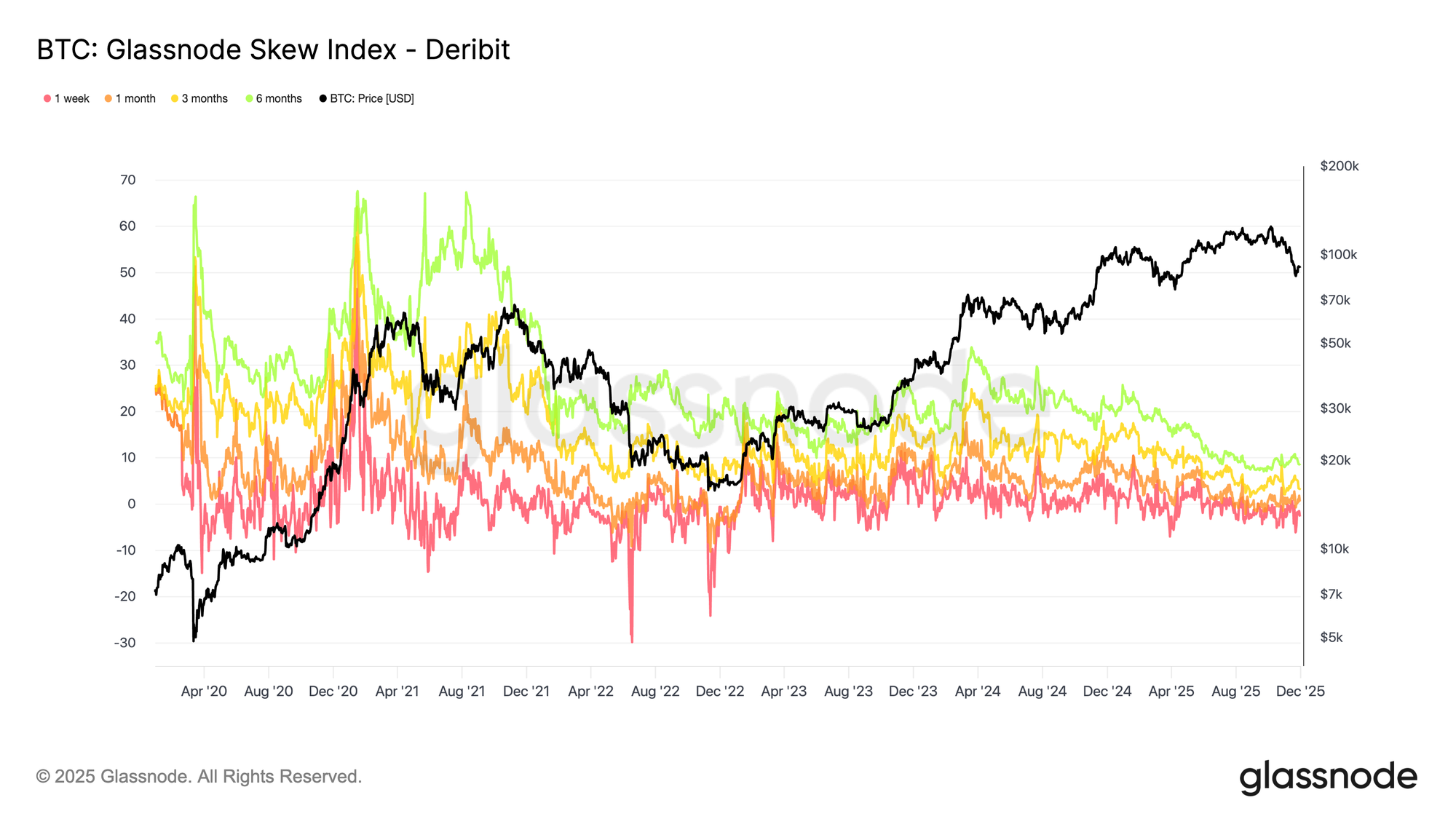
Вместо того чтобы фокусироваться на двух изолированных страйках, Индекс асимметрии Glassnode сжимает всю форму кривой волатильности (volatility smile) в единую, интуитивно понятную меру рыночной асимметрии.
Мы делим кривую на две области: одна представляет риск снижения, а другая — потенциал роста. Каждая область преобразуется в стандартизированную меру волатильности, поскольку мы вычисляем, сколько волатильности рынок закладывает в этот сегмент.
- DownVol представляет собой совокупную подразумеваемую волатильность от опционов пут вне денег — защиту от падения цен. Когда трейдеры устремляются покупать путы, DownVol растет, сигнализируя о страхе или желании хеджироваться.
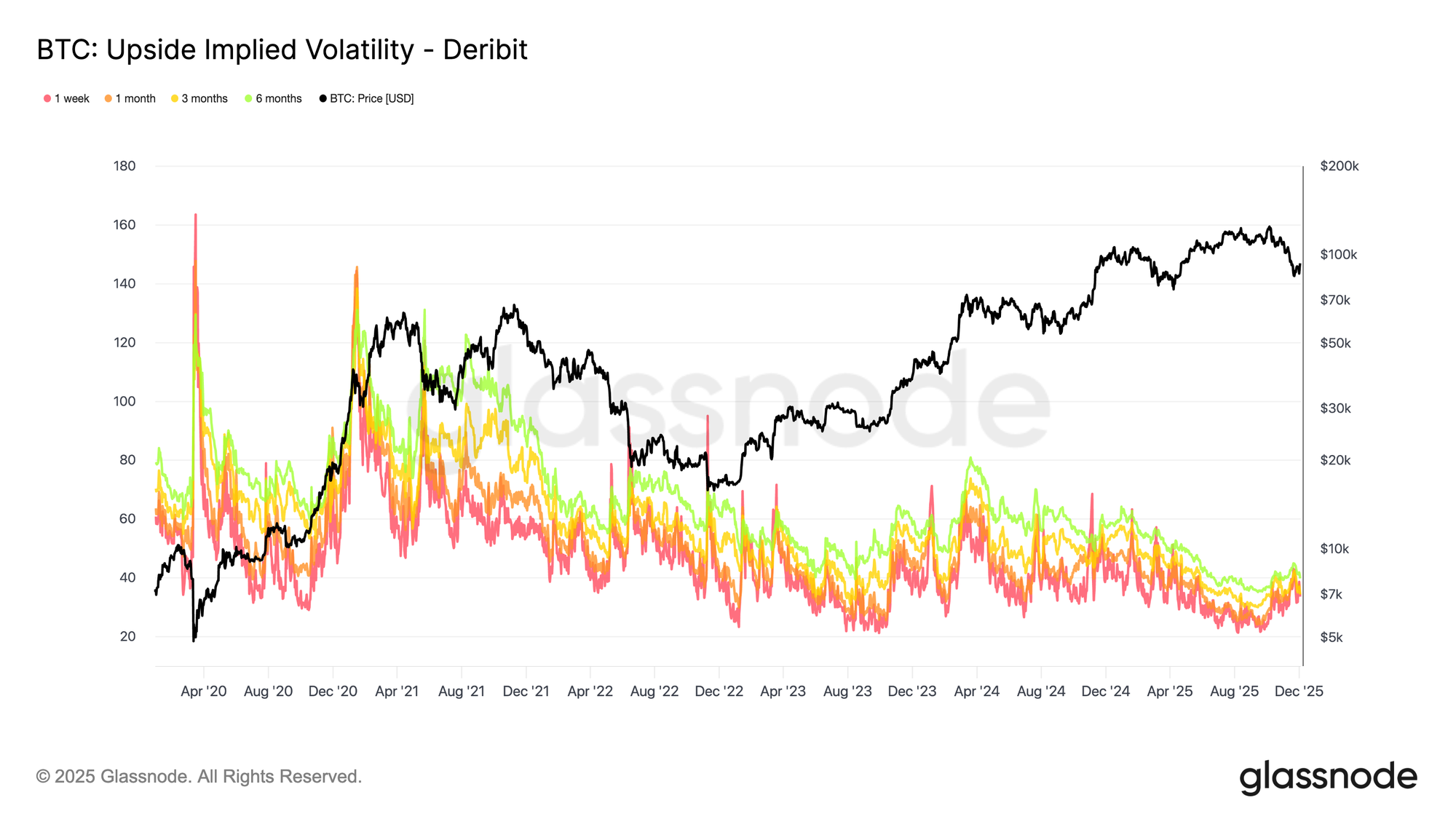
- UpVol отражает противоположное: совокупную волатильность, заложенную в опционы колл вне денег. Это показывает, сколько трейдеры готовы платить за участие в росте или потенциальную прибыль от шорт-сквиза. Когда спрос на коллы растет, UpVol увеличивается, часто вместе с сильным бычьим настроем.
Разница между этими двумя компонентами дает нам индекс асимметрии: Индекс асимметрии Glassnode = UpVol - DownVol
- Положительные значения указывают на рынок, который платит больше за волатильность на повышение — обычно это движется оптимизмом, моментумом или спекулятивной покупкой коллов.
- Отрицательные значения означают доминирование защиты от снижения, поскольку инвесторы отдают приоритет безопасности и хеджированию, а не погоне за ростом.
На практике Индекс асимметрии Glassnode показывает, больше ли опционные трейдеры обеспокоены обвалом вниз или более взволнованы пробоем вверх — и насколько.
Как использовать Индекс асимметрии
Индекс асимметрии можно применять несколькими способами для интерпретации позиционирования на опционном рынке, идентификации режимов настроений и понимания того, как трейдеры распределяют риск между сценариями роста и падения.
Определение текущего режима настроений
Индекс может помочь contextualize преобладающие рыночные условия:
- Сильно отрицательные значения указывают на рынок, который платит премию за защиту от снижения, что согласуется с оборонительным позиционированием.
- Сильно положительные значения указывают, что инвесторы платят больше за участие в росте, часто в условиях сильных трендов и спекулятивной активности с коллами.
Мониторинг этих экстремумов помогает определить, когда страхом или эйфорией доминирует на опционном рынке.
Использование в качестве инструмента подтверждения или дивергенции
Индекс может дополнять движения спотовой цены:
- Растущий Индекс асимметрии на фоне роста спотовой цены suggests, что опционный рынок усиливает движение за счет increased спроса на волатильность на повышение.
- Ралли спотовой цены при резко отрицательном Индексе асимметрии указывает на недоверенное движение, где трейдеры остаются хеджированными и осторожными.
- Падающий рынок с сильно отрицательным Индексом асимметрии подтверждает классическую среду избегания риска со significant спросом на защиту.
- Падающий рынок с положительным Индексом асимметрии может указывать, что трейдеры уже смотрят сквозь слабость и позиционируются на восстановление.
Это делает индекс полезным для оценки того, подтверждают ли опционные потоки движение цены или противоречат ему.
Интерпретация комбинаций сроков
Разные сроки экспирации могут передавать разные уровни настроений:
- Отрицательный недельный skew с нейтральными или положительными 3- и 6-месячными значениями часто указывает на временный стресс, наложенный на конструктивный среднесрочный и долгосрочный outlook.
- Очень положительный недельный skew при subdued более длинных сроках suggests, что трейдеры enthusiastic в отношении ближайшего будущего, но не решаются extended риск далеко в будущее.
- Когда асимметрия последовательно повышена или понижена по всем срокам, это указывает на стабильную, режимную среду настроений, а не на кратковременный всплеск.
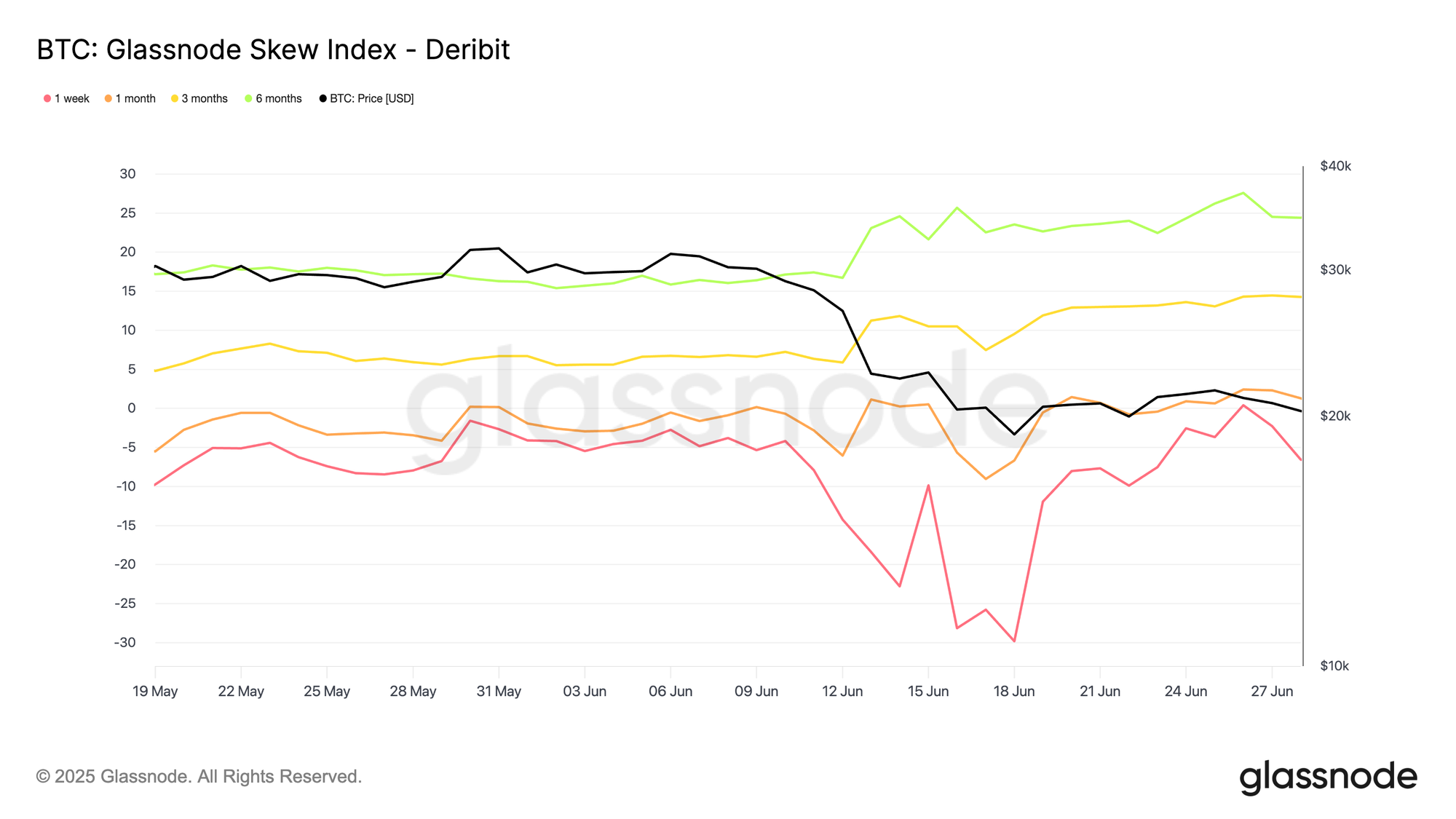
Например, в июне 2022 года мы наблюдали четкую дивергенцию по срокам: недельный Индекс асимметрии (красный) рухнул в глубоко отрицательную территорию, сигнализируя об агрессивном спросе на краткосрочные путы по сравнению с коллами. В то же время 3-месячный (желтый) и 6-месячный (зеленый) индексы асимметрии двигались выше, указывая, что инвесторы все еще были готовы платить relatively больше за экспозицию на рост further out по кривой.
Другими словами, страх был в основном краткосрочным, а опционы с более длинными сроками продолжали склоняться к сценариям роста, подразумевая, что многие участники ожидают лучших цен в более отдаленной перспективе.
Как это работает изнутри
Мы рассчитываем Индекс асимметрии Glassnode путем агрегирования цен опционов по множеству страйков с обеих сторон распределения. Эти цены преобразуются в стандартизированные меры подразумеваемой волатильности на повышение и понижение, привязанные к фиксированным срокам экспирации, таким как 1 неделя, 1 месяц, 3 месяца и 6 месяцев.
Затем мы объединяем данные с основных площадок, чтобы трейдеры могли сравнивать BTC, ETH, SOL, XRP или PAXG на consistent условиях. Эта стандартизация устраняет искажения, возникающие из-за irregularity страйков, gaps ликвидности или exchange-specific conventions.
В результате получается кросc-активный, кросc-срочный индикатор настроений опционного рынка, который capture полную структуру кривой волатильности (smile), а не полагается на точечную меру асимметрии.
Доступно для:
- Разрешения: 10 минут, ежечасно, ежедневно
- Сроки экспирации: 1 неделя, 1 месяц, 3 месяца, 6 месяцев
- Активы: BTC, ETH, SOL, XRP, PAXG
- Биржи: Deribit, OKX
- Подписывайтесь на нас в X для своевременных рыночных обновлений и анализа
- Присоединяйтесь к нашему Telegram-каналу для регулярных рыночных инсайтов
- Для получения метрик on-chain, дашбордов и оповещений посетите Glassnode Studio
Отказ от ответственности: Данный отчет предназначен исключительно для информационных и образовательных целей. Анализ представляет собой ограниченное тематическое исследование со significant ограничениями и не должен interpreted как инвестиционная консультация или definitive торговые сигналы. Прошлые паттерны производительности не гарантируют будущих результатов. Всегда проводите тщательную комплексную проверку (due diligence) и учитывайте множество факторов before принятия инвестиционных решений.