Japan To Recognize Foreign Stablecoins As Electronic Payment Instruments Starting June 1

bitcoinistОпубликовано 2026-05-20Обновлено 2026-05-20

Введение

Japan's Financial Services Agency (FSA) will officially recognize certain foreign trust-issued stablecoins as "electronic payment instruments" under its Payment Services Act, effective June 1, 2026. This amendment excludes qualifying foreign stablecoins from being classified as securities, allowing domestic licensed operators to handle them. To qualify, foreign issuers must be licensed under laws equivalent to Japan's, cooperate with FSA oversight, manage reserve assets under foreign law with proper audits, maintain anti-crime systems, and ensure the stablecoin and its reserves are in the same currency. Eligibility for reliable redemption at face value will be assessed case-by-case. This move expands Japan's stablecoin regulatory framework established in 2022, part of broader efforts to regulate crypto assets. Recent steps include classifying crypto as financial instruments, proposing a 20% flat tax on crypto income, and issuing joint guidance for crypto use in real estate transactions, emphasizing KYC and anti-money laundering checks.

Japan’s key financial authority has expanded its framework to officially treat foreign trust‐issued stablecoins as electronic payment instruments instead of securities under domestic law.

Foreign Stablecoins Recognized As Payment Instruments

On Tuesday, Japan’s Financial Services Agency (FSA) announced amendments to the Cabinet Office Ordinance to recognize certain trust-type stablecoins issued by foreign trust banks and similar entities as “electronic payment instruments” under the Payment Services Act, local news reported.

The amendment, scheduled to take effect on June 1, 2026, will exclude qualified foreign trust beneficiary rights-based stablecoins from classification as “securities” under the Financial Instruments and Exchange Act (FIEA), allowing them to be handled by domestic operators registered as electronic payment instrument operators.

To achieve this, the Cabinet Office Ordinance established four requirements, including the legal status of stablecoin issuers, the management of underlying assets, measures to prevent criminal use, and currency denomination consistency.

Under the new rules, issuers must be registered or licensed under foreign laws deemed equivalent to Japan’s Payment Services Act or Banking Act and supervised by an authority that can share oversight information with the FSA commissioner upon request. The FSA will verify each issuer’s supervisory cooperation framework during its suitability review, the report noted.

Foreign stablecoin issuers must also manage reserve assets under applicable foreign laws and submit to audits by local professionals equivalent to certified public accountants or audit firms.

In addition, they must maintain systems to detect and respond to criminal misuse, including mechanisms to suspend transactions, and ensure the trust property and reserve assets are denominated in the same currency.

Notably, authorities will assess on a case-by-case basis whether a stablecoin can reliably be redeemed at its issue price to the same degree as Japanese electronic payment instruments. As a result, stablecoins used overseas may be treated differently in Japan depending on their reserve composition and audit arrangements.

Japan Expands Crypto Regulations

Over the past few years, Japanese authorities have been working to restructure the treatment of crypto assets in the country. The latest changes to the Cabinet Order Ordinance have expanded Japan’s legal framework for stablecoins, established through the 2022 amendment to the Payment Services Act.

The government recently amended the FIEA to classify crypto assets as financial instruments and backed a tax reform plan to introduce a separate system for different transactions and a flat 20% tax on crypto income.

Last month, the FSA, alongside the Ministry of Land, Infrastructure, Transport and Tourism, the National Police Agency, and the Ministry of Finance, issued joint guidance outlining compliance requirements for the use of crypto in real estate deals.

As reported by Bitcoinist, the regulators requested that real estate firms conducting crypto transactions strictly enforce Know Your Customer (KYC) procedures and source-of-funds verifications.

The joint guidance outlined reporting obligations for cross-border payments, unlicensed transactions, or suspicious fund flows. Additionally, it warned firms that activities involving the exchange of crypto assets for fiat currency or brokerage services on behalf of clients may constitute crypto asset exchange operations, which carry the risk of legal violations.

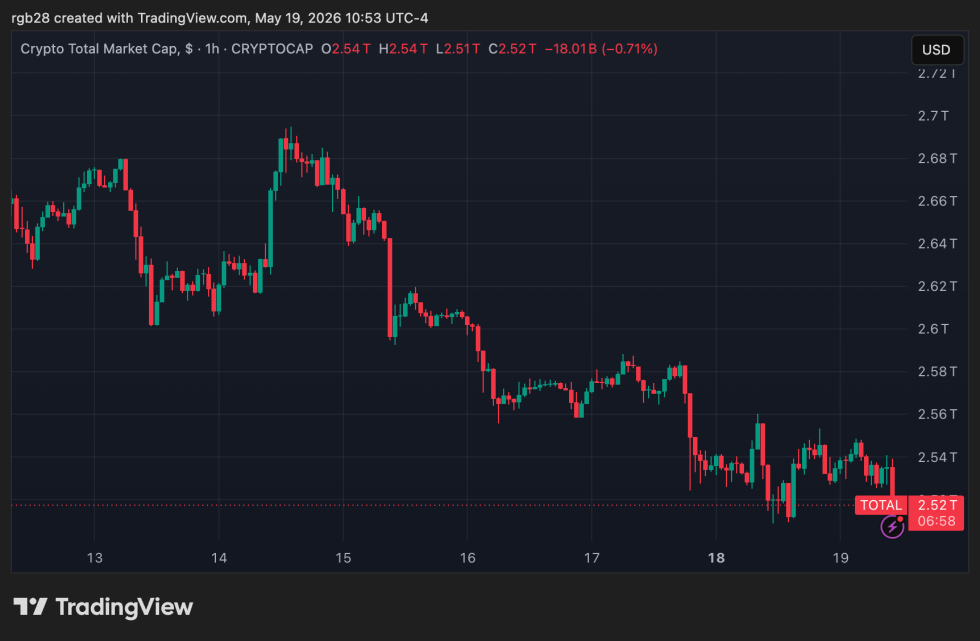
The total crypto market capitalization is at $2.52 trillion in the one-week chart. Source: TOTAL on TradingView

Связанные с этим вопросы

QWhat change has Japan's FSA announced regarding the legal treatment of foreign stablecoins?

AJapan's Financial Services Agency (FSA) has announced amendments to the Cabinet Office Ordinance to recognize certain foreign trust-type stablecoins as 'electronic payment instruments' under the Payment Services Act, rather than classifying them as 'securities' under the Financial Instruments and Exchange Act (FIEA).

QWhen will the new regulations for foreign stablecoins in Japan take effect?

AThe new regulations, which amend the Cabinet Office Ordinance, are scheduled to take effect on June 1, 2026.

QWhat are the key requirements foreign stablecoin issuers must meet to be recognized as electronic payment instruments in Japan?

AThe Cabinet Office Ordinance establishes four key requirements: the issuer must be registered/licensed under foreign laws equivalent to Japan's relevant acts; underlying/reserve assets must be properly managed under foreign law; the issuer must have systems to detect and respond to criminal misuse; and the trust property and reserve assets must be denominated in the same currency.

QHow will Japanese authorities determine if a foreign stablecoin can be reliably redeemed?

AJapanese authorities will assess on a case-by-case basis whether a foreign stablecoin can reliably be redeemed at its issue price to the same degree as Japanese electronic payment instruments. This assessment will depend on factors like the stablecoin's reserve composition and audit arrangements.

QBesides stablecoins, what other recent regulatory actions has Japan taken regarding crypto assets?

AJapan has amended the FIEA to classify crypto assets as financial instruments, backed a tax reform plan introducing a flat 20% tax on crypto income, and issued joint guidance with other ministries outlining compliance requirements for the use of crypto in real estate deals, including strict KYC and source-of-funds verifications.

Похожее

The Rally That Wasn't

The article analyzes Bitcoin's sharp decline amid a shift in macroeconomic expectations, with strong US job data leading markets to price out Fed rate cuts. Bitcoin fell 13% to around $67,000, triggering significant outflows from US spot ETFs and indicating institutional de-risking. On-chain data confirms a bearish structure. Price has dropped back into the "bear market range," with the Short-Term Holder Cost Basis falling below a key mean level—a pattern last seen in early 2022. The profitability bias has collapsed, with loss realization now dominating, mirroring a panic wave from February. Recent buyers who accumulated near the $82k top are under pressure, and loss realization is accelerating across both short-term and long-term holder cohorts. Off-chain, the rally failed at the aggregate US ETF cost basis near $83k, turning it into resistance. Spot market demand has deteriorated sharply, with sellers dominating order books. While a major long liquidation event cleared over $400M in leverage, spot buyers have not returned to absorb supply. Options markets show sustained demand for downside protection (elevated put premiums) but not panic, with volatility premiums near three-month highs. The conclusion is that the market remains fragile, with overhead supply from trapped ETF investors, weak spot demand, and accelerating losses. Without a return of spot buying and a reclaim of key cost bases, Bitcoin is vulnerable to further downside within the prevailing bear market structure.

insights.glassnode3 ч. назад

The Rally That Wasn't

insights.glassnode3 ч. назад

Торговля

Спот
Фьючерсы

Популярные статьи

Как купить S

Добро пожаловать на HTX.com! Мы сделали приобретение Sonic (S) простым и удобным. Следуйте нашему пошаговому руководству и отправляйтесь в свое крипто-путешествие.Шаг 1: Создайте аккаунт на HTXИспользуйте свой адрес электронной почты или номер телефона, чтобы зарегистрироваться и бесплатно создать аккаунт на HTX. Пройдите удобную регистрацию и откройте для себя весь функционал.Создать аккаунтШаг 2: Перейдите в Купить криптовалюту и выберите свой способ оплатыКредитная/Дебетовая Карта: Используйте свою карту Visa или Mastercard для мгновенной покупки Sonic (S).Баланс: Используйте средства с баланса вашего аккаунта HTX для простой торговли.Третьи Лица: Мы добавили популярные способы оплаты, такие как Google Pay и Apple Pay, для повышения удобства.P2P: Торгуйте напрямую с другими пользователями на HTX.Внебиржевая Торговля (OTC): Мы предлагаем индивидуальные услуги и конкурентоспособные обменные курсы для трейдеров.Шаг 3: Хранение Sonic (S)После приобретения вами Sonic (S) храните их в своем аккаунте на HTX. В качестве альтернативы вы можете отправить их куда-либо с помощью перевода в блокчейне или использовать для торговли с другими криптовалютами.Шаг 4: Торговля Sonic (S)С легкостью торгуйте Sonic (S) на спотовом рынке HTX. Просто зайдите в свой аккаунт, выберите торговую пару, совершайте сделки и следите за ними в режиме реального времени. Мы предлагаем удобный интерфейс как для начинающих, так и для опытных трейдеров.

1.4k просмотров всегоОпубликовано 2025.01.15Обновлено 2026.06.02

Как купить S

Sonic: Обновления под руководством Андре Кронье – новая звезда Layer-1 на фоне спада рынка

Он решает проблемы масштабируемости, совместимости между блокчейнами и стимулов для разработчиков с помощью технологических инноваций.

2.3k просмотров всегоОпубликовано 2025.04.09Обновлено 2025.04.09

Sonic: Обновления под руководством Андре Кронье – новая звезда Layer-1 на фоне спада рынка

HTX Learn: Пройдите обучение по "Sonic" и разделите 1000 USDT

HTX Learn — ваш проводник в мир перспективных проектов, и мы запускаем специальное мероприятие "Учитесь и Зарабатывайте", посвящённое этим проектам. Наше новое направление .

1.8k просмотров всегоОпубликовано 2025.04.10Обновлено 2025.04.10

HTX Learn: Пройдите обучение по "Sonic" и разделите 1000 USDT

Обсуждения

Добро пожаловать в Сообщество HTX. Здесь вы сможете быть в курсе последних новостей о развитии платформы и получить доступ к профессиональной аналитической информации о рынке. Мнения пользователей о цене на S (S) представлены ниже.

活动图片