Injective Passes Vote to Cut INJ Supply and Boost Deflation

TheNewsCryptoОпубликовано 2026-01-20Обновлено 2026-01-20

Введение

The Injective community has overwhelmingly approved governance proposal IIP-617, passing with 99.89% support. This update significantly accelerates the network's deflationary strategy by reducing the rate of new INJ token emissions. It does not introduce a new burn mechanism but instead makes the existing token issuance more restrictive. This change works alongside the ongoing Community BuyBack program, which uses ecosystem revenue to buy and burn INJ on the open market. The proposal is the latest step in Injective's long-term plan to structurally reduce supply, building on previous upgrades like IIP-392. Despite these improved tokenomics, INJ's market performance remains volatile and heavily influenced by broader market sentiment, not just supply dynamics.

The Injective community has approved a governance proposal that reshapes the network’s token economics and pushes INJ into a more aggressive deflationary phase. The vote, submitted as IIP-617, concluded on Jan. 19 after four days and passed with overwhelming support, signaling strong alignment among participating token holders.

According to the results, 99.89% of voters backed the proposal. The update alters certain inflation rates for Injective and speeds up the reduction in new token emissions. When this deployment is live, Injective will emit new INJ tokens at a slower rate but retain other mechanisms for burning INJ in circulation.

The proposal marks another major step in Injective’s long-running strategy to treat supply reduction as a core design feature rather than a market-driven outcome.

What changes under IIP-617

INJ plays a central role inside the Injective ecosystem. It secures the network through staking, supports governance participation, and acts as the key asset that coordinates activity across the chain’s DeFi and trading products.

Since its mainnet launch, Injective has relied on recurring token burns to permanently remove INJ from circulation. Until now, it has burnt approximately 6.85 million INJ, which has helped to limit supply and further promote the idea of deflation for this project.

A new burn or buy-back mechanism has not been added by IIP-617 but has further reduced the issuance mechanism that already exists in the protocol. In effect, Injective now combines two supply controls: direct issuance reduction and ongoing burn activity.

The proposal also keeps the Injective Community BuyBack program intact. That initiative uses ecosystem-generated revenue to purchase INJ on the open market and burn it repeatedly. Rather than replacing this program, IIP-617 makes it more effective by ensuring fewer new tokens offset the burns.

Earlier upgrades prepared the groundwork

This approach in the sector has undergone some transformations as there have been various upgrade levels. Injective has, in the past, brought levels of policy change in its INJ 3.0 roadmap, as well as utilized governance in constraining the sector’s supply dynamics.

Instead, in 2024, the community collectively passed IIP-392 almost uniformly. This upgrade strengthened deflation by 400% and also made it more related to staking participation. The idea was simple, and it aimed at ensuring the supply behavior of the network dynamically changed according to the network conditions.

After that, in 2025, Injective introduced another factor by associating a reduction in supply planning with the halving cycle of Bitcoin. Now, Injective reduces these factors even further through IIP-617 by speeding up the reduction in issuance. The goal is to create a more structural deflation.

Members of the Injective Foundation also revealed their involvement in the process, shedding more light on how core contributors participated in the proposal.

Market reaction stays mixed

Despite the increased levels of deflation, it is still not linear with respect to INJ’s performance on the market. INJ has been volatile on the market from 2025 to 2026. INJ is still down 75% from last year, and this is giving investors reasons to be cautious despite the improved tokenomics.

Such a price dynamic highlights another evident truth about cryptocurrency markets: supply mechanisms are important but tend to be driven more by market sentiment on a shorter timeline. Market liquidity cycles and overall Bitcoin sentiment continue to be more influential for INJ than simple token burning events.

However, the move is definitely a significant indicator. Injective is setting itself for a further supply-constrained environment, and it is doing it through the means of governance and not through marketing packages. Now, with two deflationary mechanisms in place, it is clear that the network is trying to ensure that INJ is made even rarer in the long run. Whether the price will show the effects of it or not is to be seen.

Highlighted Crypto News:

South Korea Uncovers $101.7M Crypto Laundering Scheme Linked to Cross-Border Payments

TagsCrypto TokenDeFiInjectiveToken Burntrading

Связанные с этим вопросы

QWhat was the result of the Injective governance proposal IIP-617 vote?

AThe proposal passed with overwhelming support, with 99.89% of voters backing it.

QWhat is the primary goal of IIP-617 regarding the INJ token?

AThe primary goal is to reshape the network's token economics by reducing the rate of new token emissions, thereby pushing INJ into a more aggressive deflationary phase.

QHow does the Injective Community BuyBack program work?

AThe program uses ecosystem-generated revenue to purchase INJ on the open market and repeatedly burn it, permanently removing tokens from circulation.

QWhat previous upgrade significantly increased INJ's deflation rate and tied it to staking participation?

AThe IIP-392 upgrade, passed in 2024, increased deflation by 400% and made it more related to staking participation.

QDespite the new deflationary measures, what is the current state of INJ's market performance according to the article?

AINJ's market performance has been volatile, and it is still down 75% from the previous year, indicating that market sentiment and liquidity cycles remain highly influential.

Похожее

Goldman Sachs Bows Down, Bitcoin Finally Breaks Through the Gates of Wall Street

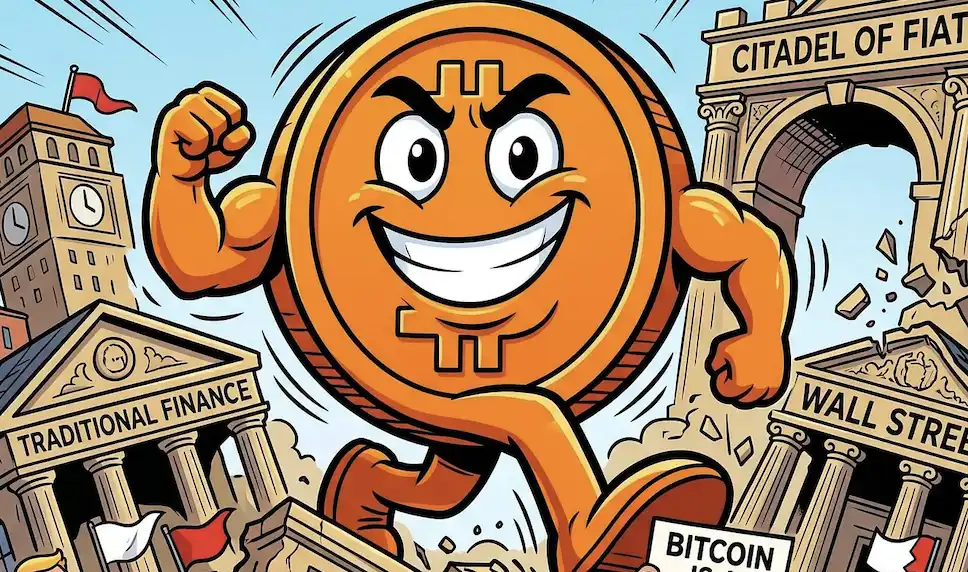
Wall Street giants, including Goldman Sachs, Morgan Stanley, Charles Schwab, and the New York Stock Exchange, have reversed their long-standing opposition to Bitcoin and are now actively embracing it. After years of dismissing Bitcoin as a scam, a bubble, or a tool for illicit activities, these institutions are launching Bitcoin ETFs, enabling spot trading, and building dedicated crypto infrastructure. Goldman Sachs, which once called Bitcoin a "fraud tool," is now offering Bitcoin ETFs. Morgan Stanley, which internally banned the term "cryptocurrency," has launched its largest-ever ETF backed by Bitcoin. Charles Schwab has opened spot crypto trading for its retail clients, integrating Bitcoin alongside traditional assets. The NYSE is building robust infrastructure to support digital assets, signaling a long-term commitment. This dramatic shift is driven not by a change in ideology but by economic necessity. As Bitcoin repeatedly survived market crashes and grew into a multi-trillion-dollar asset class, ignoring it became too costly. Wall Street’s business model relies on capturing fees, and Bitcoin’s rise represented a massive wealth transfer occurring outside their ecosystem. The fear of missing out (FOMO) and client demand forced these institutions to capitulate. The article frames this as a historic surrender to Bitcoin’s mathematical inevitability. Unlike the trust-based traditional financial system, Bitcoin operates on decentralized, transparent, and unchangeable rules. Its scarcity and resilience make it a hedge against fiat currency devaluation and systemic risk. The narrative has flipped: not holding Bitcoin is now seen as the greater risk. The author concludes that Bitcoin has not been co-opted by Wall Street; instead, it has co-opted Wall Street, marking a fundamental shift in the global financial architecture.

marsbit50 мин. назад

Goldman Sachs Bows Down, Bitcoin Finally Breaks Through the Gates of Wall Street

marsbit50 мин. назад

Торговля

Спот
Фьючерсы
活动图片