Infinex Token Sale New Rules: Two Options - $0.0099 Locked for One Year or $0.03 Unlocked Immediately

Odaily星球日报Опубликовано 2025-12-26Обновлено 2025-12-26

Введение

Infinex, a DeFi platform founded by Synthetix's Kain Warwick, has revised its token sale terms for its INX token. The fully diluted valuation (FDV) has been reduced from $300 million to $99.99 million following community feedback, though the one-year lockup period remains unchanged. The sale, scheduled for January 3-6, 2026, will offer 5% of the total token supply. Participants are given two pricing options: purchase tokens at $0.0099 each with a mandatory one-year lock, or opt for immediate unlocking at TGE (end of January 2026) at a higher valuation of $300 million FDV, equating to $0.03 per token. The latter option features a linear valuation decrease over the year, settling at the $99.99 million FDV. The changes have sparked significant community backlash, particularly from Patron NFT holders. They argue the new immediate unlock option at a lower FDV devalues their earlier investments, which were made under the expectation that early liquidity required a much higher valuation threshold. The Patron NFT floor price fell nearly 10% following the announcement. Despite the FDV reduction, the core complaint about the lengthy one-year lockup persists, with many in the community viewing it as a major disadvantage in the current market.

Original | Odaily Planet Daily (@OdailyChina)

Author | Asher (@Asher_ 0210)
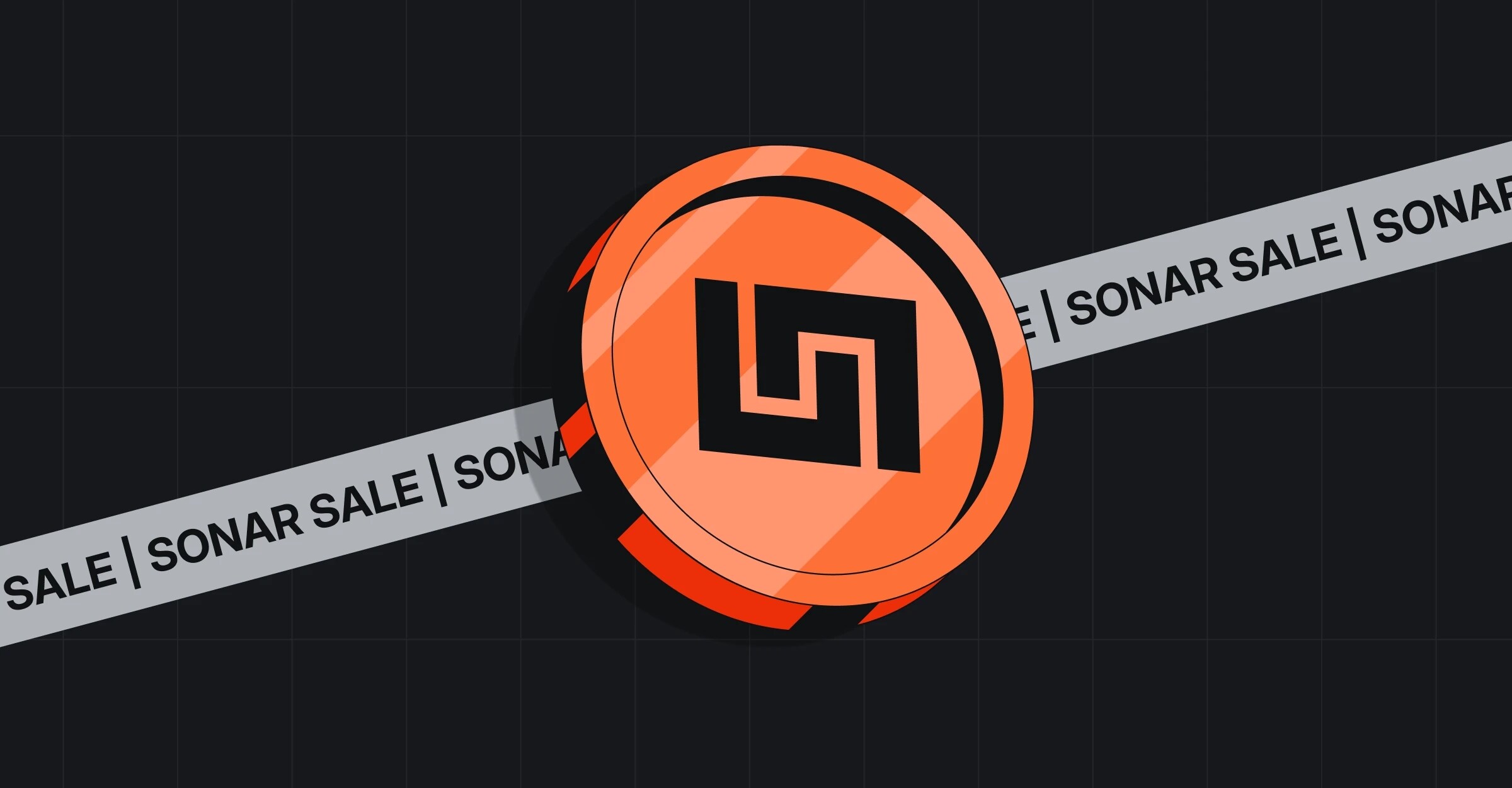
Yesterday, Infinex founder Kain Warwick posted on X platform that due to feedback indicating the pricing was too high, the valuation of the Sonar token sale conducted by Infinex on Echo has been reduced from the initial $300 million to $99.99 million, while the lock-up period remains unchanged at one year, to better adapt to the current market environment.

Affected by the FDV reduction, the overall allocation quota for the Sonar sale has decreased, making it impossible to guarantee the priority allocation arrangement for the original Patron NFT holders. The floor price of Infinex Patrons NFT has dropped nearly 10% in 24 hours, temporarily at 1.387 ETH.
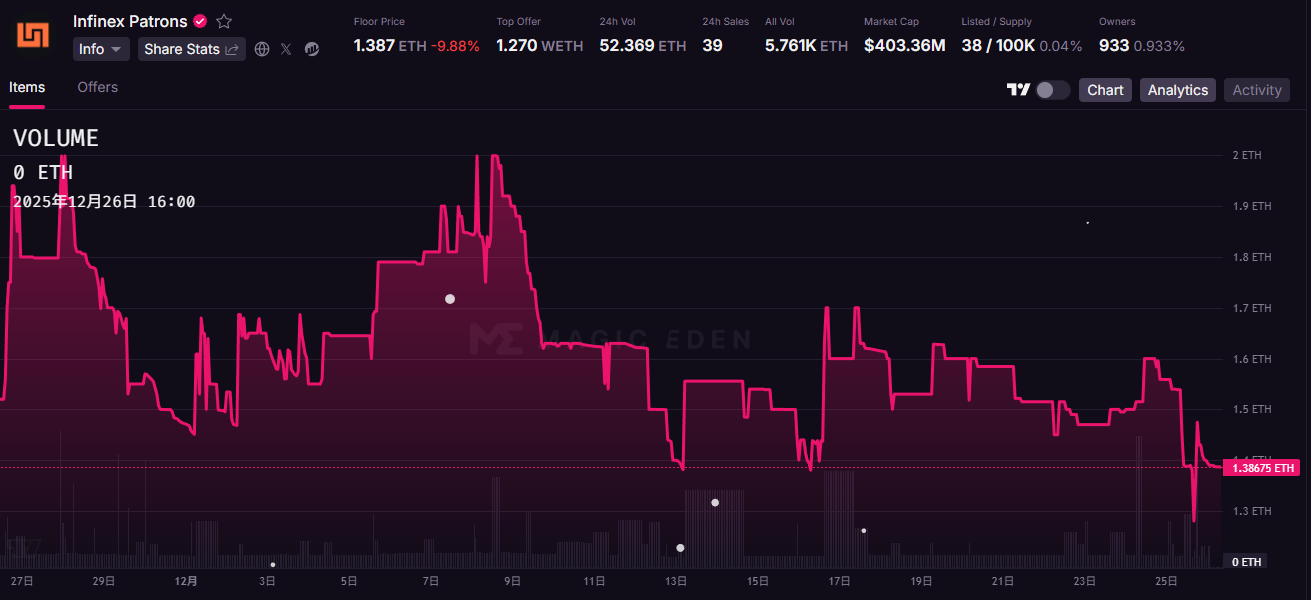
Below, Odaily Planet Daily takes you through the Infinex project, the new token sale rules, and community sentiment.

Infinex: Full-Stack DeFi Services

Infinex is a decentralized finance platform launched by Synthetix founder Kain Warwick in April 2024. Its goal is to provide a product form close to the experience of a centralized exchange under a decentralized premise, thereby narrowing the usability gap between CeFi and DeFi. While maintaining non-custodial assets and on-chain security, the platform focuses on optimizing the interaction process and user experience.
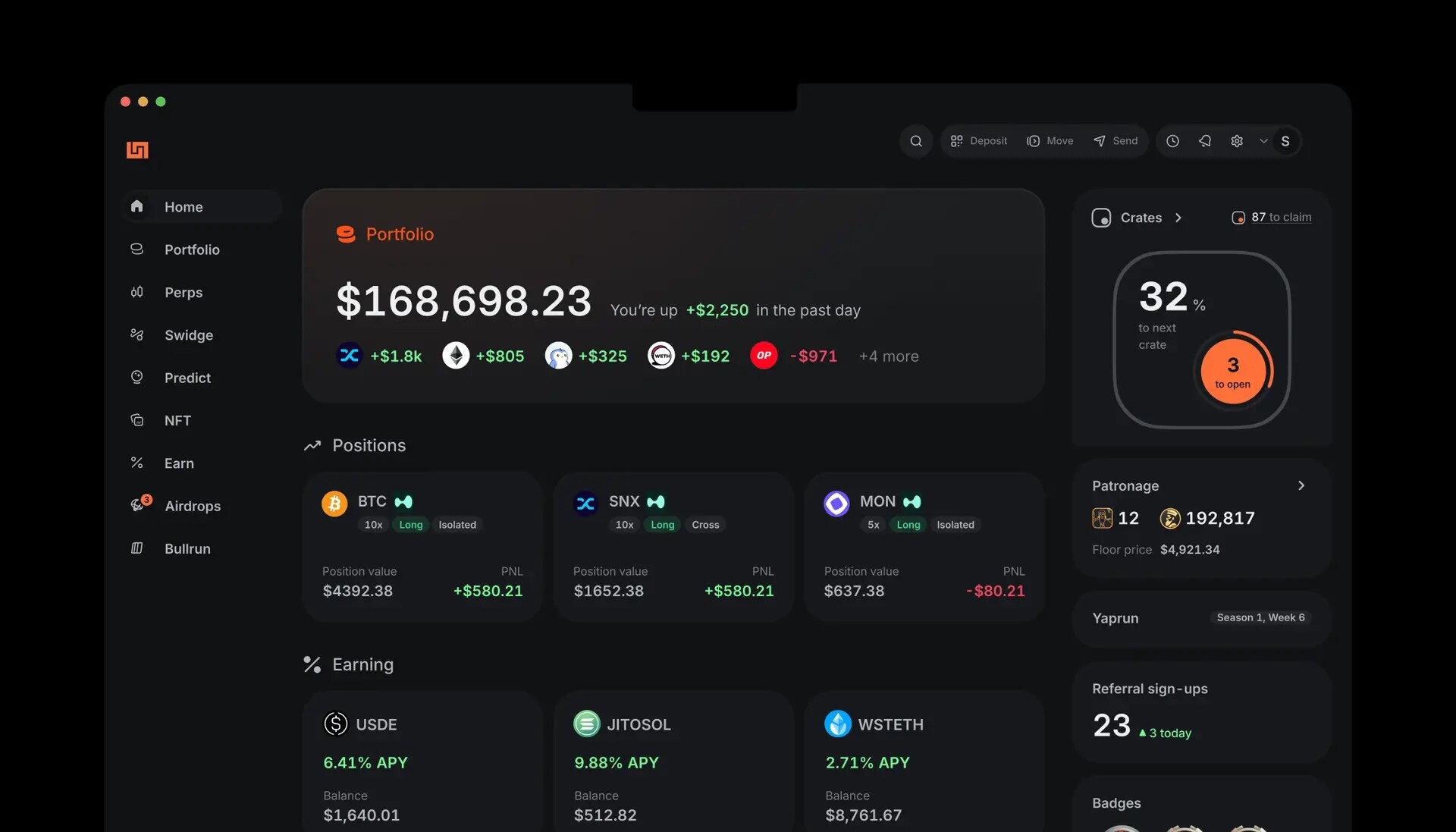
From a product positioning perspective, Infinex is not a single-function application but rather a full-stack DeFi service entry point. Its core capabilities include: acting as a non-custodial wallet covering multiple chains to host user assets; serving as a unified interface to aggregate and integrate various on-chain DeFi protocols and services; and through highly abstract interaction design, hiding complex concepts like address management, cross-chain bridging, seed phrases, and Gas fees in the background, allowing users to interact with DeFi applications without needing to understand the underlying mechanisms, resulting in an overall user experience closer to CeFi products.

To date, Infinex has supported 15 blockchain networks including Ethereum, Solana, and Base. The integrated DeFi functions cover cross-chain swaps (Swidge), perpetual contracts (Perp), liquid staking, and other yield-generating services (Earn), among others.

Infinex Token Sale New Regulations

According to the official Infinex documentation, the updated details of the Infinex token sale are as follows:

  • INX Token Sale Account Registration Date: Starting December 27th;
  • INX Token Official Sale Date: January 3rd to January 6th, 2026;
  • Infinex TGE Date: Planned for late January 2026;
  • Sale Quantity: 5% of the total token supply;
  • FDV: Valuation reduced from the initial $300 million to $99.99 million;
  • Lock-up Situation: Locked for one year;
  • Purchase Quantity: Minimum amount is $200, maximum amount is $2500. If the token sale is oversubscribed, the chance of obtaining an allocation can be increased by sharing participation details on X. Regular users can get a 3x multiplier by sharing on X, while Patreon NFT holders can get a 10x multiplier.

Additionally, the INX tokens in this sale offer an early unlock option. If the early unlock option is chosen, the corresponding valuation at TGE is a $300 million FDV, with a single token price of $0.03. Thereafter, this valuation will be linearly reduced over the following year, finally settling at a $99.99 million FDV, corresponding to a single token price of $0.0099.

Community Sentiment: Negative Voices Dominate, Patron NFT Holders Particularly Dissatisfied

"A $300 million valuation allows for full unlocking at TGE, so what was the point of me buying the Patron NFT at a $500 million valuation?" This is the most direct question raised by many Patron NFT holders after the new rules were announced. According to the previous sale expectations, participants could participate in the token sale at a $300 million FDV. If they wished to unlock at TGE, they would need to correspond to a higher valuation threshold, approximately a $1 billion FDV. It was under this expectation that some users chose to purchase Patron NFTs at a higher implied valuation to secure more certain allocation rights and earlier liquidity.

However, after the adjustment of the new plan, the valuation threshold for early unlocking was significantly reduced to a $300 million FDV, significantly weakening the Patron mechanism which originally used a high valuation to exchange for unlocking rights and priority. This means that the premium paid by Patron NFT holders previously for "certainty" and "early unlocking" is no longer valid, and some holders have turned to a state of negative returns both on paper and in expectation.

In response to this controversy, Kain Warwick stated that the purpose of the new plan is to promote broader distribution of the token and increase overall participation and market heat before TGE. However, in the view of some Patron holders, this explanation does not cover their core losses and fails to fully address the expectation gap suffered by early supporters due to the mechanism change, therefore not completely quelling the controversy.

Furthermore, the unchanged 1-year lock-up period remains the biggest pain point in community discussions. Although the significant reduction in FDV has somewhat alleviated market criticism of the high valuation, it has not changed the strong dissatisfaction of most community members towards the "1-year lock-up period," which they believe is almost equivalent to a "death sentence" in the current market environment.

Связанные с этим вопросы

QWhat are the two options for purchasing INX tokens in the updated Infinex token sale?

AThe two options are: purchasing at $0.0099 per token with a one-year lockup period, or purchasing at $0.03 per token for immediate unlocking at TGE.

QWhy was the Fully Diluted Valuation (FDV) for the Sonar token sale reduced from $300 million to $99.99 million?

AThe FDV was reduced in response to community feedback that the initial pricing was too high, in order to better adapt to the current market conditions.

QWhat negative impact did the new token sale rules have on Infinex Patrons NFT holders?

AThe new rules, which lowered the early unlock valuation threshold, significantly devalued the benefits of the Patron NFTs. This caused their floor price to drop nearly 10% as the premium paid for guaranteed allocation and early liquidity was undermined.

QWhat is the core product goal of the Infinex platform as described in the article?

AInfinex's core goal is to provide a full-stack DeFi service that offers a user experience close to that of a centralized exchange (CeFi) while maintaining the non-custodial and on-chain security of DeFi.

QWhat was the community's primary criticism that remained even after the FDV was lowered?

AThe community's biggest criticism, which was not resolved by the FDV reduction, was the mandatory one-year lockup period for tokens purchased at the lower price, which many considered excessively long and unfavorable in the current market.

Похожее

55TB to 28TB? The Rumor and Panic Behind Rubin's Memory Being Halved

Title: 55TB to 28TB? The Rumor and Panic Behind the Potential Halving of Rubin's Memory. On June 4th, a report from SemiAnalysis suggested NVIDIA's next-gen Vera Rubin NVL72 AI rack may ship with roughly 28TB of SOCAMM DRAM per rack instead of the anticipated 55TB, primarily using 96GB modules. This sparked a market panic, causing Micron's stock to drop over 10% on fears of halved memory demand. However, the article argues this panic is misguided for several key reasons. First, SOCAMM modules are socketed and upgradeable, not soldered. Lower initial configuration doesn't mean permanent demand loss. Second, the primary driver is a severe 2026 LPDDR5X supply shortage, not diminished need. NVIDIA is likely prioritizing rack shipments with available components. Third, with fixed total LPDDR5X supply, using less per rack could allow NVIDIA to ship *more* racks, not necessarily reducing overall memory orders. Micron's sharp drop was also attributed to a broader semiconductor sell-off triggered by Broadcom's earnings, with the SemiAnalysis report providing a convenient narrative for profit-taking after Micron's massive rally. In summary: the report on lower default configurations is likely accurate, but interpreting it as a demand collapse is wrong. The real risk for Micron lies in its reportedly minimal HBM4 share for Rubin, not in potentially flexible SOCAMM demand. The sell-off appears more like a correction amplified by coinciding negative catalysts.

marsbit16 мин. назад

55TB to 28TB? The Rumor and Panic Behind Rubin's Memory Being Halved

marsbit16 мин. назад

Exclusive from Yingke | Tang Wenbin's 'Yuanli Lingji' Merges with Logistics Robotics Company, and Secures Investment from Zhipu, SenseTime, Jieyue, and Others

Exclusive report: Embodied AI company "Yuanli Lingji" recently completed a new round of financing from major AI model firms including Zhipu AI, Stepfun, and SenseTime, alongside continued investments from industrial backers like Huaqin and SAIC Hengxu. Founded in March 2025 by Tang Wenbin, former co-founder and CTO of Megvii, Yuanli Lingji is a general-purpose embodied AI model company. In a notable move, the company has merged with logistics robotics firm "Atomix" (formerly known as Yuanli Juhe) through a share acquisition. Atomix, which originated from Megvii's logistics robotics business led by Tang in 2016 and was spun off in July 2024, has grown to become the world's second-largest supplier of pallet shuttle robots, with annual revenue nearing 1 billion RMB and over 500 projects globally for clients like Uniqlo and CATL. This merger aims to break the industry's "data deadlock" by combining Atomix's extensive real-world operational data from more than 20 countries with Yuanli Lingji's model training capabilities. The company's embodied AI model "DM0" utilizes a cross-domain training approach, integrating internet semantics, autonomous driving rules, and robotics data to achieve hardware-agnostic, precise manipulation even with a compact 2.4B parameter size. The collective investment from key AI players and the strategic merger signal a shift in the competitive landscape, as major model companies pivot from language tokens to physical actions ("from Token to Action"). The industry is entering a consolidation phase where hardware, AI models, data, and application scenarios converge to scale embodied intelligence, a trend mirrored by recent moves from giants like ByteDance and Skild AI.

marsbit24 мин. назад

Exclusive from Yingke | Tang Wenbin's 'Yuanli Lingji' Merges with Logistics Robotics Company, and Secures Investment from Zhipu, SenseTime, Jieyue, and Others

marsbit24 мин. назад

U.S. Stock Market Trends: Dow Hits New High, Nasdaq Falls, Whom Did Broadcom's Slap Wake Up?

U.S. Stocks Split: Dow Hits Record High as Nasdaq Slips; Broadcom's Plunge Sparks Rotation On June 4, the U.S. stock market saw a sharp divergence. The Dow Jones surged 875 points (+1.73%) to a record high of 51,561.93, while the Nasdaq Composite edged down 0.09%. The S&P 500 rose 0.41%. The primary catalyst was a sharp sell-off in AI-related chip stocks, led by Broadcom (AVGO). Despite reporting a 143% year-over-year jump in AI semiconductor revenue to $10.8 billion, the company's shares plunged about 14%. This was triggered by its maintained long-term AI revenue target, which failed to meet heightened expectations for a stock that had gained 55% this quarter and traded at a high P/E ratio. The slide dragged down the broader semiconductor sector and the technology板块. Conversely, money rotated into sectors like Healthcare (+3.14%), Financials (+2.67%), and Real Estate (+1.87%). UnitedHealth and Goldman Sachs were major contributors to the Dow's gains. The rotation was attributed to a search for value outside overheated tech names and a slight dip in Treasury yields. In other major news, SpaceX confirmed its IPO for June 12, targeting a record $75 billion raise at a ~$1.75 trillion valuation. Additionally, initial jobless claims rose to a four-month high, adding nuance to the labor market narrative ahead of the key May non-farm payrolls report. The day's action signaled that while the AI growth story remains intact, excessive valuations are prompting a market reassessment. Funds are moving, at least temporarily, from high-flying tech to more defensive and value-oriented sectors. The sustainability of this rotation hinges on upcoming economic data, particularly the jobs report, and the market's absorption of the massive SpaceX IPO.

marsbit27 мин. назад

U.S. Stock Market Trends: Dow Hits New High, Nasdaq Falls, Whom Did Broadcom's Slap Wake Up?

marsbit27 мин. назад

From 'Old Dogs' to 'New Darlings': How AI is Revaluing Old Infrastructure, from Dell to Nokia

"Old Dogs" Become AI's New Darlings: Revaluing Legacy Infrastructure The AI investment narrative is shifting. Beyond the spotlight on core chipmakers like Nvidia, a new wave of interest is rising for legacy tech companies—Dell, HPE, Nokia, Cisco, Corning, Western Digital—once labeled as slow-growth, outdated stories. This resurgence stems from AI's evolution from model development to real-world deployment, creating massive demand for physical infrastructure. As AI moves into data center construction and enterprise adoption, the focus turns to who can actually build and deliver complex systems. These established players hold decades of experience in supply chains, integration, networking, and enterprise delivery—assets now critical for scaling AI. The revaluation can be grouped into three key infrastructure areas: 1. **Servers & Integration (e.g., Dell, HPE):** They are becoming essential system integrators, transforming GPUs into full-scale AI servers with networking, power, and cooling, then delivering them to clients. Strong recent earnings and AI-specific revenue/order growth for Dell and HPE underscore this shift. 2. **Networking & Connectivity (e.g., Corning, Nokia, Cisco):** As AI clusters grow, high-speed data transfer becomes paramount. Corning benefits from fiber demand for data center links, Nokia is exploring AI-integrated wireless networks (AI-RAN), and Cisco sees surging orders for data center switches—all critical for efficient AI operations. 3. **Storage (e.g., Western Digital, Seagate):** The AI data explosion requires vast capacity. Beyond high-speed memory (HBM), there's growing need for high-capacity HDDs to store training data, logs, video, and cold/archival data cost-effectively. This revaluation, however, is not a blanket endorsement. True reassessment requires concrete proof: AI-driven orders and revenue growth, upward revisions to company guidance, and sustainable improvements in profit quality, not just top-line sales. In essence, AI is not turning all old tech firms into high-growth stocks; it is selectively re-pricing the "old assets" of companies that are mission-critical for building the new AI infrastructure, transforming their legacy capabilities into renewed growth engines.

marsbit36 мин. назад

From 'Old Dogs' to 'New Darlings': How AI is Revaluing Old Infrastructure, from Dell to Nokia

marsbit36 мин. назад

Торговля

Спот
Фьючерсы

Популярные статьи

Как купить ONE

Добро пожаловать на HTX.com! Мы сделали приобретение Harmony (ONE) простым и удобным. Следуйте нашему пошаговому руководству и отправляйтесь в свое крипто-путешествие.Шаг 1: Создайте аккаунт на HTXИспользуйте свой адрес электронной почты или номер телефона, чтобы зарегистрироваться и бесплатно создать аккаунт на HTX. Пройдите удобную регистрацию и откройте для себя весь функционал.Создать аккаунтШаг 2: Перейдите в Купить криптовалюту и выберите свой способ оплатыКредитная/Дебетовая Карта: Используйте свою карту Visa или Mastercard для мгновенной покупки Harmony (ONE).Баланс: Используйте средства с баланса вашего аккаунта HTX для простой торговли.Третьи Лица: Мы добавили популярные способы оплаты, такие как Google Pay и Apple Pay, для повышения удобства.P2P: Торгуйте напрямую с другими пользователями на HTX.Внебиржевая Торговля (OTC): Мы предлагаем индивидуальные услуги и конкурентоспособные обменные курсы для трейдеров.Шаг 3: Хранение Harmony (ONE)После приобретения вами Harmony (ONE) храните их в своем аккаунте на HTX. В качестве альтернативы вы можете отправить их куда-либо с помощью перевода в блокчейне или использовать для торговли с другими криптовалютами.Шаг 4: Торговля Harmony (ONE)С легкостью торгуйте Harmony (ONE) на спотовом рынке HTX. Просто зайдите в свой аккаунт, выберите торговую пару, совершайте сделки и следите за ними в режиме реального времени. Мы предлагаем удобный интерфейс как для начинающих, так и для опытных трейдеров.

712 просмотров всегоОпубликовано 2024.04.12Обновлено 2026.06.02

Как купить ONE

Обсуждения

Добро пожаловать в Сообщество HTX. Здесь вы сможете быть в курсе последних новостей о развитии платформы и получить доступ к профессиональной аналитической информации о рынке. Мнения пользователей о цене на ONE (ONE) представлены ниже.

活动图片