Ilya Takes the Stand for Revenge, Confirming Altman Lied, Holding $70 Billion and Saying 'I Don't Want OpenAI to Be Destroyed'

marsbitОпубликовано 2026-05-13Обновлено 2026-05-13

Введение

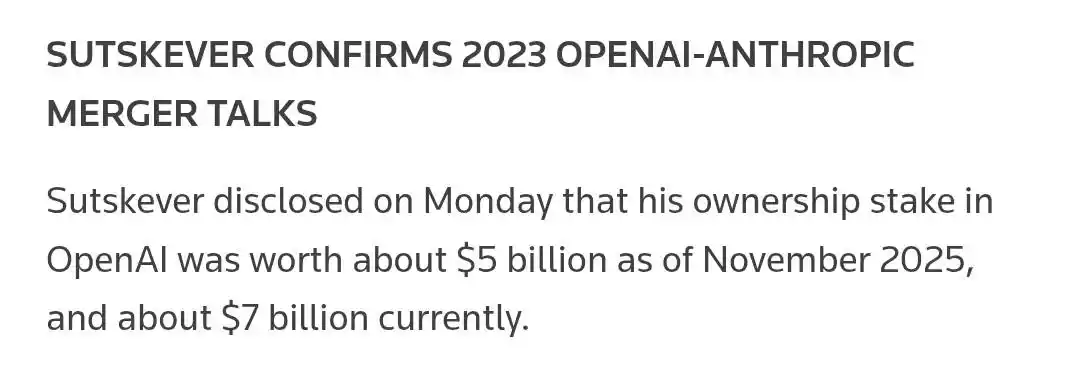
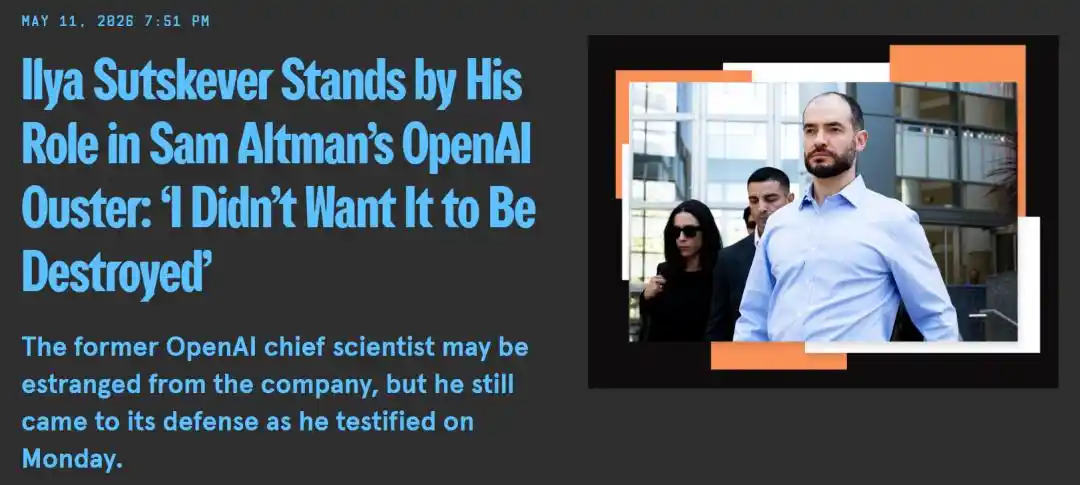
Ilya Sutskever, former chief scientist of OpenAI, testified in Elon Musk's lawsuit against the company, alleging that CEO Sam Altman is a habitual liar who sowed discord among executives and created an environment that hindered serious AI safety discussions. Sutskever revealed he compiled a 52-page dossier on Altman's conduct over a year before the November 2023 boardroom attempt to oust him. He confirmed his OpenAI stake is worth $7 billion. During his testimony, Sutskever expressed regret over his role in the board's actions, citing a lack of experience and poor legal advice. He stated his reversal—signing a letter to reinstate Altman—was a desperate move to prevent OpenAI's collapse and a potential Microsoft takeover, saying, "I didn't want it to be destroyed." The trial also uncovered details about a potential OpenAI-Anthropic merger post-ouster and internal Microsoft communications pressuring for faster ChatGPT monetization. While Sutskever's testimony damaged Altman's credibility, it also countered part of Musk's case, as he stated he never promised Musk that OpenAI would remain non-profit. The trial's outcome could impact the future structure of the $850 billion-valued company.

Elon Musk's landmark lawsuit against OpenAI finally saw Ilya take the stand!

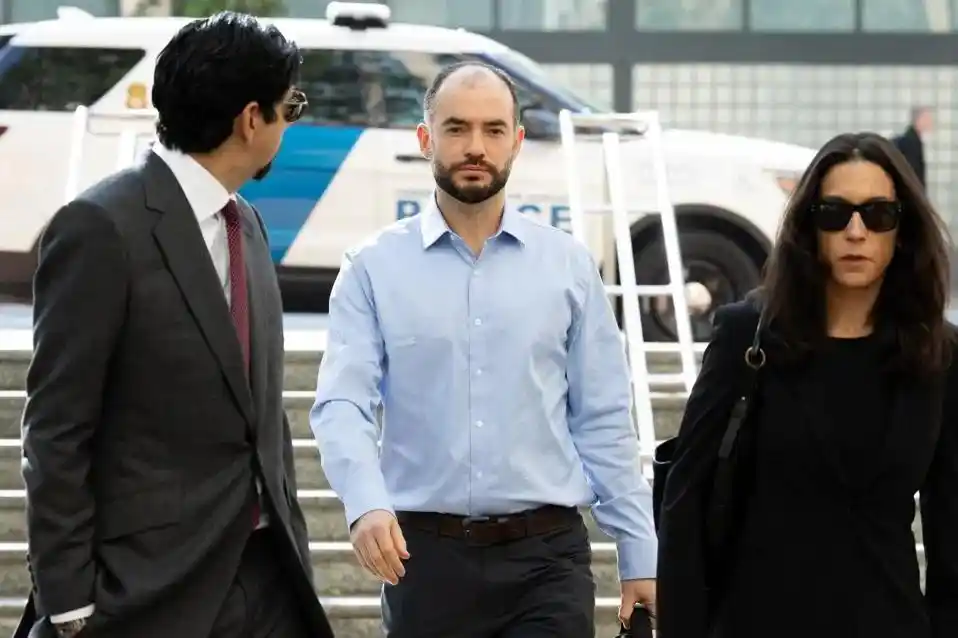
May 11, 2026, Oakland Federal Court, California.

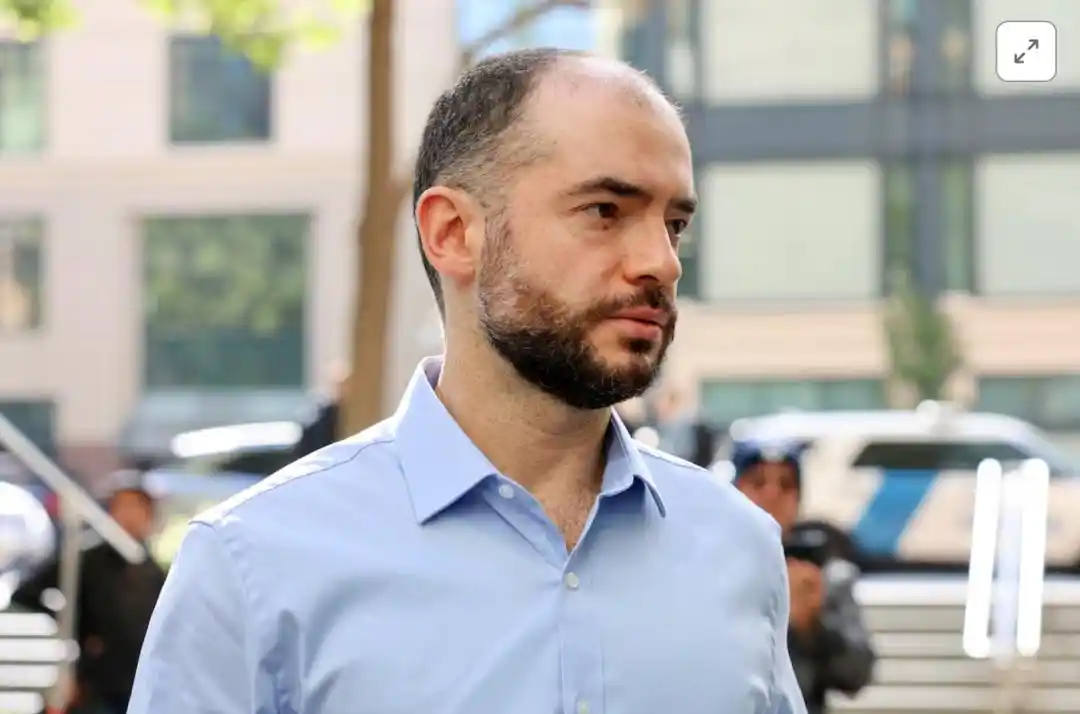
When that curly-haired, slightly melancholic genius scientist Ilya Sutskever slowly walked up to the witness stand, everyone in the courtroom held their breath.

Wherever he appears, Ilya commands attention, especially here, at the trial of Elon Musk vs. OpenAI.

This time, Ilya was no longer the apologizer posting "I deeply regret" on social media, but an avenger returning with a 'bombshell'.

He not only personally confirmed Altman's habitual lying but also revealed to the world the power vacuum beneath OpenAI's glamorous facade.

This is destined to be the final chapter in the historic 'AI Palace Drama'.

This trial may decide the future of OpenAI—a company preparing for a trillion-dollar IPO, valued at $850 billion.

Altman is expected to take the stand himself as early as Tuesday to respond.

52 Pages of 'Lying Evidence': Altman Through That Man's Eyes

"He habitually lied, sowed discord among executives, and undermined corporate governance."

When Ilya said these words under oath, the current OpenAI management sitting in the defendant's seats turned pale.

This was no longer rumor, but courtroom testimony from OpenAI's former Chief Scientist.

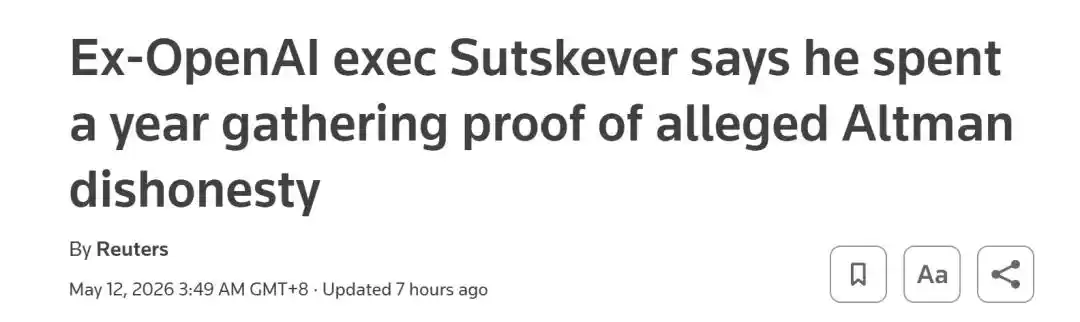
This time, Ilya revealed a previously unknown shocking detail: before the global-shocking 'November Coup' in 2023, he had been secretly gathering evidence for an entire year.

This evidence file was 52 pages long.

This 'Complete Collection of Altman's Dirty Laundry' detailed Altman's day-to-day political maneuvering.

For example, his specialty was sowing discord.

He frequently created conflicts between CTO Mira Murati and other executives, making them suspicious of each other to establish his own absolute authority.

Additionally, he was very skilled at manipulating information.

Ilya testified that Altman created an environment where "executives could not access correct information." In such an environment, any serious discussion about AI safety would be diluted by Altman with false market visions.

This time, Ilya bluntly stated that Altman's behavior was "detrimental to achieving any grand goal," especially the development of safe AGI.

"I spent a year observing and thinking, and ultimately I believed firing him was appropriate."

Ilya's tone was calm, yet every word was cutting. He admitted he had spoken with Murati in detail many times, both feeling profound unease about Altman's behavior.

The $70 Billion 'Traitor': The Expensive Price Tag of an Idealist

Next came another climax of the trial.

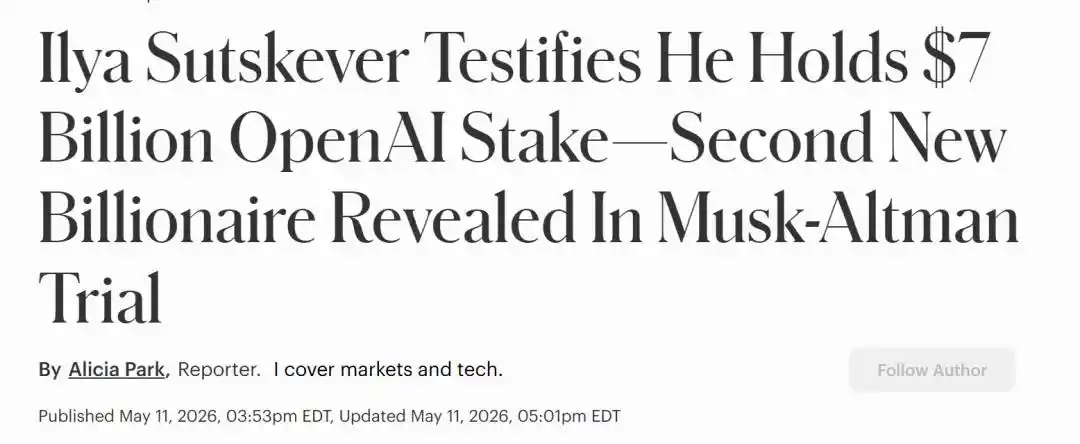
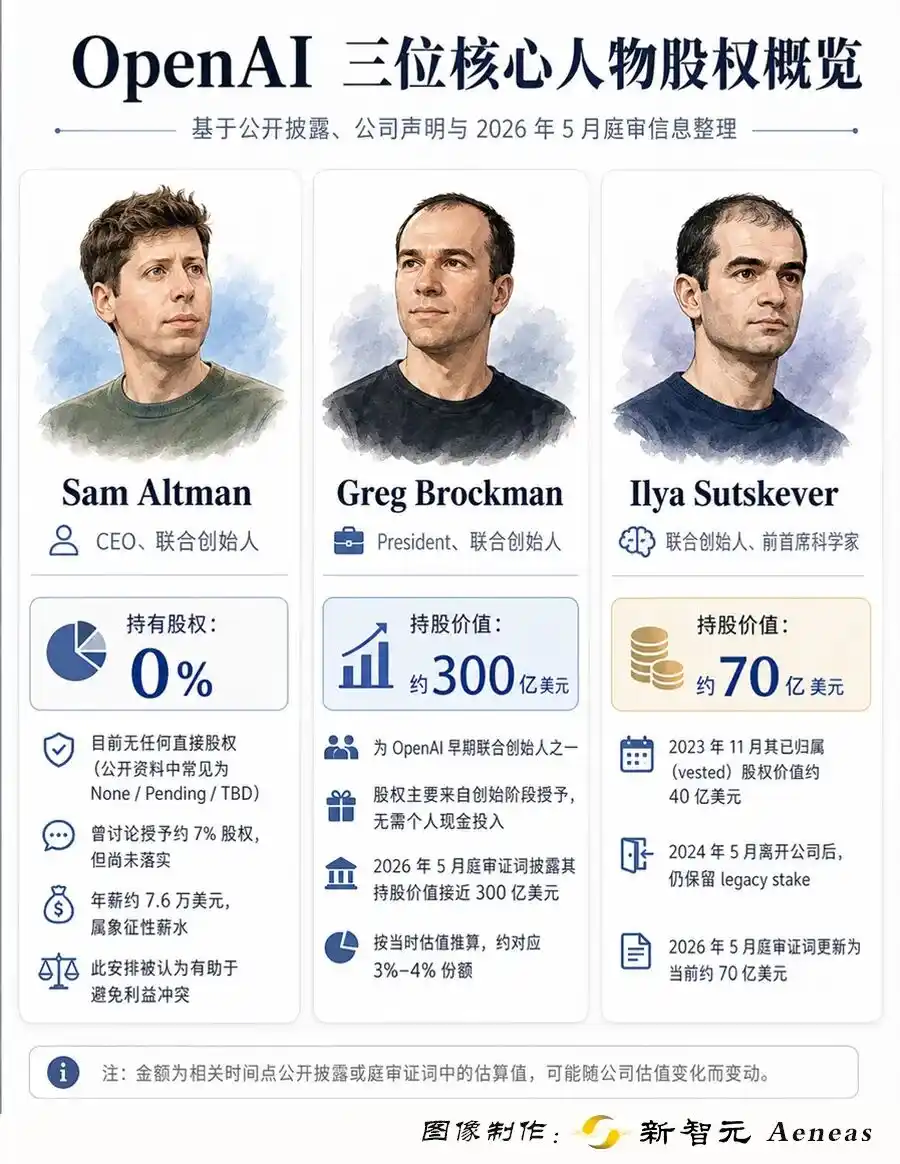
As a co-founder of OpenAI, Ilya had always been seen as a "pure scientist." But when the judge asked about the value of his shares, the number shocked the courtroom: $70 billion.

Just a week prior, OpenAI President Greg Brockman had admitted to holding shares worth $30 billion.

And Altman, whom Musk accused of being "blinded by greed," had a net worth of about $3.5 billion (mainly from his external investments).

A scene of irony unfolded: these former believers who championed "non-profit" had become the fastest-accumulating wealthy individuals in human history.

But Ilya displayed a near-tragic sense of contradiction in court.

He mentioned that back then, to join OpenAI, he rejected Google's renewal offer of $6 million per year—at the time, it seemed like "an astronomical figure" to him.

He explained why, on the weekend of the coup, he suddenly changed course and signed the petition calling for Altman's return.

"It was a 'Hail Mary,'" Ilya said in a low voice, "I saw the company was about to collapse, and Microsoft was ready to swallow us all."

At the time, the situation deteriorated faster than anyone expected. A large number of employees indicated they would leave with Altman. The company faced dissolution.

Ilya later expressed regret—not for gathering evidence or voting for removal, but for "participating in the board's action." He criticized his board colleagues for lacking experience, accepting "not very good legal advice," and acting too hastily.

On Monday in court, when he said these words, the entire gallery fell silent.

"I have a strong sense of belonging to OpenAI. I feel like I've poured my life into it. I just care about it. I don't want it to be destroyed."

The OpenAI Mafia Panorama

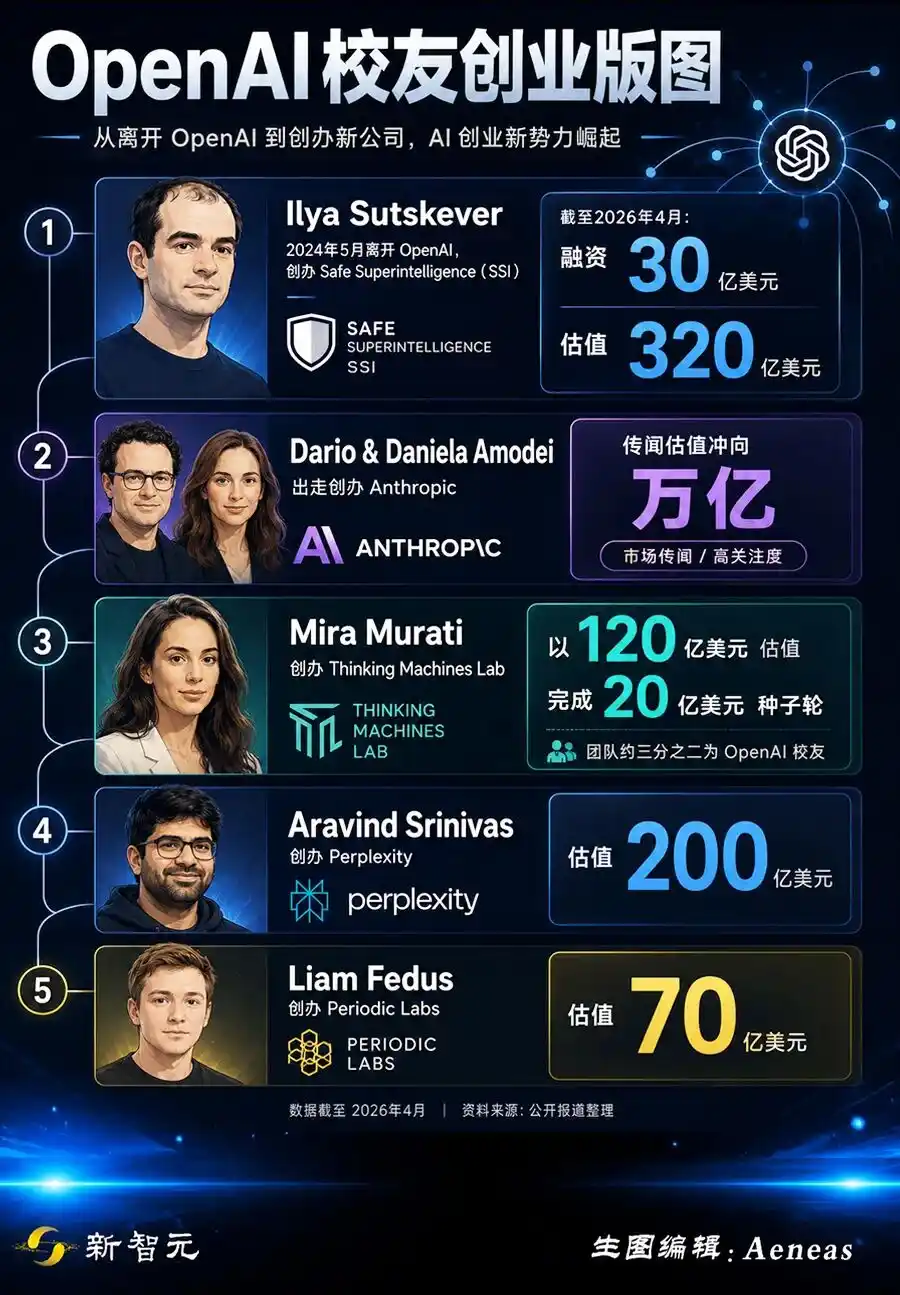
Furthermore, this trial incidentally unveiled a panoramic view of the "OpenAI Mafia."

In May 2024, he left OpenAI and founded Safe Superintelligence. By April 2026, this company had raised $3 billion with a valuation of $32 billion.

Dario and Daniela Amodei left to found Anthropic, rumored to be racing towards a trillion-dollar valuation.

Mira Murati founded Thinking Machines Lab, which completed a $2 billion seed round last year at a $12 billion valuation, with two-thirds of the team being OpenAI alumni.

Aravind Srinivas founded Perplexity, valued at $20 billion. Liam Fedus founded Periodic Labs, valued at $7 billion.

It's intriguing that while their reasons for leaving varied, almost every one was related to Altman's leadership style.

The Almost-Happened Anthropic Merger

Ilya's testimony wasn't just about Altman.

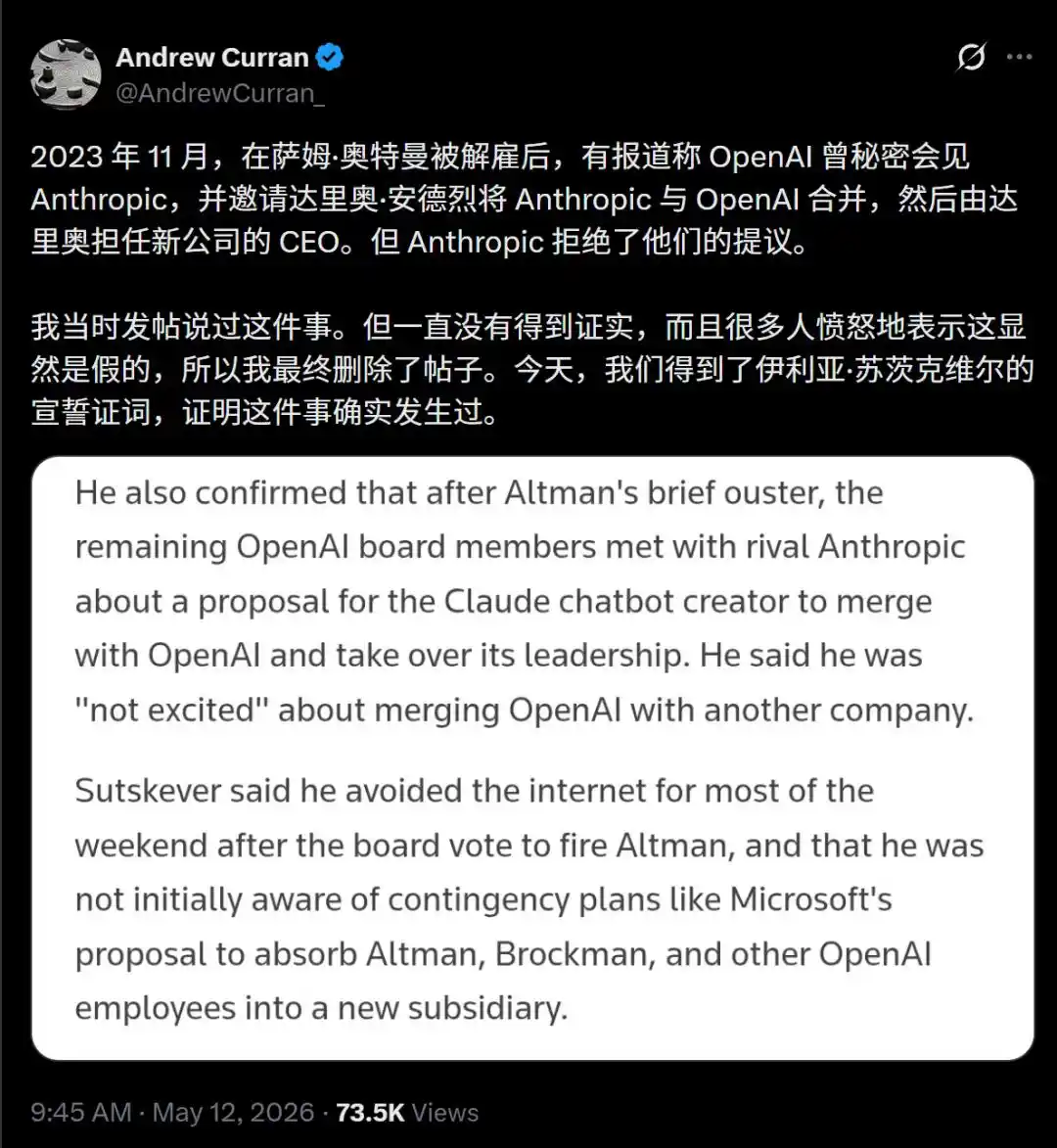
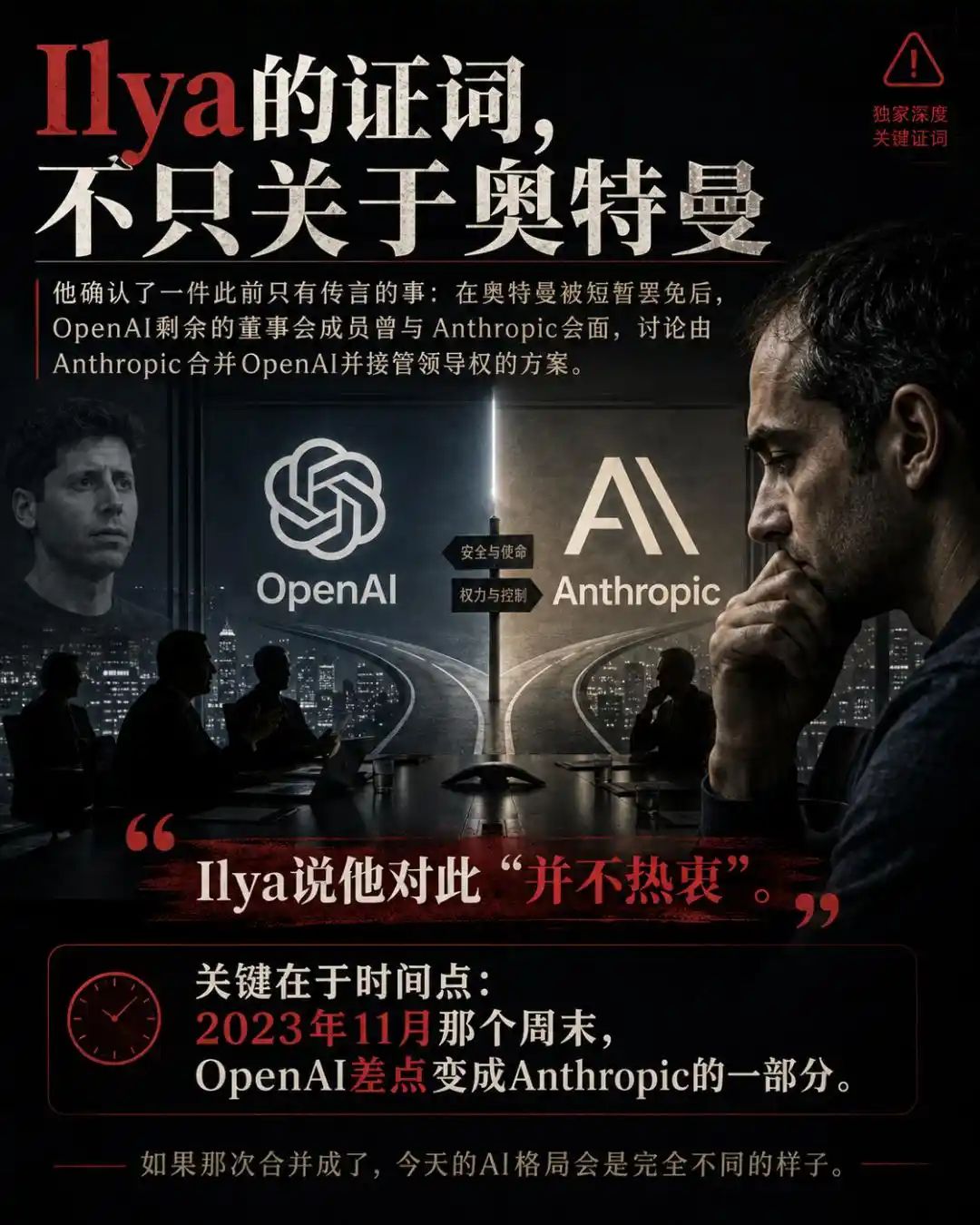
He confirmed something previously only rumored: after Altman's brief ousting, the remaining OpenAI board members met with Anthropic to discuss a plan for Anthropic to merge with and take over leadership of OpenAI.

Ilya said he was "not enthusiastic" about it.

The damaging nature of this detail lies in the timing—that weekend in November 2023, OpenAI almost became part of Anthropic.

If that merger had happened, today's AI landscape would be completely different.

Microsoft's Shadow: Nadella's 'Power Grab' Ambition

If Ilya exposed internal rot, then Microsoft CEO Satya Nadella, who took the stand next, demonstrated the cold logic of capital.

Nadella described the ousting incident at the time as "amateur city," saying he "never got a clear explanation."

But court documents revealed another side of Nadella himself.

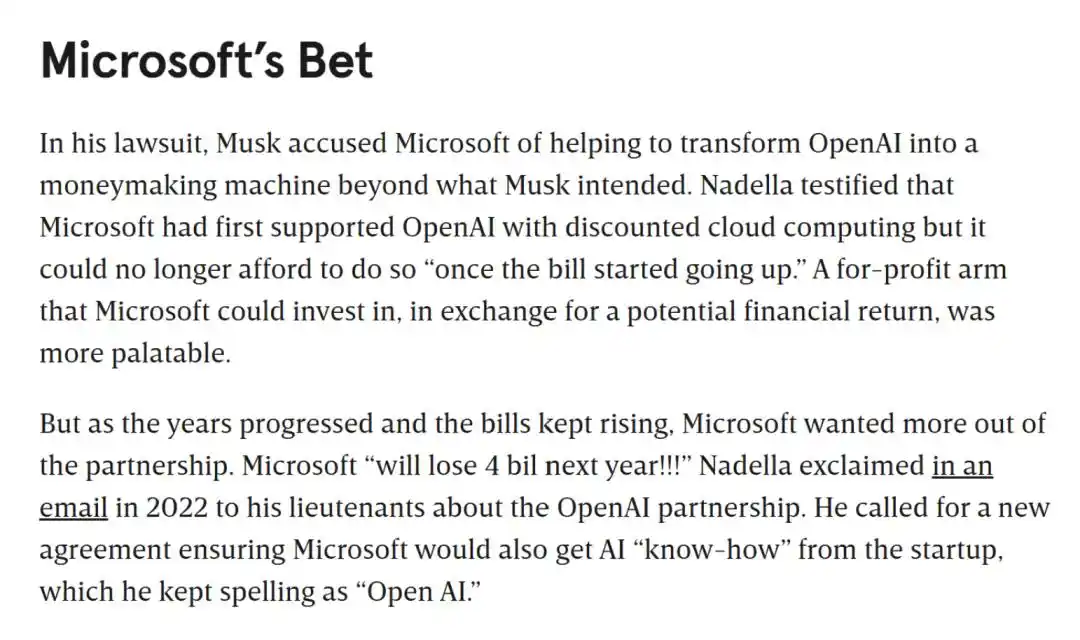
A 2022 email made public in court showed Nadella furiously raging to a subordinate: "If we're putting this much money in and have no control, it makes no sense at all!"

Under questioning by Musk's lawyer, Nadella admitted that when the 2023 coup occurred, Microsoft had already prepared a 14-person "takeover board list" and exercised de facto "veto power" over new OpenAI board members.

Even more explosive, Nadella had texted Altman repeatedly in early 2023 urging him: "Launch the paid subscription version of ChatGPT as soon as possible. The sooner, the better."

Two weeks later, he was inquiring about subscriber numbers.

This directly confirmed Musk's accusation: OpenAI was no longer a research lab, but Microsoft's 'IT department' and monetization machine.

And this, precisely this, was at the core of Musk's accusation—that OpenAI had deviated from its non-profit mission.

Musk's Fury: A Dream 'Exploited'?

Sitting in the audience, Musk perhaps wore a complex smile.

The core of this trial is: Did Altman use false promises of "non-profit" to deceive Musk into providing early investment and brand endorsement, then turn around and sell the results to Microsoft?

While Ilya's testimony didn't fully side with Musk (he denied ever promising Musk that OpenAI would never seek profit), his denunciation of Altman's character undoubtedly provided the strongest ammunition for Musk's lawsuit.

Ilya mentioned that he also opposed Musk's proposal to merge OpenAI into Tesla back then, considering Musk too "aggressive."

Musk's core accusation is: Altman and Brockman violated the promise that OpenAI would remain forever non-profit, turning instead to pursue profit.

Ilya's testimony on this issue actually favored OpenAI.

He said he "never promised Musk that OpenAI would remain non-profit."

He said something that will likely be repeatedly quoted: "OpenAI's mission is greater than its non-profit or for-profit structure."

At this point in the lawsuit, there are no absolute heroes left. It's more like a group of geniuses, on their path to godhood, engaged in the dirtiest brawl over interests, power, and the right to define humanity's future.

Approaching the Endgame: OpenAI or OpenMoney?

The trial continues.

Altman himself will take the stand this Tuesday.

The current situation is extremely dangerous for OpenAI.

If the judge ultimately rules that OpenAI violated its original non-profit charter, its for-profit entity valued at $850 billion could face structural reorganization.

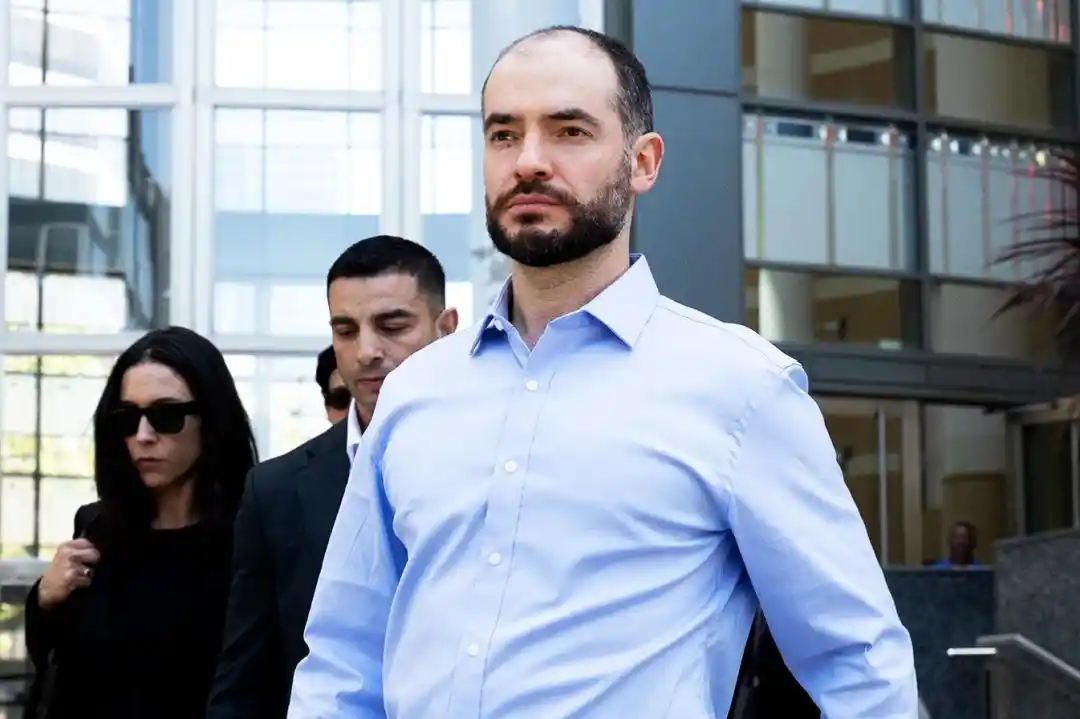
Ilya sat in the witness stand for about an hour. According to a Wired reporter's observation, he made almost no eye contact with anyone throughout.

This man was once the soul of OpenAI, the leader who chanted "Feel the AGI" with employees at company gatherings.

Now, wearing a shirt without a suit jacket, he looked lonely and weary. In court, he said: "I've poured my life into OpenAI, I don't want it to be destroyed."

But the reality is, that pure OpenAI he deeply loved perhaps died the moment the first page of that 52-page evidence was written.

This trial is not about the success or failure of a company, but the core contradiction in Silicon Valley today: when technology granting god-like power (AGI) collides with ultimate human greed, can we still hold onto the last vestiges of integrity?

Next Thursday, the judge will deliver closing arguments.

And humanity's right to define the future of AI may be quietly rewritten within these few pages of testimony.

References:

https://www.reuters.com/business/former-openai-executive-sutskever-discloses-nearly-7-billion-stake-ai-firm-2026-05-11/

https://www.forbes.com/sites/aliciapark/2026/05/11/Ilya-sutskever-testifies-he-holds-7-billion-openai-stake-second-new-billionaire-revealed-in-musk-altman-trial/

https://www.wired.com/story/Ilya-sutskever-testifies-musk-v-altman-trial/

This article is from the WeChat public account "New Zhiyuan," author: New Zhiyuan, editor: Aeneas

Связанные с этим вопросы

QWhat is the core accusation Ilya Sutskever makes against Sam Altman during the trial?

AIlya Sutskever testified that Sam Altman habitually lied, manipulated and sowed discord among executives, and created an environment where senior managers could not obtain accurate information, actions which were detrimental to developing safe AGI.

QWhat was the stated value of Ilya Sutskever's OpenAI stake revealed in court?

AThe value of Ilya Sutskever's stake in OpenAI was revealed to be 7 billion US dollars.

QWhat reason did Ilya Sutskever give for signing the letter asking for Sam Altman's return during the November 2023 'coup'?

AIlya Sutskever stated his decision to sign the letter was a 'Hail Mary' (a desperate measure) because he saw the company was on the verge of collapse, with Microsoft poised to absorb everyone, and he did not want OpenAI to be destroyed.

QWhat major alternative to OpenAI's leadership was discussed after Sam Altman's brief ouster in November 2023, according to Ilya's testimony?

AAccording to Ilya Sutskever's testimony, after Sam Altman's ouster, the remaining OpenAI board members met with Anthropic to discuss a potential merger where Anthropic would take over the leadership of OpenAI.

QWhat does the trial fundamentally question about OpenAI, based on Elon Musk's lawsuit?

ABased on Elon Musk's lawsuit, the trial fundamentally questions whether OpenAI violated its original non-profit charter and mission by pursuing profits and becoming a de facto 'IT department' for its major investor, Microsoft.

Похожее

From Parallel Finance to Mainstream Finance: The On-Chain Securities Era Ushers in a Historic Window

From Parallel Finance to Mainstream: The Dawn of On-Chain Securities For over a decade, the crypto industry has operated as a parallel financial system with its own currencies, markets, and assets—from Bitcoin and ICOs to DeFi, NFTs, and memecoins. Despite building a robust internal ecosystem, a wall has separated it from the traditional financial world. That barrier is now crumbling. The industry's first act was one of internal evolution: ICOs streamlined fundraising, DeFi recreated financial services on-chain, and layer-2 networks competed for scalability—all within the crypto bubble. While innovative, this cycle remained closed, with capital and users circulating internally, leading to volatile boom-bust cycles. Even Bitcoin ETFs, while attracting Wall Street capital, merely provided a channel to buy crypto assets without bridging the systems. The next, larger narrative is Real-World Assets (RWA) moving on-chain. This involves tokenizing stocks, bonds, funds, and future cash flows. Blockchain can compress the complex traditional processes of trading, settlement, clearing, and custody into a seamless, automated network operating in seconds. This shift is creating a new financial gateway: the native crypto securities broker. This entity will combine functions of an exchange, broker, bank, and custodian into a unified global financial operating system. Consequently, the next major battleground won't be the "public chain wars" focused on speed and cost, but the competition to build the financial infrastructure capable of hosting high-quality, liquid real-world assets. Access to global equities, index funds, or stakes in companies like SpaceX could erase the boundary between crypto and traditional finance, unlocking a market orders of magnitude larger than crypto's current valuation. In summary, after years of creating a separate financial world, crypto's next decade will be defined by its integration into the existing global financial system, marking the true beginning of its largest growth story.

marsbit12 мин. назад

From Parallel Finance to Mainstream Finance: The On-Chain Securities Era Ushers in a Historic Window

marsbit12 мин. назад

Wang Chuan: When the Neighbor Old Wang Made 30x on Memory Stocks, How to Avoid Anxiety (Part Six) - The Trap of Commoditized Goods

Wang Chuan: When the Neighbor Lao Wang Made 30x on Storage Stocks, How to Stay Anxiety-Free (Part 6) - The Trap of Commoditized Goods. This essay uses historical and current examples to analyze the cyclical and high-risk nature of the data storage industry. It begins with the 1990s rise and dramatic fall of Iomega, whose stock soared over 160x in 18 months before collapsing 97% from its peak, illustrating the fleeting success of storage "meme stocks." The core problem is that storage products, like DRAM and flash memory, are highly commoditized. This leads to extreme volatility: prices have plummeted over 80% multiple times, and company stocks often crash 95% or go bankrupt. The industry's dynamic is defined by "elastic demand facing heavy-asset, long-cycle, rigid supply." When demand spikes and supply is fixed, prices skyrocket, as seen recently with AI-driven demand for High Bandwidth Memory (HBM). Companies like Sandisk and Micron have reported massive revenue and gross margin jumps (e.g., Sandisk's gross margin rising from 22.5% to 78.3%) despite minimal increases in production volume. However, these high margins are self-defeating. They incentivize massive new capacity investments (hundreds of billions planned from 2026), with supply expected to surge by late 2027. Once new supply meets demand, prices and profits will crash, potentially leading to a scenario where "selling more results in earning less." The article debunks the safety of long-term supply agreements, comparing them to fragile non-aggression pacts easily broken when market conditions shift. It warns that when an industry is highly profitable but trades at low P/E ratios, the risk is greatest, as plummeting prices quickly erase those earnings. Multiple asymmetric risks loom, including economic recession, reduced AI spending, faster-than-expected capacity expansion (especially from Chinese firms), and technological innovations that reduce memory requirements. In conclusion, the storage sector is a cyclical trap where periods of euphoric profits are often precursors to devastating downturns, luring unprepared investors into a "wealth incinerator."

marsbit22 мин. назад

Wang Chuan: When the Neighbor Old Wang Made 30x on Memory Stocks, How to Avoid Anxiety (Part Six) - The Trap of Commoditized Goods

marsbit22 мин. назад

Wang Chuan: When the neighbor Lao Wang earned thirty times from investing in memory storage stocks, how can you still avoid anxiety (6) - The trap of homogeneous products

The article, "Wang Chuan: How to Remain Unanxious After Neighbor Lao Wang's Thirty-Fold Gain on Storage Stocks (Part 6) - The Trap of Commoditized Goods," analyzes the cyclical and perilous nature of the data storage industry through historical and current case studies. It begins with the example of Iomega, whose Zip drives led to a stock surge of over 160x in the mid-1990s before collapsing over 97% from its peak due to competition from cheaper CD-R technology. This pattern is characteristic of storage, where products like DRAM are highly commoditized, leading to extreme price volatility. The sector has seen prices crash over 80% multiple times, with companies often facing bankruptcy. The core dynamic is "elastic demand facing heavy-asset, long-cycle, rigid supply." High prices attract new capacity, but the long lead time means supply eventually overshoots, causing sharp price corrections. The current AI-driven boom, exemplified by surging demand for High-Bandwidth Memory (HBM), has led to skyrocketing prices and profit margins for companies like SanDisk and Micron, despite relatively flat production volumes. However, the author warns this high-margin environment is self-defeating. The high profits are already triggering massive new capacity investments (hundreds of billions starting 2026), with supply expected to ramp up by late 2027. When supply catches up, total revenue and profits may fall even as more units are sold. Long-term supply agreements offer little protection, as buyers can find ways to renegotiate if market prices drop, similar to fragile political treaties. Key risks include economic downturns, cuts in AI spending, faster-than-expected capacity expansion (especially from Chinese firms), and innovations in chip/algorithm design that reduce memory needs. A critical trap is that at the cycle's peak, storage stocks often appear cheap with low P/E ratios, luring value investors just before an impending downturn where profits evaporate. The conclusion cautions that for commoditized goods like storage, high margins inevitably destroy themselves, and the current asymmetry favors downside risk over further upside. The neighbor's dream of easy wealth from storage stocks is portrayed as a precarious illusion.

链捕手39 мин. назад

Wang Chuan: When the neighbor Lao Wang earned thirty times from investing in memory storage stocks, how can you still avoid anxiety (6) - The trap of homogeneous products

链捕手39 мин. назад

AI PCs Are Here, Going Toe-to-Toe with 120B Models Locally! NVIDIA Redefines the "Personal AI Computer" Foundation with RTX Spark

NVIDIA has redefined the "AI PC" standard with the launch of the RTX Spark super chip at GTC 2026. Boasting 1 petaflop (1000 TOPS) of AI performance, it dwarfs the 45-50 TOPS NPUs in current AI PCs. The SoC features a Blackwell GPU, a 20-core Arm CPU co-designed with MediaTek, and crucially, up to 128GB of unified memory shared between CPU and GPU. This architectural shift enables local execution of 120-billion-parameter large language models with million-token context windows, a massive leap from the 9B-40B models typical on current consumer hardware. Beyond AI, use cases include 12K video editing and high-fps ray-traced gaming. Key to enterprise adoption is a security collaboration with Microsoft. Windows security is upgraded, and NVIDIA's OpenShell sandbox runtime is integrated to safely contain AI agent actions. Major software support comes from Adobe, which announced a deep,底层-level rewrite of Photoshop and Premiere to leverage the unified memory for up to 2x performance gains. Six OEMs, including Dell, HP, Lenovo, and Microsoft Surface, will release RTX Spark-based轻薄本 and compact desktops this fall. However, questions remain about real-world performance,功耗, thermal management in laptops, pricing, and the actual impact of the OpenShell sandbox. The RTX Spark represents a fundamental power shift in the PC industry, moving from an x86 CPU-centric model to a GPU-centric SoC platform, but its ultimate success hinges on the upcoming product rollouts and ecosystem validation.

marsbit53 мин. назад

AI PCs Are Here, Going Toe-to-Toe with 120B Models Locally! NVIDIA Redefines the "Personal AI Computer" Foundation with RTX Spark

marsbit53 мин. назад

Торговля

Спот
Фьючерсы

Популярные статьи

Как купить S

Добро пожаловать на HTX.com! Мы сделали приобретение Sonic (S) простым и удобным. Следуйте нашему пошаговому руководству и отправляйтесь в свое крипто-путешествие.Шаг 1: Создайте аккаунт на HTXИспользуйте свой адрес электронной почты или номер телефона, чтобы зарегистрироваться и бесплатно создать аккаунт на HTX. Пройдите удобную регистрацию и откройте для себя весь функционал.Создать аккаунтШаг 2: Перейдите в Купить криптовалюту и выберите свой способ оплатыКредитная/Дебетовая Карта: Используйте свою карту Visa или Mastercard для мгновенной покупки Sonic (S).Баланс: Используйте средства с баланса вашего аккаунта HTX для простой торговли.Третьи Лица: Мы добавили популярные способы оплаты, такие как Google Pay и Apple Pay, для повышения удобства.P2P: Торгуйте напрямую с другими пользователями на HTX.Внебиржевая Торговля (OTC): Мы предлагаем индивидуальные услуги и конкурентоспособные обменные курсы для трейдеров.Шаг 3: Хранение Sonic (S)После приобретения вами Sonic (S) храните их в своем аккаунте на HTX. В качестве альтернативы вы можете отправить их куда-либо с помощью перевода в блокчейне или использовать для торговли с другими криптовалютами.Шаг 4: Торговля Sonic (S)С легкостью торгуйте Sonic (S) на спотовом рынке HTX. Просто зайдите в свой аккаунт, выберите торговую пару, совершайте сделки и следите за ними в режиме реального времени. Мы предлагаем удобный интерфейс как для начинающих, так и для опытных трейдеров.

1.4k просмотров всегоОпубликовано 2025.01.15Обновлено 2025.03.21

Как купить S

Sonic: Обновления под руководством Андре Кронье – новая звезда Layer-1 на фоне спада рынка

Он решает проблемы масштабируемости, совместимости между блокчейнами и стимулов для разработчиков с помощью технологических инноваций.

2.3k просмотров всегоОпубликовано 2025.04.09Обновлено 2025.04.09

Sonic: Обновления под руководством Андре Кронье – новая звезда Layer-1 на фоне спада рынка

HTX Learn: Пройдите обучение по "Sonic" и разделите 1000 USDT

HTX Learn — ваш проводник в мир перспективных проектов, и мы запускаем специальное мероприятие "Учитесь и Зарабатывайте", посвящённое этим проектам. Наше новое направление .

1.8k просмотров всегоОпубликовано 2025.04.10Обновлено 2025.04.10

HTX Learn: Пройдите обучение по "Sonic" и разделите 1000 USDT

Обсуждения

Добро пожаловать в Сообщество HTX. Здесь вы сможете быть в курсе последних новостей о развитии платформы и получить доступ к профессиональной аналитической информации о рынке. Мнения пользователей о цене на S (S) представлены ниже.

活动图片