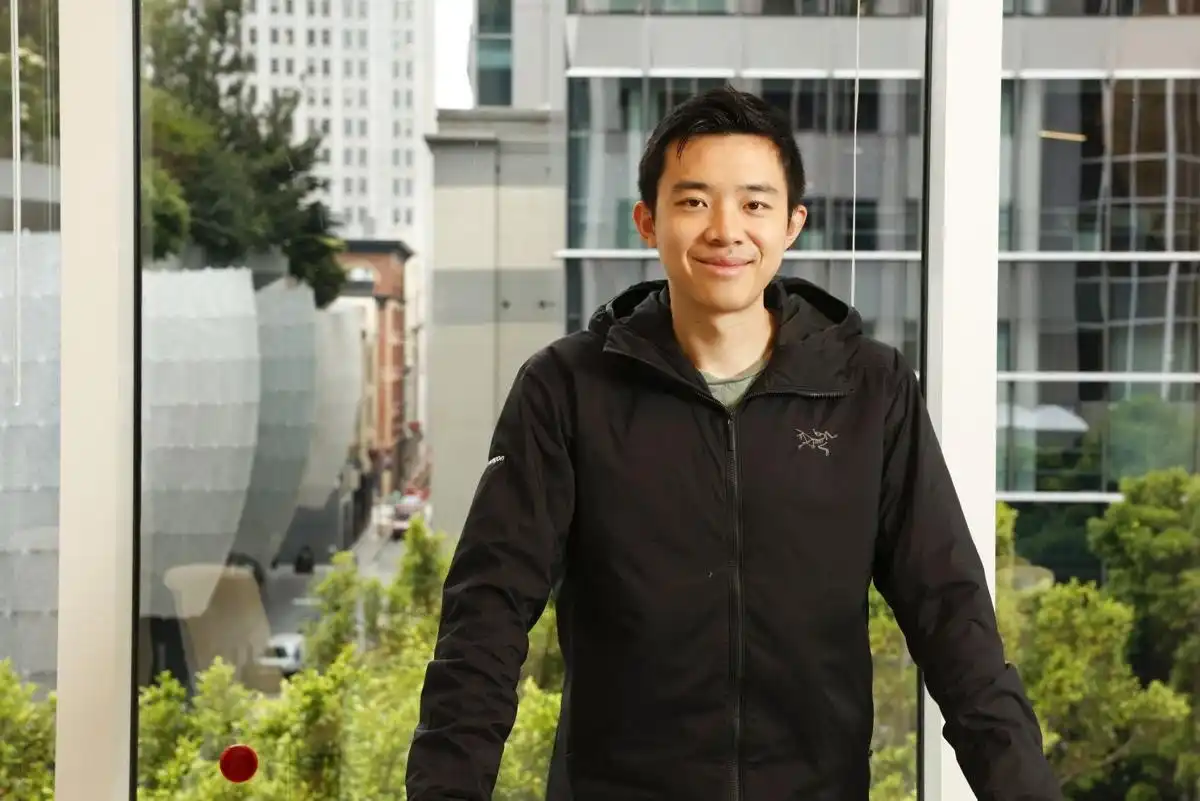
Hyperliquid Founder's Circle of Friends Exposed: This Group of 'Olympic Gold Medalists' is Dominating Silicon Valley's AI Scene

marsbitОпубликовано 2026-04-16Обновлено 2026-04-16

Введение

This article profiles a group of former Olympiad medalists, now prominent AI entrepreneurs, who first connected through a Hudson River Trading (HRT) internship and high school competitions. The circle includes Jeff Yan (founder of Hyperliquid), Alexandr Wang (head of Meta's AI division after selling Scale AI), Scott Wu (CEO of Cognition, creator of AI engineer Devin), Johnny Ho (CSO of Perplexity), Jesse Zhang (CEO of Decagon), Demi Guo (CEO of Pika), and Steven Hao (CTO of Cognition). Their shared background in elite math and programming contests forged a powerful network. Now, they are leading some of Silicon Valley's most valuable AI companies, with several ventures achieving multi-billion dollar valuations. The piece draws a parallel to the "PayPal Mafia," highlighting their collective focus on engineering excellence, efficiency, and a shared vision for shaping the future with AI.

Author: Azuma, Odaily Planet Daily

Yesterday, a feature interview with Hyperliquid founder Jeff Yan in "Colossos" magazine went viral across the internet (Related reading: 11 People, Zero Funding, Earning $900 Million Annually: The Crazy Life of Hyperliquid Founder Jeff Yan).

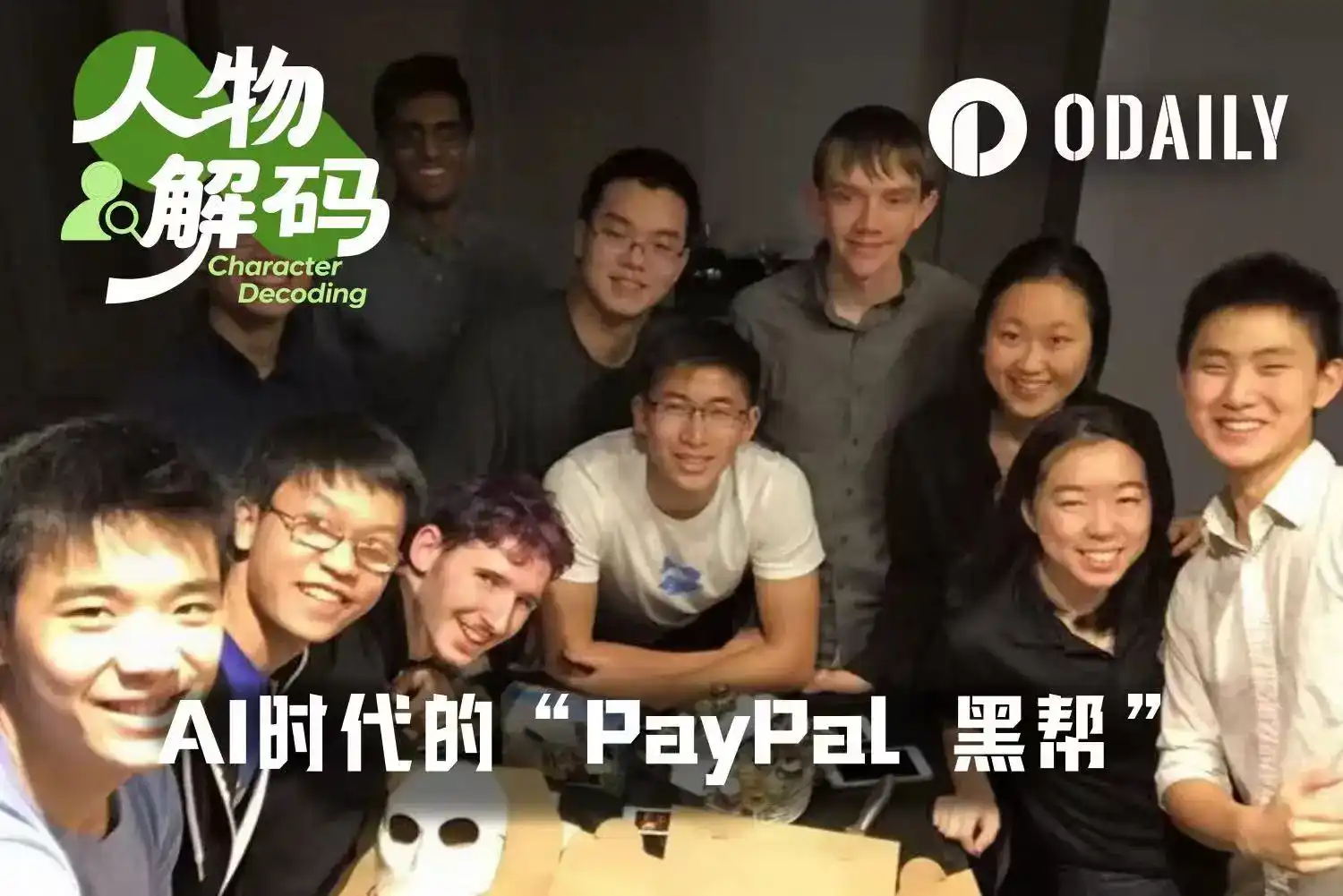
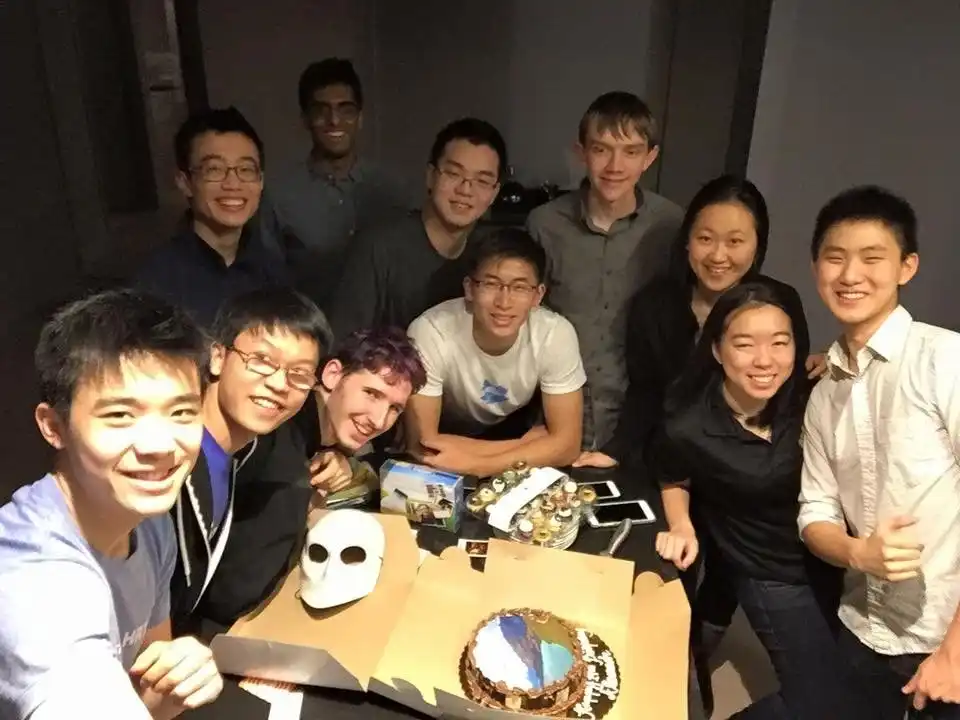
In the interview, Jeff Yan disclosed a little-known story — during his junior year at Harvard, he participated in the inaugural internship program at the quantitative trading giant "Hudson River Trading" (HRT). Ten interns were selected that year. Apart from Jeff Yan, who chose the cryptocurrency track, several others from that intern class have now become prominent figures in the AI field, including Meta's AI business line head Alexandr Wang, Decagon founder and CEO Jesse Zhang, and Cognition founder and CEO Scott Wu.

Odaily Note: The intern group photo shared by Jesse Zhang

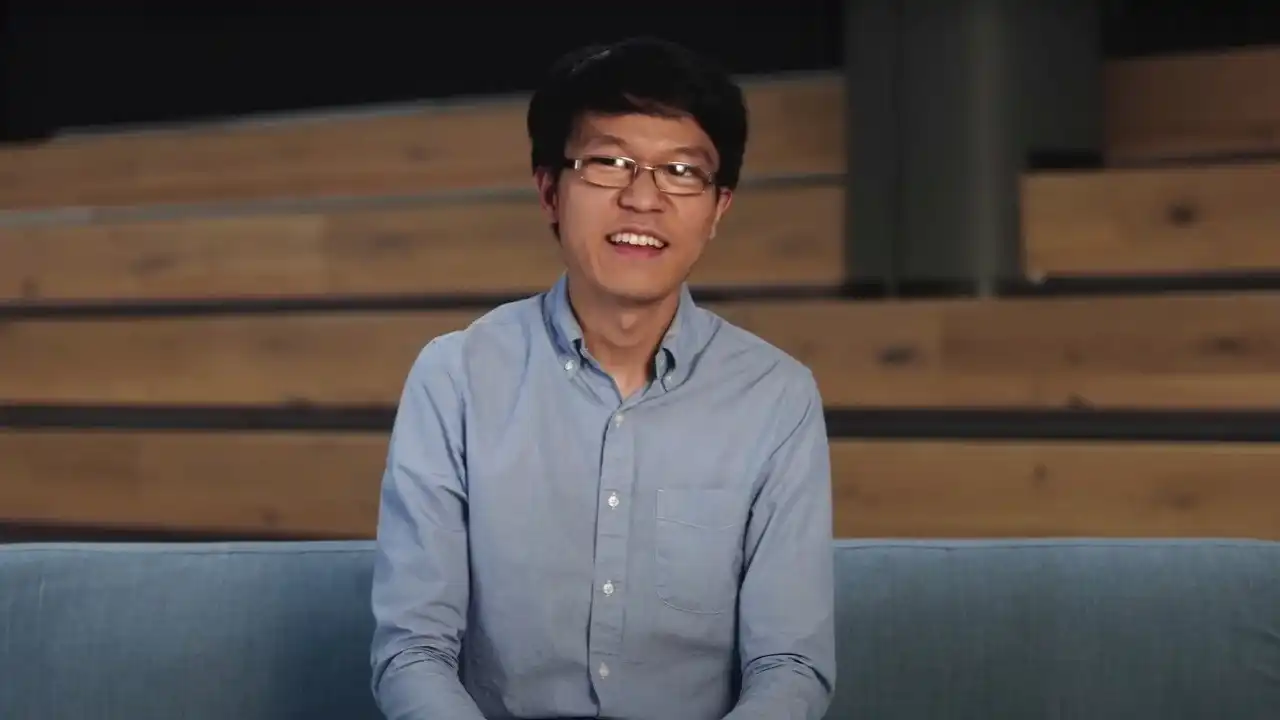
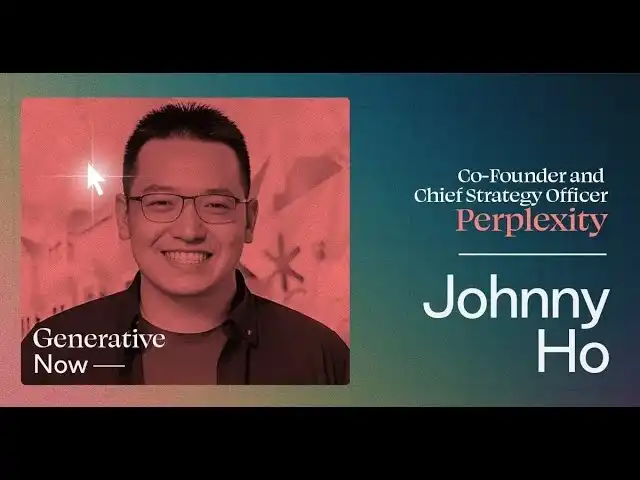
According to additional disclosures by Scott Wu himself, the HRT internship was not the starting point of their friendship. As early as high school, many of them had met through Olympic competitions (Jeff Yan, Scott Wu, and several others had won gold medals), and that small circle included many more notable names, including but not limited to Perplexity co-founder and CSO Johnny Ho, Pika co-founder and CEO Demi Guo, and Steven Hao, Alexandr Wang's former partner in founding Scale AI......

During the formative years of Jeff Yan, Scott Wu, and others, the "PayPal Mafia" represented by Elon Musk and Peter Thiel was already dominating the business world, and people began searching for the next similar special network. Jeff Yan's small circle had also discussed this topic. The 19-year-old Alexandr Wang once said to his friends: "Why can't it be us?"

Ten years later, Alexandr Wang's bold statement seems to be coming true. Leveraging AI, this group of young people from the Hudson River is stirring up the era in their own way.

Alexandr Wang: Zuckerberg's AI Brain

Alexandr Wang is perhaps the most well-known figure in this small circle. Born in 1997 in Los Alamos, New Mexico, Alexandr Wang is a descendant of Chinese immigrants. His parents were physicists at the Los Alamos National Laboratory — where the United States' first atomic bomb was secretly developed during World War II.

Alexandr Wang was passionate about mathematics and programming from a young age. He qualified for the Mathematical Olympiad Program in 2013, the US Physics Team in 2014, and reached the finals of the US Computer Science Olympiad in 2012 and 2013.

In 2015, Alexandr Wang dropped out of the Massachusetts Institute of Technology and founded Scale AI the following year, which annotates data used for training AI in computer vision and audio transcription. Riding the wave of the AI boom, Scale AI's valuation soared, reaching $7.3 billion by 2021. With a 15% stake, Alexandr Wang's net worth surpassed the $1 billion mark.

In June 2025, Meta, which had clearly fallen behind in the AI race, acquired a 49% stake in Scale AI for $14.3 billion. Zuckerberg's附加条件 was that — the soul of Scale AI, the then 28-year-old Alexandr Wang, must join Meta. Alexandr Wang subsequently joined Meta and began leading Meta's AI development team, the "Meta Superintelligence Labs" (MSL).

On the night of April 8th, Zuckerberg's big gamble paid off. MSL officially released its first self-developed AI model, Muse Spark. Muse Spark is a native multimodal reasoning model supporting tool calling, visual chain-of-thought, and multi-Agent orchestration. It is the most powerful model Meta has released to date. During training, MSL observed predictable scaling improvements in the model during pre-training, reinforcement learning, and test-time reasoning stages.

Scott Wu: Olympiad Prodigy, Creator of a $10 Billion AI Unicorn

Scott Wu was born in 1997 in Louisiana to a family of Chinese immigrants. Growing up, Scott Wu actively participated in programming and mathematics competitions, winning three gold medals in the International Olympiad in Informatics (IOI), including first place in 2014.

After high school, Scott Wu attended Harvard University but dropped out after two years. During his undergraduate studies at Harvard College, he was a member of the university team that participated in the 2016 International Collegiate Programming Contest (ICPC), winning a gold medal and achieving an overall third-place ranking.

In 2019, Scott Wu co-founded the social platform Lunchclub as its CTO. In 2023, Scott Wu, along with friends Steven Hao and Walden Yan (both Olympic gold medalists), co-founded Cognition, where he serves as CEO.

In 2024, the Cognition team launched the world's first autonomous AI software engineer, Devin. This product can independently complete code writing, testing, and deployment, and supports the decomposition and collaboration of complex tasks. It significantly outperformed GPT-4 in the SWE-bench benchmark test. In May of the same year, Cognition secured $175 million in funding led by Peter Thiel's Founders Fund, valuing the company at $2 billion post-money. In September 2025, Cognition raised another $400 million, skyrocketing its valuation to $10.2 billion.

By early 2026, Cognition's annualized revenue had reached $400 million.

Johnny Ho: Net Worth $2.1 Billion, Once Considered Acquiring TikTok and Chrome

Like Scott Wu, Harvard graduate Johnny Ho won three gold medals in the International Olympiad in Informatics (IOI), achieving a perfect score and first place in 2012.

In August 2022, Johnny Ho co-founded Perplexity with Aravind Srinivas, Andy Konwinski, and Denis Yarats. Perplexity is positioned as an AI search engine company, providing a search service with conversational answers that display citation sources and offer related question suggestions.

In 2023, Perplexity's monthly visits reached 10 million; by April 2024, its monthly active users had reached approximately 15 million. That same year, Perplexity embarked on a疯狂融资 spree. In its fourth funding round at the end of the year, it raised $5 [Note: Likely a typo, probably meant $500 million or similar, but translated as written], reaching a valuation of $9 billion; In July 2025, Perplexity completed another $100 million in new funding, raising its valuation to $18 billion.

It is worth mentioning that Perplexity has initiated several bold "minnow-swallowing-whale" level acquisition proposals (with VCs willing to provide capital), including an offer to acquire TikTok in early 2025, proposing to merge Perplexity, TikTok's US operations, and new capital partners into a new entity, and in August 2025, proposing to Google to acquire its core product, the Chrome browser, for $34.5 billion.

According to the latest data from Forbes, Perplexity's current valuation is as high as $20 billion, and Johnny Ho's personal wealth has reached $2.1 billion.

Jesse Zhang: AI Startup Valued at $4.5 Billion in Three Years

Jesse Zhang was also born in 1997 and grew up in the San Francisco Bay Area. From high school, Jesse Zhang was a typical "competition fanatic" — selected twice for the Mathematical Olympiad Program (MOP), a finalist in the Intel STS, and participated in MIT's RSI research program. After entering Harvard, Jesse Zhang completed the four-year university curriculum in just three years.

In 2018, Jesse Zhang co-founded the game highlight sharing platform Lowkey with friends. The project received seed funding from Y Combinator and Series A funding from a16z. In 2021, Lowkey was acquired by Pokémon GO developer Niantic for an undisclosed amount.

In 2023, Jesse Zhang co-founded Decagon with partner Ashwin Sreenivas, focusing on automating enterprise customer service using AI Agents to solve the problems of high labor costs and low efficiency in call centers.

In June 2024, shortly after its founding, Decagon quickly raised $35 million in funding, including a $5 million seed round led by a16z and a $30 million Series A led by Accel; Four months later, Decagon raised $65 million in a Series B round; In June 2025, a Series C round raised $131 million, pushing the valuation to $1.5 billion; In January 2026, a Series D round raised $250 million, skyrocketing the valuation to $4.5 billion... In line with the rising valuation was Decagon's revenue capability. By the end of 2025, the company disclosed an annual revenue capability exceeding $30 million.

Demi Guo: Hangzhou '95er, Pioneer in AI Video Generation

Demi Guo was born in 1999 in Hangzhou, China, and moved to Silicon Valley with her family during childhood.

Demi Guo won a silver medal at the 2015 International Olympiad in Informatics. She graduated from Harvard University with a bachelor's degree in mathematics and a master's degree in computer science, later dropping out of a Stanford PhD program to focus on entrepreneurship in generative AI video content creation.

In April 2023, Demi Guo co-founded Pika with Chenlin Meng, with Demi Guo serving as CEO. Pika focuses on developing video generation AI technology. Its core products include the Pika 1.0 and Pika 2.0 models, which generate 3D animation, anime, cartoon, and cinematic styles, offering features like video extension, canvas expansion, and element replacement.

Regarding funding, Pika completed a $20 million seed round before its official launch; It then completed a $35 million Series A round in November 2023, led by Lightspeed Venture Partners; In June 2024, Pika completed an $80 million Series B round at a $470 million valuation, led by Spark Capital, with participation from Greycroft, Lightspeed Venture Partners, and actor Jared Leto, among others.

Steven Hao: AI Tech Guru with a Net Worth Over $1 Billion

Steven Hao, a graduate of MIT's mathematics department, also won a gold medal in the International Olympiad in Informatics (IOI). He was a partner of Alexandr Wang at Scale AI and has now joined Scott Wu's Cognition as CTO. Both companies have been详细介绍 earlier, so we won't elaborate further here.

Forbes data shows that the 30-year-old Steven Hao's personal wealth is estimated to have reached $1.3 billion.

Epilogue: We Might Be Witnessing a New Legend

I thought about giving this small circle a new name similar to the "PayPal Mafia," like calling them the "Hudson River Mafia," or the broader "Olympiad Mafia"... Although the era and story trajectory are completely different, they seem to share the same core spirit as the previous generation's "PayPal Mafia" — behind the camaraderie of high-level competition, what truly connects them is a shared pursuit of intellectual density, engineering efficiency, and system re-architecting capabilities, along with a profound judgment about where the future begins.

A new generation of entrepreneurs has stepped onto the stage. Before them lies the question, "How will AI reshape the world?" — a problem far more difficult than any Olympiad. This is their battlefield and their stage.

Связанные с этим вопросы

QWho are the key members of the 'Olympiad gold medalist' group mentioned in the article, and what are their notable achievements in the AI industry?

AThe key members include Jeff Yan (founder of Hyperliquid), Alexandr Wang (head of Meta's AI division, founder of Scale AI), Scott Wu (CEO of Cognition, creator of Devin AI), Johnny Ho (co-founder of Perplexity, valuation $20B), Jesse Zhang (CEO of Decagon, valuation $4.5B), Demi Guo (CEO of Pika, AI video generation pioneer), and Steven Hao (CTO of Cognition, ex-Scale AI). Their achievements range from leading billion-dollar AI companies to developing groundbreaking AI models and products.

QWhat was the significance of the Hudson River Trading (HRT) internship program in connecting these individuals?

AThe HRT internship program served as a pivotal networking point where these individuals first collaborated professionally. It included future AI leaders like Alexandr Wang, Scott Wu, and Jeff Yan, strengthening their existing relationships from high school Olympiad competitions and laying the foundation for their collective impact in Silicon Valley's AI sector.

QHow did Alexandr Wang transition from founding Scale AI to leading Meta's AI efforts?

AAlexandr Wang founded Scale AI, which grew to a $7.3B valuation by 2021. In 2025, Meta acquired 49% of Scale AI for $14.3B, with the condition that Wang join Meta to lead its AI development team, the Meta Superintelligence Labs (MSL). Under his leadership, MSL launched the advanced multimodal AI model Muse Spark in 2026.

QWhat are the core innovations or products developed by Cognition, Perplexity, and Pika as highlighted in the article?

ACognition created Devin, the first autonomous AI software engineer capable of coding, testing, and deploying tasks. Perplexity developed an AI-powered conversational search engine with citation sources. Pika focused on AI video generation tools, including models for 3D animation and style transfer, with features like video extension and element replacement.

QWhat common traits or backgrounds unite this group of AI leaders, according to the article?

AThey share a background in elite academic competitions (e.g., International Olympiads in math, computing, or physics), attendance at top universities like Harvard and MIT, early careers in quant trading or tech, and a focus on high-impact AI entrepreneurship. Their bond is rooted in intellectual density, engineering efficiency, and a shared vision for AI-driven transformation.

Похожее

Eight Global Central Banks Enter the Fray, Aiming to Claim a Piece of the Stablecoin Pie?

The article discusses the Agorá project, a global cross-border payment system initiative led by the Bank for International Settlements (BIS) with participation from eight major central banks (including the Federal Reserve Bank of New York, Bank of England, and Bank of Japan) and over 40 private financial institutions like JPMorgan and SWIFT. Agorá aims to create a unified platform for the instant settlement of cross-border transactions using tokenized commercial bank deposits. A key feature is its strict "permissioned" design, where funds are pre-labeled by country and smart contracts enforce AML and sanctions checks. This contrasts with the "permissionless" ideal suggested by its ancient Greek namesake. The system employs a two-tier architecture: central banks retain full control over sovereign reserves on separate ledgers, while private entities manage a shared ledger for multi-currency clearing. The project, which completed a prototype in May 2026, seeks to streamline the slow, multi-step process of traditional cross-border payments. It is positioned as a centralized, regulatory-compliant alternative to decentralized stablecoins like Tether, targeting large-scale institutional transfers. The analysis highlights a potential future market split: projects like Agorá could dominate wholesale institutional payments, while public blockchain-based stablecoins retain their role in retail, remittance, and emerging market use cases. This represents an effort by traditional finance to establish boundaries for decentralized networks. The upcoming integration of the EU's Pontes framework with its core settlement system will test this dynamic.

marsbit1 мин. назад

Eight Global Central Banks Enter the Fray, Aiming to Claim a Piece of the Stablecoin Pie?

marsbit1 мин. назад

BitMart Research Institute Weekly Highlights: ETF Continued Outflows + AI Drain, Crypto Market Seeks Bottom Amid Volatility

**BitMart Research Weekly Highlights: ETF Outflows and AI Demand Weigh on Crypto Market** The crypto market saw a correction this past week, diverging from the all-time highs in U.S. equity markets. Bitcoin (BTC) fell roughly 6%, while Ethereum (ETH) declined about 4.5%. The primary pressure point was significant and sustained outflows from U.S. spot Bitcoin ETFs, which experienced a record nine consecutive days of net redemptions totaling approximately $2.8 billion. Spot Ethereum ETFs also faced continuous outflows. This weakness in digital assets contrasted with the continued surge in traditional markets, particularly AI-related stocks. The news of Anthropic's secret IPO filing, targeting a potential $750B IPO, and Alphabet's major new AI infrastructure funding further fueled the tech rally. The analysis suggests a potential "liquidity siphon" effect, where capital is being diverted from crypto into the dominant AI investment narrative. Other notable developments include DTCC's DTC announcing plans to integrate Stellar for tokenized asset services, signaling a major step for tokenized equities. Meanwhile, MicroStrategy paused its primary mechanism for funding Bitcoin purchases to focus on debt management, removing a key institutional buyer from the market. The report concludes that the crypto market remains under pressure from the competing AI narrative and major upcoming IPOs, with a potential for a broader market bottom if an AI-driven correction occurs later this cycle.

marsbit17 мин. назад

BitMart Research Institute Weekly Highlights: ETF Continued Outflows + AI Drain, Crypto Market Seeks Bottom Amid Volatility

marsbit17 мин. назад

The Death of the Three-Act Play: AI Ushers Enterprise Software Startups into the ‘Speedrun Era’

The Death of the Three-Act Play: How AI is Ushering in a 'Speedrun Era' for Enterprise Software Startups The traditional three-act play for building an enterprise software company—first, a niche wedge product; second, an expanded suite; third, a dominant platform—is becoming obsolete in the AI era. Previously, startups would spend 3-5 years perfecting a single-point solution to reach tens of millions in ARR (Act 1: The Wedge). Then, over another few years, they'd build adjacent products to form a suite and cross the $100M ARR threshold (Act 2: The Suite). Finally, with scale and user engagement, they could aim to become a foundational platform themselves (Act 3: The Platform). This model assumed a timeline measured in years. However, AI-driven tools have dramatically compressed software development costs and timelines. Companies like Cursor, Clay, and Harvey have scaled from near zero to approaching or surpassing $100M ARR in remarkably short periods, demonstrating a new competitive pace. The core argument is that in this rapidly changing market, relying on a small, "safe" wedge as a protective harbor may now be a conservative, even risky, strategy. The plummeting cost of building software means the time required for Acts 1 and 2 is approaching zero. Consequently, rational strategy now favors planning to build the entire vision from the outset. This shift changes the calculus for early-stage investment. The emphasis is moving from finding a defensible niche to backing founders with "unreasonable, relentless ambition" to reimagine entire workflows or replace incumbent platforms from day one. The age of gradual expansion is giving way to an era of immediate, full-scale ambition.

marsbit36 мин. назад

The Death of the Three-Act Play: AI Ushers Enterprise Software Startups into the ‘Speedrun Era’

marsbit36 мин. назад

After the 'Golden Finger' Points to IBM, the Stock God Trump's Next Target Emerges

The White House occupant is being called a "stock god." Financial disclosures show former President Trump executed 3,642 stock trades in Q1 2026, averaging 58 per trading day. More significantly, a pattern has emerged where companies he publicly praises often see their stock prices rise and frequently overlap with his personal portfolio holdings, government industrial policy, and federal funding. Since a high-profile Tesla event in March 2025, Trump has publicly endorsed at least nine companies, including Intel, Dell, Micron, Palantir, IBM, Apple, Thermo Fisher, Nvidia, and AMD. These "Trump concept stocks" share key traits: they are tied to AI, semiconductors, quantum computing, or "Made in America" narratives; they often receive government contracts, subsidies (like CHIPS Act funding), or regulatory favors; and their CEOs typically have strong personal or political ties to Trump. Timing raises questions. In several instances, such as with Palantir and Dell, Trump's personal account established or increased positions weeks before his public endorsements, which were followed by significant stock price jumps. While his assets are reportedly held in a blind trust managed by his children, the correlation is notable. Based on this pattern, analysis suggests the next companies likely to be endorsed are those where the US government has already taken a strategic equity stake but which haven't yet received a high-profile "call-out." Prime candidates include MP Materials (rare earths, 15% DoD interest), Lithium Americas (lithium, DoE-backed), and quantum computing firms like IonQ, Rigetti, and D-Wave, which are reportedly in talks for government equity-for-funding deals. Other potential names are Oracle (deep political ties) and GlobalFoundries (semiconductors and quantum funding). These stocks carry high political premium, meaning their valuations are highly sensitive to political favor, which can be volatile.

marsbit1 ч. назад

After the 'Golden Finger' Points to IBM, the Stock God Trump's Next Target Emerges

marsbit1 ч. назад

Торговля

Спот
Фьючерсы

Популярные статьи

Как купить S

Добро пожаловать на HTX.com! Мы сделали приобретение Sonic (S) простым и удобным. Следуйте нашему пошаговому руководству и отправляйтесь в свое крипто-путешествие.Шаг 1: Создайте аккаунт на HTXИспользуйте свой адрес электронной почты или номер телефона, чтобы зарегистрироваться и бесплатно создать аккаунт на HTX. Пройдите удобную регистрацию и откройте для себя весь функционал.Создать аккаунтШаг 2: Перейдите в Купить криптовалюту и выберите свой способ оплатыКредитная/Дебетовая Карта: Используйте свою карту Visa или Mastercard для мгновенной покупки Sonic (S).Баланс: Используйте средства с баланса вашего аккаунта HTX для простой торговли.Третьи Лица: Мы добавили популярные способы оплаты, такие как Google Pay и Apple Pay, для повышения удобства.P2P: Торгуйте напрямую с другими пользователями на HTX.Внебиржевая Торговля (OTC): Мы предлагаем индивидуальные услуги и конкурентоспособные обменные курсы для трейдеров.Шаг 3: Хранение Sonic (S)После приобретения вами Sonic (S) храните их в своем аккаунте на HTX. В качестве альтернативы вы можете отправить их куда-либо с помощью перевода в блокчейне или использовать для торговли с другими криптовалютами.Шаг 4: Торговля Sonic (S)С легкостью торгуйте Sonic (S) на спотовом рынке HTX. Просто зайдите в свой аккаунт, выберите торговую пару, совершайте сделки и следите за ними в режиме реального времени. Мы предлагаем удобный интерфейс как для начинающих, так и для опытных трейдеров.

1.4k просмотров всегоОпубликовано 2025.01.15Обновлено 2026.06.02

Как купить S

Sonic: Обновления под руководством Андре Кронье – новая звезда Layer-1 на фоне спада рынка

Он решает проблемы масштабируемости, совместимости между блокчейнами и стимулов для разработчиков с помощью технологических инноваций.

2.3k просмотров всегоОпубликовано 2025.04.09Обновлено 2025.04.09

Sonic: Обновления под руководством Андре Кронье – новая звезда Layer-1 на фоне спада рынка

HTX Learn: Пройдите обучение по "Sonic" и разделите 1000 USDT

HTX Learn — ваш проводник в мир перспективных проектов, и мы запускаем специальное мероприятие "Учитесь и Зарабатывайте", посвящённое этим проектам. Наше новое направление .

1.8k просмотров всегоОпубликовано 2025.04.10Обновлено 2025.04.10

HTX Learn: Пройдите обучение по "Sonic" и разделите 1000 USDT

Обсуждения

Добро пожаловать в Сообщество HTX. Здесь вы сможете быть в курсе последних новостей о развитии платформы и получить доступ к профессиональной аналитической информации о рынке. Мнения пользователей о цене на S (S) представлены ниже.

活动图片