How Does Backpack's Staking Token-to-Equity Conversion Work?

marsbitОпубликовано 2026-02-25Обновлено 2026-02-25

Введение

Backpack, a Solana-based wallet and exchange platform founded by ex-FTX members, has announced a novel staking-to-equity conversion plan. Users who stake its native token for at least one year can convert those tokens into real company equity at a fixed ratio, with 20% of equity reserved for this purpose. The platform emerged after FTX’s collapse, having lost 80% of its operational funds, and gradually built its user base through its Mad Lads NFT community and a compliant exchange. It recently acquired FTX Europe and secured regulatory licenses. Backpack’s tokenomics include a 1 billion total supply, with 62.5% pre-IPO allocation. The TGE will release 25% of tokens, entirely to users. The model ties token distribution to IPO milestones—a rare hybrid approach in crypto. This move aims to transform users from token holders into legal company owners. However, it faces significant regulatory challenges, particularly from the SEC, which may view the token as a security. The dual-structure of token and equity could also complicate IPO investor relations. While innovative, the plan operates in a regulatory grey area—attempting to bridge decentralized tokenomics with traditional equity financing.

Original | Odaily Planet Daily (@OdailyChina)

Author | DingDang (@XiaMiPP)
On February 24, Backpack CEO Armani Ferrante announced a staking-to-equity conversion plan, allowing users who stake Backpack's native token for at least one year to exchange these tokens for real company equity at a fixed ratio. The company has reserved 20% of its equity for this plan.

This brief statement conveys far more information than a conventional TGE narrative.

In traditional TGE narratives, users are seen as traffic and community token holders; in this design, Backpack attempts to elevate users from product users to legal company owners.

The question is: Can it really work? Is this a financial innovation or a high-risk experiment dancing on the edge of regulation? Does it change the power structure, or is it just a more advanced form of chip management? To understand this, we must look back at Backpack's own history.

Backpack: A Company Rising from the Ruins

Backpack is a "wallet + exchange" integrated platform centered on the Solana ecosystem, founded by Armani Ferrante, a former member of FTX and Alameda Research. It was established after the collapse of FTX, emphasizing compliance and user custody.

However, unlike the "trading first, ecosystem later" development path of centralized exchanges like Binance, Backpack's path is the reverse. It started with a wallet and NFTs, gradually accumulating users, community, and technical foundations, and eventually launched an exchange.

Looking back at Backpack's history. In 2022, the collapse of FTX not only tore apart the credit structure of the entire crypto industry but also directly impacted projects associated with it. Backpack had just completed a $20 million funding round led by FTX Ventures and Jump Crypto before FTX's collapse. But as the empire crumbled, about 80% of Backpack's operating funds evaporated. At that time, Backpack was positioned as a "wallet + xNFT operating system," aiming to provide Solana users with a safer, integrated entry point, avoiding reliance on centralized platforms.

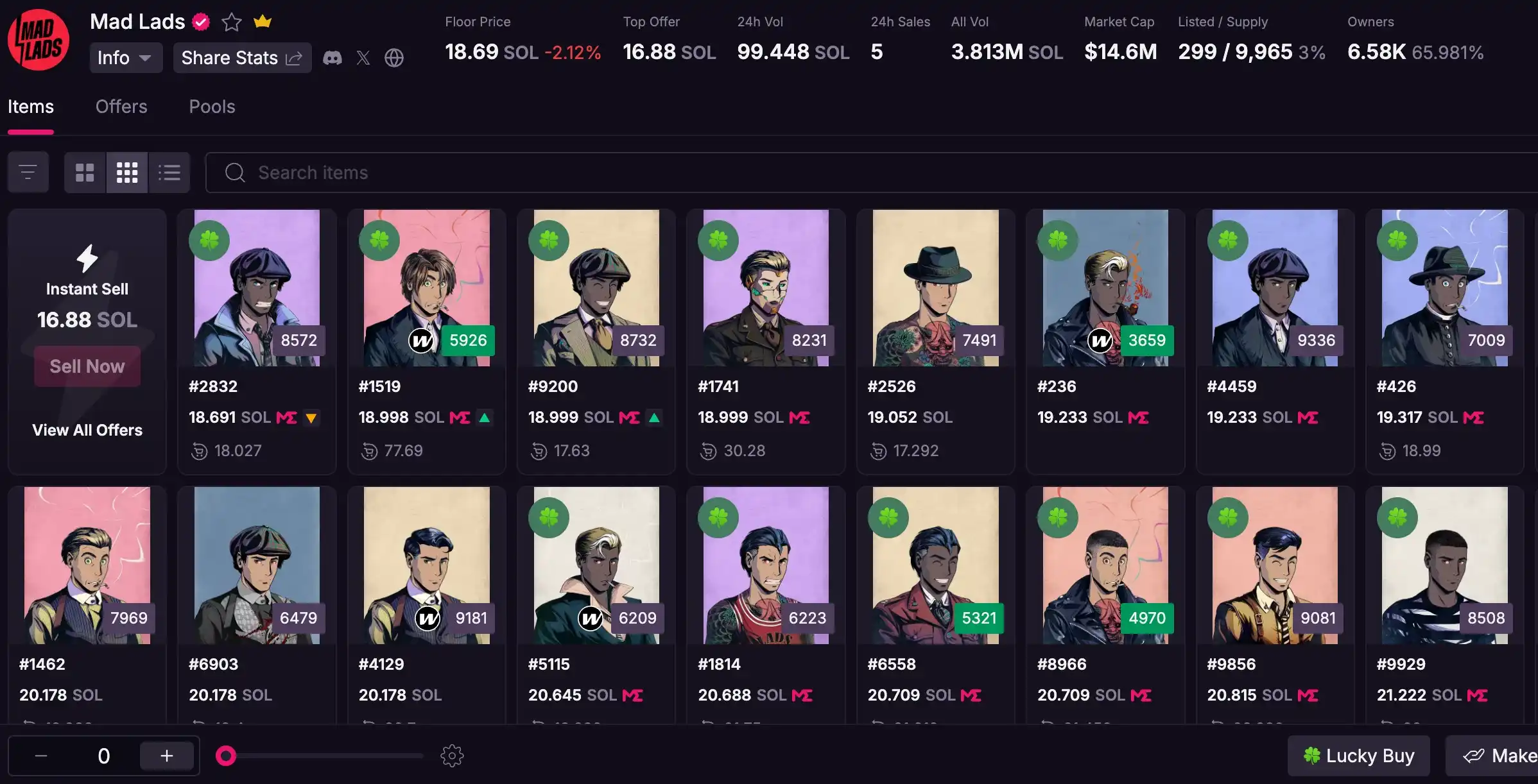
In April 2023, during the bear market trough, Backpack quietly launched the Mad Lads NFT series, with a minting price of 6.9 SOL. It quickly became one of the top NFT communities on Solana, with the floor price once reaching 229.4 SOL. Today, despite the overall decline of NFTs, the Mad Lads floor price remains at 18.8 SOL, more than double the original minting price.
In November of the same year, Backpack obtained a Dubai VARA license and launched Backpack Exchange, though it was only in a limited testing phase at the time. By then, it had accumulated user trust through its wallet and NFTs, leveraging the exchange to monetize traffic. In February 2024, Backpack completed a $17 million Series A funding round, valuing the company at $120 million. In January 2025, it acquired FTX Europe's assets for $32.7 million, obtaining a European MiFID II license, further strengthening its compliance foundation and committing to handle FTX EU customer claims.

Backpack was born with a silver spoon but rebuilt from the ruins. After nearly three years, Backpack has accumulated a trading volume of over $400 billion and user assets exceeding $350 million.

Now, it is poised for a greater leap.

Token Issuance Plan and Equity Linkage

On February 17, Backpack announced the start of identity verification before TGE, the first step for users to claim tokens.

According to Backpack's token economic model, the total token supply is 1 billion. The pre-IPO total supply is 625 million tokens (62.5%), released in three phases:

  • Phase 1 (TGE): Releases 25% of the total supply, or 250 million tokens. Of these, 240 million (24%) are allocated to points holders, and 10 million (1%) to Mad Lads holders. This phase is 100% allocated to users, with no internal team share.
  • Phase 2 (Pre-IPO): Accounts for 37.5%, or 375 million tokens, as "growth-triggered unlocks," released gradually based on key milestones (such as regulatory approvals, new product launches, and geographic expansion).
  • Phase 3 (Post-IPO): Also accounts for 37.5%, or 375 million tokens, deposited into company treasury, locked for one year after IPO, for the team and investors.

From its token distribution plan, we can already see that token issuance is closely tied to an IPO. Backpack is currently negotiating terms for a new $50 million funding round at a valuation of $1 billion. At this valuation, the 20% equity reserved is worth $200 million.

In the short history of the cryptocurrency industry, token issuance has quietly evolved from an optional financing tool to an almost "instinctive choice" and default path for nearly all projects. As users, we are familiar with this method, but Backpack's approach goes beyond what we know.

From an industry perspective, this model fills a gap. Coinbase successfully IPOed in 2021 but never issued a native token; DeFi projects like Uniswap issued governance tokens but did not pursue an equity listing. Backpack is attempting a "dual-track" system: tokens for community incentives and equity for long-term ownership, which is unprecedented in the crypto industry.

Is Token Issuance + IPO Feasible?

Although this plan is bold and innovative, it faces regulatory challenges.

Under U.S. regulatory context, most tokens could be considered securities by the SEC. If so, companies must comply with registration, disclosure, and anti-fraud rules. If an IPO is pursued in the future, the SEC will review the history of token issuance, structural design, and potential compliance violations.

More complex is the potential "ownership conflict" between equity and tokens: IPO investors worry about dilution of rights (such as voting rights and dividends), while token holders expect value capture, which could be seen as "dual financing" or misleading behavior. Especially during the Gensler era (2022-2024), enforcement tightened, and many projects abandoned IPOs altogether.

In short, token issuance takes the "decentralized/on-chain financing" fast lane, while an IPO takes the "centralized/compliant/equity financing" slow lane. Backpack is trying to drive both vehicles simultaneously, which requires极强的 structural design and regulatory communication skills. Otherwise, it could face delays in listing or regulatory fines.

While there is no complete precedent in the crypto industry, there are partial ones. Coinbase, also a centralized exchange, completed its IPO in 2021, but it had considered issuing a token. Backpack co-founder Can Sun revealed in a podcast two years ago that he participated in Coinbase's上市 work, helping design its token economic model. Although Coinbase ultimately chose a pure equity listing, this experience provided valuable reference for Backpack. At that time, he already planned to realize this unfulfilled ambition at Backpack.

Can It Change the Industry?

Today, the reality of the crypto industry is that many tokens lose over 80% of their value within a year of listing. "Peak at issuance" has almost become a curse. Backpack seems to be寻找 another path: giving tokens the possibility of converting to equity,推动 incentive methods to change.

In the past, the familiar model was "earn tokens with product," where projects first build a good product, and users earn token rewards through usage, such as fee sharing, liquidity mining, airdrops, etc. Token value comes from the product's actual performance. Backpack's approach更像 using token expectations to feed company valuation, i.e., equity binding, IPO narrative, using the expected value of tokens to quickly gather funds, community, and attention, thereby raising the company's valuation and accelerating financing and product iteration. Tokens are no longer just reward tools but valuation engines.

Of course, this transformation is full of uncertainty. How will regulators define it? How to balance rights between equity and tokens? Will the market really buy into the narrative of future shareholders? These questions have no ready answers. But in a pessimistic moment for the crypto industry, Backpack is at least trying to provide a new tension.

Backpack once rebuilt from the ruins; this time, it is building a bridge in the cracks of the system.

Трендовые криптовалюты

Связанные с этим вопросы

QWhat is the core mechanism of Backpack's staking-to-equity conversion plan?

AUsers who stake Backpack's native token for at least one year have the opportunity to convert these tokens into real company equity at a fixed ratio, with 20% of the company's equity reserved for this plan.

QHow did Backpack's development path differ from traditional centralized exchanges like Binance?

ABackpack started with a wallet and NFT ecosystem (e.g., Mad Lads NFT) to build user trust and community, then launched its exchange, whereas traditional exchanges like Binance typically prioritize trading services first before expanding into ecosystems.

QWhat are the three phases of Backpack's token economic model?

APhase 1 (TGE): 25% of total supply allocated to users; Phase 2 (Pre-IPO): 37.5% unlocked based on milestones like regulatory approvals; Phase 3 (Post-IPO): 37.5% reserved for team and investors, locked for one year after IPO.

QWhat regulatory challenges does Backpack face with its dual-token and equity model?

AThe SEC may classify the token as a security, requiring compliance with registration and disclosure rules. The dual structure could also create ownership conflicts between equity investors and token holders, potentially leading to regulatory scrutiny or delays in IPO.

QHow does Backpack's approach aim to change the typical 'peak at launch' token trend?

ABy linking token staking to real equity ownership and an IPO narrative, Backpack uses token expectations to boost company valuation, attract funding, and shift incentives from short-term rewards to long-term ownership, potentially breaking the cycle of post-launch token depreciation.

Похожее

Стимулируют ли новые предложения по комиссиям протокола Uniswap ‘существенное сжигание UNI’?

Uniswap представил три предложения по активации протокольных комиссий в различных версиях (V2, V3, V4) на блокчейнах Ethereum, Base, Arbitrum, Robinhood, BNB Chain, Polygon и Optimism. Все новые сборы будут направляться в механизм сжигания токенов UNI. Генеральный директор Хейден Адамс ожидает «существенного» увеличения объема сжигания, особенно учитывая высокий торговый оборот на новой сети Robinhood L2. Однако предложения встретили сопротивление со стороны некоторых поставщиков ликвидности (LP), например Gamma Strategies. Они утверждают, что комиссии снизят их доходы и сделают Uniswap V4 менее конкурентоспособным на фоне других DEX. В настоящее время львиная доля сборов (более $5 млрд с 2018 года) идет LP, в то время как сам протокол заработал лишь $25 млн. Если предложения будут приняты и грамотно сбалансированы, это может значительно ускорить сжигание UNI. На прошлой неделе темпы сжигания уже выросли втрое. Цена UNI в июле выросла на 41%, но сейчас столкнулась с сопротивлением. Дальнейший рост может зависеть от сохранения импульса на Robinhood и эффекта от новых комиссионных предложений.

ambcrypto1 ч. назад

Стимулируют ли новые предложения по комиссиям протокола Uniswap ‘существенное сжигание UNI’?

ambcrypto1 ч. назад

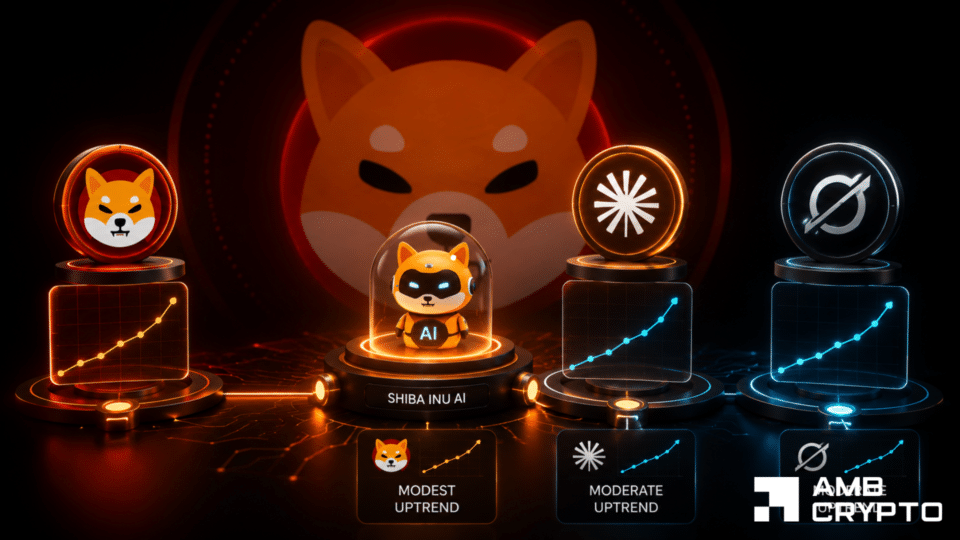
Прогноз цены SHIB на 2026 год — вот что говорят эти модели ИИ!

Согласно прогнозам трех моделей искусственного интеллекта (Shiba Inu, Claude и Grok), цена мемкоина Shiba Inu (SHIB) к концу 2026 года может продемонстрировать умеренный рост. Модели ожидают не взрывного ралли, а скорее скромные или средние прибыли. Ключевыми факторами роста называют большое и растущее сообщество SHIB, а также возможный рост цен под влиянием Bitcoin и притока капитала в мемкоины. Однако, по мнению Claude и Grok, слабое внедрение в экосистеме Shibarium и общие настроения на крипторынке могут ограничить потенциал роста. Технический анализ показывает, что в краткосрочной перспективе цена SHIB консолидируется выше уровня поддержки $0.00000412, при этом объем торгов и RSI снижаются, что указывает на активность продаж. Для достижения уровня $0.00000510 необходимо преодолеть сопротивление на отметке $0.0000045. На дневном графике наблюдается накопление монет покупателями, а индикатор MACD подтверждает контроль быков, хотя их импульс остается минимальным. Эти данные согласуются с прогнозами ИИ о вероятных, но не взрывных, ростах.

ambcrypto3 ч. назад

Прогноз цены SHIB на 2026 год — вот что говорят эти модели ИИ!

ambcrypto3 ч. назад

Вспыхнул конфликт между США и Ираном, хедж-фонды агрессивно наращивают позиции в нефти с самой высокой скоростью за десятилетие

Возобновление боевых действий между США и Ираном кардинально меняет ситуацию на глобальном рынке нефти. Хедж-фонды агрессивно наращивают ставки на рост цен на Brent, а перебои с проходом через Ормузский пролив и сокращение поставок топлива подстегивают рост как цен на нефть, так и прибыли нефтепереработчиков. По данным Bloomberg, на неделе, завершившейся 14 июля, институциональные инвесторы увеличили чистые длинные позиции по Brent на 75 996 лотов до 357 154 — это максимальный недельный прирост с декабря 2016 года. Цены на нефть за 10 дней выросли примерно до месячного максимума после падения примерно на 30% во втором квартале. Непосредственной причиной стало возобновление американских ударов по Ирану, который, в свою очередь, атаковал суда в Ормузском проливе, сократив его пропускную способность. Атаки в Ормузском проливе также привели к сокращению глобальных поставок дизельного топлива и бензина, подняв маржу нефтеперерабатывающих заводов до рекордного уровня. Инвесторы одновременно нарастили чистые длинные позиции по мазуту на NYMEX. Ситуацию усугубляет резкое падение экспорта нефтепродуктов из России из-за украинских атак на НПЗ и последующего запрета Москвой на экспорт дизеля, что создало дополнительное давление на глобальный рынок топлива.

marsbit5 ч. назад

Вспыхнул конфликт между США и Ираном, хедж-фонды агрессивно наращивают позиции в нефти с самой высокой скоростью за десятилетие

marsbit5 ч. назад

Столкновение США и Ирана возобновляется, хедж-фонды агрессивно увеличивают позиции по нефти со скоростью, которая стала самой быстрой за последние десять лет

Конфликт между США и Ираном глубоко перестраивает мировую нефтяную картину. Хедж-фонды агрессивно наращивают ставки на рост Brent с самой высокой скоростью за последнее десятилетие. Согласно данным Bloomberg, по состоянию на неделю 14 июля управляющие активами увеличили чистые длинные позиции по Brent на 75 996 лотов до 357 154 лотов — это самый большой еженедельный прирост с декабря 2016 года. Непосредственным катализатором стал возобновленный военный удар США по Ирану, что привело к ответным действиям Тегерана и атакам на суда в Ормузском проливе, серьёзно сократившим трафик через этот ключевой маршрут. Резко сменившись с опасений по поводу переизбытка предложения, инвесторы начали активный закрытие коротких позиций. Одновременно атаки в проливе и сокращение экспорта нефтепродуктов из России из-за атак Украины на НПЗ привели к резкому ужесточению глобальных поставок топлива. Это взвинтило прибыль нефтеперерабатывающих заводов до рекордных уровней, что также привлекло значительный приток средств в длинные позиции по дизельному топливу и мазуту на биржах.

链捕手5 ч. назад

Столкновение США и Ирана возобновляется, хедж-фонды агрессивно увеличивают позиции по нефти со скоростью, которая стала самой быстрой за последние десять лет

链捕手5 ч. назад

Торговля

Спот

Популярные статьи

Как купить F

Добро пожаловать на HTX.com! Мы сделали приобретение Synfutures (F) простым и удобным. Следуйте нашему пошаговому руководству и отправляйтесь в свое крипто-путешествие.Шаг 1: Создайте аккаунт на HTXИспользуйте свой адрес электронной почты или номер телефона, чтобы зарегистрироваться и бесплатно создать аккаунт на HTX. Пройдите удобную регистрацию и откройте для себя весь функционал.Создать аккаунтШаг 2: Перейдите в Купить криптовалюту и выберите свой способ оплатыКредитная/Дебетовая Карта: Используйте свою карту Visa или Mastercard для мгновенной покупки Synfutures (F).Баланс: Используйте средства с баланса вашего аккаунта HTX для простой торговли.Третьи Лица: Мы добавили популярные способы оплаты, такие как Google Pay и Apple Pay, для повышения удобства.P2P: Торгуйте напрямую с другими пользователями на HTX.Внебиржевая Торговля (OTC): Мы предлагаем индивидуальные услуги и конкурентоспособные обменные курсы для трейдеров.Шаг 3: Хранение Synfutures (F)После приобретения вами Synfutures (F) храните их в своем аккаунте на HTX. В качестве альтернативы вы можете отправить их куда-либо с помощью перевода в блокчейне или использовать для торговли с другими криптовалютами.Шаг 4: Торговля Synfutures (F)С легкостью торгуйте Synfutures (F) на спотовом рынке HTX. Просто зайдите в свой аккаунт, выберите торговую пару, совершайте сделки и следите за ними в режиме реального времени. Мы предлагаем удобный интерфейс как для начинающих, так и для опытных трейдеров.

592 просмотров всегоОпубликовано 2024.12.21Обновлено 2026.06.02

Как купить F

Обсуждения

Добро пожаловать в Сообщество HTX. Здесь вы сможете быть в курсе последних новостей о развитии платформы и получить доступ к профессиональной аналитической информации о рынке. Мнения пользователей о цене на F (F) представлены ниже.

活动图片