Автор оригинала: ShirleyLi, исследователь Web3Caff Research
Как легко отслеживать рыночные тренды, технологические тенденции, развитие экосистемы и управленческую динамику, происходящие в индустрии финансовых технологий (FinTech) нового поколения? Колонка «Анализ рыночного пульса», запущенная Web3Caff Research, углубится в изучение текущих горячих событий, проведет их отбор, а также предоставит ценностную интерпретацию, комментарии и анализ принципов. Увидеть суть за явлением — присоединяйтесь к нам, чтобы быстро улавливать передовые рыночные тенденции.
По сравнению с пользователями-людьми, самое большое преимущество AI Agent заключается в том, что в идеальных условиях он обладает более высокой способностью к автономному выполнению задач: он может самостоятельно выполнять задачи, проводить операции и активно использовать внешние инструменты без постоянного вмешательства человека. Однако на практике, когда AI Agent использует инструменты (например, API торговых платформ, инструменты анализа данных, оракулы), он все равно сталкивается с некоторыми проблемами.
Во-первых, точки доступа к этим инструментам разбросаны по разным местам, таким как GitHub, официальные сайты, централизованные API-платформы и т.д., и отсутствует единый канал обнаружения. В условиях отсутствия человеческого вмешательства AI Agent с трудом может самостоятельно найти и подключиться к необходимым инструментам, к тому же конкретные способы оплаты на разных платформах различаются, не существует стандартизированного процесса. Это создает определенные трудности в процессе использования инструментов AI Agent.
Во-вторых, в традиционном интернете вызов API обычно требует от разработчика регистрации учетной записи, получения API Key и прохождения проверки прав доступа по определенным правилам. Этот процесс изначально был разработан для людей-участников, но для AI Agent, который хочет автоматически завершить регистрацию, получить учетные данные и использовать инструменты, до сих пор отсутствует открытое и стандартизированное решение.
Хотя в настоящее время протокол x402 уже может поддерживать автоматическую оплату AI Agent, он в основном подходит для открытых интерфейсов по принципу «заплатил — использовал», и трудно справляется с более сложными сценариями прав доступа. Например, когда доступ к сервису имеют только подписчики, или пользователи, обладающие определенным удостоверением, могут получить скидку.
Чтобы заполнить этот пробел, OpenSea недавно попытался выпустить черновой вариант стандарта ERC-8257, стремясь создать для AI Agent открытый, разрешительный каталог инструментов на блокчейне, позволяя AI Agent самостоятельно обнаруживать инструменты, понимать правила доступа и после выполнения условий автоматически завершать вызов и оплату.
Проще говоря, ядро ERC-8257 — это набор реестра инструментов на блокчейне. Этот реестр по сути является смарт-контрактом, разработчики инструментов могут зарегистрировать в блокчейне соответствующую информацию о своем инструменте и права доступа к нему, сделав их публичными для всей сети.
Однако, поскольку полное размещение всех данных непосредственно в блокчейне обходится дорого, ERC-8257 позволяет разработчикам хранить более подробную информацию об инструменте на своих собственных серверах или доменах в виде файла формата JSON (Manifest), а реестр в блокчейне записывает только ссылку на этот файл. Этот файл вне блокчейна обычно включает: название инструмента, описание функциональности, API-интерфейсы, способ вызова, информацию о ценообразовании, платежный протокол, правила доступа и т.д. Реестр в блокчейне должен записывать ключевые данные, такие как адрес файла вне блокчейна, хэш-значение файла и информация о разработчике инструмента. Такая конструкция направлена на предотвращение последующего несанкционированного изменения разработчиком содержимого инструмента. Когда AI Agent вызывает инструмент, он может проверить хэш-значение файла, чтобы убедиться, соответствует ли содержимое вне блокчейна информации, зарегистрированной в блокчейне.
В ERC-8257 также есть очень важный элемент дизайна: права доступа имеют не фиксированный формат, а определяются через независимый смарт-контракт. Разработчик инструмента может свободно определять этот контракт, чтобы устанавливать, кто имеет право использовать его инструмент. Например, разработчик может проверять, обладает ли AI Agent определенным NFT, токеном, подпиской, находится ли в белом списке и т.д.
Рассмотрим пример: инструмент анализа в блокчейне устанавливает: стоимость вызова обычного API для обычного пользователя — 0,05 доллара за раз, а для пользователя, владеющего определенным NFT — всего 0,01 доллара за раз. В то же время, если пользователь подписался на его сервис (путем постоянной оплаты через указанный токен или платежный протокол), он также получает доступ к расширенным аналитическим интерфейсам.
В этом сценарии «владение определенным NFT» и «подписка на сервис» — это два особых удостоверения доступа. Если AI Agent в данный момент не обладает соответствующими правами, он может получить эти условия в блокчейне или на рынке (например, купить NFT или оформить подписку), а затем снова подать запрос на вызов.
Однако важно отметить, что когда права доступа существуют в форме активов, таких как NFT или токены, они сами по себе могут войти в рыночную систему обращения, и на них может повлиять соотношение спроса и предложения, что приведет к высокой волатильности стоимости или спекулятивному поведению.
Поэтому ERC-8257 не ограничивает систему прав доступа моделью единого актива, а выбирает путь открытости. Разработчики инструментов или сервисов могут в зависимости от конкретных потребностей выбирать разные механизмы доступа. Например, ввести нетрансферрируемые Soulbound NFT (NFT, привязанные к душе), чтобы избежать колебаний стоимости, вызванных торговыми операциями, или ввести не основанные на активах механизмы, такие как репутационные баллы, чтобы снизить влияние спекулятивного поведения.
На уровне оплаты ERC-8257 также не отвечает за определение конкретной платежной логики, а лишь требует от разработчика объявить в JSON-файле, какой платежный протокол поддерживается, например x402, платежи ERC-20 в блокчейне или другие протоколы машинных платежей. Фактическое выполнение платежа будет осуществляться соответствующим протоколом.
Если смотреть на общий процесс, способ работы ERC-8257 выглядит примерно следующим образом:
- Разработчик инструмента развертывает сервис инструмента, разрабатывает соответствующие права доступа, а затем отправляет соответствующую информацию в реестр на блокчейне;
- Когда AI Agent необходимо вызвать какой-либо инструмент или сервис, он может сканировать реестр в блокчейне. Обнаружив инструмент или сервис, соответствующий его потребностям, он может далее прочитать подробный файл описания, чтобы понять правила вызова;
- Если AI Agent не соответствует условиям доступа, он может попытаться получить соответствующие права, а затем снова инициировать вызов;
- В конечном итоге AI Agent может без участия человека самостоятельно завершить весь процесс обнаружения инструмента, проверки прав доступа, оплаты и вызова.
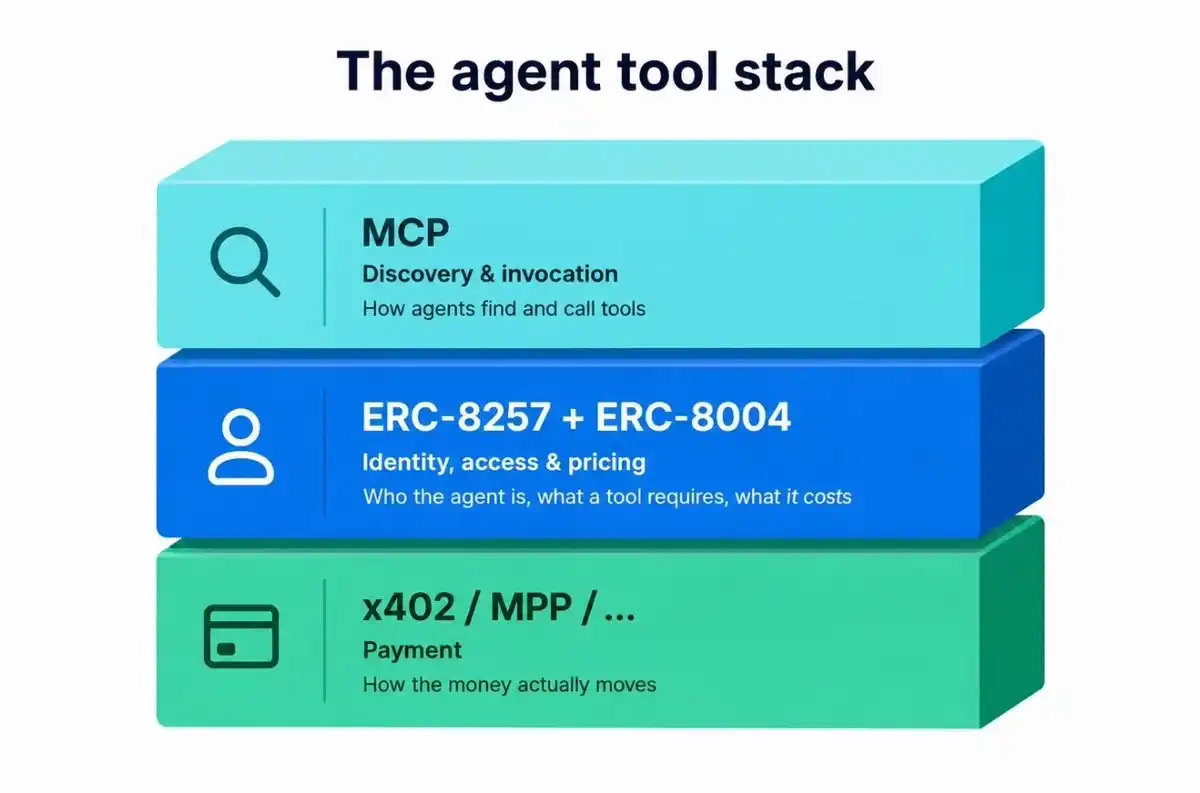
Источник изображения: The App Store for Agent Tools: ERC-8257
В целом, ERC-8257 пытается решить не только проблему размещения API в блокчейне, но и то, как AI Agent может, подобно пользователю-человеку, автоматически обнаруживать инструменты, понимать правила доступа, получать права доступа и стандартизированным образом использовать эти инструменты. Судя по целям дизайна, ERC-8257 вместе с протоколом x402 образуют взаимодополняющие отношения:
- ERC-8257, как ожидается, позволит AI Agent обнаруживать инструменты в глобальном масштабе и на основе правил определять, обладает ли он правами доступа;
- Протокол x402 отвечает за оплату и расчеты в процессе вызова инструмента. После разрешения на вызов инструмента он поддерживает оплату AI Agent за раз или за частоту вызовов.
Однако, помимо упомянутого ранее риска волатильности стоимости и спекулятивного поведения, который может возникнуть, если права доступа существуют в форме активов, таких как NFT или токены, стандарт ERC-8257 в процессе практической реализации также столкнется с некоторыми потенциальными рисками и вызовами.
Например, хотя ERC-8257 предоставляет стандартизированные рамки регистрации и доступа к инструментам, разные разработчики по-прежнему различаются в установлении условий доступа. Хотя AI Agent на уровне обнаружения инструментов может полагаться на единый путь индексации в блокчейне, в процессе фактического вызова ему все равно необходимо быть совместимым с различной логикой проверки прав, что создает определенную техническую сложность.
Кроме того, в отношении механизмов доверия, в настоящее время AI Agent будет проверять, был ли файл изменен в процессе передачи, путем сравнения хэш-значения, записанного в блокчейне, и файла описания инструмента вне блокчейна. Однако этот механизм может решить только проблему соответствия данных, он не может гарантировать правильность логики работы инструмента, надежность его интерфейсов, а также наличие потенциальных рисков утечки информации в процессе обработки данных. В то же время, поскольку сервисы инструментов обычно развернуты на инфраструктуре вне блокчейна, их долгосрочная доступность и стабильность по-прежнему зависят от операционных возможностей разработчика. Это означает, что AI Agent также необходимо проводить отбор с помощью внешних репутационных механизмов.
Таким образом, прежде чем стандарт ERC-8257 будет фактически применяться, его надежность инструментов, согласованность правил доступа и другие аспекты еще требуют дальнейшей проверки и доработки.
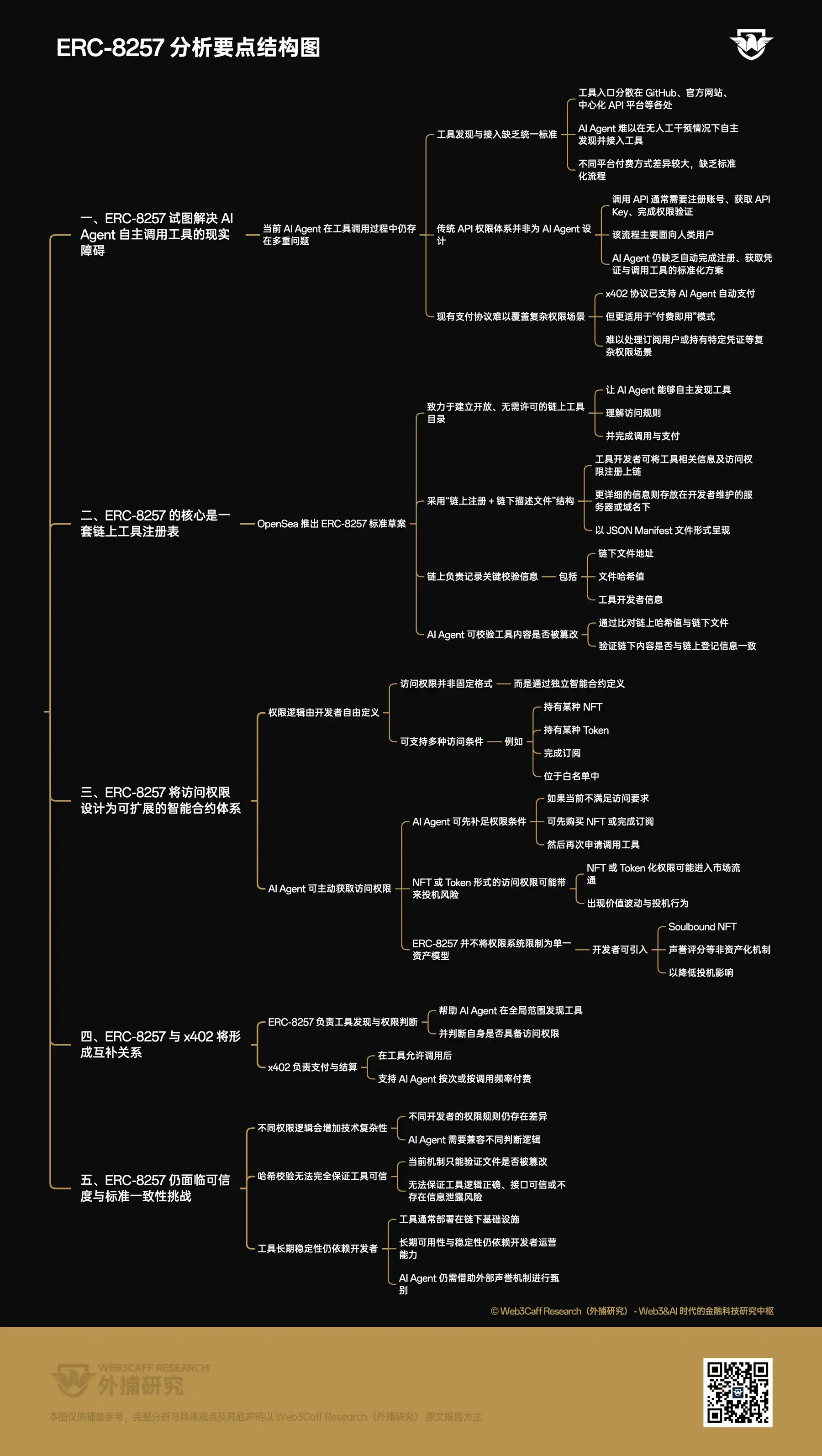
Структурная схема ключевых моментов:
Список использованной литературы:
[1] The App Store for Agent Tools: ERC-8257
[2] ERC-8257: Agent Tool Registry
Отказ от ответственности
Настоящий отчет составлен Web3Caff Research, содержащаяся в нем информация предназначена только для ознакомления и не является прогнозом, инвестиционной рекомендацией, предложением или офертой, инвесторам не следует полагаться на такую информацию при покупке, продаже любых ценных бумаг, криптовалют или принятии любой инвестиционной стратегии. Термины, используемые в отчете, и высказанные точки зрения направлены на помощь в понимании тенденций в отрасли, содействие ответственному развитию в сфере финансовых технологий (FinTech), включая Web3, блокчейн, AI, платежи и другие отрасли, и не должны толковаться как четкие юридические точки зрения или точка зрения Web3Caff Research. Мнения, выраженные в отчете, отражают личные взгляды автора на указанную дату, не связаны с позицией Web3Caff Research и могут изменяться в зависимости от последующих обстоятельств. Информация и мнения, содержащиеся в настоящем отчете, получены из собственных и не собственных источников, которые, по мнению Web3Caff Research, являются надежными, и не обязательно охватывают все данные, а также не гарантируют их точность. Поэтому Web3Caff Research не дает никаких гарантий относительно их точности и надежности и не несет ответственности за ошибки и упущения, возникшие каким-либо иным образом (включая ответственность перед любым лицом по небрежности). Настоящий отчет может содержать «прогнозную» информацию, которая может включать прогнозы и предсказания, данная статья не является гарантией какого-либо прогноза. Полностью на усмотрение читателя остается полагаться ли на информацию, содержащуюся в настоящем отчете. Настоящий отчет предназначен только для ознакомления, не является инвестиционной рекомендацией, предложением или офертой о покупке или продаже любых ценных бумаг, криптовалют или принятии любой инвестиционной стратегии, и призываем вас строго соблюдать соответствующие законы и правила вашей страны или региона.