Hot Interactions Collection | Surf Launches Points System; MemeMax's MaxPacks Event Ongoing (January 30th)

Odaily星球日报Опубликовано 2026-01-30Обновлено 2026-01-30

Введение

Hot Interaction Roundup: Surf Launches Points System; MemeMax's MaxPacks Campaign Underway (Jan 30) Surf, an AI platform built for the crypto space, has officially launched its version 1.5 and introduced a personal points system. Users can earn "Surf Waves" points by subscribing to paid membership tiers (Plus, Pro, Max), actively using the platform for research, or inviting friends. The project recently completed a $15 million funding round led by Pantera Capital. MemeMax, a decentralized exchange platform for Meme tokens on the MemeCore chain, is running a Pre-Launch campaign. Users can earn MaxPacks by sending 10 transactions on the MemeCore chain before 8:00 AM UTC on January 31. Additionally, Twin, a platform that allows users to build infinitely scalable AI agents using natural language without coding, was featured. It recently secured $10 million in seed funding. Users can interact with its platform to earn 500 points and set up AI agents for tasks like price alerts.

Original | Odaily Planet Daily (@OdailyChina)

Author | Asher (@Asher_ 0210)

Surf: An AI Platform Built for the Crypto Space

Project Introduction

Surf is an AI platform built specifically for the crypto space, developed by the Cyber team. Its core highlight is the use of AI technology to accurately analyze on-chain data and user queries, offering high knowledge density and a smooth interactive experience. On December 10, 2025, Surf announced the completion of a $15 million funding round, led by Pantera Capital, with participation from Coinbase Ventures and Digital Currency Group.

On January 21st, Surf posted on platform X announcing that Surf version 1.5 is officially live and has introduced a personal points system.

Interaction Tutorial

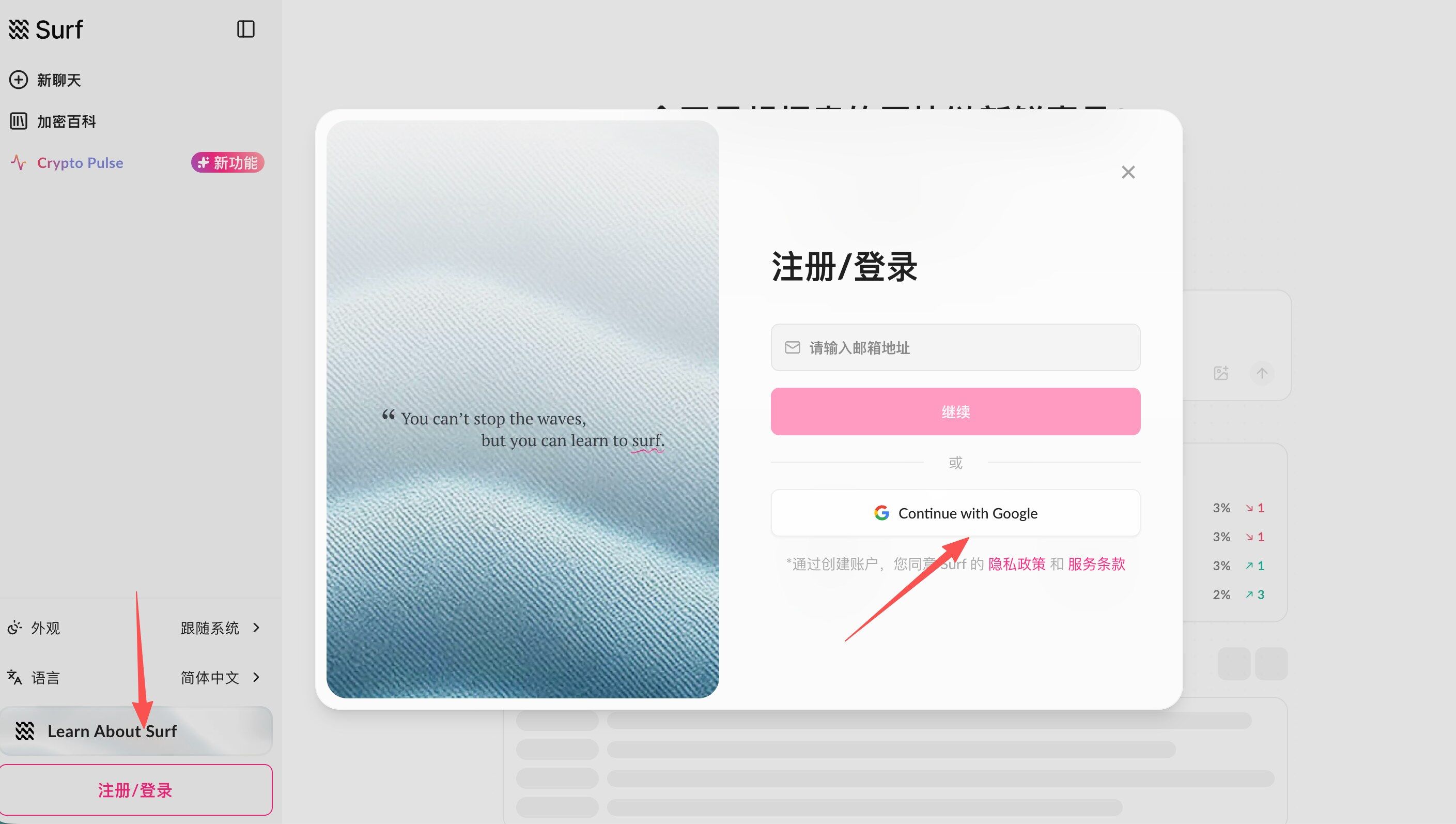
STEP 1. Go to the interaction website (Link: https://asksurf.ai/), and log in to your personal account using your Google email.

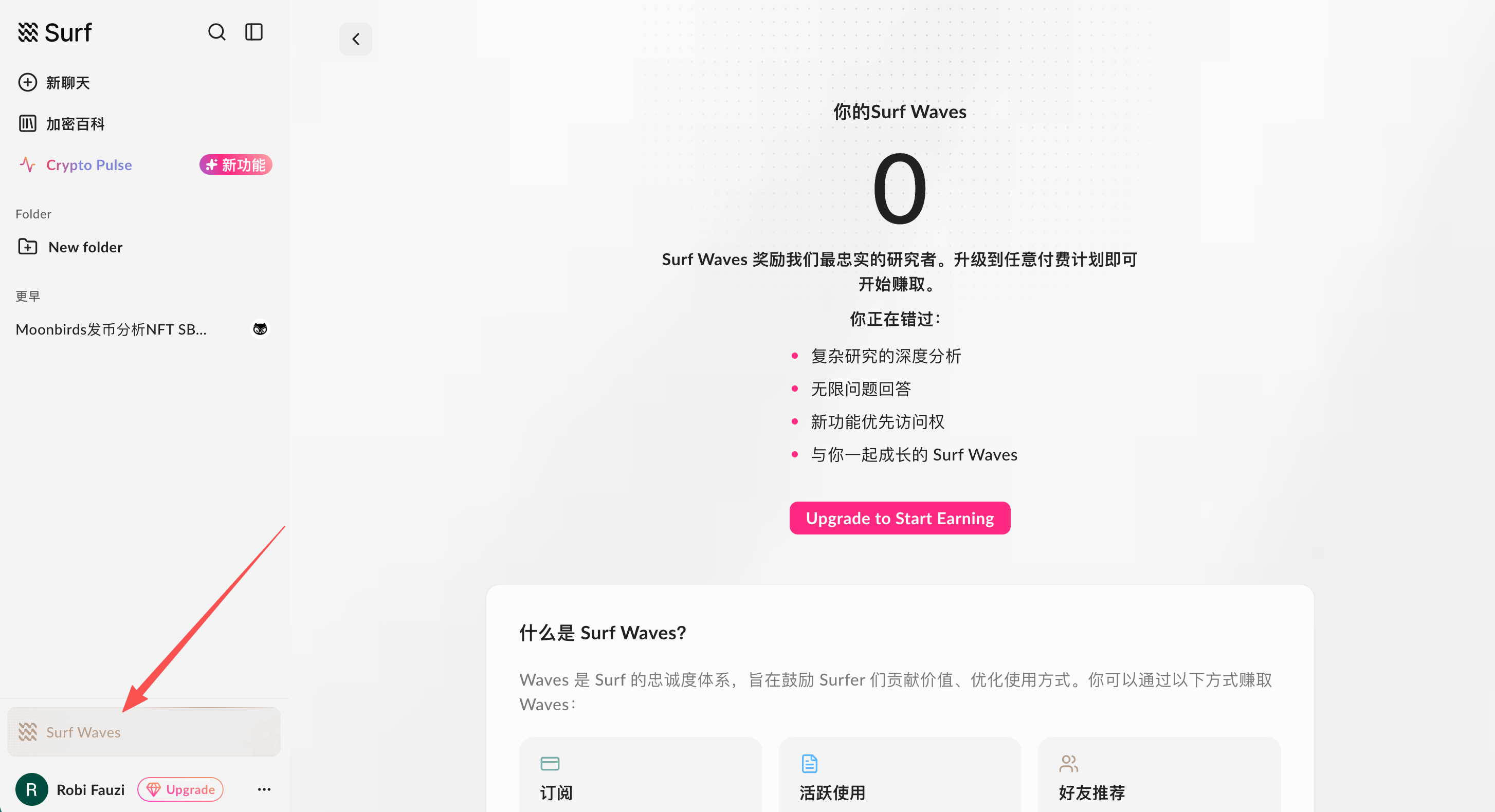
STEP 2. Click on "Surf Waves" to view your current personal points.

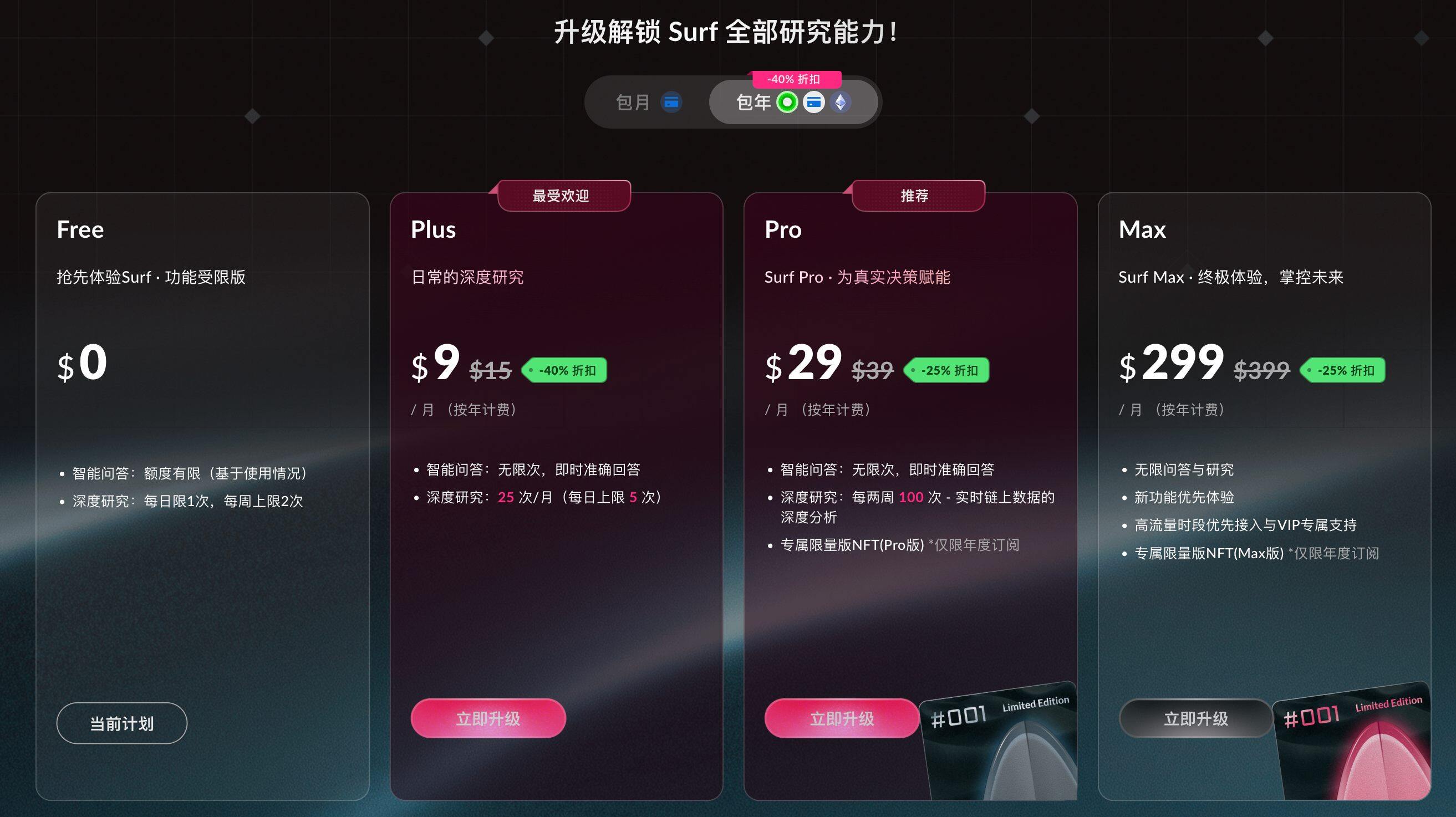
STEP 3. There are currently three ways to earn points: 1. Pay for a subscription to Plus, Pro, and Max level memberships (40% discount for annual payment) to receive points; 2. Actively use the platform - Pro users can perform 100 deep researches every two weeks, Plus users can perform 25 deep researches per month, and free users get 2 deep research opportunities per week; 3. Invite friends to earn points.

MemeMax: A Decentralized Exchange Built for Memes

Project Introduction

MemeMax is a decentralized exchange built specifically for Memes, operating on the MemeCore chain. Yesterday, MemeMax posted on platform X announcing that the Pre-Launch event will end at 8:00 AM Beijing Time on January 31st. You can still send 10 transactions on the MemeCore chain to obtain MaxPacks.

Interaction Tutorial

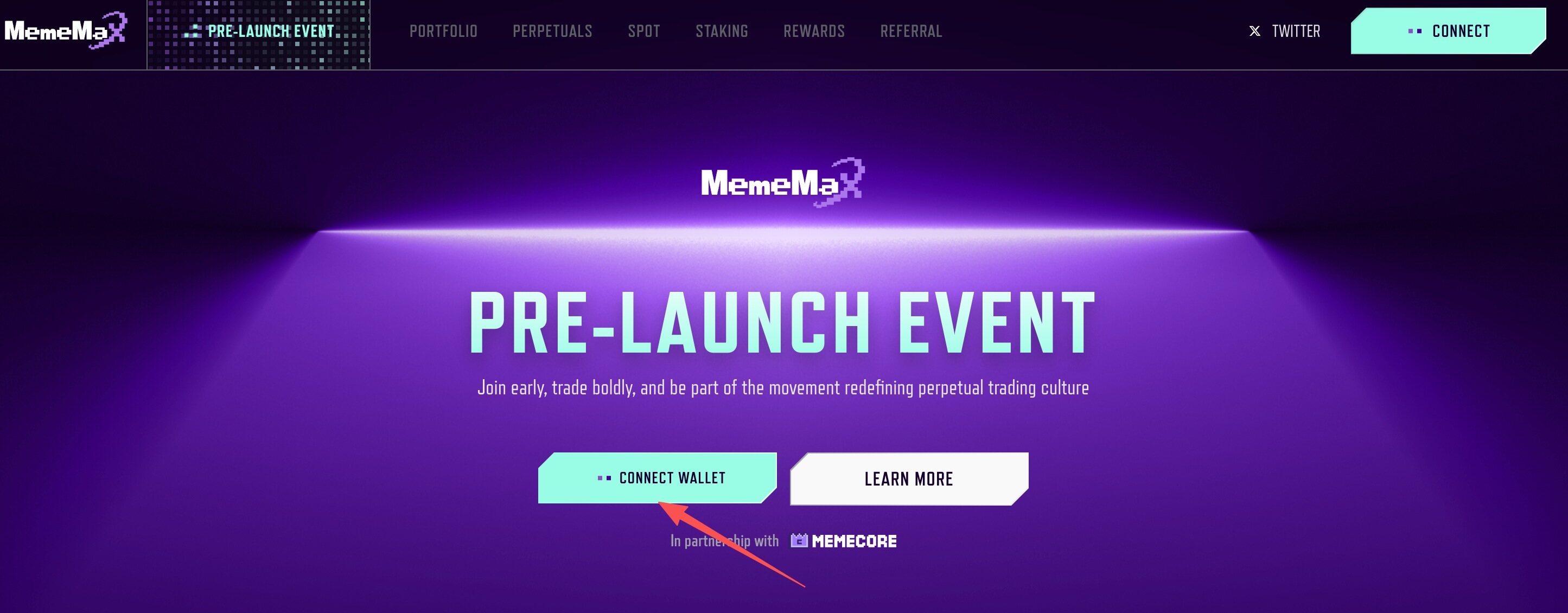
STEP 1. Go to the interaction website (Link: https://mememax.com/), connect your wallet to log into your personal account, and link your X account.

STEP 2. Send 10 transactions on the MemeCore chain to obtain MaxPacks.

Twin: Build Infinitely Scalable AI Agents with One Click

Project Introduction

Twin is a platform that allows users to build infinitely scalable AI agents with one click using natural language. It enables users to create, deploy, and run fully autonomous AI agents to automate complex business processes, operational tasks, and even build entire autonomous companies (such as AI hedge funds, retail automation, etc.) without writing code.

Recently, Twin announced the completion of a $10 million seed funding round, which was subsequently shared by Zama founder Rand, who mentioned that the project's CTO is a former engineer at Zama.

Interaction Tutorial

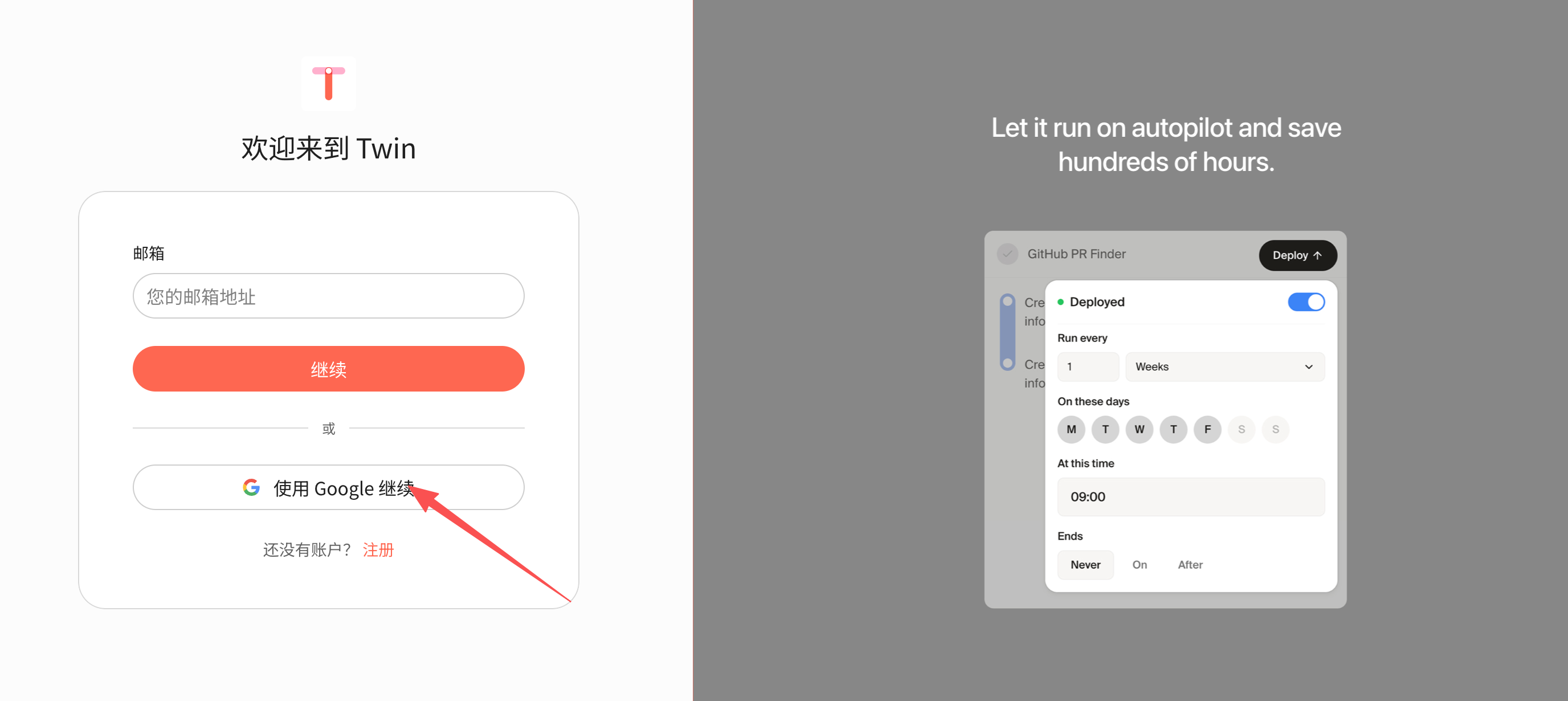
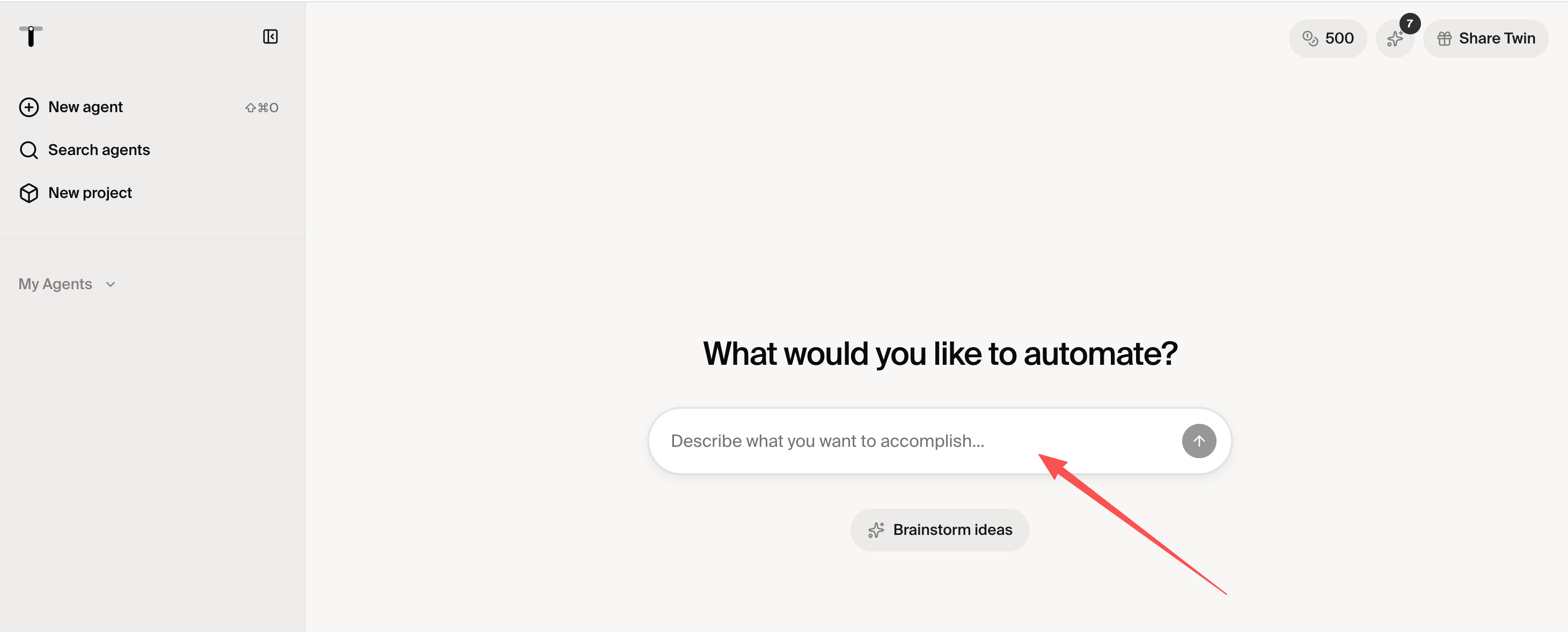
STEP 1. Visit the interaction website (Link: https://builder.twin.so/), log in to your personal account using your Google email to receive 500 points.

STEP 3. Click on the middle chatbox to converse with the bot; launching the AI Agent will enable real-time email alerts for prices of Bitcoin, gold, silver, etc.

Связанные с этим вопросы

QWhat is Surf and what recent update did it announce on January 21st?

ASurf is an AI platform built for the crypto space, developed by the Cyber team. On January 21st, it announced the official launch of Surf 1.5 and introduced a personal points system.

QHow can users earn points on the Surf platform?

AUsers can earn points in three ways: 1. By paying for a Plus, Pro, or Max membership (with a 40% discount for annual payment). 2. By actively using the platform (Pro users get 100 deep research opportunities every two weeks, Plus users get 25 per month, and free users get 2 per week). 3. By inviting friends.

QWhat is MemeMax and what is the deadline for its Pre-Launch activity mentioned in the article?

AMemeMax is a decentralized trading platform built specifically for Meme tokens, operating on the MemeCore chain. The Pre-Launch activity is set to end at 8:00 AM Beijing Time on January 31st.

QWhat recent funding milestone did Twin achieve and who was one of its notable supporters?

ATwin recently completed a $10 million seed round of funding. The project gained recognition after a转发 (repost/endorsement) from Rand, the founder of Zama, who also mentioned that Twin's CTO is a former Zama engineer.

QWhat is the primary function of the Twin platform as described in the article?

ATwin's primary function is to allow users to build infinitely scalable AI agents using natural language, without writing code. Users can create, deploy, and run fully autonomous AI agents to automate complex business processes, operational tasks, or even build entire autonomous companies.

Похожее

a16z: AI's 'Amnesia', Can Continuous Learning Cure It?

The article "a16z: AI's 'Amnesia' – Can Continual Learning Cure It?" explores the limitations of current large language models (LLMs), which, like the protagonist in the film *Memento*, are trapped in a perpetual present—unable to form new memories after training. While methods like in-context learning (ICL), retrieval-augmented generation (RAG), and external scaffolding (e.g., chat history, prompts) provide temporary solutions, they fail to enable true internalization of new knowledge. The authors argue that compression—the core of learning during training—is halted at deployment, preventing models from generalizing, discovering novel solutions (e.g., mathematical proofs), or handling adversarial scenarios. The piece introduces *continual learning* as a critical research direction to address this, categorizing approaches into three paths: 1. **Context**: Scaling external memory via longer context windows, multi-agent systems, and smarter retrieval. 2. **Modules**: Using pluggable adapters or external memory layers for specialization without full retraining. 3. **Weights**: Enabling parameter updates through sparse training, test-time training, meta-learning, distillation, and reinforcement learning from feedback. Challenges include catastrophic forgetting, safety risks, and auditability, but overcoming these could unlock models that learn iteratively from experience. The conclusion emphasizes that while context-based methods are effective, true breakthroughs require models to compress new information into weights post-deployment, moving from mere retrieval to genuine learning.

marsbit1 ч. назад

a16z: AI's 'Amnesia', Can Continuous Learning Cure It?

marsbit1 ч. назад

Can a Hair Dryer Earn $34,000? Deciphering the Reflexivity Paradox in Prediction Markets

An individual manipulated a weather sensor at Paris Charles de Gaulle Airport with a portable heat source, causing a Polymarket weather market to settle at 22°C and earning $34,000. This incident highlights a fundamental issue in prediction markets: when a market aims to reflect reality, it also incentivizes participants to influence that reality. Prediction markets operate on two layers: platform rules (what outcome counts as a win) and data sources (what actually happened). While most focus on rules, the real vulnerability lies in the data source. If reality is recorded through a specific source, influencing that source directly affects market settlement. The article categorizes markets by their vulnerability: 1. **Single-point physical data sources** (e.g., weather stations): Easily manipulated through physical interference. 2. **Insider information markets** (e.g., MrBeast video details): Insiders like team members use non-public information to trade. Kalshi fined a剪辑师 $20,000 for insider trading. 3. **Actor-manipulated markets** (e.g., Andrew Tate’s tweet counts): The subject of the market can control the outcome. Evidence suggests Tate’sociated accounts coordinated to profit. 4. **Individual-action markets** (e.g., WNBA disruptions): A single person can execute an event to profit from their pre-placed bets. Kalshi and Polymarket handle these issues differently. Kalshi enforces strict KYC, publicly penalizes insider trading, and reports to regulators. Polymarket, with its anonymous wallet-based system, has historically been more permissive, arguing that insider information improves market accuracy. However, it cooperated with authorities in the "Van Dyke case," where a user traded on classified government information. The core paradox is reflexivity: prediction markets are designed to discover truth, but their financial incentives can distort reality. The more valuable a prediction becomes, the more likely participants are to influence the event itself. The market ceases to be a mirror of reality and instead shapes it.

marsbit2 ч. назад

Can a Hair Dryer Earn $34,000? Deciphering the Reflexivity Paradox in Prediction Markets

marsbit2 ч. назад

Торговля

Спот
Фьючерсы
活动图片