From Wuhan to Silicon Valley: How an AI Company Covered a Decade's Journey of Giants in 9 Months?

比推Опубликовано 2025-12-30Обновлено 2025-12-30

Введение

Meta has acquired the AI startup Manus for billions of dollars, marking its third-largest acquisition to date. Founded by Xiao Hong, a graduate of Huazhong University of Science and Technology, Manus started in Wuhan and launched its product in March of this year. Within just nine months, the company grew its annualized revenue to $125 million with a global subscription-based user base. Initially criticized as a "shell" for using third-party AI models like Claude and Qwen, Manus focused on the application layer rather than developing its own models. The acquisition process took only 10 days, as Meta urgently sought a proven AI product to compete with OpenAI’s ChatGPT and Google’s Gemini. A key turning point was Manus’s relocation from China to Singapore in July, which involved downsizing from 120 to 40 employees. This move facilitated the acquisition amid geopolitical complexities. Investors, including Sequoia China, Tencent, and ZhenFund, saw returns of dozens of times their initial investments. Xiao Hong will now serve as a VP at Meta, reporting directly to Mark Zuckerberg. The deal underscores a new paradigm: Chinese entrepreneurs and investors can achieve global success, though it may require strategic relocations to navigate international regulations.

Author: Wawa, Deep Tide TechFlow

Original Title: From Wuhan to Silicon Valley, Manus Took Nine Months


Today's biggest news in the AI circle: Meta acquires Manus for billions of dollars.

This is Meta's third-largest acquisition in history, second only to WhatsApp and Scale AI, and even more expensive than the acquisition of Instagram back in the day.

Looking at Manus's timeline, the product was only launched in March this year, and it was acquired in December. From release to sale, it took just 9 months.

Founder Xiao Hong, from Ji'an, Jiangxi, graduated from Huazhong University of Science and Technology and started his business in Wuhan. His first product was the WeChat public account formatting tool Yiban, which was sold. The second product was the enterprise WeChat CRM tool Weiban, which was also sold. The third product was the browser AI plugin Monica, which wasn't sold but was criticized.

Criticized for what? For being a shell.

At that time, the industry consensus was that only companies developing large models had a future, and those building applications on top of others' models were just shells with no technical substance.

When Manus first became popular in March this year, co-founder Ji Yichao responded to a netizen's question on social media: "We have used Claude and also fine-tuned different versions of Qwen (Qianwen) models."

In other words, they used others' large models and built the application layer themselves.

So what?

Now it's worth billions of dollars.

Last year, ByteDance executives flew to Hong Kong specifically to meet Xiao Hong, offering $30 million to acquire the company. Xiao Hong didn't sell.

Looking back now, the difference between $30 million and billions is not just a year's time; it's:

A product that was delivered.

Additionally, we think the most interesting part of this story is not the ending but the process.

In July this year, Manus made a decision: to move the company from China to Singapore. Out of a 120-person team, only 40 core technical staff were retained to move together, and the rest were laid off. The Beijing office was closed, and the Wuhan office was also closed.

At the time, many people criticized them for "running away."

Now, it seems this step was necessary. It is almost impossible for a Chinese company to be acquired by a U.S. tech giant under current regulatory conditions. Changing the registration location removed the obstacle.

The negotiation took only 10 days.

ZhenFund partner Liu Yuan said it was so fast that they initially doubted whether it was a fake offer.

How desperate was Meta to close a multi-billion-dollar deal in just 10 days?

Looking at the background: This year, Meta's capital expenditure on AI exceeded $70 billion, but most of it was spent on infrastructure, with few products ready for use. OpenAI has ChatGPT, Google has Gemini, what does Meta have?

Llama is open-source, and anyone can use it. Meta needed a competitive application-layer product, and Manus happened to be ready-made.

Annualized revenue of $125 million, built from scratch in 8 months, global users, subscription-based, and proven viable.

This is not just acquiring a team; it's acquiring a:

Validated business model.

Interestingly, Manus's investor list includes Sequoia China, Tencent, and ZhenFund. When these investments were made, the valuation was in the tens of millions of dollars. Now, upon exit, the returns are dozens of times higher.

So, you see, Chinese VCs invested in a Chinese company, the company moved to Singapore, was acquired by a U.S. company, and Chinese VCs made money from the U.S. company.

This chain is even more Agent than Manus's product.

After the acquisition, Xiao Hong will become a vice president at Meta. A entrepreneur who started in Wuhan with a WeChat public account formatting tool is now going to report to Zuckerberg in Silicon Valley.

ZhenFund's Liu Yuan said: "The era for this generation of young Chinese entrepreneurs has arrived."

This statement might only be half right.

The era has indeed arrived, but the way it arrived was by moving the company away.


Twitter:https://twitter.com/BitpushNewsCN

BitPush TG Discussion Group:https://t.me/BitPushCommunity

BitPush TG Subscription: https://t.me/bitpush

Original link:https://www.bitpush.news/articles/7599188

Связанные с этим вопросы

QWhat is the name of the AI company acquired by Meta and for how much?

AThe AI company acquired by Meta is called Manus, and the acquisition was for several billion dollars, making it Meta's third-largest acquisition in history.

QHow long did it take from Manus product launch to its acquisition by Meta?

AIt took 9 months from Manus' product launch in March to its acquisition in December.

QWho is the founder of Manus and what was their background?

AThe founder of Manus is Xiao Hong, who is from Jiangxi, China, graduated from Huazhong University of Science and Technology, and previously created products like a WeChat public account formatting tool and an enterprise WeChat CRM tool.

QWhy did Manus move its company from China to Singapore before the acquisition?

AManus moved its company from China to Singapore to avoid regulatory hurdles and make the acquisition by a U.S. tech giant like Meta feasible, as it would be nearly impossible for a Chinese company to get approval for such a deal under current geopolitical conditions.

QWhat was the business model of Manus that made it attractive to Meta?

AManus had a subscription-based business model with an annualized revenue of $125 million, global users, and a proven product-market fit, which provided Meta with a ready-to-use application layer product in the AI space.

Похожее

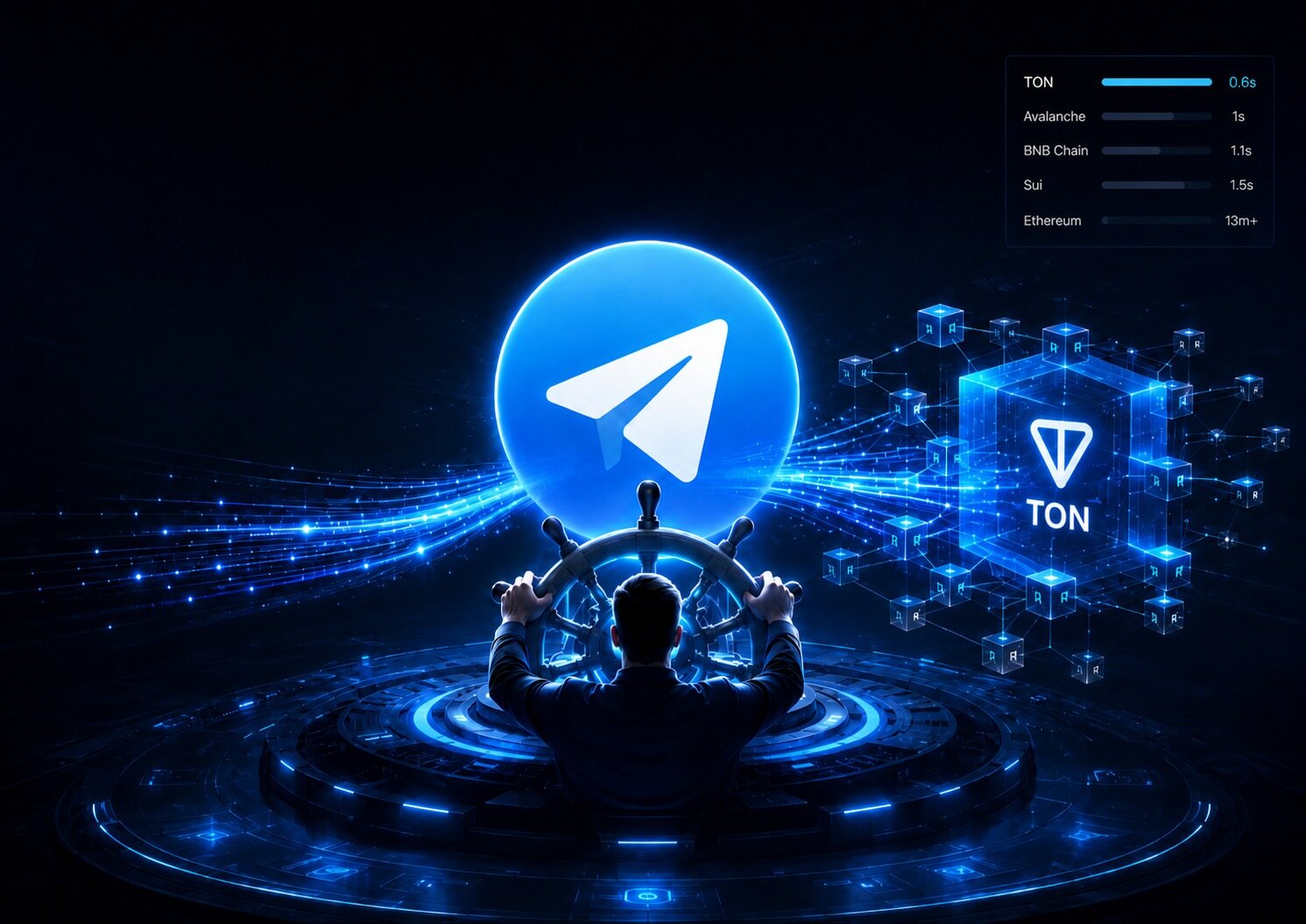
Telegram Takes Direct Control of TON, Social Traffic Rewrites the Public Chain Narrative

Telegram founder Pavel Durov announced that Telegram will replace the TON Foundation as the core driver and largest validator of The Open Network (TON). Key initiatives include a sixfold reduction in transaction fees, performance upgrades, and improved developer tools within the next few weeks. This marks a strategic shift from Telegram merely providing user access to deeply integrating TON into its platform's core infrastructure. The goal is to transform Telegram's massive social traffic into sustainable on-chain activity. While viral mini-apps like Notcoin have demonstrated Telegram's ability to drive user adoption, TON aims to support frequent, low-value transactions inherent to social platforms—such as tipping, in-app payments, and game rewards. Ultra-low fees and sub-second finality (0.6 seconds) are crucial to making blockchain interactions seamless and nearly invisible within the Telegram user experience. However, Telegram's increased central role raises questions about network decentralization. Durov argues that Telegram's participation will attract more large validators, thereby enhancing decentralization. TON also offers high annual staking rewards (18.8%), aiming to retain capital within its ecosystem. The fundamental challenge for TON is no longer leveraging Telegram's user base, but becoming an indispensable, seamless infrastructure layer for Telegram's everyday applications—moving from an adjacent chain to an embedded utility.

marsbit5 мин. назад

Telegram Takes Direct Control of TON, Social Traffic Rewrites the Public Chain Narrative

marsbit5 мин. назад

Telegram Takes Direct Control of TON, Social Traffic Reshapes Public Chain Narrative

Telegram's founder, Pavel Durov, has announced a major shift in the development of The Open Network (TON). Telegram will now become the core driver of TON, replacing the TON Foundation and becoming its largest validator. The focus will be on technical upgrades over the next few weeks, including slashing network fees by six times to near-zero and improving finality time to 0.6 seconds. This move signifies a deeper integration between Telegram and TON, moving beyond just providing a user base. The goal is to transform Telegram's vast social traffic and built-in features—like Mini Apps, payments, and bots—into sustainable, on-chain usage scenarios. The reduced fees and faster speeds are crucial for enabling the small, frequent transactions typical of social interactions. While this promises stronger execution and product alignment, it raises questions about centralization. Durov argues Telegram's involvement will attract more validators, enhancing decentralization, but the outcome remains to be seen. Additionally, TON's high annual staking reward of 18.8% aims to retain capital within the ecosystem. The key challenge for TON is no longer just leveraging Telegram's entry point, but becoming an invisible, seamless infrastructure layer within Telegram's daily use. Its success hinges on converting viral attention into lasting, embedded utility.

Odaily星球日报14 мин. назад

Telegram Takes Direct Control of TON, Social Traffic Reshapes Public Chain Narrative

Odaily星球日报14 мин. назад

OpenAI Post-Training Engineer Weng Jiayi Proposes a New Paradigm Hypothesis for Agentic AI

OpenAI engineer Weng Jiayi's "Heuristic Learning" experiments propose a new paradigm for Agentic AI, suggesting that intelligent agents can improve not just by training neural networks, but also by autonomously writing and refining code based on environmental feedback. In the experiment, a coding agent (powered by Codex) was tasked with developing and maintaining a programmatic strategy for the Atari game Breakout. Starting from a basic prompt, the agent iteratively wrote code, ran the game, analyzed logs and video replays to identify failures, and then modified the code. Through this engineering loop of "code-run-debug-update," it evolved a pure Python heuristic strategy that achieved a perfect score of 864 in Breakout and performed competitively with deep reinforcement learning (RL) algorithms in MuJoCo control tasks like Ant and HalfCheetah. This approach, termed Heuristic Learning (HL), contrasts with Deep RL. In HL, experience is captured in readable, modifiable code, tests, logs, and configurations—a software system—rather than being encoded solely into opaque neural network weights. This offers potential advantages in explainability, auditability for safety-critical applications, easier integration of regression tests to combat catastrophic forgetting, and more efficient sample use in early learning stages, as demonstrated in broader tests on 57 Atari games. However, the blog acknowledges clear limitations. Programmatic strategies struggle with tasks requiring long-horizon planning or complex perception (e.g., Montezuma's Revenge), areas where neural networks excel. The future vision is a hybrid architecture: specialized neural networks for fast perception (System 1), HL systems for rules, safety, and local recovery (also System 1), and LLM agents providing high-level feedback and learning from the HL system's data (System 2). The core proposition is that in the era of capable coding agents, a significant portion of an AI's learned experience could be maintained as an auditable, evolving software system.

marsbit1 ч. назад

OpenAI Post-Training Engineer Weng Jiayi Proposes a New Paradigm Hypothesis for Agentic AI

marsbit1 ч. назад

Your Claude Will Dream Tonight, Don't Disturb It

This article explores the recent phenomenon of AI companies increasingly using anthropomorphic language—like "thinking," "memory," "hallucination," and now "dreaming"—to describe machine learning processes. Focusing on Anthropic's newly announced "Dreaming" feature for its Claude Agent platform, the piece explains that this function is essentially an automated, offline batch processing of an agent's operational logs. It analyzes past task sessions to identify patterns, optimize future actions, and consolidate learnings into a persistent memory system, akin to a form of reinforcement learning and self-correction. The article draws parallels to similar features in other AI agent systems like Hermes Agent and OpenClaw, which also implement mechanisms for reviewing historical data, extracting reusable "skills," and strengthening long-term memory. It notes a key difference from human dreaming: these AI "dreams" still consume computational resources and user tokens. Further context is provided by discussing the technical challenges of managing AI "memory" or context, highlighting the computational expense of large context windows and innovations like Subquadratic's new model claiming drastically longer contexts. The core critique argues that this strategic use of human-centric vocabulary does more than market products; it subtly reshapes user perception. By framing algorithms with terms associated with consciousness, companies blur the line between tool and autonomous entity. This linguistic shift can influence user expectations, tolerance for errors, and even perceptions of responsibility when systems fail, potentially diverting scrutiny from the companies and engineers behind the technology. The article concludes by speculating that terms like "daydreaming" for predictive task simulation might be next, continuing this trend of embedding the idea of an "inner life" into computational processes.

marsbit1 ч. назад

Your Claude Will Dream Tonight, Don't Disturb It

marsbit1 ч. назад

Торговля

Спот
Фьючерсы

Популярные статьи

Как купить S

Добро пожаловать на HTX.com! Мы сделали приобретение Sonic (S) простым и удобным. Следуйте нашему пошаговому руководству и отправляйтесь в свое крипто-путешествие.Шаг 1: Создайте аккаунт на HTXИспользуйте свой адрес электронной почты или номер телефона, чтобы зарегистрироваться и бесплатно создать аккаунт на HTX. Пройдите удобную регистрацию и откройте для себя весь функционал.Создать аккаунтШаг 2: Перейдите в Купить криптовалюту и выберите свой способ оплатыКредитная/Дебетовая Карта: Используйте свою карту Visa или Mastercard для мгновенной покупки Sonic (S).Баланс: Используйте средства с баланса вашего аккаунта HTX для простой торговли.Третьи Лица: Мы добавили популярные способы оплаты, такие как Google Pay и Apple Pay, для повышения удобства.P2P: Торгуйте напрямую с другими пользователями на HTX.Внебиржевая Торговля (OTC): Мы предлагаем индивидуальные услуги и конкурентоспособные обменные курсы для трейдеров.Шаг 3: Хранение Sonic (S)После приобретения вами Sonic (S) храните их в своем аккаунте на HTX. В качестве альтернативы вы можете отправить их куда-либо с помощью перевода в блокчейне или использовать для торговли с другими криптовалютами.Шаг 4: Торговля Sonic (S)С легкостью торгуйте Sonic (S) на спотовом рынке HTX. Просто зайдите в свой аккаунт, выберите торговую пару, совершайте сделки и следите за ними в режиме реального времени. Мы предлагаем удобный интерфейс как для начинающих, так и для опытных трейдеров.

1.3k просмотров всегоОпубликовано 2025.01.15Обновлено 2025.03.21

Как купить S

Sonic: Обновления под руководством Андре Кронье – новая звезда Layer-1 на фоне спада рынка

Он решает проблемы масштабируемости, совместимости между блокчейнами и стимулов для разработчиков с помощью технологических инноваций.

2.2k просмотров всегоОпубликовано 2025.04.09Обновлено 2025.04.09

Sonic: Обновления под руководством Андре Кронье – новая звезда Layer-1 на фоне спада рынка

HTX Learn: Пройдите обучение по "Sonic" и разделите 1000 USDT

HTX Learn — ваш проводник в мир перспективных проектов, и мы запускаем специальное мероприятие "Учитесь и Зарабатывайте", посвящённое этим проектам. Наше новое направление .

1.8k просмотров всегоОпубликовано 2025.04.10Обновлено 2025.04.10

HTX Learn: Пройдите обучение по "Sonic" и разделите 1000 USDT

Обсуждения

Добро пожаловать в Сообщество HTX. Здесь вы сможете быть в курсе последних новостей о развитии платформы и получить доступ к профессиональной аналитической информации о рынке. Мнения пользователей о цене на S (S) представлены ниже.

活动图片