"Fat Apps" Are Dead, Welcome to the Era of "Fat Distribution"

marsbitОпубликовано 2025-12-19Обновлено 2025-12-19

Введение

The article "Fat Apps Are Dead, Welcome to the Era of Fat Distribution" argues that crypto applications are becoming commoditized infrastructure, shifting value from the applications themselves to the distribution channels and front-end interfaces that control user access. The author traces the evolution of value accumulation theories in crypto, from the 2016 "Fat Protocol" thesis (value accrues to base layers like Ethereum) to the 2022 "Fat App" thesis (value accrues to applications like Uniswap that built liquidity and user experience). By 2025, the thesis has shifted again. Excessive investment in infrastructure has led to diminishing returns; technical improvements (e.g., minor reductions in oracle costs or interest rate optimizations) are now imperceptible to end-users. Users prioritize familiar interfaces over marginally better backend performance. Consequently, applications like Aave and Morpho are increasingly focusing on B2B partnerships, embedding their services as backends within other platforms (e.g., traditional fintech apps like Robinhood). The author posits that convincing an existing platform to integrate a feature is far easier than onboarding millions of new users to complex, native crypto workflows. A case study illustrates this: Coinbase directs its users' borrowing activity to Morpho on Base, even though competitors offer better rates, because the seamless, integrated user experience within the Coinbase app is more valuable to customers than optimizin...

Original Author: Matt

Original Compilation: Chopper, Foresight News

Today, even cryptocurrency applications are gradually becoming standardized infrastructure, serving Web2 and traditional financial institutions with user-friendly front-end interfaces.

Each cryptocurrency cycle gives rise to a new theory about "how value accumulates in the crypto ecosystem," and these theories are reasonable at the time.

  • In 2016, Joel Monegro proposed the "Fat Protocol Theory": value converges toward underlying public chains like Ethereum through shared data, tokens, and network effects.
  • In 2022, Westie proposed the "Fat App Theory": as Layer 2 networks significantly reduce transaction costs, applications like Uniswap, Aave, and OpenSea build liquidity and user experience barriers, earning even more fees than the public chains they belong to.
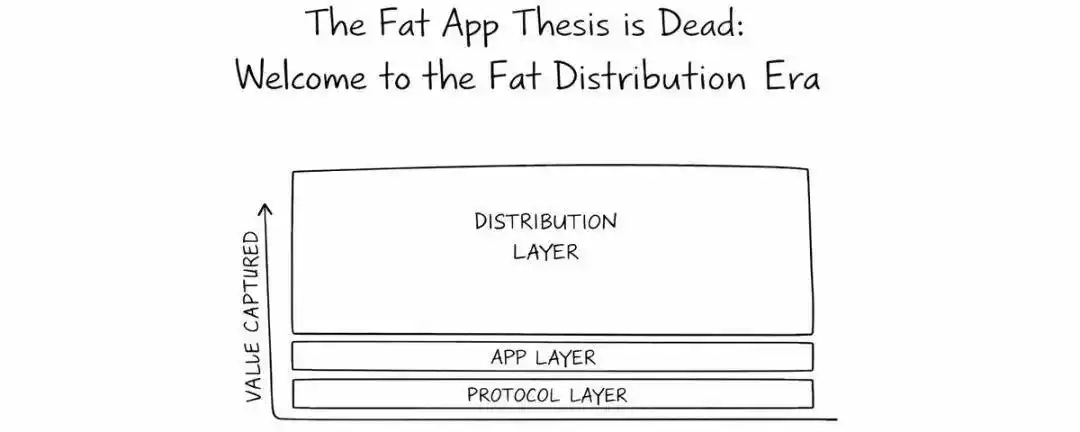
By 2025, the industry has officially entered a new phase: cryptocurrency applications themselves have become replaceable, standardized products.

The reason for this shift is simple: the crypto industry has invested excessive resources in infrastructure and technical optimization. We have relentlessly researched complex automated market maker (AMM) algorithms, innovative liquidation mechanisms, customized consensus protocols, and zero-knowledge proof cost optimizations, but now we are facing diminishing marginal returns. Technical improvements in applications are no longer perceptible to end users.

Users don’t care about a 1-basis-point reduction in oracle data costs, a 10-basis-point increase in lending rates, or improved pricing accuracy in decentralized exchange liquidity pools. What they truly care about is using an interface they already trust and are familiar with.

This trend is becoming increasingly evident: applications like Polymarket, Kalshi, Hyperliquid, Aave, Morpho, and Fluid are investing more time and resources into B2B partnerships. Instead of struggling to attract new users to adapt to cumbersome on-chain operations, they are transforming into backend services embedded in other product ecosystems.
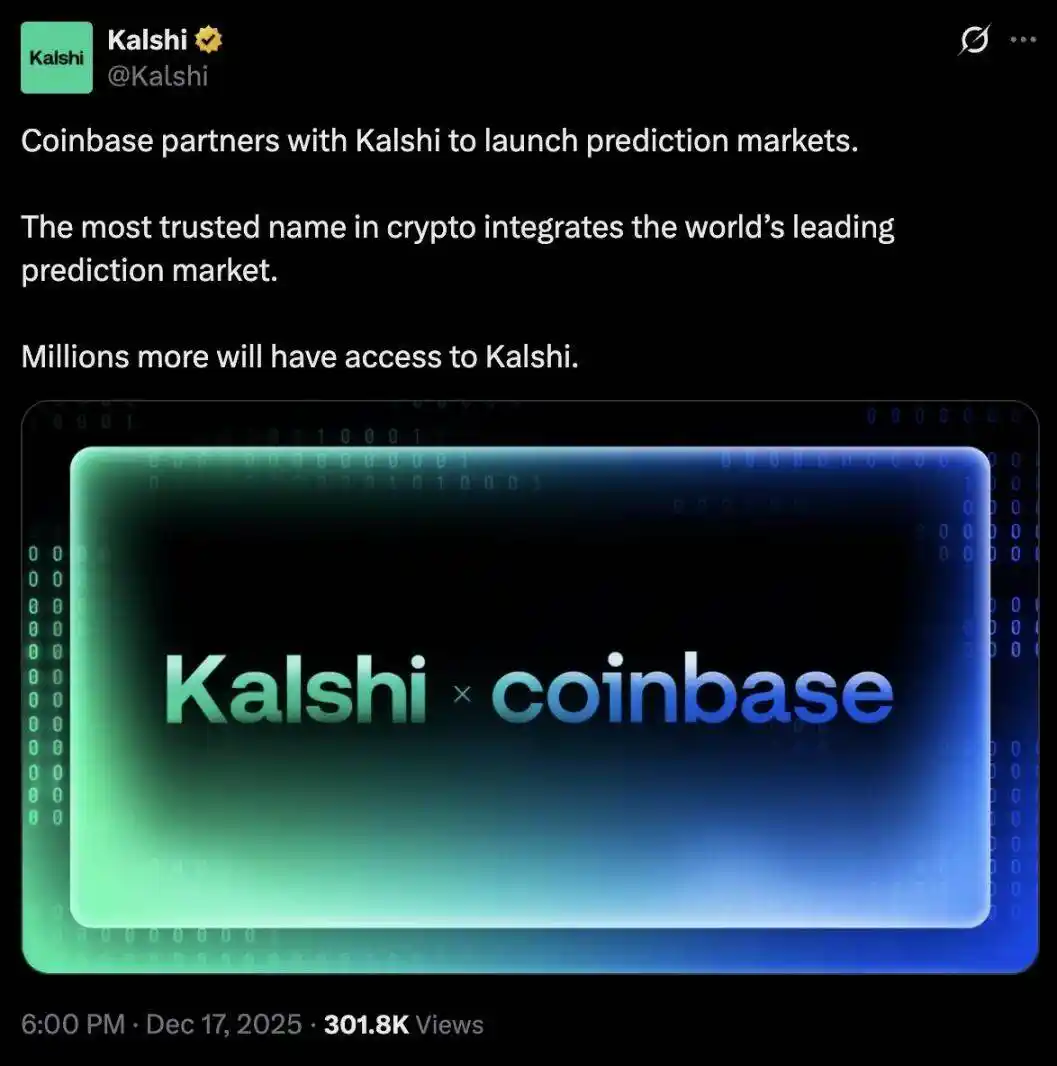
Convincing 25 million new users to download browser extensions, manage private keys, prepare gas fees, transfer assets across chains, and adapt to complex on-chain processes—or having platforms like Robinhood add an "earnings" feature to directly channel user deposits into your lending market. Clearly, the latter is easier to achieve.

Integration partnerships will ultimately win out, distribution channels will ultimately win out, front-end interfaces will ultimately win out; and crypto applications will merely become simple conduits for traffic.

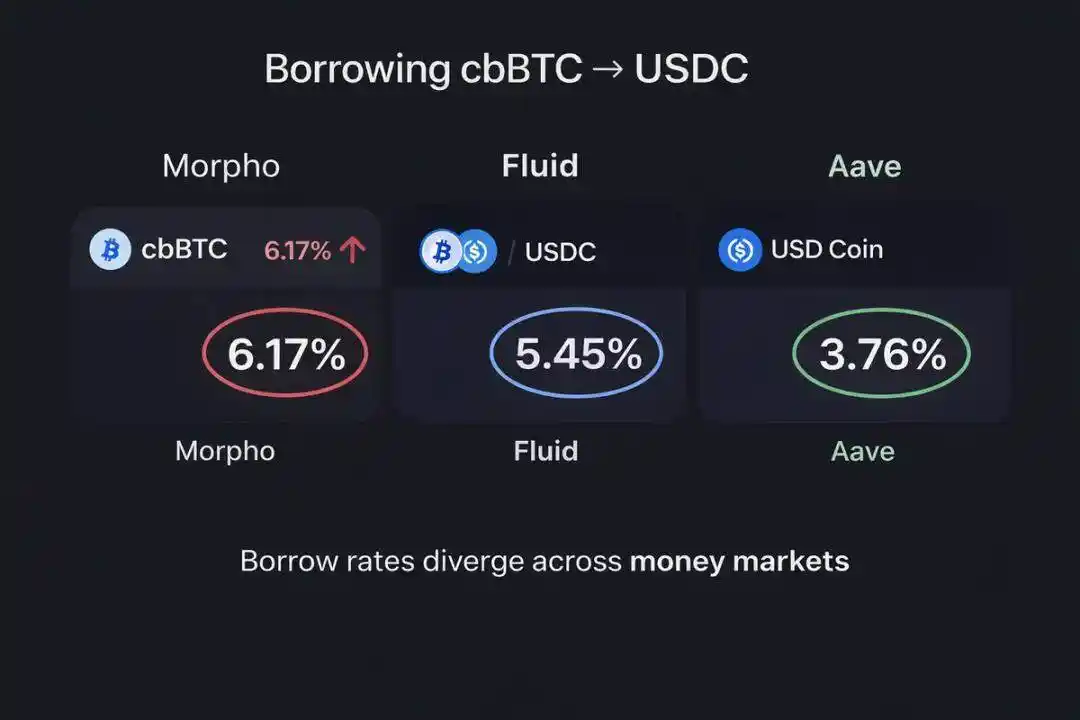
Coinbase’s case perfectly illustrates this: users can borrow USDC by using their platform’s Bitcoin (cbBTC) as collateral, and this transaction flow is directed to the Morpho lending market on the Base chain. Although Aave and Fluid on the Base chain offer significantly better interest rates for borrowing stablecoins using cbBTC as collateral, Morpho still dominates the market. The reason is simple: Coinbase users are willing to pay extra for "immediate and convenient operations."
However, not all applications will become invisible infrastructure. Some will still adhere to the B2C (business-to-consumer) track and will not adopt B2B2C (business-to-business-to-consumer) as their primary profit model. But they must undergo a complete transformation: adjusting core priorities, restructuring profit logic, building new competitive barriers, optimizing marketing strategies and development plans, and rethinking the core pathways for users to enter the crypto space.

This does not mean that infrastructure-type applications can no longer create value, but rather that the front-end platforms that truly control user traffic will capture a larger share of the value.

In the future, competitive barriers will no longer be built around liquidity or crypto-native user experience but will focus on distribution capabilities.


Связанные с этим вопросы

QWhat is the main shift described in the article regarding the evolution of crypto applications?

AThe article describes a shift from 'fat applications' to 'fat distribution,' where crypto applications are becoming standardized infrastructure, and value is increasingly captured by front-end platforms that control user distribution rather than the applications themselves.

QAccording to the article, why are technical improvements in crypto applications becoming less impactful for end users?

ATechnical improvements, such as minor reductions in oracle data costs or slight increases in lending rates, have reached a point of diminishing returns and are no longer perceptible or meaningful to end users, who prioritize familiar and trusted interfaces.

QHow does the examples of Polymarket, Kalshi, and Aave illustrate the trend mentioned in the article?

AThese applications are increasingly focusing on B2B partnerships, embedding their services as back-end infrastructure into other products rather than directly attracting users with complex on-chain processes, highlighting the shift toward distribution-driven value capture.

QWhat example does the article use to demonstrate that users prefer convenience over optimal rates?

AThe article cites Coinbase users opting to borrow USDC using cbBTC as collateral through Morpho on Base, despite better rates being available on Aave or Fluid, because they value the convenience of a familiar interface.

QWhat will be the primary competitive barrier in the future, as stated in the article?

AThe primary competitive barrier will shift from liquidity or crypto-native user experience to distribution capabilities, with front-end platforms that control user traffic capturing a larger share of value.

Похожее

The Shutdown of Claude Mythos Revealed the True Cost of Renting AI to Me

The sudden shutdown of Claude Mythos this week starkly highlights a critical, often overlooked risk for founders: when your core capability relies entirely on someone else's platform, your fate is not in your own hands. The key question becomes: who truly owns the intelligence your product depends on? For years, the debate around open-source models focused on cost. Now, the evidence is clear: fine-tuned open-source models can achieve frontier-level quality for specific, mission-critical tasks at a fraction of the cost. However, the deeper issue is control. Relying on a third-party API is like renting; it works until the landlord changes the rules, raises the rent, or asks you to leave—as Mythos experienced. The lesson is not to stop using frontier models—they are incredible infrastructure. The goal is ownership. Ownership means starting with a powerful open-source model and shaping it around what makes your company unique: your data, workflows, domain expertise, and definition of "good." Over time, the model becomes less generic and more reflective of your business, creating durable value. The optimistic conclusion is that AI's future doesn't hinge on one superior model. There is no single frontier. The frontier includes proprietary models, models fine-tuned on company-specific knowledge, specialized models for narrow problems, and intelligent routers orchestrating model ensembles. The most interesting development is not models getting smarter, but intelligence becoming increasingly customizable. The winning companies will be those that transform intelligence into a unique, owned asset. Looking ahead, the vision is not one model dominating all, but many teams owning the part of the frontier that matters most to them.

marsbit22 мин. назад

The Shutdown of Claude Mythos Revealed the True Cost of Renting AI to Me

marsbit22 мин. назад

Tiger Research: U.S. Strategic Bitcoin Reserve - Should the Market Be Happy or Disappointed?

Tiger Research analyzes the evolution of U.S. legislative efforts regarding a strategic Bitcoin reserve, concluding the market impact is limited in the short term but potentially positive long-term. The core event was a March 2025 executive order by former President Trump, which designated confiscated Bitcoin as a strategic reserve and promised not to sell existing holdings (approx. 190k BTC). As it contained no mandate to purchase new Bitcoin, the market reacted negatively, with prices dropping 5.7%. Legislative history shows a significant retreat from initial ambitions. The 2024 "BITCOIN Act" proposed mandatory purchases of 1 million BTC over five years. Reintroduced in 2025, it stalled due to high fiscal costs, concerns over dollar hegemony, and opposition from the Treasury Secretary. The current frontrunner, the 2026 "American Retirement and Monetary Advancement (ARMA) Act," is a compromise. It lacks any purchase requirement, instead focusing on consolidating existing government-held Bitcoin and legally prohibiting its sale for at least 20 years. While ARMA has higher passage odds due to bipartisan support and no purchase mandate, its immediate market effect is neutral. It eliminates potential government selling pressure but creates no new demand. The long-term significance is that formally establishing Bitcoin as a national reserve asset in law could later reignite debates on mandatory purchases. Therefore, the path to a government buyer is longer than initially priced by the market, but the directional narrative remains intact.

marsbit25 мин. назад

Tiger Research: U.S. Strategic Bitcoin Reserve - Should the Market Be Happy or Disappointed?

marsbit25 мин. назад

US Stock Market Trend (June 16): SpaceX Rises 42% in Two Days, New Fed Chairman Takes Office Today

**U.S. Stocks Trend (June 16): SpaceX Soars 42% in Two Days, New Fed Chair Takes Office Today** Markets surged on Monday following former President Trump's social media announcement of a completed U.S.-Iran deal to reopen the Strait of Hormuz, pending a June 19 signing. The news triggered a broad risk-on rally: oil prices crashed, tech stocks soared, bond yields fell, and defensive sectors lagged. **Market Performance:** The Nasdaq jumped 3.07%, led by semiconductor stocks like Micron (+9.2%). The S&P 500 gained 1.65%, and the Dow rose 0.92% to a record high. However, the Russell 2000 small-cap index underperformed (+0.72%). SpaceX continued its hot streak, rising another 5% pre-market after disclosures of large buys by an Australian billionaire and Cathie Wood's ARK. Boeing also rallied on the transportation optimism. Conversely, energy stocks like Chevron fell over 3% on the oil price plunge, with other defensive sectors also selling off. The day's action showed a clear rotation of funds from energy/defensive plays into AI and tech narratives. **Macro & Outlook:** The VIX fear index fell 8.37%. Treasury yields declined, and WTI crude dropped over 5%. Attention now shifts to a packed schedule: the Bank of Japan is widely expected to hike rates to 1.0% on Tuesday. The Fed's June meeting concludes Wednesday, marking new Chair Wash's debut. While rates are expected to hold, his tone on stubborn inflation and the "dot plot" will be crucial for gauging the 2024 rate path. The formal Iran deal signing is set for Friday. **Trend Perspective:** While the peace deal is a genuine positive, Monday's explosive rally may have gotten ahead of itself, pricing in a swift resolution to inflation concerns. The shortened trading week faces a triple test: BoJ tightening, the Fed's policy stance, and deal implementation details. Tech and semiconductors, which led the surge, remain vulnerable to any disappointment from these key events. The real price discovery begins with the central banks' communications this week.

marsbit46 мин. назад

US Stock Market Trend (June 16): SpaceX Rises 42% in Two Days, New Fed Chairman Takes Office Today

marsbit46 мин. назад

Торговля

Спот
Фьючерсы

Популярные статьи

Как купить ERA

Добро пожаловать на HTX.com! Мы сделали приобретение Caldera (ERA) простым и удобным. Следуйте нашему пошаговому руководству и отправляйтесь в свое крипто-путешествие.Шаг 1: Создайте аккаунт на HTXИспользуйте свой адрес электронной почты или номер телефона, чтобы зарегистрироваться и бесплатно создать аккаунт на HTX. Пройдите удобную регистрацию и откройте для себя весь функционал.Создать аккаунтШаг 2: Перейдите в Купить криптовалюту и выберите свой способ оплатыКредитная/Дебетовая Карта: Используйте свою карту Visa или Mastercard для мгновенной покупки Caldera (ERA).Баланс: Используйте средства с баланса вашего аккаунта HTX для простой торговли.Третьи Лица: Мы добавили популярные способы оплаты, такие как Google Pay и Apple Pay, для повышения удобства.P2P: Торгуйте напрямую с другими пользователями на HTX.Внебиржевая Торговля (OTC): Мы предлагаем индивидуальные услуги и конкурентоспособные обменные курсы для трейдеров.Шаг 3: Хранение Caldera (ERA)После приобретения вами Caldera (ERA) храните их в своем аккаунте на HTX. В качестве альтернативы вы можете отправить их куда-либо с помощью перевода в блокчейне или использовать для торговли с другими криптовалютами.Шаг 4: Торговля Caldera (ERA)С легкостью торгуйте Caldera (ERA) на спотовом рынке HTX. Просто зайдите в свой аккаунт, выберите торговую пару, совершайте сделки и следите за ними в режиме реального времени. Мы предлагаем удобный интерфейс как для начинающих, так и для опытных трейдеров.

742 просмотров всегоОпубликовано 2025.07.17Обновлено 2026.06.02

Как купить ERA

Обсуждения

Добро пожаловать в Сообщество HTX. Здесь вы сможете быть в курсе последних новостей о развитии платформы и получить доступ к профессиональной аналитической информации о рынке. Мнения пользователей о цене на ERA (ERA) представлены ниже.

活动图片