Автор: etherscan.eth
Компиляция: AididiaoJP, Foresight News
Несколько недель назад пользователь Etherscan по имени Нима поделился неприятным опытом. После совершения всего двух транзакций со стейблкоинами он за короткое время получил более 89 писем с оповещениями о мониторинге адресов.
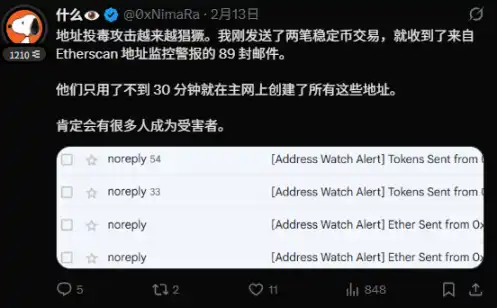
Как указал Нима, эти оповещения были вызваны транзакциями отравления адресов. Единственная цель злоумышленников при создании этих транзакций — внедрить в историю транзакций пользователя поддельные адреса, очень похожие на настоящие, с намерением обманом заставить пользователя ошибочно скопировать и использовать эти поддельные адреса при следующем переводе.
Отравление адресов существует в Ethereum уже несколько лет. Однако подобные случаи подчеркивают, что这类攻击活动已变得高度自动化和规模化。Раньше это были спорадические спам-сообщения, а теперь их можно осуществлять в больших масштабах, причем злоумышленники обычно внедряют транзакции отравления в течение нескольких минут после легитимной транзакции.
Чтобы понять, почему такие атаки стали более распространенными в настоящее время, нам нужно проанализировать два аспекта: процесс эволюции методов атак с отравлением адресов и основные причины, по которым их можно легко масштабировать.
Кроме того, в этой статье основное внимание уделяется одному ключевому принципу защиты, чтобы помочь пользователям эффективно противостоять таким атакам.
一、Индустриализация отравления адресов
Отравление адресов раньше считалось нишевым методом мошенничества, используемым оппортунистическими злоумышленниками. Однако на сегодняшний день его операционная модель все больше приобретает индустриальные характеристики.
Исследование, опубликованное в 2025 году, проанализировало активность по отравлению адресов в период с июля 2022 года по июнь 2024 года (то есть до обновления Fusaka). Исследование показало, что в Ethereum произошло около 17 миллионов попыток отравления, затрагивающих около 1,3 миллиона пользователей, а подтвержденные убытки составили не менее 79,3 миллиона долларов США.
В приведенной ниже таблице на основе результатов «Исследования отравления блокчейн-адресов» показаны масштабы активности по отравлению адресов в Ethereum и BSC в период с июля 2022 года по июнь 2024 года. Данные показывают, что в сети BSC, где комиссии за транзакции значительно ниже, частота транзакций отравления выше на 1355%.
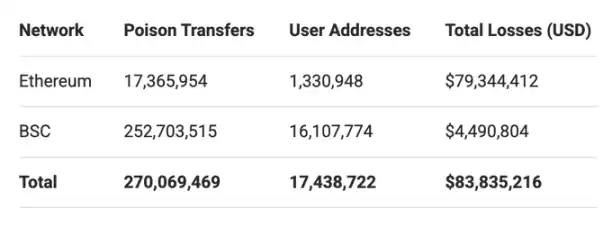
Злоумышленники обычно идентифицируют потенциальные цели, отслеживая активность в блокчейне. Как только обнаруживается транзакция целевого пользователя, автоматизированные системы генерируют высокоподобные адреса, имеющие одинаковые начальные и конечные символы с легитимными адресами, с которыми взаимодействовал пользователь. Затем злоумышленник отправляет на целевой адрес транзакцию отравления, содержащую эти поддельные адреса, чтобы они появились в истории транзакций пользователя.
Злоумышленники склонны выбирать в качестве целей те адреса, которые имеют более высокий потенциал прибыли. Адреса, которые часто совершают переводы, имеют большие балансы токенов или участвуют в крупных переводах, обычно получают больше попыток отравления.
Конкурентный механизм повышает эффективность атак
style="text-align: start;">Исследование 2025 года выявило примечательное явление: между различными группами злоумышленников часто существует конкуренция. Во многих кампаниях по отравлению несколько злоумышленников отправляют транзакции отравления на один и тот же целевой адрес почти одновременно.Каждая группа атакующих пытается первой внедрить свой поддельный адрес в историю транзакций пользователя, hoping that их поддельный адрес будет выбран первым, когда пользователь в будущем будет копировать адрес. Тот, кто успешно внедрится первым, увеличивает вероятность того, что его адрес будет ошибочно скопирован пользователем.
Следующий пример с адресом наглядно демонстрирует интенсивность этой конкуренции. В этом случае в течение нескольких минут после завершения легитимной транзакции USDT было внедрено 13 транзакций отравления.
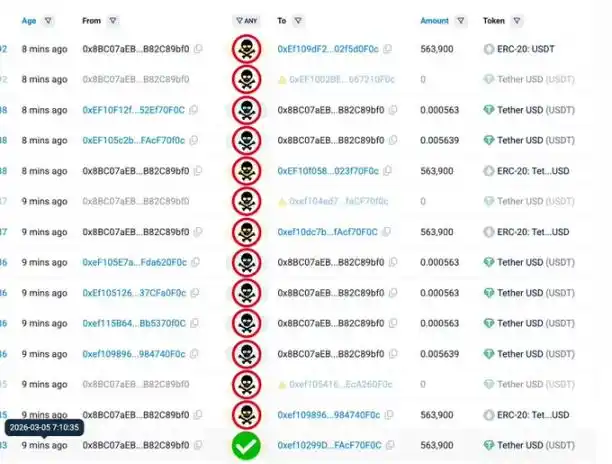
Примечание: Etherscan по умолчанию скрывает транзакции с нулевым значением; здесь скрытие отменено для демонстрационных целей
Распространенные методы, используемые в атаках с отравлением адресов, включают: dust-транзакции (транзакции с пылью), поддельные переводы токенов и транзакции с нулевой стоимостью токенов.
二、Причины, по которым атаки с отравлением адресов легко масштабируются
На первый взгляд, уровень успешности отравления адресов кажется невысоким. В конце концов, большинство пользователей не попадаются на удочку. Однако с экономической точки зрения логика таких атак совершенно иная.
Логика вероятностной игры
Исследователи обнаружили, что в Ethereum уровень успешности單次 попытки отравления составляет около 0,01%. Другими словами, в среднем только about 1 из 10,000 транзакций отравления может привести к тому, что пользователь ошибочно отправит средства злоумышленнику.
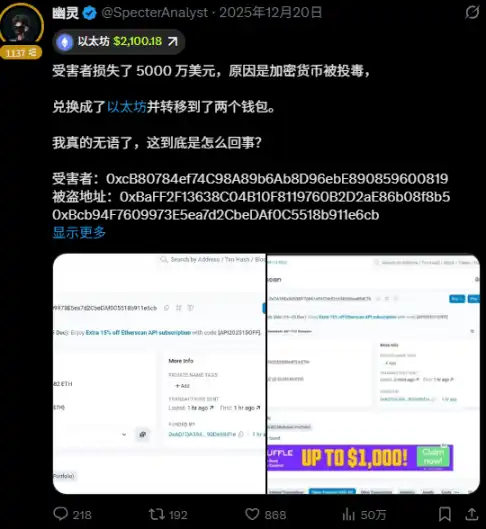
Учитывая это, кампании по отравлению адресов больше не ограничиваются несколькими адресами, а склонны отправлять тысячи甚至миллионы транзакций отравления. Когда база попыток достаточно велика, даже крошечный уровень успешности может накапливаться и产生значительный незаконный доход.
Один успешный обман с крупным переводом может easily покрыть стоимость тысяч неудачных попыток.
Более низкие транзакционные издержки стимулируют рост попыток отравления
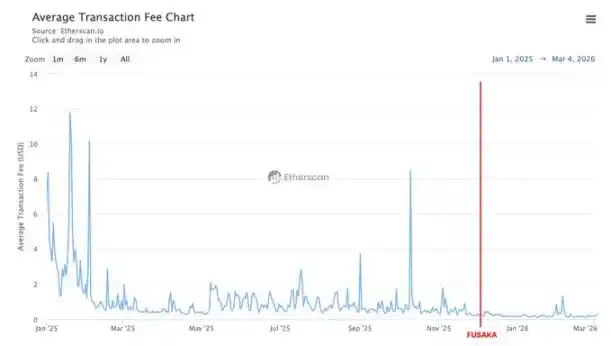
Обновление Fusaka, активированное 3 декабря 2025 года, внедрило оптимизации масштабируемости, эффективно снизив стоимость транзакций в Ethereum. Это изменение, приносящее пользу обычным пользователям и разработчикам, также значительно снизило стоимость для злоумышленников инициировать單次 транзакцию отравления, позволив им отправлять попытки отравления в беспрецедентных масштабах.
После обновления Fusaka сетевая активность Ethereum значительно усилилась. В течение 90 дней после обновления среднесуточный объем обрабатываемых транзакций увеличился на 30% по сравнению с 90 днями до обновления. За тот же период среднее количество newly создаваемых адресов в день увеличилось примерно на 78%.
Кроме того, мы наблюдали значительный рост активности dust-транзакций. В таких транзакциях злоумышленник отправляет transaction с тем же токеном, что и в истории переводов пользователя, но с extremely small суммой.
Следующие данные сравнивают активность dust-транзакций для нескольких основных активов в течение 90 дней до и после обновления Fusaka. Для стейблкоинов, таких как USDT, USDC и DAI, dust-транзакция refers to транзакция на сумму менее 0,01 доллара США; для ETH это refers to перевод менее 0,00001 ETH.
USDT
- До обновления: 4,2 миллиона
- После обновления: 29,9 миллиона
- Рост: +25,7 миллиона (+612%)
USDC
- До обновления: 2,6 миллиона
- После обновления: 14,9 миллиона
- Рост: +12,3 миллиона (+473%)
DAI
- До обновления: 142,405
- После обновления: 811,029
- Рост: +668,624 (+470%)
ETH
- До обновления: 104,5 миллиона
- После обновления: 169,7 миллиона
- Рост: +65,2 миллиона (+62%)
Данные показывают, что вскоре после обновления Fusaka активность dust-транзакций (менее 0,01 доллара США) резко возросла, достигла пика, а затем несколько снизилась, но осталась significantly выше уровня до обновления. Для сравнения, активность по переводам выше 0,01 доллара США за тот же период оставалась относительно стабильной.
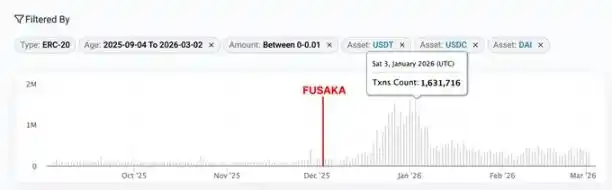
График: Сравнение тенденций dust-транзакций (<0,01 USD) для USDT, USDC и DAI в течение 90 дней до и после обновления Fusaka
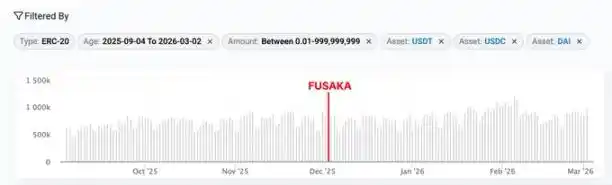
График: Сравнение тенденций обычных транзакций (>0,01 USD) для USDT, USDC и DAI в течение 90 дней до и после обновления Fusaka
Во многих атаках злоумышленники сначала массово распределяют токены и ETH по вновь сгенерированным поддельным адресам, а затем эти поддельные адреса по одному отправляют dust-транзакции на целевые адреса. Поскольку dust-транзакции involve extremely small суммы, а стоимость транзакций снизилась, злоумышленники могут operate в large масштабах с extremely low стоимостью.
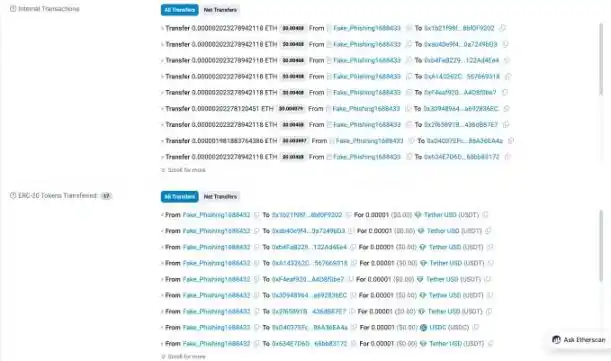
Иллюстрация: Адрес Fake_Phishing1688433 массово отправляет токены и ETH на несколько различных поддельных адресов в одной транзакции
Важно понимать, что не все dust-транзакции являются отравлением. Dust-транзакции также могут originate from легитимной активности, такой как обмен токенов или небольшие взаимодействия между адресами. Однако после проверки большого количества записей dust-транзакций можно судить, что значительная их часть, скорее всего, является попытками отравления.
三、Ключевой принцип защиты
Перед отправкой любых средств обязательно тщательно проверяйте целевой адрес.
Вот несколько практических советов по снижению риска при использовании Etherscan:
Используйте идентификаторы адресов

Для адресов, с которыми вы часто взаимодействуете, установите приватные метки имен в Etherscan. Это поможет четко идентифицировать легитимные адреса среди множества похожих адресов.
Использование сервисов доменных имен, таких как ENS, также может повысить узнаваемость адреса во всем браузере.
Также рекомендуется использовать функцию адресной книги кошелька, чтобы добавить часто используемые адреса в белый список, ensuring that средства всегда отправляются по назначению.
Включите подсветку адресов
Функция подсветки адресов Etherscan помогает пользователям визуально区分 внешне похожих адресов. Если два адреса выглядят почти одинаково, но подсвечиваются по-разному, то один из них, скорее всего, является адресом отравления.
Обязательно дважды проверяйте перед копированием адреса
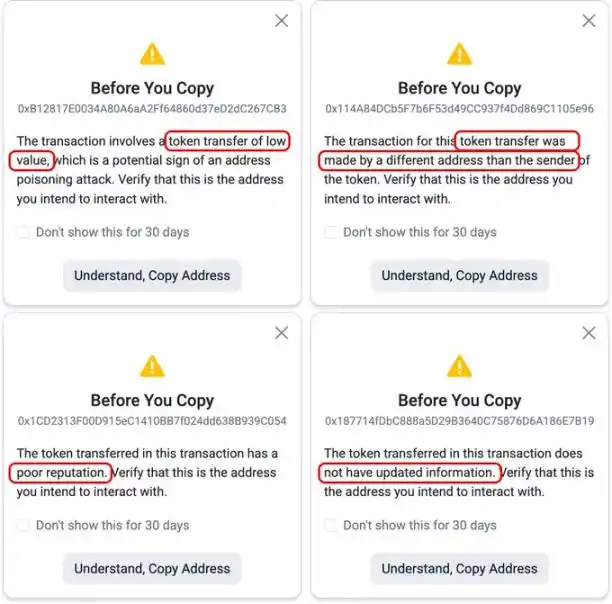
Etherscan активно выводит всплывающее окно с напоминанием, когда пользователь копирует адрес, который может быть связан с подозрительной активностью. Эта подозрительная активность включает:
- Переводы токенов с низкой стоимостью
- Поддельные переводы токенов
- Токены с плохой репутацией
- Токены с необновленной информацией
Когда вы видите такое напоминание, обязательно приостановите操作 и тщательно проверьте, является ли копируемый вами адрес тем целевым адресом, с которым вы действительно намерены взаимодействовать.
Помните, в мире криптовалют нет кнопки «Отменить». Как только средства отправлены на неправильный адрес, возможность их вернуть微乎其微.
Резюме
Поскольку снижение транзакционных издержек делает стратегии атак с высоким объемом более экономичными, атаки с отравлением адресов в Ethereum демонстрируют тенденцию к increasing распространению. Подобные атаки также оказывают негативное влияние на пользовательский опыт, поскольку множество спам-сообщений об отравлении заполняют интерфейсы истории транзакций, ориентированные на пользователей.
Эффективная защита от атак с отравлением адресов требует как повышения собственной безопасности пользователей, так и поддержки за счет более оптимального дизайна интерфейса. Для пользователей ключевая привычка заключается в следующем: перед отправкой средств обязательно тщательно проверяйте целевой адрес.
В то же время соответствующие инструменты и пользовательские интерфейсы должны играть более важную роль в помощи пользователям в быстрой идентификации подозрительной активности.
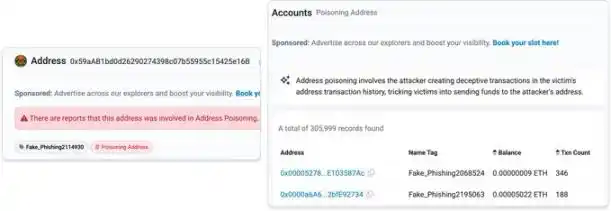
Метки адресов отравления на Etherscan (https://etherscan.io/accounts/label/poisoning-address)
Etherscan продолжает стремиться к улучшению интерфейса браузера и сервисов API, чтобы помочь пользователям更方便地 идентифицировать подобные атаки. Мы активно помечаем поддельные адреса, идентифицируем и скрываем транзакции с нулевой стоимостью токенов, маркируем поддельные токены. Предоставляя эти структурированные данные, пользователям не нужно вручную просеивать огромное количество записей транзакций, чтобы更容易 обнаружить потенциальные попытки отравления адресов.
Поскольку атаки отравления эволюционируют с помощью автоматизации и транзакций с большим объемом пыли, четкое представление этих сигналов риска имеет решающее значение для помощи пользователям в区分 подозрительной активности и легитимных транзакций.