Don't Worry, USDC and USDT's Public Chains Won't Shake Ethereum

marsbitОпубликовано 2026-02-27Обновлено 2026-02-27

Author: LanHu Notes

Some have suggested that if stablecoin issuers like Circle (USDC) and Tether (USDT) build public chains, could it cause Ethereum to fade away? I originally had no intention of addressing this. However, several friends have privately messaged me asking about it. So, let's briefly discuss it.

First, the conclusion: Ethereum will not fade because of this. Overall, it will even benefit.

In the future stablecoin war, the most important aspects are the front-end distribution channels—Meta, MrBeast (Tom Lee's Bitmine has invested $2 billion), Robinhood, Aave, Polymarket, Lighter, Uniswap, exchanges, wallets... Stablecoin issuers are not the strongest in the entire chain, and the L1 chains they build do not naturally have network effects.

Major players like Meta will not only support Circle's chain but will support multiple chains; channels like MrBeast, which are expected to deeply integrate with the Ethereum ecosystem, will prioritize supporting Ethereum; Robinhood is also building its L2 network based on Arbitrum (Ethereum ecosystem), and it might become an independent L2 in the future; Polymarket also plans to build an Ethereum L2...

The places that reach users are the source of network effect power. As long as Ethereum L1/L2 fees are low enough and speeds are fast enough (at the same level), its security and decentralization advantages are unparalleled. Currently, Ethereum L1 is moving towards 10,000 TPS, and L2 is advancing towards over a million TPS. In the future, fees and speed will not be issues.

Issuers building their own chains will not lead to large-scale migration of traffic; instead, they might eventually gradually become Ethereum L2s.

Arc is an L1 chain developed by Circle, supporting USDC as the native gas fee, sub-second settlement, and institutional-grade privacy/compliance, expected to launch later this year. Even so, USDC is still issued on multiple chains, including Ethereum, Solana, etc., with the Ethereum ecosystem still holding the majority share. As for how it will develop after launch, there are still many unknowns. Tether's USDT also operates on multiple chains.

If each stablecoin issuer builds an L1 chain, there will be competitive pressure among them, making it difficult to operate on each other's chains. The Ethereum ecosystem is inclusive and will still be the most important chain for hosting different stablecoins.

Multi-chain issuance of stablecoins is the norm. This means that even if ARC launches, it will only be a supplement to the existing ecosystem, not a replacement. It will have its own institutional trading scenarios, but the market share it ultimately captures does not entirely depend on the stablecoin issuer but on the distribution channels and high-frequency application scenarios of the stablecoin. For distribution channels, fees, speed, and security are all important, and currently, Ethereum has the best balance of these three. Distribution channels will not and cannot ignore Ethereum.

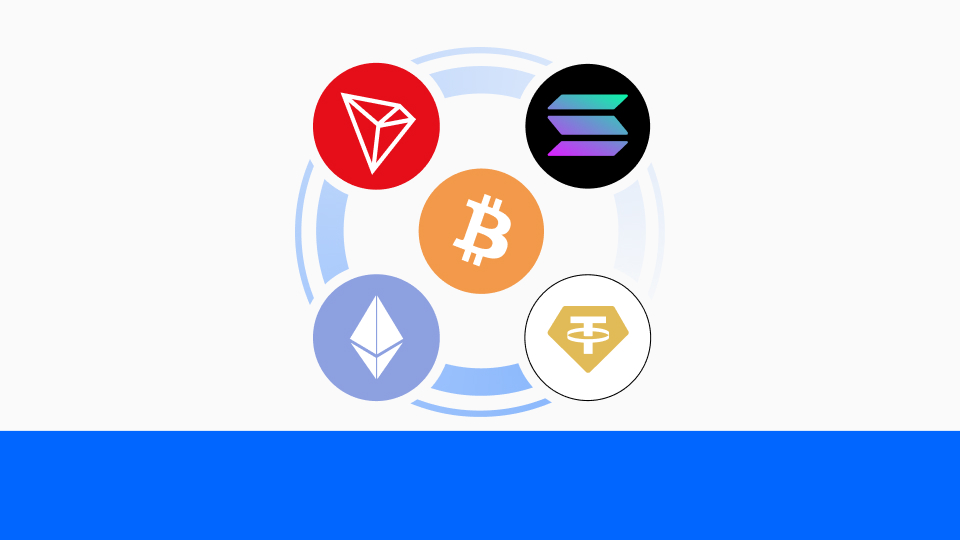
Looking at the current market share of stablecoins, Ethereum dominates, and its share is still growing.

In February 2026, the total stablecoin market capitalization was about $3.1-3.2 trillion (DefiLlama/TRM Labs data), of which:

• Ethereum: 52-60% (~$1.53-1.65 trillion), grew 40% in 2025 (from $1.15 trillion to $1.53 trillion). It is the largest share, handling over half of stablecoin activity.

• Tron: 25-30% (~$830-840 billion), dominated by USDT, but growth is slowing (fees increased to $0.50 per transaction).

• Solana: 4.5% (~$130 billion), USDC accounts for 77%, benefiting from low fees (<$0.01 per transaction).

• Others: BNB Chain grew 133% (2025), but its share is small; Arbitrum/Base and other L2s account for ~$100 billion. The total Ethereum ecosystem (L1 + L2) exceeds 70%.

Additionally, by currency, USDT ~$1.84 trillion (59%), USDC ~$750 billion (24%). USDC is growing faster (+6.39% in February 2026), but mostly on Ethereum.

In terms of transaction volume, stablecoin transfers exceeded $10.5 trillion in January 2026 (a historical high). Ethereum handles most institutional/DeFi traffic (annual forecast over ~$40 trillion), far exceeding PayPal ($20 trillion) and approaching Visa ($15 trillion). These all have network effects. Do you think users will naturally migrate just because a stablecoin chain is born?

Ethereum still has the largest developer ecosystem, the most vibrant DeFi ecosystem, and stable operation without downtime. Would institutions place their trading scenarios on a centralized L1 chain that might experience downtime?

Ethereum's competitors have always been itself, not any other chain. As long as its fees and speed are not inferior to any other L1 chain, its security and decentralization advantages will be incomparable.

Ethereum's future, besides stablecoins, includes asset tokenization, DeFi, and the AI agent economy. These are all major trends. The L1 chains built by stablecoin issuers are not enough to make Ethereum fade away.

By the way, how is Plasma chain, supported by the largest stablecoin issuer Tether, doing now?

Связанные с этим вопросы

QWill the launch of stablecoin-native blockchains like Circle's ARC or Tether's chain cause Ethereum to become irrelevant?

ANo, Ethereum will not become irrelevant. It will continue to benefit and remain the dominant ecosystem due to its superior security, decentralization, and the network effects of its vast developer and DeFi community. Most stablecoin activity and value are still concentrated on Ethereum and its Layer 2s.

QWhat is the most important factor in the future competition among stablecoins according to the article?

AThe most important factor is the front-end distribution channels, such as major platforms like Meta, MrBeast, Robinhood, Aave, and exchanges. The reach to end-users is the source of network effect, not just the blockchain built by the stablecoin issuer.

QWhat percentage of the total stablecoin market cap does Ethereum ecosystem (L1 + L2) hold as of February 2026, based on the article?

AThe Ethereum ecosystem (L1 + L2s) holds over 70% of the total stablecoin market share.

QWhat are the key advantages that the article claims give Ethereum a competitive edge over other chains?

AEthereum's key advantages are its unparalleled security and decentralization, combined with low fees and high speed on its Layer 2 scaling solutions. The article states that when Ethereum's fees and speed are on par with other L1s, its security and decentralization become unbeatable.

QDoes the article suggest that stablecoin issuers building their own chains will lead to a mass migration of users away from Ethereum?

ANo, the article argues the opposite. It states that such chains are more likely to become a supplement to the existing multi-chain reality rather than a replacement for Ethereum. Most distribution channels will support multiple chains, and Ethereum's inclusive ecosystem will remain the most important chain for hosting different stablecoins.

Похожее

It's Not Jensen Huang Who Wants to Change the PC, But the PC That's Revolting Against Itself

The 40-year-old PC industry is undergoing a fundamental transformation, driven by the rise of AI PCs. At the GTC Taipei 2026 event, NVIDIA, backed by Microsoft and major PC OEMs, announced the RTX Spark super chip for Windows PCs, marking its official entry into the PC core processor market. This move aims to redefine the AI PC by shifting its core from the CPU to an AI-focused SoC (System on Chip). NVIDIA envisions the PC evolving from a personal computer to a "personal AI"—a platform where local AI Agents can autonomously perform tasks. While Intel pioneered the AI PC concept earlier in 2026, NVIDIA's aggressive push, leveraging its vast CUDA developer ecosystem of 6 million, positions it to potentially reshape the industry's long-standing Wintel (Windows-Intel) power structure. NVIDIA's strategy extends beyond hardware; it's about embedding its CUDA, RTX, and AI software stack into the PC platform itself. The article identifies key shifts: 1) The move from a CPU-centric to an AI SoC-centric architecture, similar to Apple's approach with its M-series chips. 2) The PC's evolution from a human-operated tool to a platform for human-Agent collaboration. 3) The extension of NVIDIA's data center-centric CUDA ecosystem to personal devices via RTX Spark. Ultimately, the change is driven by the broader trend of AI moving to personal devices. Companies like Intel, AMD, Qualcomm, and Apple are all participating in this shift. NVIDIA's entry accelerates the competition, but the core driver is the technology itself finding its optimal expression in the PC. The industry is reinventing itself, with the outcome hinging on execution, ecosystem development, and the creation of compelling local AI applications.

marsbit20 мин. назад

It's Not Jensen Huang Who Wants to Change the PC, But the PC That's Revolting Against Itself

marsbit20 мин. назад

Popular Interaction Collection | Interstate Launches Points Event; Flip Early Waitlist Application (June 12)

**Interstate Launches Points Event, Flip Opens Early Waitlist Applications** *Originally published by Odaily Planet Daily, author Asher.* **Interstate**, an infrastructure platform integrating on-chain transactions for assets like Meme tokens, prediction markets, and xStocks, has launched a points event. Each trade on the platform now rewards users with points. The project has completed a $1.5 million seed round from investors including MH Ventures, Alchemy Ventures, and Marshland Capital. Users can visit the official website to connect their wallets and start earning points through trading tasks (note: the site may experience high traffic). **Flip**, an AI-powered financial assistant, has opened applications for its early waitlist. The platform allows users to manage finances via chat, helping with spending tracking, bill management, investment portfolio monitoring (including stocks and crypto), and more. Flip recently raised $1.4 million in a pre-seed round led by The House Fund and participated in a16z's Speedrun accelerator. Interested users can join the waitlist via the official website. **ArcNova**, an AI-native infrastructure platform for short-form video and entertainment, continues to offer tasks for earning points. Users can sign in daily, complete social and app tasks, and refer friends to accumulate points. The project announced a $15 million funding round in May, backed by Adaverse Ventures, Animoca Brands, and others. The task portal is accessible through the ArcNova website. These updates highlight ongoing opportunities for user engagement and potential rewards across emerging crypto and AI projects.

Odaily星球日报2 ч. назад

Popular Interaction Collection | Interstate Launches Points Event; Flip Early Waitlist Application (June 12)

Odaily星球日报2 ч. назад

Торговля

Спот
Фьючерсы

Популярные статьи

Manyu: восходящая мем-звезда на Ethereum, готовая открыть новую эру культуры Shiba

Manyu - это мемтокен на Ethereum, который приносит децентрализованную культурную и развлекательную ценность через вирусное влияние в соцсетях и вовлечённость сообщества.

2.0k просмотров всегоОпубликовано 2025.11.27Обновлено 2025.11.27

Manyu: восходящая мем-звезда на Ethereum, готовая открыть новую эру культуры Shiba

Неделя обучения по популярным токенам 14: Glamsterdam — самое ожидаемое обновление Ethereum в 2026 году

Ordinals/Runes по-прежнему стимулируют доходы от комиссий за блоки и активность разработчиков, рассматриваются как отправная точка «нативной эмиссии активов» в сети.

1.5k просмотров всегоОпубликовано 2026.04.29Обновлено 2026.04.29

Неделя обучения по популярным токенам 14: Glamsterdam — самое ожидаемое обновление Ethereum в 2026 году

Обсуждения

Добро пожаловать в Сообщество HTX. Здесь вы сможете быть в курсе последних новостей о развитии платформы и получить доступ к профессиональной аналитической информации о рынке. Мнения пользователей о цене на ETH (ETH) представлены ниже.

活动图片