Автор: Frank, PANews
Оригинальное название: Глубокий анализ 290 000 рыночных данных: раскрываем 6 истин о ликвидности Polymarket
Ранее PANews уже проводила глубокое исследование стратегий прогнозных рынков, и одним из ключевых выводов было то, что главным препятствием для многих арбитражных стратегий может быть не математическая формула, а глубина ликвидности самого прогнозного рынка.
Недавно, после того как Polymarket анонсировал запуск рынка прогнозов на недвижимость США, эта ситуация стала еще более очевидной. После запуска дневной объем торгов на этой серии рынков составил всего несколько сотен долларов, что совершенно не соответствовало ожидаемой активности. Реальная рыночная активность оказалась намного ниже, чем активность обсуждений в социальных сетях. Это кажется абсурдным и аномальным явлением, поэтому, возможно, необходимо провести всестороннее исследование ликвидности прогнозных рынков, чтобы раскрыть несколько истин о ликвидности на них.
PANews извлекла исторические данные по 295 тысячам рынков на Polymarket на сегодняшний день и получила следующие результаты.
1. Краткосрочные рынки: арена PVP, сравнимая с MEME-монетами
Из 295 тысяч рынков 67,7 тысячи имеют цикл менее 1 дня, что составляет 22,9%, а 198 тысяч имеют цикл менее 7 дней, что составляет 67,7%.
Среди этих сверхкраткосрочных прогнозных событий 21 848 являются currently активными рынками, из которых 13 800 имеют дневной объем торгов равный 0, что составляет примерно 63,16%. Другими словами, на Polymarket существует большое количество краткосрочных рынков, находящихся в состоянии отсутствия ликвидности.
Знакомое состояние, не правда ли?
В разгар бума MEME-монет на Solana также выпускались десятки тысяч MEME-монет, подавляющее большинство из которых также оставались без внимания или быстро прекращали существование.
Сейчас такое же состояние воспроизводится на прогнозных рынках, с той лишь разницей, что жизненный цикл событий на прогнозных рынках определен, а у MEME-монет он неизвестен.
Что касается ликвидности, у более половины этих краткосрочных событий ликвидность составляет менее 100 долларов.
По категориям эти краткосрочные рынки практически поделены между прогнозами на спорт и криптовалютные行情. Основная причина в том, что механизм определения таких событий относительно прост и成熟, обычно это вопросы вроде «вырастет или упадет ли конкретная монета за 15 минут» или «победит ли конкретная команда». Однако, возможно, из-за того, что ликвидность по сравнению с криптопроизводными инструментами слишком мала, криптокатегория не является самым популярным «королем краткосрочной торговли».
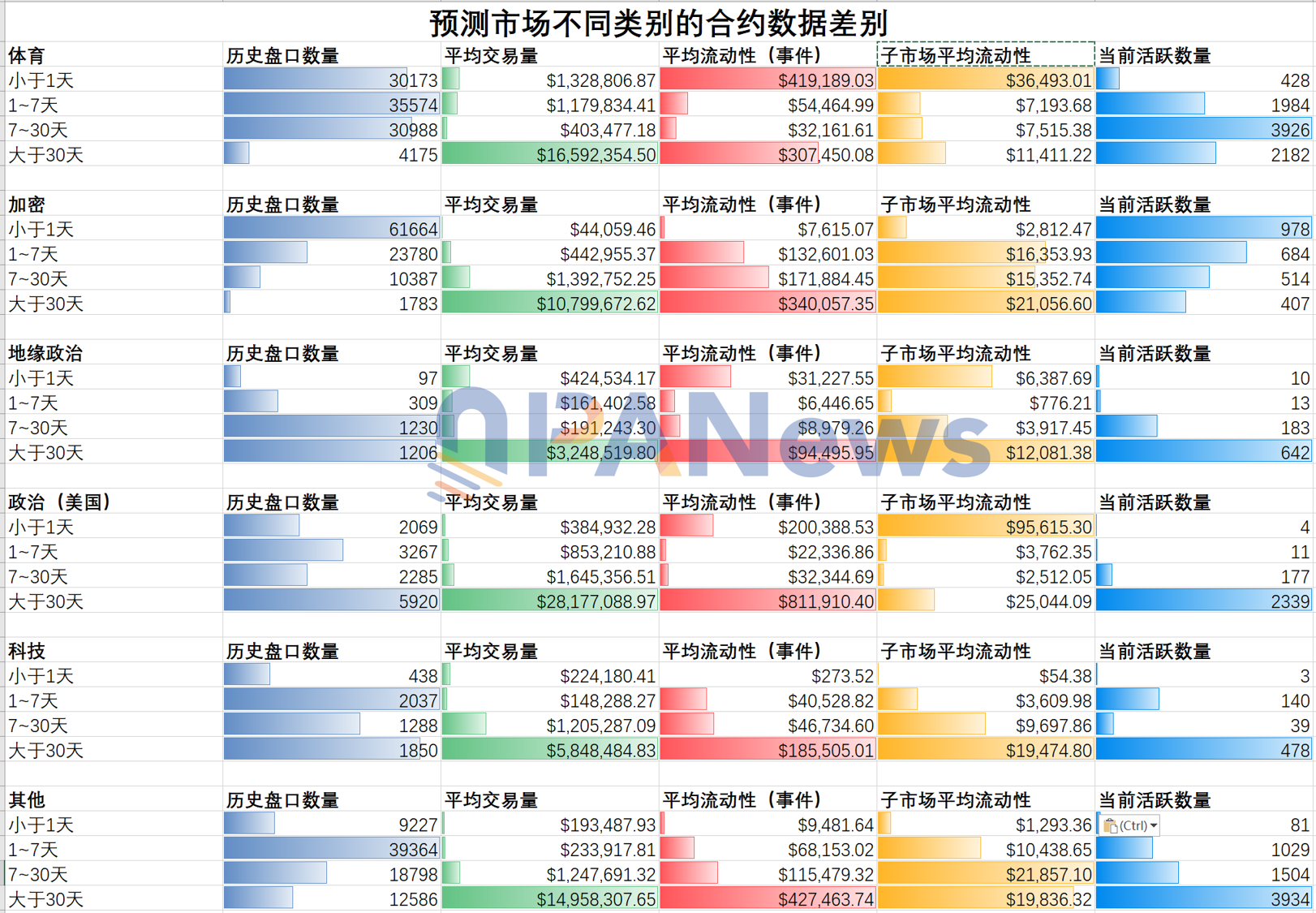
Абсолютное доминирование принадлежит спортивным событиям. Согласно анализу, средний объем торгов по спортивным событиям с прогнозным циклом менее 1 дня на Polymarket составляет 1,32 миллиона долларов, в то время как по криптографическим — всего 44 тысячи долларов. Это также означает, что если вы надеетесь получить доход, прогнозируя краткосрочные движения криптовалют на прогнозном рынке, возможно, для этого не хватит ликвидности.
2. Долгосрочные рынки: бассейн для осаждения крупных капиталов
По сравнению с множеством краткосрочных рыночных событий и контрактов, количество рынков с более длинным временным циклом гораздо меньше.
На Polymarket количество рынков с циклом 1~7 дней составляет 141 тысячу, а рынков сроком более 30 дней — всего 28,7 тысячи. Однако именно на этих долгосрочных рынках сконцентрировано больше всего капитала. Средняя ликвидность лотов сроком более 30 дней составляет 450 тысяч долларов, в то время как у лотов сроком менее 1 дня — всего около 10 тысяч долларов. Это также говорит о том, что крупные капиталы предпочитают размещаться в долгосрочных прогнозах, а не участвовать в краткосрочных спекуляциях.
Среди долгосрочных рынков (более 30 дней), за исключением спортивной категории, все остальные категории демонстрируют более высокий средний объем торгов и среднюю ликвидность. Наиболее привлекательной для капитала категорией рынков является американская политика, средний объем торгов на таких рынках составляет 28,17 миллиона долларов, а средняя ликвидность — 811 тысяч долларов. Далее, категория «другие» также показывает неплохие результаты по привлечению осаждения капитала, средняя ликвидность составляет 420 тысяч долларов (здесь «другие» включают поп-культуру, социальные темы и т.д.).
В области прогнозов на крипторынке капитал также более склонен к долгосрочности, например, прогнозы «превысит ли BTC 150 тысяч долларов к концу года» или упадет ли цена某ой монеты ниже определенного уровня в течение нескольких месяцев. На прогнозном рынке криптопрогнозы больше похожи на простой инструмент хеджирования опционов, а не на инструмент краткосрочных спекуляций.
3. Двухполюсное разделение спортивных рынков
Прогнозы на спорт являются одним из основных источников дневной активности на Polymarket на сегодняшний день, текущее количество активных рынков достигает 8698, что составляет около 40%. Однако, если посмотреть на распределение объемов торгов, спортивные рынки с разными циклами имеют огромный разрыв. С одной стороны, средний объем торгов по сверхкраткосрочным прогнозам сроком менее 1 дня составляет 1,32 миллиона долларов, с другой стороны, средний объем торгов по среднесрочным рынкам (7~30 дней) составляет всего 400 тысяч долларов, а по сверхдолгосрочным рынкам (более 30 дней) средний объем торгов достигает 16,59 миллиона долларов.
Исходя из этих данных, пользователи, участвующие в спортивных прогнозах на Polymarket, либо追求 «мгновенный результат», либо совершают «ставки на весь сезон», среднесрочные事件合约 не слишком популярны.
4. Прогнозы по недвижимости столкнулись с «трудностями адаптации» при запуске
После анализа большого количества данных, поверхностный результат показывает, что события с более длительным сроком прогноза,似乎具有更好的 ликвидностью. Но иногда, когда эта логика применяется к некоторым конкретным или более узким категориям, обнаруживается, что эта особенность перестает работать. Например, упомянутые ранее прогнозы по недвижимости — это рынок с относительно высокой определенностью и сроком прогноза более 30 дней. А прогнозы результатов выборов в США в 2028 году, например, лидируют на всем рынке как по ликвидности, так и по объему торгов.
Возможно, это отражает «трудности холодного старта», с которыми могут столкнуться новые классы активов (особенно непопулярные и требующие специальных знаний). В отличие от простых и интуитивно понятных прогнозов событий, участие в рынках недвижимости требует от участников большей профессиональной подготовки и знаний. В настоящее время рынок, кажется, все еще находится в «периоде磨合 стратегий», энтузиазм розничных участников ограничивается наблюдением со стороны. Конечно,天然 низкая волатильность рынка недвижимости также усугубляет эти трудности холодного старта — отсутствие частых событий,驱动波动性, также снижает интерес спекулятивного капитала. В совокупности эти факторы ставят такие относительно нишевые рынки в неловкое положение: у профессиональных игроков нет контрагентов, а любители не решаются войти.
5. «Краткосрочность» или «осаждение»?
Проведя上述 анализ, мы можем重新 классифицировать различные категории прогнозных рынков, а именно: такие рынки, как криптовалюты и спорт, можно отнести к краткосрочным рынкам, а политика, геополитика, технологии и другие категории больше склоняются к рынкам долгосрочного осаждения.
За этими двумя типами рынков стоят разные группы инвесторов. Краткосрочные рынки, очевидно, больше подходят для людей с небольшим объемом капитала или those, кому требуется более высокая оборачиваемость средств. Рынки «осаждения» больше подходят для людей с большим объемом капитала и相对 более высокой определенностью.
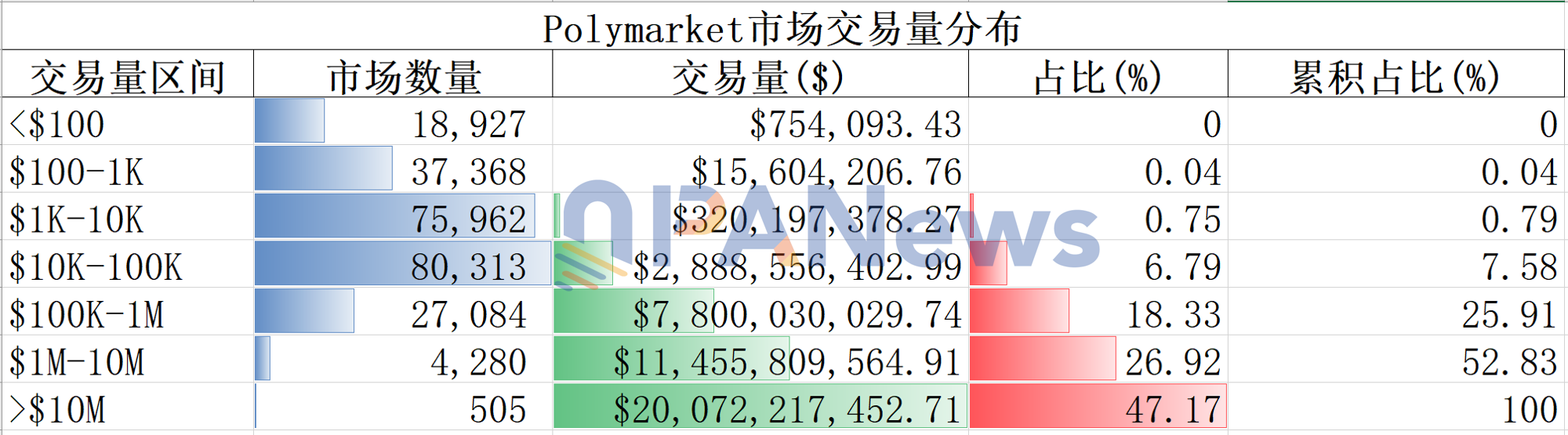
Однако, если разделить рынки по объему торгов,可以看到, что рынки, способные к осаждению капитала (более 10 миллионов долларов), занимают 47% от общего объема торгов, хотя их количество контрактов是最少的, всего 505. А рынки с объемом торгов от 1000 до 10 тысяч долларов составляют подавляющее большинство по количеству, общее количество контрактов достигает 156 тысяч, но объем торгов составляет всего 7,54%. Для подавляющего большинства прогнозных контрактов,缺乏顶级叙事能力, «запуск и мгновенное падение к нулю» — это норма. Ликвидность распределена не равномерно, как солнечный свет, а сконцентрирована, как прожектор, вокруг极少数 суперсобытий.
6. Блок «Геополитика» на подъеме
По показателю «Текущее количество активных / Историческое количество» можно судить о динамике роста категории. В настоящее время板块 с наивысшей эффективностью роста, несомненно, является «Геополитика». Общее историческое количество事件контрактов по геополитике составляет всего 2873, но currently активных — 854, доля активных достигает 29,7%, что является самым высоким показателем среди всех блоков.
Эти данные говорят о том, что количество новых контрактов в категории «Геополитика» в настоящее время быстро растет, и это одна из самых волнующих тем для пользователей прогнозных рынков. Это также подтверждается тем, что в последнее время несколько контрактов, связанных с «геополитикой», часто подвергались утечкам информации о内部地址ах.

В целом, behind анализом ликвидности прогнозных рынков, будь то спортивный блок как «высокочастотное казино» или политический блок как «макрохеджирование», их核心 способности捕获 ликвидности заключается в том, что они要么 обеспечивают мгновенную дофаминовую обратную связь,要么提供 глубокое пространство для макрогейминга. А те рынки, которые缺乏叙事密度, имеют слишком длительный цикл обратной связи и缺乏 волатильности, «бесполезные» рынки, обречены на вымирание в децентрализованном стакане заявок.
Для участников, Polymarket превращается из утопии «предсказания всего» в极其专业的 финансовый инструмент. Осознание этого важнее, чем слепой поиск следующего «прогноза со стократной доходностью». В этой гонке ценность обнаруживается только там, где есть обильная ликвидность; а там, где ликвидность иссякла, есть только ловушки.
Возможно, это и есть最大的 истина, которую данные рассказывают нам о прогнозных рынках.
Twitter:https://twitter.com/BitpushNewsCN
Группа общения в TG比推:https://t.me/BitPushCommunity
Подписка в TG比推: https://t.me/bitpush