Disrupting the Billion-Dollar Gambling Industry, Prediction Markets Face Crackdown from the Established Order

marsbitОпубликовано 2026-01-12Обновлено 2026-01-12

Введение

Pioneering prediction markets like Polymarket, Kalshi, and Crypto.com’s Truth Predict are facing regulatory pushback in the U.S., particularly from state authorities overseeing sports betting. On January 9, the Tennessee Sports Wagering Council (SWC) issued cease-and-desist orders to these platforms, accusing them of offering illegal sports gambling products without state licensing, despite being registered with the CFTC as designated contract markets. The conflict stems from the rapid growth of both sectors. Since the federal ban on sports betting was overturned in 2018, 30 states—including Tennessee—have legalized online sports betting, generating billions in wagers and significant tax revenue. In 2024 alone, U.S. sports betting handle reached $148.74 billion, with taxes contributing $2.82 billion. Tennessee collected $97.16 million in taxes from sports betting in 2024. Prediction markets, which trade “event contracts” classified as financial derivatives under CFTC jurisdiction, have surged in popularity. Their 2025 trading volume hit $40 billion, a 400% increase from 2023, with sports-related contracts being the largest category. This growth threatens traditional sportsbooks, whose stocks have underperformed the market. Multiple states—including Maryland, Ohio, and Nevada—have taken action against prediction markets. Kalshi has challenged these actions in court, arguing federal compliance should preempt state regulations, but court rulings have been mixed. The legal bat...

Original | Odaily Planet Daily (@OdailyChina)

Author | Azuma (@azuma_eth)

The booming prediction markets are now facing a real challenge.

On January 9, US local time, the Tennessee Sports Wagering Council (SWC) issued cease-and-desist orders to prediction market platforms such as Kalshi, Polymarket, and Crypto.com, demanding that these platforms stop offering sports event prediction contracts to residents of the state. The reason cited was that these companies were engaged in illegal gambling operations without obtaining a license from the state government.

In the notice, the SWC accused these three firms of illegally offering sports betting products under the guise of "event contracts." Although these platforms are registered with the U.S. Commodity Futures Trading Commission (CFTC) as designated contract markets, according to Tennessee state law, any entity offering sports event betting services in the state must hold a license issued by the SWC.

The SWC demanded that Kalshi, Polymarket, and Crypto.com cease all activities in the state by January 31, close open contracts, and refund resident deposits. Failure to comply by the deadline could result in civil penalties of up to $25,000 per violation and even criminal charges.

The Rapidly Growing Sports Betting Market

To understand why Tennessee is taking such a hard line against prediction market platforms, one must look at the current state of the US sports betting market.

Since the U.S. Supreme Court overturned the federal law prohibiting commercial sports betting, the Professional and Amateur Sports Protection Act (PASPA), on May 14, 2018, individual states have gained the authority to decide whether to legalize sports betting within their jurisdictions. Currently, sports betting in the US is regulated by state-level agencies responsible for licensing, compliance, and enforcement. Each state can set its own tax rates, market entry barriers, and responsible gambling requirements.

According to a report by the sports betting media Legal Sports Report, as of now, 38 US states (including Washington D.C. and Puerto Rico) have allowed the legal operation of sports betting services (both online and offline), with 30 states permitting online sports betting services — Tennessee is one of them and is the first state to allow only online sports betting while prohibiting physical betting venues.

Home to multiple popular leagues such as the NFL, MLB, NBA, and NHL, the US is undoubtedly a sports powerhouse, and sports betting is a gambling service clearly defined and heavily taxed by state governments.

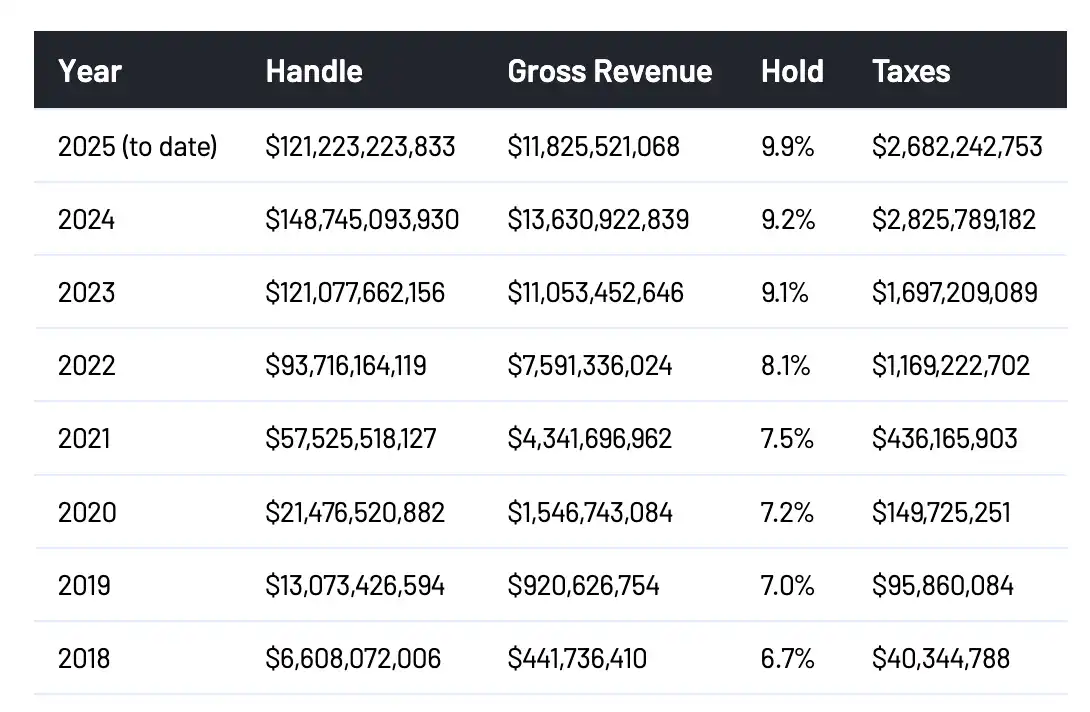
Statistics from another major sports betting media, Sports Book Review (chart below, data as of August 2025), show that since the regulatory relaxation in 2018, the total betting handle (Handle) and tax revenue (Taxes) of the US sports betting market have shown astonishing growth over the past few years — the total market betting handle reached $148.74 billion in 2024, with tax contributions reaching $2.82 billion; in the first 8 months of 2025 alone, the total betting handle ($121.22 billion) and tax revenue ($2.68 billion) have nearly matched the full-year 2024 figures.
Focus on Tennessee: What Does Sports Betting Mean?

Now, let's focus on the protagonist of this incident, Tennessee.

In 2019, Tennessee passed the Tennessee Sports Gaming Act, formally legalizing sports betting. Although the then-Governor Bill Lee had reservations about gambling, he still allowed the bill to pass without exercising his veto power. Between 2021 and 2022, the Tennessee legislature passed laws establishing a dedicated regulatory council to be fully responsible for licensing and oversight. This council was initially called the Sports Wagering Advisory Council and later renamed the Tennessee Sports Wagering Council, the SWC that issued the cease-and-desist orders to Kalshi, Polymarket, and Crypto.com at the beginning of this article.
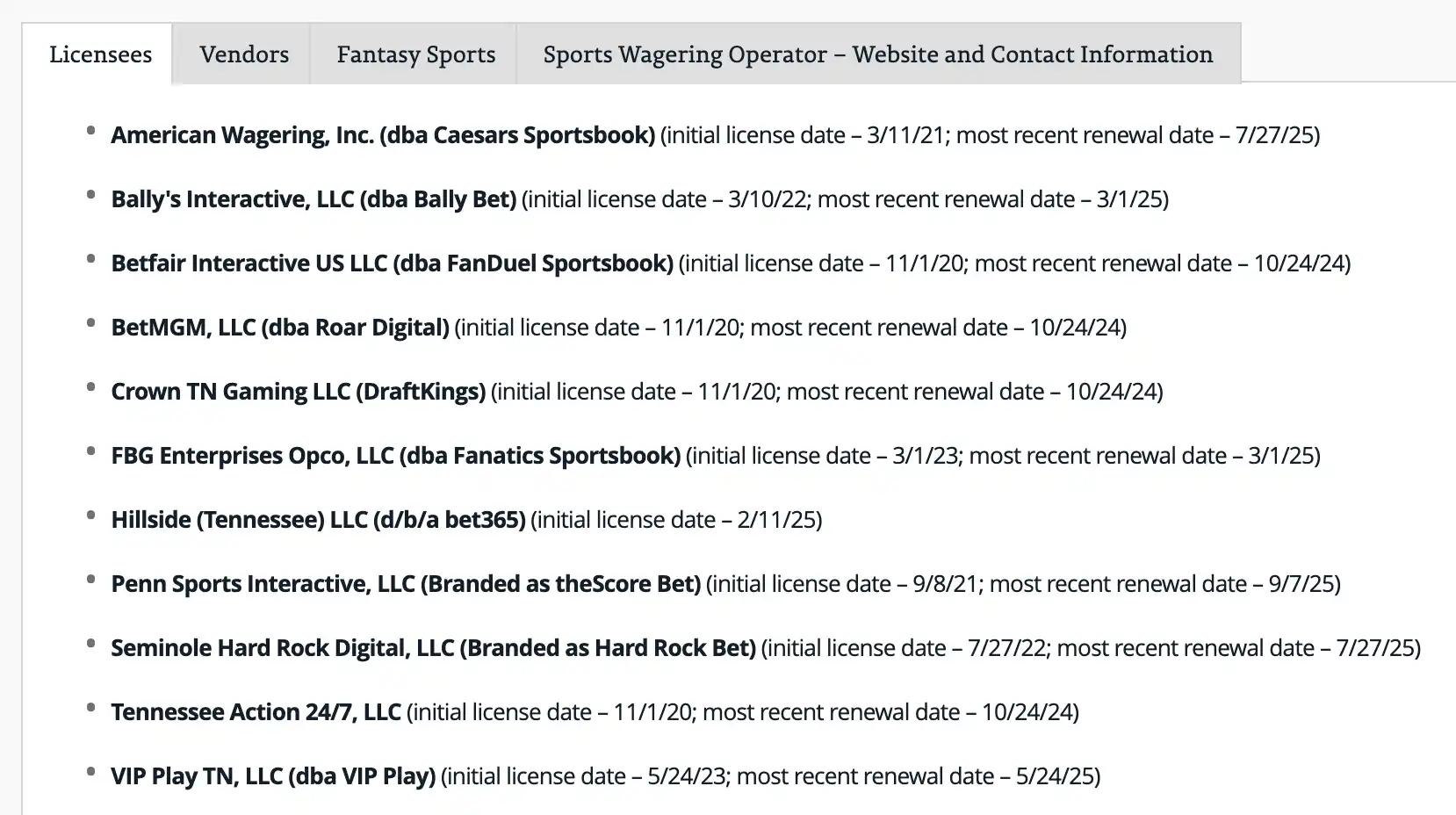
Currently, the SWC is Tennessee's sole sports betting regulatory body, responsible for operational licensing, compliance supervision, rule-making, and enforcement. The SWC stipulates that all sports betting providers must obtain a license from the SWC to offer services in the state. A total of 11 licenses have been issued so far (see chart above); only residents aged 21 and over can access related services, and they must pass geolocation verification to ensure bets are placed within the state; regarding taxation, the state levies a 1.85% tax on the total handle — an earlier scheme based on revenue was replaced in 2023 by taxation based on the total handle.

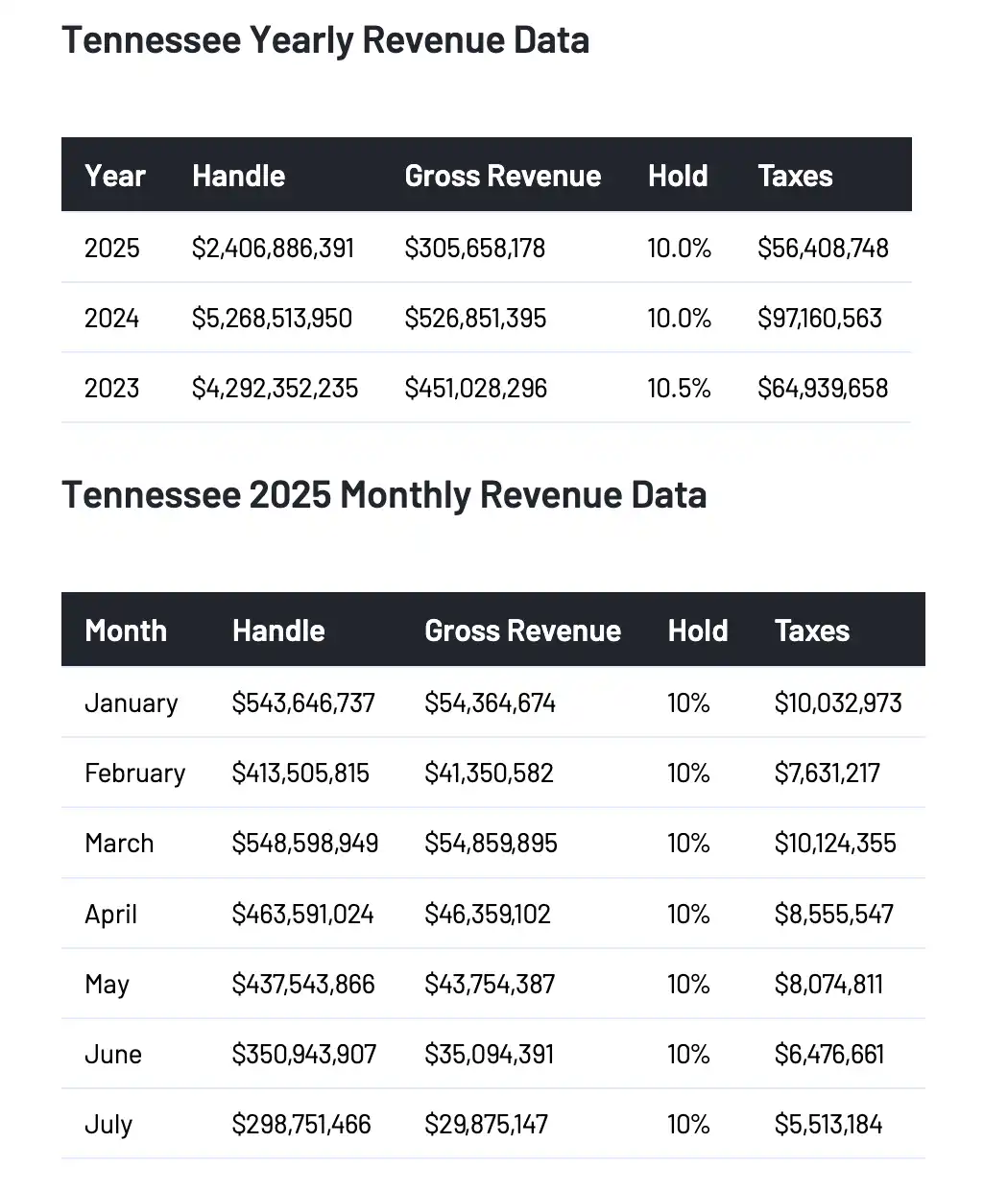
The sports betting market has contributed significant tax revenue to Tennessee. Statistics from Sports Book Review (chart below, data as of July 2025) show that in 2024, the total sports betting handle in Tennessee reached $5.268 billion, with tax contributions amounting to $97.16 million; in the first 7 months of 2025, the total handle has reached $2.4 billion, with tax contributions already reaching $56.4 million.
But this huge and still growing cake is now being gradually eroded by the likes of Polymarket.

How Are Prediction Markets Eroding the Old World?

On December 3, 2025, Polymarket announced that it had obtained CFTC approval to return to the US market after nearly four years; even earlier, Kalshi and Crypto.com's prediction market platform Truth Predict had already opened their doors to US users under CFTC approval.

The current regulatory situation is that sports betting is clearly classified as a gambling service, with regulatory authority belonging to the states, but prediction market platforms like Polymarket are generally regarded as new entities providing "event contract" trading services, and "event contracts" are considered financial derivatives in terms of asset nature, falling under the regulatory purview of the CFTC. This allows prediction markets to bypass the stringent regulations of gambling services — no need for state-level licenses, no need to follow addiction control and other user protection regulations, no need to pay high gambling taxes to the states; but at the same time, they can offer sports event outcome betting services similar to gambling,客观上 forming a certain "regulatory arbitrage."

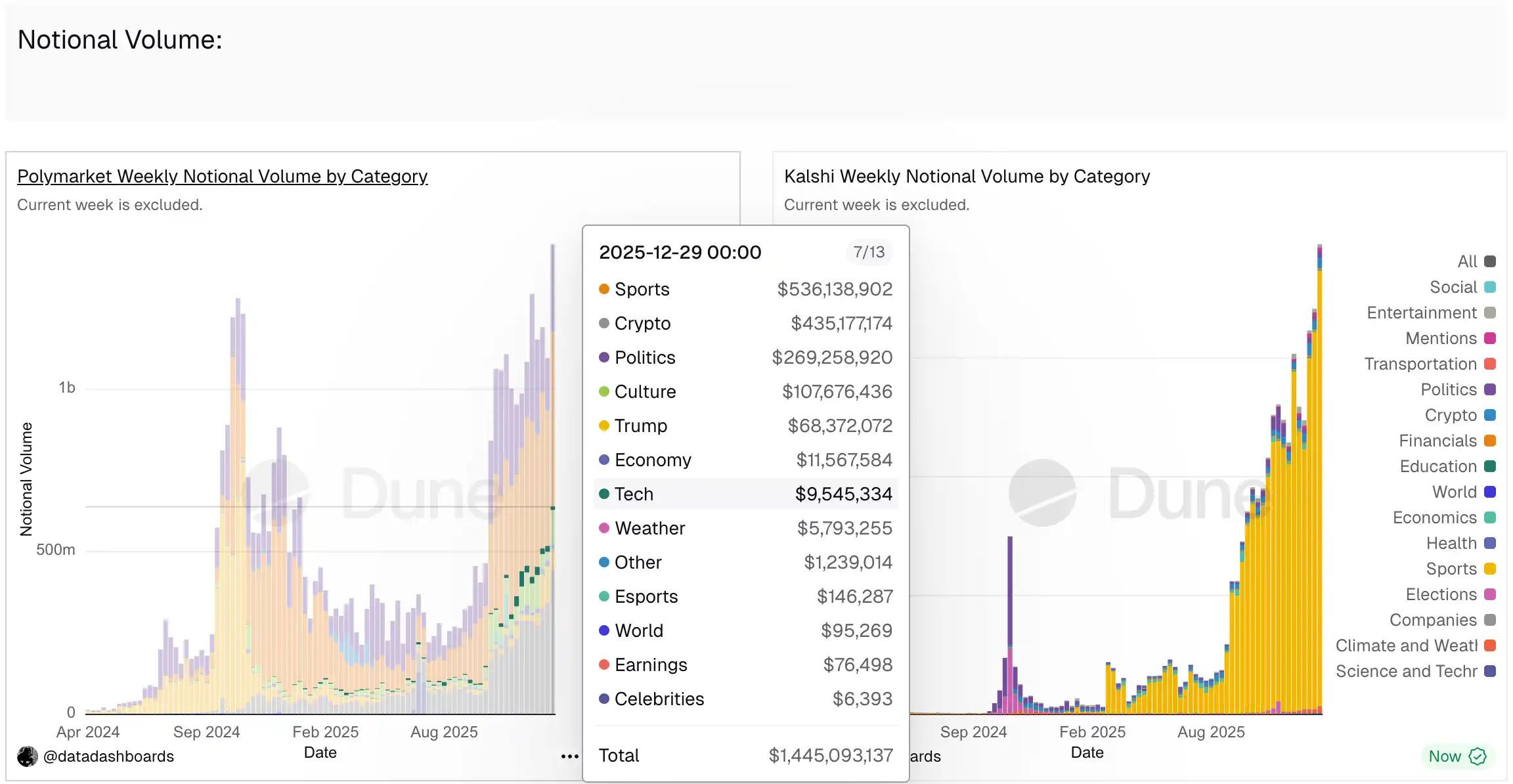
If prediction markets were still just small experimental fields, it might be fine, but the fact is that the growth rate of prediction markets is even more outrageous than that of the already夸张 sports betting market — in 2025, the total trading volume of prediction markets was approximately $40 billion, an increase of about 400% from $9 billion in 2024. Data Dashboards compiled on Dune (chart below) show that sports-related event contracts have long become the category with the highest trading volume share in prediction markets.
The capital market has long sensed the growing threat of Polymarket to traditional sports betting services. Two giants of the sports betting market, DraftKings and Flutter Entertainment, recorded declines of 11.7% and 16.1% respectively over the past year — during the same period, the US stock market was in a bull market, with the Dow Jones rising 12.97% for the year, the Nasdaq up 20.36%, and the S&P 500 up 16.39%; and the size of the sports betting market continued its eight-year upward trend.
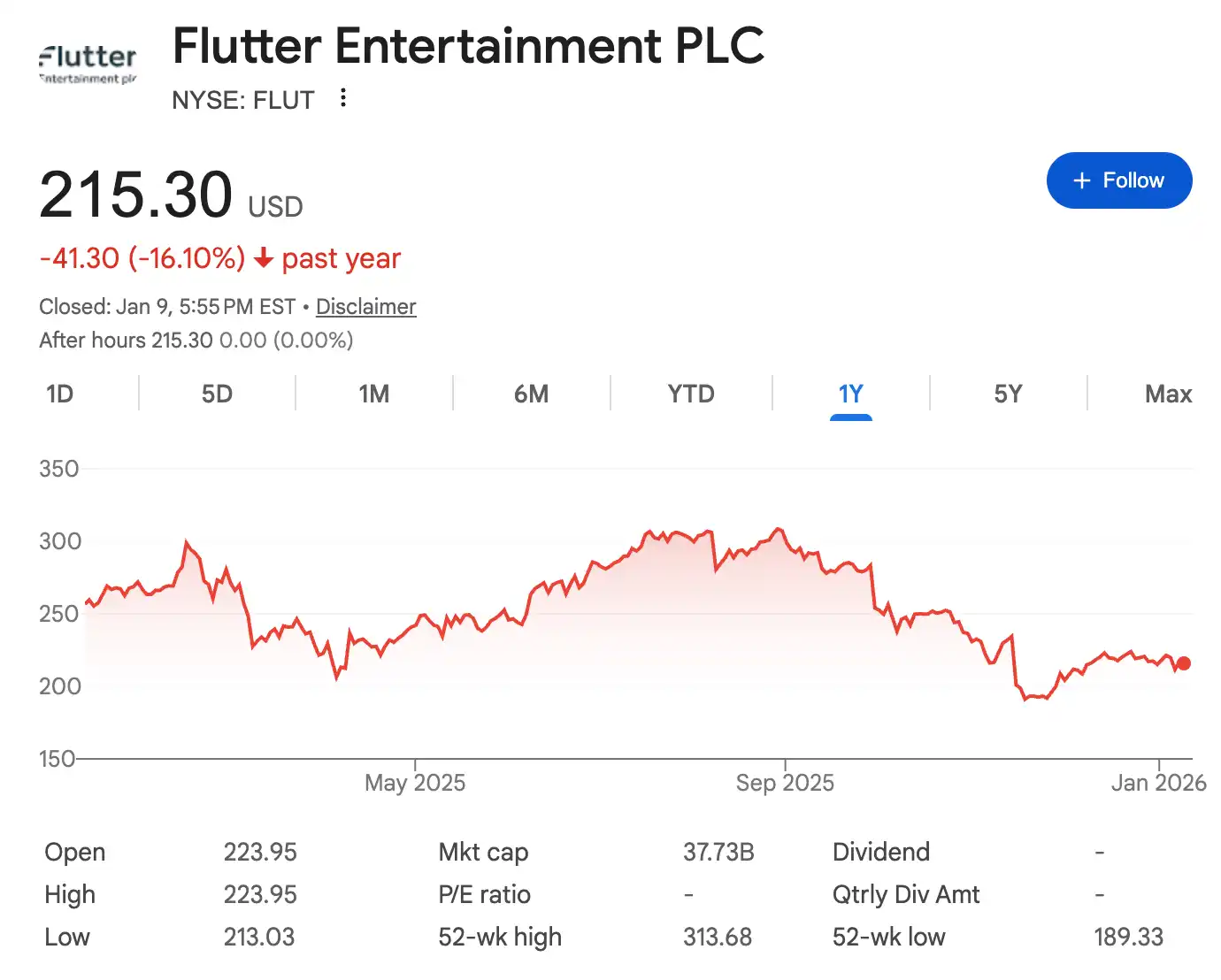
Whether it is Tennessee, which needs sports betting as a source of tax revenue, or the capital forces that actually control the sports betting market, it is difficult for them to agree to let prediction markets, this new player, come and share the pie.

Friction Is Not an Isolated Case; How Do Prediction Markets Fight Back?

In fact, Tennessee's ban on prediction markets is not an isolated incident. Maryland, Ohio, Illinois, New Jersey, Nevada, Montana, Michigan, and Connecticut have all cracked down on prediction markets for similar reasons. Since Polymarket only returned to the US market in December last year, Kalshi has borne the brunt of more regulatory impacts.

In response, Kalshi has filed lawsuits against three states — Nevada, New Jersey, and Maryland — on the grounds that it "has complied with higher-priority federal regulations and does not need to comply with state-level regulations." However, the results have not been ideal.

  • The lawsuit in Nevada was the first to proceed. The district court initially supported Kalshi, but then turned around and ruled against Kalshi last November. Judge Andrew Gordon determined that sports-related event contracts on Kalshi were very similar to sports betting wagers and therefore fell under the regulatory scope of Nevada's gambling laws. Kalshi has appealed to the U.S. Court of Appeals for the Ninth Circuit;
  • In New Jersey, the district court sided with Kalshi, but the state's gaming regulatory agency has appealed to the U.S. Court of Appeals for the Third Circuit;
  • In Maryland, the district court sided with the gaming regulatory agency. Judge Judge Adam B believed that Kalshi failed to prove that "Congress has clearly and manifestly intended to deprive states of the power to regulate gambling." Kalshi has appealed this to the U.S. Court of Appeals for the Fourth Circuit.

The law firm Benesch commented on this, stating that as the national debate continues, similar divisions are expected at the appellate court level, which will lay the groundwork for the Supreme Court to resolve this issue in the coming years... If the appellate courts happen to consistently support Kalshi's position, other prediction markets might emulate its model and proceed with similar businesses before the Supreme Court hears the case; but if the appellate courts reach different conclusions, companies in similar situations may wait for clearer legal signals before taking action. In any case, Kalshi's lawsuit will create a precedent with direct and profound implications for the national sports betting and gambling industry.

In summary, whether prediction markets need to follow state gambling regulations remains an unresolved issue for now. The fundamental contradiction of this issue lies in the similarity of the products and services offered by prediction markets and sports betting, and the differences in regulatory requirements.

This is a tug-of-war over institutional adaptation. Before the appellate courts or even the Supreme Court give a final ruling, the gray area between prediction markets and sports betting will persist for a long time, and regulatory conflicts will be hard to avoid. In the short term, states will likely continue to defend their regulatory authority and tax base through enforcement and litigation; while prediction market platforms will try to use federal compliance and innovation narratives as a shield to fight for more living room.

Recommended Reading:

《Why Prediction Markets Are Truly Not Gambling Platforms》

Трендовые криптовалюты

Связанные с этим вопросы

QWhy did the Tennessee Sports Wagering Council (SWC) issue a cease-and-desist order to prediction market platforms like Kalshi, Polymarket, and Crypto.com?

AThe SWC issued the order because these platforms were offering sports event prediction contracts to Tennessee residents without obtaining a state-required license, which the SWC considers illegal gambling operations under state law.

QWhat is the key regulatory difference that allows prediction markets to operate under federal oversight while traditional sports betting is state-regulated?

APrediction markets are classified as offering 'event contracts,' which are considered financial derivatives and fall under the regulatory jurisdiction of the CFTC (Commodity Futures Trading Commission). In contrast, sports betting is explicitly defined as a gambling service and is regulated at the state level.

QHow significant is the sports betting market in the United States in terms of handle and tax revenue?

AIn 2024, the US sports betting market's total handle was $148.74 billion, contributing $2.82 billion in taxes. For the first eight months of 2025, the handle reached $121.22 billion, with tax contributions of $2.68 billion, nearly matching the full-year 2024 figures.

QWhat legal argument has Kalshi used to challenge state-level bans on its operations, and what has been the outcome so far?

AKalshi has argued that it 'complies with higher-priority federal regulations and does not need to comply with state-level regulations.' The outcomes have been mixed: it lost its case in Nevada and Maryland (with appeals filed) but won at the district court level in New Jersey (which the state has appealed).

QWhat is the fundamental conflict between prediction markets and the established sports betting industry according to the article?

AThe fundamental conflict stems from the similarity in the services offered (betting on sports event outcomes) but the vast difference in regulatory requirements. Prediction markets operate under federal CFTC oversight with lighter restrictions, while sports betting is heavily taxed and regulated, creating a 'regulatory arbitrage' that threatens the tax base and business models of the traditional industry.

Похожее

Свадебное дело Чхве Тхэвона закрыто: раскрывая скрытые линии наследования за триллионной империей SK Hynix

Дело о разводе главы SK Group Чхве Тхэвона завершилось, раскрывая сложные сценарии наследования в конгломерате, стоящем за SK Hynix, чья капитализация превысила 1000 трлн вон. В отличие от традиционных сценариев наследования в чеблях, где ключевую роль играют первенец, доли, брачные связи и отцовское признание, трое детей Чхве Тхэвона от бывшей жены Но Соён — дочь Чхве Юнджон (1989 г.р.), дочь Чхве Минджон (1991 г.р.) и сын Чхве Ингын (1995 г.р.) — следуют разными путями. Чхве Юнджон, названная СМИ «наиболее очевидным кандидатом», занимает руководящую должность в SK Inc. и работает над стратегией развития в области биотехнологий и точной медицины, сочетая научную подготовку с бизнес-опытом. Её брак с основателем ИИ-стартапа символизирует новый тип элитных союзов. Чхве Минджон, добровольно служившая в ВМС Республики Корея и работавшая в сфере международной политики в SK Hynix в США, сейчас является основателем ИИ-стартапа в сфере здравоохранения. Её брак с бывшим офицером морской пехоты США подчёркивает связь с геополитическим контекстом, в котором теперь существует полупроводниковый гигант. Чхве Ингын, единственный сын и, казалось бы, естественный наследник по старой логике, сохраняет молчание. Имея образование в области физики, он покинул SK E&S, чтобы присоединиться к McKinsey, что рассматривается как стандартная внешняя стажировка, но без явных сигналов о наследовании. Громкое судебное разбирательство по разводу родителей, связанное с разделом активов на триллионы вон, стало фоном для их путей. По мере того как SK Hynix становится глобальным геополитическим активом в эпоху ИИ, наследование в SK перестаёт быть семейным делом, превращаясь в публичный экзамен на легитимность в новой, сложной реальности. Наследникам предстоит найти свои собственные ответы на вызовы эпохи.

marsbitВчера 09:08

Свадебное дело Чхве Тхэвона закрыто: раскрывая скрытые линии наследования за триллионной империей SK Hynix

marsbitВчера 09:08

Банки выступают против компромисса по доходности стейблкоинов – Найдёт ли закон CLARITY 60 голосов?

Американский Банковский институт политики выступил против нового проекта закона CLARITY Act, указав на пробелы в регулировании доходности стейблкоинов и мерах по борьбе с незаконными финансами. Банковский сектор добивается полного запрета любых форм вознаграждений по стейблкоинам и лоббирует сенаторов, что снижает поддержку со стороны республиканцев. Из-за смерти сенатора Грэма и болезни Макконнелла у республиканцев стало 51 голос. Если сенаторы Кёртис и Корнин откажут в поддержке, эта цифра упадет до 49, а для принятия закона потребуется 60 голосов. Необходимость заручиться поддержкой 11 демократов осложняется тем, что некоторые про-крипто демократы также выступают против законопроекта. Сроки ограничены: до августовских каникул Сената осталось две недели. Лидер большинства Джон Тюн сомневается в успехе до перерыва. Советник Белого дома по криптовалютам Патрик Уитт призывает провести голосование, утверждая, что новые этические нормы устраняют возражения демократов. Вероятность принятия закона в 2026 году, по рыночным оценкам, упала до 32%.

ambcryptoВчера 09:03

Банки выступают против компромисса по доходности стейблкоинов – Найдёт ли закон CLARITY 60 голосов?

ambcryptoВчера 09:03

За 2 месяца оценка выросла с 8,8 до 68 млрд юаней! Крупнейший AI-хаб OpenRouter может быть куплен

Stripe ведет переговоры о приобретении стартапа OpenRouter, агрегатора API крупных языковых моделей, за сумму около 100 миллиардов долларов. Это представляет собой семикратный рост по сравнению с оценкой OpenRouter в 13 миллиардов долларов двумя месяцами ранее. OpenRouter выступает в качестве «маршрутизатора» или агрегатора для более чем 400 AI-моделей (таких как GPT, Claude и множество открытых), позволяя разработчикам через единый API выбирать наиболее подходящую модель для каждой задачи на основе стоимости, скорости и сложности. Это помогает приложениям снижать расходы, автоматически направляя простые запросы к более дешевым моделям. Компания, основанная соучредителем OpenSea Алексом Аталлой, демонстрирует быстрый рост: ее ежегодный доход достиг 50 миллионов долларов, увеличившись в пять раз за полгода. Для Stripe, крупнейшего процессора онлайн-платежей, это вторая крупная сделка в сфере AI-инфраструктуры после приобретения платформы биллинга Metronome в 2025 году. Стратегия Stripe заключается в создании комплексного предложения для AI-экономики: OpenRouter будет «выбирать модель», Metronome — «подсчитывать потребление», а существующие платежные сервисы Stripe — «обрабатывать оплату». Таким образом, Stripe стремится контролировать ключевой уровень инфраструктуры, который определяет распределение трафика между моделями и формирует счета для конечных предприятий. Сделка подчеркивает растущую важность промежуточного слоя, который управляет стоимостью и выбором моделей для миллионов пользователей AI-приложений.

链捕手Вчера 09:00

За 2 месяца оценка выросла с 8,8 до 68 млрд юаней! Крупнейший AI-хаб OpenRouter может быть куплен

链捕手Вчера 09:00

От OpenSea до OpenRouter: Алекс Аталлах повторяет сценарий «ухода на пике»?

Автор: Нэнси, PANews Алекс Аталла, соучредитель NFT-платформы OpenSea, покинул компанию на пике пузыря NFT четыре года назад. Сейчас он снова оказывается в центре внимания на волне бума ИИ, готовясь продать созданную им агрегирующую платформу AI-моделей OpenRouter по высокой цене. По данным The Wall Street Journal от 23 июля, платежный гигант Stripe ведет переговоры о приобретении OpenRouter, при этом потенциальная оценка сделки может приблизиться к 100 миллиардам долларов. Если сделка состоится, это станет еще одним успехом Аталлы в создании компании на уровне ста миллиардов долларов после OpenSea. Ранее в этом месяце появились сообщения о том, что OpenRouter получил предложения о покупке от нескольких крупных технологических компаний. Потенциальная сделка со Stripe рассматривается как важный шаг для инфраструктурного гиганта в сфере платежей по расширению своего присутствия в области инфраструктуры ИИ. По данным информированных источников, если сделка будет заключена, оценка OpenRouter может приблизиться к 100 миллиардам долларов, что значительно превышает его предыдущие оценки при финансировании. Всего за три года компания добилась быстрого роста благодаря буму больших моделей. Это не первая компания Аталлы стоимостью в сто миллиардов. Ранее он был соучредителем OpenSea, ведущей мировой платформы для торговли NFT, пиковая оценка которой превысила 130 миллиардов долларов. Его уход с OpenSea до серьезного спада на рынке NFT рассматривался как знаковый сигнал. OpenRouter стала крупнейшим хабом в эпоху ИИ, подключившись к более чем 400 AI-моделям, имея около 10 миллионов пользователей и обрабатывая более 200 триллионов токенов в месяц. Однако, несмотря на быстрый рост, это бизнес с большими объемами, но ограниченной рентабельностью. Его основная бизнес-модель заключается в взимании комиссии за платформу (около 5-5,5%) при вызове разработчиками AI-моделей. Конкуренция на рынке агрегации AI-моделей также обостряется. Высокая оценка OpenRouter, возможно, больше отражает его будущий потенциал, чем текущую прибыльность. Для потенциальных покупателей наиболее ценным активом могут быть не текущие доходы, а накопленные реальные данные об использовании ИИ, которые трудно быстро воспроизвести. От NFT к ИИ Алекс Аталла дважды поймал волну технологического бума. Если продажа OpenRouter состоится с оценкой в 100 миллиардов долларов, это может означать либо переоценку стоимости инфраструктуры ИИ, либо сигнал о новом пике цикла. Ответ на этот вопрос даст только время.

链捕手Вчера 08:44

От OpenSea до OpenRouter: Алекс Аталлах повторяет сценарий «ухода на пике»?

链捕手Вчера 08:44

Приближается ли Биткойн к очередной зоне накопления? ЭТОТ сигнал говорит «да»

Аналитики отмечают, что Bitcoin (BTC) переживает один из самых длительных медвежьих периодов, охватывающий три квартала и два календарных года, при этом его динамика отклонилась от рынка акций. Однако сохраняется корреляция с акциями Apple (AAPL). График соотношения BTC/AAPL с 2017 года движется в восходящем канале, где его нижняя граница традиционно сигнализирует о зоне недооценки (накопления) для Bitcoin, а верхняя — о перекупленности. В настоящее время соотношение приближается к линии поддержки, что, по историческим данным, может предшествовать новой фазе роста BTC. При этом в 2025 году нарушилась многолетняя корреляция годовой доходности Bitcoin с индексами S&P 500 и Nasdaq 100, что объясняется его более резкой реакцией на макроэкономические потрясения. В качестве подтверждающего сигнала для разворота рассматриваются поступления стейблкоинов на криптобиржи, которые указывают на готовность капитала к реинвестированию. За последние семь дней чистый приток составил $1,42 млрд, что значительно меньше оттока в $10 млрд за предыдущие 30 дней и пока недостаточно для уверенного старта ралли. Таким образом, соотношение BTC/AAPL указывает на возможное приближение к зоне накопления, но для подтверждения тренда необходимы более значительные притоки стейблкоинов.

ambcryptoВчера 08:24

Приближается ли Биткойн к очередной зоне накопления? ЭТОТ сигнал говорит «да»

ambcryptoВчера 08:24

Торговля

Спот

Популярные статьи

Как купить ORDER

Добро пожаловать на HTX.com! Мы сделали приобретение Orderly (ORDER) простым и удобным. Следуйте нашему пошаговому руководству и отправляйтесь в свое крипто-путешествие.Шаг 1: Создайте аккаунт на HTXИспользуйте свой адрес электронной почты или номер телефона, чтобы зарегистрироваться и бесплатно создать аккаунт на HTX. Пройдите удобную регистрацию и откройте для себя весь функционал.Создать аккаунтШаг 2: Перейдите в Купить криптовалюту и выберите свой способ оплатыКредитная/Дебетовая Карта: Используйте свою карту Visa или Mastercard для мгновенной покупки Orderly (ORDER).Баланс: Используйте средства с баланса вашего аккаунта HTX для простой торговли.Третьи Лица: Мы добавили популярные способы оплаты, такие как Google Pay и Apple Pay, для повышения удобства.P2P: Торгуйте напрямую с другими пользователями на HTX.Внебиржевая Торговля (OTC): Мы предлагаем индивидуальные услуги и конкурентоспособные обменные курсы для трейдеров.Шаг 3: Хранение Orderly (ORDER)После приобретения вами Orderly (ORDER) храните их в своем аккаунте на HTX. В качестве альтернативы вы можете отправить их куда-либо с помощью перевода в блокчейне или использовать для торговли с другими криптовалютами.Шаг 4: Торговля Orderly (ORDER)С легкостью торгуйте Orderly (ORDER) на спотовом рынке HTX. Просто зайдите в свой аккаунт, выберите торговую пару, совершайте сделки и следите за ними в режиме реального времени. Мы предлагаем удобный интерфейс как для начинающих, так и для опытных трейдеров.

605 просмотров всегоОпубликовано 2024.08.25Обновлено 2026.06.02

Как купить ORDER

Обсуждения

Добро пожаловать в Сообщество HTX. Здесь вы сможете быть в курсе последних новостей о развитии платформы и получить доступ к профессиональной аналитической информации о рынке. Мнения пользователей о цене на ORDER (ORDER) представлены ниже.

活动图片