CZ's Missed Opportunity: The Cost of a Trillion-Dollar AI Era

比推Опубликовано 2026-02-09Обновлено 2026-02-09

Введение

In 2014, CZ sold his Shanghai apartment to buy 1,500 BTC—a legendary investment that would have been worth nearly $190 million at its peak. But an even bigger opportunity came years later. In November 2022, amid FTX’s liquidity crisis, Binance signed a non-binding letter of intent to acquire the failing exchange. The deal fell through within days, and FTX collapsed. Unknown to many at the time, FTX held a hidden gem: a 7.84% stake in AI startup Anthropic, acquired in a 2022 funding round. That investment, made before the AI boom, is now worth an estimated $27.44 billion based on Anthropic’s rumored $350 billion valuation. Had the Binance-FTX acquisition proceeded, CZ might have gained control of this stake—potentially the most valuable asset in FTX’s portfolio. Instead, FTX’s bankruptcy estate sold the Anthropic shares to traditional financial firms like Jane Street and Fidelity, netting over $1.3 billion. The article reflects on the missed chance for crypto leaders to influence AI’s top tier and laments what could have been a powerful convergence of crypto and AI.

Source | Odaily Planet Daily

Author | Azuma(@azuma_eth)

Original Title | The Day CZ Missed the Best Investment of His Life, Crypto Missed AI


In 2014, CZ, who had only been exposed to the concept of cryptocurrency for a year, made the most daring investment of his life—he sold his apartment in Shanghai and "all-in" bought approximately 1,500 BTC at a three-digit price. 12 years later, if CZ had never sold, this investment could have yielded hundreds of millions of dollars in profits (peak returns of approximately $189 million).

Compared to his subsequent achievements of founding Binance and becoming the industry leader, the returns from this investment are insignificant to CZ. However, from an external perspective, this idealistic "all-in" move remains one of CZ's most talked-about actions.

Yet, it is lamentable that even someone as resolute and decisive as CZ once missed an investment with potential profits a hundred times greater than "selling a house to buy Bitcoin" in a highly dramatic fashion.

Rewind 1,188 Days: The Acquisition That Was a Feint

November 9, 2022, was a sleepless night for the cryptocurrency industry.

Just the day before, FTX, then a shining star in the industry, suspended withdrawals due to a liquidity crisis. Panic spread rapidly through the community, and the damp smell of an impending storm began to permeate the market... The rest of the story is well-known: FTX collapsed, triggering a domino effect that plunged the market into a prolonged winter lasting several years.

In a parallel universe, the story could have taken a different turn. In the early hours of November 9, SBF and CZ issued statements announcing that FTX had preliminarily reached an acquisition agreement with Binance.
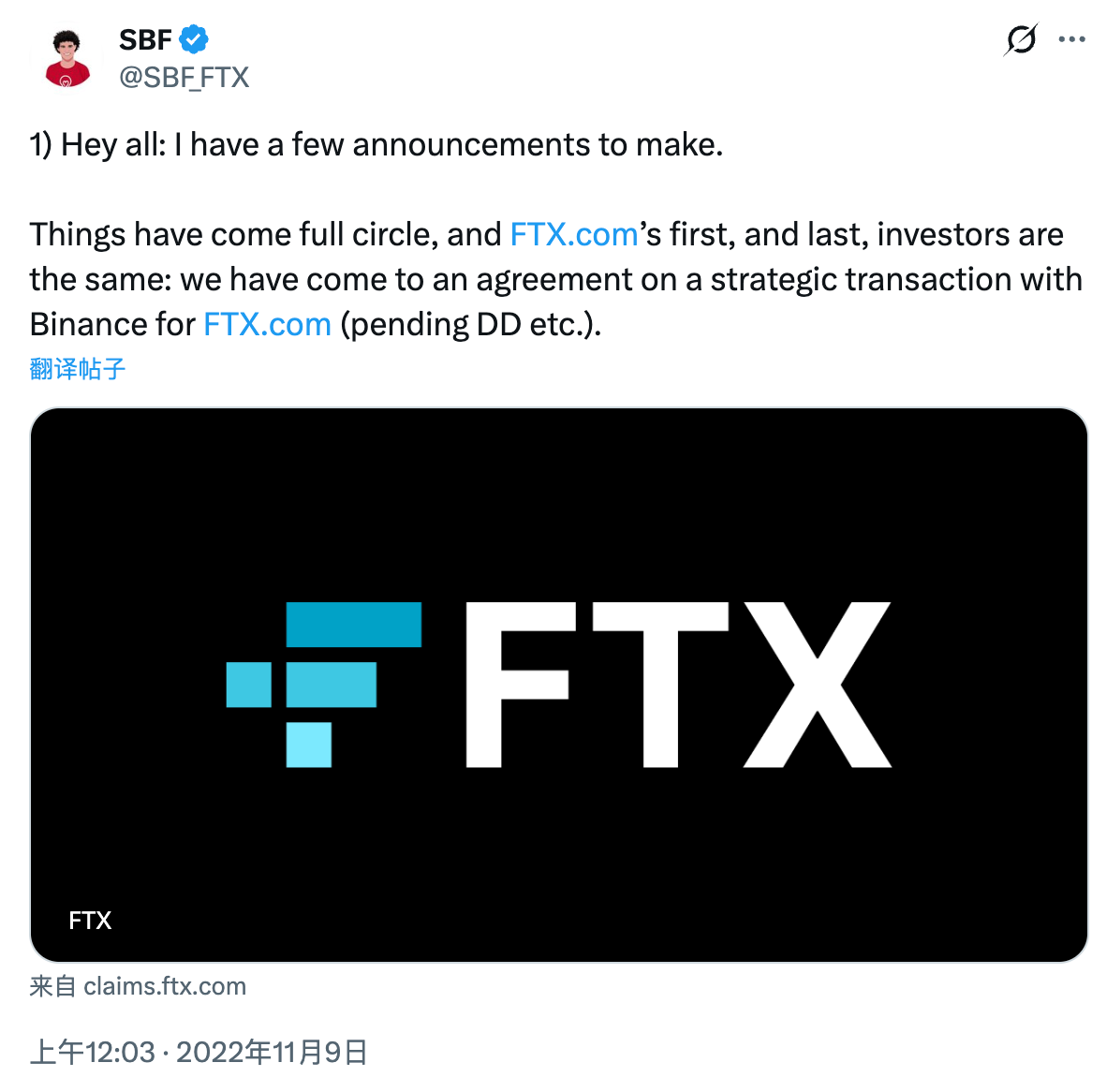
SBF: Hello everyone. I have some news to announce. Things have come full circle. FTX's first and last investors are the same group—we have reached a strategic transaction agreement with Binance (pending due diligence).
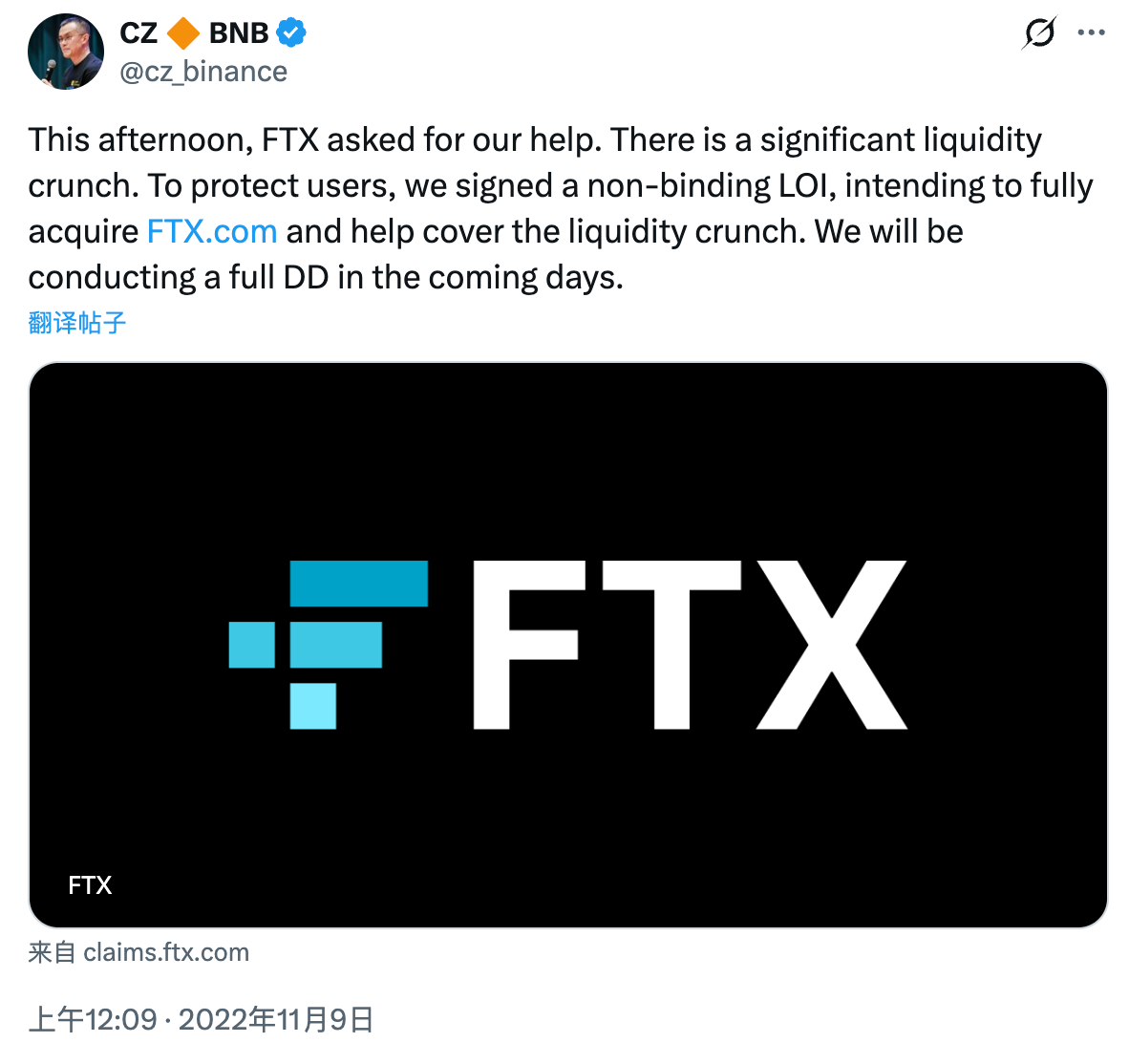
CZ: This afternoon, FTX approached us for assistance. The exchange is currently facing severe liquidity issues. To protect users, we have signed a non-binding letter of intent to fully acquire FTX and address the liquidity crisis. We will conduct comprehensive due diligence in the coming days.

However, the acquisition ultimately fell through. Just one day later, Binance officially announced the abandonment of the acquisition, citing "issues beyond our control," which became the final straw that broke FTX.

Did CZ genuinely consider acquiring FTX? Was the hastily concluded acquisition drama a sincere attempt to help or merely a ploy to gauge the opponent's "health bar"? This may forever remain a mystery. From the outcome, CZ personally defeated his biggest competitor at the time, solidifying Binance's position as the industry leader.

But no one could have predicted that a seemingly insignificant "side bet" in FTX's asset portfolio would rapidly appreciate in value over the next few years, now far exceeding the total value of the remaining assets from that unfinished acquisition.

From a "Side Bet" to the Center of AI

In April 2022 (the official announcement date, though the transaction was actually completed in 2021), FTX made its most significant investment in the AI field—leading a $580 million Series B funding round for AI startup Anthropic with a $500 million investment. FTX initially held a 13.56% equity stake, which was later diluted to 7.84% as Anthropic completed multiple rounds of funding.
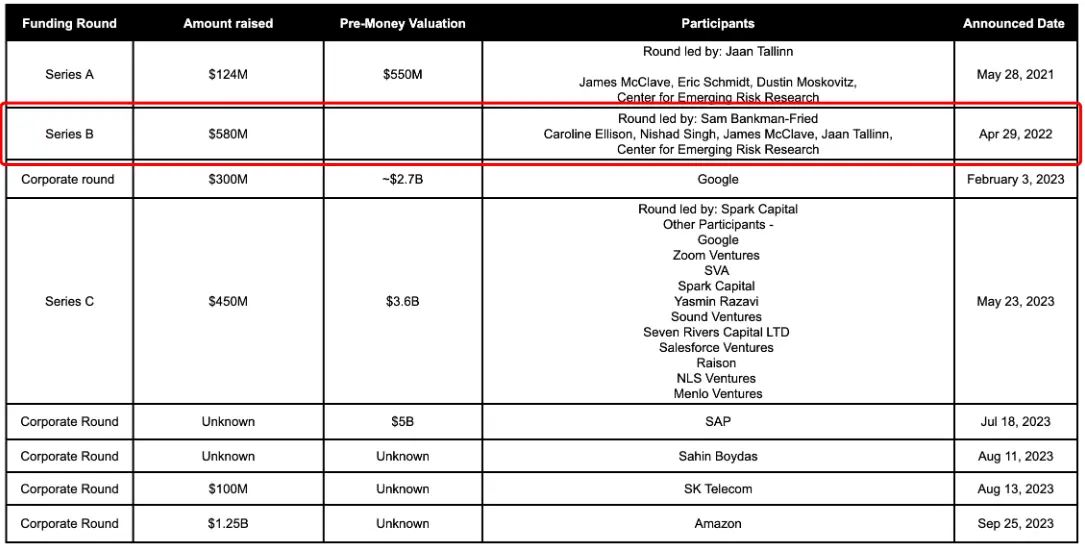
This was an era when AI's potential had not yet exploded. Just six months later (in late November 2022, the same month FTX collapsed), OpenAI's ChatGPT emerged, irreversibly ushering the world into the "Age of Exploration" for AI. Anthropic, with its Claude series of products (especially the programming-oriented Claude Code), repeatedly amazed the world, gradually becoming one of the most prominent companies in the AI era.

As Claude continued to evolve, Anthropic's valuation also climbed. Capital eagerly poured in, desperate to secure a spot on Anthropic's journey to an IPO. The latest market rumor is that Anthropic is in the final stages of another large funding round, expected to exceed $20 billion (originally planned to raise $10 billion, but investor demand far exceeded expectations, potentially doubling the final amount). The valuation could reach $350 billion, and the transaction may be completed as early as this week.

At the latest valuation of $350 billion, FTX's former equity in Anthropic would be worth approximately $27.44 billion, enough to cover the reserve shortfall that led to its bankruptcy multiple times... But history has already unfolded, and the outcome is set.

It's hard not to marvel at SBF's rare talent for venture capital (he also invested in the now-popular Cursor during its seed round), but clearly, he was not a qualified enterprise operator, especially lacking in risk control. CZ's profile is the opposite: he is an exceptional master of enterprise operations. Binance's dominance is inseparable from his多次正确的战略决策 (multiple correct strategic decisions), but CZ often describes himself as not a traditional investor solely pursuing returns—he doesn't trade cryptocurrencies and prefers to be a builder of the industry.

A Hasty Ending: This Should Have Been the Best Intersection of Crypto and AI

You might wonder, what happened to FTX's equity in Anthropic?

The outcome is straightforward. After FTX's bankruptcy, all assets, including the Anthropic equity, were handled by the FTX bankruptcy management team. In February 2024, the court approved the team's request to sell these shares. In March and June of the same year, the team sold 29.5 million shares for $884 million and 15 million shares for $450 million, respectively, totaling over $1.3 billion in sales.
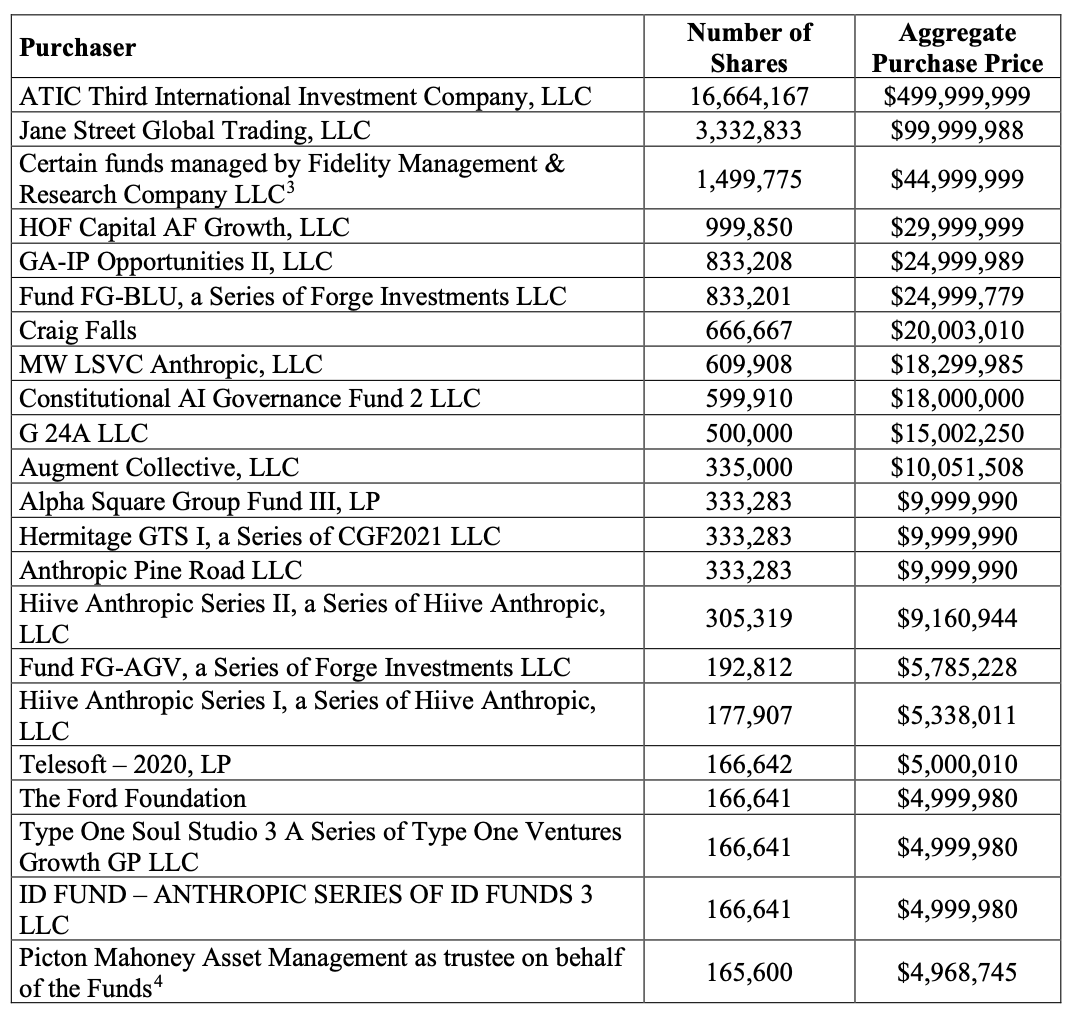
The buyers of these shares were primarily ATIC Third International Investment from Abu Dhabi and traditional financial institutions from Wall Street, such as Jane Street and Fidelity. In other words, no companies from the crypto circle got a share of the pie.

Whether these shares were deliberately sold at a low price or if there was利益输送 (benefit transfer) under the guise of bankruptcy liquidation is no longer important to the crypto industry.

This should have been the best intersection of Crypto and AI. In another timeline, whether these shares were in the hands of SBF or CZ, if leading companies in the crypto world had some influence in the development of the most successful AI company, there could have been more innovative attempts around Crypto + AI, leading to unexpected fruits.

The one slapping his thigh in regret isn't just CZ.


Twitter:https://twitter.com/BitpushNewsCN

BitPush TG Discussion Group:https://t.me/BitPushCommunity

BitPush TG Subscription: https://t.me/bitpush

Original article link:https://www.bitpush.news/articles/7610451

Связанные с этим вопросы

QWhat was the potential return on CZ's investment if he had not sold the 1500 BTC he bought in 2014?

AThe peak return would have been approximately $189 million.

QWhy did Binance ultimately abandon the acquisition of FTX in November 2022?

ABinance abandoned the acquisition because the problems at FTX were beyond their control, as stated in their official announcement.

QWhat was the value of FTX's stake in Anthropic at the time of its potential $35 billion valuation, and how does it compare to FTX's deficit?

AAt a $35 billion valuation, FTX's 7.84% stake in Anthropic was worth approximately $2.744 billion, which was more than enough to cover the reserve shortfall that led to its bankruptcy multiple times over.

QWhich companies ultimately purchased the Anthropic股权 (shares) from the FTX bankruptcy estate, and were any crypto companies involved?

AThe buyers were primarily traditional financial institutions, including ATIC Third International Investment from Abu Dhabi, and Jane Street and Fidelity from Wall Street. No crypto companies were involved in the purchase.

QWhat was the original amount FTX invested in Anthropic's Series B round, and what was their initial股权占比 (equity stake)?

AFTX invested $500 million to lead Anthropic's $580 million Series B round, initially acquiring a 13.56% equity stake.

Похожее

The AI Investment Landscape Is Being Reshaped: Beyond the 'Magnificent Seven', What Opportunities Lie in the Semiconductor Supply Chain?

AI Investment Map is Reshaping: Opportunities Beyond the 'Magnificent Seven' Since ChatGPT ignited the AI wave, investment initially focused on the "Magnificent Seven" tech giants dominating cloud infrastructure. However, the rise of DeepSeek and debates on AI capital expenditure effectiveness are shifting this dynamic. Investors now recognize opportunities deeper in the supply chain—the companies providing the essential "picks and shovels." Early concerns about an AI investment "arms race" and potential low returns were partly alleviated by strong Q1 earnings from cloud providers, validating robust compute demand. This has highlighted a more certain investment thesis: regardless of which AI applications ultimately win, massive capital expenditure will first fuel demand for semiconductors and related components. This "pick-and-shovel" logic has driven semiconductor ETFs to record highs. Key beneficiaries include: * **Memory Chipmakers (e.g., SK Hynix, Samsung, Micron)**: High Bandwidth Memory (HBM) is a critical bottleneck for AI training. * **Photonics Companies**: Crucial for high-speed data transfer within AI data centers. * **The Broader "AI-11" Semiconductor Ecosystem**: This encompasses foundries & lithography (TSMC, ASML), logic & custom chips (AMD, Broadcom, Intel, Marvell), and enterprise storage (SanDisk, Western Digital). Every dollar of AI infrastructure spending flows through this chain. While the "Magnificent Seven" remain dominant in market size, their earnings growth premium over the rest of the S&P 500 ("S&P 493") is narrowing. Market attention and marginal investment are shifting towards the expanding semiconductor supply chain. The investment narrative is evolving from "betting on the ultimate AI winner" to "investing in the certainty of the infrastructure build-out." Understanding this shift from the demand side to the supply side is key to identifying future AI investment opportunities.

marsbit3 мин. назад

The AI Investment Landscape Is Being Reshaped: Beyond the 'Magnificent Seven', What Opportunities Lie in the Semiconductor Supply Chain?

marsbit3 мин. назад

600 People, $66 Billion: The First Major Cash-Out in the Era of Large Models

The first systematic "big cash-out" of the AI era occurred in October 2025, when over 600 current and former OpenAI employees sold a total of $6.6 billion in shares via a secondary market. Approximately 75 individuals maxed out a $30 million per-person sale limit, while around 525 others cashed out an average of $8.3 million each. This event, exceeding the scale of any 2024 US IPO, functioned as a "shadow IPO." It marked a radical departure from the traditional Silicon Valley path of waiting for a public listing, instead allowing employees to convert equity to cash after just two years of tenure—a direct retention tool in a fiercely competitive talent market where rivals like Meta have offered packages worth hundreds of millions. This massive liquidity event presents a dual-edged sword for OpenAI. While it helps retain talent, it also risks triggering a brain drain as newly wealthy employees may depart. Furthermore, it creates a dilemma for those who sold: they forfeited potential future gains as the company's valuation soared from $400 billion to $852 billion within months. In stark contrast, employees at rival Anthropic demonstrated greater reluctance to sell during their own secondary offering. The financial narratives of the two labs also diverge sharply. OpenAI, while achieving over $20 billion in annualized revenue by 2025, faces massive projected losses (up to $14 billion in 2026), a long path to cash flow positivity, and significant revenue-sharing payments to Microsoft. Anthropic reports rapid revenue growth, improving gross margins, and a faster path to profitability. OpenAI's trajectory is thus balanced precariously between skyrocketing valuation based on funding narratives and the pressures of sustained financial losses post-cash-out. The event underscores that the AI race has evolved into a capital and human experiment, where immense wealth crystallizes the complex calculations of greed, fear, and ambition within the industry.

marsbit23 мин. назад

600 People, $66 Billion: The First Major Cash-Out in the Era of Large Models

marsbit23 мин. назад

NVIDIA Begins Adding Soap to the Bubble

NVIDIA is taking on a dual role: not just as a leading chip supplier, but as a massive capital allocator across the entire AI supply chain. In 2026, the company has committed over $40 billion in investments within five months, targeting everything from optical fiber manufacturing and data center operations to foundational AI model development. This investment spree, described as a systematic "sprinkler" approach, primarily funds companies that are major buyers of NVIDIA's own GPUs. Critics, including analysts from Goldman Sachs, label this a "circular revenue" loop—comparable to a supplier financing a customer to buy more of its products. A prominent example is NVIDIA's investment in OpenAI, which is expected to generate around $13 billion in revenue for NVIDIA, much of which may be reinvested back into OpenAI. While CEO Jensen Huang dismisses the "circular financing" critique as "absurd," arguing the investments are confidence votes in long-term generational shifts, some analysts express discomfort. They note that while investments in critical supply chain components like optics are strategically sound, funding new cloud providers like CoreWeave feels like "pre-paying for your own GPUs." The strategy carries significant risks. If the AI investment cycle turns, the market may question how much demand is genuine versus artificially sustained by NVIDIA's own balance sheet. Despite posting record-breaking earnings—$215.9 billion in annual revenue and $120 billion in net profit for FY2026—NVIDIA's stock fell after its report, signaling that "beating expectations" may no longer be enough to assure investors about the duration of the AI spending boom. The article concludes that while a bubble isn't necessarily a fraud, NVIDIA's actions resemble adding soap to a bubble—making it appear more robust and durable. This creates a complex scenario requiring extreme冷静 from investors to distinguish between real structural growth and financial engineering.

marsbit40 мин. назад

NVIDIA Begins Adding Soap to the Bubble

marsbit40 мин. назад

Short Positions Have Been Squeezed Out: Will the Next Leg of the U.S. Stock AI Rally Continue in Seoul?

"Short Squeeze Exhausted: Will the Next Leg of the AI Rally Continue in Seoul?" A Nomura report suggests the US AI stock rally, which saw the S&P 500 rise ~16.6% in 28 days largely driven by 10 key stocks, may be pausing. The fuel from short covering, CTA fund positioning, and volatility-control strategies is nearing its limit. For the rally to continue, new momentum from retail and sentiment-driven FOMO (Fear Of Missing Out) is needed. South Korea's market provided a potential answer on the very day the report was published. The KOSPI index surged 4.32%, triggering a buy-side circuit breaker, led by massive gains in chip giants SK Hynix (+11.98%) and Samsung. This surge is characterized by retail "hynix FOMO" and overseas funds precisely buying into AI themes via chip-focused ETFs, shifting from broad Korean market ETFs. The Korean rally is a high-beta extension of the US AI capital expenditure story, as major cloud providers plan massive infrastructure spending, directly benefiting memory chip leaders. However, this linkage also implies vulnerability. The sustainability of this next leg depends on whether US tech stocks correct, the trajectory of US inflation (with upcoming CPI data key), and geopolitical tensions around the Strait of Hormuz. Seoul has emerged as the new epicenter of the AI trade, but its fate remains tied to these broader macro and market dynamics.

marsbit44 мин. назад

Short Positions Have Been Squeezed Out: Will the Next Leg of the U.S. Stock AI Rally Continue in Seoul?

marsbit44 мин. назад

Торговля

Спот
Фьючерсы

Популярные статьи

Как купить S

Добро пожаловать на HTX.com! Мы сделали приобретение Sonic (S) простым и удобным. Следуйте нашему пошаговому руководству и отправляйтесь в свое крипто-путешествие.Шаг 1: Создайте аккаунт на HTXИспользуйте свой адрес электронной почты или номер телефона, чтобы зарегистрироваться и бесплатно создать аккаунт на HTX. Пройдите удобную регистрацию и откройте для себя весь функционал.Создать аккаунтШаг 2: Перейдите в Купить криптовалюту и выберите свой способ оплатыКредитная/Дебетовая Карта: Используйте свою карту Visa или Mastercard для мгновенной покупки Sonic (S).Баланс: Используйте средства с баланса вашего аккаунта HTX для простой торговли.Третьи Лица: Мы добавили популярные способы оплаты, такие как Google Pay и Apple Pay, для повышения удобства.P2P: Торгуйте напрямую с другими пользователями на HTX.Внебиржевая Торговля (OTC): Мы предлагаем индивидуальные услуги и конкурентоспособные обменные курсы для трейдеров.Шаг 3: Хранение Sonic (S)После приобретения вами Sonic (S) храните их в своем аккаунте на HTX. В качестве альтернативы вы можете отправить их куда-либо с помощью перевода в блокчейне или использовать для торговли с другими криптовалютами.Шаг 4: Торговля Sonic (S)С легкостью торгуйте Sonic (S) на спотовом рынке HTX. Просто зайдите в свой аккаунт, выберите торговую пару, совершайте сделки и следите за ними в режиме реального времени. Мы предлагаем удобный интерфейс как для начинающих, так и для опытных трейдеров.

1.3k просмотров всегоОпубликовано 2025.01.15Обновлено 2025.03.21

Как купить S

Sonic: Обновления под руководством Андре Кронье – новая звезда Layer-1 на фоне спада рынка

Он решает проблемы масштабируемости, совместимости между блокчейнами и стимулов для разработчиков с помощью технологических инноваций.

2.2k просмотров всегоОпубликовано 2025.04.09Обновлено 2025.04.09

Sonic: Обновления под руководством Андре Кронье – новая звезда Layer-1 на фоне спада рынка

HTX Learn: Пройдите обучение по "Sonic" и разделите 1000 USDT

HTX Learn — ваш проводник в мир перспективных проектов, и мы запускаем специальное мероприятие "Учитесь и Зарабатывайте", посвящённое этим проектам. Наше новое направление .

1.8k просмотров всегоОпубликовано 2025.04.10Обновлено 2025.04.10

HTX Learn: Пройдите обучение по "Sonic" и разделите 1000 USDT

Обсуждения

Добро пожаловать в Сообщество HTX. Здесь вы сможете быть в курсе последних новостей о развитии платформы и получить доступ к профессиональной аналитической информации о рынке. Мнения пользователей о цене на S (S) представлены ниже.

活动图片