Crypto Titans Revolt Over California’s 5% Wealth Tax Proposal

bitcoinistОпубликовано 2025-12-29Обновлено 2025-12-29

Введение

California's proposed one-time 5% wealth tax on net worth exceeding $1 billion, including unrealized gains, is facing strong opposition from crypto and tech leaders. They argue it could drive billionaires and their investments out of the state, force asset sales, and harm the local economy. Supporters claim it would generate up to $100 billion for public services without affecting middle-income families. The tax would apply to paper assets like stocks and crypto, with payment options over five years. Critics highlight challenges in valuation, collection, and potential tax avoidance.

Leaders in crypto and tech are pushing back hard against a proposed one-time 5% wealth tax in California. The measure would hit net worth above $1 billion and would tax paper gains—assets counted even if they haven’t been sold.

Supporters say the money would pay for health programs and other public services. Based on official estimates, the plan could raise up to ~$100 billion from roughly 200 very wealthy residents.

What The Tax Would Do

According to the initiative’s fiscal outline, the levy would apply to net worth on January 1, 2026, and it targets unrealized gains — stocks, company stakes, and other holdings valued on paper.

Taxpayers could pay in one lump sum or stretch payments over five years, with interest if they choose the latter. For example, someone with $20 billion in assets would face about $1 billion in liability under a 5% rule. A resident with more than $200 billion could see a bill exceeding $10 billion.

Industry Pushback And Warnings

Based on reports, several high-profile crypto firms and founders say the measure would drive people and money out of California. Executives named in coverage include Hunter Horsley, Jesse Powell, Chamath Palihapitiya, Nic Carter, Alexis Ohanian, and other tech figures.

Their message is simple: large, sudden tax bills on paper wealth could force owners to sell stakes or move to other states, which they argue would cost jobs and investment in the local economy. Some say the rule would be especially tough on founders whose wealth is tied up in startups.

Image: Unsplash

Supporters offer a different view. They argue the charge would target a small group—high net worth individuals—and provide funds for health care, education, and food programs without increasing taxes for middle-income families.

Representative Ro Khanna has been mentioned as a backer who sees the revenue as a way to strengthen public services.

Numbers And Unknowns

The math is clear in one sense: 5% of very large sums adds up quickly. Estimates put potential revenue as high as ~$100 billion. But collection is less certain.

Total crypto market cap at $3 trillion on the daily chart: TradingView

Critics point to past cases where wealth taxes produced less money than forecast because some taxpayers relocated or shifted assets offshore. Valuing private companies and volatile holdings like crypto presents practical challenges, and that could make administration complex.

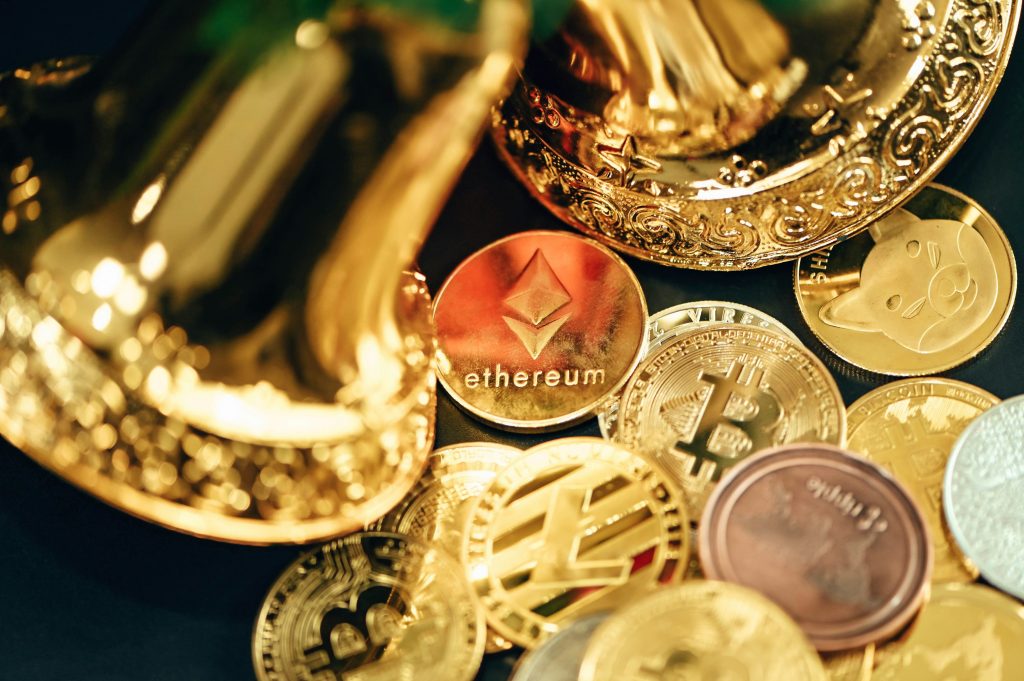
Featured image from Pexels, chart from TradingView

Связанные с этим вопросы

QWhat is the proposed wealth tax in California and who would it affect?

AThe proposed wealth tax in California is a one-time 5% levy on net worth exceeding $1 billion, targeting unrealized gains on assets like stocks and company stakes, even if they haven't been sold. It would affect approximately 200 of the state's wealthiest residents.

QWhat is the primary argument made by crypto and tech leaders against the tax?

ACrypto and tech leaders argue that the tax on unrealized gains would drive billionaires, their spending, philanthropy, and the jobs they create out of California, ultimately harming the state's economy.

QHow much revenue is the tax proposal estimated to generate, according to the article?

ABased on official estimates, the proposed wealth tax is estimated to raise up to approximately $100 billion in revenue.

QWhat practical challenges mentioned in the article could complicate the administration of this tax?

AThe article states that challenges include the difficulty of accurately valuing private companies and volatile holdings like cryptocurrency, as well as the risk of taxpayers relocating or shifting assets offshore to avoid the tax.

QAccording to its supporters, what would the revenue from this tax be used for?

ASupporters of the tax, such as Representative Ro Khanna, argue that the revenue would be used to fund public services like health care, education, and food programs without raising taxes on middle-income families.

Похожее

What Happens to Ethereum Developer Tools After the Grants Run Out?

On February 27th, the Ethereum Foundation (EF) announced Project Odin, a structured sustainability support program designed for a select group of strategic, previously grant-funded teams. Unlike a standard grant, Odin offers a long-term advisory mechanism focused on helping these teams establish credible, sustainable paths within a two-year framework, thereby reducing long-term dependence on single funding sources. The program addresses a critical post-grant challenge: how essential public goods, especially major developer tools, can achieve financial sustainability beyond initial funding. While grants from EF and programs like Gitcoin or RetroPGF remain vital for startups and research, they often fall short for mature, widely-used infrastructure. Tools like compilers, languages, and network stacks are deeply embedded but struggle with monetization, trapped between being too foundational to lose and too public to generate natural revenue. Project Odin provides teams with a dedicated Strategic Advisor to guide them through a three-phase process: 1) analyzing current funding and realistic options, 2) validating potential paths with stakeholders, and 3) executing plans, which may include crafting support contracts, service agreements, or other recurring revenue models. The first pilot participant is Vyper, a critical smart contract language for the EVM, highlighting the need for sustainable models for core infrastructure. The initiative reframes the public goods conversation from "who should be funded" to "how do already-proven teams avoid perpetual funding crises?" It encourages ecosystem participants—protocols and projects that depend on these tools—to view sustainable support not just as charity, but as essential risk management for their own operational supply chains.

marsbit15 мин. назад

What Happens to Ethereum Developer Tools After the Grants Run Out?

marsbit15 мин. назад

MARA Reports Q1 Revenue Below Expectations, Net Loss of $1.3 Billion, Stock Plunges After Hours

Bitcoin mining firm MARA Holdings reported disappointing Q1 2024 results, causing its stock to erase all daily gains and fall 3.44% in after-hours trading. Revenue dropped 18% year-over-year to $174.6 million, missing Wall Street estimates of $192.7 million. The company posted a net loss of $1.3 billion, a significant increase from a $533.4 million loss a year ago, primarily driven by unrealized losses on its holdings of 38,689 Bitcoin, which depreciated in value during the quarter. MARA also sold over 15,100 BTC in late March to repurchase debt at a discount. The broader mining environment remains challenging due to a 35% decline in Bitcoin's price from its all-time high and a nearly 30% increase in mining difficulty over the past year. MARA's market cap ranking among U.S. miners has slipped to seventh. Critically, the company announced a strategic pivot away from Bitcoin mining expansion. It stated it has no plans to purchase new mining equipment and is fully transitioning toward AI data centers. Its strategy involves retrofitting existing mining sites for AI and high-performance computing (HPC) and leveraging its recent $1.5 billion acquisition of Long Ridge Energy & Power, a gas-fired power plant and data center. This infrastructure could eventually support 600 MW of AI compute capacity, allowing MARA to redeploy up to 90% of its non-custodial mining power for AI and IT workloads.

marsbit16 мин. назад

MARA Reports Q1 Revenue Below Expectations, Net Loss of $1.3 Billion, Stock Plunges After Hours

marsbit16 мин. назад

The AI Investment Landscape Is Being Reshaped: Beyond the 'Magnificent Seven', What Opportunities Lie in the Semiconductor Supply Chain?

AI Investment Map is Reshaping: Opportunities Beyond the 'Magnificent Seven' Since ChatGPT ignited the AI wave, investment initially focused on the "Magnificent Seven" tech giants dominating cloud infrastructure. However, the rise of DeepSeek and debates on AI capital expenditure effectiveness are shifting this dynamic. Investors now recognize opportunities deeper in the supply chain—the companies providing the essential "picks and shovels." Early concerns about an AI investment "arms race" and potential low returns were partly alleviated by strong Q1 earnings from cloud providers, validating robust compute demand. This has highlighted a more certain investment thesis: regardless of which AI applications ultimately win, massive capital expenditure will first fuel demand for semiconductors and related components. This "pick-and-shovel" logic has driven semiconductor ETFs to record highs. Key beneficiaries include: * **Memory Chipmakers (e.g., SK Hynix, Samsung, Micron)**: High Bandwidth Memory (HBM) is a critical bottleneck for AI training. * **Photonics Companies**: Crucial for high-speed data transfer within AI data centers. * **The Broader "AI-11" Semiconductor Ecosystem**: This encompasses foundries & lithography (TSMC, ASML), logic & custom chips (AMD, Broadcom, Intel, Marvell), and enterprise storage (SanDisk, Western Digital). Every dollar of AI infrastructure spending flows through this chain. While the "Magnificent Seven" remain dominant in market size, their earnings growth premium over the rest of the S&P 500 ("S&P 493") is narrowing. Market attention and marginal investment are shifting towards the expanding semiconductor supply chain. The investment narrative is evolving from "betting on the ultimate AI winner" to "investing in the certainty of the infrastructure build-out." Understanding this shift from the demand side to the supply side is key to identifying future AI investment opportunities.

marsbit45 мин. назад

The AI Investment Landscape Is Being Reshaped: Beyond the 'Magnificent Seven', What Opportunities Lie in the Semiconductor Supply Chain?

marsbit45 мин. назад

Торговля

Спот
Фьючерсы

Популярные статьи

Как купить S

Добро пожаловать на HTX.com! Мы сделали приобретение Sonic (S) простым и удобным. Следуйте нашему пошаговому руководству и отправляйтесь в свое крипто-путешествие.Шаг 1: Создайте аккаунт на HTXИспользуйте свой адрес электронной почты или номер телефона, чтобы зарегистрироваться и бесплатно создать аккаунт на HTX. Пройдите удобную регистрацию и откройте для себя весь функционал.Создать аккаунтШаг 2: Перейдите в Купить криптовалюту и выберите свой способ оплатыКредитная/Дебетовая Карта: Используйте свою карту Visa или Mastercard для мгновенной покупки Sonic (S).Баланс: Используйте средства с баланса вашего аккаунта HTX для простой торговли.Третьи Лица: Мы добавили популярные способы оплаты, такие как Google Pay и Apple Pay, для повышения удобства.P2P: Торгуйте напрямую с другими пользователями на HTX.Внебиржевая Торговля (OTC): Мы предлагаем индивидуальные услуги и конкурентоспособные обменные курсы для трейдеров.Шаг 3: Хранение Sonic (S)После приобретения вами Sonic (S) храните их в своем аккаунте на HTX. В качестве альтернативы вы можете отправить их куда-либо с помощью перевода в блокчейне или использовать для торговли с другими криптовалютами.Шаг 4: Торговля Sonic (S)С легкостью торгуйте Sonic (S) на спотовом рынке HTX. Просто зайдите в свой аккаунт, выберите торговую пару, совершайте сделки и следите за ними в режиме реального времени. Мы предлагаем удобный интерфейс как для начинающих, так и для опытных трейдеров.

1.3k просмотров всегоОпубликовано 2025.01.15Обновлено 2025.03.21

Как купить S

Sonic: Обновления под руководством Андре Кронье – новая звезда Layer-1 на фоне спада рынка

Он решает проблемы масштабируемости, совместимости между блокчейнами и стимулов для разработчиков с помощью технологических инноваций.

2.2k просмотров всегоОпубликовано 2025.04.09Обновлено 2025.04.09

Sonic: Обновления под руководством Андре Кронье – новая звезда Layer-1 на фоне спада рынка

HTX Learn: Пройдите обучение по "Sonic" и разделите 1000 USDT

HTX Learn — ваш проводник в мир перспективных проектов, и мы запускаем специальное мероприятие "Учитесь и Зарабатывайте", посвящённое этим проектам. Наше новое направление .

1.8k просмотров всегоОпубликовано 2025.04.10Обновлено 2025.04.10

HTX Learn: Пройдите обучение по "Sonic" и разделите 1000 USDT

Обсуждения

Добро пожаловать в Сообщество HTX. Здесь вы сможете быть в курсе последних новостей о развитии платформы и получить доступ к профессиональной аналитической информации о рынке. Мнения пользователей о цене на S (S) представлены ниже.

活动图片