Crypto Gains State-Level Support As South Carolina Bans Federal CBDCs

bitcoinistОпубликовано 2026-05-21Обновлено 2026-05-21

Введение

South Carolina has joined over a dozen U.S. states in enacting legislation to protect cryptocurrency rights. Governor Henry McMaster signed Senate Bill 163, which passed with near-unanimous support. The law prohibits state agencies from accepting or requiring payments in a Federal Reserve-issued central bank digital currency (CBDC) or participating in related pilot programs, though privately issued stablecoins like USDC remain permitted. Beyond the CBDC ban, the legislation establishes a broad framework for digital assets. It protects the right of individuals and businesses to accept cryptocurrencies as payment, formally recognizes self-hosted wallets, and prevents discriminatory taxation on digital asset transactions. The law also provides legal protections for crypto mining operations against unfair local regulations and exempts certain activities like node operation and staking services from money transmitter licensing. It includes consumer protection measures, allowing the state Attorney General to prosecute fraud in staking or mining services.

South Carolina is now one of more than a dozen US states that have passed laws protecting cryptocurrency rights — and it did so with almost no pushback.

Governor Henry McMaster signed Senate Bill 163 on May 19, adding it to a growing stack of state-level digital asset laws that have quietly moved through Republican-controlled legislatures across the country.

A Near-Unanimous Vote That Signals Shifting Ground

The bill cleared the South Carolina Senate 38-1, a margin that says more than the law itself. Filed in January 2025, it spent 17 months working through the legislative process — passing the Senate in May of that year, getting reconciled with House amendments in April 2026, and landing on the governor’s desk this month.

Senators Daniel Verdin and Matthew Leber sponsored the bill. It now adds a new Chapter 47 to Title 34 of the South Carolina Code of Laws, laying out one of the more detailed state-level crypto frameworks in the country.

The law prohibits state government agencies from accepting or requiring payments in a central bank digital currency. It also bars those agencies from joining any Federal Reserve CBDC pilot or testing program.

But the definition matters: the bill describes a CBDC as a digital currency issued directly by the US Federal Reserve or a federal agency. Privately issued stablecoins backed by legal tender or government treasuries — such as USDC — fall outside that definition and remain permitted under state law.

BTCUSD now trading at $77,467. Chart: TradingView

What The Law Actually Covers

Beyond the CBDC ban, S.163 covers a wide range of crypto activity. Individuals and businesses are protected from being blocked from accepting digital assets as payment for legal goods and services.

Self-hosted and hardware wallets are formally recognized, allowing users to hold their own assets without government interference. State and local governments are also barred from taxing digital asset payments at higher rates than other payment types.

The law’s definition of digital assets is broad, covering cryptocurrencies, stablecoins, fungible tokens, non-fungible tokens, and other digital-only assets that carry economic, proprietary, or access rights.

Crypto mining operations also get legal cover. Local governments cannot impose unfair zoning rules, excessive noise restrictions, or regulations that single out mining businesses.

Node operations, blockchain software development, staking services, and mining activities are exempt from money transmitter license requirements under certain conditions.

Staking-as-a-service and mining-as-a-service providers will not automatically be classified as securities issuers under state law.

At the same time, the South Carolina Attorney General retains authority to prosecute fraud involving anyone who falsely claims to offer those services — a consumer protection measure built directly into the law.

Featured image from Pexels, chart from TradingView

Связанные с этим вопросы

QWhat is the main purpose of the South Carolina Senate Bill 163, recently signed by Governor Henry McMaster?

AThe main purpose of South Carolina Senate Bill 163 is to establish a detailed state-level framework for digital assets. Its key provisions include prohibiting state government agencies from accepting or requiring payments in a Federal Reserve central bank digital currency (CBDC), banning state agencies from participating in any Federal Reserve CBDC pilot programs, and protecting various cryptocurrency-related rights and activities for individuals and businesses.

QHow does the South Carolina law define a Central Bank Digital Currency (CBDC), and what does it exclude from this definition?

AThe South Carolina law defines a Central Bank Digital Currency (CBDC) as a digital currency that is issued directly by the U.S. Federal Reserve or a federal agency. It specifically excludes privately issued stablecoins that are backed by legal tender or government treasuries, such as USDC, from this definition. These privately issued stablecoins remain permitted under the state law.

QWhat specific protections does the law provide for individuals and businesses regarding cryptocurrency?

AThe law provides several protections for individuals and businesses. It prohibits state and local governments from blocking them from accepting digital assets as payment for legal goods and services. It formally recognizes self-hosted and hardware wallets, allowing users to hold their assets without government interference. It also bars governments from taxing digital asset payments at a higher rate than other forms of payment.

QWhat legal protections does the law offer to crypto mining operations and related activities in South Carolina?

AThe law offers legal protections to crypto mining operations by prohibiting local governments from imposing unfair zoning rules, excessive noise restrictions, or regulations that specifically target mining businesses. Furthermore, it exempts node operations, blockchain software development, staking services, and mining activities from money transmitter license requirements under certain conditions. Providers of staking-as-a-service and mining-as-a-service are also not automatically classified as securities issuers under state law.

QWho sponsored the bill, and how did it perform in the South Carolina Senate vote?

AThe bill was sponsored by Senators Daniel Verdin and Matthew Leber. It passed the South Carolina Senate with an overwhelmingly supportive margin of 38 votes to 1, signaling strong bipartisan or broad legislative support for its provisions.

Похожее

Claude Code Introduces Dynamic Workflows: Enabling AI to Form Teams and Collaborate

Claude Code introduces dynamic workflows, enabling AI to coordinate teams of specialized agents for complex tasks. This transforms Claude from a code assistant into a programmable workbench. Workflows address key limitations of single-agent systems: agentic laziness (premature task completion), self-preferential bias (favoring own outputs), and goal drift (losing sight of original objectives). The system allows Claude to dynamically create execution frameworks using JavaScript. It can split tasks, dispatch parallel agents for isolated work (e.g., in separate worktrees), implement adversarial validation, run tournaments, and synthesize results. This multi-agent approach is valuable for tasks requiring deep research, factual verification, code migration, root cause analysis, large-scale triage, and qualitative sorting. Key patterns include: classify-and-route, fan-out-and-synthesize, adversarial verification, generate-and-filter, tournaments, and loop-until-done. While token usage is higher, workflows excel where tasks resemble programming—needing problem decomposition, isolated context, hypothesis testing, and handling many details. They extend Claude Code's utility beyond technical work to areas like business plan review, resume screening, and naming brainstorm. The feature is not a universal solution but points to a future where AI tool competitiveness depends on organizing reliable, reusable, and auditable execution flows for complex goals.

marsbit17 мин. назад

Claude Code Introduces Dynamic Workflows: Enabling AI to Form Teams and Collaborate

marsbit17 мин. назад

Hyperliquid, Wall Street's 24/7 Trading Convenience Store

Hyperliquid: The 24/7 Trading "Convenience Store" for Wall Street Hyperliquid, a decentralized cryptocurrency exchange, has become a go-to platform for Wall Street traders seeking to trade around the clock, especially during traditional market closures. Founded by Jeff Yan, a former quantitative trader, after the FTX collapse, the platform emphasizes user self-custody of assets. It offers a wide range of perpetual contracts—leveraged derivatives with no expiry—on assets from Bitcoin and crude oil to the S&P 500 and even pre-IPO companies like SpaceX. A notable example involves a hedge fund trader who capitalized on geopolitical news over a weekend, securing a 243% return on oil derivatives before markets reopened. The platform, run by just 11 employees, generated approximately $800 million in revenue last year, and its native token HYPE has seen significant growth. Its rise highlights the merging of traditional finance and crypto. While U.S. users are currently restricted, recent CFTC rule changes could open access. The platform is known for its transparency, having processed $10 billion in liquidations during a market crash while competitors faltered. Regulators warn of the high risks and complexity of perpetual contracts for retail investors. Key to its appeal is a strong community culture, direct engagement with founders, and a simple interface. Despite rules against VPN use, it attracts global users with its permissionless approach. Hyperliquid plans to expand into prediction markets and options, aiming to eventually host all financial activity.

marsbit17 мин. назад

Hyperliquid, Wall Street's 24/7 Trading Convenience Store

marsbit17 мин. назад

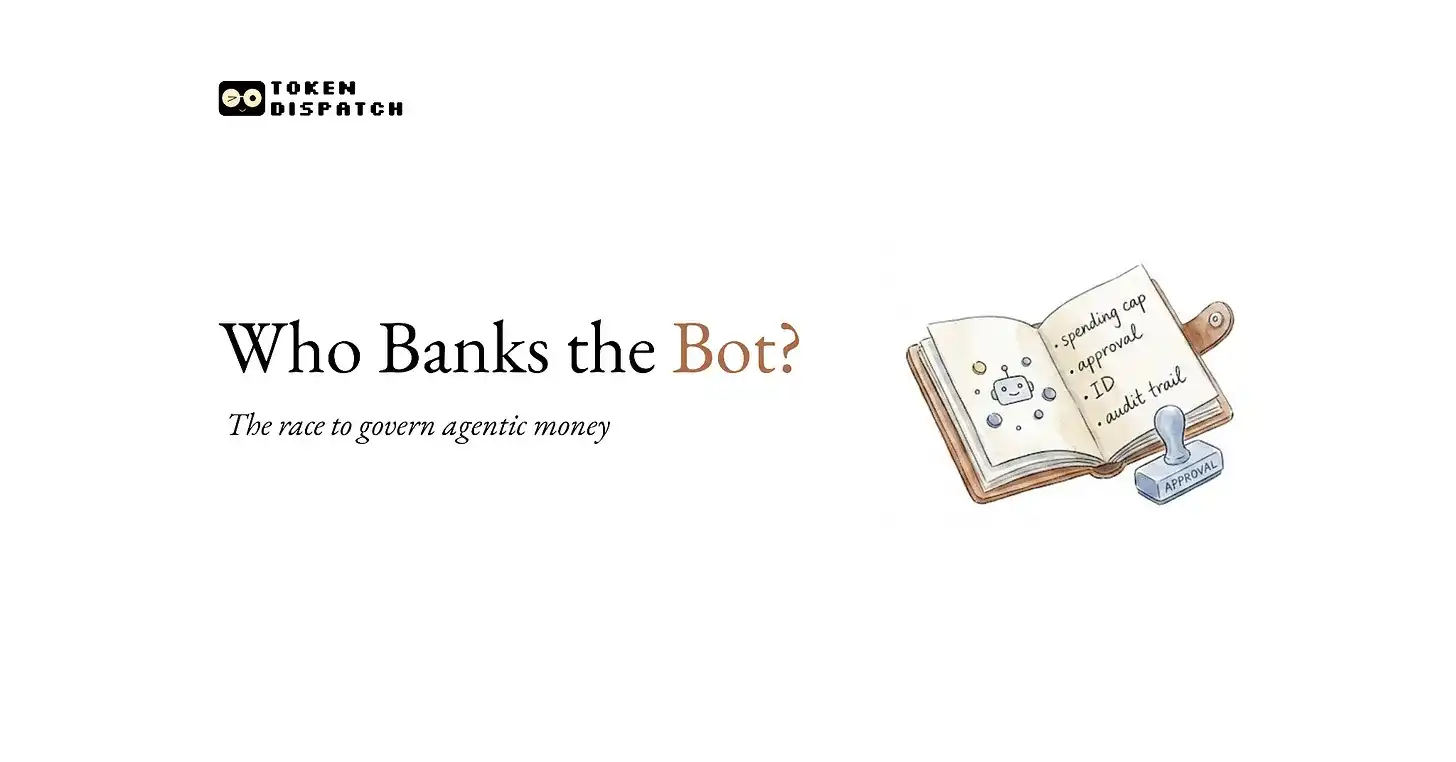
Who Funds the Agents?

**Summary: Who Funds AI Agents?** OpenAI recently shut down a feature allowing AI agents to shop for users, highlighting the challenge of creating a secure and regulated environment for agent-driven transactions. While payment infrastructure exists, a crucial governance layer—defining spending limits, fraud detection, tax handling, and return policies—is largely missing. The potential is enormous: AI agents already processed $73M across 176M transactions last year, with McKinsey forecasting this could grow to $3-5T in global consumer commerce by 2030. The core competition isn't just about processing payments, which can be very cheap (especially with crypto-based settlement), but about controlling the rules that govern agent spending. Key players like Stripe and Coinbase are racing to dominate this governance layer. Stripe's acquisition of wallet provider Privy allows it to set spending policies, identity checks, and human-in-the-loop approvals directly at the wallet level. Similarly, Coinbase's stack, including its x402 protocol and AgentKit, embeds governance rules. This vertical integration across settlement, wallet, and governance layers is becoming the dominant strategy. Control over the governance layer is where significant future value lies. If agents handle trillions in transactions, even a small fee for managing compliance, fraud prevention, and policy enforcement could generate billions in annual revenue. The companies that successfully integrate across the payment stack will capture value from idle agent balances, transaction fees, and governance services, positioning themselves as the foundational banks of the AI agent economy.

marsbit44 мин. назад

Who Funds the Agents?

marsbit44 мин. назад

Торговля

Спот
Фьючерсы
活动图片