Crypto Extortion Hits Strait Of Hormuz As Scammers Exploit Shipping Crisis

bitcoinistОпубликовано 2026-04-21Обновлено 2026-04-21

Введение

An emerging crypto extortion scam is targeting shipping companies with vessels stranded near the Strait of Hormuz, according to maritime risk firm Marisks. Criminals posing as Iranian security officials are sending fraudulent messages offering safe passage in exchange for transit fees paid in Bitcoin or Tether. The scam exploits desperation amid the ongoing regional conflict, which has severely restricted movement through the critical waterway. Victims are instructed to submit documents and pay a cryptocurrency fee to secure transit. However, the messages are not from Iranian authorities. Paying could not only result in financial loss but also potentially violate international sanctions, as any crypto transfer linked to Iranian entities may be considered material support. Legal risks remain even if companies are defrauded. The scheme appears to capitalize on earlier reports that Iran was considering a real crypto-based toll system.

At least one vessel that came under fire while trying to leave the Strait of Hormuz may have been acting on fraudulent instructions — directions that came not from Iranian officials, but from criminals posing as them.

Maritime risk firm Marisks flagged the possibility in a warning issued Monday, though it stopped short of confirming the link.

The warning describes a scam targeting ship owners whose vessels are stuck west of the strait. Unknown groups have been sending messages to these companies, claiming to represent Iranian security services and offering safe passage in exchange for transit fees paid in Bitcoin or Tether (USDT).

Image: Pension Awareness

Fake Officials, Real Consequences

Marisks was direct: the messages are fraudulent. They do not come from Iranian authorities, the firm said.

Tehran has not publicly addressed the situation.

The scam follows a pattern designed to look credible. Recipients are told to submit documents for review. Once verified, they are assigned a fee in cryptocurrency. Pay it, the messages say, and safe transit will be arranged at an agreed time.

It is a structured process — one built to look official enough that desperate ship owners might believe it.

Bitcoin is currently trading at $76,278. Chart: TradingView

The timing is no accident. The Strait of Hormuz has been largely closed since conflict escalated in the Middle East. Before hostilities, the waterway carried roughly 20% of the world’s oil and liquefied natural gas.

Ships have been stranded for days, some under threat of armed intervention. That pressure creates exactly the kind of desperation scammers rely on.

Reports earlier this month indicated that Iran itself had been weighing a real Bitcoin-denominated toll on vessels passing through the strait — charging around $1 per barrel for loaded tankers while letting empty ships through free.

The scam appears to have grown directly out of that reporting, borrowing its credibility from a policy that was already in the news.
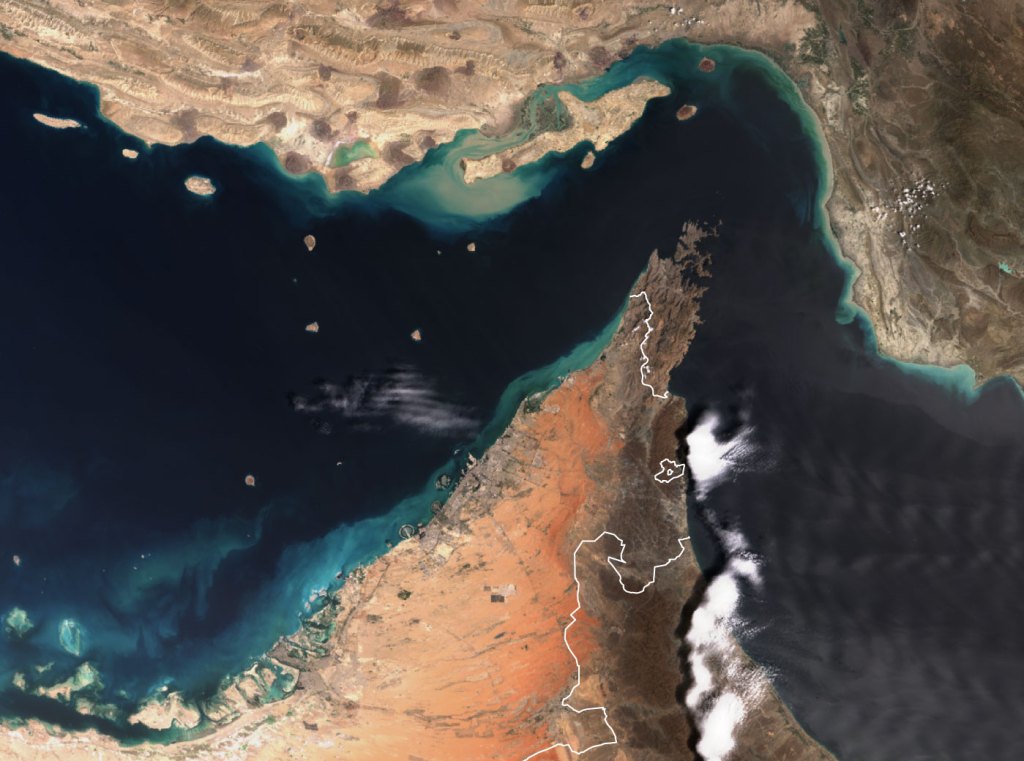
Satellite image of Strait of Hormuz. Source: WSJ

Sanctions Risk Adds To The Danger

For shipping companies tempted to pay, the financial and legal exposure goes beyond losing money to criminals.

According to Chainalysis senior intelligence analyst Kaitlin Martin, any cryptocurrency transfer tied to Iranian-controlled waterways could be classified as material support — a designation that puts companies in potential violation of US and international sanctions.

Entities linked to the Islamic Revolutionary Guard Corps fall under some of the strictest sanctions in force.

That means victims of the scam could face legal scrutiny even after being defrauded. Paying what appears to be a ransom to free a stranded vessel could trigger the same sanctions mechanisms designed to punish deliberate violators.

Featured image from Unsplash, chart from TradingView

Связанные с этим вопросы

QWhat is the main subject of the scam described in the article targeting ships in the Strait of Hormuz?

AThe scam involves criminals posing as Iranian security officials, sending fraudulent messages to ship owners offering safe passage in exchange for transit fees paid in Bitcoin or Tether (USDT).

QWhich maritime risk firm issued a warning about the possibility of fraudulent instructions to vessels?

AMarisks, a maritime risk firm, issued the warning about the fraudulent messages.

QWhat significant risk do shipping companies face beyond financial loss if they pay the cryptocurrency ransom?

AThey risk violating US and international sanctions, as any cryptocurrency transfer tied to Iranian-controlled waterways could be classified as material support, potentially leading to legal scrutiny.

QWhy is the timing of this scam particularly effective, according to the article?

AThe timing is effective because the Strait of Hormuz has been largely closed due to escalated conflict, leaving ships stranded and under threat, which creates the desperation that scammers rely on.

QWhat real policy proposal by Iran may have lent credibility to this cryptocurrency extortion scam?

AReports indicated that Iran itself had been considering a real Bitcoin-denominated toll on vessels passing through the strait, charging around $1 per barrel for loaded tankers, which the scam appears to have exploited for credibility.

Похожее

70% of the Public Opposes AI, Americans Hope the U.S. Loses the AI War

70% of Americans believe AI development is moving too fast, with growing public resistance evolving from online criticism to real-world protests and violence. This widespread anti-AI sentiment stems from fears of job losses, rising utility costs, environmental damage, threats to democracy, and financial instability. Key incidents illustrate the backlash: Google's former CEO Eric Schmidt was loudly booed at a graduation for promoting AI; AI company ads are vandalized; protests and even violent attacks target AI firms and data centers. Polls show deep public pessimism and strong local opposition to data center construction, often surpassing resistance to nuclear power plants. The core grievances are economic and practical: AI is seen as automating jobs, concentrating wealth, and increasing household electricity and water bills due to massive data center resource demands. Environmentalists also oppose AI's high energy use and carbon emissions. This opposition has turned AI into a major political issue in the US. While the Trump administration prioritizes AI innovation for global competition, bipartisan pushback is growing. Democrats and factions within the MAGA movement are forming temporary alliances to support stricter regulations and local bans on new data centers, pressuring the administration to choose between its tech industry backers and its voter base. The situation highlights a profound national divide over AI's future.

marsbit18 мин. назад

70% of the Public Opposes AI, Americans Hope the U.S. Loses the AI War

marsbit18 мин. назад

Agents Take Over Traffic Distribution Power: What Are Tencent, ByteDance, and Alibaba Competing For?

In the race to dominate the AI era's entry point, China's tech giants—Tencent, ByteDance, and Alibaba—are aggressively deploying AI Agents to control the future of traffic distribution. Alibaba is pursuing a dual-track "closed loop + openness" strategy. Its Qianwen app is evolving into a super-Agent integrated across its ecosystem (Taobao, Alipay, etc.) to handle complex tasks like travel planning. Concurrently, it is opening its platform to external brands (Luckin Coffee, KFC) and has launched a B2B Agent platform, "Wukong," targeting enterprise automation. Its other flagship, Quark, aims to be an "AI super search box" for information and tasks. ByteDance is executing an omnipresent "sprawl strategy." Its Doubao app boasts over 300 million monthly active users and is evolving into a default AI entry point for daily life, with plans for paid versions and e-commerce integration. Its core weapon is the Kouzi platform, a visual "AI assembly factory" for developers to build custom Agents. ByteDance is also pushing hardware integration, collaborating on AI phones and developing smart glasses to embed Doubao everywhere. Tencent is playing its long-held "ultimate card" by quietly embedding an AI Agent directly into WeChat. This Agent, accessible via a swipe, can understand user commands and automatically execute tasks by calling upon WeChat's millions of mini-programs (e.g., finding and ordering coffee). This leverages WeChat's unparalleled 1.4-billion-user ecosystem to position the app as an AI-powered "service operating system," a move that could dramatically reshape the competitive landscape. The core battleground is shifting from competing for "user screen time" to competing to be the "default execution layer" for user intent. The business model is evolving from an "attention economy" to an "intent economy," where the Agent that can most efficiently fulfill a user's need gains control over service access and token flow. This represents a fundamental change in how users connect with digital services, making the fight for the Agent入口 (entry point) a pivotal moment for redefining industry leadership in the AI age.

marsbit2 ч. назад

Agents Take Over Traffic Distribution Power: What Are Tencent, ByteDance, and Alibaba Competing For?

marsbit2 ч. назад

Торговля

Спот
Фьючерсы

Популярные статьи

Как купить ONE

Добро пожаловать на HTX.com! Мы сделали приобретение Harmony (ONE) простым и удобным. Следуйте нашему пошаговому руководству и отправляйтесь в свое крипто-путешествие.Шаг 1: Создайте аккаунт на HTXИспользуйте свой адрес электронной почты или номер телефона, чтобы зарегистрироваться и бесплатно создать аккаунт на HTX. Пройдите удобную регистрацию и откройте для себя весь функционал.Создать аккаунтШаг 2: Перейдите в Купить криптовалюту и выберите свой способ оплатыКредитная/Дебетовая Карта: Используйте свою карту Visa или Mastercard для мгновенной покупки Harmony (ONE).Баланс: Используйте средства с баланса вашего аккаунта HTX для простой торговли.Третьи Лица: Мы добавили популярные способы оплаты, такие как Google Pay и Apple Pay, для повышения удобства.P2P: Торгуйте напрямую с другими пользователями на HTX.Внебиржевая Торговля (OTC): Мы предлагаем индивидуальные услуги и конкурентоспособные обменные курсы для трейдеров.Шаг 3: Хранение Harmony (ONE)После приобретения вами Harmony (ONE) храните их в своем аккаунте на HTX. В качестве альтернативы вы можете отправить их куда-либо с помощью перевода в блокчейне или использовать для торговли с другими криптовалютами.Шаг 4: Торговля Harmony (ONE)С легкостью торгуйте Harmony (ONE) на спотовом рынке HTX. Просто зайдите в свой аккаунт, выберите торговую пару, совершайте сделки и следите за ними в режиме реального времени. Мы предлагаем удобный интерфейс как для начинающих, так и для опытных трейдеров.

712 просмотров всегоОпубликовано 2024.04.12Обновлено 2026.06.02

Как купить ONE

Обсуждения

Добро пожаловать в Сообщество HTX. Здесь вы сможете быть в курсе последних новостей о развитии платформы и получить доступ к профессиональной аналитической информации о рынке. Мнения пользователей о цене на ONE (ONE) представлены ниже.

活动图片