Crypto Developers Could Get Long-Term Shield Under New Senate Bill

bitcoinistОпубликовано 2026-01-14Обновлено 2026-01-14

Введение

US Senators Cynthia Lummis and Ron Wyden introduced the Blockchain Regulatory Certainty Act, a standalone bill to protect blockchain developers and non-custodial infrastructure providers from being classified as money transmitters. The legislation creates a safe harbor for those who write code or maintain networks without controlling user funds, meaning liability depends on custody of assets rather than software development. This aims to reduce legal risks for node operators and open-source developers. The move follows industry lobbying and delays in broader crypto market-structure legislation. While welcomed by many, some caution that clear definitions are needed to prevent loopholes and ensure the protection applies only to builders, not asset handlers.

US Senators Cynthia Lummis and Ron Wyden introduced a standalone measure that would protect blockchain developers and other non-custodial infrastructure providers from being treated as money transmitters solely for writing code or maintaining networks. The bill is being filed as the Blockchain Regulatory Certainty Act, a name that also appears in earlier House paperwork filed last year.

Crypto: Bill Aims To Protect Non-Custodial Developers

The draft would create a safe harbor for developers who do not control user funds, making liability turn on actual custody or control of assets rather than on the act of creating software. That change would mean node operators, protocol maintainers, and many open-source coders could avoid money-transmitter rules so long as they do not hold or direct users’ tokens.

Industry Pressure And A History Of Concern

Reports have disclosed months of lobbying from exchanges, developer groups, and advocacy coalitions that urged lawmakers to clarify this point. Those groups warned that without clear language, developers could face licensing and enforcement risks that would chill US-based development. The House version of the measure first appeared in May last year and set out similar safe-harbor text.

Total crypto market cap currently at $3.1 trillion. Chart: TradingView

Senate Markup Delayed As Negotiations Continue

Lawmakers have paused a larger Senate market-structure push while they work through a range of open issues, including stablecoin policy and yield rules. With that broader package pushed later into the month, sponsors moved the developer protections into a standalone bill to give that issue its own spotlight. Reports suggests the pause means Congress may act on the developer language sooner than the full market bill.
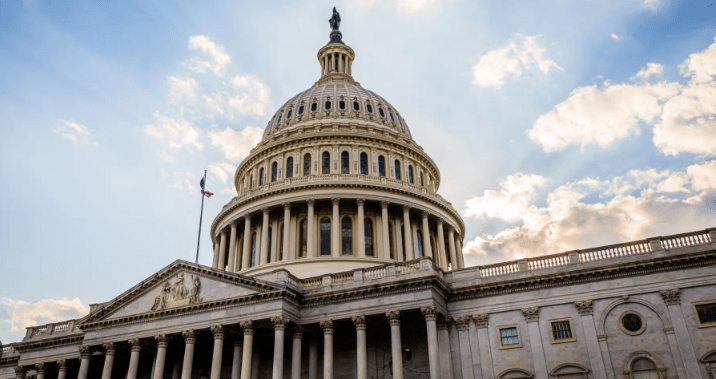
The US Senate. Image: Omar Chatriwala/Getty Images

What Developers And Advocates Are Saying

Some protocol teams and industry lawyers welcomed the step as a much-needed clarification, saying it would reduce legal uncertainty for projects that do not custody funds.

Others urged care, noting that clear definitions will be crucial to prevent loopholes and to make sure bad actors cannot hide behind the safe harbor. Coverage indicates sponsors emphasized the bill’s goal is narrow: protect those who build and maintain, not those who handle other people’s assets.

The proposal for a separate law is being introduced while there are still many uncertainties surrounding how cryptocurrencies will be regulated in the US. In the latter part of 2025 and into 2026, the crypto sector has demonstrated that it has a great deal of clout within political circles in Washington D.C.

There has been a significant increase in lobbying by large crypto-related businesses as legislators review various options for regulating this industry. Several reports have linked the current political environment to the legislative actions taken to regulate crypto in Congress, as well as how interest in legislative action has increased due to Trump’s administration.

Featured image from Unsplash, chart from TradingView

Связанные с этим вопросы

QWhat is the main purpose of the Blockchain Regulatory Certainty Act introduced by Senators Lummis and Wyden?

AThe main purpose is to protect blockchain developers and non-custodial infrastructure providers from being treated as money transmitters solely for writing code or maintaining networks, by creating a safe harbor for those who do not control user funds.

QAccording to the bill, what determines liability for developers under the proposed safe harbor?

ALiability turns on actual custody or control of assets rather than on the act of creating software, meaning developers are protected as long as they do not hold or direct users' tokens.

QWhy did the developer protection measure become a standalone bill instead of part of a larger package?

AThe larger Senate market-structure push was paused to work on open issues like stablecoin policy, so sponsors moved the developer protections into a standalone bill to give it separate attention and potentially faster action.

QWhat concern do some industry lawyers have about the safe harbor provision?

ASome lawyers urge care, noting that clear definitions are crucial to prevent loopholes and ensure bad actors cannot hide behind the safe harbor to evade regulation.

QHow has the crypto industry demonstrated political influence in Washington D.C. according to the article?

AThe crypto sector has shown significant clout through increased lobbying by large crypto-related businesses and heightened legislative activity, with reports linking this to the current political environment and Trump's administration.

Похожее

Cook's Curtain Call and Ternus Takes the Helm: The Disruption and Reboot of Apple's 4 Trillion Dollar Empire

Tim Cook has officially announced he will step down as CEO of Apple in September, transitioning to executive chairman after a 15-year tenure during which he grew the company’s market value from around $350 billion to nearly $4 trillion. He will be succeeded by John Ternus, a 50-year-old hardware engineering veteran who has been groomed for the role through increasing public visibility and internal responsibility. Ternus’s appointment signals a strategic shift toward hardware and engineering leadership, with Johny Srouji—head of Apple Silicon—taking on an expanded role as Chief Hardware Officer. This consolidation aims to strengthen Apple’s core technological capabilities. However, Cook’s departure highlights a significant unresolved issue: Apple’s delayed and fragmented approach to artificial intelligence. Despite early efforts, such as hiring John Giannandrea from Google in 2018, Apple’s AI initiatives—particularly around Siri—have struggled with internal restructuring and reliance on external partnerships, including with Google. The transition comes at a critical moment as Apple faces paradigm shifts with the rise of artificial general intelligence (ASI). The company’s closed ecosystem of hardware, software, and services—once a major advantage—now presents challenges in adapting to an AI-centric world where intelligence may matter more than the device itself. Ternus must quickly articulate a clear AI strategy, possibly starting at WWDC, to reassure markets and redefine Apple’s role in a new technological era. His task is not only to maintain Apple’s operational excellence but also to reinvigorate its capacity to innovate and lead in the age of AI.

marsbit32 мин. назад

Cook's Curtain Call and Ternus Takes the Helm: The Disruption and Reboot of Apple's 4 Trillion Dollar Empire

marsbit32 мин. назад

Торговля

Спот
Фьючерсы
活动图片