Community is Dead, Long Live Community

marsbitОпубликовано 2026-05-15Обновлено 2026-05-15

Введение

The author, James Richard Fry, laments the degradation of the Web3/crypto community, contrasting its past vitality with its current state. He fondly recalls early days of genuine connection and shared belief on platforms like Clubhouse and Discord, where communities formed around common interests like DeFi and NFTs, fueled by deep conviction and a spirit of building together. He argues that today, the term "community" has been co-opted by "extractors." Most modern Discord communities, he asserts, are filled with members driven solely by the prospect of financial gain from airdrops, leading to artificial engagement that vanishes post-Token Generation Event (TGE), often replaced by hostility. This extractive behavior, he states, has poisoned the ecosystem, creating cheap imitations of the early, belief-driven communities. Using his project, Across Protocol, as an example, he notes its own Discord has succumbed to this dynamic, pushing away genuine supporters. Consequently, he announces the decision to transition the Across Discord to read-only mode as a first step toward shutting it down completely. He concludes with a bittersweet farewell to the platform that once hosted beautiful moments, declaring "The community is dead. Long live the community."

Author:jamesrichardfry, Head of Marketing at Across Protocol

Compiled by: Jiahuan, ChainCatcher

I've been struggling with how to start writing this. Part of me wants to paint everything in a sunny light. Dress it up with marketing talk, make it sound grand, and move on.

But that wouldn't be entirely honest. If you know me, you know I wear my heart on my sleeve and can't hold things in. So, I'll just say it straight.

Community is dead. Of course, it wasn't always like this. That goes without saying, but I'm going to say it out loud anyway.

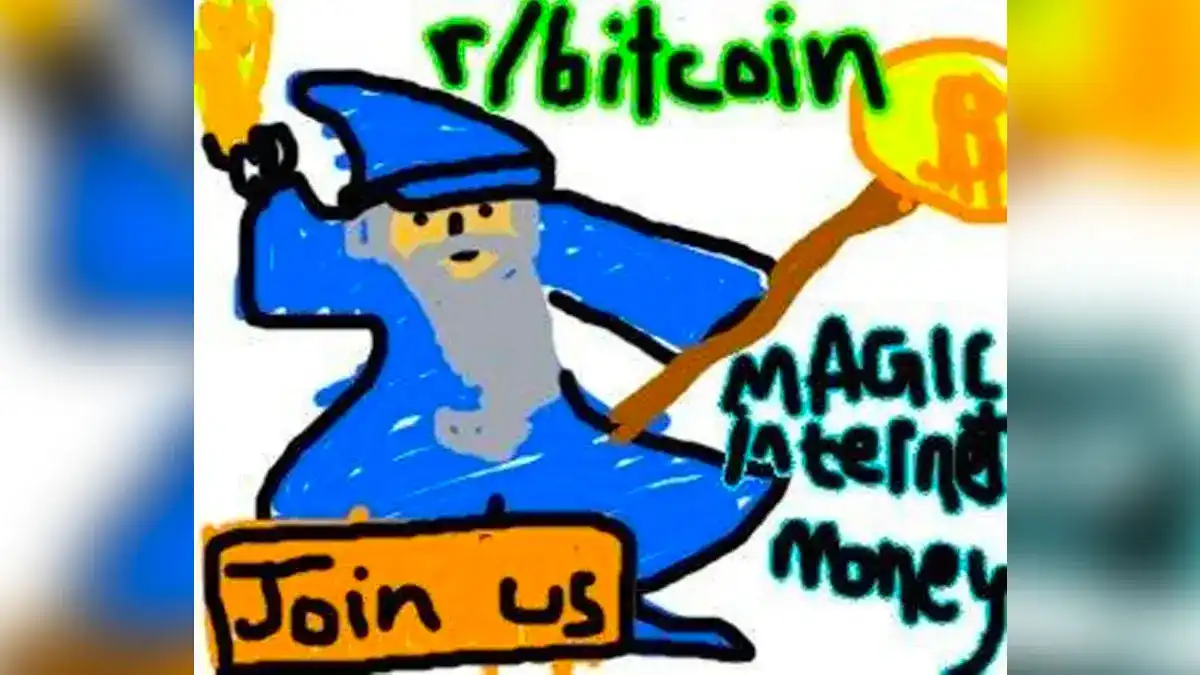
I still miss the good old days on Clubhouse and Discord channels. When we spent hours 'vibing' with strangers online, talking about magic internet money, the latest NFT drop, the best staking opportunities, commiserating over our fails and losses, dreaming together about the next great project, and actually 'building'.

To this day, many of those online strangers are still great friends. Some even became close friends in real life. When community is good, it's truly good. I miss those days.

Zooming out a bit, what exactly is community? In our last all-hands meeting, I rambled on about this for so long I could almost hear my colleagues' eyes rolling.

To share a bit of that with you, here's what I think community is:

Community is a group of people gathered around a common interest. We all have communities in many aspects of our daily lives.

From the school you attended, the sport you played, the religion you follow, the gym you go to, even the grocery store you shop at, communities exist.

Some communities are more shallow. The group of old men I see at the gym Monday to Friday is a community, but it's obviously very different from the friend circle we deliberately spend time with.

Web3 or crypto communities are no different.

We all gather around shared interests. DeFi Summer. NFT Mania. NFT Winter. Every kind of cross-chain interoperability, every ZK proof.

Whatever flavor you're into, there's a group of people going down that rabbit hole with you.

Some are here for financial speculation. Some are here from a deep conviction and commitment to the early cypherpunk movement. Some crypto communities are more superficial or performative.

Others are deep. I mean, really deep. Like religious groups, cultish followings, conviction that sits deep in your gut, put-your-money-where-your-mouth-is deep.

We wear the same 'uniform' (PFP), speak our own language (WAGMI), look absolutely insane to outsiders, and we don't care at all because we believe in what we've gathered around.

Early crypto community was inseparable from conviction.

Not just belief, but deep conviction burning in your gut that gives you the courage to get on stage and talk for hours in front of hundreds of listeners about why you believe in the founder, the project, the roadmap, and why you are the diamond-handed hodler of that project.

Conviction. That's what drove parabolic growth in the early days. Without community, crypto wouldn't be what it is today.

By the way, Across is no exception. Across' early community was a golden era. Vibes were high. Deep conviction existed (yes, I used that word a lot). Excitement and energy, people caring about the project for its innovation, not token price.

We hired many people from the community who still work with us today. There are also those from the early days who are still die-hard community members, sticking with us through thick and thin.

When community is good, it's truly good.

But then, it changed.

Fast forward to today. I'm going to make some broad generalizations now. Please know, I don't mean 'all' community members, 'every' community group, and I'm not painting with a broad brush. But if I'm continuing my blunt style, I do mean most. The overwhelming majority.

The word 'community' has been ruined by the extractors of crypto. In many ways, if you want to know why 'the love of money is the root of all evil', look no further than the endless Discord 'communities'.

Thousands of unread messages per day, staggering daily active users, endless social support, until the Token Generation Event (TGE) arrives. We all know how the script goes.

The pre-TGE vibes mimic the sentiment of early crypto communities. Deep conviction. Fire in the gut. Courage to get on stage. Project profile pictures and tags in bios. Ride or die, diamond-handed, conviction-filled hodlers.

Then, everyone changes.

One night you go to bed, barely able to keep up with Discord notifications.

You wake up the next morning, and it's a ghost town.

Or worse.

You find your loyal 'community' coming at you with pitchforks and torches.

Because of the airdrop.

You see, 'community' is no longer community.

It has devolved into endless AI-generated spam for points, for hope of an airdrop, to immediately dump, then complain about token price, and call the project a scam or rug (to be fair, often also true).

I don't need to finish that long-winded sentence, you know what I mean, right?

'Community' is not community. You all know it, you feel it. The timeline feels off. Discord servers feel off. Podcasts feel off. Twitter Spaces feel off.

It's all wrong, like 'Kangshuaifu' will never be Master Kang. Everyone reading this today knows it in their heart, even if you've never articulated it this clearly before.

Today's 'communities' are just cheap imitations of the early communities that built crypto into what it is today. The common interest of these 'community' members boils down to one thing. Extraction. Quick. Decisive. Extraction. That's the poison that killed what crypto could have and should have been.

Most (again, not all) Discord 'communities' today are made up of a mixed bag of remnants.

Some are truly loyal followers and believers. (To those who still support Across, we wouldn't be here without you. Thank you. You know where to find us, and there will always be a place for you.)

Some, often the majority, are here to extract from the project. I won't belabor the point.

And finally, some only appear to complain. Because in every bear market, these specific types of 'community' members come out to kick you while you're down, as if the bear market has zero impact on each team member, as if we caused it.

Unfortunately, the Across Discord has recently fallen into that 'majority' category. Our 'community' has become unrecognizable.

Those who recognize our incredible achievements, the progress Across has pioneered for the entire industry, and still support us, are also tired of being part of this extractive 'community' and have left Discord.

The few who remain would happily follow us to Twitter and other channels. What's left are the so-called 'communities' I defined above. Yes, I say this with fire in my gut and deep conviction.

Therefore, today, the Across Discord will go read-only.

This is the first step in our plan to shut down the server entirely.

To the community of believers who remain, let's keep building. We have so much more work to do.

To Discord, thank you for hosting some of the good old days of crypto. I'll always cherish it.

Community is dead.

Long live community.

Связанные с этим вопросы

QWhat is the main argument or thesis of the article titled 'The Community is Dead, Long Live the Community'?

AThe article argues that the true spirit of early crypto communities—built on deep belief, shared passion, and genuine collaboration—has been largely destroyed and replaced by a culture of extraction, where most participants are only interested in quick profits from airdrops and token launches, leading to empty, toxic, and transactional online spaces.

QAccording to the author, what characterized the early, authentic crypto communities?

AAccording to the author, early authentic crypto communities were characterized by deep belief (conviction), genuine passion for the technology (like DeFi, NFTs), meaningful connections that turned into real friendships, a sense of shared purpose in 'building' the next big thing, and a culture that wasn't primarily focused on token price.

QWhat specific action is the author announcing regarding the Across Protocol Discord server, and why?

AThe author announces that the Across Protocol Discord server will be set to 'read-only' mode as the first step towards its planned full shutdown. The reason is that the server has degraded into a space dominated by extractive individuals seeking airdrops and complaining, which has driven away the genuine believers and no longer represents a true community.

QWhat does the author mean by stating that today's 'communities' are often just 'extractors'?

AThe author means that the majority of participants in current crypto project 'communities' are not there out of belief or to contribute. Their sole common interest is to 'extract' value—primarily by farming points for a potential airdrop, selling the token immediately upon launch, and then often turning hostile by labeling the project a scam if the price falls.

QHow does the title 'The Community is Dead, Long Live the Community' reflect the article's dual perspective?

AThe title reflects the dual perspective by mourning the death of the original, idealistic form of crypto community ('The Community is Dead') while simultaneously expressing hope and a call to continue for the small remnant of genuine believers who still embody that original spirit ('Long Live the Community').

Похожее

AI Trading Cools, South Korean Stocks Plunge 1.8%, Spot Gold Rises 1%, Bitcoin Dives

A sell-off in AI-related stocks, triggered by Broadcom's disappointing earnings forecast, sent shockwaves through global markets. South Korea's KOSPI led Asia's decline, plunging 1.8% as the risks from concentrated chip stock gains and surging leveraged investments came to the fore. The tech-heavy Nasdaq 100 futures fell 0.5% following Broadcom's 14% after-hours plunge, which signaled a slower-than-expected transition to AI clients. This pullback extended Wall Street's weakness, halting the S&P 500's nine-day rally amid hawkish Fed signals and renewed Middle East tensions. South Korean authorities convened an emergency meeting, pledging "immediate measures" against market volatility and warning of record-high stock margin debt. The adjustment rippled across assets: Bitcoin fell to around $64,000, its lowest since February, while safe-haven gold rose 1% on bargain hunting. Oil prices dipped on Middle East ceasefire news. Market analysts noted the sell-off was driven by profit-taking after massive gains, particularly in chip stocks like Samsung and SK Hynix, which now dominate the KOSPI. Wall Street banks are divided on Korea's outlook, with Goldman Sachs raising its target while Citigroup and others warn of overvaluation and a potential bubble. Bridgewater's Ray Dalio noted that great technological shifts often create bubbles. Meanwhile, Fed officials' hints at potential future rate hikes added to the cautious mood ahead of key U.S. jobs data.

华尔街日报4 мин. назад

AI Trading Cools, South Korean Stocks Plunge 1.8%, Spot Gold Rises 1%, Bitcoin Dives

华尔街日报4 мин. назад

Seeking Alpha's Hot Article: Why Might the U.S. Stock Market Crash in June?

In a recent Seeking Alpha article, financial professor and analyst Damir Tokic argues that the US stock market may be poised for a significant crash in June 2026. The core thesis centers on a "mega-bubble" in equities, particularly within the technology sector, which has driven the S&P 500 to near-record valuations, with a Shiller P/E ratio exceeding 40—a level comparable to the 2000 dot-com bubble. Tokic identifies two primary catalysts for a potential collapse. First, he points to unsustainable market exuberance fueled by what he terms the "Trump Stimulus"—massive AI capital expenditure by tech giants, which he believes is politically driven and cannot last. Second, and more urgently, he highlights the escalating Iran war as a critical threat. The ongoing closure of the Strait of Hormuz has created a severe global energy supply crunch. Strategic petroleum reserves are projected to hit critically low operational levels by June, potentially causing oil prices to spike above $200 per barrel and triggering a severe, supply-driven inflationary shock. This scenario, Tokic warns, would force the Federal Reserve's hand. Despite currently maintaining a dovish bias, the Fed would likely be compelled to officially pivot to a hawkish stance at its June FOMC meeting to combat soaring inflation and bond yields. He contends that such a shift—or even a failure to act, which would destroy Fed credibility—could be the trigger that punctures the market bubble. The resulting downturn, he concludes, could rival the bear markets of 2000 and 2008, advising investors to prepare for a major correction.

marsbit26 мин. назад

Seeking Alpha's Hot Article: Why Might the U.S. Stock Market Crash in June?

marsbit26 мин. назад

AI PC Battle: Bet on the Toll Booth, Not the Camp

**Title:** The AI PC Battle: Don't Bet on Sides, Bet on the Tollbooth **Summary:** The AI PC competition is moving beyond simple "x86 vs. Arm" narratives. The core investment thesis should focus on identifying which players can sustain margins, cash flow, and pricing power throughout the upgrade cycle, rather than backing a particular architecture. The opportunity is analyzed in three layers: 1. **The Advanced Foundry Tollbooth:** TSMC is positioned to collect "tolls" regardless of which chip designer wins, due to its dominant ~70% share in advanced semiconductor manufacturing, which is essential for high-end AI PC chips. 2. **Compute & Platform Spillover:** AMD represents an offensive in the x86 CPU+GPU space, while NVIDIA leverages its GPU and CUDA software stack dominance. Both benefit from the demand for increased local AI compute. 3. **Architecture Diffusion & Turnaround Plays:** ARM and Intel offer potential for significant upside (elasticity), but investments here require stricter discipline due to higher execution risks and competitive challenges. The industry is transitioning from concept to shipment validation. While short-term forecasts for AI PC adoption have been revised down slightly due to tariffs and procurement delays, the long-term trend towards AI becoming a standard PC feature remains intact. The key driver for upgrade cycles will be whether compelling enterprise applications (e.g., privacy-sensitive computing, low-latency inference) emerge beyond consumer-focused features like meeting summarization. Investment strategy should prioritize companies with platform-level advantages and recurring revenue streams. TSMC offers high certainty as the foundational tollbooth. AMD presents a strong offensive play within the established ecosystem. ARM and Intel are higher-risk, higher-potential-reward turnaround bets. The report cautions against chasing short-term hype and emphasizes a disciplined, long-term approach focused on buying ecosystem strength and cash-flow certainty after market enthusiasm subsides. **Key Risks:** Underwhelming AI PC applications slowing upgrade cycles; slow improvement in Windows on Arm compatibility; macro/tariff impacts on PC demand; potential advanced node supply-demand mismatches affecting TSMC; high overall AI sector valuations making stocks vulnerable to a risk-off shift in markets.

marsbit41 мин. назад

AI PC Battle: Bet on the Toll Booth, Not the Camp

marsbit41 мин. назад

Ten-Thousand-Word Analysis: From $10 to $290, MRVL Wins the Entire AI Era by 'Not Making GPUs'

Marvell Technology's stock price surged from under $10 in 2016 to a record $290 in June 2026, fueled not by making GPUs, but by dominating AI infrastructure connectivity. This analysis argues the market misvalues MRVL as merely a smaller Broadcom in custom AI chips, overlooking its true, unique position. Marvell's core strength lies in enabling high-speed data flow for AI clusters through three interconnected businesses. First, it holds a commanding ~70% market share in high-speed optical DSPs (essential for data center light modules), a deep-moat business with accelerating growth. Second, its custom AI chip design business serves hyperscalers like AWS, Microsoft, and Google, with a significant revenue pipeline despite lower margins. Third, stable cash flows come from Ethernet switch chips and enterprise storage controllers. Together, they form a full-stack "AI data movement" platform. CEO Matt Murphy's transformative leadership since 2016, involving strategic divestments, key acquisitions (like Inphi for optical DSPs), and securing long-term agreements with major cloud providers, repositioned the company. A pivotal $2 billion strategic investment from NVIDIA in 2026 underscored Marvell's critical role in the AI ecosystem, particularly through collaborations like NVLink Fusion. While Marvell faces risks—including client concentration (losing the Amazon Trainium3 design), lower-margin business mix, competitive threats, insider selling, and complex supply chains—its fundamentals remain strong. The optical interconnect moat is widening with the acquisition of Celestial AI (photonics fabric), and financial metrics show accelerating revenue growth and operating leverage. With a PEG ratio suggesting undervaluation relative to its growth, the thesis is that the market undervalues Marvell's monopolistic position in AI "plumbing" while overemphasizing its competitive custom chip segment. The story transcends investing, symbolizing how in any complex system—from the internet to AI—the value of "connection" ultimately surpasses that of individual "nodes."

marsbit1 ч. назад

Ten-Thousand-Word Analysis: From $10 to $290, MRVL Wins the Entire AI Era by 'Not Making GPUs'

marsbit1 ч. назад

Торговля

Спот
Фьючерсы
活动图片