Cloud PC Gets a Second Chance, Google/Alibaba/Microsoft Battle for Cloud AI Dominance

marsbitОпубликовано 2026-05-18Обновлено 2026-05-18

Введение

Google unexpectedly announced "Android Computer," a new high-end productivity-focused PC series, positioning cloud AI as its core rather than an add-on. This move signals a potential revival for the "cloud computer" concept in the AI era. The article argues that current "AI PCs" are essentially traditional Windows machines with AI features grafted on, heavily reliant on cloud AI for complex tasks due to limited local consumer-grade hardware capabilities. This reliance raises questions about the value of premium local AI hardware. Cloud computers, which struggled with latency-sensitive applications like cloud gaming, are seen as a natural fit for AI PCs due to AI's higher tolerance for response time. Google's Android Computer deeply integrates AI (powered by its Gemini model) into the OS interface, making it contextually available. Its hardware-agnostic approach (supporting both x86 and ARM chips) further underscores the shift towards cloud-centric AI. Other players are adapting: Cloud service providers like Alibaba are enhancing their AI cloud computer offerings; chipmakers (Intel, AMD) are focusing on data center AI chips; traditional PC brands are adding AI software layers; and Apple is leveraging its ecosystem and affordable hardware. Microsoft is defining AI PC standards, embedding Copilot (powered by GPT and Bing) into Windows, and also relying on cloud AI. In conclusion, Android Computer challenges the traditional PC form factor by proposing a "light local, heavy clo...

Just before Google I/O, Google held a pre-launch event for Android 17 in the early hours of May 13. Unexpectedly, at this event, Google unveiled a new product series without warning—the Android Computer. Different from Chromebooks, the Android Computer is positioned more toward the high-end market, with productivity as its core selling point. Google is no longer content with just the entry-level market; it aims to capture more territory in the PC domain beyond netbooks.

The concept of AI PC has been very popular in recent years. Countless PC chip and device manufacturers have been emphasizing the AI features of their products, tirelessly promoting the new changes that AI brings to PC usage scenarios over and over again. The sudden emergence of the Android Computer, however, showcases a brand-new approach to the AI PC: it no longer relies on traditional desktop operating systems; cloud AI is not an accessory but the core, from which all related functions derive.

(Image Source: Google)

If the Android Computer succeeds, the cloud computer could very well become the definitive answer for the AI era.

Current AI PCs Are Not "AI" Enough

Currently, the AI PCs within the PC industry are more like traditional PCs with an AI shell added on. On the chip side, both Intel and AMD have added dedicated AI computing units to their PC processors to enhance their on-device AI capabilities. In terms of system and ecosystem, device manufacturers have been building their own AI applications into their systems, including their own PC managers, AI agents, etc., and integrating external large language models.

However, this type of AI PC is essentially still a traditional Windows computer, with AI more like a cherry-on-top feature. Moreover, the vast majority of AI scenarios implemented on these AI PCs are based on cloud AI, including document summarization and editing, image generation, and various "lobster" tools.

Despite chip manufacturers' constant promotion of their chips' local AI capabilities and scenarios involving deploying open-source models using CPU, GPU + NPU heterogeneous computing, the reality is that the AI computing power provided by consumer-grade PC chips is always very limited. After all, not every consumer has a 5080 graphics card or a minimum of 32GB of RAM.

(Image Source: JD.com)

Under these circumstances, an ordinary consumer-grade PC can hardly run large-parameter local models, and thus cannot truly handle slightly more complex AI tasks.

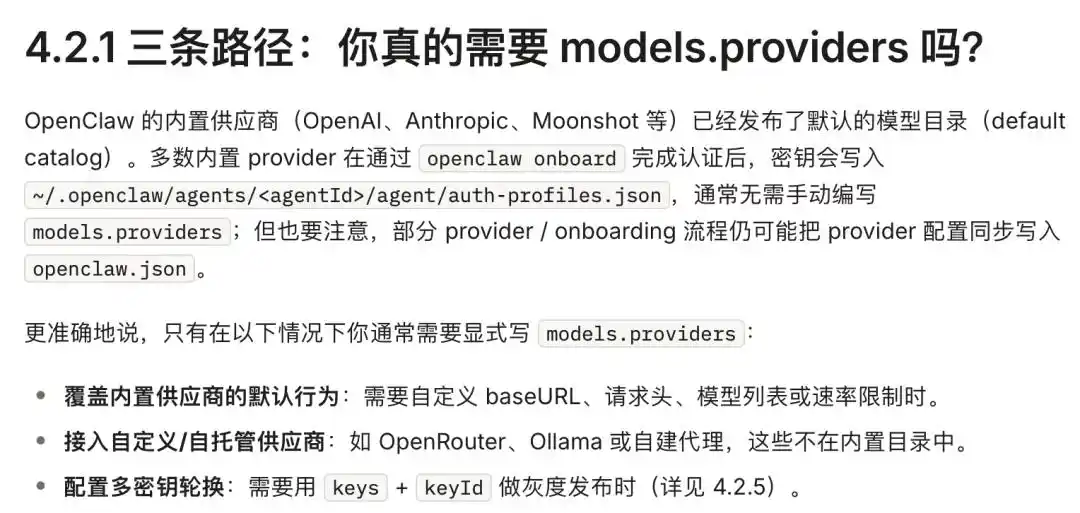
A while ago, OpenClaw went viral, directly causing Mac minis to sell out and their prices to increase. But the vast majority of people were using cloud models to "raise lobsters." Various lobster deployment tutorials mention which AI's tokens are cheap and how to reduce token consumption.
(Image Source: Gitbook)

This leads to a new question: Since AI PCs still rely on cloud AI to implement AI scenarios, what is the hardware value of the AI PC itself?

After all, theoretically, a traditional PC without the AI chip premium, as long as it can connect to the internet and access cloud AI, can also transform into an AI PC.

We can even be more radical: drastically reduce the PC's hardware configuration. As long as it has a screen, keyboard, and internet capability, it can become a cloud AI computer. The rapid development and popularization of AI seem to provide an opportunity for the "cloud computer," a not-so-new concept, to explode.

Cloud Computer + AI, the Future of AI PC?

For us, cloud computers are not a new thing. The cloud gaming craze a few years ago was essentially realized in the form of cloud computers. At that time, the widespread adoption of 5G, with its low latency and high throughput characteristics, was seen as a magic pill for popularizing cloud computers.

But reality is harsh. The concept of cloud gaming has never really taken off. Google's cloud gaming service Stadia, launched in 2019, was discontinued in less than three years. According to reviews from overseas media and user feedback, for Stadia to achieve a near-local gaming platform's smooth experience, it required extremely high network quality, such as using a local high-speed broadband wired connection. Even using Wi-Fi would significantly degrade the experience, let alone using more volatile mobile networks like 5G.
(Image Source: Google)

However, cloud gaming is highly sensitive to network latency, whereas online AI is much more tolerant. As ordinary users, we are already accustomed to AI needing time to "think" when answering questions or handling tasks. We don't demand instant feedback from AI as urgently as we do in games.

Ultimately, the bottleneck for AI response speed is not internet speed but computing power. Even if you install a local large model, it still requires sufficient inference time to generate answers.

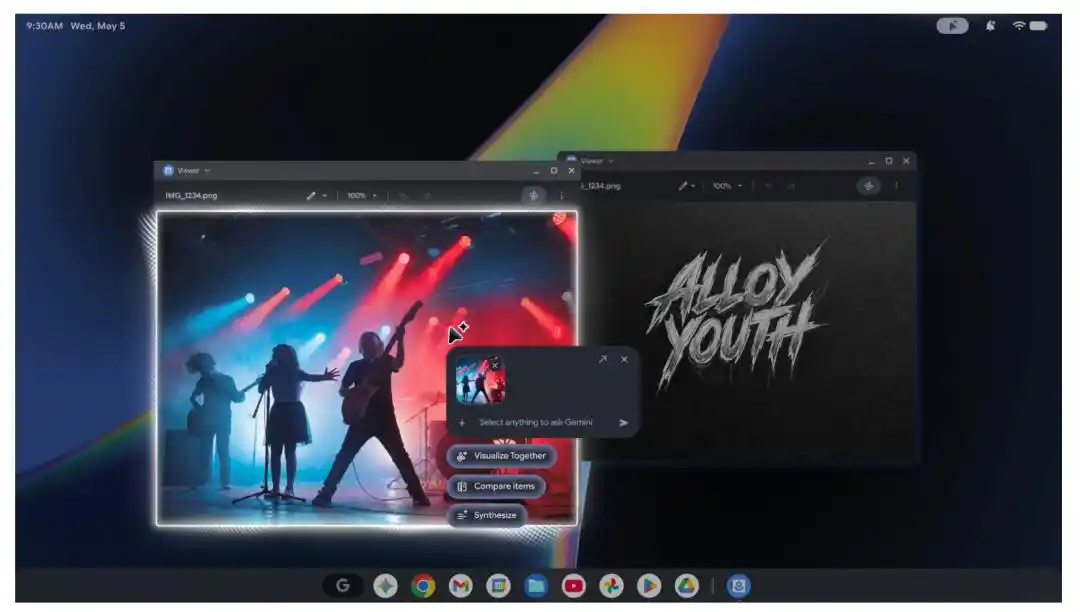
Therefore, we believe the cloud computer form is naturally suited for AI PCs. And Google's Android Computer is creating an AI PC in a way distinct from traditional PCs. On the Android Computer, AI is not an add-on but a core function. Google states that currently, most AI tools are standalone apps, and users need to copy data into the AI interface to use AI features. The Android Computer, however, integrates AI into every part of the system. Most intuitively, wherever the mouse pointer moves, AI appears there. AI captures text, images, code, and other information near the pointer for direct processing and manipulation.
(Image Source: Google)

Furthermore, the implementation approach for the Android Computer is highly diverse. For the Android Computer, Google provides more of a product philosophy and implementation framework; the hardware itself still needs to be built by partner manufacturers. According to Google's announced partner brands, they are mainly divided into two categories: chips and devices. The former includes Intel, Qualcomm, and MediaTek, while the latter includes HP, Lenovo, Acer, Asus, and Dell.

Looking at the chip brands, it's clear Google doesn't care what architecture the Android Computer uses—X86 is fine, ARM is fine. After all, currently, the implementation of AI scenarios on Android PCs still heavily relies on the cloud-based Gemini, making local hardware computing power relatively less important.

In addition, internet and cloud service providers have been offering cloud computer services and are evolving toward the AI PC direction.

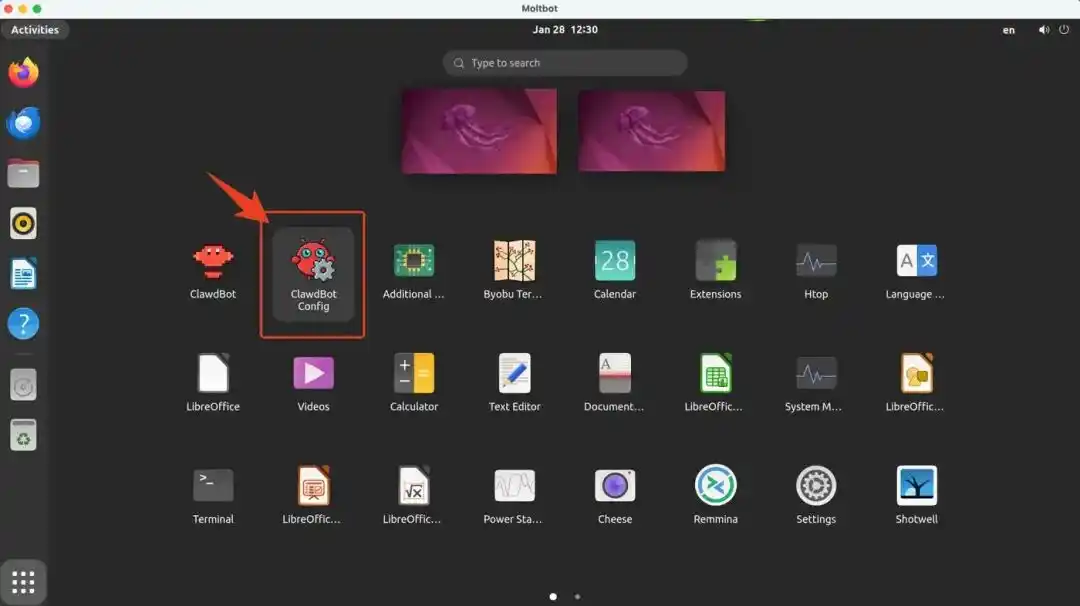
Taking Alibaba as an example, in 2024, it launched the Wuying AI Cloud Computer, which not only has powerful cloud hardware configurations but also robust support for large models. By 2026, the Wuying AI Cloud Computer was further upgraded, providing comprehensive support for OpenClaw lobster raising, enabling one-click deployment, direct access to Qianwen (Alibaba's model), and integration with communication tools like DingTalk, Feishu, and WeChat.
(Image Source: Alibaba Cloud)

Another noteworthy point is that AI giants are engaged in a frenzied arms race in AI infrastructure construction, becoming the "culprit" behind rising storage prices. Moreover, there's no sign of storage prices dropping in the short term. This will further hinder the configuration upgrades of consumer PCs. If the traditional PC iteration model is still used to build AI PCs, progress will become increasingly difficult. Instead of investing heavily in local AI configurations with a clear performance ceiling, it might be better to simply hand over AI tasks directly to the cloud.

The Times Are Changing. How Should PC Manufacturers Respond?

The AI-ification of PCs is an irreversible mega-trend. Players across the entire PC industry chain are racking their brains to figure out how to board the AI PC ship. They play different roles and thus promote AI PCs in different ways.

First are the chip manufacturers. They continue to emphasize the AI computing power of consumer-grade chips and build AI scenarios around it. More importantly, both Intel and AMD are continuously making efforts in the server market, vying for orders from AI giants.

After all, for AI companies to build AI infrastructure, they naturally need to purchase large quantities of AI chips. Besides NVIDIA, the main companies capable of fulfilling these orders are traditional CPU brands like Intel and AMD.

AMD's latest financial report shows that its "Data Center" business segment contributed $5.8 billion in revenue in the first fiscal quarter, accounting for over half of the total. Moreover, both Intel and AMD's production capacities cannot meet order volumes; AMD is already seeking assistance from other foundries like Samsung in addition to TSMC.
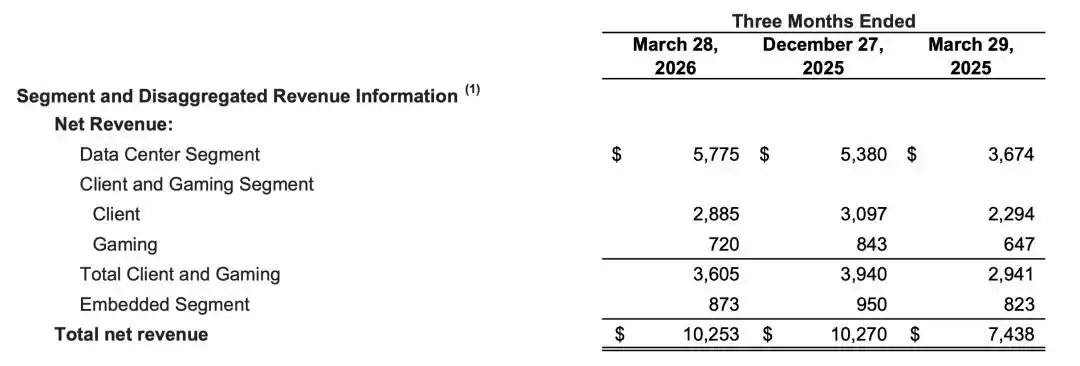
(Image Source: AMD)

Next are the device manufacturers. This includes both traditional PC brands like Lenovo, Asus, and HP, as well as emerging brands like Huawei, Xiaomi, and Honor. Currently, their approach to creating AI PCs is mainly based on the traditional architecture of Intel/AMD chips + Windows systems, enhancing PC AI capabilities by embedding software like PC managers and AI agents.

Simultaneously, smartphone brands have an advantage in the AI PC field: they can integrate PC products with other devices in their own hardware ecosystems, such as phones, car infotainment systems, wearables, and smart home devices, enabling seamless cross-device AI capability flow. Taking Xiaomi as an example, the "Super Xiaoai," a tool combining AI agent, AI assistant, voice assistant, and other capabilities, can appear on various devices within the Xiaomi ecosystem.
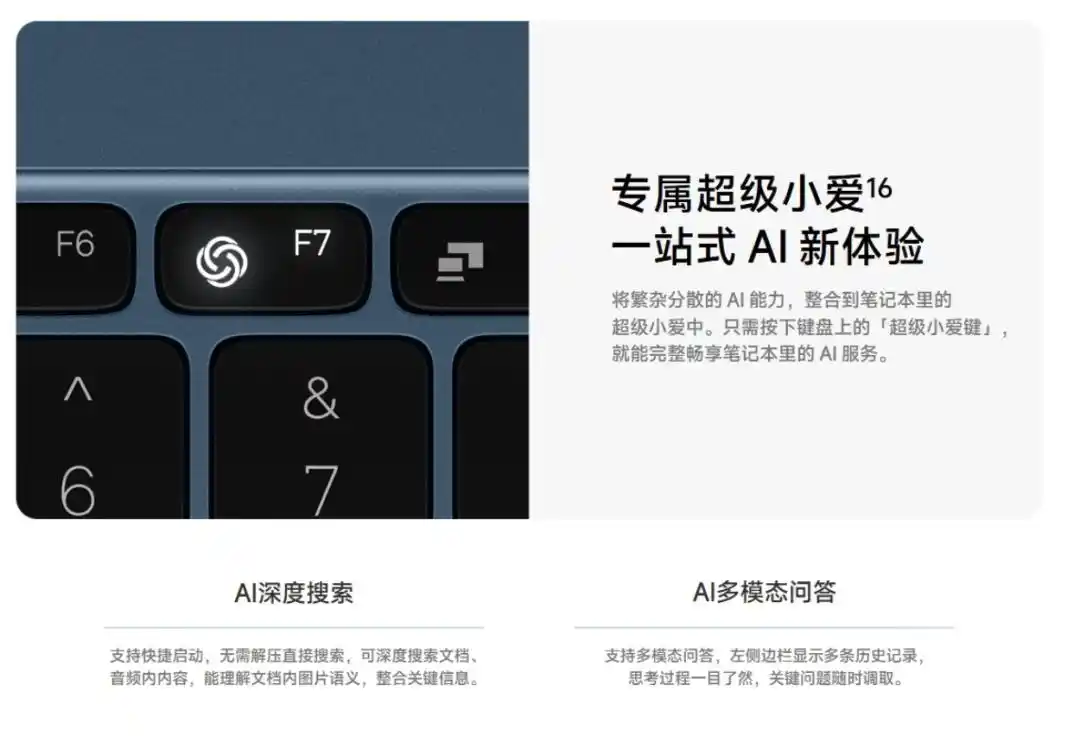
(Image Source: Xiaomi)

Additionally, Apple is a special case in the AI PC arena. Apple Intelligence was announced very early, but its rollout has been sluggish, leaving Mac's AI-ification in an awkward position. Apple's advantage in the PC field remains its unparalleled hardware-software integration capability, with absolute control over the M-series chips and the macOS system.

Recently, Apple increased the production of the MacBook Neo from 5 million to 10 million units and is willing to maintain high costs to keep producing the A18 Pro chip. Due to the success of this notebook, according to data from Luotu (Runto) for Q1 online notebook market share, Apple has become the PC brand with the second-largest market share in China, following Lenovo.
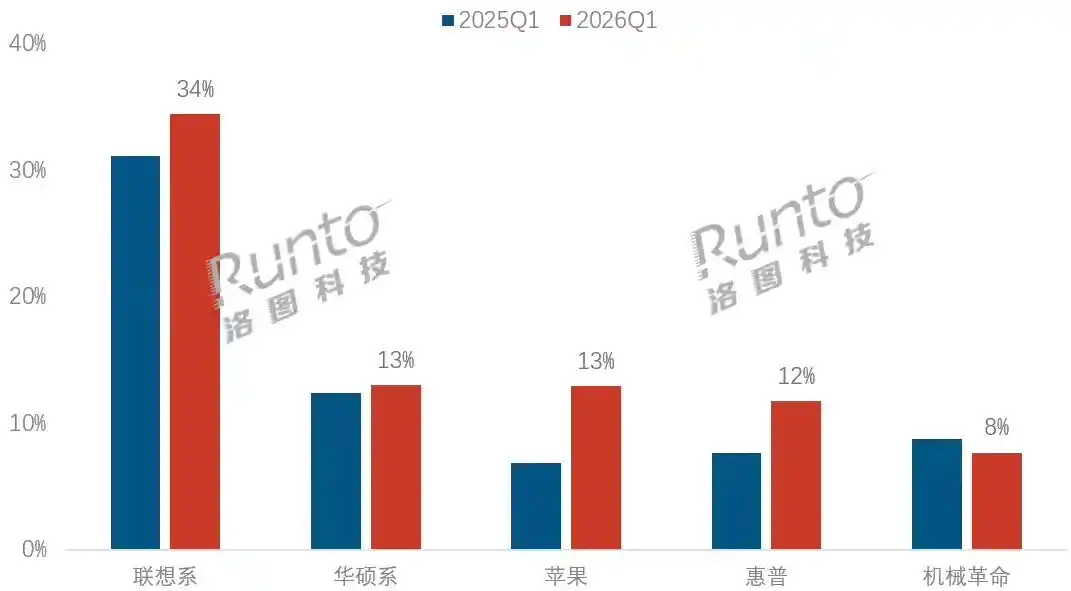
(Image Source: Runto)

Against the backdrop of soaring storage prices, the affordable MacBook has shown surprising appeal. Frankly, the MacBook Neo was not initially well-regarded and seemed more like a product to consume A18 Pro inventory. This reflects that Apple is capable of creating successful, affordable PCs. Once it establishes a solid user base, MacBooks empowered by Apple Intelligence could potentially catch up in the AI PC era.

Finally, Microsoft, as the dominant force in PC operating systems, cannot be ignored. Microsoft's actions regarding AI PCs mainly focus on three areas: defining AI PC hardware standards, system restructuring, and hardware architecture diversification.

Microsoft requires AI PCs to have at least 40 TOPS of computing power and 16GB or more of RAM. It has introduced the Windows Copilot Runtime into the Windows底层 (底层 means underlying layer/base), integrating multiple small models. Simultaneously, Windows provides AI features like live captions and Recall.
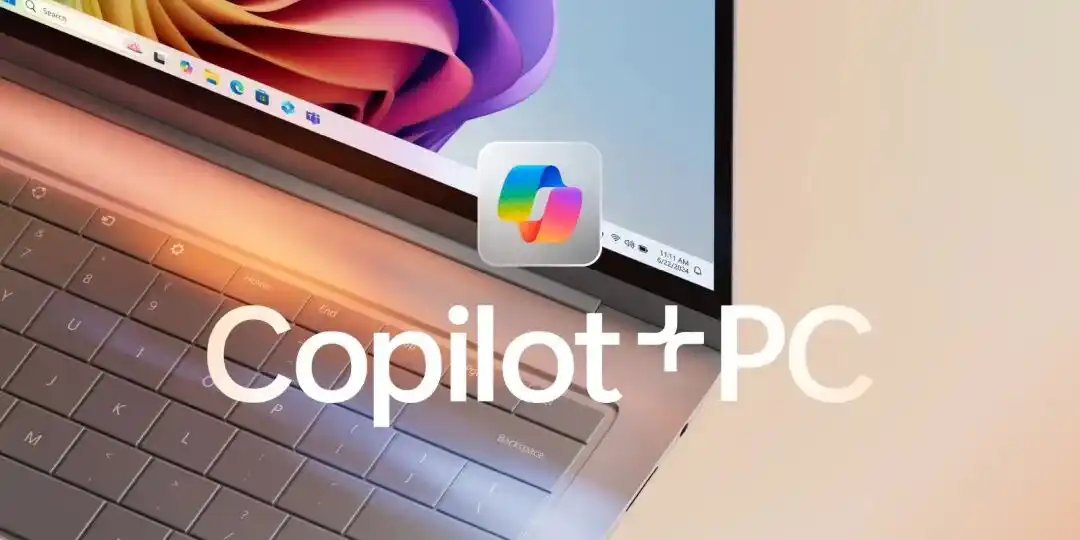
(Image Source: Microsoft)

A key point among these is that Copilot utilizes GPT's large model technology and Bing's internet connectivity capabilities and is deeply integrated into the Windows system, Edge browser, and Office 365, fully leveraging its ecosystem advantages. And this primarily relies on cloud AI capabilities.

In Conclusion

The emergence of the Android Computer challenges the long-solidified traditional PC form. It represents another product philosophy for PC development in the AI era: lightweight locally, heavyweight in the cloud.

In today's world where storage costs remain high and local consumer-grade computing power faces bottlenecks, this approach of breaking down hardware barriers and directly handing over core productivity to cloud-based large models is undoubtedly more imaginative.

Of course, this PC form revolution triggered by AI has just begun. Microsoft and traditional PC manufacturers won't sit idly by. They still emphasize the importance of on-device computing power but are already comprehensively incorporating cloud AI. Apple will also continue to grab market share with its hardware-software integrated ecosystem advantages and its down-market strategy. The upcoming PC market competition will no longer be merely about hardware spec wars but a comprehensive contest involving cloud leverage, system-level AI restructuring, and cross-device ecosystems.

Whether the Android Computer becomes the ultimate answer still needs to withstand tests related to network stability, data privacy, user habit migration, etc. But one thing is certain: AI has fundamentally reshaped the definition of a PC.

The PC of the future may truly no longer need an expensive graphics card and large-capacity memory. It might only require a screen and a network connection to the cloud to unleash productivity. A brand-new era for AI cloud computers is approaching us.

This article is from the WeChat public account "雷科技AGI" (Lei Technology AGI), author: 重嘉 (Chong Jia).


Связанные с этим вопросы

QWhat is the new concept of AI PC introduced by Google with Android Computer, and how is it different from current AI PCs?

AGoogle introduced the Android Computer as an AI PC concept where cloud AI is the core, not an accessory. Unlike current AI PCs which are essentially traditional Windows PCs with AI features layered on top, the Android Computer is built around cloud-based AI. Its functionality heavily relies on the cloud (like Gemini), and it deeply integrates AI throughout the system, such as having AI appear and act directly wherever the mouse pointer moves. This represents a 'light local, heavy cloud' approach.

QWhy has cloud gaming struggled, and why might cloud AI computers face a different challenge?

ACloud gaming has struggled due to its high sensitivity to network latency and quality. Services like Google Stadia required extremely stable, high-speed wired connections for a smooth experience, which was often not practical for many users, especially on mobile networks like 5G. In contrast, cloud AI computers are more tolerant of network conditions because the perceived bottleneck for AI tasks is processing/thinking time (compute power on the server side), not immediate real-time responsiveness. Users are accustomed to AI models taking time to generate responses, whether locally or in the cloud.

QWhat example does the article give of Alibaba's cloud AI computer service?

AThe article cites Alibaba's 'Wuying AI Cloud Computer' as an example. Launched in 2024 and upgraded by 2026, it offers robust cloud hardware and strong large language model support. It specifically provides comprehensive support for 'raising shrimp' on OpenClaw, enabling one-click deployment, direct access to Alibaba's Qianwen model, and integration with communication tools like DingTalk, Feishu, and WeChat.

QHow are chip manufacturers like Intel and AMD involved in the AI PC trend, according to the article?

AChip manufacturers like Intel and AMD are involved in the AI PC trend in two main ways: Firstly, they are enhancing consumer PC processors with dedicated AI computing units (NPUs) to boost on-device AI capabilities for traditional AI PCs. Secondly, and increasingly importantly, they are aggressively competing in the server/data center market to supply the AI chips needed by AI companies (like Google, Microsoft, OpenAI) for their massive cloud infrastructure build-outs. Their server chip orders are surging, contributing significantly to their revenue.

QWhat are the three main areas of action Microsoft is taking regarding AI PCs, as mentioned in the article?

AMicrosoft's actions regarding AI PCs focus on three areas: 1. Defining AI PC hardware standards (e.g., requiring 40+ TOPS of compute power and 16GB+ RAM). 2. System-level AI integration by embedding the Windows Copilot Runtime into the OS and adding native AI features like live captions and Recall. 3. Leveraging its ecosystem by deeply integrating its AI assistant (Copilot), which uses GPT technology and Bing's web capabilities, into Windows, Edge, and Office 365, primarily utilizing cloud AI power.

Похожее

I've Been a VC in Web3 for Nine Years: Asian Funds Are Experiencing "Hell Mode"

After nine years as a Web3 VC, the author observes a severe downturn in Asia's crypto venture capital scene, with many funds disappearing or pivoting away. The market has cooled dramatically since the 2021-2024 frenzy, leading to fewer deals and active investors. IOSG Ventures, a firm that has endured three market cycles, has adapted its strategy: shifting from 80-90% early-stage investments to a 50% early-stage, 30% post-TGE, and 20% OTC portfolio to find better value and liquidity. The current bear market is described as "hell mode" for Asian funds due to scarce LP capital, forcing extreme precision in targeting only top projects. The author argues the core industry problem has been the disconnect between tokens and real value, where tokens served as fundraising tools without granting holders rights to protocol revenue. A positive shift is emerging where projects like Uniswap and Morpho are programmatically binding token value to protocol profits. Investment focus has moved towards fundamentals: real-yield financial infrastructure (stablecoins, lending) and crypto-native AI infrastructure, while avoiding narrative-driven projects. The conclusion is that true, durable companies are born in pessimistic times when focus shifts to real user needs and sustainable business models. The industry's future will be shaped by those who remain after the泡沫 dissipates.

marsbit4 мин. назад

I've Been a VC in Web3 for Nine Years: Asian Funds Are Experiencing "Hell Mode"

marsbit4 мин. назад

Cango Releases Q1 Financial Report: Total Revenue of $102 Million, Business Expands into AI Computing Infrastructure

Cango Releases Q1 2026 Financial Results: Total Revenue of $102 Million, Business Expands into AI Compute Infrastructure Bitcoin mining company Cango reported unaudited financial results for Q1 2026. While bitcoin mining remains its core revenue driver, the company is strategically expanding into energy and AI compute infrastructure. **Key Financial & Operational Highlights:** * **Revenue & Performance:** Total revenue for the quarter was $102 million, with $98.4 million coming from bitcoin mining. However, the company reported a net loss of $261.1 million, primarily attributed to non-cash impacts like bitcoin price declines leading to miner impairments and fair value losses on its bitcoin holdings. Notably, long-term debt was significantly reduced to $30.6 million from $557.6 million at the end of 2025. * **Mining Operations:** Cango's total hash rate was 37.01 EH/s. It mined 1,266 bitcoin during the quarter and reduced its average cash cost per bitcoin by 9.0% quarter-over-quarter to $76,928, demonstrating improved operational efficiency. * **AI Business Expansion:** The company introduced EcoHash, a new commercial platform. This initiative leverages Cango's existing expertise in energy management and high-density computing to provide infrastructure for AI workloads, starting with GPU compute leasing. Management emphasized executing a disciplined strategy to strengthen the core mining business while advancing AI infrastructure through EcoHash. They highlighted progress in cost reduction, stable global operations, and a strengthened balance sheet through debt reduction.

marsbit4 мин. назад

Cango Releases Q1 Financial Report: Total Revenue of $102 Million, Business Expands into AI Computing Infrastructure

marsbit4 мин. назад

Another Corporate Bitcoin Treasury Strategy Ends: From High-Profile Entry to Liquidation at a Massive Loss in 11 Months

French semiconductor company Sequans Communications has sold off its bitcoin holdings and terminated its corporate bitcoin treasury strategy less than a year after launching it, sustaining heavy losses. Facing delisting from the New York Stock Exchange in mid-2025 due to low market capitalization, Sequans announced a plan to hold over 3,000 bitcoin as a long-term reserve asset. The strategy was executed with Swan Bitcoin and backed by a $384 million private financing round. At its peak in October 2025, the company held 3,234 bitcoin with an average cost of approximately $116,643 per coin. However, the plan quickly unraveled. With bitcoin's price falling, Sequans sold 970 bitcoin in late 2025 to repay debt, contradicting the core "hold" philosophy of such corporate strategies. The company has now sold more bitcoin to fully repay its convertible notes and announced the termination of its bitcoin reserve strategy. It plans to liquidate its remaining 658 bitcoin. The venture resulted in significant financial damage. The company reported an unrealized loss of $67.4 million on its bitcoin holdings in 2025, contributing to a total net loss of $109.3 million for the year. Sequans' stock (SQNS) has plummeted over 80% since the strategy's launch and is down 77% year-to-date. CEO Georges Karam, who previously championed bitcoin's long-term value, now states the company will refocus entirely on its core IoT semiconductor business. The failed experiment highlights the risks for companies adopting volatile digital assets as treasury reserves.

marsbit36 мин. назад

Another Corporate Bitcoin Treasury Strategy Ends: From High-Profile Entry to Liquidation at a Massive Loss in 11 Months

marsbit36 мин. назад

BIS Latest Research: The Future of Stablecoins and the Global Monetary Landscape

BIS Working Paper No. 170, released in May 2026, analyzes the impact of stablecoins on the global monetary system. The market has grown exponentially since 2014, with over 300 active stablecoins exceeding $300 billion in market capitalization. It is highly concentrated, dominated by USD-linked stablecoins (98% by market cap, mainly USDT and USDC), which function as new forms of private offshore dollar claims on blockchain. Currently, stablecoin use remains largely within crypto ecosystems for trading and DeFi collateral. Real-economy adoption, such as in cross-border payments, is nascent but growing in emerging markets and developing economies (EMDEs) facing high inflation and volatile currencies, where they facilitate capital flight and "digital dollarization." The paper assesses impacts using the Cohen-Kennen framework. For private-sector functions, stablecoins most directly affect value storage (as a dollar-denominated safe haven in EMDEs) and the medium of exchange (enhancing cross-border payment efficiency, further entrenching dollar use). Impacts on the unit of account and official-sector functions are currently limited but could indirectly constrain monetary policy autonomy and capital controls. The report outlines three potential future scenarios: 1) **Niche adoption**, where stablecoins remain crypto-centric with minimal systemic impact; 2) **Digital dollarization**, a high-risk scenario where USD stablecoins become de facto standards in EMDEs, eroding monetary sovereignty; and 3) **Local currency stablecoin integration**, an ideal but challenging scenario where regulated domestic stablecoins linked to CBDCs enhance efficiency without foreign currency substitution. Key policy recommendations emphasize global coordination: establishing uniform regulatory standards (e.g., for reserves and disclosure), strengthening cross-border supervisory cooperation, enhancing domestic defenses in EMDEs (via macroeconomic stability, improved payment systems, and CBDCs), and combating illicit activities. The paper concludes that stablecoins are a structural force reinforcing dollar dominance in the near term, posing significant risks to EMDEs' financial stability and policy autonomy. Their long-term trajectory depends on regulatory responses, adoption patterns, and the co-evolution with public digital currencies.

marsbit45 мин. назад

BIS Latest Research: The Future of Stablecoins and the Global Monetary Landscape

marsbit45 мин. назад

Торговля

Спот
Фьючерсы

Популярные статьи

Неделя обучения по популярным токенам (2): 2026 может стать годом приложений реального времени, сектор AI продолжает оставаться в тренде

2025 год — год институциональных инвесторов, в будущем он будет доминировать в приложениях реального времени.

1.8k просмотров всегоОпубликовано 2025.12.16Обновлено 2025.12.16

Неделя обучения по популярным токенам (2): 2026 может стать годом приложений реального времени, сектор AI продолжает оставаться в тренде

Обсуждения

Добро пожаловать в Сообщество HTX. Здесь вы сможете быть в курсе последних новостей о развитии платформы и получить доступ к профессиональной аналитической информации о рынке. Мнения пользователей о цене на AI (AI) представлены ниже.

活动图片