Claude Bill Skyrockets by 5 Billion, Surges 60-Fold Overnight—Can Your Token Budget Keep Up?

marsbitОпубликовано 2026-06-01Обновлено 2026-06-01

Введение

An enterprise reportedly ran up a staggering $500 million bill on Anthropic's Claude AI in just one month due to a simple oversight: failing to set usage limits for employee accounts. This incident highlights a growing trend of runaway AI costs. Other examples include a Google Cloud user hit with an unexpected $18,000 bill from API key abuse, and an OpenAI internal experiment that consumed 603 billion tokens, costing $1.3 million in 30 days. Major AI providers like OpenAI and GitHub are shifting from flat monthly fees to granular, usage-based pricing (per input/output/cached token), causing shock for some users whose costs skyrocketed by orders of magnitude. The root causes extend beyond pricing. The rise of autonomous AI agents executing long, complex tasks has drastically increased token consumption. Furthermore, misaligned incentives, like internal "leaderboards" ranking employees by AI usage, can encourage wasteful "tokenmaxxing"—using powerful models for trivial tasks just to inflate metrics. This has sparked a new industry focused on cost optimization. Solutions include providing AI with better context (reducing redundant searches) and intelligent model routing (matching tasks to the most cost-effective model). Research indicates token consumption for agentic tasks can vary wildly (up to 30x for the same job) without guaranteeing better results, and models often underestimate their own costs. As AI expenses begin to rival or even surpass human labor costs for some t...

A $500 Million Bill in Just 1 Month!

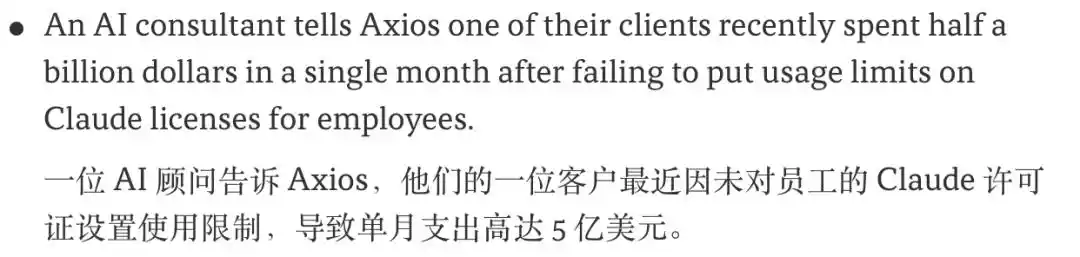
Recently, a shocking blunder erupted in the tech world. According to Axios, a company actually managed to rack up a $500 million bill on Claude in just one month!

The reason is laughable: management forgot to set usage limits when granting employees access to Claude accounts.

In fact, this isn't the only case of AI bills exploding.

In April, a Google Cloud user, whose publicly accessible API key was misused, received a bill for $18,000 overnight, despite having only a $7 budget set.

The unlucky user, Jesse Davies, is an Australian AI consultant and founder of Agentic Labs. He had set up two safeguards for his Google Cloud account: a A$10 (about $7) budget alert and a hard spending cap of $1,400.

As reported by Tom's Hardware, attackers discovered a Cloud Run service he had deployed months earlier from AI Studio, sending over 60,000 requests. Both safeguards failed: there was a delay in billing calculations, and by the time the system reacted, the amount had skyrocketed to $18,000.

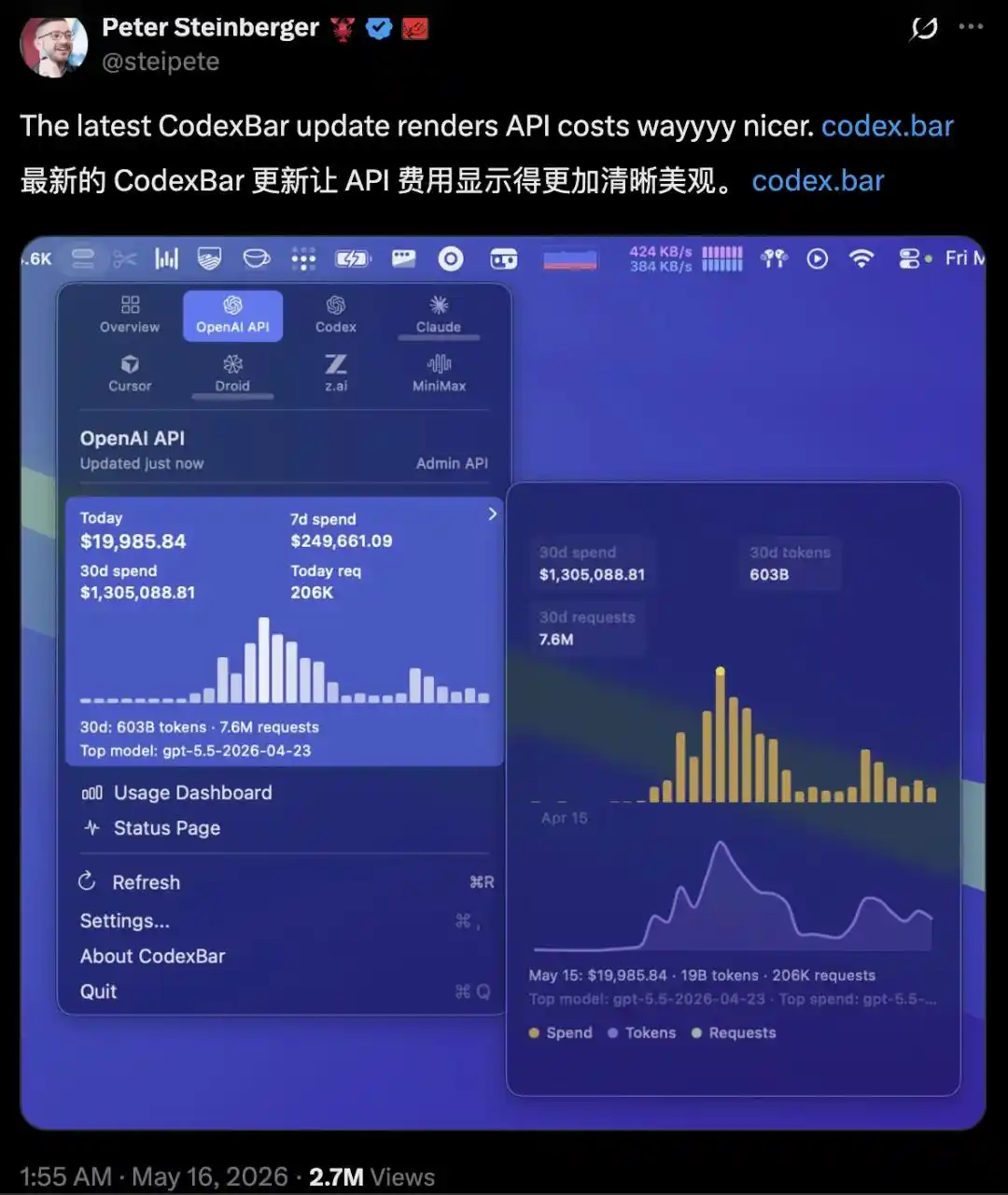
In mid-May, Peter Steinberger, founder of the open-source project OpenClaw, posted a screenshot on X: a $1.3 million OpenAI API bill for 30 days.

His team has only three people, but they orchestrated 100 Codex agents running in parallel: burning through 603 billion Tokens and making 7.6 million requests in 30 days. Fortunately, he didn't have to foot this $1.3 million bill himself.

Steinberger joined OpenAI this past February, and this $1.3 million was treated as an internal experiment:

to test the absolute limits of AI programming when token cost is not a consideration. He added that this was the result of Codex's "Fast Mode" (higher-tier billing); turning it off reduced the cost to about $300,000.

Even earlier, Uber's CTO Praveen Neppalli Naga had admitted to The Information that the company had exhausted its annual Claude Code budget by April, and their COO also publicly stated that AI costs were becoming increasingly "hard to justify."

$500 million, $1.3 million, $18,000—though these figures differ by orders of magnitude, they point to the same reality:

In the age of agents, any one of these—a compromised key, an army of agents running 24/7, or an account with forgotten limits—can blow up your token bill overnight.

Why Do AI Bills Explode?

The answer lies mainly in the shift in billing methods.

Starting April this year, OpenAI began transitioning from monthly flat fees to usage-based billing by Token.

On April 2, Codex billing shifted from per-message estimates to alignment with actual Token usage: Input, Cached Input, and Output Tokens are billed separately. On April 23, this rule was extended to all Enterprise, Edu, Health, and Gov plans: the invisible discount within the monthly fee was removed.

GitHub followed closely, just announcing: all Copilot plans will switch to usage-based billing effective June 1, 2026. The old premium request logic is scrapped, replaced with AI credits, settled based on actual consumption of Input, Output, and Cached Tokens against each model's API rate.

GitHub officially explained the reason for this change:

Currently, a quick chat question and a multi-hour autonomous coding task cost the user the same amount. GitHub has been subsidizing the heavy users, but this model is no longer sustainable.

Before the rise of AI agents, the costs of chat and completions were similar, and monthly fees could cover them.

After agents rose, a single task could run for hours and modify entire codebases, creating a cost difference of orders of magnitude between heavy and light users. The flat monthly fee model collapses in the face of such disparity.

The news sparked an uproar on Reddit and X.

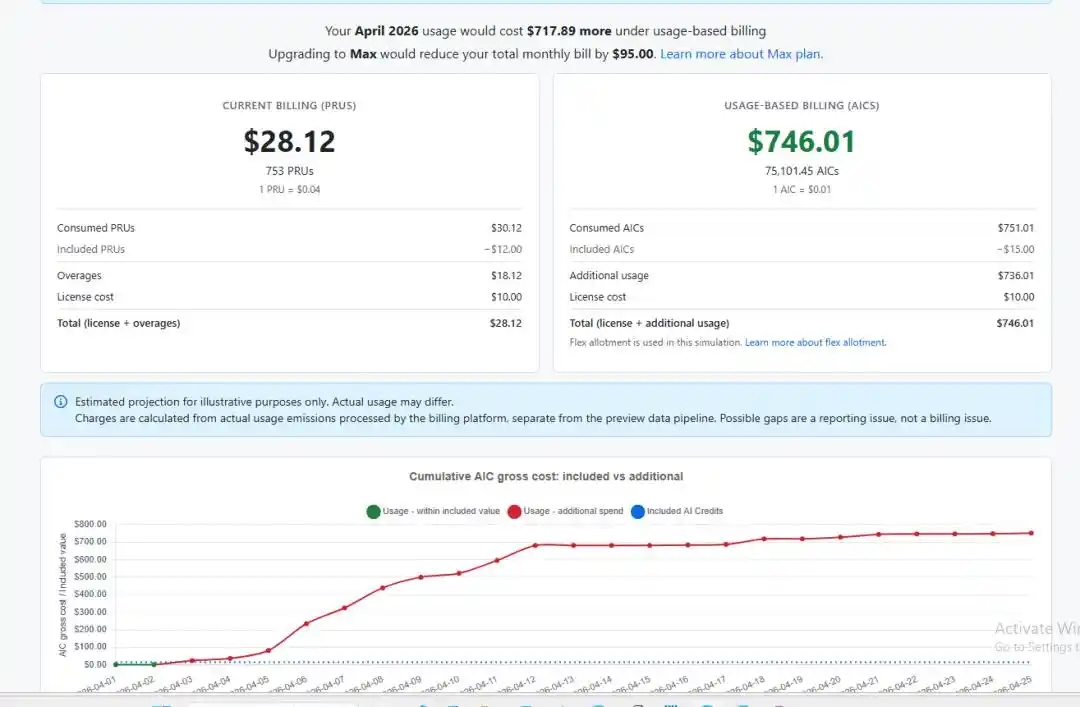
A developer with the ID JBusu shared a screenshot of their bill, bluntly calling the new pricing "a joke." Their previous monthly cost of $28.12 would become $746.01 under the new system. They've decided to cancel, "At this price, I could rent a cloud server myself and it would be cheaper."

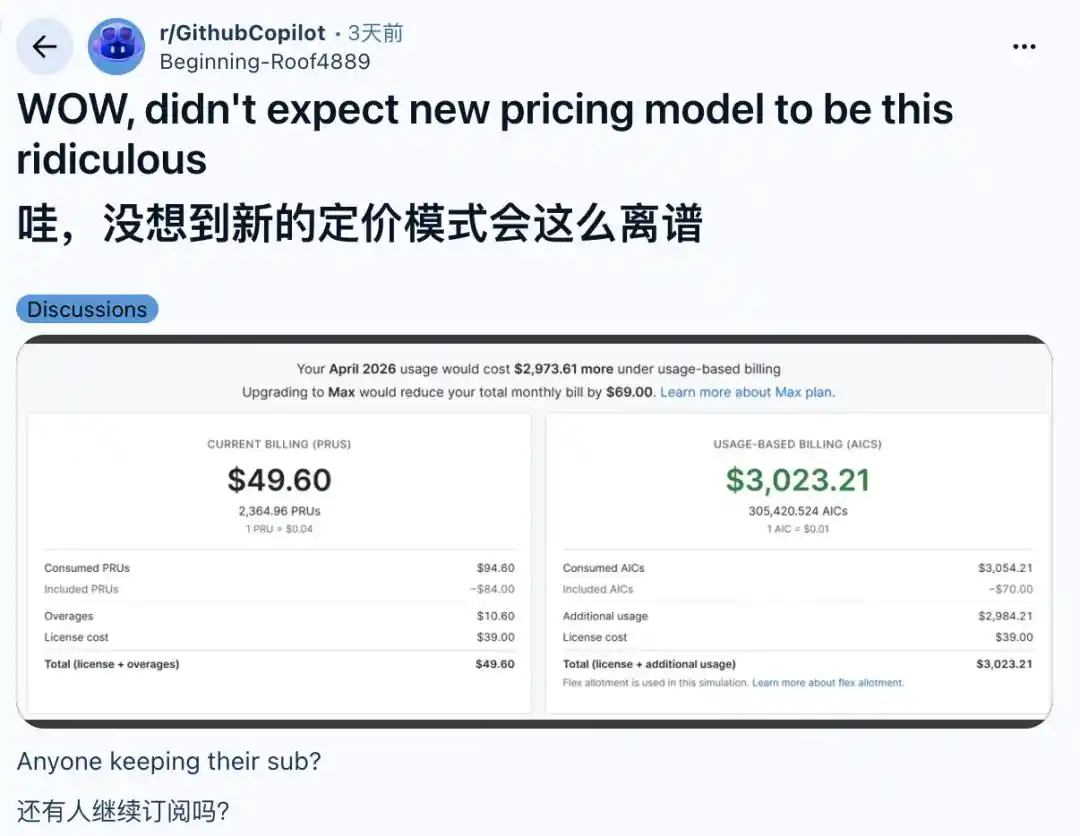
Another user shared an even more extreme screenshot, showing costs soaring from $50 to $3,000. They said they never expected pricing to be this outrageous, "Is anyone still subscribing?"

However, some veteran Copilot users countered: these extreme bills are likely burned by "vibe-coders" who aren't mindful of token usage and may not represent normal use.

One veteran user commented: "I use it all day long and rarely exceed limits by month-end. It's hard to believe this is due to differences in task complexity." Another was more direct: "It's people wanting fully automated YOLO-mode development, letting AI run wild. Culling this waste is actually good for everyone else."

One thing is clear: GitHub hasn't abolished monthly fees; the base subscription price remains unchanged. What has changed is that extra usage, agent tasks, and calls to more expensive models now fall under usage-based billing.

The hardest hit are those heavy agent users who rely on Copilot for long-chain tasks.

The Leaderboard Gamed by Its Own Users

The collapse of flat fees is partly due to platforms changing their billing rules, and partly because AI users themselves are burning through tokens.

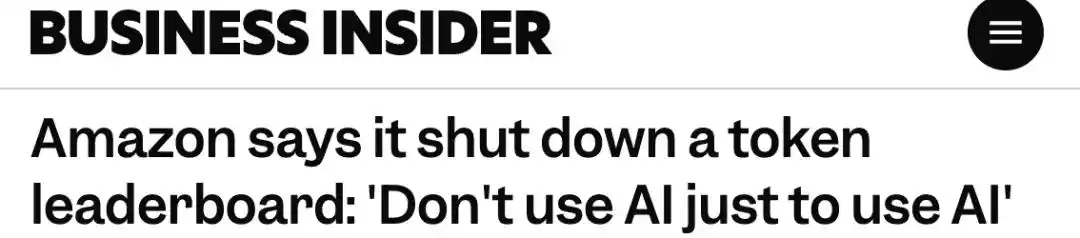
In May, Business Insider reported that Amazon took down an internal AI usage leaderboard called KiroRank.

The report cited insiders saying the leaderboard quietly encouraged a strange work style: some employees, to climb the ranks, would burn tokens on tasks that didn't solve actual problems, purely for ranking.

After the story broke, Amazon SVP Dave Treadwell directly addressed all employees: "Don't use AI for the sake of using AI. Use it to solve customer problems, business problems, to innovate."

Though absurd, this is hardly surprising. When "burning tokens" gets you on a leaderboard, employees will naturally burn tokens.

Silicon Valley has coined a term for this phenomenon: Tokenmaxxing—treating consumption volume as productivity.

Axios's report also mentioned CTOs discovering employees using cutting-edge AI models to check the weather or write routine emails—trivial tasks that, when run on the most expensive frontier models, can silently send bills soaring.

KiroRank wasn't part of Amazon's official evaluation system but an informal tool built by employees. Yet it clearly exposes a classic management principle: when KPIs are set wrong, people will use the cleverest ways to game the system.

Equating "how much was used" with "how well it was done"—this is the systemic root of this wave of AI waste.

Those Who Count Tokens Are Already Making Money

On the flip side of token bill anxiety, some are quietly turning it into a business.

First approach: Feed the AI with context.

Glean is actually Arvind Jain's own company. It builds an enterprise AI work assistant: unifying knowledge scattered across a company, giving employees' AI direct context so they don't have to dig around. The AI takes fewer detours, naturally burning fewer tokens.

This mechanism helped Glean's annual revenue triple in 15 months, crossing $300 million, with clients including Databricks, Reddit, and Samsung.

Second approach: Delegate tasks to the right model.

This is what model routing startup Factory AI does: automatically routing each task to the most suitable model, cheap ones for simple tasks, top-tier for complex ones. Arvind also noted: Do routing right, and you can save 10x.

Both paths lead to the same destination: Let AI work, but don't let it burn money indiscriminately.

Academic research is also laying the groundwork for this shift.

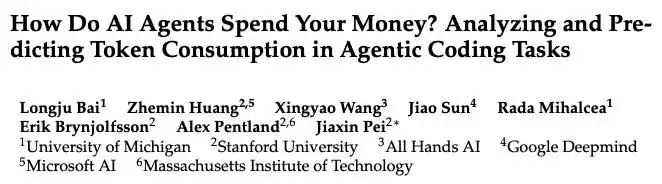
https://arxiv.org/pdf/2604.22750

An arXiv paper from April 2026 systematically broke down how agent coding tasks actually burn money for the first time.

Conclusion One: Token consumption for agent tasks can be thousands of times higher than ordinary code reasoning or code chat, with Input Tokens being the main cost driver.

Conclusion Two: Running the same task multiple times can result in a 30x difference in Token consumption.

Conclusion Three: Higher Token consumption does not necessarily lead to higher accuracy. Accuracy often peaks at medium cost—burning more beyond that spends money without yielding better results.

The paper also found that even frontier models can't reliably predict their own token consumption, generally underestimating the real cost.

You think spending more gets more done. In reality, money is spent, the work isn't necessarily better, and the budget is still unpredictable.

When AI Bills Start Rivaling Labor Costs

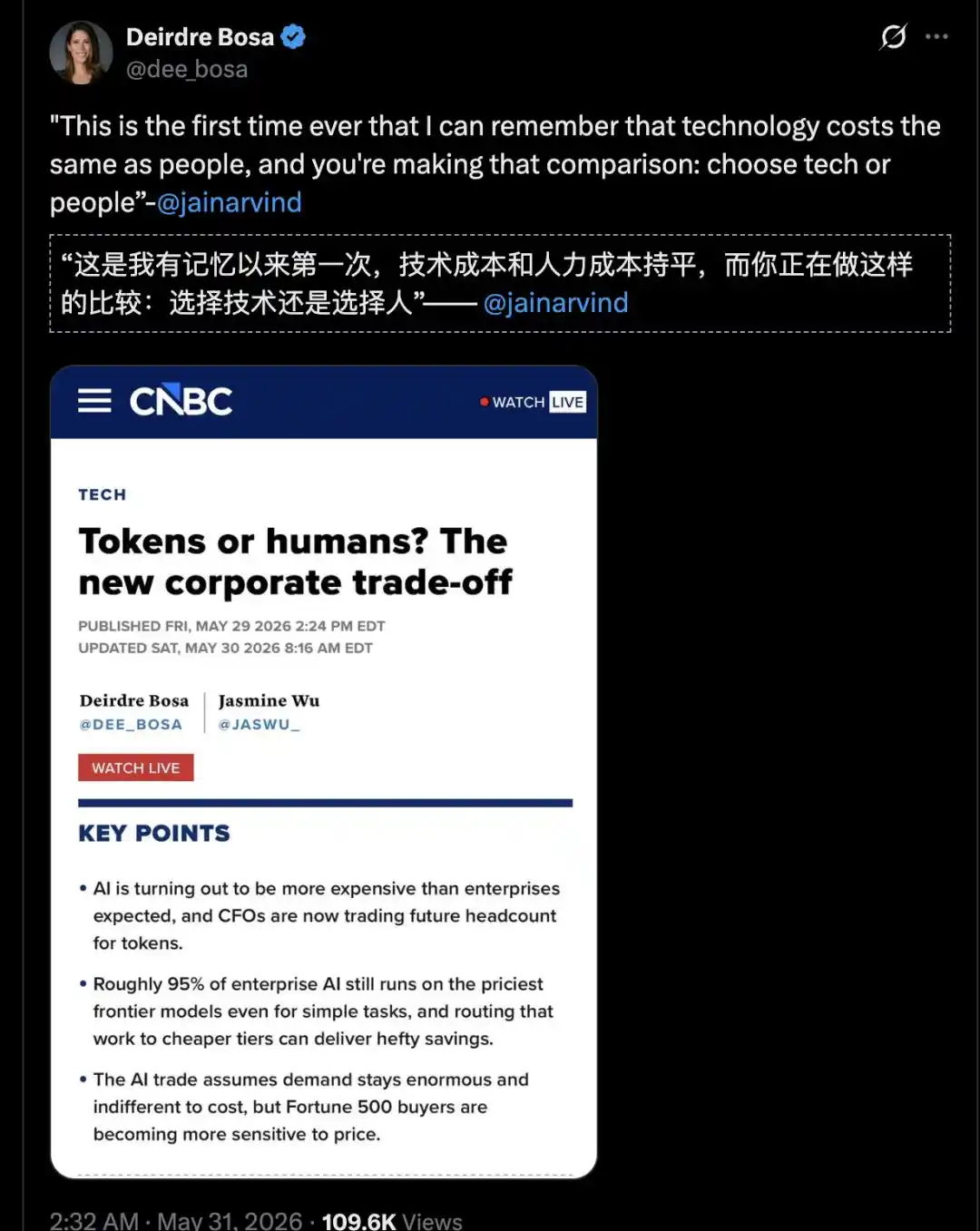
"This is the first time in my memory that technology costs are starting to be on par with human costs."

On May 29, Glean CEO Arvind Jain said this in an interview with CNBC's Deirdre Bosa.

Observations from Nvidia's Vice President of Applied Deep Learning, Bryan Catanzaro, corroborate this.

He mentioned in an Axios interview that for his team, compute costs far exceed employee salaries.

Similar trends are emerging across multiple companies: from enterprise AI player Glean, to AI compute seller Nvidia, to AI user Uber—all are re-evaluating this equation.

In Arvind's view, historically, technology was just a small slice of overall corporate costs. But now, AI costs are catching up to payrolls. Many companies' annual AI budgets are often burned through in just one or two months.

Over the past year, AI usage rate was a worshipped metric: more usage meant being advanced, burning tokens meant embracing the future. Now, many companies are reflecting on that simple question: What exactly did all those burned tokens buy?

The window of free or flat-rate unlimited usage is precisely closing at this moment.

Going forward, the question facing all developers is this: How to budget meticulously and maximize the value of every single Token.

Undoubtedly, the true winners of the future will be those who learn to count tokens first.

References:

https://x.com/dee_bosa/status/2060791500049613306%20

https://www.cnbc.com/2026/05/29/-tokens-or-humans-the-new-corporate-trade-off.html%20

https://www.axios.com/2026/05/28/ai-spending-roi-enterprise-costs%20

https://www.businessinsider.com/amazon-ai-leaderboard-tokenmaxxing-2026-5

This article is from the WeChat public account "AI Era Insights", author: ASI启示录

Связанные с этим вопросы

QWhat is the main reason behind the dramatic increase in AI usage costs as discussed in the article?

AThe primary reason is the shift from flat-rate monthly subscription models to consumption-based pricing (charging per Token used). This change, implemented by companies like OpenAI and GitHub, means that intensive AI agent tasks, which can consume orders of magnitude more tokens than simple chats or completions, now incur significantly higher costs.

QWhat incident involving a leaked API key led to a massive unexpected bill, and how much was it?

AAn Australian AI consultant named Jesse Davies had a Google Cloud API key exposed from a public service. Attackers used it to make over 60,000 requests, resulting in a bill of $18,000, despite him having set a budget alert and a hard spending limit.

QWhat does the term 'Token maxxing' refer to in the context of corporate AI use?

A'Token maxxing' refers to the practice of employees excessively consuming AI tokens, not to solve real problems, but to climb internal usage leaderboards (like Amazon's KiroRank) or meet misguided productivity KPIs that equate high token usage with good performance.

QWhat was the key finding of the April 2026 arXiv paper regarding AI agent coding tasks and cost?

AThe key finding was that AI agent tasks can consume up to a thousand times more tokens than standard code reasoning/dialogue, primarily due to input tokens. Crucially, higher token consumption does not necessarily lead to higher accuracy, with performance often plateauing at a medium cost level.

QAccording to the article, what are the two main business approaches emerging to help manage and reduce AI token costs?

A1. Providing context to AI: Companies like Glean build systems that give AI assistants direct access to relevant company knowledge, reducing the need for lengthy searches and context-building, thus saving tokens. 2. Model routing: Startups like Factory AI automatically route tasks to the most cost-appropriate AI model (e.g., simple tasks to cheaper models, complex ones to top-tier models), potentially saving up to 10x in costs.

Похожее

The Midlife Crisis of Crypto GPs: No PMF, No Next Check from LPs

The article "The Midlife Crisis of Crypto GPs: No PMF, No Next LP Check" analyzes the shifting crypto fundraising landscape. It argues the era of selling grand visions to LPs is over; GPs must now offer products with clear Product-Market Fit (PMF). The author categorizes crypto fundraising products into three types: Primary (VC funds), Liquid (trading strategies), and CeFi/DeFi Native Yield. This summary focuses on the Primary market. Key points include: * **Market Shift:** LPs are impatient, demand immediate returns, and are skeptical of future promises. The "easy money" narrative has faded. * **GP Value Erosion:** LP learning curves have shortened (aided by AI), reducing the value of a GP's basic "crypto knowledge." Superior judgment is now rare. * **Weakened LP Motivations:** Traditional reasons for LPs to invest in crypto VC funds (capturing industry beta, gaining access, leveraging GP judgment) have weakened due to new products like ETFs and increased LP sophistication. * **Surviving in Primary:** The primary market will likely persist for: 1) large funds in endowment mandates treating it as a lottery ticket, 2) family offices/HNWIs using proprietary capital, 3) a few funds with proven recent outperformance, and 4) funds with strong ecosystem "deal-making" capabilities. * **Conclusion:** For most GPs, rebuilding trust requires starting over in a niche, demonstrating alpha-generating ability, or providing concrete value/services to LPs.

marsbit44 мин. назад

The Midlife Crisis of Crypto GPs: No PMF, No Next Check from LPs

marsbit44 мин. назад

Crypto GPs' Midlife Crisis: No PMF, No LP's Next Check

The article "The Midlife Crisis of Crypto GPs: No PMF, No LP's Next Check" analyzes the shifting crypto fundraising landscape. It argues that the era of LPs funding vague "vision" is over; GPs must now offer products with clear Product-Market Fit (PMF) to secure capital. The market has matured. LPs, disillusioned by the last cycle's failures and wary of long lock-up periods, now demand tangible, near-term returns rather than speculative narratives. The proliferation of accessible crypto ETFs and other liquid products has reduced the need for VC blind pools as an entry point. The author categorizes crypto fundraising products into three types: Primary (VC funds, with blind pools or clear pipelines), Liquid (alpha/beta, directional/market-neutral strategies), and CeFi/DeFi Native Yield (crypto-specific mechanisms like staking, farming). Focusing on the Primary market, the piece details why traditional LP rationales for investing in crypto VCs have weakened: easier beta access via ETFs, diminished "access" and "judgement" premiums as LPs build internal teams, and a widespread lack of proven superior returns from GPs. Ultimately, only specific players are likely to remain at the primary VC table: large funds with access to patient endowment capital, family offices/HNWIs investing proprietary capital, the few funds with demonstrable excess returns from the last cycle, and those with clear "deal-making" or ecosystem resource advantages. For others, the path forward is to rebuild trust by proving alpha-generation capability in a niche or providing concrete, valuable services.

链捕手1 ч. назад

Crypto GPs' Midlife Crisis: No PMF, No LP's Next Check

链捕手1 ч. назад

The Age of Decoupling Has Arrived: Bitcoin is No Longer the Sole Compass of Crypto

The era of the cryptocurrency market moving in lockstep with Bitcoin is ending, as the industry splits into two distinct asset categories: endogenous and exogenous. Endogenous assets, like Bitcoin, derive value purely from the crypto market's cycles. Their narratives swing between being "interstellar money" in bull markets and "digital collectibles" in bear markets. Exogenous assets, however, are nominally crypto but operate with independent value drivers. Examples include: * **Venice:** An AI inference service using tokens for payments; its consumer-AI business model is decoupled from crypto price swings. * **Figure:** A fintech lender using blockchain to speed up loan approvals; its core value is in credit, not crypto. * **Stablecoin firms like BVNK:** Acquired by traditional finance giants (Mastercard, Stripe), their growth is tied to payment infrastructure, not market cycles. Hybrid projects like **Hyperliquid** (a decentralized exchange) show a shift, with a growing share of non-crypto trading (e.g., prediction markets). This divergence is fundamental. Endogenous assets remain highly correlated to Bitcoin, similar to gold miners to gold. Exogenous assets are evolving to have their own fundamentals, like the weak correlation between gold and the S&P 500. This changes investment analysis. Evaluating exogenous assets requires traditional fundamental research—assessing user bases, unit economics, and moats—more akin to fintech investing than charting Bitcoin. Promising exogenous sectors include: on-chain exchanges/brokers, AI-crypto fusion, privacy-focused digital banks, lending (institutional/private credit), stablecoins/real-world asset tokenization, payment rails, and non-financial crypto-consumer products. Currently, investing via equity is often safer than via tokens, as token value accrual mechanisms need further regulatory and industry development (e.g., the CLARITY Act). Nonetheless, the core trend is clear: crypto market drivers are diversifying from a single factor (Bitcoin) to multiple fundamentals, ending the era of uniform market moves.

marsbit2 ч. назад

The Age of Decoupling Has Arrived: Bitcoin is No Longer the Sole Compass of Crypto

marsbit2 ч. назад

Five Cryptos That Could Outperform Bitcoin Over the Next Cycle Due To Higher Growth Velocity

Bitcoin's growth often sets market trends, but analysts believe the next cycle's highest percentage gains may come from assets with greater growth velocity. While Bitcoin provides stability, several cryptocurrencies are positioned for stronger relative upside. This article highlights five such assets, with a particular focus on Ozak AI as the potential high-growth standout of the cycle. Ethereum (ETH) is noted for its ongoing evolution and institutional adoption. Solana (SOL) is recognized for its high throughput and history of sharp rallies. Chainlink (LINK) is highlighted as essential infrastructure for DeFi and AI applications. Avalanche (AVAX) is mentioned for its subnet architecture and enterprise potential. Ozak AI ($OZ) is presented as a distinct early-stage opportunity, currently in presale at $0.014 with a target listing price of $1.00. The project is building a full AI-native blockchain ecosystem, including prediction agents, a data stream network, and structured data vaults. Analysts suggest its early valuation stage and focus on AI infrastructure could allow for exponential growth velocity compared to more mature assets like Bitcoin, which requires massive capital inflows for significant price movement. The final takeaway positions Ozak AI as a high-asymmetry bet for investors seeking exponential upside alongside more stable assets.

TheNewsCrypto2 ч. назад

Five Cryptos That Could Outperform Bitcoin Over the Next Cycle Due To Higher Growth Velocity

TheNewsCrypto2 ч. назад

Торговля

Спот
Фьючерсы

Популярные статьи

Как купить BILL

Добро пожаловать на HTX.com! Мы сделали приобретение Billions Network (BILL) простым и удобным. Следуйте нашему пошаговому руководству и отправляйтесь в свое крипто-путешествие.Шаг 1: Создайте аккаунт на HTXИспользуйте свой адрес электронной почты или номер телефона, чтобы зарегистрироваться и бесплатно создать аккаунт на HTX. Пройдите удобную регистрацию и откройте для себя весь функционал.Создать аккаунтШаг 2: Перейдите в Купить криптовалюту и выберите свой способ оплатыКредитная/Дебетовая Карта: Используйте свою карту Visa или Mastercard для мгновенной покупки Billions Network (BILL).Баланс: Используйте средства с баланса вашего аккаунта HTX для простой торговли.Третьи Лица: Мы добавили популярные способы оплаты, такие как Google Pay и Apple Pay, для повышения удобства.P2P: Торгуйте напрямую с другими пользователями на HTX.Внебиржевая Торговля (OTC): Мы предлагаем индивидуальные услуги и конкурентоспособные обменные курсы для трейдеров.Шаг 3: Хранение Billions Network (BILL)После приобретения вами Billions Network (BILL) храните их в своем аккаунте на HTX. В качестве альтернативы вы можете отправить их куда-либо с помощью перевода в блокчейне или использовать для торговли с другими криптовалютами.Шаг 4: Торговля Billions Network (BILL)С легкостью торгуйте Billions Network (BILL) на спотовом рынке HTX. Просто зайдите в свой аккаунт, выберите торговую пару, совершайте сделки и следите за ними в режиме реального времени. Мы предлагаем удобный интерфейс как для начинающих, так и для опытных трейдеров.

253 просмотров всегоОпубликовано 2026.05.07Обновлено 2026.06.01

Как купить BILL

Обсуждения

Добро пожаловать в Сообщество HTX. Здесь вы сможете быть в курсе последних новостей о развитии платформы и получить доступ к профессиональной аналитической информации о рынке. Мнения пользователей о цене на BILL (BILL) представлены ниже.

活动图片