Circle’s Stablecoin Infrastructure Just Got A Major European Upgrade — And It’s Already Processing Trillions

bitcoinistОпубликовано 2026-05-28Обновлено 2026-05-28

Введение

Orbital, a global payment orchestration platform, has partnered with Banking Circle, a fully MiCA-compliant bank, as its primary European banking partner to expand stablecoin settlement and multi-currency payment capabilities. This integration connects Orbital's platform directly to Banking Circle's infrastructure, which processes over €1.5 trillion annually. The partnership provides Orbital's clients with instant, 24/7 two-way conversion between fiat currencies and stablecoins like USDC, USDG, and EURI. It also consolidates access to SEPA, named IBANs, and compliance checks into a single layer. Banking Circle's unique simultaneous holding of banking, electronic money token, and Crypto-Asset Service Provider licenses in Luxembourg positions it as a comprehensively regulated EU digital asset settlement bank. This collaboration arrives as Europe's MiCA regulation is enforced, offering institutional clients a unified regulatory framework for both stablecoin and traditional payment operations.

Orbital, a global payment orchestration platform connecting stablecoin and traditional payment rails, has selected Banking Circle as its primary banking partner to expand stablecoin settlement and multi-currency payment capabilities across Europe — a partnership that plugs Orbital directly into a fully MiCA-compliant infrastructure already processing more than €1.5 trillion annually across 750 financial institutions.

The partnership, announced May 28 via PR Newswire, connects Orbital’s payment orchestration layer to Banking Circle’s newly activated stablecoin settlement services — capabilities the Luxembourg-based bank launched on April 27, 2026, following its receipt of a Crypto-Asset Service Provider license from Luxembourg’s Commission de Surveillance du Secteur Financier on April 15, per Stablecoin Insider’s reporting of the bank’s announcement.

The timing is notable: Banking Circle became the first institution in Luxembourg to simultaneously hold banking, electronic money token, and CASP licenses — a regulatory trifecta that positions it as one of the most comprehensively licensed digital asset settlement banks in the European Union.
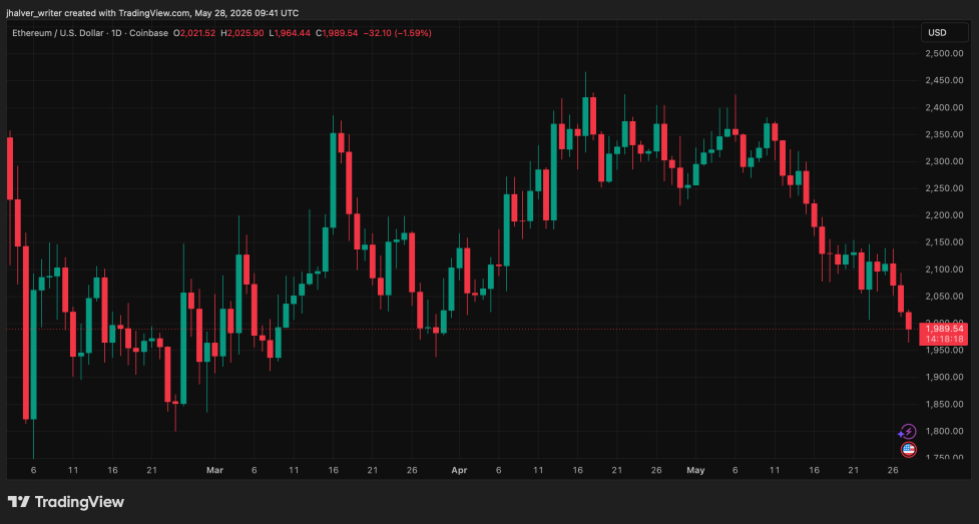
ETH's price trends to the downside on the daily chart. Source: ETHUSD on Tradingview

What The Integration With Circle Delivers

Through Banking Circle’s platform, Orbital gains access to instant two-way fiat-to-stablecoin and stablecoin-to-fiat settlement supporting Circle’s USDC, Paxos’ USDG, and Banking Circle’s own euro stablecoin EURI — all with 24/7 real-time execution directly from the bank’s core platform, per the PR Newswire announcement.

The integration removes a structural friction point that has historically complicated enterprise stablecoin adoption in Europe: the requirement to maintain separate relationships with multiple settlement counterparties across different jurisdictions and regulatory frameworks.

For Orbital’s enterprise clients — which include businesses managing cross-border payments across both stablecoin and traditional rails — the Banking Circle connection adds direct access to SEPA infrastructure, named IBANs, and full AML and KYC compliance checks within a single integrated payment layer, per the announcement.

The MiCA Context

The partnership arrives as Europe’s Markets in Crypto-Assets regulation enters its operational enforcement phase — creating both an opportunity and a compliance threshold that many payment infrastructure providers are scrambling to meet. Banking Circle’s simultaneous licensing across banking, EMT, and CASP categories means Orbital’s stablecoin settlement activity now operates under the same regulatory oversight framework that governs its traditional payment operations — a structural alignment that matters considerably for the institutional clients both companies serve.

The broader European stablecoin infrastructure buildout is accelerating in parallel. A consortium of twelve European banks including ING, UniCredit, and CaixaBank is advancing the Qivalis euro stablecoin project with a planned launch in the second half of 2026 — signaling that the institutional demand Orbital and Banking Circle are positioning to capture is expanding rapidly across the continent.

This development marks a pivotal moment for the nascent sector’s integration with Europe’s regulated financial infrastructure. A payment orchestration platform connecting stablecoin rails to a bank processing €1.5 trillion annually — under full MiCA oversight — is precisely the institutional plumbing the sector has been building toward, and its arrival suggests the gap between crypto payment infrastructure and traditional finance settlement is narrowing faster than most observers anticipated.

Cover image from Grok, ETHUSD chart from Tradingview

Связанные с этим вопросы

QWhat is the main purpose of the partnership between Orbital and Banking Circle announced in the article?

AThe partnership aims to expand Orbital's stablecoin settlement and multi-currency payment capabilities across Europe by connecting it to Banking Circle's MiCA-compliant infrastructure, which processes over €1.5 trillion annually.

QWhat regulatory achievement makes Banking Circle a uniquely positioned partner for digital asset settlement in the EU according to the article?

ABanking Circle is the first institution in Luxembourg to simultaneously hold banking, electronic money token (EMT), and Crypto-Asset Service Provider (CASP) licenses, making it one of the most comprehensively licensed digital asset settlement banks in the European Union.

QWhat stablecoins does the integration between Orbital and Banking Circle support for instant fiat conversion?

AThe integration supports instant two-way settlement for Circle's USDC, Paxos's USDG, and Banking Circle's own euro stablecoin, EURI.

QHow does the partnership address a key friction point for enterprise stablecoin adoption in Europe?

AIt removes the structural friction of needing separate relationships with multiple settlement counterparties across different jurisdictions by providing access to a single, integrated payment layer with full compliance checks.

QWhat broader trend in European finance does the article mention in relation to the Orbital-Banking Circle partnership?

AThe article mentions an accelerating European stablecoin infrastructure buildout, exemplified by the Qivalis euro stablecoin project involving twelve major banks, signaling rapidly expanding institutional demand across the continent.

Похожее

Claude Code Introduces Dynamic Workflows: Enabling AI to Form Teams and Collaborate

Claude Code introduces dynamic workflows, enabling AI to coordinate teams of specialized agents for complex tasks. This transforms Claude from a code assistant into a programmable workbench. Workflows address key limitations of single-agent systems: agentic laziness (premature task completion), self-preferential bias (favoring own outputs), and goal drift (losing sight of original objectives). The system allows Claude to dynamically create execution frameworks using JavaScript. It can split tasks, dispatch parallel agents for isolated work (e.g., in separate worktrees), implement adversarial validation, run tournaments, and synthesize results. This multi-agent approach is valuable for tasks requiring deep research, factual verification, code migration, root cause analysis, large-scale triage, and qualitative sorting. Key patterns include: classify-and-route, fan-out-and-synthesize, adversarial verification, generate-and-filter, tournaments, and loop-until-done. While token usage is higher, workflows excel where tasks resemble programming—needing problem decomposition, isolated context, hypothesis testing, and handling many details. They extend Claude Code's utility beyond technical work to areas like business plan review, resume screening, and naming brainstorm. The feature is not a universal solution but points to a future where AI tool competitiveness depends on organizing reliable, reusable, and auditable execution flows for complex goals.

marsbit43 мин. назад

Claude Code Introduces Dynamic Workflows: Enabling AI to Form Teams and Collaborate

marsbit43 мин. назад

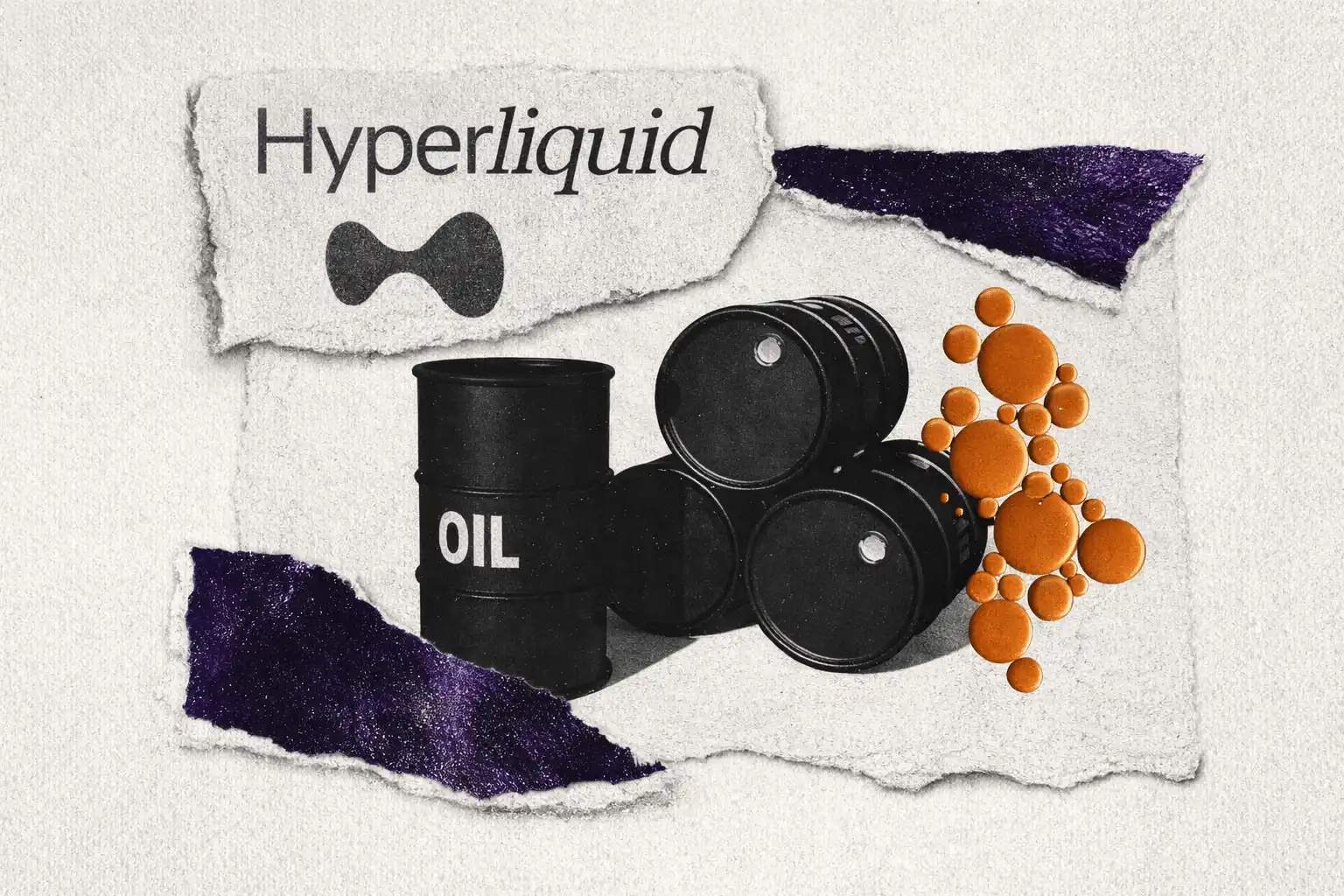
Hyperliquid, Wall Street's 24/7 Trading Convenience Store

Hyperliquid: The 24/7 Trading "Convenience Store" for Wall Street Hyperliquid, a decentralized cryptocurrency exchange, has become a go-to platform for Wall Street traders seeking to trade around the clock, especially during traditional market closures. Founded by Jeff Yan, a former quantitative trader, after the FTX collapse, the platform emphasizes user self-custody of assets. It offers a wide range of perpetual contracts—leveraged derivatives with no expiry—on assets from Bitcoin and crude oil to the S&P 500 and even pre-IPO companies like SpaceX. A notable example involves a hedge fund trader who capitalized on geopolitical news over a weekend, securing a 243% return on oil derivatives before markets reopened. The platform, run by just 11 employees, generated approximately $800 million in revenue last year, and its native token HYPE has seen significant growth. Its rise highlights the merging of traditional finance and crypto. While U.S. users are currently restricted, recent CFTC rule changes could open access. The platform is known for its transparency, having processed $10 billion in liquidations during a market crash while competitors faltered. Regulators warn of the high risks and complexity of perpetual contracts for retail investors. Key to its appeal is a strong community culture, direct engagement with founders, and a simple interface. Despite rules against VPN use, it attracts global users with its permissionless approach. Hyperliquid plans to expand into prediction markets and options, aiming to eventually host all financial activity.

marsbit43 мин. назад

Hyperliquid, Wall Street's 24/7 Trading Convenience Store

marsbit43 мин. назад

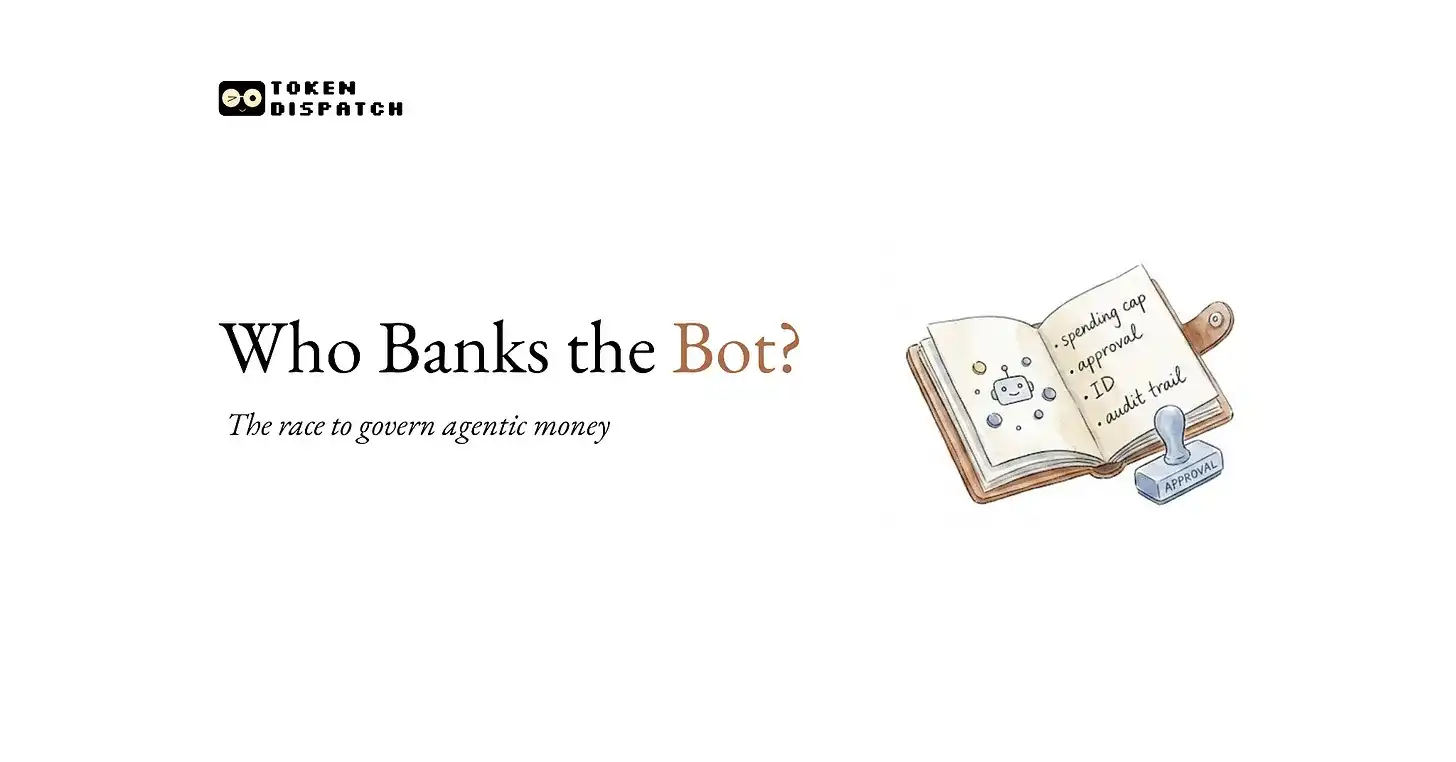
Who Funds the Agents?

**Summary: Who Funds AI Agents?** OpenAI recently shut down a feature allowing AI agents to shop for users, highlighting the challenge of creating a secure and regulated environment for agent-driven transactions. While payment infrastructure exists, a crucial governance layer—defining spending limits, fraud detection, tax handling, and return policies—is largely missing. The potential is enormous: AI agents already processed $73M across 176M transactions last year, with McKinsey forecasting this could grow to $3-5T in global consumer commerce by 2030. The core competition isn't just about processing payments, which can be very cheap (especially with crypto-based settlement), but about controlling the rules that govern agent spending. Key players like Stripe and Coinbase are racing to dominate this governance layer. Stripe's acquisition of wallet provider Privy allows it to set spending policies, identity checks, and human-in-the-loop approvals directly at the wallet level. Similarly, Coinbase's stack, including its x402 protocol and AgentKit, embeds governance rules. This vertical integration across settlement, wallet, and governance layers is becoming the dominant strategy. Control over the governance layer is where significant future value lies. If agents handle trillions in transactions, even a small fee for managing compliance, fraud prevention, and policy enforcement could generate billions in annual revenue. The companies that successfully integrate across the payment stack will capture value from idle agent balances, transaction fees, and governance services, positioning themselves as the foundational banks of the AI agent economy.

marsbit1 ч. назад

Who Funds the Agents?

marsbit1 ч. назад

Торговля

Спот
Фьючерсы

Популярные статьи

Как купить S

Добро пожаловать на HTX.com! Мы сделали приобретение Sonic (S) простым и удобным. Следуйте нашему пошаговому руководству и отправляйтесь в свое крипто-путешествие.Шаг 1: Создайте аккаунт на HTXИспользуйте свой адрес электронной почты или номер телефона, чтобы зарегистрироваться и бесплатно создать аккаунт на HTX. Пройдите удобную регистрацию и откройте для себя весь функционал.Создать аккаунтШаг 2: Перейдите в Купить криптовалюту и выберите свой способ оплатыКредитная/Дебетовая Карта: Используйте свою карту Visa или Mastercard для мгновенной покупки Sonic (S).Баланс: Используйте средства с баланса вашего аккаунта HTX для простой торговли.Третьи Лица: Мы добавили популярные способы оплаты, такие как Google Pay и Apple Pay, для повышения удобства.P2P: Торгуйте напрямую с другими пользователями на HTX.Внебиржевая Торговля (OTC): Мы предлагаем индивидуальные услуги и конкурентоспособные обменные курсы для трейдеров.Шаг 3: Хранение Sonic (S)После приобретения вами Sonic (S) храните их в своем аккаунте на HTX. В качестве альтернативы вы можете отправить их куда-либо с помощью перевода в блокчейне или использовать для торговли с другими криптовалютами.Шаг 4: Торговля Sonic (S)С легкостью торгуйте Sonic (S) на спотовом рынке HTX. Просто зайдите в свой аккаунт, выберите торговую пару, совершайте сделки и следите за ними в режиме реального времени. Мы предлагаем удобный интерфейс как для начинающих, так и для опытных трейдеров.

1.4k просмотров всегоОпубликовано 2025.01.15Обновлено 2026.06.02

Как купить S

Sonic: Обновления под руководством Андре Кронье – новая звезда Layer-1 на фоне спада рынка

Он решает проблемы масштабируемости, совместимости между блокчейнами и стимулов для разработчиков с помощью технологических инноваций.

2.3k просмотров всегоОпубликовано 2025.04.09Обновлено 2025.04.09

Sonic: Обновления под руководством Андре Кронье – новая звезда Layer-1 на фоне спада рынка

HTX Learn: Пройдите обучение по "Sonic" и разделите 1000 USDT

HTX Learn — ваш проводник в мир перспективных проектов, и мы запускаем специальное мероприятие "Учитесь и Зарабатывайте", посвящённое этим проектам. Наше новое направление .

1.8k просмотров всегоОпубликовано 2025.04.10Обновлено 2025.04.10

HTX Learn: Пройдите обучение по "Sonic" и разделите 1000 USDT

Обсуждения

Добро пожаловать в Сообщество HTX. Здесь вы сможете быть в курсе последних новостей о развитии платформы и получить доступ к профессиональной аналитической информации о рынке. Мнения пользователей о цене на S (S) представлены ниже.

活动图片