CEO Responds to Crisis with Jokes, AI Entrepreneurs Steal Crypto's Marketing Playbook

marsbitОпубликовано 2026-03-10Обновлено 2026-03-10

Введение

CEO Roy Lee of AI startup Cluely turned a potential PR crisis—accusations of inflating revenue figures in a TechCrunch report—into a viral marketing opportunity. Instead of a formal apology, Lee posted a satirical video response where he rapped sarcastically while wearing a suit jacket and no pants, leaning into his controversial persona. Cluely, which began as a tool for cheating in coding interviews and led to Lee’s expulsion from Columbia University, has consistently used controversy and attention as a growth strategy. The company initially promoted itself with the tagline “Cheat on Everything” before pivoting to an AI note-taking assistant. Lee’s approach reflects a broader trend in tech, where capturing attention is seen as a critical competitive advantage. Investors like a16z, which participated in Cluely’s $15 million Series A, endorse this model, arguing that in an era of commoditized AI capabilities, virality and narrative can serve as a moat. This strategy mirrors tactics long used in crypto, where memes and drama often drive engagement and growth.

Original | Odaily Planet Daily (@OdailyChina)

Author | DingDang (@XiaMiPP)
In most startups, if someone exposes "falsified revenue," it would likely lead to a PR crisis—issuing a statement, explaining the misunderstanding, correcting data metrics, apologizing, and then steering the conversation back to focusing on the product or business growth.

But Cluely's CEO Roy Lee clearly had no intention of doing that.

A Company That Started as a "Cheating Tool"

Cluely was founded in 2025, and its initial product came from a project called Interview Coder, developed by Roy Lee and his college roommate Neel. This was a tool that used AI to help users cheat in LeetCode interviews. Due to this project, both were eventually expelled from Columbia University.

If it were an ordinary person, being expelled from school would be a black mark to be concealed. But Roy Lee turned this incident into a marketing opportunity, even a "turning point in his life."

Cluely's initial product slogan was: "Cheat on Everything." It wasn't until November 2025 that Cluely began shifting its product narrative from a "cheating tool" to an AI note-taking assistant, such as using AI to automatically organize meeting content, optimize collaboration efficiency, and even modify attendees' expressions to cover up distraction. But no matter how the product adjusted, this company, or rather, its CEO, never shook off a very distinct vibe: it almost grew through controversy.

And the ensuing storm, to some extent, continued along this path.

A Farce Sparked by "Falsified Revenue"

The incident began when someone dug up a TechCrunch report from July 2025. The article mentioned that Cluely's Annual Recurring Revenue (ARR) had doubled in a week, reaching $7 million. This data was questioned as being falsified.

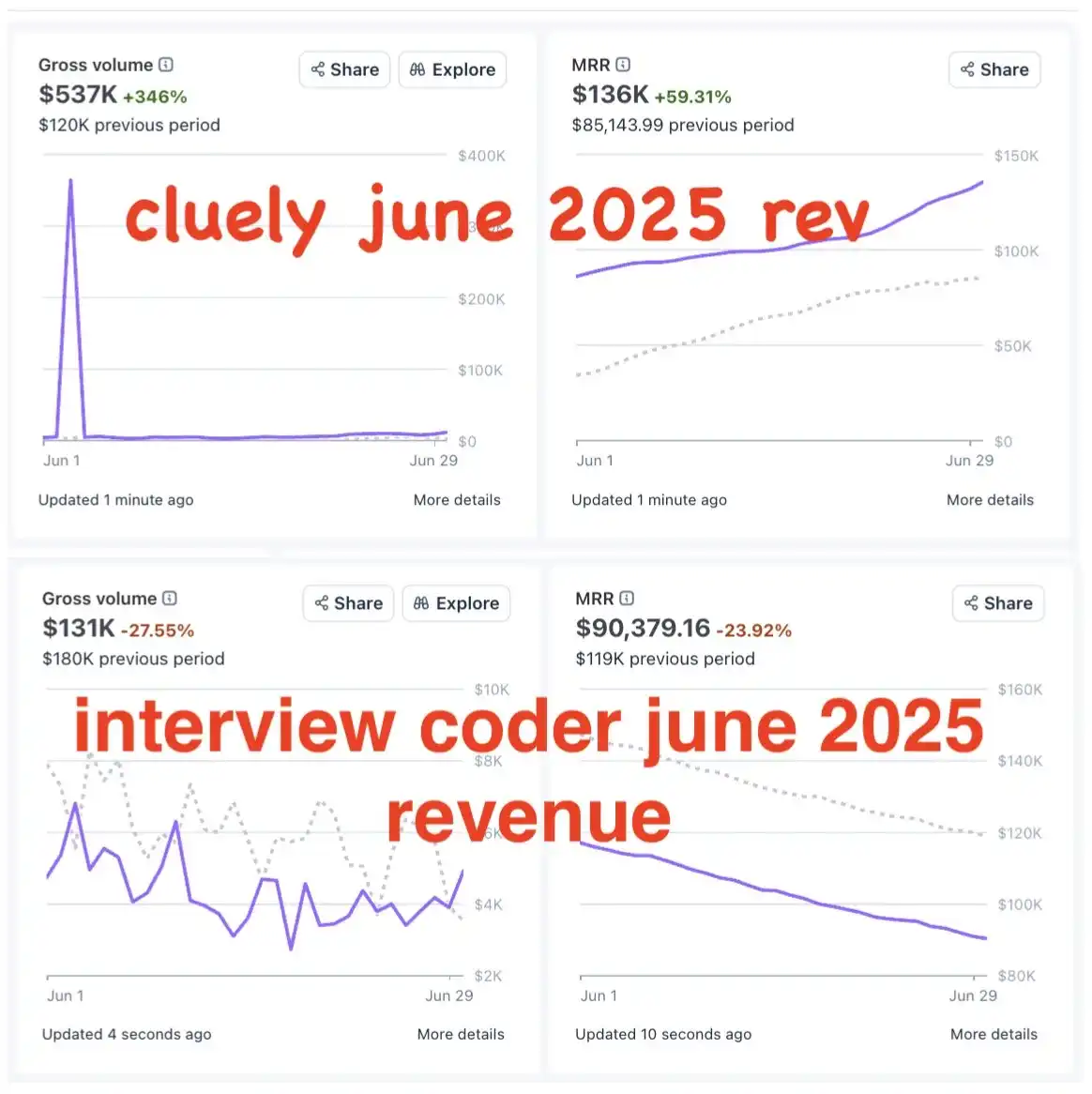
Facing the质疑, Cluely CEO Roy Lee was quite candid. He quickly posted admitting it, saying he had casually mentioned that number when a reporter called him, not expecting it to be written into a formal report. Seemingly to prove it wasn't a deliberate exaggeration, he also posted Cluely's real data from June 2025: consumer business annual revenue $2.7 million, enterprise business annual revenue $2.5 million, totaling $5.2 million.

Up to this point, there wasn't much of a stir; the explanation seemed plausible.

But on the same day, TechCrunch reporter Julie Bort published a rebuttal to Roy's claim. She stated that the interview was arranged proactively by Cluely's PR team, it was on the record, and not just a casual chat.

Roy Lee didn't continue with a textual explanation but chose a more dramatic way to respond. He released a video with the caption, Breaking News: Cluely CEO Officially Responds to TechCrunch.

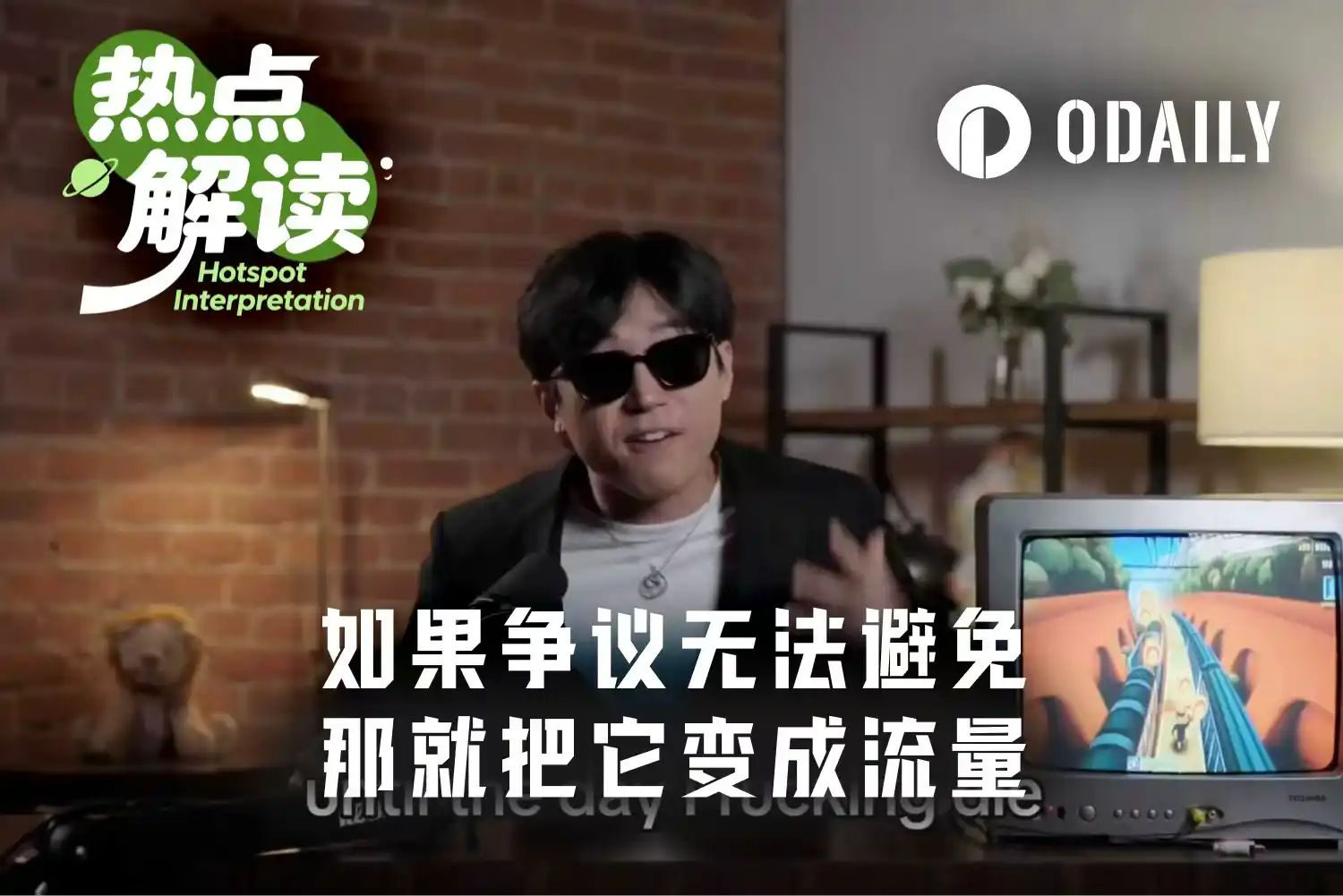
In the video, he sat in front of the camera wearing sunglasses and a suit, a microphone on the desk, looking like he was preparing to make a serious statement. But the setting wasn't an office; it looked more like a living room, with an old desktop computer next to him, its screen playing Subway Surfers—a classic time-wasting game. Roy's response was also completely informal, more like a self-deprecating performance, mixed with self-mockery and bragging, his tone resembling a rapper freestyling.

Even more absurdly, at the end of the video, he stood up from behind the desk, revealing this ostensibly serious CEO... wasn't wearing pants......

Thus, a PR crisis originally about "falsified revenue" was handled as a traffic-attracting, self-mocking performance.

What a16z Is Betting On Is Actually the Attention Economy

The capital market doesn't seem to mind this kind of performative founder personality either. In June 2025, Cluely announced the completion of a $15 million Series A funding round, with participating institutions including the well-known venture capital firm Andreessen Horowitz (a16z). Its partner Bryan Kim once mentioned on a podcast: In the AI era, the traditional "artisan product + slow growth" model is no longer sufficient; viral spread itself is part of the product.

What he considers the "new AI startup template" is that in an era where model capabilities are increasingly commoditized, attention itself is becoming a key resource. Whoever can capture user attention first may build a new moat.

From the "cheating controversy" of Interview Coder, to the entrepreneurial story of being expelled from Columbia, to this absurd "response video," Roy Lee's entire personal brand has almost been built along this path: controversy itself is the content for dissemination. This might also explain why a16z chose to invest in Cluely, to invest in Roy Lee.

When Controversy Becomes a Growth Strategy

In past entrepreneurial narratives, growth usually came from product capabilities, technological barriers, and business models. But in today's internet environment, another resource is becoming increasingly important—attention.

This logic has actually been proven in the crypto industry long ago. Many crypto projects capture user attention by creating topics, controversies, or even dramatic events, and then convert this traffic into product growth or commercial value, especially with the rise of Memes—pure dissemination, no (traditional) product.

To some extent, Roy Lee's response video is a typical case of this logic: when negative news emerges, rather than trying to suppress the controversy, repackage the controversy itself into dissemination content.

Evidently, in the current internet environment, attention is often more valuable than explaining the truth.


Связанные с этим вопросы

QWhat was the initial product of Cluely, and what was its controversial purpose?

AThe initial product of Cluely was Interview Coder, an AI tool designed to help users cheat in LeetCode coding interviews.

QHow did Cluely's CEO, Roy Lee, respond to the allegations of falsifying revenue reported by TechCrunch?

ARoy Lee responded by releasing a satirical video where he offered a self-deprecating and humorous performance, rather than issuing a formal written statement or apology.

QWhich prominent venture capital firm invested in Cluely, and what was their stated reasoning for the investment?

AAndreessen Horowitz (a16z) invested in Cluely. Their reasoning was that in the AI era, viral attention itself is a critical resource and part of the product, and they believe capturing user attention can build a new moat.

QAccording to the article, what key resource is becoming increasingly important for growth in today's internet environment?

AAttention is the key resource becoming increasingly important for growth, as it can be leveraged into product growth or commercial value.

QWhat industry's marketing tactics does the article suggest AI entrepreneurs like Roy Lee are adopting?

AThe article suggests AI entrepreneurs are adopting marketing tactics from the Crypto industry, particularly using controversy and attention-grabbing stunts to drive growth.)

Похожее

Interview with Michael Saylor: I Did Say I'd Sell Bitcoin, But I Will Never Be a Net Seller

**Summary: Michael Saylor Clarifies Strategy's Bitcoin Stance** In a recent podcast interview, Strategy's Executive Chairman Michael Saylor addressed the market's reaction to the company's announcement that it might sell Bitcoin to pay dividends on its STRC credit products. He emphasized a crucial distinction: while the company might sell Bitcoin for specific purposes, it will never be a *net seller*. Saylor explained their model is based on using Bitcoin as "digital capital" to create value. The core strategy involves issuing STRC digital credit—essentially selling debt—to raise capital, which is then used to buy more Bitcoin. He estimates Bitcoin appreciates at roughly 40% annually. A small portion of these capital gains (e.g., ~2.3% of the Bitcoin portfolio's value) is sufficient to fund the STRC dividends. Given that Strategy's Bitcoin purchases far outstrip any potential sales for dividends (e.g., buying $3.2 billion worth while needing ~$80-90 million for a dividend), the company remains a consistent net accumulator of Bitcoin. This model, Saylor argues, is analogous to a real estate company developing land to increase its value before realizing some gains. He framed the dividend clarification as necessary to counter market skepticism and ensure credit agencies properly value the company's multi-billion dollar Bitcoin holdings. Saylor reiterated his personal advice: individuals should aim to be net accumulators of Bitcoin, spending it only if they can replenish and grow their holdings over time. Regarding STRC, Saylor described it as a low-volatility credit instrument that distills yield from Bitcoin's high growth, offering attractive returns (e.g., ~11-12% yield) for risk-averse investors. He noted that Strategy's STRC issuance now constitutes about 60% of the U.S. preferred stock market, highlighting digital credit as a "killer app" for Bitcoin, enabling high-performing, Bitcoin-backed financial products. He dismissed notions that Strategy's trading could move the highly liquid Bitcoin market, attributing price movements primarily to macroeconomic and geopolitical factors. Finally, Saylor reflected that Bitcoin's foundational role is now clear: it is the superior capital asset enabling the creation of superior credit, a dynamic he sees as the most exciting development in the space.

marsbit6 мин. назад

Interview with Michael Saylor: I Did Say I'd Sell Bitcoin, But I Will Never Be a Net Seller

marsbit6 мин. назад

380,000 Apps Exposed, 2,000+ Apps Leaked Secrets: AI Programming Turns 'Intranet' into Public Internet

Israeli cybersecurity firm RedAccess uncovered a severe data exposure trend linked to "vibe coding" or AI-powered software development tools. Their research found approximately 38,000 publicly accessible web applications built with platforms like Lovable, Base44, Netlify, and Replit. Of these, an estimated 2,000 apps exposed sensitive corporate and personal data, including medical records, financial information, internal strategic documents, and customer chat logs. In some cases, access even granted administrative privileges. The core issue stems from default privacy settings that make applications public by default, combined with a lack of built-in security controls (like authentication) in the AI-generated code. This allows employees without security expertise—"citizen developers"—to easily create and deploy applications that bypass standard corporate security reviews. The exposed apps, often indexed by search engines, are trivially discoverable. While some platform providers (Replit, Lovable, Wix/Base44) argue that security configuration is the user's responsibility and question the validity of some findings, security researchers confirm the widespread reality of such exposures. This pattern, also noted in prior studies, highlights a critical security gap as AI democratizes app creation, potentially leading to massive, unintentional data leaks.

marsbit1 ч. назад

380,000 Apps Exposed, 2,000+ Apps Leaked Secrets: AI Programming Turns 'Intranet' into Public Internet

marsbit1 ч. назад

Attracting Global Capital, Asia's New 'Super Cycle' Is Unfolding

Investors are turning to Asia as the next frontier for global equity growth, with a new "super cycle" unfolding across the region. Driven by the AI revolution, Asian markets, particularly South Korea, have seen significant rallies. According to Morgan Stanley analysis, the underlying drivers of Asia's industrial cycle are shifting from traditional sectors like real estate and manufacturing to massive investments in AI infrastructure, energy security and transition, and supply chain resilience. Fixed asset investment in Asia is projected to grow from around $11 trillion in 2025 to $16 trillion by 2030, with a 7% annual growth rate from 2026-2030. The AI wave is a primary catalyst, driving immense capital expenditure for chips, servers, data centers, and power systems. Asia is central to this hardware supply chain. In China, AI investment is focused on building a full-system domestic capability, with the local AI chip market potentially reaching $86 billion by 2030. Beyond AI, China's export story is expanding from EVs and batteries to robotics. The country already captures about half of new global industrial robot demand and over 90% of humanoid robot shipments. This growth phase mirrors the early stages of China's EV export boom. Simultaneously, energy security investments, spurred by AI's massive power needs, are rising, with China benefiting from its leadership in solar, batteries, and EVs. Regional defense spending is also increasing structurally, supporting demand for advanced manufacturing. The main beneficiaries are China, South Korea, and Japan, positioned in core supply chain areas. However, risks remain, including potential overcapacity, profit margin pressures from competition, persistent technological restrictions, geopolitical friction, and workforce displacement due to AI-driven automation. Market volatility is also expected to increase as investor expectations diverge on the realization of these capital investment and export themes.

marsbit1 ч. назад

Attracting Global Capital, Asia's New 'Super Cycle' Is Unfolding

marsbit1 ч. назад

Торговля

Спот
Фьючерсы

Популярные статьи

Как купить S

Добро пожаловать на HTX.com! Мы сделали приобретение Sonic (S) простым и удобным. Следуйте нашему пошаговому руководству и отправляйтесь в свое крипто-путешествие.Шаг 1: Создайте аккаунт на HTXИспользуйте свой адрес электронной почты или номер телефона, чтобы зарегистрироваться и бесплатно создать аккаунт на HTX. Пройдите удобную регистрацию и откройте для себя весь функционал.Создать аккаунтШаг 2: Перейдите в Купить криптовалюту и выберите свой способ оплатыКредитная/Дебетовая Карта: Используйте свою карту Visa или Mastercard для мгновенной покупки Sonic (S).Баланс: Используйте средства с баланса вашего аккаунта HTX для простой торговли.Третьи Лица: Мы добавили популярные способы оплаты, такие как Google Pay и Apple Pay, для повышения удобства.P2P: Торгуйте напрямую с другими пользователями на HTX.Внебиржевая Торговля (OTC): Мы предлагаем индивидуальные услуги и конкурентоспособные обменные курсы для трейдеров.Шаг 3: Хранение Sonic (S)После приобретения вами Sonic (S) храните их в своем аккаунте на HTX. В качестве альтернативы вы можете отправить их куда-либо с помощью перевода в блокчейне или использовать для торговли с другими криптовалютами.Шаг 4: Торговля Sonic (S)С легкостью торгуйте Sonic (S) на спотовом рынке HTX. Просто зайдите в свой аккаунт, выберите торговую пару, совершайте сделки и следите за ними в режиме реального времени. Мы предлагаем удобный интерфейс как для начинающих, так и для опытных трейдеров.

1.3k просмотров всегоОпубликовано 2025.01.15Обновлено 2025.03.21

Как купить S

Sonic: Обновления под руководством Андре Кронье – новая звезда Layer-1 на фоне спада рынка

Он решает проблемы масштабируемости, совместимости между блокчейнами и стимулов для разработчиков с помощью технологических инноваций.

2.2k просмотров всегоОпубликовано 2025.04.09Обновлено 2025.04.09

Sonic: Обновления под руководством Андре Кронье – новая звезда Layer-1 на фоне спада рынка

HTX Learn: Пройдите обучение по "Sonic" и разделите 1000 USDT

HTX Learn — ваш проводник в мир перспективных проектов, и мы запускаем специальное мероприятие "Учитесь и Зарабатывайте", посвящённое этим проектам. Наше новое направление .

1.8k просмотров всегоОпубликовано 2025.04.10Обновлено 2025.04.10

HTX Learn: Пройдите обучение по "Sonic" и разделите 1000 USDT

Обсуждения

Добро пожаловать в Сообщество HTX. Здесь вы сможете быть в курсе последних новостей о развитии платформы и получить доступ к профессиональной аналитической информации о рынке. Мнения пользователей о цене на S (S) представлены ниже.

活动图片