Indepth Research

Provide in-depth research reports and independent analysis, leveraging data, technology, and economic insights to deliver a comprehensive examination of the blockchain ecosystem, project potential, and market trends.

Dialogue with Xie Jiayin: I Have Ambition, and So Does Bitget

In a candid interview, Xie Jiayin, the Head of Greater China at Bitget, discusses his ambitious vision for the exchange and its rapid growth. Since joining in early 2024, Xie has championed a user-centric approach, aiming to build "the warmest exchange." Under his leadership, Bitget has expanded its user base to over 120 million, with monthly trading volume reaching $750 billion, making it a top-three exchange in the Chinese-speaking market. Xie emphasizes the importance of direct engagement, often working 12-14 hours daily and maintaining an active presence on social media, where he has posted over 17,000 tweets and replies. He insists on swift responses from his team to user inquiries, reflecting Bitget’s commitment to accountability and trust. Bitget’s strategy includes innovative products like UEX (Universal Exchange), offering traditional assets such as U.S. stocks, gold, and forex contracts. The platform recently became the first to achieve $10 billion in U.S. stock contract trading volume. Xie acknowledges the competitive landscape but remains confident in Bitget’s growth, targeting a monthly trading volume of $1 trillion by 2026. He also highlights Bitget’s philanthropic efforts, including a $12 million donation for disaster relief in Hong Kong, and the exchange’s focus on institutional and VIP services. Despite market fluctuations, Xie advocates for long-term optimism in crypto, comparing the industry’s current stage to the early internet era and encouraging young talent to join the evolving space. Xie’s personal and professional goals align with Bitget’s ambition: to solidify its position as a top global exchange and continue driving innovation-driven, user-focused growth.

深潮12/26 07:58

Dialogue with Xie Jiayin: I Have Ambition, and So Does Bitget

深潮12/26 07:58

Founder's Account: From Start to Abandonment, Why I'm No Longer Doing Web3 Payments

In this candid reflection, a serial entrepreneur shares their decision to step away from Web3 payment ventures after six months of deep immersion. Initially drawn by the promise of faster, more transparent, and globally efficient settlements—especially for cross-border and remote work scenarios—the founder quickly realized that the industry’s core challenges aren’t product-based but structural. Through on-the-ground research in places like Yiwu, Mexico, and Shuibei, they observed that real-world adoption of Web3 payments remains fragmented, relationship-dependent, and far from the scalable, product-driven opportunity often portrayed. The critical barrier? Dependence on banking relationships, compliance, licensing, risk management, and regulatory navigation—areas where small, agile teams lack the resources and long-term leverage. The author emphasizes that many seemingly profitable payment operations actually profit from risk tolerance, not operational excellence, and that sustainability hinges on resilience to regulatory and financial shocks. While still believing in Web3 payment’s long-term potential—especially as a back-end upgrade for global treasury management—they concluded that the sector demands deep industry assets, patience, and risk capital ill-suited to their team’s strengths. Instead, they plan to focus on the next layer: helping users navigate on-chain asset management and risk-aware investing, turning payment flows into sustainable value. This isn’t a rejection of Web3 payments but a pragmatic shift based on resource alignment and structural reality.

marsbit12/26 02:13

Founder's Account: From Start to Abandonment, Why I'm No Longer Doing Web3 Payments

marsbit12/26 02:13

Huobi Growth Academy | 2025 In-depth Crypto Market Research Report: Institutions, Stablecoins, and Regulation, 2025 Crypto Market Review and 2026 Outlook

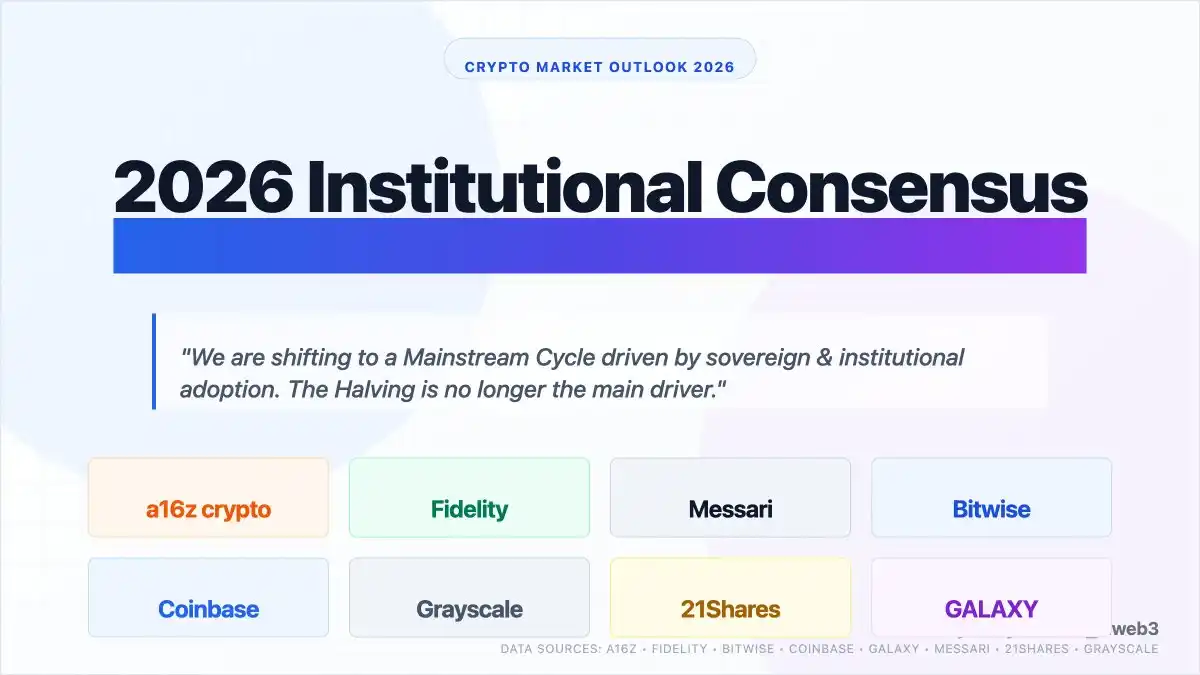
The 2025 crypto market underwent a structural transformation driven by three key shifts: institutional adoption, the maturation of the on-chain dollar system, and regulatory normalization. Institutional capital became the marginal buyer via ETFs and regulated vehicles, reducing volatility but increasing sensitivity to macro factors like interest rates. The market shifted from narrative-driven speculation to liquidity-driven, macro-sensitive asset allocation. Stablecoins evolved into core infrastructure, serving as the primary settlement layer and dollar proxy for on-chain economy, with transaction volumes rivaling major payment systems. Real-World Assets (RWA), particularly tokenized U.S. Treasuries, scaled significantly, introducing low-risk yield curves on-chain and merging DeFi with traditional finance. However, algorithmic and yield-bearing stablecoin failures exposed systemic fragility due to leverage and opacity. Regulatory clarity reduced institutional entry barriers, turning compliance into a competitive moat. Valuation models began incorporating regulatory costs, legal stability, and compliance efficiency, shifting focus from growth metrics to sustainable infrastructure. Looking ahead to 2026, key variables include macro liquidity conditions, the quality stratification of on-chain dollar instruments, sustainability of real yields, and the institutional moats built around compliance and distribution. The winners will be assets and infrastructures that thrive within these new constraints of capital, yield, and regulation.

marsbit12/25 08:49

Huobi Growth Academy | 2025 In-depth Crypto Market Research Report: Institutions, Stablecoins, and Regulation, 2025 Crypto Market Review and 2026 Outlook

marsbit12/25 08:49

活动图片