Regulatory Policy

Focuses on global regulatory developments, policy changes, and compliance requirements. It provides in-depth analysis of government regulations and their impact on the cryptocurrency and blockchain industries, helping businesses and investors proactively manage policy-related risks.

Who Controls the Profit Rights of Digital Dollars? The Wall Street vs. Crypto Capital Game Behind the CLARITY Act

The CLARITY Act represents a pivotal U.S. legislative effort to regulate digital assets, moving beyond the infrastructure-focused GENIUS Act. It aims to end "regulation by enforcement" by granting the CFTC exclusive jurisdiction over digital commodities and the SEC over investment contracts. A major conflict emerged in the Senate over "yield-bearing stablecoins." Traditional banks, fearing massive deposit outflows and damage to their net interest margins, lobbied for a total ban on third-party stablecoin yields. The crypto industry, led by Coinbase, argued this would stifle innovation, deprive users of rightful earnings from underlying assets like Treasuries, and drive capital offshore. The debate reached a stalemate in early 2026, stalling the bill's progress. White House mediation set a March 1 deadline for a compromise. A proposed solution, the "Digital Markets Restructure Act," introduced a "Yield Neutrality" principle, decoupling yield rights from bank charters, and a "Residual-Risk Assessment Model" to regulate based on actual risk (enterprise, exposure, market) rather than outdated classifications. The outcome will profoundly impact the U.S. financial system: potentially deepening demand for U.S. Treasuries, lowering government borrowing costs, and extending dollar hegemony digitally. It forces traditional banks to digitize and could cause a major schism in DeFi, pushing compliant players toward institutionalization and smaller, non-compliant protocols offshore. The act ultimately decides who controls the profits of the digital dollar.

marsbit02/22 05:34

Who Controls the Profit Rights of Digital Dollars? The Wall Street vs. Crypto Capital Game Behind the CLARITY Act

marsbit02/22 05:34

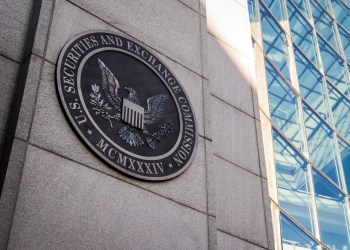
From 'Punishment' to 'Acceptance': SEC's 2% Discount Tears Open Compliance Gap for Stablecoins

This article discusses a significant policy shift by the U.S. SEC regarding the capital treatment of payment stablecoins held by broker-dealers. On February 19, the SEC’s Division of Trading and Markets issued new guidance allowing broker-dealers to apply a 2% discount—rather than a punitive 100% haircut—to certain stablecoin holdings when calculating net capital requirements. This change aligns stablecoins with money market funds and other low-risk assets, making it financially viable for regulated entities to hold and use them. The move is seen as a major step toward integrating digital assets into mainstream finance. It follows the passage of the GENIUS Act in July 2025, which established a federal regulatory framework for payment stablecoins. The SEC’s guidance is designed to bridge the gap between existing rules and the new law, enabling broker-dealers to use stablecoins for settlement, trading, and tokenized securities without excessive capital penalties. The author highlights that this shift is part of a broader effort by the SEC to move away from enforcement-heavy regulation under former Chair Gary Gensler and toward a more structured, inclusive approach. The change is expected to encourage more institutional participation, improve liquidity, and support the use of stablecoins in cross-border payments and financial inclusion. However, challenges remain, including ongoing tensions between federal and state regulators and pending legislation to clarify the classification of digital assets. The 2% discount symbolizes a meaningful step toward recognizing stablecoins as legitimate financial tools within the U.S. regulatory system.

比推02/21 15:34

From 'Punishment' to 'Acceptance': SEC's 2% Discount Tears Open Compliance Gap for Stablecoins

比推02/21 15:34

The 'Stablecoin Revolution' on the Balance Sheet: SEC Uses a '2% Discount' to Tear Open a Gap for Digital Asset Compliance

In a significant move toward integrating digital assets into mainstream finance, the U.S. SEC’s Division of Trading and Markets issued new guidance on February 19, allowing broker-dealers to apply a 2% discount—rather than a punitive 100% haircut—to certain payment stablecoins when calculating net capital reserves. This adjustment, announced via a statement by SEC Crypto Hub Chair Hester Peirce, aligns the regulatory treatment of qualifying stablecoins with that of money market funds and other low-risk instruments. The decision aims to remove operational and financial barriers for regulated intermediaries holding stablecoins, which serve as critical infrastructure for on-chain transactions, settlements, and tokenized securities. The guidance bridges current state-level frameworks with the forthcoming federal standards under the GENIUS Act—signed into law in July 2025—which establishes a comprehensive regulatory regime for payment stablecoins. This shift is part of a broader effort by the SEC to move away from enforcement-heavy oversight under former leadership and toward clearer, more accommodating rules. The change may encourage more broker-dealers, banks, and trading platforms to engage with digital assets, thereby expanding access to stablecoin-based services for consumers through regulated channels rather than offshore platforms. While challenges remain—including state-federal regulatory coordination and pending market structure legislation—the 2% discount symbolizes a meaningful step in recognizing stablecoins as legitimate financial tools within the U.S. securities regulatory system.

Odaily星球日报02/21 06:20

The 'Stablecoin Revolution' on the Balance Sheet: SEC Uses a '2% Discount' to Tear Open a Gap for Digital Asset Compliance

Odaily星球日报02/21 06:20

活动图片